Yesterday I Learned … VIII


Yesterday I learned that the makers of South Park predicted that with the advent of AI a college degree in Geology might prove pointless sooner than we think. Being a paid Geologist, as with many studies in informational pursuits, will be relegated to the ash heap of history if AI proves a greater information resource than men and women pursuing answers to geological questions. “It might damage the human element of the profession as a catalog of facts,” supporters say, “but what about new discoveries and new information?” How does AI uncover new information in the field of Geology? Mathematics.

Today I learned that we discovered a planet called Neptune almost solely using mathematics. The planet Neptune is so dim that it cannot be viewed with the naked eye, so based almost solely on mathematical principles, some French guy predicted that a planet had to be acting on Uranus with a perturbing, or unsettling, force in a manner Saturn and the Sun were not. Using Isaac Newton’s laws of gravity and motion as a guide, this French guy theorized that Uranus’ orbits and movements were so irregular that there had to be a planet right … there, causing it. The ellipses in that sentence was filled with mathematical calculations and theories. That French guy was a fraction of a degree off.

I also learned that Artificial Intelligence (A.I.) has recently progressed to something called Artificial General Intelligence (A.G.I.). The difference between the two is math. Most of the research to this point has led to progressions in A.I.’s ability to solve and resolve linguistic problems. The progression into math, or more general intelligence, has excited some and put the fears in a whole lot more.

Tomorrow we’ll learn that no matter what incarnation A.I. takes, it will always require some sort of human input. We fear the extent of A.I.’s capabilities now, but we feared the extent of the internet, yesterday, and the capabilities and unforeseen consequences of fire yesteryear. The gods punished Prometheus for introducing humans to fire. Some suggest the gods feared the progression of the human, others say that that the gods feared for the human race. They didn’t think the humans were capable of understanding the consequences of playing with fire.  
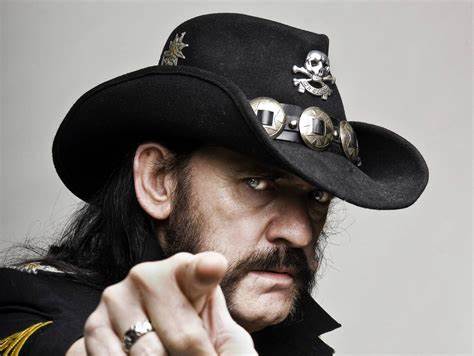
Yesterday I learned that nothing is original, particularly in the arts. “What has been will be again, what has been done will be done again; there is nothing new under the Sun.” Ecclesiastes 1:9. So, give up on the ‘O’ word, original, they say, and strive for the ‘U’ word, unique. Today I learned that Kilmister, AKA Lemmy Kilmister, AKA Lemmy, the lead singer of Hawkwind and Motorhead passed away. Listen to his music, watch an interview with him, or read about the man. If he’s not one of the most original artists you’ve ever heard, then you know this genre far better than me. If we don’t view Lemmy as an original tomorrow, I think we’ll at least acknowledge that he definitely gave new meaning to the Oscar Wilde quote, “Be yourself, everyone else is taken.”

Yesterday I learned that “The death of a language occurs when young people, progressively refuse to speak it.” That’s so obvious that it’s hardly worth writing, but why would young people stop speaking their native tongue?” Steven Pinker writes about this as if it’s a bad thing, which it kind of is, when one puts it in the frame of a death of a language basically killing all links to a culture and the subsequent death of traditions and folklore of said culture. Today I learned that even though the Russian language is not even close to a fear of extinction, Russian parents prefer that their children learn English. They try to teach it in their home and they want it taught in their kids’ schools. These parents pursue this, according to the report, because they want more for their children. They want their children to speak a more universal language to hopefully open up more economic opportunities for them. This could include their children working in the service industry, the tourist industry, or some other industry that they hope will lead to their children an easier life than the one they had to endure. We can’t help but guess that their greatest hope/dream is that their children might find an opportunity that helps them escape Russia. Whatever the case is, they believe that their children continuing to speak something nothing but the “mother tongue” might limit their opportunities in life the way it did theirs. Tomorrow, we will see that most young people are self-serving. They might love their culture as it pertains to their love of family and the essence of their being, and they might want to continue the history and traditions of their culture, but if it does nothing more than romanticize the past, most young people will not carry the torch if it comes at the expense of what they perceive to be a path to personal gains, their personal happiness, or the intra-or-inter-personal connections they develop in life.

Yesterday I learned that one of the last individuals I’d ever expect became a drug addict. If we all sat in a room, with all those we all know and love, and someone asked who’s the least likely to become a drug addict, he probably would’ve been the last one everyone selected. When I found out he became a drug addict, I had so many questions that I couldn’t think of one. To say I was disappointed doesn’t even crack that shell. He was the apex of stability, and all that, until he hurt his back, bad, and he didn’t want to undergo surgery. He preferred to treat his near-crippling pain with painkillers. If you’ve ever been ground-bound with back pain, and it hurts to breathe, you probably have an idea what he was going through. The meds made him feel better, temporarily, and he wanted more of those “temporary” moments, until he got addicted to them. Did it alter his brain chemistry, or did he fear the return of the backpain? Regardless, he became an addict. 

Today I learned that some consider that addiction a disease. Even though the least likely I would expect became one, I cannot grasp that concept. I do not suggest those who state that are lying, excusing the behavior, or have any other ulterior motives. I also leave ample space for the idea that I don’t know what I’m talking about, because prior to this moment, I never knew anyone who suffered from any form of a drug addictions. I just don’t understand how the decision and resultant decisions to continue to take drugs can be classified a disease. Before we try a hard drug, for the first time, we know most of the stories about the harm we could do to our body, and every time thereafter, we know we’re doing greater damage. We also know that we fall prey to various addictions easily, and we know (or I know) that we could become personally, psychologically, and physiologically addicted. As John Lennon once said, “Cocaine was the first drug I ever tried where the moment after I tried it, I wondered how much more of it I could get.” 

Tomorrow, I think we’ll reread Psychology Today’s article that suggests, “There is significant evidence that addiction is a complex, cultural, social, and psychological phenomenon, as much as it is a biological phenomenon … that baffles physicians and philosophers.” Some recreational drugs provide a shot of dopamine that can lead to a restructuring of the brain. Among the many things various deleterious recreational drugs do to the brain, one thing they provide is short-term, artificial fun. They can make a trip to the grocery store fun. They, along with alcohol, can make a good time great. I have little in the way of personal experience with recreational drugs. I was never an addict, but I was a binge-drinker. As a binge drinker, I never understood responsible drinking. “You want to go out, after such a rough week at work, and drink one or two drinks and go home? That’s the exact opposite of what I want to do.” Most addictions, in my opinion, are an addiction to something else, something different than what I’m experiencing in my otherwise uninteresting and unfulfilling life. They’re an escape from the hum drum of life. Very few addicts of anything say, “I do it, because it’s fun, and I like having fun. I know sobriety, and I know it well. It’s boring.” If we had the self-control to do it just once, and no one was affected by it, we could claim no harm, no foul, but how many people have such self-control? Have you ever heard the term chasing the dragon, chasing that first high. It’s way above my pay grade to try to understand if addiction is a disease, but after seeing what happened to a friend I deemed far more capable than me, I walk away with the notion that we’re all susceptible to various forms of addiction, because, as another friend of mine once said:

“We’re all chemical.” I had no idea when she said that, but my friend was a Neurology student who specialized in Neurochemistry. *She also said it so long ago that her assessments may have aged, my remembrances of what she said could be faulty and incomplete, and I might exaggerate certain points that she hit, but this is what I remember about what she said. “We can debate the particulars of this very complex subject, and we do, and I can go into those particulars if you want, but it all boils down to that simple statement, we’re all chemical.” The two of us had a long shift before us, and I could’ve asked her for the details, but I asked her to give it to me in a nutshell. “You’ve heard the term brain chemistry, right? Those chemicals in our brain dictate mood. If your brain is not, naturally, producing enough green, you might be suffering from a chemical imbalance that affects your mood in a variety of ways both mild and severe. To relieve that malady, you seek a specialist who prescribes you a dose of green,” she said that trying hard to find colors we don’t associate with mood. “If, however, you’re not suffering from an imbalance, and you have plenty of green, and you then take a green pill, it can provide an excess of green that results in feelings of temporary euphoria. We’re all chemical. The problem with taking certain prescription and recreational drugs is that they introduce these colors, moods, and stimulants artificially. If you don’t need green, and you artificially introduce more green, you have an excess of green, and your brain stops producing green organically. The brain adjusts and sees that we’re all stocked up on green, red, yellow, or whatever color we’re talking about, so it stops producing it. As a result, the next time we take a green pill, the brain has already adjusted its production of the color, so we don’t experience an excess, and that excess produced the euphoria the first time. So, our inclination is to take more than we did the first time if we want that sense of euphoria. This is why they call it chasing the dragon, because you’re continually trying to up the dose to return to that initial feeling of euphoria. Every case is different, of course, and the amount of damage is different too, but when we stop taking the green pill, it can take a while for the brain to start producing green organically again, and that can lead to feelings of withdrawals.” 

*For anyone who is seeking a more comprehensive discussion on this topic, please visit: Psychology Today

The Disappointed Reader


“I’m disappointed, and I just can’t hide it!” I whisper/shout to the author of the book I’m reading. “You had me. You really had me, and it’s almost painful hanging here.”

Hi, I’m whatever his name is, but you can call me what’s his face, and I love a great story. Some love money and power, some love their family, and some love a really good cheeseburger. I love the great story. I love them big and small, on a device, in a book, and in a mall. I love the story you told me last week about that big, hairy guy you saw in a tank top last Tuesday at Walmart who shouted something about the price of a 3-pack of Fun Pops. If it’s unique, funny, and complete, you might have me on the edge of my seat. I might ask you so many question that you’ll “Just let me tell the story for God’s sakes” me, because I love your details. I love them so much that you will probably joke that I focus on parts of your story no one ever has ever considered before. That’s just kind of what I do. I might ask you to repeat that word you just used to describe that 3-pack of Fun Pops fella, and I might even use it later. I want to be there with you, in your story. I want to love it, enhance it, and make it my own. My leading questions might even help make your story better. I’ve done it before, without intending to do so, and I’m sure I’ll do it again. 

I might be phony in a number of ways, but my love of a great story is authentic and organic. I’m not saying my passion is greater than anyone else’s. I’m saying, we all love spending some time in the hands of a great storyteller. We used to go to the town square to hear a great story, before that the amphitheater, and the rock opposite the storyteller. No matter where or when we heard, saw, or experienced the great story, the elements have not changed. That great, classic intro led us to that rock, and the perfect climactic ending almost made us forget the fascinating information in between. Some stories entertain, some educate, but the greatest storytellers of all time find a way to meld the two in an unforgettable tome. Some of us, most of us, don’t particularly care what we are at the end, as long we’re something. Which is why when I have the finished product of a master craftsman in my hands, and they drop the ball, it’s tantamount to an ugly divorce.

They can get me. I’ll give them that. These skilled wordsmiths, who are far better at their craft than I will ever be, can have me flipping pages rapidly, flopping around at night, hours after I’ve put the book down, wondering what they’re going to do to me next, and I’ll probably be talking about those progressions the next day. When the novel is that good, I become so obsessed that I’m thinking about the possibilities throughout the day, into the night, and in my dreams. Then, boom! Nothing.

What? Why is that bookmark rotting in the place it’s been in for six months? After the flurried pace, why do I not care what happened to these characters now? It’s often so relative why we lose interest that it can be tough to pinpoint, but at some point, the author and the reader part ways on the best way to conclude this buildup.

I am a lot more patient with the author of a niche book that happened to cover a topic of particular interest to me. This book they wrote might be the only book they ever write, partake in, or have ghost written for them based on an interview. If that’s the case, my maniacal mind ask theirs, “Aren’t you afraid of losing the reader?” I try to frame my internal question in a very generous scope. They’re obviously not writers, but this product that they’re putting out has their name on it. I cut them an enormous amount of slack, in other words, but I searched for the topic of their book, so I’m obviously an eager customer. I read through the summary of the book, and it fit so well with what I was searching for that I decided to download a sample of it. Depending on the book, the sample is either the first tenth of the book. A song on the radio is a sample of an album in much the same way, the first tenth of a book is a sample of that book, right? It should contain the best writing that book has to offer. If I can barely make it through your sample, on a topic I’m inordinately interested in, the author’s writing must be terrible.

“You had me with the topic, and the summary, but your writing reads like that teacher from Ferris Bueller’s Day Off.” My favorite writers can make the history of grills in Mattel’s Barbie fascinating. I don’t expect that level of mastery of powerful, provocative prose from every author, but in this particular case, they have a topic that I am dying to learn more about, and they can’t even write a decent enough sample to get me to purchase their book? The author, or ghost writer, just gets lost in the description of the inanity, but even inanities can come to life with powerful prose. I’ll admit, I’m a little bitter in the sense that I can’t get published, and this guy has, but that doesn’t affect my reading selections. I might be hyper-critical when it comes to writing, but it’s only because I know I can do better. It’s not because I think I’m more intelligent, talented, or gifted in anyway. I’m just more demanding of myself. I read through what I’ve written with the fear that with any given sentence or paragraph, I can lose the reader. I’m probably more paranoid than most writers.

With master storytellers, I fall head over heels in love with their characters. I admire some from afar, embodied others, and sympathize and empathize with the rest. My favorite authors know how to create and substantiate characters, and some of them know how to juggle them in a gargantuan tome. 

In the introductory phase of the huge novel, the author’s juggling skills mesmerize, as the author introduces the MacGuffin to each character in a variety of unique ways. (The MacGuffin is a term for the literary device authors use in their plot to motivate the characters to act. The MacGuffin can be the monster in a horror story, a ring in Lord of the Rings, a glowing object in Pulp Fiction, and as filmmaker Alfred Hitchcock said, “What everybody on the screen is looking for but the audience doesn’t care about.”) The MacGuffin provides the conflict, the goal, and the theme of the interactions between the characters. Yet, even in the best novels, the MacGuffin is almost irrelevant, and we see this at the end when the MacGuffin is finally defeated in an anticlimactic and unceremonious manner.

The MacGuffin doesn’t need too many details, as the best authors allow us to paint their MacGuffin in our mind’s eye. We also see need for a simplified MacGuffin in those stories that involve intricate detail that might play well in the author’s mind, and some detail-oriented readers, but for the rest of us a simple tale of good vs. evil will do. I’ve witnessed the opposite, where a MacGuffin received painstaking detail. The author was/is a painter also, so he provided intricate detail of the visual elements of the monster, and rich details regarding their lives, values, and goals. It was so much that it was too much, and my bookmark remains in the 2/3rds of that description to this day.

I stressed the word defeated, because most modern authors try to avoid having their MacGuffin defeated. Modern authors don’t enjoy having their readers think in terms of good vs. evil or triumph vs. failure. Winning and losing is not a part of their equation, as it’s too simplistic or something, and they fear that it paints their narrative as a game or sporting event. Some authors even introduce the delusional elements of victory by having the characters defeat the MacGuffin, only to have it rise again in the midst of their celebration. When this happens, we know the author is mocking the simple-minded notion of victory, as we are only three-fourths the way through the novel. We also know to prepare for a complicated, winding effort the characters will employ to form a collusive effort that helps them overcome whatever personal, inner demons they may have had that caused them to be susceptible to their fears of the MacGuffin, or the unknown in general. In Stephen King’s It, for example, Pennywise mocks the groups’ efforts to defeat It. In It’s mockery, it actually instructs one of the individual members on the best way to defeat It. I don’t know if King struggled with the best way to convey the information necessary to kill It, but I have to think it would be better that this information comes from anyone else but the MacGuffin. It just seemed odd that It, or anything else would aid in their own destruction. If they’re evil, perhaps they should lie to the good guys, but telling them how they should approach an attack next time kind of dispels the notion that they’re truly evil. It’s complicated and deep and some of the times, readers wonder if it might be more fun if the author dropped all the pretentious efforts to please their peers and the critics and just wrote a simple novel of good defeating evil. 

In the early stages, the characters encounter the MacGuffin individually, and they’re overwhelmed by it. “We obviously cannot do this alone,” the characters say throughout the narrative in individual ways. One important trait of the typical monster story is that the meager human cannot do it alone … if at all. The methods of warfare we’ve developed are inferior to the ways of the MacGuffin, and the creativity of the human being is incredibly primitive in reference to its power. For these reasons and others, many, many others, I could not write a compelling monster narrative, for my tale would be far more interested in the human ability to overcome. My tale would be less interested in the power of the monster and more in the resolve most humans find when they’re backed into a corner. A theme of my tale would be, you think the badger is deadly when backed into corner, try a human. We might not think much of our fellow humans on most days, but while we don’t have the claws of the badger, the jaws of the alligator, or the ferocious strength of the bear, there’s a reason we sit atop the animal kingdom, the human brain. The best you’ll ever see of a human happens just after they’re backed into a corner. When they’re so desperate that they think their lives will end, they will find some levels of ingenious resolve they didn’t even know existed. My characters want to live, and they will do whatever is necessary to see one more day. If the gun doesn’t work, and it doesn’t in an overwhelming majority of most monster stories, they’ll try something else, and then something else to help them survive. Such a theme would not play well in most monster movies, because at all points in between, and with very specific characters, it’s not about them, and they usually do nothing but lay there in the spot the director designated for the death scene. If they fight or thrash about a bit, it’s often a minimal fight. More often than not, all they do is scream.  

After they experience nothing but failure in the face of the MacGuffin, they seek others who’ve experienced similar, but different, failures in their respective interactions with it. They learn a lot about it and themselves in the process, and they bring that knowledge to the other group, who have uncovered their own truths. They then use that combined knowledge to carve out some temporary peace for themselves. In doing so, the author effortlessly funnels these characters together in a quest to defeat, uncover, or discover a truth about the MacGuffin. The ebb and flow of this part of the narrative is often the most engaging and provocative part. If it wasn’t so engaging, I would consider dropping most novels at this point, because the buildup, for me, is the part that builds the obsession. 

At some point, the author needs to make an initial reveal, a tease, and a summation of what the author has spent hundreds of pages foreshadowing. The reveal involves a progressed, unexplained truth about the MacGuffin. The quality author teases this out, and they leave us in some doubt about whether or not it is in fact a truth. There are relative truths each character discovers and even though the author depicts their characters as weak, the narrative is still about them, and their perspective. It is about the MacGuffin, but it’s not.  

In this reveal, we’re not entirely sure what happened, but we know that one of the novel’s most beloved, but expendable side characters, (the proverbial red-shirted Ensign from Star Trek), is dead. Some believe the guy in the red shirt did something ill-advised, and they place much of the blame for his death on him. This permits them to continue to believe the MacGuffin is benevolent, as they continue to argue with those who view the MacGuffin as vindictive and vengeful (a hint at various interpretations of God, Satan, or some confusing hybrid of both). This scene also permits the author to reveal the powers of the MacGuffin, a power that will cause the reader to fear it, but the power will later be diminished by whatever the group of characters chose to define it.

One character, often the militaristic lunatic, steps forward to demand revenge or retribution. He wants to eradicate the MacGuffin from the Earth as a result of the beloved side character’s death. The militaristic side character also seeks to disguise his bloodlust as a form of protection, under the proviso that he could be next, or we could, and he believes in the tooth for a tooth response to what he perceives to be the MacGuffin’s deadly aggression. The majority disagree and side with the saner main character who suggests the group needs a more complex, less violent resolution. 

The characters have obeyed the rules, based on the nature of the MacGuffin they’ve collectively discovered thus far, but they’ve also found some loopholes. If they do this, while doing that, there will be no ramifications from the MacGuffin. There are rise and fall and fall and rise, a rise, fall, rise, or a fall, rise, fall arcs throughout to build the tension. The characters learn from their mistakes. 

The various arcs appeal to just about everyone, as we try to keep an open mind. At some point, we begin to identify with the problem-resolution ideas of one character over the others. We also enjoy the love-interest angle two of the leaders developed, how the sick child became sick, and if it can be attributed to the MacGuffin in some way, but we keep coming back to the ultimate resolution. 

For those of us who have read a number of modern books, and watched such storylines play out on current TV shows and movies, we pretty much know where 99% of them are headed. We might disagree with the angle the characters choose, but more that, we know that eventually the author will have to choose sides in this dilemma, and we always know what side the more modern authors are going to take. The only drama left, is how is they are going to get there.

They often lead us into “their” position with numerous, failed efforts by the lunatic, military type to wipe the MacGuffin off the face of the planet with some drastic overreach that will affect life on Earth. We are to side with the intellectual pacifist, normally employed as a scientist, a professor, or a reporter in most modern stories. This is where the gist of the story becomes clear. The MacGuffin is not bad, or evil in the simplistic terms we use to define good vs. evil. Is the white shark bad, the bear, or the tiger? No, they just want to eat, but in our cartoonish narratives, we often depict them as mean, and they always have an otherworldly growl that shakes us to our bones. Plus, there is a now a complex, rational explanation for the death of the beloved side character, and any related activities that follow. The whole idea that the MacGuffin was a bad entity, was a relative term defined by the obnoxious, military man who just wants to blow stuff up. The more rational scientist, professor, or reporter finds another way that turns out to be correct. They find a way to communicate with the MacGuffin. This narrative often dismisses the fact that some MacGuffins we encounter in life are bad, and  in real life we shouldn’t be so naïve as to believe every MacGuffin is misunderstood. We might meet a real bad guy in life, our MacGuffin, and if we choose to try to talk to them, or advise counseling, they’ll be back to do what they did to us, to someone else. This part of the narrative is often the whole purpose of the artist starting this project, to have the author’s side win. Logic often prevails, but the conflicted logician may employ some violent tendencies, as a subtle ode to those who enjoy some level of violence in every storyline, or to display the main character’s progressed desperation, but it’s often directed at the the real bad guys of this narrative, the irrational, militaristic bad guys who won’t listen to her.

Again, I could not write a modern monster story, because my problem solving techniques would be too simplistic, anti-climactic, and a little boring. My resolution would probably involve a gun. One of my characters would pull out a gun and shoot the MacGuffin dead. If that didn’t work, my character would shoot it again, multiple times, until it is dead. If that didn’t work, the character would try something else. This resolution would probably bore most modern monster book readers, because they prefer conflict resolutions that are deep, complicated, and multidimensional. My methodology is if one thing doesn’t work, try another. Gather all of the most brilliant minds, militaristic and otherwise, and try to develop a master plan of attack. In the modern monster movie, nothing works. I understand that leads to some compelling drama that defines their desperation, but this cliché often leads the authors to fall prey to some formulaic storytelling. 

It’s not that I want the author to write a story that employs my fundamentals, or that I want my side to win, it’s the eventual formula of these stories I find so deflating. Most modern authors play it safe with a formula loaded with so many clichés, tropes, and stereotypical characterizations that I eventually put the book out of its misery. I empathize with the difficulty of adding it all up to a fiery crescendo, but how many endings just crush? I’d say very few. I don’t know if some authors write too many books, or if they overcome blocks by just writing what amounts to the same endings every time out, but their formulas often leave me wanting. 

“What would you have done different?” defenders of the modern author might ask. It’s not my project, and I’m not the skilled author that brought the reader, almost effortlessly to point ‘R’, in the ‘A’ to ‘Z’ progression. They fumbled the ball three-fourths the way through is what I’m saying, and they had such a healthy drive going. “Do you think you could’ve done better?” No, but I would’ve done it different. I’ve given up on the big ‘O’, originality, because it’s almost impossible to be original nowadays, and an artist could go mad in the effort. Doing different is not always original, but the author could vie for unique. Every modern author, it seems, travels from ‘R’ to ‘Z’ in almost the exact same way. Why wouldn’t you take a right at ‘T’ or a left at ‘V’ to surprise me with something different? There’s just so much same-same going on in most novels that I can predict where they’re headed.

I still love the great story, and I probably always will. I might ‘X’ some authors out for the predictability of their formula, but that doesn’t mean that I’ve given up on the art of storytelling. I’m always on the lookout for the next great story from the next great author who shocks me with their innovative approach, unique techniques, their style, and a crushing crescendo, but I’ve been beat down by those who fall back on the tried and true. 

The Origins of the Pejoratives


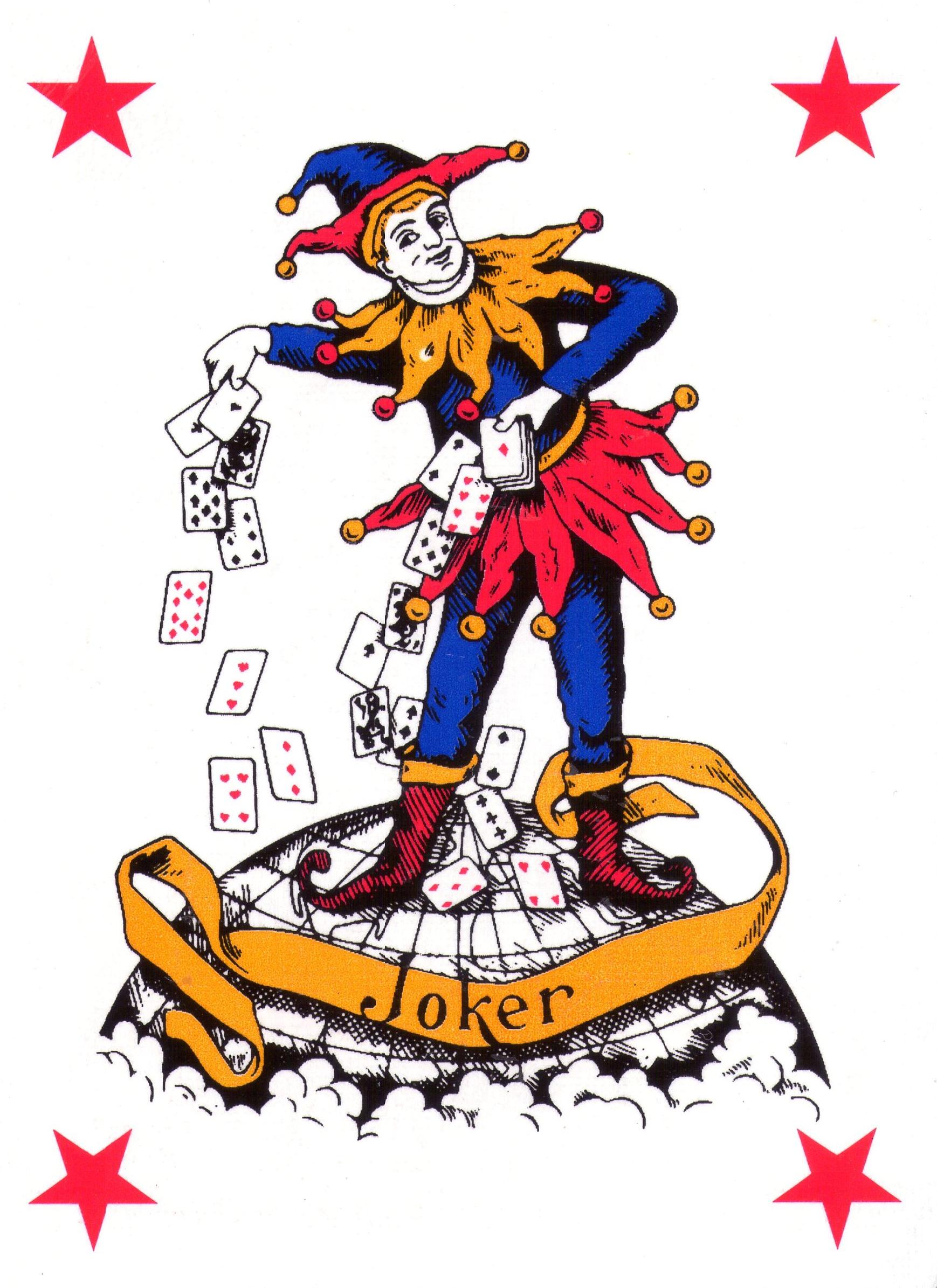
“You, my friend, are what they call a joker,” I told Shelley Macintosh. “A real joker.”

“A joker?” Shelley asked. “What’s a joker? Did you mean a jokester? Do you mean joker, as in the playing card, or the bad guy from Batman?”

“A joker,” I said, measuring her reaction to see if she was playing with me. “A joker. A person who jokes around a lot. I don’t know. Everyone says it. It’s a common phrase everyone uses it to describe a person who jokes around a lot. Are you messing with me? You’ve never heard of the term joker before?”

After some back and forth, we established the fact that Shelley never heard the word used in that context before. As incomprehensible as I considered it that a woman who was roughly my age, who grew up in the area I did with all the same colloquialisms, and watched the same shows growing up, never heard the word, I then wondered where I did. 

Etymologists trace the historical origins of words, but their professional focus remains on more formal and serious words. There is some less serious research into the history of vulgar vocabulary, but a term that is nestled somewhere in  between, like joker, doesn’t receive much focus from either party. Joker might not be a great example of a pejorative, as it doesn’t really belittle anyone, put anyone in their place, offend anyone, or hurt their feelings, but put in a certain context, “You’re a real joker, aren’t you?” it could be confrontational. Those words could be fighting words, but we’d have to frame them up with the right face to get that done. 

We know that the Ancient Egyptians had court jesters, that could be called jokers, to entertain their pharaohs dating back to the Fifth Dynasty, and the Romans employed them to provide comic relief for their leaders, but how did the term joker weave its way through the timeline to my mouth in the 20th Century?  

How does a word, any word, travel through time? Some are fascinated by this, as evidenced by those who choose professions in various professional language specialist arenas, but to those of us who choose more common professions it’s so boring we don’t want to devote any of the precious time we have left on Earth to it. In principle, it’s interesting to wonder how a word might travel from Ancient Greece to modern English, but the research is not as fascinating as readers might think. I’ve had friends drop words and phrases I found fascinating. “Where did you hear that word?” I wondered aloud thinking that that word was exclusive to the first person I heard use it. I did my research, and I found it personally fascinating to learn that some of these words and phrases predate me by hundreds to thousands of years. Fascinating, right? Wrong, people don’t go so far as to yawn in my face, say “who cares?” or drop a playful characterization of my bookishness on me, but they don’t find the history of words nearly as fascinating as I do. 

In my research, I found that a large number of the words and phrases we use every day derive most often from various stages of Latin, English, Ancient Greece, The Bible, and Shakespeare. Look up your favorite word, and you’ll find that most of the words and phrases you use every day are derived from one of those sources, and the reason we stress derived is that as these words travel through time they modify slightly in meaning, totally transform, and on some very rare occasions remain somewhat in tact, in spelling and meaning, for thousands of years.  

Most don’t call their peers out on their word choices in the manner Shelley did, because why would we? Unless it involves a swear word, or some unique way of expressing emotions, it’s just not that interesting to us. We also don’t call each other out on the origin of the more common words and phrases we use, because we operate on a certain, unspoken and conditional quid pro quo. “I’ll tell you what, I won’t call you out on these words and phrases you use,” we say without saying, “if you don’t call me out, because I don’t know anything about their origin either.” 

One important note, before we continue, is as Etymology.com points out, “etymologies are not definitions; they’re explanations of what words mean, what they they sounded 600 or 2,000 years ago, and how they’ve traveled through time. Etymology is a science that studies the history of a word. It is a subfield of linguistics, philology, and semiotics. Etymology also studies the word’s progressions from one language to another, how it changes from one language to another, its changes in form and meaning, and some semblance of its origins.” The best and most succinct definition of etymology is that it’s the history of a word. 

If this entire article is nothing more than retread for you, and you’re not only familiar but intimately knowledgeable about the general idea of etymologies, and if you have an unusual love of language and all of the manipulative power of a clever lexicon, my bet is someone, somewhere has already called you a nerd, a nincompoop, or a total nimrod.  

Nimrod: A slightly dim-witted individual, a dolt.

Etymology: There are more professional, professorial, and well-researched theories on the etymological origin of nimrod out there, and their tracings are all over the place, but we prefer the more childish, amateurish word-of-mouth theories that appeal to those who prefer Buggs Bunny to long-since deceased authors monkeying around with a term. The idea that one of our favorite Saturday morning cartoons had some influence on the language we share is just far more entertaining. 

The etymology of nimrod begins with The Great Nimrod (a name that can, apparently, only be mentioned with computer-enhanced reverb and some form of trumpet accompaniment). The Nimrod of Biblical lore was either the great-grandson of Noah (a man who built an ark), son of Cush, or Ham (depending on the source?), and the King of Shinar. Nimrod is also reputed to be the leader of the people who built the Tower of Babel in Shinar.  

Nimrod was considered “the first on earth to be a mighty man”. He was also considered one of the great hunters of his day and “a mighty hunter before the Lord”. Nimrod was such a mighty character in the book of Genesis 10:8–12 that there are some references that declare subjects of the kingdom of Assyria called it, “The Land of Nimrod” 1 Chronicles 1:10. 

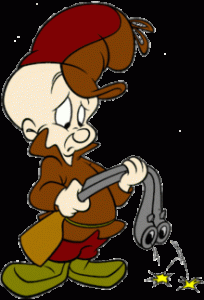
Having said all that, we could assume that most considered Nimrod, the man, the myth, the legend beyond reproach, but anyone who knows anything about Looney Tunes knows that only made him prime for a satirical representation. For them, the rich tradition and folklore surrounding Nimrod made him the perfect analogy for their fumbling, stumbling hunter, Elmer Fudd.

In a 1948 episode called What Makes Daffy Duck, the brilliant and underrated comedic actor Daffy Duck refers to Elmer Fudd as “my little Nimrod”. To show how much the writers loved the characterization, they did it again, in a 1951 episode entitled Rabbit Every Monday in which they had Buggs Bunny refer to Yosemite Sam as “The Little Nimrod”. 

A young child, who knows nothing of the King of Shinar, or the first mighty man of Earth, might hear this term and decide to use it against her brother, the next time he he does something foolish. Her erudite parents might overhear this and ask her if she realizes she’s calling her brother a mighty man. To clarify, they might tell the tale of the great Nimrod, and she might pause while soaking all this in. My guess is the next time her brother messes up, however, nimrod will be the first word out of her mouth, because there’s something uniquely satisfying about the sound of the word, and its unique power might derive from its uniqueness. Not many people place nimrod in their regular pejorative rotation, but when they do use it, it just feels deliciously degrading.

Chances are the daughter didn’t know where she heard the term nimrod, but everyone from my era knows that not only did we watch Looney Tunes a lot, but our local programmers ran the cartoon so often, showing so many reruns, that we could almost recite each short in real time, and we all know the conscious and subconscious power of repetition. 

The brilliance of these particular Looney Tunes’ shorts lies in the idea anytime a duck or a rabbit are confronted by a human, or a hunter, they should experience fear and intimidation. As animals at the the bottom of the food chain, they know that their lives are always on the line. The humor lies in their mockery of that principle, in general, and Elmer Fudd in particular, for his stature as a mighty hunter before the Lord. Thus, the writers of Looney Tunes almost single-handedly, redefined the term nimrod for an era and beyond as someone who has an unusual belief in oneself in principle, only to show he is actually so bad at it that we question his mental acuity. 

So, the next time someone attempts to belittle you with the pejorative nimrod, ask them if they’re referring to “The mighty hunter before the Lord,”, the King of Shinar, or Elmer Fudd. As much as we all loved Elmer Fudd growing up, regardless his foibles, we might not be insulted either way.

Dunce: A slow-witted or stupid person. A pejorative term that refers to one’s inability to learn. Generations ago, a student who failed to learn, or exhibited a lack of discipline was often forced to sit in a decidedly prominent corner of the room, wearing a dunce cap, or cone. Dunce was, at one time, one of the worst pejoratives one could call another.

Etymology: Once seen as one of the most brilliant philosophical theologians of his day, John Duns Scotus’ philosophies, and teachings, garnered such a substantial following that his followers called themselves Dunsmen, or Dunsers, after the theologian’s middle name. Unfortunate for the Subtle Doctor and his followers, the Renaissance happened. The Renaissance was a cultural movement that sought to render all of the ideas and achievements of classical antiquity obsolete. The Renaissance involved so many changes in so many fields that it evolved into a cultural movement that eventually rendered Scotus’ teachings obsolete by “modern” standards. Those who ascribed to the new theories of the Renaissance developed such loyalty to the “modern” ways of thinking that they derided anyone who refused to modernize. As one of the most prominent adherents to classical modes of thought, John Duns Scotus and his followers, were singled out for ridicule. As such, proponents of the Renaissance called anyone who refused to modernize to the cultural changes happening around them, Dunsers. As anyone who knows about the history of words and pejoratives knows, some words are either purposely or accidentally mispronounced or altered over time for a variety of reasons, and Dunsers became dunces.   

Nincompoop: A nincompoop is foolish, an idiot, a bonehead, or a dope. This word is decidedly out-dated, old-fashioned, and rarely used anymore. If you’ve ever had someone call you a nincompoop, chances are that person has been eligible for Social Security for at least ten years. It’s not a compliment, but in the pantheon of pejoratives, it is not a wounding insult either. If you ever decide to use the pejorative on someone, the backlash might prove greater than the intended insult. Some suggest that the more common pejorative ninny derived from nincompoop, because people felt weird saying the complete word nincompoop. Although ninny wields far more power than nincompoop, it should be used judiciously, as the backlash could be just as severe. Although most of us have never heard of these two pejoratives, and even fewer have experimented with them in a pejorative sense, we caution people who might use such terms in the hopes of achieving some sort of retro-feel, because neither of them sound right, and there’s just no way that nincompoop can achieve the desired effect.   

Etymology: Some suggest this word is derived from the Latin legal phrase non compos mentis “insane, mentally incompetent” (circa 1600). Others deny this, because the Latin phrase lacks the second “N”. They say that nincompoop was probably derived from Nicodemus, which was used in French for “a fool”. Still others, suggest that it was probably just an invented word at some point.

That’s it, the latter. There’s no solid evidence on the etymology of this one, and the only time I remember hearing nincompoop delivered as an insult is when my great-aunt dropped it on me after I did something stupid. She said it with obvious exclamation points all over her voice, and she made the meanest face she could think of, but all she got out of me was laughter. I don’t know if hearing the last syllable coupled with the mean face drained it of all effectiveness, but it obviously achieved the opposite affect.  

Dolt: 16th century, Old English. Derived from dull, or dol. Middle English word dullen, meaning “to dull, make or become dazed or stupid.”

The progression to modernity has led dolt to mean a person who lacks common sense or the intelligence necessary to make good decisions in life. A dolt is different than a fool, however, as The Content Authority points out, as a fool is often educated and/or wise enough to make quality decisions but continues to do otherwise.

Bedlam: A scene or state of wild uproar and confusion. An outbreak of crazed insanity, that is not a riot. “We went to the concert the other night. A couple fights broke out on the floor, and it evolved into absolute bedlam before the authorities to regain control.” The housing unit of the pejoratives of yesteryear.

Etymology: Bedlam is a colloquial pronunciation of Bethlehem. Bethlehem, as in the name of the Hospital of Saint Mary of Bethlehem. The hospital began as a priory, in 1247, changed to a hospital by 1402, and ultimately became a civic lunatic asylum by 1547, where it housed the insane. Most of the inmates, as they were called, were starved, shackled, and exhibited to the public in wild and frenzied states. Thus, bedlam became synonymous with frenzied, psychotic behavior. 

The proper name might be caught in transition in the title of John Davies’ 1617 publication of humorous poetry, “Wits bedlam —where is had, whipping-cheer, to cure the mad.”

The pejoratives on this list all have interesting, unusual, and noteworthy twists and turns throughout their history. Other pejoratives such as idiot, moron, imbecile and others are noteworthy not for their changes or meaning, but for their consistency through time. Some of these pejoratives existed in the B.C. (Before Christ) era. Think about that for just a second, before you yawn with fatigue, that pejorative you just called your sister was similar, if not the exact same word, a boy called his sister thousands of years ago in Ancient Greece. To my mind, the twists and turns and evolutions of words, through time, are just as interesting as the consistency of the pejoratives through thousands of years.