Turning the Other Cheek


“If someone strikes you, turn the other cheek,” is one of the most powerful, most ubiquitous quotes from Jesus of Nazareth. It has been quoted, paraphrased, and interpreted throughout my life, and for thousands of years prior to that. To say that the quote has been misinterpreted may be a misnomer, for as with all brilliant philosophical quotes of this nature, it’s open to subjective interpretation, relative to the person, time, and place. 

“What does it mean?” a young child asked his teacher. The teacher provided an answer that aligned with the interpretations of the day’s pacifist’s ideals. The child enjoyed that interpretation. He wanted peace. He wanted peace throughout the world, especially on the playground. He wanted to play the role of messenger for this interpretation to spread the word, but he knew his bullies. He knew that they were irrationally prone to violence in ways that a peacenik, like his teacher, either couldn’t or wouldn’t understand. He knew, as later crystallized in the movie The Dark Knight, “Some men just want to see things burn.” Asking bullies for peace, in such a manner, was simply unrealistic in the child’s world. 

The young child didn’t call his teacher out. He assumed his teacher knew more than he did, and he also didn’t want to be disrespectful. He was just frustrated that he didn’t think he could apply this answer to his situation. He thought she was smarter than him, and if she were in a similar situation, she would find a way to make it apply, but he couldn’t. He thought he wasn’t strong enough or confident enough. He also knew that providing her further detail of the situation, and the urgency he had for greater meaning, would result in a “If that continues, you come talk to me,” reply from the teacher. He didn’t want to hear that, because he knew that that would only result in more abuse at the hands of the bully, and scorn, and a possible ruination of his reputation. 

To add to his frustration, the child would see his teacher’s interpretation of the quote work on TV, and in the movies. He would read it in fairy tales and other books, but he knew that their solutions were all theoretical before he even knew what theoretical meant. Their theory was based on the idea that all kids were truly good kids, and that every bully was so reasonable they were open to reason. 

The young child took his dilemma to his mother, and his mother felt sorry for him. She offered him solutions, but as every boy knew most female advice doesn’t work on the playground. She knew it too, so she asked the father for advice, and the father said: “You walk up to him and punch him in the mouth!” The mother was aghast. She said, “He’s little. That kid’s probably twice his size.” The dad then muttered something about the rules of the jungle and said, “If you want to end it, you have to end it. If you don’t want to do that, don’t ask. Stay away from the kid … I don’t know.” 

Here, the young child stood at a crossroads in life. He was all alone in a defining moment, and he knew it. He favored the turn the other cheek philosophy for one reason: It would be less painful and less confrontational. Plus, in some ways, it appealed to the manner in which he thought the world should work. The world should be one that rejected violence. Violence never solved anything. That’s what they said on TV, in movies, and in all the fairy tales he had read throughout his life. Jesus said something along those lines, and so did Gandhi, but they didn’t say it where it mattered most in his world, and on the playground, in the jungle, as his dad put it.  

This kid tried everything at one point. He tried reasoning with the bully. He tried trading comments. He used every piece of advice he could gather, and at some point, it proved pointless.  

In the midst of these exchanges, the kid proved to be quick on his feet, intellectually, and he got the better of the bully. It was a shining moment for the boy, and he was proud, probably too proud. He wore his pride well, and contrary to the advice the kid sought, this infuriated the bully.  

His bully finally punched him, and it didn’t hurt as bad as the kid thought it would. The kid didn’t think at all, as a matter of fact, he struck back. Prior to this incident, he dreamed that when he finally struck the bully, it would be the haymaker heard throughout his world. It wasn’t. He wasn’t schooled in the art of fighting. He had never been in a fight before. His punch was ugly, sloppy, and ineffective.  

He heard the idea that most bullies don’t want to fight, they just want to bully, and the minute you stand up to them they’ll back down. They might even respect you more. They might pump an eyebrow at the subject of their ridicule and say, “Nice punch kid!” and walk away. That’s the way it worked in the ABC After School Specials, but that wasn’t the way it worked in his reality. 

The young child was called upon to engage in a protracted tussle that extended far beyond the single, exclamatory punch. It turned out to be this kid’s personal Karate Kid/Tom Cruise moment, except for the fact that he lost the fight. The bully, the kid knew, had two older brothers who loved to fight. They punched him all the time. The bully probably fought his brothers every day, and in the course of those daily bouts he developed a love of fighting.  

After his humiliating defeat, however, a funny thing happened. Even though the bully thoroughly enjoyed torturing the kid every day, and he obviously enjoyed beating on him in the bathroom that day would prove to be the last time the bully ever picked on him. The bully never said anything about the matter, and he never said anything regarding a new found respect for the kid. He just chose another antelope limping at the back of the pack.  

The kid expected some kind of renewed, progressive torture that centered around a comment such as, “How’s your face kid?” He expected some comments about the cuts on his face, the bruises, and a recount of that day’s activities. It came from all other quarters, but the bully did not join them. The abuse just ended without comment or further incidents.  

Did the kid learn that turn the other cheek was wrong, no, but he did learn one important lesson, you have to teach people how to treat you. 

The moment the kid shared with his bully might have been his Karate Kid/Tom Cruise moment, but it was not a Karate Kid/Tom Cruise movie. As if by baton, others took the bully’s lead, and the kid learned other rules of the jungle: confrontation is a constant, confrontation is relative, and confrontation is ever-changing. The kid had this notion that that one punch would be the punch heard ’round his world. He thought every other kid would hear of his exploits and realize you don’t mess around with him. He had this notion that once he faced down this, his greatest confrontation, he would be forever capable of handling future confrontations. It wasn’t true of course. Bolstered with confidence, he would face down some confrontations, but he would walk away from others. He would learn to regret those latter moments, for none of these confrontations ever ended until he dealt with them properly. All of the lessons learned from successes, and failures, would eventually culminate into an adult who could handle confrontations, but in his particular case, he never gained much by turning the other cheek 

The crucial point is that this child’s actions, and the lessons learned, are not a direct refutation of Jesus of Nazareth’s quote, but the interpretations and paraphrasing those teachers and intellectuals have spread in the centuries that followed. Another interpretation of this quote, that would’ve been quite helpful to this young man, is the following: 

“But I tell you, do not resist an evil person. If someone strikes you on the right cheek, turn to him the other also.” – Matthew 5:38-42 

“At the time of Jesus’ teachings, striking someone deemed to be of a lower class with the back of the hand was used to assert authority and dominance. If the persecuted person “turned the other cheek,” the discipliner was faced with a dilemma. The left hand was used for unclean purposes, so a back-hand strike on the opposite cheek would not be performed. The other alternative would be a slap with the open hand as a challenge or to punch the person, but this was seen as a statement of equality. Thus, they argue, by turning the other cheek the persecuted was in effect demanding equality.”{1} 

{1}http://answers.yahoo.com/question/index?qid=20071209121037AARdG0I 

Would You Eat Someone Somebody Cared About?


Would you eat something someone cared about? Would you eat something someone whispered to sweetly?

On an episode of the brilliant, hidden camera show on TruTV called Impractical Jokers, the comedian Salvatore (Sal) Vulcano assumed the role of a worker at the counter of a bakery. In the course of his duties at the bakery, in an episode, titled “Who Arted?”, Sal spoke to one of the pastries a customer ordered before placing it in that customer’s take home pastry box. The implied joke, in this transaction, was that Sal developed a familiar bond with these pastries that went beyond the usual, professional association a baker has with his creations.

“I’m going to give you to this lady now, and she’s going to eat you,” he whispered to the pastry. In response to the confection’s purported plea, Sal Vulcano added: “I’m sorry, this is just the way things are.”

In reaction to this display, the customer on the other side of the counter, decided that she did not want that particular pastry. She didn’t reveal anything about her decision making process, but it was obvious that she was uncomfortable with the idea of eating that particular pastry. Without saying a word, Sal selected another pastry, and he proceeded to speak to that one too. The woman interrupted him saying:

“I don’t want one that you’ve spoken to.”

At the conclusion of the segment, all four comedians provided comment on the segment, and they admitted that they wouldn’t eat food that someone has spoken to either. Why, was my first question. I have no idea why, all things being similar, a person would prefer a pastry that hasn’t been involved in communication. We can only speculate why, because the show did not interview the woman after the segment, or if they did they did not air it, and the four comedians don’t say why they would reject the pastry either. My guess is that the four comedians wanted to let this woman off the hook. 

freee-range-turkeyIn this space of philosophical confusion, I put the question to a friend. He said that his decision would be based on what the person said to the pastry.

“Okay, but what communication would you deem so unacceptable you wouldn’t eat it? It’s not something we see every day, I’ll grant you that. It might be weird, a little creepy, and I may join you in giving the man an odd look when he does it, but I would then sit and eat it without any uncomfortable feelings or guilt.”

The obvious answer is that Sal’s presentation animated the pastries in a manner that this customer found disconcerting. In her world, presumably, it had always been socially acceptable to eat pastries, and she wanted to return that world. She didn’t want the guilt associated with eating a product that had a friend, or that someone cared about, or at the very least she didn’t want to watch their interaction, or in any other way know about it. She was so uneasy with the association that she made a boldfaced demand that Sal give her another pastry, one that hasn’t been spoken to in any manner, and she did this without acknowledging the lunacy of such a demand.

Proper analysis of the segment is almost impossible, since we don’t know what was going on in this customer’s head, but it appears to be an excellent portrayal, albeit incidental, of an individual who over thinks matters. She appears to be an individual who cares about what others think of her. She appears to be the type who makes informed, compassionate decisions about her dietary preferences. When she watches documentaries on food preparation, we can guess that they affect her dietary choices

An author wrote a book that awarded “light counts” to each being. In this book, the author suggested that some animals are more aware of their existence than another, and that that awareness could be said to be a non-religious soul. Humans, he wrote, are the barometer, as they are the most aware of their existence. In the next tier of his “consciousness cone” he lists the dog, the cat, and various other animals that he considers more aware of their existence. The human is at the top, and the atom is at the bottom. The purpose of his piece, the reader soon learns, is to inform the reader what the author considers acceptable to eat. A plant-based diet is entirely acceptable, for instance, to eat plants, vegetables, and fruit, because they have very few light counts, and little to no soul.

Some have suggested that talking to cats and dogs animates them in a manner that improves their life. Others have suggested that talking to plants can improve their condition. Does this affect the way we care for them, is it all a myth, or are we, in essence, transferring some of our light count to them? What if a human decides to transfer some of their light count to a piece of pastry? Is that possible? Is it possible that this woman believes this on some tangential level, and she prefers to eat a pastry with no light counts attached to them?  

If this woman knows about this multi-tiered philosophy, or thinks about it anyway, we can presume that prior to her interaction with Sal, she was always comfortable eating pastries, because she assumed they had no cognition or awareness of their own being. She is a woman who makes informed dietary choices based on similar compassionate bullet points. Thus, when Sal assigned the pastries such characteristics, it made her so uncomfortable that she asked him to give her one without communicating with it.   

Who would eat something that someone cares so much about? A cad would. Someone who doesn’t care about a person, place, or thing would. They might even worry that doing so could reflect poorly on them if they eat the pastry without a second thought. You’re saying you would eat such a thing without guilt? What kind of person are you? How do we sell ourselves to our peers in the aftermath?

Would we eat a small child’s beloved dog? Most would say no, to quote Pulp Fiction’s Jules Winnfield, “A dog’s got personality. Personality goes a long way.” If we agree with that sentiment, what are our parameters? Would we have any problems eating a small child’s beloved turkey? What if we met that turkey, and that turkey displayed some personality? What if that turkey displayed a little spunk that we couldn’t help but appreciate? What if that turkey befriended another turkey in a manner we found it endearing? What if the bird displayed an act of kindness that left an impression on us? What if it allowed us to fondle its wattle? What if that turkey had a name? How could anyone we eat a living being with a name? What kind of people are we? Would we rather eat a turkey that we’ve never met, that some individual in a factory farm slaughtered and packaged for us? We are informed, compassionate beings who don’t want to see anyone, any animal, or anything suffer, and when an individual does something that suggests they’ve bonded with something we plan on eating, do we consider how much pain that food might go through when we gnash it with our teeth, do we want to avoid thinking about that, and does it challenge what we think we know about light counts, the soul, and overall cognition. 

The different between a quality baker and a top-notch one is the care they put into it. Some top-notch state that they put love into the confections they create. They care about their creations in the manner any other artist might. Sal’s joke might have been a spoof on the love and care some bakers put into their creations, and he did not expect the reaction this woman gave. 

Once that reaction was out there, however, I would’ve been obsessed with drilling down to the woman’s philosophy behind rejecting the pastries to which Sal spoke. I would ask her if Sal redefined her philosophical stance on eating pastries in all the ways described above. If she said yes in any way, I would ask her why she considered another pastry acceptable. If he redefined it for her, wouldn’t that definition apply to all pastries? If she said no to this preposterous notion, I would ask her if she thought Sal transferred some of his soul, some of his light count to the particular pastry that she rejected. What’s the difference? Where is the line? It’s a pastry you say, and a pastry does not have the recognition of its own life in the manner a turkey does. 

If a person has difficulty eating a pastry that someone spoke to lovingly, they may be a little too obsessed with their presentation. They may be as susceptible to commercialization and suggestion as those people they claim to hate. They may take the line, you are what you eat, a little too literally. They may consult websites that contain modern intellectuals who detail who we are by what we eat. They might refrain from eating a pasty, because of what it says about them if they do. They might be so afraid of what is says about them that they cannot sleep at night after taking a bite out of something that Sal appeared to love. Do they think too much, do they have too much time on your hands, and are they a result of the problem or part of it. If this woman was a spectator of the joke, as opposed to the subject of it, would she think less of the person who could eat such a confection without guilt?

How do we make our decisions on what not to eat? Does a vegetarian, or a vegan, make their dietary choices based entirely on a love of animals? Some of the vegetarians and vegans I’ve encountered initially say something along the lines of, “I don’t care for the texture of meat.” Or, they tell a story regarding the moment they made their decision and how they experienced a moment that shaped that decision in some way. Some others will detail for us the health related benefits they’ve explored. All but the very few will openly address anything political about their decision, and even fewer will state that they did it to achieve some level of cultural superiority by becoming a vegetarian or vegan. The minute we deign to put a piece of meat before our mouth, we will learn about their politics on the issue. We will also learn of their feelings of superiority over meat eaters before we learn their last name. If neither of these are the case, or if my experiences could be called anecdotal, why would a seemingly reasonable woman reject a pastry based solely on the fact that a Sal whispered sweet nothings to it before placing it in a pastry box?

If Sal had a Snickers bar perform the Can Can to animate that candy bar in a realistic, non-comedic manner would that woman, a vegan, or a vegetarian, be able to then eat that Snickers bar without regret or guilt? I realize that Snickers bars and pastries are relatively inanimate, but with proper, serious characterization would it be possible to animate them in such a fashion that a person, with susceptibilities to messaging, could be made to feel guilty about eating them? If that was successful, could an enterprising young documentarian launch a well-funded campaign, steeped in political pressure, to lead a segment of the population into avoiding eating Snickers candy bars based on videos about the inhumane manufacturing process involved in the creation and packaging of Snickers bars? With the proper documentarian displaying the inhumane process through which the peanuts and caramel are adjoined with the nougat in a final process that involves what could be called a suffocation technique employed by the layer of chocolate placed over the top, would it be possible to substantiate this cause to a point where a person would not only stop eating Snickers but denigrate those that do and anyone who supports Big Candy to be in line with evil? It’s not only possible, in my humble opinion, the seeds of it were on display in the inadvertent brilliance of this comic sketch on this episode of Impractical Jokers.

Consider the Lobster: A Review


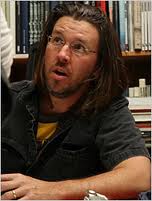
Consider the Lobster starts out as most brilliant, pop psychology books do from an angle we may have never considered before. Since this book is a collection of divergent essays, it should be reviewed chapter by chapter and essay by essay. The first essay Big Red Son involves comedic talk of the porn industry. To be fair to the author, David Foster Wallace, this essay was first written in 1998, and some may conclude it unfair to declare it dated, but I didn’t read this until 2012, so I am forced to say that this material has been mined for all its worth at the time of my reading. (See Chuck Palahniuk’s Snuff.) The second chapter Some Remarks on Kafka’s funniness… whets the appetite. The general theme of this chapter “that humor is not very sophisticated today” has been mined by those of us obsessed with pop culture, but Wallace does get some points for listing the specific problems with the current sense of humor that doesn’t understand the sophisticated and subtle humor of author Franz Kafka. He says: “Kafka’s humor has almost none of the particular forms and codes of contemporary US amusement.” This launches the Wallace into a detailed list of complaints about contemporary humor brought to the homes of TV watchers.

David Foster Wallace

“Kafka’s humor has almost none of the particular forms and codes of contemporary U.S. amusement. There’s no recursive wordplay or verbal stunt-pilotry, little in the way of wisecracks or mordant lampoon. There is no body-function humor, nor sexual entendre, nor stylized attempts to rebel by offending convention. No slapstick with banana peels or rogue adenoids. There are none of the ba-bing ba-bang reversals of modern sitcoms; nor are there precocious children or profane grandparents or cynically insurgent coworkers. Perhaps most alien of all, Kafka’s authority figures are never just hollow buffoons to be ridiculed, but they are always absurd and scary and sad all at once.”

The point that Wallace attempts to make is that his students don’t understand Kafka’s absurdist wit, because they are more accustomed to being spoon-fed their entertainment. They’re not accustomed to having to think through something as complex as Kafka’s central joke:

“That the horrific struggle to establish a human self-results in a self whose humanity is inseparable from that horrific struggle. That our endless and impossible journey toward home is in fact our home.”

The chapter is worth reading not for its “When I was a kid, we had to walk ten miles to school” style of complaining about the youth of the day, but the illustrative manner in which Wallace complains about humor in general. A complaint this author laments may not be generational.

The fourth chapter may be the selling point for this book. In it, Wallace describes a war that has been occurring in the English language for a couple generations now. Wallace calls it a Usage War. The Usage War describes how one side, the more traditional side, AKA the prescriptive side, pleads for a return to traditional English. He talks of the other side, the more modern side that describes itself as a more scientific study of the language, updating our usage on a more inclusive plane. The latter, called the descriptive side, calls for more political correctness in its language. It calls for a more comprehensive list of words and usage that incorporates styles of language such as Ebonics and words that are more commonly used, such as “irregardless”. Previous to this reading, I heard that tired phrase “everything is political”, but I had no idea that that phrase could be extended to dictionaries. The author’s reporting on this subject is excellent. It is informative without being biased, and it is subjective with enough objectivity to present both viewpoints in a manner that allows you to decide which side is more conducive to progress in our language.

Wallace is not as unbiased in his John McCain chapter however. He makes sure, in the opening portions of an article –that was paid for by the unabashedly liberal periodical Rolling Stone— that his colleagues know that he is not a political animal (i.e. he is stridently liberal). He lets them know he voted for Bill Bradley. Other than the requisite need a writer of a Rolling Stone article feels to display their liberal bona fides, it’s not clear why Wallace included his opinion in a piece that purports to cover an election campaign. If I were granted the honor of being paid to cover a Nancy Pelosi campaign, for example, I would not begin this piece with a couple of paragraphs describing how I feel about her politics, but such is the state of journalism in America today…particularly in the halls of the unabashedly liberal Rolling Stone.

To have such an article begin with a political screed that is different than mine, would normally turn me off, but I’ve grown used to it. (I know, I know, there is no bias.) The real turn off occurs after the reader wades through the partisan name-calling, to the languid dissertation on the minutiae involved on a campaign bus. If you’re ever aching to know what goes on in a political campaign, I mean really aching to know, this is the chapter for you. I would say that most are curious about the machinations that occur behind the scenes, but I would say that most of those same people would have their curiosity tested by Wallace’s treatment here. He wrote that the editors at Rolling Stone edited the piece. He wrote that he always wanted to provide his loyal readers a director’s cut. After reading through the first twenty pages of this chapter, I was mentally screaming for that editor to step in and assist me through the piece. It’s not that his writing is poor, of course, nor that it’s entirely without merit, but you REALLY have to be one who aching to know the inner workings of a campaign. You have to want to know bathroom difficulties —such as keeping a bathroom door closed on a tour bus— you have to want to know what reporters eat, why they eat it, and when. You have to want your minutiae wrapped up in minutiae, until your eyes bleed with detail. I have a cardinal rule about never skipping passages. I live with the notion that I can learn something from just about everything an author I deem worthy writes, and I deem Wallace to be a quality writer with an adept and varying intellect, but I had to break my cardinal rule with this chapter. It was a painful slog.

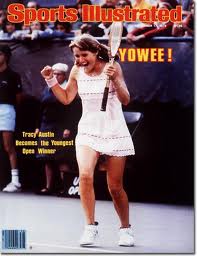
As for the chapter on Tracy Austin, Wallace laments the fact that championship level athletes aren’t capable of achieving a degree of articulation that he wants when he purchases one of their autobiographies. Tracy Austin, for those who don’t know, was a championship level tennis player. Wallace purchased her autobiography hoping that, as an adult long since removed from the game of tennis, Austin would be able to elucidate the heart of a champion. He hoped that Austin would be able to describe for us what went through her mind at the moment when she achieved the pinnacle of her career, and he wanted to know what she thought about the accident that led to her premature retirement. He wasn’t just disappointed, he writes, in the manner that he is disappointed with sideline interviews that are loaded with “we give it 110%, one game at a time, and we rise and fall as a team” style clichés. He sums up his disappointment with the following:

“It may well be that we spectators, who are not divinely gifted as athletes, are the only ones able truly to see, articulate, and animate the experience of the gift we are denied. And that those who receive and act out the gift of athletic genius must (out of necessity) be blind and dumb about it—and not because blindness and dumbness are the price of the gift, but because they are its essence.”

imagesCAY91IXCWe talk about athletic accomplishment. They do it. We analyze and speculate about their prowess. They exhibit prowess. We concentrate on the arena of the mind, and their concentration lies in physical prowess. We, non-athlete types, think about the things they do, we fantasize about them, and they do them. We think about how glorious it would be to sink a championship winning basket over Bryon Russell, Michael Jordan just does it. We wonder what Michael might do if he missed that shot. Michael didn’t think about that. We think about, and write about, that incredibly perfect and physically impossible baseline shot of Tracy Austin just made. She just does it. We see the replays of their exploits endlessly repeated on Sportscenter, and we hear almost as many different analyses of them. We then think about these plays from all these varied angles that are provided, and we project ourselves onto that platform. We don’t think about all the rigorous hours a Jordan and Austin spent preparing for that moment, we simply think about that moment, and what it would mean to us to have conquered such a moment. So, when one of these athletes steps away from that stage to offer us a few words about that moment and those few words center around the “I just did it” meme, we are profoundly disappointed. To paraphrase Yoda, “They don’t think, they do, or they do not.” They use the force granted to them though spending a greater percentage of their lives in gyms, on tennis courts, and in weight rooms. They concentrate on muscle memory to prevent the mind from interfering with their eventual completion of the act. If we, non-athlete types, were in a similar situation, we might think about the significance of the history of the game, the profundity of the moment, and how this moment might affect the rest of our lives. We might also think about how many people are watching us, if Bryon is a better athlete than we are, and if he will block our shot. We think about what our peers are going to say about this play after the game, and we become so immersed in the enormity of the moment that we probably think too much to make the shot. The point is that they’ve made that shot so many times, in so many different ways, in practice and in games, that they simply rely on muscle memory to make the championship shot. They may think about that shot, as long as it takes them to project it, but once they step on the court, they go on auto-pilot and complete the mission. They would probably love to give Hemingway-esque descriptions of their game, that satisfy us all, because they know it might land them an announcer job of some sort, but there is a reason Joe Montana, Michael Jordan, and so many other top-shelf athletes that broadcasters would’ve paid millions for never ended up with a job in a booth. There’s a reason Larry Bird and Magic Johnson were two of the greatest of all time, but they weren’t great coaches. There’s also a reason, and a number of reasons why they could accomplish what we never could.

I used to wonder what announcers were talking about when they said, “He’s too young to understand what this means.” This kid, as you call him, has been playing this game his whole life for this game, and he’s lived the life of the championship level athlete, which means sacrificing the norms of daily life that his peers knew, and he’s done all that for “this” moment. What do you mean he doesn’t know what it means? It dawned on me, after a couple struggles with it, that this kid doesn’t know what this moment would mean to the announcer … and, subsequently, those of us at home watching. In that post-game interview, then, we’re looking for something, some little nugget with which we can identify. When we get phrases from the cliché vault, we’re so disappointed that they didn’t put more effort into helping us identify with their glory, or our sense of their glory. We’re frustrated that they couldn’t reach us on our level. Yet, as Wallace states, it is the essence of a championship level athlete to be “blind and dumb” during the moments that define them, and we all know this to one degree or another. We’ve all seen these championship level athletes being interviewed about their individual moments thousands of times, so why do we continue to be so frustrated with them, and does this continued sense of frustration begin to say more about them or us?