The Mythology of You


“Who are you? Who Who? Who Who?” –Pete Townshend of The Who.

Has anyone ever told you a lie? Have you ever told a lie? When we lie, most of us don’t tell whoppers. We fib. We exaggerate. We tell meaningless lies that don’t harm anyone, but lies are lies, and they have a way of piling up. When the lies of other begin to pile up, we feel compelled to confront them and set the record straight, and we gather other friends to corroborate the truth, as we know it. We then receive a look from the liar that informs us that they’re shocked at the details we’ve gathered. Our purpose was to confront the liar after their lying reached a point where we could no longer tolerate it, but at some point it dawned on us that they didn’t intend to lie, and this is made all the more evident when the confrontation is over, and they continue to lie, fib, and exaggerate.

Why do we lie is a question I asked myself, especially when some of the lies are so obvious and easy to refute. When someone tells me an obvious lie, I feel trapped. Should I out them on the spot, thus informing them that they shouldn’t try this anymore, or will I feel worse than they should for telling the lie. Some lie so often that I can’t help but think they’re trying to make me feel guilty for knowing the truth.

My personal research, conducted through extensive reading on this fascinating subject, coupled with revelatory, related experiences, has led me to believe that most liars are not intentionally deceiving their audience. They may have been exaggerating a truth to cast themselves in the best light possible, but their intent was to create a better result for themselves. Their intent was not to deceive anyone. At some point, between the event in question and their exaggerated account of what happened , they created a truth that they believed. What’s the difference? I didn’t think there was one, until I began delving into the psychology of “misremembering” that some psychologists equate to the problems inherent in eyewitness testimony.

We all seek comfort in a world of truth, but we also manufacture a world of delusions for greater comfort. The difference between the two causes equal confusion for both parties.

Most of us don’t care for our narrow definition of reality, so we’ve come up with a number of definitions that suit us better. This is our mythology, and if we have enough belief in it, we might be able to sell it to others so often that we begin to believe it too.

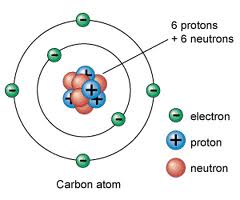
The Protons and Neutrons 

To make this complex algorithm understandable, let’s put the discussion to a visual display, the model of the atom. The protons and the neutrons, in this model represent the reality of who we are. The protons and the neutrons contain the positive and negative experiences we’ve had and the “in the moment” reactions to those experiences. This is a very limited, and limiting, definition of who we are, and we’re often so unhappy with our reality that we would rather not focus on it. We’ve all made mistakes, and those mistakes have shaped us, but most of us maintain a certain degree of mental health by focusing on the orbital region that exists outside the nucleus.

The Electrons 

In the orbital regions that exist outside the nucleus are the mythologies we have of who we are. This orbital region contains electrons that are the ideas we have about who we are and who we could be. The electrons are the illusions and delusions we have of ourselves, and the potential we believe we have to accomplish great things. Every electron in this region perpetuates this mythology. The lies we tell ourselves are not whoppers, for we would have as much trouble buying into those lies as anyone else. The lies we tell ourselves often have a semblance of truth to them, and we connect the dots after that. The lies can be negative, if we’re seeking sympathy, but they’re often positive electrons that we use to shape how others view us, and how we hope others view us.

The lies we tell ourselves may be unconscious measures employed to stave off the depression that we might fall into if we allowed the protons and neutrons of our reality to overwhelm us. The unconscious measures we use can be interpretations of misdeeds that we employ to maintain the idea that we are good people regardless what we’ve done.

Walk through any penitentiary, and you’ll hear a number of qualifiers and excuses for the things these men and women have done. Are the inmates lying in the truest sense of the word? Ninety percent of them may be, but that is the obvious answer. The less than obvious answer goes to what we might consider a more comprehensive explanation. If the state convicted this criminal with an airtight case, why would they continue to lie to the person who can recite the numerous elements of their conviction? They might want you to believe they’re not bad people, but it’s far more important to them that they convince themselves of their virtues. If they are unable to do so, their guilt might lead them to think that their life is not worth living.

Among the most pervasive electrons we have, floating around in our orbital region, contain the beliefs we have in our own potential. There’s nothing wrong with believing we have potential, of course, until that belief supersedes our desire to do anything about it. For some, the belief in their potential is the reason they wake up in the morning with a smile, ready to greet a new day, but acting on that belief might result in failure and a comprehensive diminishment of one’s belief in themselves. Acting on that belief may also reveal to others that we’re not as capable as we once thought. To thwart that we enjoy reveling in the mythology we create for ourselves.

The Cheaters 

Most of us are honest with whom we are, but we do cheat. When we go out on a first date, or a business luncheon, we may tip a service industry worker a little more than we would have if we were alone. It’s a white lie, that doesn’t harm anyone, and it may bolster our perception, but is it possible that we’re making an investment in our mythology for others to see, and if we do it often enough, it becomes true on a certain level. If we lay that tip on the table, to paraphrase Babe Ruth, it ain’t lying. We done it. It’s only a lie, if we don’t believe it. If we believe it, it can be an investment in our mythology.

Our culture forces celebrities to engage in this lie whenever they go out. Those who stand to prosper from the mythologies of the celebrity encourage them to lay a huge tip on a table, but no one stands to prosper more from a positive mythology than the celebrity does, so their tips are often extravagant enough to make an impression. An inadequate tip could do damage to the mythology they’ve worked so hard to create after all, and if the mythology is real, who’s to say the perception isn’t?

Some of us begin to cheat by building mythologies so often that we can no longer see through the cloud we’ve created, and when this happens we may need professional psychiatric, or psychological, help when something goes wrong. We’ve cheated so often, and created so many mythologies, that we can’t achieve enough objectivity to see our way through a problem. We need to pay someone to let us talk about our past. We need someone cold-hearted to stop us in the middle of our tale and say that some of the details we’ve added are not true. Their cold-hearted nature might shock us, but if we strive for mental health, we’ll drop the façade and work from the new premise. We’ll recognize that those around us have enabled us to live certain lies, because they don’t want to be so cold-hearted. We’ll also recognize that these professionals are doing their best to help us achieve some sort of clarification about who we are and why we do what we do. We can’t work through this cloud ourselves anymore, because we’ve loaded our minds with such positive clutter that we can’t see through to the truth of our existence anymore. We thought we were somewhat happy, yet we were also very unhappy, and we were left with a feeling that life isn’t as fulfilling as it was when we thought we had it all figured out.

Publicity and Charity 

“I live every day trying to convince others of the lies I tell them,” a friend of mine said in jest. One of the primary lies we tell ourselves is that we’re wonderful people, and we’ll take any and every opportunity to prove it. A wonderful person is someone who does things for the sole purpose of attaining a wonderful perception, as opposed to one who actually does wonderful things. A wonderful person might perform certain actions for the publicity it gains them, but truly wonderful people do what they do to help others.

“You’re doing this for yourself,” a sick man, lying on a deathbed, says to a female that is caressing his hands and whispering sweet nothings to him. This crass and heartless man should enjoy the comfort the woman provides, but the greater question is was he calling her out for being a wonderful person as opposed to one who did a wonderful thing? What will she do in the moments that follow his death? Will she tell people about it, or was this a truly selfless act by the woman. Who cares, some would say, as long as she did it.

We have wonderful memories of our school days. We remember running and playing on the playground. We remember some of the studying we did, and some of the questions we answered in class, but for the most part, we choose to remember the fun we had, and some of the aspects that led to our current maturity in life. Those weren’t the only events that occurred in our lives, of course. If we dig back, with professional assistance, we may learn that those days weren’t as great as we remember them, but our selective memory has made us who we are today, so why do we bother with all of those awful memories?

“I had a wonderful childhood, which is tough because it’s hard to adjust to a miserable adulthood.” –Larry David

As we age, we experience the lot life has to offer, and after a while we begin to think we have a decent grasp on who we are based on those experiences. When we select those character-defining moments in our lives, however, which memories are we selecting? Are we selecting protons and neutrons, or electron memories, and what do those selections end up saying about us? Most studies state that for our mental well-being, we often choose positive life experiences to define who we are. If we stumble upon a negative experience, as noted, we find a way to rewrite that memory in a manner to make us appear better than we might have otherwise been in that particular situation. We’ll also qualify that negative experience in a manner that excuses us from the worst part of our involvement in those instances. The memory selection, coupled with harmless delusions that accompany them, form the mythology of who we are, but what if, to paraphrase my friend, we live every day trying to convince others of the lies we tell them that we end up convincing ourselves of these lies, and what if this effort results in us becoming better people? Would it matter if we based this eventuality on a big lie, or a series of meaningless, little delusions? I believe wholeheartedly in the philosophical axiom “Know Thyself”, and I pride myself on being as brutally honest with myself as I can possibly be, but I know that doesn’t work for everyone. The natural reaction one could have to those that live a life diametrically opposed to that effort is, “Who cares how or why they got there they’re living a lie.” That might be true in some cases, relative to the scale of the lies, but what kind of person would they be if they strove to live a more honest life?

Do the Apophenia


Apophenia is the spontaneous perception of connections and meaningfulness of unrelated phenomena –The term was coined by K. Conrad in 1958 (Brugger)

We do the apophenia when we see the Virgin Mary in the grill patterns of a grilled cheese, when we see a baked turkey in a cloud formation, and in the unmistakable manner in which a river breaks. “Hey, that’s Bob Hope!” we inform friends that never see our apophenia. 

ChessusFor some of us, the physical connections we make are neat coincidences worthy of note, for others it could be a sign, but for others these connections take on a spiritual meaning. These connections are also made in science, math, the manner in which we study the universe, and the way we study one another.

One psychoanalyst sees child abuse behind every emotional problem their patients have. He may have seen one substantial and irrefutable case that proved to have profoundly affected one patient’s life, and it prejudiced that psychoanalyst in every case that followed. Another man of science achieves conclusions that back up the idea of penis envy in females when his females test subjects fail to return the pencils he gave them for the test. Another sees the old adage “don’t step on a crack or you’ll break your mother’s back” as a more substantial reaction to the fears of the act of intercourse, as the stepping on a crack represents the penis entering the vagina. Science, and the drama of daily life, has humans spotting patterns to explain why we do what we do on a daily basis. Some of the times, the patterns exist. Some of the times they don’t, but if we don’t have patterns to our daily life we fear we may go crazy in the chaos of our studies of who we are.

Seeking a Progressive Intellect

Humans are born with a brain that questions the world around them. When we enter our teens, we question everything we’ve been taught to that point in our lives. Our rock stars, movies, and books teach us something different about life, and they’re usually better looking, and cooler, than our parents, so we believe the rock stars. Our parents are idiots. We then enter our thirties, and we begin to then question our teen rebellion. We begin to think our parents may have had a point about certain things in life, even if we would never give them credit for it. We have experienced a little bit of life to this point, and everything the rock stars and celebrities told us about life has fallen apart. Our rock stars may know a lot about coordinating music, but most of their casual asides about life have proven to be short-sighted. Our favorite rock stars become the idiots. When we enter our forties, and experience even more in life, we finally reach a point where we have our own ideas about life that is an amalgamation of rock star advice, parental advice, and personal experience. We now think our parents were idiots again, but we now have confirmation that we were idiots for ever believing that rock stars knew anything about real life. The one consistent aspect of this consistent questioning is that we question everything. We need explanations. It’s elemental to our DNA.

We’ve even gone so far, at various points in our lives, to question the existence of God. Writer Norman Mailer once asked, “If God didn’t want us to question His existence, why did He give us a progressive intellect?” If He wanted ultimate authority, without dissent, why didn’t He just give us the brain of a chimpanzee and be done with it? If God were insulted to the point of damning us, in the afterlife, every time we questioned Him, why did He give us a degree of brainpower that exists somewhere between His and the chimpanzee’s?

He didn’t give us a brain that could comprehend the enormity of the universe He created, but He did give us a brain that wanted to somehow and in some way. He gave us a brain that would try to break it down into bite-sized morsels for easier digestion. He gave us a brain that sought out patterns and tendencies in the universe and developed mathematical and scientific hypotheses based on those readings. He gave us a brain that could develop findings that helped us understand one small tidbit of the universe with the hope that it would eventually lead to a representative pattern of the manner in which the entire universe operates. He gave us brains that will make mistakes, and learn from those mistakes, and laugh at those mistakes, but he gave us a brain that progressively seeks greater answers based on the small windows He gave us. The mistakes that we make are mistakes of apophenia, or connecting unrelated data in a meaningful manner, but in many ways we can’t help making such mistakes. It’s the way of our minds. Some have suggested that God may have made our brains the way He did for His own entertainment, and others have innumerable reasons that they believe, but no matter what the truth is, it’s hard to imagine that He would be insulted or aggrieved by us using the gift He gave us to its fullest extent.

Studying the Patterns in Life

We study the patterns of our politicians to try to understand why they act the way they do, and we study voting patterns to see how their rhetoric is affecting and influencing us. Employers study patterns to try to discover a manner in which they can make their employees more productive. Employees study patterns in their work to attempt to become better employees. Apophenia will enter into these studies, but we will correct those mistakes in the hope of eventually achieving a sound, representative pattern of the way all of our universes work.

We would love to have a comprehensive pattern for understanding the ways of humanity, but that would be as impossible as achieving a comprehensive pattern of the universe. So, we judge humanity based on the patterns we see, and some of it’s anecdotal, and some of it’s wrong, but we can’t help it, it’s the way our minds work.

The difference between the two studies is when one makes an incorrect, or incomplete, assessment regarding the manner in which the universe operates, he is then allowed to input the new data and correct the assessment. When one makes an incorrect, or incomplete, assessment of humanity, he is considered so wrong that he is eventually discredited. All of us read these assessments with the belief that they do not apply to us, so the assessments are therefore incorrect. We are all outliers in every study, because we’re all individuals, and the idea that the study may be based on general rules means nothing to us. It’s just wrong, and it needs to be corrected… Even if it does, in some manner, apply to us in ways we either can’t, or won’t, admit.

These studies do apply to our friends, however, and it pleases us to recognize their patterns in the studies. It gives us a window into an understanding for how they work. We expect them to be shocked when we spot their patterns, or even complimented by the fact that we have paid such attention to them. More often than not, however, they are insulted. They are insulted, because they live with the belief that they are random creatures that live lives that are so complicated that they cannot be figured out through a random sampling of their otherwise simple brethren. Those of us who study these patterns only do so, because we are generally curious and observant individuals that make the most of our progressive intellect, but before we get righteous and indignant we are forced to admit that we don’t think these studies apply to us either.

Our friends always tell us we are wrong, or these studies are wrong about them, and some of the times we are wrong. Some of the times, we read patterns incorrectly. Some of the times, we do the apophenia. What do we do then? Do we simply alter our perceived patterns accordingly, or do we buy into the idea that there may be a lot more randomness occurring than we originally believed. Most people abhor patterns when they’re informed of theirs. They often feel like they’re being calling them simple when another points out how predictable they are. Anyone that has engaged in such conversations has found that these reactions are simple and predictable.

Most people aren’t as complicated as they want us to believe. Yet, some of the greatest joys we may experience in life occurs when we are immersed in patterns. Knowing what’s expected of us, and fulfilling that task provides us the joy of accomplishment. Living inside that box that our employers are trying to get us to think outside, gives us a degree of comfort we don’t recognize until we venture beyond the border. Most people prefer routine even if it leads to some degree of boredom. Chaos and unpredictability often leads to confusion and unhappiness, but most people don’t want to be the one that points this out to them.

The endless loop of life’s patterns and trends may say more about us than the idea of a random world. We want to know why we loop, when we loop, and if looping in patterns and trends is productive or destructive. The study of this may tell us why we’re at the upper end of the animal kingdom, for while animals may seek patterns in their mating and hunting rituals, they are far more satisfied with the randomness of the world than we are. A lion may spot patterns in a herd of antelope, but he is not studying them to learn greater truths about the antelope. He is simply trying to locate the easiest and safest mode to attack them and satisfy his hunger. Humans seek patterns for greater understanding, and while it’s a noble pursuit we often do the apophenia in our pursuit of the truth.

A Study of Apophenia

In statistics, apophenia is labeled a Type I error, seeing patterns where no patterns exist. Mistakes are made in statistics when a statistician engages in apophenia. Of course patterns exist in statistics, and studying patterns is the purpose of the study of statistics, but a statistician has to guard themselves from proclaiming an answer is reached before apophenia has been weeded out. They don’t want to leap to a conclusion, in other words, before they have thoroughly tested these patterns against their own perceptions.

It is highly probable that the apparent significance of many unusual experiences and phenomena are due to apophenia, e.g., ghosts and hauntings, numerology, the Bible code, anomalous cognition, most forms of divination, the prophecies of Nostradamus, remote viewing, and a host of other paranormal and supernatural experiences and phenomena.{1}

Steve Jobs talked about apophenia as it applies to the random function of the iPod:

“As humans, when we come across random clusters we naturally superimpose a pattern. We instinctively project an order on the chaos. It’s part of our psychological make-up. For example, when the iPod first came out and people started to use the shuffle feature, which plays songs in a random order, many people complained that it didn’t work. They said that too often songs from the same album, or the same artist, came up one after another. Yet that’s what randomness does – it creates counter-intuitively dense clusters.

“We’re making it (the shuffle feature) less random to make it feel more random,” Apple CEO Steve Jobs confessed after Apple was forced to change the feature on the iPod in response to complaints from users. Jobs, and company, changed the programming behind the feature. In other words, each new song now has to be significantly different from what came before, so as to conform to our expectation of randomness.{2}

Customers required that Apple programmers build a feature into the iPod that would make it less random, so we were more comfortable with the idea that it fit our definition of random better. Regardless if there was a pattern to the order in which one song followed another, we spotted one, and we complained. To diffuse the complaints, Apple programmers built in a function that would cause a Metallica song to always follow an Elton John song, so we would see significant contrast in the random and thereby stop searching for the pattern. Say what you want about Apple being uncompromising in their pursuit of perfection with their products, but they are as susceptible to customer complaints as any other company when they receive them in volume.

Feeling Special

SpecialHumans have a need to feel special, but the patterns in day-to-day life normally don’t give one such a feeling. Day-to-day life is usually mundane, pedantic, and exceedingly boring, until you try dying. Dying, or experiencing a near-death experience, can revitalize life. It can give one that special feeling that allows them to appreciate the changing of the leaves, as if for the first time. Seeing a loved one die can wake us through comparative analysis, because we never view these moments as coincidental or happenstance. They’re seminal moments peppered with purpose: “I just talked to Ernie the other day, and he spoke about the death of Peter Sellers … It’s almost like he knew.” Or, “I was just on 158th and Main Street the other day. I went through that very cross walk one week before Ernie did. That could’ve been me.” This gives us a special feeling, an idea that there is a reason we’re alive, and that we must have a purpose or that would be us lying in that casket.

We also believe that special forces have a hand in our romantic entanglements. “I just happened to go to a bar that I never go to, and I just happened to go to the bar to order a drink at the exact moment she did. Fate had to have played a hand there. There’s no other explanation for it.”

The idea that true randomness occurs is impossible for us to grasp. It seems impossible to us that our company just happened to assign Mark and Brenda sit by each other three years ago. Now that they’re married, everyone at the wedding acknowledges that there had to be special forces at work. For some of us, this is simply theoretical fun. For others, it is an undeniable truth. There are no smiles when they say it. They consider such patterns almost creepy in the manner they take place. This is a connection of random coincidences that seem simply too numerous and too coincidental to be anything other than special forces at work.

“You mean to tell me that Tom just happened to be standing in the middle of the street. He said he never just stands in the middle of the street, but he just happened to be there at the exact moment our precious Judy was when a cement truck “just happened” to topple over and almost kill her, until Tom, who just happened to be there, just happened to reach out and grab her. You mean to tell me that all of those circumstances just happened that way? That there were no special forces at work?”

Do the apophenia if it makes you feel better, we skeptics say, but you’re never going to convince us that it was anything more than an incredible series of coincidences that occurred to save your young girl’s life. We’ll be extremely happy for you, and we may even cry with happiness (we’re not heartless), but we will probably be one of the few outliers that doesn’t buy into the fact that Judy is special, and she was saved by special forces that have a special purpose for her in life.

Special Forces at Work

How many moments in our lives have we appreciated all that life has to offer? How many times, after a life-altering circumstance, have the mundane routines and patterns that once zapped our energy, attained value with a revitalized mindset? We can’t even remember that person that used to wake without remembering the morning. We love life now, and that freight train, called the mundane, no longer has the power it once did. We think about how much time was wasted waiting for the minutes to click by, until we could go home. We think about all those hours spent waiting for the weekend, until the weekend arrived and we were just as bored at home, on the weekend, as we were in the workplace. When that life-altering circumstance came around and shook our foundation, we felt like there were no more coincidences and random occurrences. We realize that we walked around in a stupor through life, in the same manner we used to grow hypnotized driving familiar paths only to get there without remembering the drive. Our eyes are now open to a purpose we can never explain or achieve. We just know that we do things differently now. One would expect that a survivor of this sort would be more welcome to the random life has to offer, but more often than not it probably just changes the pattern temporarily.

{1} http://www.skepdic.com/apophenia.html

{2} http://smorgasborddesign.wordpress.com/2012/01/27/seduction-persuasion/


You say What I Think, not what you May Randomly Do


universeSome of the times our world, our universe, makes no sense at all.  It’s too random, and the random is impossible to grasp.  It can be overwhelming when an astronomer welcomes us to their understanding of the universe, but if we take out all the anecdotal information the well-informed astronomer details for us, it can all make sense.  There are patterns out there, everywhere, just waiting to be discovered.  The universe is built on mathematical equations.  It is built on gravitational pulls and weight and near absolute order.  Our political system is also built in much the same manner, save for the order, but if we pull out the random thoughts and words of individual politicians, we can understand our political system a little better, if we understand the political platforms and political action committees that drive these individual politicians.  Everyone we speak with has motivations and tendencies, and if we study human psychology long enough we can use our past experience to understand future behaviors of people from a specific race, a specific region of the world, and a religious affiliation.  If we study these psychological patterns long enough, and hard enough, we may be able to read each other’s minds.  We can know what we we’re all thinking and we can assign that mode of thought to the future actions of any speaker.  We can figure the world out better if we can just assign it the proper mathematical/psychological equation and pattern.  Or can we?

“I think we have cockroaches,” a friend of mine said to a black person in regard to their workplace.

“Why are you telling me this?” the black person asks. “Is it because I’m black?  You think I know something more about cockroaches because I’m black?  Or do you think that, based on the fact that I’m black, that I should be the one to clean it up?”

“Did I tell her that, because I’m a racist?” this friend asked me.  She told me that she hadn’t told anyone else in the firehouse about the cockroaches, and she had no idea why she singled the black woman out about it.  My friend was worried.  She and the black woman had been good friends prior to the comment, but her comment put a strain on their relationship.  My friend worried that they would never be good friends again based on her “racist” comments.

We all think we know what’s going on in another person’s head.  We think that past experience dictates what current motivations are.  We can know what everyone is thinking based upon our random sampling of the world.  Is there a margin of error in our thinking, of course, but margins of error usually rank no higher than five percent in any political poll taken, so studying human behavior in our daily lives can’t be much different.  What if we are wrong though?  What if we have no idea what other people are thinking?  Would we rather make changes in the way we approach people, or does the satisfaction we gain from our understanding of our random sampling provide us such a degree of control over the random that we need it to remain sane?

In his book You are Not so Smart, Gerald McRaney cites a psychology experiment in which one person taps out a song on a desktop, and the listener tries to figure out the song they’re tapping.  The tapper is not allowed to hum or signal the listener in anyway.  They are to pick out a song that everyone involved is familiar with, say The National Anthem, and they are to tap it over and over, until the listener gets it.  In the course of this experiment, some tappers got frustrated with their listeners, and they tapped slower and slower, until their listeners got so frustrated with the process they quit.  Were the listeners just plain stupid the tappers being to wonder.  How could they not get The National fricking Anthem?  Are they unpatriotic, do they simply not know The National Anthem when they hear it, or are they just not paying enough attention?  The truth was that these listeners simply didn’t know what the tappers were thinking.  We all attempt to communicate to one another in a way that is crystal clear to us, but our listeners don’t get it.  It’s frustrating, but it clues us into the fact that most people don’t know what we’re thinking.

Have you ever tried giving directions to a person that is totally unfamiliar with your town?  As a hotel front desk clerk, I learned very quickly how difficult it can be to give someone directions.  I was born and raised in this town I describe, and I know it like the back of my hand, but I learned very quickly that this was more of a disadvantage than an advantage when giving directions to a person who has never been to my town.  After a few unsuccessful and very frustrating trial runs, I learned to try to put myself in their frame of mind and give directions from that point.  You don’t know how often you give instructions and directions from your point of view, until you’ve done it hundreds of times, and prepared yourself for incoming calls or questions from people totally unfamiliar with it.  What helped me progress to this point, more than anything else, was the refrain these people would give when asking for directions: “Now, you have to treat me like a total idiot here.”  These were usually frequent travelers that said this, and they had presumably been given directions hundreds of times.  They knew the mentality I was going to have to have if I was going to properly guide them to the hotel.  They knew how their mind worked, and they taught me how to deal with them in that context.

A wife tells a husband she knows exactly what he was thinking when he said something that she regarded as a transgression.  The husband knows that it was not what he meant at all, but he relents when he considers that she might know him better than he knows himself.  An online computer company gives their employees sensitivity training on personal emails sent to other employees.  Their primary warning: “Your recipient does not know what’s going on in your head.  Every personal email that you send can be read ten different ways by ten different people based on their individual, life experiences.”

Conservatives mount a defense against hate-crime legislation based on the fact that we can’t know what was going on in the assailant’s mind.  We can know that the assailant killed the victim based on the evidence put forth, but proving that they did it with a specific motivation is almost impossible to prove in most cases.  As much as we intelligent beings hate to admit it, we know very little about what goes on in other human minds, and what we don’t know we make up by assigning them our thoughts.

We see thought patterns and speech patterns everywhere we go and in every person we encounter.  When someone fails to follow our pattern, we give them our pattern and predict what they’re going to say based on that.  It gives us pleasure to know their pattern, and it gives us some semblance of control over the powerlessness we otherwise feel in the face of the random.

We look up into a night-time sky, and in it we initially see what appears to be a random mess of little lights.  It’s overwhelming.  It’s too random.  We shut down.  Why try understanding anything that has no order to it?  When it’s pointed out to us that there is a pattern to the little lights, we find pleasure in spotting the big dipper and a little dipper.  We suddenly feel the power of categorization and organization at our fingertips, and it is no longer so overwhelming.

When we see a child act in a disorderly fashion, we provide them our knowledge of what we consider the orderly system.  One of the reasons we do this is so that their world is not so confusing and random to them.  We remember how miserable we were when the world made no sense to us, so we attempt to lessen their misery by presenting them with some of the facts of we learned.  When our child proceeds to do something random that might cause them harm, we don’t understand this.  “Why would you do that?” we ask genuinely confused by their regression into the random.  “I’ve already taught you this,” we say with exhausted frustration.  We’ve known this child for so long, and we’ve taught them our order so many times that we’re exhausted with effort.  The answer is that it’s not necessarily their progress that we thought we witnessed, it’s ours.  We accidentally assigned them our order and our thought patterns in their presumed progress, and we thought they grasped it.

Why would a child purposefully harm themselves when they know better based on what we’ve taught them?  The answer is that children don’t understand the ramifications of their actions.  They don’t understand our order yet.  They’ve heard it a number of times, but they don’t understand it on the level we do.  Some studies have suggested that humans don’t fully come to grips with the ramifications of their actions, until they’re roughly eighteen years of age.  Impossible, we think.  When we were eighteen, we had a full grasp on the consequences of our actions.  If we think that, we’re usually assigning our current brains to our young brains.  It seems impossible, I know, but science is suggesting that we assign our current brains to our past brains all the time to help us make sense of who we are today.  We usually think, based upon our current mindsets, that we’ve been pretty consistent throughout our lives.  In truth, we’ve made huge leaps of progress in our understanding of the world and our progress in it, but we accidentally expect children to make the same leaps we thought our young brains made when we were their age.  When they go back and do that random thing again, we view them as being purposefully stubborn and rebellious to what we’ve already taught them.

When we see a male penguin have sexual relations with another male penguin, we assign our motivations to them.  That penguin must be gay.  If a human male has sex with another human male, they’re gay, and one plus one always equals two.  We know their motivations, like we know our own motivations.  The question of whether or not the idea of gay exists in the penguin world is a concept that doesn’t compute to us.  The very idea that penguins would have random sex with other penguins just to have sex, regardless of the other party’s gender, is just too foreign a concept for us to deal with.  The order that we require extends downward to our children and outward to the other beings in the animal kingdom.  It all has to make sense to us on a certain level.  There is no random.

We assign characteristics and thought patterns to groups, because it helps us make some sense of the variations in their psychology, and it helps us make sense of our own psychology.  We have an “OH!” moment when we think we spot a pattern.  We have a “That makes sense now!” moment, and we feel better about the order of the universe and our understanding of it, regardless if this pattern truly exists or not.

A person randomly comes up to us and says that there are cockroaches in the firehouse.  Why did they pick us, in such a seemingly random fashion?  If we’re a woman, and they’re a man, it makes sense to us that we should be insulted because past experience with the men of our lives dictates that they want us to clean it up.  We know the patterns of most men, and we use it to claim offense.  Even if they meant no offense, and they didn’t intend for us to clean up anything, they know the patterns of most men too, and they know that they’re a man, so they think that they may have been thinking that on some level they’re not aware of.  If we’re black and they’re white, we’ve been down this road before.  We know that they think blacks are more familiar with cockroaches, based on the stereotype that blacks used to live with cockroaches.  Otherwise, it would make no sense to us that someone would just walk up to us and say such a random thing, so we categorize and organize them in our brain and project our thoughts into theirs.  What doesn’t factor into our equation is that some of the times the world is random, because the random is impossible to grasp.