The Music That Chuck Klosterman Kind of, Sort of, Used to Dislike


To promote Chuck Klosterman’s new book I Wear the Black HatEntertainment Weekly (EW) provided their readers a sample chapter. There is no title to this EW installment, but one would think EW, and Klosterman, would go with some form of a modern meme that attracts young people. “Music Chuck Hates,” or “I Hate the Eagles, by Chuck Klosterman,” or some title that would attract young people in the manner the Facebook page has with the title: “I ——- Love Science”.

KlostermanReading through this sample chapter, however, the reader begins to believe that these titles would not work, as Klosterman is not as passionate, or as emotional, about the music in this chapter as such a title would suggest. A better title might be: “The Music I used to hate, but I’ve grown, and I’m a lot more thoughtful now, and I’ve realized that the people making this music aren’t so bad. And I may run into these people, or need them for an interview, so I am at least going to be more cryptic with my critiques.” The book has a theme regarding villains, so Klosterman presumably dismisses various bands as villains to give himself a reason to discuss them in a book about villains. Even with that proviso, Klosterman should’ve exhibited a more commanding tone when discussing his likes and dislikes in music.

In the paragraphs provided, Klosterman discusses the band, the Eagles. Klosterman claims that he hated them as much as anyone else for most of his life, and he says that this was based on the fact that they were/are limousine liberals, but he says that his tastes changed in 2003, when he was forced to re-listen to one of the Eagles songs:

“I listened to “Take It Easy” and I thought about its lyrical content, and I came to a mostly positive — but highly uncomfortable — realization about who I was and how I thought about art.”
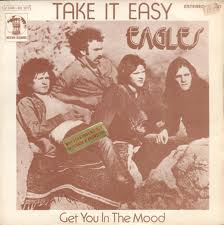
Take it easyYou gained a greater appreciation of art, or how you thought about art, from the lyrical content of a song by the Eagles? The Eagles? Lyrical content? Take it Easy? Chuck? What are you talking about? No one would say that the pop genre is without artistic merit. They’re out there, but they’re in the minority, and the Eagles are not in that minority. The Eagles didn’t even write Take it Easy, as Chuck Klosterman admits. Glenn Frey wrote one line of the song, and Jackson Browne wrote the rest of it.

In the midst of this article, there are some “Klostermans”. Klostermans, as I define them, involve Chuck Klosterman’s kitschy breakdown of the lyrics of a song as if they were profound literature, a writing tool he’s used so often in his career, and so well, that the act of doing so should be trademarked “a Klosterman”. For the most part, these breakdowns are hilarious, but when he does it with Take it Easy, it feels like a violation of the term. It almost feels as if he’s asking us to re-examine a song that we’ve all heard far too many times … in the bits and pieces we’ve heard on classic rock radio before we were able to change the channel. There are also moments in life when a person is not able to change the channel or in any other way skip a song, such as in a doctor’s waiting room, when it’s not in a person’s best interests to run screaming out of a room the moment after Take it Easy begins.

We don’t want to hear this song again, Chuck. We don’t care that a guy is having trouble juggling five women. No matter why or how. Let it die for criminys’ sakes. We enjoy it when Chuck analyzes old Billy Joel lyrics, that’s fun and kitschy, but the Eagles? Artistic? Chuck?

Throughout the course of the Eagles career, they’ve created safe, boring, liberal, touchy-feely music that our most simple-minded friends shush us over, and close their eyes, and have a spiritual moment, based on the fact that this particular song was playing on the radio during a seminal moment in their lives. For these people, however, music is largely background noise, until those songs reach the rarefied air of being on the radio so often that they can’t help but become monumental and a slice of Americana. This, in turn, leads the people that sang that song to believe that they are so monumental, and such a slice of Americana that they can wave a magic wand on stage and get audience members to live through their more important (their stress) lives.

The Eagles could be the greatest American band, if we base that scale on popularity, or sales, but suggesting that there is anything artistic about this simple-minded, clichéd, and ubiquitous music is a statement best left to the sycophantic staff of Rolling Stone magazine. Most of us cannot listen to an Eagles song, much less Take it Easy, without feeling a little dumber, more common, and less in touch with who we are as music aficionados, and it’s going to take more than a clever “Klosterman” to get me listening to it again.

On Bruce Springsteen, Klosterman writes:

“I just thought he was so fake, which is the most backward possible reason for hating Bruce Springsteen.

“Old people who read Newsweek believed Bruce was somehow different from everyone else making music, and his willingness to perpetuate that fallacy made me view his integrity as profoundly compromised. It seemed like the difference between acting in a play and lying in real life.

“Any time I meet someone who thinks Springsteen is overrated or artificial, I find myself thinking, this person is extra real. I immediately respect that person more. And yet I do sincerely believe Springsteen is (on balance) a great guy. I don’t hate him at all. So why am I still retroactively trolling him? It’s just something I can’t get over.”

When Klosterman states that hating Springsteen for being fake is, “the most backward possible reason for hating Bruce Springsteen”, this reader wonders if Klosterman is attempting to qualify the opinions that follow. Either that or Mr. Klosterman is attempting to dispel what he may believe to be a consensus on Mr. Springsteen. If that is the consensus, this reader didn’t find anything in the Springsteen section to dispel it. Klosterman does write that he believes Bruce is “(on balance) a great guy”, but isn’t that what fake people are … on balance? I have no idea if Bruce Springsteen is actually fake, and I don’t care enough to put as much thought into it as Chuck Klosterman has. If Springsteen is fake, an observer could say that he hits all of the bullet points. He seems like “a great guy (on balance)”. He gives us the formula he knows we want, to remain in our favor, then he goes on to live the life he wants to live, and no one calls him out for what could be hypocrisy. While it’s difficult to prove, or disprove, one’s authenticity, Chuck Klosterman writing, “I sincerely believe he is a great guy” doesn’t cut it for this reader. We readers don’t care what you think of him personally, Chuck, unless you can substantiate it in some manner.

Does it really matter if we think a musician is fake? Do we think Bob Dylan is fake? No one cares, least of all (it seems) Bob Dylan. Bruce Springsteen does care, or at least he appears to care. Bruce has built a musical empire around the idea that he’s real “extra real”. I co-opt that term from Klosterman, but Klosterman does not write the words “extra real” in the pejorative sense I did, and he does not attach the term to Bruce. Yet, we could attach the term “extra real” to the “generic-yet-kinetic” clothing Bruce Springsteen wears. Would we deem Springsteen authentic if he chose to sing his unionized, small town lyrics in a made-to-measure, custom-fitted Frank Sinatra suit with wide lapels? Springsteen is so big, because he’s managed (artificially?) to remain so small, and that’s what people love about him. Those of us who don’t think Bruce is “extra real”, think Bruce is overrated, and we see through the “great guy” image of the man singing about small town, unionized America, to the idea that once one strips away all the “extra real” layers of Bruce Springsteen, his music is not artistically complex or by any measure diverse. He just puts on “amazing” shows, and few break down how they are amazing.

Klosterman then examines the point of Springsteen being authentic in comparison to Mötley Crüe, when he writes:

“The difference was that Mötley Crüe did not pretend they were real (or at least not in a convincing enough manner). Vince Neil never led me to believe that any element about who he pretended to be was supposed to serve any purpose beyond “the act of being the singer in Mötley Crüe.””

Klosterman nails this point, but he backtracks it in an “aw shucks” manner that suggests he may have been too hard on Springsteen throughout his life writing that “Bruce is a great guy”, and that he “doesn’t hate him”, and that “it’s something he can’t get over”.

Anytime a person has beliefs they can’t get over, they probably have them because they know that there is a fundamental truth to them that they can’t get beyond now that they’re old and so many people are telling them that they’re wrong. I realize that, as Chuck climbs the ladder in corporate magazines, and newspapers, he’s entered a sphere of existence where he’s torn between the readers that put him where he is, and the editors that put a governor on his former “No one gets out of here alive” method of critique, but those of us who read this particular piece in EW were a little disappointed by the apparent need Chuck Klosterman felt to politically tight rope his way through genuine critique. Chuck Klosterman’s previous writings were what separated him from those rock journalists who were afraid to write anything negative about Springsteen, Clapton, Tom Petty, or any of the sacred cows of rock that rock journalists seem forbidden by their editors to write anything negative about. It could also be that I’ve exaggerated Klosterman’s previous writings in my own mind, and that he was never as daring as I considered him, but it seems to me that he was never this cautious either.

On Van Halen, Klosterman writes that he hated Van Halen (or as we called them “Van Hagar”) soon after David Lee Roth and Van Halen parted ways. Chuck then says that he had the same feelings for Mötley Crüe after they replaced Vince Neil.

“Within any group conflict, my loyalties inevitably rest with whichever person is most obviously wrong,” Chuck writes.

It’s a humorous assessment of Klosterman’s musical fandom, but I believe his loyalties are more superficial than that. Chuck and I were about thirteen and sixteen respectively, when the Van Halen split occurred, and neither of us knew much about music, but we knew their lead singers. I may have known the names of Nicki Sixx, Tommy Lee, Mick Mars, the Van Halens, and Michael Anthony, as I was a big fan, but David Lee Roth and Vince Neil were the bands as far as I was concerned. They were the front men, and they were the face of the band in public perception.

A true musician will inform a listener that the front men are the least vital components of the music, and the guitarist is the second least important when compared to the vital back beat of the bassist and the drummer, but in the land of public perception, it’s the exact opposite. Therefore, when the groups separated from these two front men, those of us in public perception land considered the band done. Chuck can try to lay groundwork that suggests that the loyalties of his teenage mind were more complex than that, but down deep, I think he knows that the music of these bands became karaoke after the groups replaced their charismatic lead singers. The bands became a group of guys trying to hold onto a franchise that they struggled so hard to create, and they wanted a few more years added to the legacy before they called it a day. The music of these bands lost their nihilism, their signature, and their “silly and fun arena rock” persona after their lead singers left. They became Pat Boone’s “In a Metal Mood”. They became a bunch of guys trying to play what the youngsters liked. They became a: “You guys gotta keep it together” paycheck their manager promised them after informing them how marketable the name of their band was, and how they would never achieve that kind of plateau again in any other incarnation.

The albums created, post carnage, Mötley Crüe and Van Hagar’s 5150 may have been the greatest albums anyone has ever created, but those of us in public perception land barely noticed, and more importantly didn’t care, when they came out. Those groups were over as far as we were concerned.

ACDCKlosterman does not cover the music of AC/DC, because this was a hate column, and he presumably never hated AC/DC, but their music was some of the most consequential music of our era, and it would be music that I would eventually come to hate.

I didn’t hate AC/DC at first, but I didn’t love them either. Their music was never “my” music in the manner music becomes “my music” to a teenager, but I did have some appreciation for what they did early on when the “cool kids” in my neighborhood introduced me to them. (I knew of their music to this point, in other words, but we had never been properly introduced.)

The album, Back in Black, was my formal introduction to AC/DC, and it blew me away. I did not know that other bands (bands other than Kiss) could make fearless music. The first song I heard was Back in Black, and from its intro on, I knew this was fearless music that my parents, most females, and chart makers would not appreciate. (I probably didn’t think of charts in the truest sense of the word, at that point, but I knew I wouldn’t hear AC/DC on my local, top 40-radio station.)

I also loved the album cover. It was black, nothing but black. I also loved the title, and the band’s name. As a Kiss fan, I thought that every band was required to have brilliant visuals on the cover. I found Back in Black’s lack of visuals brilliantly simplistic.

When I first heard Back in Black, I thought that I now had one other band that I could trust not to make a ballad. (I was still embittered over Kiss’s foray into ballads with the song Beth, but I had learned to forgive them by simply lifting the record player’s arm up over that misstep.) I thought I discovered the second greatest band in the land, in AC/DC, especially when this friend rolled out the other AC/DC album he owned: Dirty Deeds Done Dirt Cheap. I heard that album’s title song, and the balls song, Big Balls, and I swooned in a pre-teen male form of a swoon, looking for a way to catalog his machismo.

AC/DC had a way of singing lyrics, a way that had my adolescent stamp of approval that fit the music and nothing more. There were no self-indulgent, symbolic lyrics. Their lyrics were simple and in your face that fit the music in a manner, I would later term arena rock. The problem with arena rock, and the reason I came to loathe AC/DC, is the lack of variety. As I stated earlier, I never wanted AC/DC, Kiss, or any of the bands I listened to, to go soft, but every album after Black in Black sounded almost exactly like Back in Black. I never felt the need to purchase another AC/DC album, and I came to loathe those who did.

As I wrote earlier, Chuck Klosterman should trademark his kitschy method of dissecting lyrics, as if they were profound literature. He does this so well, and so often, however, that one can’t help but think some part of Chuck Klosterman believes that his favorite lyrics form profound, artistic statements. I’ve always considered lyric writing one of the most overrated art forms. They appeal to us on a certain level, I would argue, because of the musical background that accompanies them. If one were able to remove the music from their mind, and read most lyrics on a blank page, I would argue, we would see that most lyrics do not have the literary merit necessary for the profound literature moniker.

Most lyrics involve double-entendres and cryptic messages regarding how the casual use of controlled substances should be considered kind of neato! I never understood why so many people felt compelled to tell others that they have ingested drugs, and I really had no overwhelming desire to do it, so the descriptions of these cryptic messages always bored me a little.

Don’t get me wrong, I enjoy it when musicians attempt to speak the language of their demographic by mixing in the occasional curse word. I enjoy the general idea of messing with the mainstream, but I was unmoved when a teacher told me that John Lennon was communicating greater messages in his songs than I had realized in my casual listening experiences. I always thought Lennon (along with the rest of the rock community) was most likely a vacant individual who was trying to sound smarter than he really was by using clever lyrics. I’ve always thought lyrics should fit with the music, nothing more and nothing less. It should never be an arena for the college thesis that most lyricists never wrote, because they weren’t intelligent enough to write, but they were clever enough, or cleverly brilliant enough, to make you think they were within the convenient limits of a song.

REMOn R.E.M. Klosterman writes:

“I didn’t relate to the kind of person who related to R.E.M. and I didn’t like textured, nonheavy songs that made me feel like some dour weirdo was telling me I was living my life wrong. Over the next twenty years, R.E.M. would become one of my favorite bands of all time, which means a) the sixteen-year-old version of me would have hated the thirty-six-year-old version of me, and b) I probably was living my life wrong.”

Klosterman nails my feelings on R.E.M. almost word for word, except for that last line. The last line bothers me, because (I would later learn) that’s pretty much what the worldview of the songs of R.E.M. were all about. They were about telling the listener that they were living their life wrong. Those that question such an assessment need only read an interview with Michael Stipe. His answers contain the rantings of an obnoxious, self-involved narcissist. The reader will find that this narcissist does say narcissistic things in all the “right” narcissist ways however.

In one of these interviews, Stipe described Rod Stewart as “icky”. Not kidding he said: “Ick! Ick!!” Now, I’m not sure if Stipe knows Rod Stewart on a personal level, and his judgmental attitudes are based on personal experiences, but I’m guessing that this very personal condemnation does not adhere to what Stipe calls a beautiful refrain ‘Judge not, lest ye be judged’. An observer, hearing this condemnation of Rod Stewart could find Stipe’s supposed adherence to this beautiful refrain a hollow claim.

Stipe also deems those who espouse opposing points of view unacceptable, evil, and presumably icky. He would probably also deem those that consider his rants to be “from an obnoxious, self-involved narcissist” icky. The fact that Stipe may not be as informed as he pretends to be, has never mattered to those interviewing him, however, because, again, all of his icky rants are icky in the ways the journalist has presumably considered non-icky.

If Stipe is going to judge another person, in a public forum, then we can judge his judgment, if we listen to his beautiful refrain. As with most venial sins of this nature, Stipe judges Stewart to leave the reader of the interview, the impression that he, by comparison, is a wonderful guy. He wants the reader to think he has the correct views on all the right subjects, and he lives by the “mean people suck” bumper sticker philosophy that ostensibly declares the driver to be a wonderful. I may be alone in this assessment, but I tend to find such social Darwinist thinking to be icky.

We, music fans, shouldn’t kill the messenger for the message, however, and Stipe and company (R.E.M.) did make some beautiful music. Klosterman should not condemn the music of the Eagles based solely on their politics; Rolling Stone should not condemn Ted Nugent for his views; and we should not condemn R.E.M. or Springsteen for their views. We should just listen to their music with the idea that most musicians don’t know what they’re talking about, but they cannot keep quiet in their quest for a “more consequential” title than that musician guy that prances about on stage. The one thing I have taken from all of the interviews I have read from rock musicians over the years, in my quest to learn what drives them, is that if I want to continue enjoying their music. I should probably just stop reading such interviews.


The History of Bloodletting by Mark Twain


“The change from reptile to bird was not as tremendous, it just took longer.” –Mark Twain on bloodletting

In 1890, the satirist Mark Twain published an essay called A Majestic Literary Fossil. In it he detailed “public reverence for old ideas and hostility to new ones” as it pertained to a medical procedure called bloodletting. Bloodletting was a medical practice that began in the age of antiquity, in Egypt. The logic behind the practice, then spread to the Greeks and Romans, the Arabs and Asians, and eventually throughout Europe during the Middle Ages and the Renaissance, and it remained atop prevailing wisdom for the next 3,000 years, until studies, performed in the 19th century showed that bloodletting could have harmful effects. Twain’s A Majestic Literary Fossil, details the life of those trapped in what we could call is one of historys first medical findings, findings that the most brilliant minds of medicine theorized could cure what ailed us.

The theory behind bloodletting can be condensed in one succinct sentence: “A body’s “humors” (fluids) have to be in proper balance to sustain health.” That was the initial, old world translation. A modern translation would be that bloodletting involved the withdrawal of blood from a patient to prevent or cure illness or disease. That’s pretty much it, all of the theories that followed either supported, or contributed to that theory. Although Galen of Pergamon made some important discoveries regarding blood, he also contributed to this theory with the belief that blood “was created and eventually used up.” Galen did not know that blood circulated in the manner we do today, and as a result, he believed that some blood could stagnate in the extremities and cause ill health. Thus, he believed that the vagaries inherent in humoral balance were the basis for health and illness. He believed that blood was the dominant humor and the one in most need of control. In order to perpetuate this balance of the humors, a physician would have to either remove excess, or stagnant, blood from the patient, or give them an emetic to induce vomiting, or a diuretic to induce urination. A more modern interpretation of the theory, with less jargon, is that they believed there was “bad blood” and “good blood”. Bad blood caused various ailments, and it had to be drained periodically, or proactively, to signal to the body to start creating good blood, or fresh blood. When the body encountered ailments, their theory suggested, it was because the blood hadn’t been let out sufficiently, or proactively, and reactive bloodletting measures were required to address the ailment sufficiently.   

We can all laugh at the “brilliant minds” of medicine who developed and enhanced these theories now, Mark Twain included, for believing that bloodletting was ahead of its time as a medical marvel, and a cure for what ails you, in those first 3,000 years of modern medicine. Twain believed it too, however, for much of his life, because he was captive to his era, and a man of letters as opposed to medicine. It was only when the modern medical minds of his era corrected the theories behind bloodletting that Twain saw the light, and began mocking the miracle minds of medicine for taking so long to modernize. 

Twain joined hands with those who helped his era see the light on bloodletting, and that’s when he lamented that “The change from reptile to bird was not as tremendous [as the change from bloodletting], it just took longer.” Yet, we might mock Twain’s 1890 definition of “modern medicine” 100 plus years hence, as much as he mocked the archaic practices of his past, and how many future readers will mock our definition 100 plus years from now? Will they be laughing at us for our prolific use of antibiotics to cure so much of what ails us? Will they be looking back at our use of chemotherapy as an archaic treatment of cancer? Are these the best of times in medical knowledge and technology, or will future readers consider our advancements in medicine as laughable as we do those in Twain’s time did with archaic idea of bloodletting as a cure-all?

***

Twain’s essay focuses much of its scorn on the bloodletting theories of the prominent physician, surgeon, and philosopher Galen of Pergamon from Rome (circa 129-216 A.D.). Historians considered Galen the father of Humorism, or bloodletting, and he based his theories on dissections of monkeys.

Twain writes that Galen would’ve been welcomed into his father’s home, but that Galen might have been left waiting, because “our family doctor didn’t allow blood to accumulate in the system.” [Author’s Note: Writings from the era detail that optimum use of bloodletting’s preventative measures required that a proactive doctor bleed his patients at least once a month.] Twain then added, with some spite for Galen and his theories on bloodletting, “Whereas, if Galen should appear among us today [in the era after bloodletting], he could not stand anybody’s watch; he would inspire no awe; he would be told he was a back number, and it would surprise him to see that that fact counted against him, instead of in his favor. He wouldn’t know our medicines; he wouldn’t know our practice; and the first time he tried to introduce his own, we would hang him.”

The commentary provided in this essay focuses on what Twain knew in his modern age (circa 1890), versus what they thought they knew yesteryear. It focuses some scorn, some objective looks, and some hilarity on the prevailing wisdom of previous eras. In their “modern era” of medicine, they saw how ridiculous collective wisdom could be, when viewed in the reflective “glare of the open day”. The essay details, without actually stating it, how much deference we offer doctors, their theories, and authority figures in general. The essay also focuses on how scientific theory can appear groundbreaking and miraculous in one era, until the “knowledge of the moderns” reveals the serious flaws of the previous era.   

Mark Twain, also known as Samuel Langhorne Clemens, was an American writer, humorist, satirist, and essayist who critiqued everything from the past to his definition of the present. Before going through the list of Twain’s hilarious documentation of the manner in which bloodletting was alleged to cure everything from the common to the severe, we should note the qualifiers author Thomas Morris added before “gently mocking” the medical cures of a bygone era in his book The Mystery of The Exploding Teeth.

“The methods [doctors] used were consistent with their understanding of how the body worked, and it is not their fault that medical knowledge has advanced considerably since then.”

It’s not their fault, I would add, and it’s wasn’t their doing. The doctors, family practitioners, or ear, nose, and throat specialists of the era were handcuffed by the constraints of knowledge at the time, and as Morris adds they performed admirably under such constraints.  

“One thing that these case histories demonstrate,” Morris adds, “is the admirably tenacious, even bloody-minded, determination of doctors to help their patients, in an age when their art left much to be desired.” 

Whenever we critique or complain about the constraints of modern medicine, we do so without considering how much time, effort, and concern occurred at every level of the modern medical pyramid. Their goal, no matter what defined their drive, was to redefine what was consider modern medicine for our health and prolonged life. Those at the bottom of this pyramid, our doctors, use that information, technology, and everything at their disposal to treat us. When we look back at what the “most brilliant minds of medicine” and their modern medical pyramid, we just laugh at them for being so foolish without considering how frustrating and agonizing it must’ve been for them to do everything they could, using everything at their disposal, only to lose a patient. They were their patient’s representative of modern technological advancement and knowledge, and when they came up short, their patients blamed them for their failures. How many parents sent their sons and daughters to these “brilliant minds of medicine” desperately seeking a cure, and those doctors desperately sought to satisfy their concerns? The narrative is funny when painted with a broad brush, but when we take a step back, we see the “admirably tenacious, even bloody-minded, determination of doctors to help their patients, in an age when their art left much to be desired.” 

No matter what era we live in, our family doctor, or our ear, nose and throat (ENT) family practitioner is our face of modern medicine, and we expect them to know every nugget of information our current modern medicine has at its disposal, and we expect them to have the latest, greatest technological assistance at their disposal, but they sit at the bottom of the medical community’s pyramid. They read the latest medical journals to learn what modern marvels and research might take away the pain, or cure us of what ails us. Yet, they play no role in the research that goes into the articles they read. They read it to help them make determinations on what courses to follow with treatment or prescriptions to write. They also use the technological innovations created by others to pinpoint our ailment, so we could say they are both the beneficiaries and captives of their era’s definition of modern medicine.

Thomas Morris’ qualifiers illustrate that as interesting, informative, and entertaining as Twain’s essay is, it is annoying to read an author assume some level of authority with a hint of intellectual superiority directed at the most brilliant minds of another era without similar qualifiers. It is so easy to criticize the past, and authors like Twain and others, critique past knowledge and technology from the pedestal of modern research, acquired knowledge, and technology as if they had something to do with it. Few of these authors acknowledge that they, like the rest of us, are the beneficiaries of modern advancements, even though they have not personally contributed anything to the difference between the eras. 

As low as the ENT sits on the pyramid of modern medicine, the writer and satirist is one step lower, just above us, as the purveyor of such information. Yet, there’s nothing wrong with a skilled satirist, on the level of Mark Twain, ridiculing the past in an entertaining manner, because it cements the George Santayana quote, “Those who don’t learn from the past are condemned to repeat it.” We all learn in different ways, some are visual learners, some have brains that need to hear information, but we all know comedy, humor, and mockery. Twain knows this, and he presents his information in an entertaining manner, but he still should’ve added some elements of humility as it pertains to the constraints of his knowledge and expertise in this arena.  

***

Even after placing Twain’s critiques and complaints of a bygone era in what I find proper context, I still find Twain’s drill down to the bloodletting cures of common ailments entertaining.

“[The change from the practice of bloodletting] is the utter reversal, in a couple of generations, of an attitude which had been maintained without challenge or interruption from the earliest antiquity. It amounts to creating man over again on a new plan; he was a canal boat before, he is an ocean greyhound to-day. The change from reptile to bird was not more tremendous, and it took longer.”

Headache: “One could die of a headache in the age of bloodletting,” Twain writes. “For bloodletting was listed as the proper cure of a headache back then. One such victim “seized with a violent pain in the head” required bloodletting in the arms, the application of leeches to the nostrils, the forehead, the temples, and behind the ears.

“Alas,” observed the doctor, named Bonetus, who was focused on this particular patient, “These procedures were not successful, and the patient dy’d (sic). Had the patient not dy’d, and a surgeon skilled in Arteriotomy been present, that procedure would’ve been called upon.” [Author’s note: Arteriotomy, as defined by Twain, “Is the opening of an artery with a view of taking away more blood” when the opening of the veins proved insufficient to cure what ailed the patient.]

“Here was a person being bled from the arms, forehead, nostrils, back, temples, and behind the ears,” Twain adds, “and when none of this worked the celebrated Bonetus was not satisfied, and he wanted to open an artery for a view of the cure. Now that we know what this celebrated Bonetus did to relive a headache, it is no trouble to infer that if he had a patient that suffered a stomachache, he would disembowel him. Bonetus labels his writings as “observations”. They sound more like to confessions to me.”

Frostbite: Twain cites several remedies listed in the 1745 Dictionary of Medicine by Dr. James of London and Samuel Johnson. According to this book, “One can cure frostbite by mixing the ashes of an ass’s hoof with a woman’s milk” and “Milk is bad for the teeth, for it causes them to rot, and loosens the gums.”

Dentures: “They did apparently have false teeth in those days,” Twain writes, “But they were lashed to neighboring teeth with wires or silk threads. Wearers of these teeth were encouraged not to eat with them, or laugh with them, as they usually fell out when not at rest. You could smile with them, but you should not do so without practicing first, or you may run the risk of overdoing it. These false teeth were not for business, just decoration.”

Malaria: The cure for malaria, according to a man named Paracelsus, is a spider, a spider’s web, or water distilled through a spider’s web. As evidence of their homeopathic properties, Paracelsus, notes that when he gave a spider to a monkey for consumption, “That monkey is usually free of the disorders from which they normally suffer.” Paracelsus then backs this up with the case of a dying woman who was bled dozens of times a day without response. When these constant bleedings failed to yield satisfactory results, the desperate doctors forced this woman to swallow several wads of spider web, and the results were immediate. “She straight-way mended,” Paracelsus wrote. “So,” writes Twain, “The sage (Paracelsus) is full of enthusiasm over the miracle cure that the spider web presented while mentioning, in only the most casual way, the discontinuance of the dozens of daily bleedings she had to endure. Paracelsus never suspected that this had anything to do with the cure.”

***

Twain’s essay, and all of the more modern books that followed with documented historical references to archaic medical practices of a bygone era, come equipped with two messages: be grateful for the time you live in, and if you ever achieve a method of time travel, make sure you can get back. Be grateful to all of the minds of medicine who have compiled information, through countless hours of testing and research, for giving you better health and a longer life through better medicine, greater technology, and improving the knowledge doctors have to treat us. We can all enjoy looking back at the procedures and prescriptions with a laugh, but don’t forget to be grateful. And if that ingenious mind ever comes along and figures out a way to thwart the seemingly impossible logistics of physics and achieves time travel, they should heed the warning: make sure you can get back. 

The eventual creator of the time machine should read all of these stories on archaic medical practices and procedures very carefully, and they should note that getting back might be just as important, if not more important than getting there. Before setting the world on fire with your physics defying version of the DeLorean, you might want to delay your incredible adventure a year or two to check and recheck your ability to get back. Going back to Ford’s Theater to see Abe and Mary Todd might be everything you hoped it would be, as everyone on the planet and presumably everyone in the history of man, will know your name as the one who cracked the code, but if you can’t get back, you could be subject to everything Twain, Morris, and others detail in their narratives about the relative definitions of modern medicine. If you are so brilliant that you’ve conquered the final block of physics preventing time travel, and you are able to visit your great grandfather, make sure you have enough gas, electrical power (through atomic fusion), or whatever elements, chemicals, or variations of energy you need to get back, because if you get stuck in his era, and if you’re not immune to everything they have traveling around in their sphere, you might fall prey to a doctor who knows that all they need to do is properly balance your humors.   

Humors of the body were broken down to four basic components by Galen: blood, phlegm, yellow bile, and black bile. “The theory of the four humors arose out of a Hellenic philosophy that attempted to relate all things to universal laws.” Another component of the theory was that bloodletting could produce beneficial and countering effects on the body that was subjected to deleterious effects incurred as a result of the effects changing seasons could have on humors, how a person’s dietary habits could affect these fluids, the zodiac, a person’s age, and even the compass directions’ effects. The theory held that any, and all, of these exterior forces could shake up a body’s humors and cause a body to produce more of one humor (fluid) than was necessary in that body. By releasing the blood from the body, the body could then re-regulate the humors better in regeneration.

Twain also takes some other cracks at the “home remedy” market of his day. He cites “Alexander’s Golden Antidote” that contains over one hundred ingredients, some of them common, others too complicated to mention, or attain over the counter. Twain concludes the lengthy description of this antidote, “Serve with a shovel,” but, he corrects, “We are only to take an amount that is the quantity of a hazelnut” according to the instruction on the listing. He then mocks the “Aqua Limacum” antidote that lists the “homeopathic” qualities of the garden snail when properly prepared by washing in beer, baked in fires contained in a cleaned chimney until “they make a noise”. “And with a knife and a coarse cloth to wipe away any green froth that develops; then combining those snails with a quart of saline scoured earthworms; which should then be laid on a bed of herbs and combined with two handfuls of goose dung, and two handfuls of sheep dung, then put in three gallons of strong ale, and fixed on the head and refrigeratory until distilled according to art.”

“The book does not say whether this is to be taken in one dose,” Twain writes, “or if you should split it and take a second shot at it … in case you live through the first one. The book does not specify what ailment this concoction is good for,” Twain continues, “But I have found that it is a formidable nostrum for raising good flatulencies from the stomach. It appears as though the advocates of this antidote sought to empty a sewer down the throats of those with malady so as to expel it. It is equivalent to dislodging larva from cheese with artillery fire.”

Most readers of this essay, yours truly included, would infer that Twain stood tall against homeopathy as a cure for anything, but he credits homeopathy for helping advance modern medicine beyond bloodletting and other archaic forms of medicine. He states, “When you reflect upon the fact that your father had to take such medicines as those listed above, and that you would be taking them today yourself but for the introduction of homeopathy, which forced the old-school doctor to stir around and learn something of a rational nature about his business, you may honestly feel grateful that homeopathy survived the attempts of the mainstream medical proponents to destroy it, even though you may never employ any homeopath but a mainstream medical proponent in your life.”

The takeaway from this essay, as I see it, harkens back to the Dickens’ quote: “It was the best of times. It was the worst of times…” Are we living in the best of times in regards to medical technology and advancement, or have we “advanced” to the worst of times where we run the risks of foregoing the natural, homeopathic, and organic cures of our forebears?

Twain writes that the collective brains of modern medicine might still be bleeding us if it hadn’t been for homeopaths injecting some sense into the conversation, but such a statement leads us to a confusing fork in the road that asks whether we should continue to follow homeopathy or the advancements in modern medicine, or as Twain seems to suggest a healthy combination of the two?

In our more modern era, there is a move toward advancements in modern medicine that is just as strong, in some quarters, as the movement against it. There is a common sentiment, among those against, that states that proponents of modern medicine are relatively neglectful of the consequences of modernity. An old biology teacher of mine captured this when he said, “Any time you put a foreign substance into your body; there will be other ramifications.” When a patient puts something foreign in their body, this theory states, something else might fall out as a result. When the patient repeatedly takes a foreign, synthetic substance to solve an ailment of the left eye, it might deplete the stomach of bile, or they might not be able to hear out of their right ear in a year. We’ve all read the research, heard the disclaimers, and experienced horror stories, but which side of medical knowledge do we trust more? Did the relative scarcity of medicinal techniques force our forebears to brilliantly, if simplistically, derive more natural –and in some opinions more effective– methods of survival in their age? Does our suspicion of advancement and technology cause us to reference old world, home remedies, and those remedies used by Native Americans, the Ancients, or any of those generations who preceded us, because they were forced to be more attuned to natural, more organic, and thus healthier cures?

Most of us are not students in the field of medicine, and we don’t understand how some guy in a lab can synthetically create some substance that makes our body work better, and what we don’t understand, we don’t trust. We’d much rather put our trust in the time-honored tradition of homeopathic remedies. Or, as my Biology teacher alluded, we’d much rather not introduce foreign, synthetic substances into our biology if we can avoid it, for fear of something else falling out. What if, as the idiot states, the cure is worse than the disease? What if it works? What if the medical marvel procures a cure with acceptable side effects? Will we trust it, or do we prefer nature’s natural products, because that just makes more sense than taking something, some egghead developed in a chemistry lab?

How many of us have watched those commercials promising cures that are so laced with disclaimers that the disclaimers take up the majority of the commercial. It’s almost laughable. It’s so ridiculous that we might want to put out a call on the Federal Drug Administration (FDA) to up the average twelve to twenty-four years of testing on medicinal drugs before they hit our shelves. “I don’t trust them,” we say when the Big Pharmaceutical Company puts another drug on the market, and we resort to the antidote that calls for snails, worms, goose dung, and lamb dung for a cure. “I just prefer the natural cures that we’re learning so much about nowadays,” we say, and that does sound more intelligent than those who seek modern, Western advancements in medical technology. “They’re only in it for profit.” Fair enough, but if one of those Big Pharmaceutical puts a drug on the market that leads to negative nationwide headlines, the effect those stories can have on the company stock, and the resultant effect on their quarterly profit statements are such that they want to do everything in their power to prevent it. They may not care about their customers in the sense that they only care about their stock price, their profit margin, and their corporate bottom line, but the results are often the same.

Bottom line for those who look back to a more natural, less synthetic era for their cures may want to consider the science that informed bloodletting and other cures and preventative measures that they considered sound science. Much of the science that informed those more traditional cures led to a 42.5 life expectancy, whereas modern science and medicine have our current life expectancy at 78.7. For every Eastern, homeopathic remedy that worked in Twain’s era, and could work now, there are also about one hundred, bloodletting type cures listed in the 1745 Dictionary of Medicine by Dr. James of London and Samuel Johnson that did not. Or, as the old saying goes, be careful what you ask for, because you just might get it.

The Quantifiable Lightness of Being


Is one life more important than another? It depends on who you ask, according to author Douglas Hofstadter. In his book, I am a Strange Loop, Douglas Hofstadter attempts to philosophically solve this question by suggesting that all living beings have a soul. According to his theory, certain beings, have less of a soul than others, because they have less recognition of being alive than other beings. He quantifies the theory through a series of ratings that leads to a scoring of that living being’s soul. He uses the term “light count” to describe this recognition that we’ll call Hofstadters. This term is the over-arching term he uses to describe the quantifiable power of the soul.

LoopDouglas Hofstadter provides the reader what he calls a personal “consciousness cone” that he believes describes the level of consciousness a being has of its own existence. He uses the adult human as an indicator, and he gives them 100 Hofstadters, because the adult human has the greatest recognition of his and her own life. The dog has 80 Hofstadters, the rabbit has 60, the chicken has 50, the mosquito has 30, and the atom has zero Hofstadters. Hofstadter lists the atom at the bottom, as a result of the fact that the atom has the least recognition of its own life, and the least sense of consciousness than any other life form. He does not explain, however, how he can quantify the characteristics of the rabbit higher than the chicken, or why he rates the bee over the mosquito. The reader might have numerous opinions on this, such as the bee accomplishing more necessary tasks, and a resulting honing of instincts, but the consciousness cone seems rather arbitrary in places.

The Hostadters given to adult humans are more relative than any other being however, for the adult human has more ability to increase their soul’s light count, and damage it, than any other being. Some humans, Hofstadter writes, can achieve a score higher than 100 Hofstadters, depending on how much meaning they bring to the definition of life, and the manner in which they change the definition of life for the better for others. Jesus of Nazareth and Mahatma Gandhi could be said to be two people who changed the definition many people have of life for the better, and they would achieve more than 100 on Hofstadter’s scale. Adolf Hitler, Josef Stalin, and Mao Tse Tung, on the other hand, diminished the value of life for many, and in general, through their mass slaughter. They will spend the rest of their after-life rectifying the damage they did to life on Earth, and as a result they could be given a score less than one hundred, and presumably less than zero, based on their number of violations against the value of life. 

If Hofstadter kept his scoring process broad in this manner, we might not have a problem with it in the micro, but like most modern philosophers he can’t help but bring modern politics into the discussion. He begins by begging the reader to understand that the term “the soul” he will refer to in future passages, is not “the soul” most normally associated with religion. This distinction is made, presumably, to allow Hofstadter to keep a foot in the collegial halls of academe he achieved with his first book. Hofstadter suggests that his version of the soul is more of a sense of consciousness, a lightness of being, a sense of self, and a sense of consciousness about their life. In Hofstadter’s definition of a soul, the dog has a soul, and that soul is more powerful than the mosquito’s, because the dog has more of a sense of its own life than a mosquito does, but it does not have the sense of life, or philosophy, that the adult human does.

Next, Hofstadter suggests that those adult humans who would kill a man, via Capital Punishment, have less of a soul than those who abhor such activity. This is particularly the case, suggests Hofstadter, if the death row inmate is screaming for his life in the “dead man walking” trip to the gas chamber. So, if the “dead man walking” goes quietly, with lowered eyebrows, dark lighting, and a scary soundtrack, the people leading him to the gas chamber presumably have less to worry in their accumulation of Hofstadters in their light count. One would think that Hofstadter would be point blank in his scale that if you take a life, with malice and forethought, you owe something to the general definition of the value of life that cannot be recovered, and you are destined to a less than zero existence, but for Hofstadter emotion, and remorse, appear to assist in giving that soul a greater “light count” than the unapologetic. The latter half of this paragraph involves interpretation for Hofstadter makes no specific distinction between the two, except to say that the henchmen involved in the death sentence are the ones who suffer by scale. The reader is also left to wonder if Hofstadter might be influenced by the theatrical drama some movies bring to the dead man walking scenario.

Hofstadter then suggests that a two-year-old child has less of a light count than a twenty-year-old, since that twenty-year-old has had more time to build the Hofstadters in their light count, but he writes that he does not tread lightly on the life of a two-year-old since we must recognize the potential that the two-year-old has of building Hofstadters throughout the course of their life versus the mosquito’s limited capacity to build them. The natural progression the reader might make is that the human embryo has an equal potential for building light count, but Hofstadter states that the human embryo has no sense of its own life. He does not however discuss the word potential in the natural manner one would assume he would in conjunction with his statement that the two-year-old, but he equates the human embryo with the atom on the non-entity scale, aside the atom. Hofstadter does not explain the discrepancy. The only conclusion the reader can make is that if Hofstadter has an explanation it is either nakedly hypocritical or inconvenient to his politics. 

There is also no discussion of the potential diminished Hofstadters an aborting mother may incur as a result of deciding to abort this potential light source, as in Hofstadter’s view it is not a potential light source. This is a non-issue in Hofstadter’s narrative. With capital punishment Hofstadter draws disparities between those that would lead a screaming man to his death versus the ones that lead an unrepentant man to his death, but he doesn’t draw any distinctions between the women who would take the potential life that would be screaming if the woman gave it the chance to become a light source outside the womb, and the woman that allows the innocent, potential light source to live. He states that Adolf Hitler, Josef Stalin, and Mao Tse Tung diminished their Hofstadter’s by taking millions of potential light sources from the Earth, but he does not bother to explain the discrepancy. 

If his inconsistencies were a mere sin of omission, we would have nothing to write about, but Hofstadter dives right into the fray and develops hypocrisies that require analysis for their hypocritical lack of objectivity. He fails to draw such lines of distinction along philosophical parallels, in other words, and he loses points in an objectivity count with these inconsistencies.

Hofstadter does have an interesting, and unique, take on the meaning of life. Most readers will whole-heartedly agree with the general premise he outlines, but when we agree are we helping Hofstadter establish a general level of authority that allows him to make philosophical leaps with which we might otherwise disagree? When he ventures out into the particulars that support this theory, this reader can’t help but think that Hofstadter’s key is less about teaching how to achieve a sense of philosophical purity and more about political proselytizing about what he considers the negligible affects of abortion on one’s soul versus the detrimental affects capital punishment can have on the participants, and the detrimental affects eating other animals can have on humans.

Do these same detrimental affects plague the animal kingdom? Hofstadter conveniently fails to list carnivores of the wild in his consciousness cone. He only lists herbivores. This omission allows him to sidestep the argument about the penalties lower life forms (lower than the human), such as lions and tigers and bears, should receive for eating other animals. Do the vegetarian panda bear or koala bear have more Hofstadters than the grizzly bear, because the grizzly prefers to eat fish and deer? Does the grizzly receive an asterisk in this equation, because she is less conscious of the potential light source she is destroying when she eats the deer? Is the human punished on equal level, or do we account for the fact that the human is more cognizant of the potential light source it is destroying, and the the lion, the tiger, and the alligator operate more on instinct? Hofstadter probably knows that any suggestion that meat-eating animals are more evil for eating meat might make his theory appear cartoonish. Hofstadter appears to focus his argument on meat-eating humans to provide himself more virtue among those humans who enjoy eating meat? Is he using his theory to proselytize the virtues of veganism? If not, the omission of tigers, bears, and alligators from his list seems, at the very least, a purposeful omission that Hofstadter cannot square. 

The author informs us that one of the keys to living the compassionate life is defined by placing spiders one finds in his home outside the door, in a gentle, compassionate manner. He does this to celebrate, honor, and respect the idea that lower forms of life have a soul. He implicitly states that you’ll know that you’ve achieved his level of heightened awareness if you’re so overcome by the infinite reserves of compassion in your system if you one day pass out as a result of handing a test gerbil to a research scientist for its use. This revelation informs us, perhaps implicitly, that one of the keys to being wonderful, or accumulating a greater light count, involves not only performing charitable deeds, but publicly declaring them for the publicity one receives for doing so. What’s the point of repeating such incidents, unless you use it to lubricate the reed on your own trumpet? 

Hofstadter’s attempt to toot his own horn is no different than any author in any genre or argument. We all believe we are living a more virtuous life, and we all try to encourage others to see the light. The question is, as always, do our arguments lean objective or subjective? 

Some readers may find Hofstadter’s writing a breath of fresh air, and others may view it nakedly transparent, but if Hofstadter’s purpose is to provide an objective view to import a sense of life, or philosophical view on the value of life, few can deny that his theory is inordinately clouded by his political views. He informs us that he has found resolution to his own conflicts by being so compassionate that he can be overwhelmed beyond his ability to retain consciousness, and that his concern for light counts and souls, both large and small, leads him to being a vegetarian who will not eat those light sources with greater potential for greater placement on his soul scale. He leads us to believe that he is a man in tune with the political variables for resolving conflict, but in the end it is obvious that all of his philosophical peculiarities line up on one specific side of the philosophical aisle, and that he cannot see the inconsistencies that arise from it.