Rilalities XIII


“80% of success is showing up,” Woody Allen once said.

“So, what you’re saying is if I want to succeed, I should show up?” you ask. To answer that question, we ask another question, how many people don’t? How many apathetic and self-destructive types didn’t show up for the opportunities-of-a-lifetime Woody Allen received? Was Allan Stewart Konigsbeg (Woody Allen) the most talented person in his troupe, or did he show up so often that he got the job, the jobs, and the career that the apathetic and self-destructive did not, because they weren’t there.

In his book I’m Dying Up Here, author Arthur Knoedelseder suggests that Woody Allen’s 1978 Annie Hall winning numerous Academy Awards that year opened up all kinds of opportunities for standup comedians, comedic actors, and writers of comedy. Most of those who would land multiple picture deals would go onto be the faces of comedic humor in the ’80’s and beyond. The question is was Woody Allen funnier than those peers, or was he in the right place and the right time in Hollywood history?  

To listen to modern screenwriters tell their tale, Woody Allen’s story isn’t the type of story we enjoy. We’d much rather hear the story about “the kid,” “the natural,” or the one everyone agreed was the most talented person in the room who finally got his big break, and in the next scene, they’re asleep or dead with a heroin needle hanging from their arm. It happens so often on screen, that it’s a trope, but is it true? We’re sure it’s happened, but has it happened so often that it’s a truth, or do we just love to cringe so much that screenwriters feel compelled to write about it.

I can only imagine that the screenwriter tries to sell his script pitching about “the kid,” “the natural”, and the potential Hollywood producers asking “Okay, but where is the arc? What does the American public love more than anything else, the rise and fall. We build him up as the kid, the natural, and then, on the cusp of him finally realizing his talent on a national, worldwide scale his dysfunctional, self-destructive traits rear their ugly head. It’s the Freddie Prinze story. People love that story. They love to cringe.”  

It can be a little scary to put all of our potential to succeed, and all of our hard work, on the line. How many of us have the potential to succeed, and how many can stand before others, relatively anonymous and proverbially naked, to showcase our potential? Are you a fraud, or are you so confident that you’re just waiting for an opportunity to show your talent? Are you the type who creates your own opportunities, or do you wait for them to happen? If you’re the latter, will you not show up, because you’re afraid you’re not ready? Even if you’re “not ready” in a relative sense you’ve defined, that might just be your opinion. If Woody Allen’s quote holds any weight, it might redound to your benefit to show up anyway to see what happens.   

Some of us cringe when we hear tales of the dysfunctional and self-destructive types, others laugh, and we all feel sorry for them, but they’re the ones we replace. We’re the ones who show up and do it so often that we might overcome whatever relative level of talent we might have.

Showing up is also starting up. How many of us think about doing something, how many of us daydream, and how many of us actually do it? Showing up suggests that you’re ready to make it happen. You’ve surpassed the dream stage, and you’re there. You’ve shown up and you’re ready to work with others to make it happen.  

Stop Letting Your Bullies Bully You

There are few things that bother me more than watching a victim of bullying make their problem worse by the manner in which they deal with a bully. When I hear, read, or see a member of an audience become so offended that they’ve become outraged at something a standup comedian says, I say, “You’re going about it wrong! You’re doing it all wrong!”

There might be some exceptions to the rule, but my bet is every standup comedian was a former class clown/bully. The essence of the craft is such that it attracts guys and girls that someone, somewhere once called a class A jerk. (A class A jerk is someone other than the class D jerk who pokes fun at others for sport and backs down if anyone informs them they’re offended in anyway.) 

When real life darkened their door, most standup comedians admitted they didn’t know what to do. They were as lost, or more, as the rest of us. “I don’t know what I would’ve done if my predecessors didn’t do what they did in this craft to make it what is it today. Not only am I not good at anything else, I didn’t particularly like doing anything else.” What is it they’re doing, on stage, every night? What is it they enjoy doing so much that it saved them from the depths of despair? If we dig through all the particulars of the craft, we find that making fun of other people is the core of standup comedy. Where do you think they discovered their talent, and how did they hone it? They did it on your back, and your delicious tears told them they might be onto something. It’s what they do. It’s who they are.

One other special ingredient that defines the difference between most great comedians and the ones who never made it to the main stage, pushing boundaries. What does that mean? We think pushing boundaries is about filmmakers teaching us what we don’t want to hear, and it is, but it’s also about standup comedians telling us what we don’t want to hear. They’re mutually exclusive, diametrically opposed, and the same. Tell a standup that they can do anything they want except this, and this will be the only thing they want to do. Tell them that they can make fun of everyone, except these people, and a joke about those people will probably make it into their intro. My problem is not with standup comedians. We all know who they are. They’re bullies. The problem is with the offended. If the standup comedian is wrong, tell them why, and do it from a position of power not weakness.

If we ever effectively find a way to diminish, deter, or defeat bullies as a whole, the one detriment might be our inability to deal with bullies. The only solution we’ve found at this point is to inform them that we’re offended by something they’ve said. Who cares if you’re offended? Some do, of course, and there are probably more now than ever before who aren’t afraid to say that they’re offended, but I can tell you one person who doesn’t care, the offender. I’ve been offended by something a comedian said, and I always think that’s just one man’s opinion, and it’s not an informed one. (I use the term offended, here, for the purpose of illustrating a point, because I can’t think of any comedian who has ever offended me.) You getting offended is exactly what the offender wants. It’s what their audience wants too. How many nice guys finish first in the world of standup? What is it .0001% The nature of the beast is such that if a comedian goes clean and tries to avoid offending anyone, the audience might chuckle politely, but the chuckle will be soft and almost internal, as they wait for that hurtful haymaker to punctuate the joke. Most good guy, clean comedians are widely regarded as too safe to be truly funny. We, as a whole, want our standup comedians risqué, we want them to push boundaries, and we want them to speak out against unsafe targets. Who are the unsafe targets though? That’s the question skippy, and that’s the point Howard. The unsafe targets have shifted from my guys to your guys, and from my issues to yours. We didn’t handle it well, claiming offense and outrage, and now you’re doing the same. 
If this is true, wow do we stop the mean-spirited comedian then? I don’t think you do. I think they love it so much there’s nothing we can do or say to stop them. You can see it on their face. They were born to do this, they love it, and they wouldn’t want it any other way. They define your offense as effective penetration. Their audience, comprised mostly of former bullies and class clowns, love it too. Do we get in their face and try to mow them down? Have you ever been bullied by a class A jerk? They’re unusually very good at what they do. They’re often unusually smart, and not only are they smart, they’re quick, and not only are they quick, they’re funny. It’s often that final nugget, funny, that just tears into our soul. They come up with material quick, and how do we defeat them? If it’s a class A jerk, we’re on their turf when we’re trying to outfunny them. The only way to defeat them is to switch the playing field to our internal home court and outdo them there. If we can convince them, there, that they’re not getting in, we’ll take all their fun out of it for them. That’s all I got, and I know it’s not great, but it’s obviously better than everything you’ve come up with thus far. You’re encouraging them and making them think they’re onto something when you declare that you’re offended. You’re making it worse.   

Crazy Joe Davola

Crazy Joe Davola (actor Peter Crombie) has died, and Fox News reports that his friends suggest that even though “he was cast as a bad guy on Seinfeld, and he played numerous interesting and complicated characters, including Bernard Goetz, he was very sweet in an old-school way. When not working as an actor on stage or in front of a camera, he was genuinely humble, preferring others to talk and take main stage.  He was always helpful, giving and funny. He was one [of] the kindest, soft-spoken, loving and caring people I have ever met. A gentle giant.” It’s a fitting tribute, but it’s not funny? We might not want funny to be on site forever more, but in private, on stage, I think Peter Crombie would’ve loved it if someone, someone like Lewis Black, offered Crombie a comedic sendoff. “It wasn’t much of a challenge for Peter Crombie to play the awful characters he did, because he was awful. He was an awful human being. I remember one day he saw a kid with ice cream, and he stole it. He didn’t want their ice cream. He didn’t even like ice cream. He would pitch it in the nearest receptacle. He did it just to do it. Just so he could say he did it. He said that he liked to hear kids cry. “The younger the better,” he said.”   

Review of Self-Reliance

If there’s one thing an aspiring writer can learn from the movie Self-Reliance, it’s that your audience doesn’t want anything bad to happen to the fictional characters of your stories, until they nothing does. Leaving out all of the other particulars of the plot, the primary plot of this movie is that a bored, lonely man is offered a proposition. If you can survive for thirty days, with murderers trying to murder you, we will give you $1 million dollars if they are unsuccessful. There is a catch for the murderers, however, they cannot kill him if he’s within three feet of another person. The need to have someone near him, leads the character to realize that in his life before the contest he forgot to make real, human connections throughout his life, and he forgot to live life to the fullest. That underlying theme would’ve been engaging if, IF, it was properly balanced with the character narrowly escaping harrowing threats. The problem with this movie is that this viewer (you might be different) never feels the threats are anything more than an excellent plot device to sell the movie. There are some threats made on the character’s life throughout the movie, but they are easily, too easily, vanquished. This reveals to us that the threats on the character’s life are basically ancillary to the underlying theme. It’s as if the writer said, I want to write a post-COVID script that reminds the audience of the need for human connection and companionship. The problem is how do we go about writing about that without getting too gushy? I got it. Let’s develop a contest for the character in which he needs to have people around him. All of that would be fine, except the writer/director forgot to concentrate enough on the threat therein. 

Anyone who watches this movie will realize as much as we don’t enjoy cringing, we enjoy cringing. We want to see scenes where the character stupidly gets into harrowing situations that he can’t possibly escape, until he does, and we’re awash with relief when he does. We want to experience the ups and downs of what it must feel like to have people trying to murder you. We want to scream, “Don’t go in there!” when he approaches the wrong door. We want to see pianos fall behind him while he’s talking on the phone, comically unaware of what just happened. We want to grip the arms on our chairs when a gigantic ball comes rolling after him, as he runs through a cavernous region in which there’s no lateral escape, and we want o see a poison-tipped arrow hit a guy standing somewhat near the main character after the main character bent down to pick up a piece of garbage that some rube just threw on the ground. “Hey, it’s called littering man!” The main character shouts at the litterer, as the man with the arrow in his neck, behind him, slowly falls gurgling to the ground. There can be humor intermingled in the tension, but we want/need the tension. What we get from Self-Reliance are all of the hypotheticals a man who must survive a scenario might have to go through to insure his survival. The movies is really about the social interactions a person might not go through if there wasn’t an ever-present, or in this case never-present, threat of death. My takeaways are that the movie accomplishes two things: It teaches writers what not to do with a thriller, and it leaves you with the weird, uncomfortable feeling that you actually want bad things to happen to fictional characters. Those of us who know and enjoy so many of Jake Johnson’s projects, enjoyed this one too. He’s a funny, interesting actor, and Self-Reliance is not a bad movie in anyway, except for that lack of threat, and the ending is more of a wrap-up than an exciting conclusion. The character basically tells us what happened at the end, and he shows us some shots that visualize what he’s saying. 
The Disappointed Reader


“I’m disappointed, and I just can’t hide it!” I whisper/shout to the author of the book I’m reading. “You had me. You really had me, and it’s almost painful hanging here.”

Hi, I’m whatever his name is, but you can call me what’s his face, and I love a great story. Some love money and power, some love their family, and some love a really good cheeseburger. I love the great story. I love them big and small, on a device, in a book, and in a mall. I love the story you told me last week about that big, hairy guy you saw in a tank top last Tuesday at Walmart who shouted something about the price of a 3-pack of Fun Pops. If it’s unique, funny, and complete, you might have me on the edge of my seat. I might ask you so many question that you’ll “Just let me tell the story for God’s sakes” me, because I love your details. I love them so much that you will probably joke that I focus on parts of your story no one ever has ever considered before. That’s just kind of what I do. I might ask you to repeat that word you just used to describe that 3-pack of Fun Pops fella, and I might even use it later. I want to be there with you, in your story. I want to love it, enhance it, and make it my own. My leading questions might even help make your story better. I’ve done it before, without intending to do so, and I’m sure I’ll do it again. 

I might be phony in a number of ways, but my love of a great story is authentic and organic. I’m not saying my passion is greater than anyone else’s. I’m saying, we all love spending some time in the hands of a great storyteller. We used to go to the town square to hear a great story, before that the amphitheater, and the rock opposite the storyteller. No matter where or when we heard, saw, or experienced the great story, the elements have not changed. That great, classic intro led us to that rock, and the perfect climactic ending almost made us forget the fascinating information in between. Some stories entertain, some educate, but the greatest storytellers of all time find a way to meld the two in an unforgettable tome. Some of us, most of us, don’t particularly care what we are at the end, as long we’re something. Which is why when I have the finished product of a master craftsman in my hands, and they drop the ball, it’s tantamount to an ugly divorce.

They can get me. I’ll give them that. These skilled wordsmiths, who are far better at their craft than I will ever be, can have me flipping pages rapidly, flopping around at night, hours after I’ve put the book down, wondering what they’re going to do to me next, and I’ll probably be talking about those progressions the next day. When the novel is that good, I become so obsessed that I’m thinking about the possibilities throughout the day, into the night, and in my dreams. Then, boom! Nothing.

What? Why is that bookmark rotting in the place it’s been in for six months? After the flurried pace, why do I not care what happened to these characters now? It’s often so relative why we lose interest that it can be tough to pinpoint, but at some point, the author and the reader part ways on the best way to conclude this buildup.

I am a lot more patient with the author of a niche book that happened to cover a topic of particular interest to me. This book they wrote might be the only book they ever write, partake in, or have ghost written for them based on an interview. If that’s the case, my maniacal mind ask theirs, “Aren’t you afraid of losing the reader?” I try to frame my internal question in a very generous scope. They’re obviously not writers, but this product that they’re putting out has their name on it. I cut them an enormous amount of slack, in other words, but I searched for the topic of their book, so I’m obviously an eager customer. I read through the summary of the book, and it fit so well with what I was searching for that I decided to download a sample of it. Depending on the book, the sample is either the first tenth of the book. A song on the radio is a sample of an album in much the same way, the first tenth of a book is a sample of that book, right? It should contain the best writing that book has to offer. If I can barely make it through your sample, on a topic I’m inordinately interested in, the author’s writing must be terrible.

“You had me with the topic, and the summary, but your writing reads like that teacher from Ferris Bueller’s Day Off.” My favorite writers can make the history of grills in Mattel’s Barbie fascinating. I don’t expect that level of mastery of powerful, provocative prose from every author, but in this particular case, they have a topic that I am dying to learn more about, and they can’t even write a decent enough sample to get me to purchase their book? The author, or ghost writer, just gets lost in the description of the inanity, but even inanities can come to life with powerful prose. I’ll admit, I’m a little bitter in the sense that I can’t get published, and this guy has, but that doesn’t affect my reading selections. I might be hyper-critical when it comes to writing, but it’s only because I know I can do better. It’s not because I think I’m more intelligent, talented, or gifted in anyway. I’m just more demanding of myself. I read through what I’ve written with the fear that with any given sentence or paragraph, I can lose the reader. I’m probably more paranoid than most writers.

With master storytellers, I fall head over heels in love with their characters. I admire some from afar, embodied others, and sympathize and empathize with the rest. My favorite authors know how to create and substantiate characters, and some of them know how to juggle them in a gargantuan tome. 

In the introductory phase of the huge novel, the author’s juggling skills mesmerize, as the author introduces the MacGuffin to each character in a variety of unique ways. (The MacGuffin is a term for the literary device authors use in their plot to motivate the characters to act. The MacGuffin can be the monster in a horror story, a ring in Lord of the Rings, a glowing object in Pulp Fiction, and as filmmaker Alfred Hitchcock said, “What everybody on the screen is looking for but the audience doesn’t care about.”) The MacGuffin provides the conflict, the goal, and the theme of the interactions between the characters. Yet, even in the best novels, the MacGuffin is almost irrelevant, and we see this at the end when the MacGuffin is finally defeated in an anticlimactic and unceremonious manner.

The MacGuffin doesn’t need too many details, as the best authors allow us to paint their MacGuffin in our mind’s eye. We also see need for a simplified MacGuffin in those stories that involve intricate detail that might play well in the author’s mind, and some detail-oriented readers, but for the rest of us a simple tale of good vs. evil will do. I’ve witnessed the opposite, where a MacGuffin received painstaking detail. The author was/is a painter also, so he provided intricate detail of the visual elements of the monster, and rich details regarding their lives, values, and goals. It was so much that it was too much, and my bookmark remains in the 2/3rds of that description to this day.

I stressed the word defeated, because most modern authors try to avoid having their MacGuffin defeated. Modern authors don’t enjoy having their readers think in terms of good vs. evil or triumph vs. failure. Winning and losing is not a part of their equation, as it’s too simplistic or something, and they fear that it paints their narrative as a game or sporting event. Some authors even introduce the delusional elements of victory by having the characters defeat the MacGuffin, only to have it rise again in the midst of their celebration. When this happens, we know the author is mocking the simple-minded notion of victory, as we are only three-fourths the way through the novel. We also know to prepare for a complicated, winding effort the characters will employ to form a collusive effort that helps them overcome whatever personal, inner demons they may have had that caused them to be susceptible to their fears of the MacGuffin, or the unknown in general. In Stephen King’s It, for example, Pennywise mocks the groups’ efforts to defeat It. In It’s mockery, it actually instructs one of the individual members on the best way to defeat It. I don’t know if King struggled with the best way to convey the information necessary to kill It, but I have to think it would be better that this information comes from anyone else but the MacGuffin. It just seemed odd that It, or anything else would aid in their own destruction. If they’re evil, perhaps they should lie to the good guys, but telling them how they should approach an attack next time kind of dispels the notion that they’re truly evil. It’s complicated and deep and some of the times, readers wonder if it might be more fun if the author dropped all the pretentious efforts to please their peers and the critics and just wrote a simple novel of good defeating evil. 

In the early stages, the characters encounter the MacGuffin individually, and they’re overwhelmed by it. “We obviously cannot do this alone,” the characters say throughout the narrative in individual ways. One important trait of the typical monster story is that the meager human cannot do it alone … if at all. The methods of warfare we’ve developed are inferior to the ways of the MacGuffin, and the creativity of the human being is incredibly primitive in reference to its power. For these reasons and others, many, many others, I could not write a compelling monster narrative, for my tale would be far more interested in the human ability to overcome. My tale would be less interested in the power of the monster and more in the resolve most humans find when they’re backed into a corner. A theme of my tale would be, you think the badger is deadly when backed into corner, try a human. We might not think much of our fellow humans on most days, but while we don’t have the claws of the badger, the jaws of the alligator, or the ferocious strength of the bear, there’s a reason we sit atop the animal kingdom, the human brain. The best you’ll ever see of a human happens just after they’re backed into a corner. When they’re so desperate that they think their lives will end, they will find some levels of ingenious resolve they didn’t even know existed. My characters want to live, and they will do whatever is necessary to see one more day. If the gun doesn’t work, and it doesn’t in an overwhelming majority of most monster stories, they’ll try something else, and then something else to help them survive. Such a theme would not play well in most monster movies, because at all points in between, and with very specific characters, it’s not about them, and they usually do nothing but lay there in the spot the director designated for the death scene. If they fight or thrash about a bit, it’s often a minimal fight. More often than not, all they do is scream.  

After they experience nothing but failure in the face of the MacGuffin, they seek others who’ve experienced similar, but different, failures in their respective interactions with it. They learn a lot about it and themselves in the process, and they bring that knowledge to the other group, who have uncovered their own truths. They then use that combined knowledge to carve out some temporary peace for themselves. In doing so, the author effortlessly funnels these characters together in a quest to defeat, uncover, or discover a truth about the MacGuffin. The ebb and flow of this part of the narrative is often the most engaging and provocative part. If it wasn’t so engaging, I would consider dropping most novels at this point, because the buildup, for me, is the part that builds the obsession. 

At some point, the author needs to make an initial reveal, a tease, and a summation of what the author has spent hundreds of pages foreshadowing. The reveal involves a progressed, unexplained truth about the MacGuffin. The quality author teases this out, and they leave us in some doubt about whether or not it is in fact a truth. There are relative truths each character discovers and even though the author depicts their characters as weak, the narrative is still about them, and their perspective. It is about the MacGuffin, but it’s not.  

In this reveal, we’re not entirely sure what happened, but we know that one of the novel’s most beloved, but expendable side characters, (the proverbial red-shirted Ensign from Star Trek), is dead. Some believe the guy in the red shirt did something ill-advised, and they place much of the blame for his death on him. This permits them to continue to believe the MacGuffin is benevolent, as they continue to argue with those who view the MacGuffin as vindictive and vengeful (a hint at various interpretations of God, Satan, or some confusing hybrid of both). This scene also permits the author to reveal the powers of the MacGuffin, a power that will cause the reader to fear it, but the power will later be diminished by whatever the group of characters chose to define it.

One character, often the militaristic lunatic, steps forward to demand revenge or retribution. He wants to eradicate the MacGuffin from the Earth as a result of the beloved side character’s death. The militaristic side character also seeks to disguise his bloodlust as a form of protection, under the proviso that he could be next, or we could, and he believes in the tooth for a tooth response to what he perceives to be the MacGuffin’s deadly aggression. The majority disagree and side with the saner main character who suggests the group needs a more complex, less violent resolution. 

The characters have obeyed the rules, based on the nature of the MacGuffin they’ve collectively discovered thus far, but they’ve also found some loopholes. If they do this, while doing that, there will be no ramifications from the MacGuffin. There are rise and fall and fall and rise, a rise, fall, rise, or a fall, rise, fall arcs throughout to build the tension. The characters learn from their mistakes. 

The various arcs appeal to just about everyone, as we try to keep an open mind. At some point, we begin to identify with the problem-resolution ideas of one character over the others. We also enjoy the love-interest angle two of the leaders developed, how the sick child became sick, and if it can be attributed to the MacGuffin in some way, but we keep coming back to the ultimate resolution. 

For those of us who have read a number of modern books, and watched such storylines play out on current TV shows and movies, we pretty much know where 99% of them are headed. We might disagree with the angle the characters choose, but more that, we know that eventually the author will have to choose sides in this dilemma, and we always know what side the more modern authors are going to take. The only drama left, is how is they are going to get there.

They often lead us into “their” position with numerous, failed efforts by the lunatic, military type to wipe the MacGuffin off the face of the planet with some drastic overreach that will affect life on Earth. We are to side with the intellectual pacifist, normally employed as a scientist, a professor, or a reporter in most modern stories. This is where the gist of the story becomes clear. The MacGuffin is not bad, or evil in the simplistic terms we use to define good vs. evil. Is the white shark bad, the bear, or the tiger? No, they just want to eat, but in our cartoonish narratives, we often depict them as mean, and they always have an otherworldly growl that shakes us to our bones. Plus, there is a now a complex, rational explanation for the death of the beloved side character, and any related activities that follow. The whole idea that the MacGuffin was a bad entity, was a relative term defined by the obnoxious, military man who just wants to blow stuff up. The more rational scientist, professor, or reporter finds another way that turns out to be correct. They find a way to communicate with the MacGuffin. This narrative often dismisses the fact that some MacGuffins we encounter in life are bad, and  in real life we shouldn’t be so naïve as to believe every MacGuffin is misunderstood. We might meet a real bad guy in life, our MacGuffin, and if we choose to try to talk to them, or advise counseling, they’ll be back to do what they did to us, to someone else. This part of the narrative is often the whole purpose of the artist starting this project, to have the author’s side win. Logic often prevails, but the conflicted logician may employ some violent tendencies, as a subtle ode to those who enjoy some level of violence in every storyline, or to display the main character’s progressed desperation, but it’s often directed at the the real bad guys of this narrative, the irrational, militaristic bad guys who won’t listen to her.

Again, I could not write a modern monster story, because my problem solving techniques would be too simplistic, anti-climactic, and a little boring. My resolution would probably involve a gun. One of my characters would pull out a gun and shoot the MacGuffin dead. If that didn’t work, my character would shoot it again, multiple times, until it is dead. If that didn’t work, the character would try something else. This resolution would probably bore most modern monster book readers, because they prefer conflict resolutions that are deep, complicated, and multidimensional. My methodology is if one thing doesn’t work, try another. Gather all of the most brilliant minds, militaristic and otherwise, and try to develop a master plan of attack. In the modern monster movie, nothing works. I understand that leads to some compelling drama that defines their desperation, but this cliché often leads the authors to fall prey to some formulaic storytelling. 

It’s not that I want the author to write a story that employs my fundamentals, or that I want my side to win, it’s the eventual formula of these stories I find so deflating. Most modern authors play it safe with a formula loaded with so many clichés, tropes, and stereotypical characterizations that I eventually put the book out of its misery. I empathize with the difficulty of adding it all up to a fiery crescendo, but how many endings just crush? I’d say very few. I don’t know if some authors write too many books, or if they overcome blocks by just writing what amounts to the same endings every time out, but their formulas often leave me wanting. 

“What would you have done different?” defenders of the modern author might ask. It’s not my project, and I’m not the skilled author that brought the reader, almost effortlessly to point ‘R’, in the ‘A’ to ‘Z’ progression. They fumbled the ball three-fourths the way through is what I’m saying, and they had such a healthy drive going. “Do you think you could’ve done better?” No, but I would’ve done it different. I’ve given up on the big ‘O’, originality, because it’s almost impossible to be original nowadays, and an artist could go mad in the effort. Doing different is not always original, but the author could vie for unique. Every modern author, it seems, travels from ‘R’ to ‘Z’ in almost the exact same way. Why wouldn’t you take a right at ‘T’ or a left at ‘V’ to surprise me with something different? There’s just so much same-same going on in most novels that I can predict where they’re headed.

I still love the great story, and I probably always will. I might ‘X’ some authors out for the predictability of their formula, but that doesn’t mean that I’ve given up on the art of storytelling. I’m always on the lookout for the next great story from the next great author who shocks me with their innovative approach, unique techniques, their style, and a crushing crescendo, but I’ve been beat down by those who fall back on the tried and true. 

The Adoration of the Music of Pavement


Some people remember their first kiss, some remember the first dollar they earned, others remember when they first met their wife, the birth of their child. I remember the first time I heard Pavement’s new song Stereo. My irrational exuberance, after spending two years listening to Wowee Zowee,  was such that Pavement could’ve released a three-minute single of Stephen Malkmus clearing his throat, and I would’ve been singing that for the next month, in anticipation of the release of an album they decided to title Brighten the Corners. My passion for them was silly, inexplicable, and embarrassing, but who can explain love?

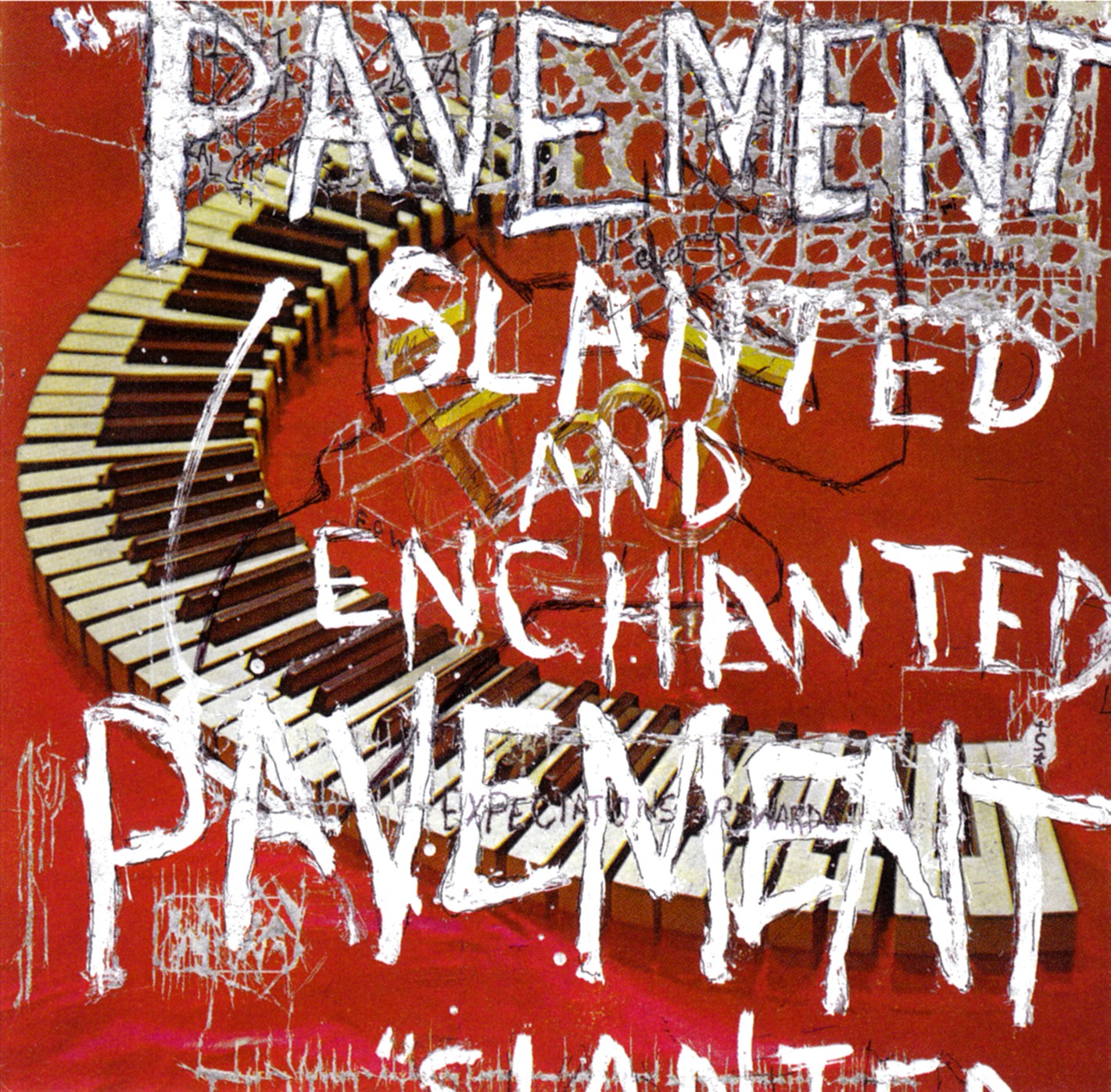
Before Apple Music, Amazon Prime, and Spotify, consumers had to take a shot in the dark on musical artists. In the early 90’s, there were no college radio stations in my area, and the radio stations we did have, played the songs their advertisers demanded. We could choose between Billboard top 40 and classic rock stations. The only outlet lovers of relatively obscure music was corporate music magazine music reviews, and most of them only reviewed top-tier artists. Every once in a while, however, the corporate chieftains would allow a reviewer to review some obscure album that didn’t  help the sales of the magazine. I never cared about the names of album reviewers. I just read the review, and some of them clicked, 99% of them didn’t. When I read a review for an album called Slanted and Enchanted from a group of nondescript fellas I’d never heard of before, I liked it so much I bought the album. I don’t know why I bought the album, but the reviewer said something along the lines of “Slanted and Enchanted is an undiscovered gem from a band who will be making some noise in coming years”. Did this guy know what he was talking about? I didn’t know, and I really didn’t care, but for whatever reason, I decided to give these guys in a band called cement, concrete, or something like that, a shot. 

Whoever that guy was, he knew his music. I listened to Slanted and Enchanted as often as I did the Seattle bands of 1992. I wasn’t around the Cali scene, when Pavement were paying their dues, but I was one of the first person I knew to own a Pavement cassette tape. It was not love them at first listen however. Slanted and Enchanted was so different and so complicated that it took a number of spins to click. To my mind, the raw Westing (by Musket and Sextant) only reinforced the idea that these guys could piece together some of the most original music I ever heard. I’ve heard some suggest that Pavement, like all artists, were a culmination, or a compilation, of their influences. If that’s the case, these cats grew up listening to music I never heard before. They weren’t punk (by my narrow and uninformed definition), hard rock, or any genre I heard. They were something different, and to my mind that’s the greatest compliment we can give any artist in the crowded field of music.  

“A genius is the one most like himself.” –Thelonius Monk.  

In 1994, Pavement doubled down on something different, when they released an album called Crooked Rain, Crooked Rain. I could go through this album and four-star and five-star the singles, but I won’t bore you with my narcissistic analysis. I will just say that I played this disc so often that almost all of the singles were playing during a seminal moment of my life between ‘94-’95. Crooked Rain, Crooked Rain cemented Pavement in the upper echelon of my favorite bands. 

As brilliant as these two albums were, top to bottom, they did not prepare me for the “Holy ‘it, these guys are it” effect Wowee Zowee would have on my psyche. As lead singer Stephen sang somewhere, “Song is sacred.” The brilliance on this disc floored me. After hearing it the first 100 times, I decided that everything Stephen Malkmus and Scott Kannberg wrote to that point culminated in Wowee Zowee. Slanted was the seed, Crooked Rain was the fertilizer, and Wowee Zowee was the flower. This analogy might be oversimplifying the evolution, and it might unintentionally denigrate the brilliance that can be found on the other two discs, but what Stephen Malkmus and Scott Kannberg (Spiral Stairs) put together on Wowee Zowee reached me on levels those other albums couldn’t.

When I write that Pavement were different that should not be confused with weird or strange. Compared to the other cassette tapes housed in my wall fixtures, Pavement were mainstream pop. When I would play their albums in my home, in my car, and in other people’s homes and cars, they were confused by what they were hearing. “I can’t believe you like this,” they would say. They were so accustomed to hearing obnoxiously complicated, noisy and difficult music coming out of my car speakers that they couldn’t believe I considered Range Life an absolute classic. The more they listened, the more confused they grew as each lyrical and musical stroke of paint Pavement put on their audio canvases had their own accessible inaccessibility.

The question Pavement, more than any other band I listened to, asked was how does we explain appeal? Why does one listener enjoy weird and obnoxiously complicated music, while another prefers a smoother flow? Drilling down deeper, why do most Pavement fans prefer one of the first two albums and I prefer the third? “Because the other two albums are superior,” you might say, “and you choose to be different for all the mileage you think that gains you.” I can’t deny that provided some initial appeal, but I’m still chasing the dragon of those obnoxiously complicated, noisy and difficult musicians, and I still love Wowee Zowee more than the other two. I don’t search for weird for the sake of being weird, but when a group like Ween can create contextual oddities, I’m all over that. If Pavement were in any way weird, it was so contextual that the listener had to dig through the cracks to find it.   

Back when the sole, mobile unit for playing music was the cassette, I think I went through three different copies of Wowee Zowee, as many will attest cassettes, and their players, weren’t built for hundreds of repeated plays. I also bought a CD version of the album later (you’re welcome fellas). After exhausting the albums, I bought all of Pavement’s cassingles (cassette singles), EP’s, and any and every musical production that had the group’s name attached to it. So, when it came time for a new Pavement album to come out, two long years later, I thought it would be the next logical step in Pavement’s evolution. (Spoiler alert: It wasn’t) I never stopped to think of artistic peaks at the time, and how Wowee Zowee just happened to dot all my personal I’s and cross my T’s in a way no album ever had. I thought if Slanted was great, Crooked Rain was even better, and Wowee Zowee had such personal appeal, then Brighten the Corners had to be an end product of whatever gap great, better, and ingenious left.     

Some people prefer to only listen to music outside the mainframe, some only listen to music that charts in Billboard top 40. There is a conceit relative to both parties, as the Billboard guy brags about his rock star’s record sales and top hits, whereas the obscure guy condemns the rock star’s audience for not knowing how deep to dig for true, quality music. I don’t know where Pavement sits in this paradigm, as I know they’ve had some record sales, some appearances on Billboard charts, and some play on MTV. I can’t deny dining out on the obscure side, but Pavement were one of the few bands that if everyone loved them, or no one did, I would continue to worship their art. 

This statement might shock those in other parts of the country, but I’ve yet to meet a tangible person who listened to Pavement at any point, and I’ve only met a few outside of my inner circle who actually heard of them. In my locale, Pavement was so obscure that people wondered how I heard of them, and other groups like Mr. Bungle and Captain Beefheart. Someone once asked me where I find such obscure music. I told her they could be found at a place called a record store.   

My frustration that no one had ever heard of these relatively obscure artists abated long before Pavement’s Wowee Zowee came out, and I put the whole “You have to hear these guys. They’re incredible” personal promotion machine behind me years prior. Very, very few people listened to my recommendations anyway, and on those occasions when I would loan my CDs out to them, they never came back saying, “You were right, these guys are incredible.” Between roughly 1992 and 1996, some Pavement album was spinning in a CD player, or spooling in a cassette player, and no one cared, and I didn’t care that they didn’t. 

The only problem for me then was that it was far more difficult to know when a relatively obscure band was coming out with a new disc in 1997. The internet has changed that dramatically. We can now subscribe to their site, check their Facebook page, or search the name of their band to learn about a new release. In 1997, we had a dry erase board at our local mom and pop record store with dates of releases and names written in fluorescent ink. “2/17,”, the whiteboard said one day, “Pavement: Brighten the Corners.”  

As a 27-year-old man, I was that kid who found out Santa was coming. I actually formed my own personal countdown that I would say to friends, “You know what today is?” I would ask, tongue-in-cheek. “Day 11, until the release of Brighten the Corners.”   

The people I knew and loved craved career advancement, money, romance, or some other form of concrete, identifiable advancement that defined them as a greater man. My identity was wrapped up in music. It’s almost embarrassing now to admit how much music has meant to me throughout my life. I had nothing to do with the music, or course, and I didn’t prosper in any way when one of “my artists” came out with a new disc, but I felt some kind of personal glory when they came out with a spectacular, spine-tingling release.  

When Pavement released the single Stereo, I grabbed a copy of it in the aforementioned record store in a manner that suggested I thought a melee might break out if others knew it was sitting on the shelf. When I listened to it, I thought it was a harbinger of the greatest album ever made. As I mentioned earlier, the progressive, five-year build up to that disc let my imagination go wild. I not only loved every album that built up to it, but their B sides were some of my favorite songs, and I dove deep into their EPs, particularly the Give it a Day/Gangsters and Pranksters EP. When one of Pavement’s songs appeared on a soundtrack or compilation tape, I snapped it up quickly, even if I didn’t care for any other artist on it. (My favorite single among those released in this manner was an R.E.M. homage called Unseen Power of the Picket Fence. It appeared on a No Alternative compilation, and it now appears on the Crooked Rain, Crooked Rain: LA’s Desert Origins anniversary edition.) With all that, I looked forward to Pavement’s next release as I would Quentin Tarantino’s next release after Pulp Fiction and everything that contained Mike Patton or David Bowie’s.   

The question I should’ve asked myself, in preparation for the release of Brighten the Corners, is how could Pavement possibly top Wowee Zowee? I didn’t ask that question, because they already established a track record of constantly topping themselves the next time out. I had such a nebulous understanding of artistic peaks that I didn’t even consider it. The artists themselves don’t understand them. If they did, they’d know how to duplicate it.

Some suggest that artistic peaks are a time and place phenomenon relative to the fan. The idea behind the time and place phenomenon suggests that a band such as Green Day wouldn’t have enjoyed the commercial success they did, if they released their first album ten years earlier or later, and if Nirvana’s Nevermind were released ten years earlier or later, it wouldn’t have had the enormous sales it did. While I find the idea thought-provoking and fascinating, it also suggests that if we somehow flipped the release dates of Brighten the Corners and Wowee Zowee around on another timeline, I might’ve consider Brighten the Corners the masterpiece and Wowee Zowee the comparative disappointment, because of the place I was in, in 1995. I don’t see it. Wowee Zowee just hit too many of my personal touchstones, and it crossed every one of my T’s and dotted my I’s so well that I considered it such an artistic peak that my anticipation for its follow-up was unprecedented, and I never looked forward to another artist’s future release so much before or since.  

As such, Brighten the Corners proved to be the most disappointed I’ve ever been in an album. Was it bad? No, not even close, but I didn’t know that at the time. I listen to the album now, and it has a number of classic Pavement songs on it. Aside from Stereo, the next three songs on the disc were, and are, really good, and Embassy Row might be one of my favorite Pavement singles. There really isn’t a terrible song on Brighten the Corners, but it had the unenviable chore of trying to follow one of my favorite albums of all time.      

The fact that I still remember the time and place I first heard Stereo shouldn’t suggest that the song was that great either. It wasn’t. It isn’t. It was good, really good, but it couldn’t possibly meet my expectations. It was the album before that, and the album before that, and the album before that. 

Some Johnny-on-the-spot, 1995 reviewers stated that with Wowee Zowee, Pavement seemed to be “self-sabotaging, of being afraid of success”. Prior to Wowee, Pavement were critical darlings, but the critics considered the disc a gigantic leap down from what they considered their legendary first two discs. I had to read those words three times to try to make sense of them. These critics weren’t jumping off the Pavement ship, but they thought it was a gigantic step down from five-stars to four and a half. Go to just about any site that reviews albums now, Allmusic.com in particular, and you’ll read unending praise of the first two discs, coupled with five-star ratings. More often than not, you’ll read that Wowee Zowee has a four and a half star rating. It doesn’t sway my opinion in the least of course, but it does lead me to wonder if the critics didn’t fall prey to the time and place theory or if I did, but I still view Wowee Zowee as the absolute pinnacle of Pavement’s artistic peak.

It seems to me that critics penalize Wowee Zowee by half a star for following Pavement’s epic releases. I also wonder if, in the critics’ minds, Pavement lost their indie/alternative cred by that point, and they viewed them as more established artists, even if they never managed huge sales. If the former is the case, should we penalize Slanted and Crooked for not being as good as Wowee. No, I still give all three five stars. I don’t know when it started, but many critics and fans have attempted to retroactively whitewash their initial reactions to Wowee Zowee by now calling it Pavement’s masterpiece. I honestly didn’t care why the critics slammed it then, and I don’t care how they try to clean it up now. I was so artistically moved by the album that I thought their next artistic adventure would break through whatever stratosphere Wowee Zowee didn’t. I never sat down and tried to imagine how it could, as I wrote, but Pavement did so much in such a short span that they made me believe anything was possible. If I were an obnoxious critic, I might retroactively assign Brighten the Corners four and a half stars, to assuage my guilt for initially calling it the most disappointing album I’ve ever heard.  

As Pavement puts a cap on their career with a now 23-year retrospective release of Terror Twilight, called Terror Twilight: Farewell Horizontal, those of us who loved them can say they released three incredible albums, one great one, and another that put a really good exclamation point on their career. Pick any artist who seeks artistic adventure, and you’re going to be able to pinpoint an artistic peak. “They’re not as good as they used to be,” is a phrase we love to say to build up an artist and tear them down, so we can identify with them better. We also think it gives us some form of critical panache to say such things, but in retrospect it makes us all look a little silly.