At the Movies


No matter how hard they try to wreck movies, I still love them. I love a great book, a fantastic album, and even a mind-blowing painting, but nothing beats spending ninety minutes in the hands of a master movie maker. Thanks to the VHS, and every medium before and since, I’ve watched more movies than just about anyone I’ve ever met. I write “just about”, because I had a “Who’s watched more movies” showdown with a fellow movie freak who cut the debate short by asking, “Do you watch porn?” I said I didn’t. He said, “I win!” 

Nobody ever died wishing they watched more movies, and it’s not something we normally lord over someone to a point of superiority. When comedians start dropping references from movies, however, movie freaks enjoy getting those jokes that the others –who didn’t waste so much of their life watching movies–don’t.  

“Before we go to a movie, we have to get to the movie theater, and is there a better way of getting there, or anywhere, than in a Jeep Wrangler? (Cue the video backdrop of a Wrangler managing various rough roads, icy snow, and large rock terrains.) “Hi! I’m somebody famous, but I have a moderately-dressed family (cue the entrance of the wife and kids and remind the paid spokesman to put his arm around his daughter’s shoulder), who need a reliable automobile to get them places. We put some serious consideration into purchasing a sensible family sedan, and then the snowstorm hit.   

“When hazardous conditions hit, the 4-wheel drive (4WD) drivetrain of the Jeep Wrangler will go from a luxury to a necessity. We don’t always need it, of course, but hazardous conditions strike, we can push, pull, or otherwise engage the 4WD to the supermarket, the drugstore, or the movie theater with comfort. The comfort 4WD owners know can be so great we might consider it a little weird. Most of us don’t care if others have a faster car than we do, and we don’t care if they think have a better car, and we never have. We’re not car guys. When that snowstorm hits, however, and it brings ice and everything else that defines hazardous conditions, there is something embarrassingly unusual that happens to us when we’re not only able to manage hazardous conditions but dominate them. 

“We all learned how to drive in the snow and ice in other cars, and those cars taught us to be cautious and never over-confident in hazardous conditions, no matter what we drive, but how often have you felt so intimidated by the “here/there be dragons” roads that you decided not to leave home. If this was you, the makers of Jeep have the antidote. The 4WD Jeep Wrangler not only provides the piece of mind that comes from making a decision that protects your family, but it can lead to some feelings of masculine machismo as you conquer nature. (Cue the son’s growl.) And now back to the show.”  

The Action Movie

“Jason Statham is our new action hero!” they say with all sorts of exclamation points. I yawn. Action movies? Does anyone still lust after a great action flick? I have nothing but compliments for Jason Statham. He’s a quality actor who picks some quality movies to star in, the Crank movies stand out as his best so far, but action movies as a whole are just dead to me? We all loved what Stallone and Schwarzenegger did to and for the genre, in the 80’s and 90’s, but didn’t the whole action movie format kind of peak in that era? How many twists on the genre can we put on this otherwise tired genre? The John Wick movies supposedly proved I am wrong. People were a buzz about them. “You have to see this next one. Do you want to see it? Do you want to see it with me? If this one is anywhere close to the first one, it’s a must-see.” So, I saw it, and as action movies go, it was really good, but I couldn’t have been more bored. Maybe there was a time when I found choreographed fight scenes exciting, but I can’t remember it. All scenes in movies require some suspension of disbelief, but we all know they’re going to win the fight. They are all so formulaic. 

To introduce his guest action-hero Steven Seagal to his show, Arsenio Hall had a great line, “This man could probably whip your tail with a french fry.” I’m sure Steven Seagal could probably beat me up, and I kind of don’t care,, but we’re talking about a man who played a character in a movie, and most of his physical exploits were choreographed with players executing moves that allowed him to punch them or kick in pre-planned moves. Does that mean he could beat me up with a french fry in real life? We all know they’re not fighting for real, of course, but we suspend our disbelief long enough to enjoy the choreography involved. If it’s not real, and all the moves by the main character and his adversaries are choreographed, aren’t we basically watching a ballet with some punching, kicking, and bullets thrown in? “But you’re male, and every male has just been intoxicated with fight scenes since about Bruce Lee. Why, because we’re males. It’s as every bit apart of us as our ring-a-ding-ding.” Well, then, I’m obviously not as male as you, because I’d prefer the verbal, cerebral exchanges we can hear in even the most average Woody Allen film over the finest choreographed fight scenes of the best Van Damme flick. 
The Car Chase   

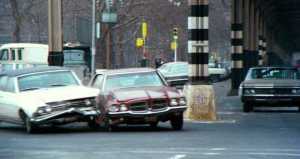
Some say that the greatest car chase scene that ever took place in the history of cinema occurred in 1971’s French Connection. People still talk about this scene as if it’s one of the greatest scenes in movie history. They talk about how dangerous it was, and Screenrant.com writes that director “William Friedkin had no permission to film the car chase the way it was done, which is why The French Connection could never be made today.” They also drop a note about how the car accident in the scene was real, and Friedkin kept it in the movie to add to the scene’s gritty realism. I drop a big “who give a crud” thud. When I saw that that scene for the first time, before I knew anything about the hoopla and the hollering, I thought the scene ran too long. After hearing people gush about the scene in the decades since, I watched it again with a renewed sense, and I thought it ran too long. That scene, one car chase scene, runs approximately six minutes. About five minutes too long. “But you have to understand how difficult the logistics of the scene were,” they say. “You have to sink yourself into the drama of the moment, and how well it was edited to a perfect pulse pounding pace.” No, I don’t. I don’t care about the particulars of the artistry of the film-making, I just want to sit down and enjoy watching a movie. I also don’t plan on ever shooting a car chase scene, so why would I be influenced by anything involved in the shooting of it? I watch a movie to be entertained, and when a chase scene, or a fight scene, interrupts the pace of that movie, “because that’s what we love”, I now have the luxury of fast forwarding through it to see what happened.

The Bad Guy

Our familiarity with portrayals of bad guys began in preschool when our teacher put on a puppet show and introduced the bad guy, “And here’s comes mean Mr. Johnson,” “BOO!” we all shouted in unison. “All I care about is money!” she has mean Mr. Johnson say in her mean guy voice, as our throng of boos strengthened. It was fun and funny back then, but we fully grown, mature and responsible adults are still doing that today. When the bad guy enters our adult productions today, the writers will introduce him by having him kick a cute, little puppy down a flight of stairs, light a physically-impaired individual’s house on fire, or do some other equally heinous act such as declaring there are some virtues to profit. At some point in the production, he will declare that a side character isn’t pulling their weight in the company, and he will do it in such an over the top, mean, bad and dastardly way that it’s almost embarrassingly cheesy to watch. Enter our good guy, “C’mon man, that’s no way to talk to a person.” We all but cheer our good guy for saying what needed to be said, but doesn’t anyone else see this as the movie’s obnoxiously obvious way of endearing the main character to the audience?

I would submit that the characterizations of bad guys haven’t progressed much beyond that preschool puppet show portrayal of the mean Mr. Johnson bad guys. “Hey, if you don’t think money is important, I’d like to see you get along without it!” mean Mr. Johnsons say in modern, adult movies. “Boo!” we shout in unison. Most adults don’t openly boo in theaters, but do we avoid openly booing because we’ve matured past that impulse, or does decades of movie going let us know that the writers and directors of our beloved productions are going to make something awful to him? That’s what separates us from preschoolers, we know the movie makers are going to expose him as the bad guy he is, and we know he’s going to get his comeuppance. We’re not talking about comedies either, where it’s more acceptable to have exaggerated characters for comedic purposes. We’re talking about otherwise complex dramas that basically write Scooby-Doo bad guys as actual characters. “He’s going to get his comeuppance,” someone in the audience says, as if they’re watching a sporting event. He’s one of those “I told you,” guys who love to say they knew what was coming, even though it is as obvious as it was in our preschool puppet plays. As I wrote I don’t need, or even want, a complex, deep narrative on par with a Dostoyevsky novel, but I wouldn’t mind seeing some writers shake up these tedious, bullet point tropes that adhere to the 80’s cookie cutter characters that Scooby Doo made famous.    
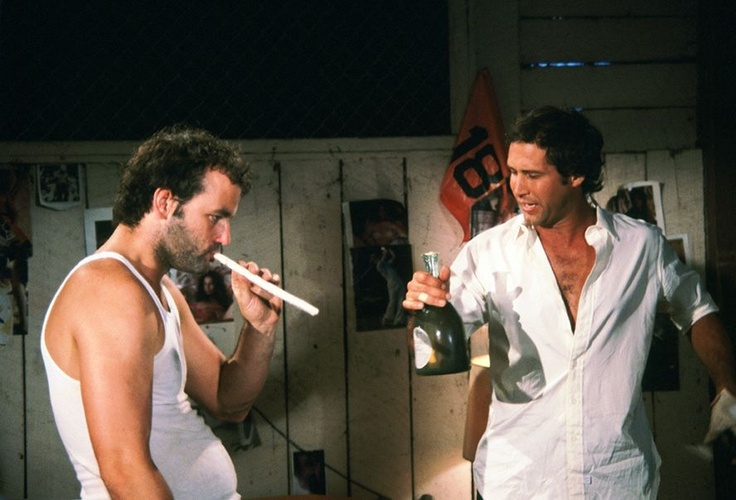
My favorite illustration of this point comes from Quentin Tarantino

“Critics always really preferred Bill Murray movies to Chevy Chase movies,” Tarantino said. “However, it does seem as if the point of all the Bill Murray movies is that he’s this kind of hip, cool, curmudgeon, smartass guy, who in the last 20 minutes gets a transformation and becomes this nice guy. And almost apologizes for who he was the entire movie before that happened.” 

Tarantino continued with examples: “StripesGroundhog DayScrooged. The whole thing. For instance, Stripes. How does he go from where Warren Oates kicks his ass, deservedly kicks his ass…to where now he’s rallying the troops? Now, he’s getting their army on during the parade and now he’s leading a secret mission. Same thing with Groundhog Day. I mean, does anybody really think a less sarcastic Bill Murray is a better Bill Murray? Maybe it’s better for Andie MacDowell, but not for us as the viewer.”

“Yet, Chevy Chase movies don’t play that s***,” Tarantino said. “Chevy Chase is the same supercilious a**hole at the end of the movie that he is at the beginning. He never changes in his stuff…I mean, unless they have him playing a dope like he is in the Vacation movies. But when he’s playing like a Chevy character, he never apologizes for who he is, stays the same way through the whole film, and even if there’s a slight change, that’s not the whole point of the movie, like changing him into a nice, cuddly guy.”

Information Age and Movies

Another huge component of watching modern movies is all of the insider information we have at our disposal. Thanks to news aggregators, the internet in general, and the other chairs on late-night talk shows, we now know so much about movies that we crossed a tipping point of too much information about the production of a simple 90-minute movie. I used to find the information actors, directors, and everyone else involved in the production provided in the other chairs on late-night talk shows somewhat fascinating, but somewhere along the line I realized it’s all just self-imposed deification, and their sign to them that they made it. For some reason, we all want to know everything we can find about our definition of our royalty, and the roles they play in movies, and we can never get enough. I did. When the actor told me that they put weight on to play the role, I didn’t really care, but I considered it a worthwhile dedication to the role. When the host began to ask questions about the diet they used to add weight, I turned the channel. When the person in the other chair informed us that she didn’t wear make-up for their role, I didn’t care. When the host said, “You are very brave,” and he appeared to mean it, I turned the channel. When it was revealed in an aggregator, that this actor didn’t get along with that actor, their onscreen lover, we all learned that many considered working with that actor difficult. When we learned that the actor became so immersed in his method acting that he demanded everyone on set call him Weasel, because he’s playing Weasel, I found that fascinating at first. Then, when everyone copied that immersion technique, I found it trite, redundant, and a little pathetic and dumb. We learn that some actors aren’t nice, but others are. “It’s true. I know he’s a good guy, because he asked me my name when giving me an autograph, and he called me Harley from then on, and he even winked at my kid.” That director used this technique, this setting, those cameras, that soundtrack, and the movie studio budgeted it at such and such an amount, but as usual the artistically demanding director burned through that the first week. We still care about the quality of a movie, of course, but all these other late-night talk show talking points enhance the movie experience for us. Why? I honestly don’t understand how any of this information enhances your cinematic experience. You like a movie better, because you found out she’s nice, and you won’t go to see another movie, because you heard a report about how one time that star didn’t hold an elevator for an old lady carrying groceries? You might be a victim of too much information. 

Even with all that, I still love movies. I find a trip to the theater, a night at home with Netflix, Prime, etc., and a quality movie, a great evening. No matter how hard they try, they can never take that away from me.  

Rilalities XIII


“80% of success is showing up,” Woody Allen once said.

“So, what you’re saying is if I want to succeed, I should show up?” you ask. To answer that question, we ask another question, how many people don’t? How many apathetic and self-destructive types didn’t show up for the opportunities-of-a-lifetime Woody Allen received? Was Allan Stewart Konigsbeg (Woody Allen) the most talented person in his troupe, or did he show up so often that he got the job, the jobs, and the career that the apathetic and self-destructive did not, because they weren’t there.

In his book I’m Dying Up Here, author Arthur Knoedelseder suggests that Woody Allen’s 1978 Annie Hall winning numerous Academy Awards that year opened up all kinds of opportunities for standup comedians, comedic actors, and writers of comedy. Most of those who would land multiple picture deals would go onto be the faces of comedic humor in the ’80’s and beyond. The question is was Woody Allen funnier than those peers, or was he in the right place and the right time in Hollywood history?  

To listen to modern screenwriters tell their tale, Woody Allen’s story isn’t the type of story we enjoy. We’d much rather hear the story about “the kid,” “the natural,” or the one everyone agreed was the most talented person in the room who finally got his big break, and in the next scene, they’re asleep or dead with a heroin needle hanging from their arm. It happens so often on screen, that it’s a trope, but is it true? We’re sure it’s happened, but has it happened so often that it’s a truth, or do we just love to cringe so much that screenwriters feel compelled to write about it.

I can only imagine that the screenwriter tries to sell his script pitching about “the kid,” “the natural”, and the potential Hollywood producers asking “Okay, but where is the arc? What does the American public love more than anything else, the rise and fall. We build him up as the kid, the natural, and then, on the cusp of him finally realizing his talent on a national, worldwide scale his dysfunctional, self-destructive traits rear their ugly head. It’s the Freddie Prinze story. People love that story. They love to cringe.”  

It can be a little scary to put all of our potential to succeed, and all of our hard work, on the line. How many of us have the potential to succeed, and how many can stand before others, relatively anonymous and proverbially naked, to showcase our potential? Are you a fraud, or are you so confident that you’re just waiting for an opportunity to show your talent? Are you the type who creates your own opportunities, or do you wait for them to happen? If you’re the latter, will you not show up, because you’re afraid you’re not ready? Even if you’re “not ready” in a relative sense you’ve defined, that might just be your opinion. If Woody Allen’s quote holds any weight, it might redound to your benefit to show up anyway to see what happens.   

Some of us cringe when we hear tales of the dysfunctional and self-destructive types, others laugh, and we all feel sorry for them, but they’re the ones we replace. We’re the ones who show up and do it so often that we might overcome whatever relative level of talent we might have.

Showing up is also starting up. How many of us think about doing something, how many of us daydream, and how many of us actually do it? Showing up suggests that you’re ready to make it happen. You’ve surpassed the dream stage, and you’re there. You’ve shown up and you’re ready to work with others to make it happen.  

Stop Letting Your Bullies Bully You

There are few things that bother me more than watching a victim of bullying make their problem worse by the manner in which they deal with a bully. When I hear, read, or see a member of an audience become so offended that they’ve become outraged at something a standup comedian says, I say, “You’re going about it wrong! You’re doing it all wrong!”

There might be some exceptions to the rule, but my bet is every standup comedian was a former class clown/bully. The essence of the craft is such that it attracts guys and girls that someone, somewhere once called a class A jerk. (A class A jerk is someone other than the class D jerk who pokes fun at others for sport and backs down if anyone informs them they’re offended in anyway.) 

When real life darkened their door, most standup comedians admitted they didn’t know what to do. They were as lost, or more, as the rest of us. “I don’t know what I would’ve done if my predecessors didn’t do what they did in this craft to make it what is it today. Not only am I not good at anything else, I didn’t particularly like doing anything else.” What is it they’re doing, on stage, every night? What is it they enjoy doing so much that it saved them from the depths of despair? If we dig through all the particulars of the craft, we find that making fun of other people is the core of standup comedy. Where do you think they discovered their talent, and how did they hone it? They did it on your back, and your delicious tears told them they might be onto something. It’s what they do. It’s who they are.

One other special ingredient that defines the difference between most great comedians and the ones who never made it to the main stage, pushing boundaries. What does that mean? We think pushing boundaries is about filmmakers teaching us what we don’t want to hear, and it is, but it’s also about standup comedians telling us what we don’t want to hear. They’re mutually exclusive, diametrically opposed, and the same. Tell a standup that they can do anything they want except this, and this will be the only thing they want to do. Tell them that they can make fun of everyone, except these people, and a joke about those people will probably make it into their intro. My problem is not with standup comedians. We all know who they are. They’re bullies. The problem is with the offended. If the standup comedian is wrong, tell them why, and do it from a position of power not weakness.

If we ever effectively find a way to diminish, deter, or defeat bullies as a whole, the one detriment might be our inability to deal with bullies. The only solution we’ve found at this point is to inform them that we’re offended by something they’ve said. Who cares if you’re offended? Some do, of course, and there are probably more now than ever before who aren’t afraid to say that they’re offended, but I can tell you one person who doesn’t care, the offender. I’ve been offended by something a comedian said, and I always think that’s just one man’s opinion, and it’s not an informed one. (I use the term offended, here, for the purpose of illustrating a point, because I can’t think of any comedian who has ever offended me.) You getting offended is exactly what the offender wants. It’s what their audience wants too. How many nice guys finish first in the world of standup? What is it .0001% The nature of the beast is such that if a comedian goes clean and tries to avoid offending anyone, the audience might chuckle politely, but the chuckle will be soft and almost internal, as they wait for that hurtful haymaker to punctuate the joke. Most good guy, clean comedians are widely regarded as too safe to be truly funny. We, as a whole, want our standup comedians risqué, we want them to push boundaries, and we want them to speak out against unsafe targets. Who are the unsafe targets though? That’s the question skippy, and that’s the point Howard. The unsafe targets have shifted from my guys to your guys, and from my issues to yours. We didn’t handle it well, claiming offense and outrage, and now you’re doing the same. 

If this is true, wow do we stop the mean-spirited comedian then? I don’t think you do. I think they love it so much there’s nothing we can do or say to stop them. You can see it on their face. They were born to do this, they love it, and they wouldn’t want it any other way. They define your offense as effective penetration. Their audience, comprised mostly of former bullies and class clowns, love it too. Do we get in their face and try to mow them down? Have you ever been bullied by a class A jerk? They’re unusually very good at what they do. They’re often unusually smart, and not only are they smart, they’re quick, and not only are they quick, they’re funny. It’s often that final nugget, funny, that just tears into our soul. They come up with material quick, and how do we defeat them? If it’s a class A jerk, we’re on their turf when we’re trying to outfunny them. The only way to defeat them is to switch the playing field to our internal home court and outdo them there. If we can convince them, there, that they’re not getting in, we’ll take all their fun out of it for them. That’s all I got, and I know it’s not great, but it’s obviously better than everything you’ve come up with thus far. You’re encouraging them and making them think they’re onto something when you declare that you’re offended. You’re making it worse.   

Crazy Joe Davola

Crazy Joe Davola (actor Peter Crombie) has died, and Fox News reports that his friends suggest that even though “he was cast as a bad guy on Seinfeld, and he played numerous interesting and complicated characters, including Bernard Goetz, he was very sweet in an old-school way. When not working as an actor on stage or in front of a camera, he was genuinely humble, preferring others to talk and take main stage.  He was always helpful, giving and funny. He was one [of] the kindest, soft-spoken, loving and caring people I have ever met. A gentle giant.” It’s a fitting tribute, but it’s not funny? We might not want funny to be on site forever more, but in private, on stage, I think Peter Crombie would’ve loved it if someone, someone like Lewis Black, offered Crombie a comedic sendoff. “It wasn’t much of a challenge for Peter Crombie to play the awful characters he did, because he was awful. He was an awful human being. I remember one day he saw a kid with ice cream, and he stole it. He didn’t want their ice cream. He didn’t even like ice cream. He would pitch it in the nearest receptacle. He did it just to do it. Just so he could say he did it. He said that he liked to hear kids cry. “The younger the better,” he said.”   

Review of Self-Reliance

If there’s one thing an aspiring writer can learn from the movie Self-Reliance, it’s that your audience doesn’t want anything bad to happen to the fictional characters of your stories, until they nothing does. Leaving out all of the other particulars of the plot, the primary plot of this movie is that a bored, lonely man is offered a proposition. If you can survive for thirty days, with murderers trying to murder you, we will give you $1 million dollars if they are unsuccessful. There is a catch for the murderers, however, they cannot kill him if he’s within three feet of another person. The need to have someone near him, leads the character to realize that in his life before the contest he forgot to make real, human connections throughout his life, and he forgot to live life to the fullest. That underlying theme would’ve been engaging if, IF, it was properly balanced with the character narrowly escaping harrowing threats. The problem with this movie is that this viewer (you might be different) never feels the threats are anything more than an excellent plot device to sell the movie. There are some threats made on the character’s life throughout the movie, but they are easily, too easily, vanquished. This reveals to us that the threats on the character’s life are basically ancillary to the underlying theme. It’s as if the writer said, I want to write a post-COVID script that reminds the audience of the need for human connection and companionship. The problem is how do we go about writing about that without getting too gushy? I got it. Let’s develop a contest for the character in which he needs to have people around him. All of that would be fine, except the writer/director forgot to concentrate enough on the threat therein. 

Anyone who watches this movie will realize as much as we don’t enjoy cringing, we enjoy cringing. We want to see scenes where the character stupidly gets into harrowing situations that he can’t possibly escape, until he does, and we’re awash with relief when he does. We want to experience the ups and downs of what it must feel like to have people trying to murder you. We want to scream, “Don’t go in there!” when he approaches the wrong door. We want to see pianos fall behind him while he’s talking on the phone, comically unaware of what just happened. We want to grip the arms on our chairs when a gigantic ball comes rolling after him, as he runs through a cavernous region in which there’s no lateral escape, and we want o see a poison-tipped arrow hit a guy standing somewhat near the main character after the main character bent down to pick up a piece of garbage that some rube just threw on the ground. “Hey, it’s called littering man!” The main character shouts at the litterer, as the man with the arrow in his neck, behind him, slowly falls gurgling to the ground. There can be humor intermingled in the tension, but we want/need the tension. What we get from Self-Reliance are all of the hypotheticals a man who must survive a scenario might have to go through to insure his survival. The movies is really about the social interactions a person might not go through if there wasn’t an ever-present, or in this case never-present, threat of death. My takeaways are that the movie accomplishes two things: It teaches writers what not to do with a thriller, and it leaves you with the weird, uncomfortable feeling that you actually want bad things to happen to fictional characters. Those of us who know and enjoy so many of Jake Johnson’s projects, enjoyed this one too. He’s a funny, interesting actor, and Self-Reliance is not a bad movie in anyway, except for that lack of threat, and the ending is more of a wrap-up than an exciting conclusion. The character basically tells us what happened at the end, and he shows us some shots that visualize what he’s saying. 

The Disappointed Reader


“I’m disappointed, and I just can’t hide it!” I whisper/shout to the author of the book I’m reading. “You had me. You really had me, and it’s almost painful hanging here.”

Hi, I’m whatever his name is, but you can call me what’s his face, and I love a great story. Some love money and power, some love their family, and some love a really good cheeseburger. I love the great story. I love them big and small, on a device, in a book, and in a mall. I love the story you told me last week about that big, hairy guy you saw in a tank top last Tuesday at Walmart who shouted something about the price of a 3-pack of Fun Pops. If it’s unique, funny, and complete, you might have me on the edge of my seat. I might ask you so many question that you’ll “Just let me tell the story for God’s sakes” me, because I love your details. I love them so much that you will probably joke that I focus on parts of your story no one ever has ever considered before. That’s just kind of what I do. I might ask you to repeat that word you just used to describe that 3-pack of Fun Pops fella, and I might even use it later. I want to be there with you, in your story. I want to love it, enhance it, and make it my own. My leading questions might even help make your story better. I’ve done it before, without intending to do so, and I’m sure I’ll do it again. 

I might be phony in a number of ways, but my love of a great story is authentic and organic. I’m not saying my passion is greater than anyone else’s. I’m saying, we all love spending some time in the hands of a great storyteller. We used to go to the town square to hear a great story, before that the amphitheater, and the rock opposite the storyteller. No matter where or when we heard, saw, or experienced the great story, the elements have not changed. That great, classic intro led us to that rock, and the perfect climactic ending almost made us forget the fascinating information in between. Some stories entertain, some educate, but the greatest storytellers of all time find a way to meld the two in an unforgettable tome. Some of us, most of us, don’t particularly care what we are at the end, as long we’re something. Which is why when I have the finished product of a master craftsman in my hands, and they drop the ball, it’s tantamount to an ugly divorce.

They can get me. I’ll give them that. These skilled wordsmiths, who are far better at their craft than I will ever be, can have me flipping pages rapidly, flopping around at night, hours after I’ve put the book down, wondering what they’re going to do to me next, and I’ll probably be talking about those progressions the next day. When the novel is that good, I become so obsessed that I’m thinking about the possibilities throughout the day, into the night, and in my dreams. Then, boom! Nothing.

What? Why is that bookmark rotting in the place it’s been in for six months? After the flurried pace, why do I not care what happened to these characters now? It’s often so relative why we lose interest that it can be tough to pinpoint, but at some point, the author and the reader part ways on the best way to conclude this buildup.

I am a lot more patient with the author of a niche book that happened to cover a topic of particular interest to me. This book they wrote might be the only book they ever write, partake in, or have ghost written for them based on an interview. If that’s the case, my maniacal mind ask theirs, “Aren’t you afraid of losing the reader?” I try to frame my internal question in a very generous scope. They’re obviously not writers, but this product that they’re putting out has their name on it. I cut them an enormous amount of slack, in other words, but I searched for the topic of their book, so I’m obviously an eager customer. I read through the summary of the book, and it fit so well with what I was searching for that I decided to download a sample of it. Depending on the book, the sample is either the first tenth of the book. A song on the radio is a sample of an album in much the same way, the first tenth of a book is a sample of that book, right? It should contain the best writing that book has to offer. If I can barely make it through your sample, on a topic I’m inordinately interested in, the author’s writing must be terrible.

“You had me with the topic, and the summary, but your writing reads like that teacher from Ferris Bueller’s Day Off.” My favorite writers can make the history of grills in Mattel’s Barbie fascinating. I don’t expect that level of mastery of powerful, provocative prose from every author, but in this particular case, they have a topic that I am dying to learn more about, and they can’t even write a decent enough sample to get me to purchase their book? The author, or ghost writer, just gets lost in the description of the inanity, but even inanities can come to life with powerful prose. I’ll admit, I’m a little bitter in the sense that I can’t get published, and this guy has, but that doesn’t affect my reading selections. I might be hyper-critical when it comes to writing, but it’s only because I know I can do better. It’s not because I think I’m more intelligent, talented, or gifted in anyway. I’m just more demanding of myself. I read through what I’ve written with the fear that with any given sentence or paragraph, I can lose the reader. I’m probably more paranoid than most writers.

With master storytellers, I fall head over heels in love with their characters. I admire some from afar, embodied others, and sympathize and empathize with the rest. My favorite authors know how to create and substantiate characters, and some of them know how to juggle them in a gargantuan tome. 

In the introductory phase of the huge novel, the author’s juggling skills mesmerize, as the author introduces the MacGuffin to each character in a variety of unique ways. (The MacGuffin is a term for the literary device authors use in their plot to motivate the characters to act. The MacGuffin can be the monster in a horror story, a ring in Lord of the Rings, a glowing object in Pulp Fiction, and as filmmaker Alfred Hitchcock said, “What everybody on the screen is looking for but the audience doesn’t care about.”) The MacGuffin provides the conflict, the goal, and the theme of the interactions between the characters. Yet, even in the best novels, the MacGuffin is almost irrelevant, and we see this at the end when the MacGuffin is finally defeated in an anticlimactic and unceremonious manner.

The MacGuffin doesn’t need too many details, as the best authors allow us to paint their MacGuffin in our mind’s eye. We also see need for a simplified MacGuffin in those stories that involve intricate detail that might play well in the author’s mind, and some detail-oriented readers, but for the rest of us a simple tale of good vs. evil will do. I’ve witnessed the opposite, where a MacGuffin received painstaking detail. The author was/is a painter also, so he provided intricate detail of the visual elements of the monster, and rich details regarding their lives, values, and goals. It was so much that it was too much, and my bookmark remains in the 2/3rds of that description to this day.

I stressed the word defeated, because most modern authors try to avoid having their MacGuffin defeated. Modern authors don’t enjoy having their readers think in terms of good vs. evil or triumph vs. failure. Winning and losing is not a part of their equation, as it’s too simplistic or something, and they fear that it paints their narrative as a game or sporting event. Some authors even introduce the delusional elements of victory by having the characters defeat the MacGuffin, only to have it rise again in the midst of their celebration. When this happens, we know the author is mocking the simple-minded notion of victory, as we are only three-fourths the way through the novel. We also know to prepare for a complicated, winding effort the characters will employ to form a collusive effort that helps them overcome whatever personal, inner demons they may have had that caused them to be susceptible to their fears of the MacGuffin, or the unknown in general. In Stephen King’s It, for example, Pennywise mocks the groups’ efforts to defeat It. In It’s mockery, it actually instructs one of the individual members on the best way to defeat It. I don’t know if King struggled with the best way to convey the information necessary to kill It, but I have to think it would be better that this information comes from anyone else but the MacGuffin. It just seemed odd that It, or anything else would aid in their own destruction. If they’re evil, perhaps they should lie to the good guys, but telling them how they should approach an attack next time kind of dispels the notion that they’re truly evil. It’s complicated and deep and some of the times, readers wonder if it might be more fun if the author dropped all the pretentious efforts to please their peers and the critics and just wrote a simple novel of good defeating evil. 

In the early stages, the characters encounter the MacGuffin individually, and they’re overwhelmed by it. “We obviously cannot do this alone,” the characters say throughout the narrative in individual ways. One important trait of the typical monster story is that the meager human cannot do it alone … if at all. The methods of warfare we’ve developed are inferior to the ways of the MacGuffin, and the creativity of the human being is incredibly primitive in reference to its power. For these reasons and others, many, many others, I could not write a compelling monster narrative, for my tale would be far more interested in the human ability to overcome. My tale would be less interested in the power of the monster and more in the resolve most humans find when they’re backed into a corner. A theme of my tale would be, you think the badger is deadly when backed into corner, try a human. We might not think much of our fellow humans on most days, but while we don’t have the claws of the badger, the jaws of the alligator, or the ferocious strength of the bear, there’s a reason we sit atop the animal kingdom, the human brain. The best you’ll ever see of a human happens just after they’re backed into a corner. When they’re so desperate that they think their lives will end, they will find some levels of ingenious resolve they didn’t even know existed. My characters want to live, and they will do whatever is necessary to see one more day. If the gun doesn’t work, and it doesn’t in an overwhelming majority of most monster stories, they’ll try something else, and then something else to help them survive. Such a theme would not play well in most monster movies, because at all points in between, and with very specific characters, it’s not about them, and they usually do nothing but lay there in the spot the director designated for the death scene. If they fight or thrash about a bit, it’s often a minimal fight. More often than not, all they do is scream.  

After they experience nothing but failure in the face of the MacGuffin, they seek others who’ve experienced similar, but different, failures in their respective interactions with it. They learn a lot about it and themselves in the process, and they bring that knowledge to the other group, who have uncovered their own truths. They then use that combined knowledge to carve out some temporary peace for themselves. In doing so, the author effortlessly funnels these characters together in a quest to defeat, uncover, or discover a truth about the MacGuffin. The ebb and flow of this part of the narrative is often the most engaging and provocative part. If it wasn’t so engaging, I would consider dropping most novels at this point, because the buildup, for me, is the part that builds the obsession. 

At some point, the author needs to make an initial reveal, a tease, and a summation of what the author has spent hundreds of pages foreshadowing. The reveal involves a progressed, unexplained truth about the MacGuffin. The quality author teases this out, and they leave us in some doubt about whether or not it is in fact a truth. There are relative truths each character discovers and even though the author depicts their characters as weak, the narrative is still about them, and their perspective. It is about the MacGuffin, but it’s not.  

In this reveal, we’re not entirely sure what happened, but we know that one of the novel’s most beloved, but expendable side characters, (the proverbial red-shirted Ensign from Star Trek), is dead. Some believe the guy in the red shirt did something ill-advised, and they place much of the blame for his death on him. This permits them to continue to believe the MacGuffin is benevolent, as they continue to argue with those who view the MacGuffin as vindictive and vengeful (a hint at various interpretations of God, Satan, or some confusing hybrid of both). This scene also permits the author to reveal the powers of the MacGuffin, a power that will cause the reader to fear it, but the power will later be diminished by whatever the group of characters chose to define it.

One character, often the militaristic lunatic, steps forward to demand revenge or retribution. He wants to eradicate the MacGuffin from the Earth as a result of the beloved side character’s death. The militaristic side character also seeks to disguise his bloodlust as a form of protection, under the proviso that he could be next, or we could, and he believes in the tooth for a tooth response to what he perceives to be the MacGuffin’s deadly aggression. The majority disagree and side with the saner main character who suggests the group needs a more complex, less violent resolution. 

The characters have obeyed the rules, based on the nature of the MacGuffin they’ve collectively discovered thus far, but they’ve also found some loopholes. If they do this, while doing that, there will be no ramifications from the MacGuffin. There are rise and fall and fall and rise, a rise, fall, rise, or a fall, rise, fall arcs throughout to build the tension. The characters learn from their mistakes. 

The various arcs appeal to just about everyone, as we try to keep an open mind. At some point, we begin to identify with the problem-resolution ideas of one character over the others. We also enjoy the love-interest angle two of the leaders developed, how the sick child became sick, and if it can be attributed to the MacGuffin in some way, but we keep coming back to the ultimate resolution. 

For those of us who have read a number of modern books, and watched such storylines play out on current TV shows and movies, we pretty much know where 99% of them are headed. We might disagree with the angle the characters choose, but more that, we know that eventually the author will have to choose sides in this dilemma, and we always know what side the more modern authors are going to take. The only drama left, is how is they are going to get there.

They often lead us into “their” position with numerous, failed efforts by the lunatic, military type to wipe the MacGuffin off the face of the planet with some drastic overreach that will affect life on Earth. We are to side with the intellectual pacifist, normally employed as a scientist, a professor, or a reporter in most modern stories. This is where the gist of the story becomes clear. The MacGuffin is not bad, or evil in the simplistic terms we use to define good vs. evil. Is the white shark bad, the bear, or the tiger? No, they just want to eat, but in our cartoonish narratives, we often depict them as mean, and they always have an otherworldly growl that shakes us to our bones. Plus, there is a now a complex, rational explanation for the death of the beloved side character, and any related activities that follow. The whole idea that the MacGuffin was a bad entity, was a relative term defined by the obnoxious, military man who just wants to blow stuff up. The more rational scientist, professor, or reporter finds another way that turns out to be correct. They find a way to communicate with the MacGuffin. This narrative often dismisses the fact that some MacGuffins we encounter in life are bad, and  in real life we shouldn’t be so naïve as to believe every MacGuffin is misunderstood. We might meet a real bad guy in life, our MacGuffin, and if we choose to try to talk to them, or advise counseling, they’ll be back to do what they did to us, to someone else. This part of the narrative is often the whole purpose of the artist starting this project, to have the author’s side win. Logic often prevails, but the conflicted logician may employ some violent tendencies, as a subtle ode to those who enjoy some level of violence in every storyline, or to display the main character’s progressed desperation, but it’s often directed at the the real bad guys of this narrative, the irrational, militaristic bad guys who won’t listen to her.

Again, I could not write a modern monster story, because my problem solving techniques would be too simplistic, anti-climactic, and a little boring. My resolution would probably involve a gun. One of my characters would pull out a gun and shoot the MacGuffin dead. If that didn’t work, my character would shoot it again, multiple times, until it is dead. If that didn’t work, the character would try something else. This resolution would probably bore most modern monster book readers, because they prefer conflict resolutions that are deep, complicated, and multidimensional. My methodology is if one thing doesn’t work, try another. Gather all of the most brilliant minds, militaristic and otherwise, and try to develop a master plan of attack. In the modern monster movie, nothing works. I understand that leads to some compelling drama that defines their desperation, but this cliché often leads the authors to fall prey to some formulaic storytelling. 

It’s not that I want the author to write a story that employs my fundamentals, or that I want my side to win, it’s the eventual formula of these stories I find so deflating. Most modern authors play it safe with a formula loaded with so many clichés, tropes, and stereotypical characterizations that I eventually put the book out of its misery. I empathize with the difficulty of adding it all up to a fiery crescendo, but how many endings just crush? I’d say very few. I don’t know if some authors write too many books, or if they overcome blocks by just writing what amounts to the same endings every time out, but their formulas often leave me wanting. 

“What would you have done different?” defenders of the modern author might ask. It’s not my project, and I’m not the skilled author that brought the reader, almost effortlessly to point ‘R’, in the ‘A’ to ‘Z’ progression. They fumbled the ball three-fourths the way through is what I’m saying, and they had such a healthy drive going. “Do you think you could’ve done better?” No, but I would’ve done it different. I’ve given up on the big ‘O’, originality, because it’s almost impossible to be original nowadays, and an artist could go mad in the effort. Doing different is not always original, but the author could vie for unique. Every modern author, it seems, travels from ‘R’ to ‘Z’ in almost the exact same way. Why wouldn’t you take a right at ‘T’ or a left at ‘V’ to surprise me with something different? There’s just so much same-same going on in most novels that I can predict where they’re headed.

I still love the great story, and I probably always will. I might ‘X’ some authors out for the predictability of their formula, but that doesn’t mean that I’ve given up on the art of storytelling. I’m always on the lookout for the next great story from the next great author who shocks me with their innovative approach, unique techniques, their style, and a crushing crescendo, but I’ve been beat down by those who fall back on the tried and true.