Rilalities XII


Story, Harrowing Story

“Our son overdosed on Tylenol,” a mom and dad said entering a hospital’s emergency department. When they were directed to a room, they informed the nurse that the family experienced a dispute in their home. Their teenage son didn’t deal with it well. “He overdosed to teach us a lesson,” the parents informed the nurse. The argument, it turned out, was based on a huge misunderstanding. After emotions subsided, the three put the missing puzzle pieces back in place and realized what happened. (The author doesn’t know the particulars.) The parents and their son concluded their Q&A with the nurse by telling her they were in the emergency room that day to get their son’s stomach pumped.

“Okay,” the nurse said after the parents explained what happened in their home. “When did he take the Tylenol, and how much?”

“It’s been a couple days,” the mother said, “and he took almost an entire bottle.” She had the near empty bottle with her, and she informed the nurse that it was full before the incident. The mother finished that explanation with a compassionate smile directed at her son, and she mouthed, ‘It’s okay,’ to him.

The nurse made a mental note that she later shared with the doctor “that the three appeared almost happy, or maybe relieved in some odd way.”

The doctor agreed, and he said, “I think they were relieved that the heated argument was over, and they were just happy to have their son back.” 


“The treatment for an acetaminophen overdose is a drug called acetylcysteine,” the doctor informed them when he sat in the emergency room, about a half an hour after the nurse left, “but it only shows maximum effectiveness within an eight hour window of the overdose. We will use acetylcysteine, and we will also perform a gastric lavage or nasogastric tube suction, or what you call a stomach pump, but there are similar time constraints on the maximum effectiveness of those procedures too. The problem with ingesting so much acetaminophen and leaving it in the system for so long, is that it has been absorbed by the liver.”

“So, so, what does that mean?” the family asked.

“Our medical team is going to do everything at our disposal today,” the doctor said, “but my job is to make sure you are well aware of the facts of the situation here.”

“And the facts are?” the mother asked.

The doctor had sympathy for the patient and his parents inability to grasp the severity of the matter, and he tried to describe the ramifications as delicately and with as much sympathy as he could. He chose his words carefully while repeating everything he said about the effectiveness of acetylcysteine and stomach pumps after a couple of days, and he repeated what he said about the medical team at that hospital doing everything they could do to help their son, “But if your son took as much Tylenol as you’ve described here today, this is going to be as difficult a situation as you can imagine.”

We can only imagine how difficult this was for the doctor, and we can imagine that the parents put the doctor through it over and over in excruciating detail, asking questions we might regard as obtuse, but what was, in fact, a couple of parents and a son having a difficult time digesting the grim reality of the situation. We have to imagine that they interrogated the doctor, until he finally broke down and said, “In cases such as these, the normal life expectancy is around two-three-days.”

After the initial hysteria broke down, we can also imagine that the parents and their child enjoyed their final moments together. The reports suggest that this is a painful way to die, but if the son was able to manage the pain to a certain degree, we can imagine that the three of them did everything they could to celebrate his last days on earth. 

The team of medical professionals tried acetylcysteine, they performed the stomach pump, and anything and everything at their disposal. The teenage boy died two days later. 

I heard this story decades ago, and it still haunts me. It’s the da Vinci of stories. It doesn’t matter the angle, or perspective, it stares back at you as hard as you stare at it. How could the parents not know their child overdosed? For a couple of days? Was the argument so intense that they were not on speaking terms? I don’t know much about overdoses of this nature, but how was he not showing concerning symptoms, concerning to him in particular? We can only imagine that the parents have dreams where they spot something and do something sooner.

As much as the parents probably went through, and still go through, we have to imagine that no one involved in this situation will ever forget it. Everyone from the nurse, to the doctor, to anyone else involved still have nightmares about it. It’s also a harrowing reminder that no matter how bad the fight, or how profound the disagreement, get it out, get it all out, speak to the ones you love, and straighten it all out before it’s too late. 

Heart Attack

Those who were there know that I had a rocky relationship with my dad. We were two stubborn, ornery, Irish roosters butting heads. He kept me in check by threatening to kick me out of the house. I didn’t want to leave my home, and I didn’t want to be known as the kid who got kicked out of the home. My plan, once I got out on my own, was to never forgive him and never forget what he did to me. Years into the plan, my dad had a massive heart attack. His chances of survival were slim. I visited him and saw him hooked up to a variety of machines, and I realized that no matter how awful he was to me, he was the last parent I had left in life. He survived, barely.

We spent the next eleven years rectifying everything that happened during my youth. During these eleven years, I thanked him for assuming the role of step-father for me when I was two-years-old. That was so hard. It was difficult to avoid qualifying it, and placing “But you did this to me” type of asterisks. I left it as a standalone thank you. 

It was the best thing I ever did. I wish he would’ve lived for another ten to twenty years, but he didn’t. When he eventually passed away, however, I said goodbye to him with a heart free of anger, without the need for some sort of retribution, and hatred. If he died after the first heart attack, I would’ve been an absolute wreck. The moral of the story is, no matter how bad the fight between you and your loved ones is, get it out, speak to one another, and straighten it out before it’s too late.

Why I Write

Ever drive down the road and see a bumper sticker with exclamatory statements on their car? How about that guy who wears a T-shirt, in public, that says something meaningful? And what about that guy we all know who debates his friends on a variety of topics, with a palpable sense of frustration. “No one will listen to me,” he shouts. Everyone who talks to that guy feels his underlying sense of frustration, and they know how angry he is. We begin to interact with him less and less, because we know he can turn everything from a discussion on geopolitics to whether or not the snap pea is a delicious food into an uncomfortably confrontational argument. Every time I meet that guy, I’m so glad I’m not him anymore. That guy has no venue. He needs to express himself all over you. Whether you deem the material I discuss valuable or not, I found my venue. 

I always valued friendship over the temporary feelings one can derive through defeating another in an argument, but I felt a certain sense of frustration when no one would agree with me. When I expressed some anger and frustration, people would give me that extra look. If you’ve seen that look, you know it. That look follows you, and it says something uncomfortably revealing about you. It’s a double-take that precedes most rational, sane people just walking away. Others, who care about you, say, “Maybe you need some counseling.” Tried it, didn’t work for me. I wouldn’t say the counselor was stupid, or I am more intelligent, but she didn’t understand me. I didn’t understand me, until I found an outlet. I wouldn’t say I was complex, or anything extra ordinary, but there was no question that I needed to do something to get everything that was in me, out. 

“Music sets the sick ones free,” Andrew Wood, lead singer of Mother Love Bone, once wrote. That was me. I didn’t just love music, I needed it. I could drop the cliché that I needed music, like some people need oxygen, but it wasn’t that severe. I prefer to think of my need for music to help balance my mental stability as one might view a farmer living out on the prairie with little-to-no law enforcement. I needed music the way those farmers need to be armed to protect their land, their livestock, and their family. The only issue was I never wanted to be anything more than a music listener. I didn’t know how to play an instrument, and I didn’t have the patience to learn one. Yet, I was in desperate need of some form of self-expression in some sort of artistic manner. 

If “Music sets the sick ones free,” and I believe it does, writing was directed neurological therapy for me. Music was equivalent to a neurologist prescribing necessary over the counter pain medication. Writing, would prove the directed neurotherapy a neurologist might prescribe after repeated visits and extensive study of my reactions to everything prior.  

I was never ill, compromised, or depressed in any substantial manner, but I had an internal itch that ruined days. Writing felt substantial to me. I wanted it all, but when it didn’t come, I kept writing. I was no prodigy. I wrote some awful stuff, but I loved it, needed it, and I kept wanting to do it no matter what. Writing anything and everything I could think up is what has led me to the definition of sanity I now know.
No Hugging and No Learning

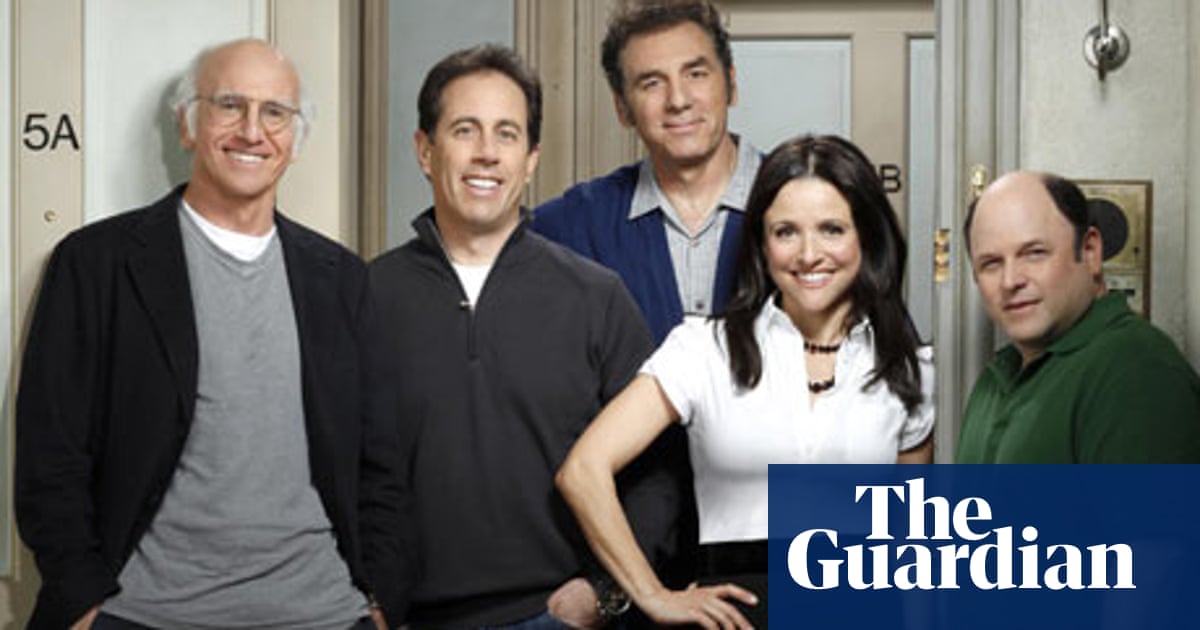
When I watched Seinfeld, I had no idea why it appealed to me so much. It was funny, of course, but there were dozens of situation comedies on the air at the time, and hundreds of them throughout history. Seinfeld was special to me, and I had no idea why. When I learned that the writer’s room had a “no hugging and no learning” thematic approach, I said, “That’s it” to myself.

Seinfeld was special, because it wasn’t “special”. Everyone from the creators, writers, on down to the actors made no effort to be special, nor did they add special ingredients into the mix. The special ingredients for most writers on most situation comedies involved the “very special episodes”. These episodes made special connections to the audience through special issues. A character, in their narrative, discovers that they’ve been so wrong for so long that they now question their foundation, and the audience understands, agrees, cries, hugs, and leaps to their feet in “clapture”. Clapture is a framing technique used by comedy writers to get the (Emmy!) audience to clap with laughter, or to agree with them more than laugh. I didn’t realize, until Seinfeld, how cringeworthy those special, meaningful messages were. The Seinfeld writers maintained that there would be no hugging, no learning, and if I might add, no special understandings in their show. They just tried to be funny. When we watch such shows, we always wonder if they reflect our values, or if we begin to reflect theirs. I think Seinfeld, more than any other sitcom I’ve watched, reflects my values. I prefer a good steak with very little seasoning and nothing else! Unless steak sauce is used to cover up the quality of the meat, I want nothing else on my steak. If you’re going to come at me and tell me what you really think of me, I prefer that you come bold with no qualifiers. I also prefer music that is complicated, fun, interesting, creative, relatively brilliant, unique, and utterly meaningless. Don’t tell me what you think of the domestic economy of Istanbul, the mating habits of the emu, or anything else that you wished you put in your college thesis. Just write lyrics that fit the music and be done with it. Seinfeld, in my opinion, met all of those standards.  

My Advice, Don’t Follow my Advice


“Try to find someone nice!” is the advice I give young uns. They won’t listen, and we know they won’t, because we know we didn’t. We had to get over our attraction to the naughty first. The naughty are just more fun and fascinating, and they’re mean. No matter how hard “they” try to redefine funny, mean is just funny, when it’s not directed at us of course. Their violations of social protocols and etiquette, aren’t just funny they’re relatively informative, in the sense that their exaggerations of the opposite teach us a lot about ourselves. Nice comes in very low on our mate-o-meter when we’re young. Nice usually comes after all the bad boys and girls beat us down.

“I don’t want to play games,” we scream, they scream, and we all scream for ice cream. “I hate the games people play, and I try to avoid drama.” Then why did you date them? We dated them, because even though they were jackballs to everyone else, they were actually pretty nice to us, for a time and in small doses, and that made us feel special. We also enjoyed the vicarious attachments people made with us when we were around the mean and naughty. After dating those who made us laugh so hard that we cried, and cried so hard we laughed, we eventually decided to go out with someone who did nothing more than say something nice to us while we were watching TV with them, someone who appeared to enjoy cleaning the living room with us, and preparing a barbecue for a family reunion. We found ourselves opting for the stability and sanity of the nice. Some might call that boring, and that’s fine with us after everything we’ve been through. My advice is to date the tumultuous types for all of the excitement and fun they bring, but make sure to break things off before you start hearing substantial calls for commitment.

Save Your Money, Man, Save Your Money   

Those wild, good times cost money too, and the good times never last as long as we think. It’s Oh-So-Good right now, and we have no reason to believe it won’t last.

Someone pays us, and we don’t deserve it. We earn it! We earn it every day, and in every way. We work as hard as we play, but there will come a day when that will fade away, and things will happen. Things always happen, that’s the thing about things. They slap us from so many different directions that some of them aren’t even listed on Google Maps. What happened?

Save your money man. Save for that day. “Save 10% of every paycheck,” they say. Others suggest we save the equivalent of three-months of our salary. Both those figures are low, far too low for me, but I’m a saver. Most people can’t, or won’t, save, and living the spartan lifestyle in the present just seems like a waste of life. Carpe diem, seize the day, and save until the end of the year. When we do the latter, and it’s “all good”, we blow it all. 10% and three-months salary is a decent compromise for them. “It’s just money,” they say, “and I would rather live a life of fun and adventure than have a nest egg. Plus, isn’t money the root of all evil?” It is, if you have it. When we don’t, we see it as the necessity it is, and we learn the definition of penniless powerlessness. We’ll also learn what it feels like to depend on others for everything, and dependency can be humiliating. It almost makes us feel like a child all over again. My advice, do everything you can now, when times are good, to avoid slipping into that spiral.    

We should’ve and could’ve spotted the spiral before it started to swirl. We know that now, and we see the pivot points now that could’ve changed it? If we had the foresight, we never would’ve gone left instead of right or right instead of left, at that crossroad.

Think about where we would be right now if we had some foresight? If I only applied for that job/promotion that I didn’t think I was qualified for, but I probably was. I mean look who ended up getting it. If I had older siblings, better parents, and I made more friends, or dated more often just think what I could be now. And college, college! If I paid more attention in college, my life would be oh-so different. We can’t stop thinking about how that person, equally qualified, landed our dream job or promotion, because they threw a relatively worthless degree in basket weaving at the “theys”. The best explanation I’ve heard for why this happens is that attaining that sheepskin displays perseverance.

Experience teaches us two things, college degrees don’t mean as much as we thought they did, and it’s better to have one than not. But, and there’s always a butt, how many of us would probably be in almost-the-exact-same-space we’re in right now, if we attained the golden ticket? How different are the lives of the college graduates in our peer group? Generally speaking, they got a job, and we got a job. Even with all that, there’s a super-secret part of us that thinks if we just paid more attention in Mr. Crippen’s Astronomy class, we could all be astrophysicists by now. It’s possible, of course, but it’s more likely that if our academic accomplishments landed us a job on the Starship Enterprise, we’d probably end up a red shirt sent to investigate the spiky colorful plants that shoot out deadly spores.

The Bonkers

Avoid “The Bonkers” if you can. Our parents introduced us to the Bonkers multiple times. The Bonkers were our parents’ friends, which pretty much means our parents were bonkers too, as opposites don’t always attract. Some of the times, people make friends because they share a worldview, and some of the times it’s happenstance, but commonalities often weave their way into friendships. The Bonkers have ideas about how the world works, and their ideas are always nuanced approaches that are subjective to their worldview, fascinating, and wrong. If my parents were bonkers-free, they would’ve stepped up on The Bonkers at some point and said, “Hold on, that, right there, is just insane. I know you’re not willing to die on that hill, but if the Chinese are correct in saying that every adult leaves a mark on a child, I don’t want that influencing my child.”  

The primary characteristic The Bonkers share is resentment. They have an explanation for why they didn’t achieve in the shadow of their boogeymen. They were the child who didn’t get enough attention, who became an adult that was cheated out of the system for a reason so bizarre they feel compelled to repeat that reality-shattering explanation at every outing. In reality, they didn’t have the talent, ingenuity, wherewithal or perseverance to make the big bucks, and they spent their lives characterizing, and re-characterizing, those who do. I met their boogeymen more than once, and I knew some of them. When I unmasked them, I learned they weren’t the boogeymen of The Bonkers’ resentful narratives. They didn’t have near the money, power, or influence detailed in The Bonkers’ tales, and they didn’t make calculated moves to hold the little guy down. They were just as insecure, normal, and common as the people telling their tales. To move these findings from slightly funny to hilarious, I learned that most boogeymen have their own boogeymen. 

One of the best little tidbits I’ve ever heard came from a total wreck of a person. She said, “You raise a child to a certain point, and no one knows  where that ends, but at another point you learn to stop raising them and start guiding them.”

Another friend of mine dropped this nugget, “The number one rule to parenting is to spend time with your children and be there for them. The best element of my dad’s inept parenting was that he always made time for me. He made so many missteps and unforgettable mistakes, but he was always there for me. You’re going to make mistakes with your kid, we all do, but if you spend time with them, it will edit and delete some, if not all, of your mistakes.” Time, in other words, heals all wounds. 

How much time do we have for them? How much time do we have in general? Most narcissists are so into “me time” that they should’ve entered that data into their reproduction algorithm before going down that hole. Is it more narcissistic to require more “me time” or more time? We don’t even know the definition of narcissism, but we’re all narcissists and none of us are. “Yeah, you’re talking about that other guy.” 

I’m a storyteller, and I tell stories the way others play chess. I appreciate the fact that readers want a streamlined point of focus, but I cannot help considering the other side. When someone provides me a story from their day, I immediately think about the other side. (For those who want friends in life, don’t do this. People don’t like this. They want you to side with them in their story.) Learned, intellectual types suggest that it’s impossible for us to be objective, this is what learned, intellectual types call hyperbole. Of course total objectivity is difficult to difficult to achieve, but that doesn’t mean we shouldn’t try to achieve it. Some don’t, and when I hear their stories, I can’t help but think about this situation from the other person’s perspective.  

When we tell our story, it’s filled with faults and variables. We’ve all had primrose paths and well-marked minefields on the map of our crossroads, and most of us chose the well-marked, yet uncharted minefields. When we detail for our children the ramifications and consequences of our actions, we conclude with, “But I know you’re not going to listen to me, because I didn’t listen to my dad. Your best scenario is to experience everything yourself, then remember what I said here today. If you learn to couple your experiences with my advice, as I did with my dad’s, you might turn out halfway decent.” He listens to me now, at this age. That will change, of course, but our job is not to build the structure, it’s to create a foundation from which they build.

Rilalities X


Are you offended? Have you ever met someone who was easily offended? Have you ever told them that that gives the other side ammunition? Their response centers on the idea that it’s not them. They’re not easily offended. The just find the other party offensive. A talk show host, named Dennis Prager, took questions from the audience after a speech. A woman asked Mr. Prager a question. In the course of that question, she informed him that his views on the subject of her question offended her. When she finished her question, Dennis Prager answered it. He then went back to the idea that he offended her. “You said you were offended,” he said. “Why were you offended?” The two went back and forth for a bit before it became clear that her basis for declaring Dennis Prager offensive was that Dennis Prager had a different view on the subject. An older, wiser Dennis Prager looked back on that Q&A and suggested that the sole reason the woman was offended was that she disagreed with his opinion on the matter. “This,” Dennis Prager said, “Is what is going on in our culture today. Too many people confuse having a different opinion with being offended.”

We all believe that we have special insight on a given subject that leads us to know more than others. The others could be wrong, and they could be ill informed, but those that are offended believe that it’s more likely that they have a nefarious motivation for believing the way they do. Some of us do have a motive, and some of those motives are nefarious. We cannot discount that. We can say, however, that not everyone that disagrees with another has a nefarious reason for doing so. This is what we call painting with a broad brush. When a loved one disagrees with us, we know that we can’t paint them with this broad brush, so we find, or fabricate, a motive for them disagreeing with our impassioned pursuit of the truth. It seems impossible that educated people that have put some thought into their opinions can disagree with ours, so the only answer can be that they’ve arrived at their notion by nefarious means, and that offends us. Claiming offense seems like a shortcut to persuading another of their views. It’s a way of saying that I hold passionate beliefs based upon my special insight into the human condition, and you are not only wrong and lacking by virtue of your limited insight, but you are irredeemable.

Here’s how to do it, for the uninformed. If the member of an audience hears a comment from someone that audience member shares a worldview, or they like on a personal level, it doesn’t matter what that comment is, the audience members finds a way to support, excuse, or forgive that provocateur’s comment. The general thesis of their reply is, “I know what’s in his heart.” If a provocative point comes from an individual that has an opposing worldview, it doesn’t matter what’s in that person’s heart. In an attempt to portray themselves as well informed, the offended will react to the provocateur’s point. In the face of what they deem to be an offensive statement, they react. They don’t argue against the merits of the case the provocateur presents, and they don’t offer a substantive counter argument. They react, and that reaction is to claim offense. Being offended permits them, and some would say obligates them, to be offensive in return.

Bowie: The difference between rock stars and musicians/artists is a wide chasm. The groups AC/DC, Eagles, and ZZ Top developed a formula that consumers enjoyed, and they enjoyed the formula. The bond between the two was such that the rock stars didn’t venture outside the formula. If their fans would argue that point, they would have to concede the groups put less effort into making their albums as different as the albums in David Bowie’s catalog. The consumer never knew what to expect from David Bowie. Most of us now know the history of David Bowie, and we now assume that long-term success was a forgone conclusion, but a broader look at his career suggests that Bowie could’ve rested on his laurels after delivering Hunky Dory and Ziggy Stardust and the Spiders from Mars. How many artists would’ve sold their souls for half of the longevity of these two albums? How many artists would’ve done whatever it took to carve out the niche Bowie did in the rock world with these two albums? How many artists would’ve then released various incarnations of the formula found with those two albums, at such a young age? How many of those same artists would’ve been so grateful for the financial support that the record industry offered them to achieve such success that they would’ve been susceptible to their advice? Bowie could’ve had a successful career based almost entirely on the Ziggy Stardust character. What David Bowie decided to do was retire the Ziggy character soon after he achieved a peak with it. Three years later, he delivered an entirely different sound in Young Americans, and five years after Ziggy Stardust, he delivered three albums (in the space of two years) that demolished everything he built to that point and rebuilt a new sound for himself that some call his Berlin trilogy.

The thing with invention, and reinvention, is that an artist is bound to disappoint those that expect a more regular, consistent product. The thing with experimentation, on par with some of David Bowie’s discography, is that not all of it will work. No one that listened to Ziggy Stardust for the first time would expect that artist to produce the Low and Scary Monsters albums. Those albums are a stark departure from that which preceded them, as are Hours, Heathen, and Blackstar. I’ve listed but a few albums here, but most of the albums in Bowie’s catalogue had an individual beauty that any music lover should explore. Not everything Bowie touched turned to gold, of course, but I would say that he, more than just about any artist in his rarified air, believed that the essential ingredient of the artist was to take a risk and pursue avenues their audience might not, and often times did not, find entertaining. It is for this reason that I list David Bowie at, or near, the top of the list of rock stars that also happen to be musicians and artists.

These Dreams: Every person has dreams, hopes, and aspirations. Our individual dreams describe us as well as anything else does. I knew a person that believed that he discovered a ticket to ride. He spent a number of years compiling a VHS tape of nude scenes from movies and television shows. Before anyone begins assigning modern techniques to this pursuit, they should know that my friend make this tape in the basement of a home, in the Midwest, in the 80’s. My friend had no technical equipment. He had a pen, a notepad, and a VCR. My friend had no idea how many hours he logged compiling this tape, but he had to watch a movie, document the minute mark at which the actress removed her top, wait for the scene to arrive in the second viewing, and hit record at the perfect moment. For those that don’t remember, the cable channels of that era assisted my friend by replaying the same movie repeatedly. My friend spent years collecting these scenes, and he swears he had a three-hour tape almost full of, on average, four to five second scenes, when his sister found the tape and recorded over it. She recorded the movie Vamp for those interested in history.

Much later on in our friendship, I found a book that documented these scenes for him, so he no longer had to do it. I gave it to him for his birthday. He considered that book a bittersweet present. I was confused. I didn’t see how he could be anything less than overjoyed at the prospect that he was onto something with that tape. I told him the book had become a best seller.

“I should’ve written that book,” he said. “That book led me to the realization that I wasted years of my life making a tape that wouldn’t have seen the light of day. I was a dumb kid,” he furthered. “I didn’t know anything about licensing and attaining a person’s rights to using their image. That book had those scenes documented down to the minute, and the description of those scenes, just as I had. You joked about those little notepads, but I filled with the descriptions of the scenes in which Hollywood’s brightest stars showed their hoo hoos. It also had the exact minutes and seconds into the movie in which those top stars removed their tops. I didn’t think of rating those scenes, like that author did, but if I had spent some time writing a book on it, I probably would have come up with that. I could’ve made some real money off a book like that.”

Objectivity versus obliviousness: A friend of mine, we’ll call her Fawn, opened a story from her life with the qualifier, “This is not a story that you will view from objectively.” She said, “I don’t want you playing devil’s advocate with me. I just want you to listen.” When she finished, I went silent, as a form of rebellion to her direct order. “Well, what do you think?” she asked. I told her that she did not permit me to answer. She said I was. She just said that it had to be within the parameters that she drew up.

Everyone wants their listener to side with them in a story from their life, some just want the listener to listen with a comment the sides with them. Most are not this blatant. I thought it was a hilarious comment on the idea that I rarely take her side.

Another friend, a woman named Maddie, informed me that her friend Patricia invited Maddie to lunch at a restaurant. Maddie informed me that she reluctantly agreed to meet Patricia in this restaurant. After agreeing to go, Maddie decided that she wouldn’t be going. Maddie informed me that she had no other plans. She just didn’t want to go. Maddie also admitted that she never attempted to call Patricia beforehand to inform Patricia that she had changed her mind. Maddie then informed me that by not going, she would be leaving Patricia alone at that table in the restaurant. As the morning hours crept toward to noon, Maddie decided that she was not going to go. Rather than go through the painstaking process of developing an excuse “I just blew her off,” Maddie told me.

After the questions and answers established the particulars of this situation, I said, “How would you like that if she did that to you?” I considered this a time-honored question that my dad asked me so many times that it’s an ingrained response. I dare say that most people have a version of this question ingrained in their brain. I didn’t consider this question a brilliant display of my skills, and I didn’t consider it confrontational. I consider it a question that my dad would’ve asked of me, if I relayed such a story to him. It’s a question we ask of one another, when we think the other side doesn’t see the error of their ways.

Maddie had apparently never had a parent put them through the character-building exercise of viewing matters such as these, objectively. She informed me that Patricia wouldn’t do that to her. “You’re missing the point,” I said. In the course of this email, I set off a firestorm by saying, “I have to tell you that I think what you did was wrong. It would be one thing, if you had conflicting plans, or if you called Patricia to cancel your lunch, but leaving her at the restaurant alone was wrong.” This was the gist of my reply. It might have been a little longer, but I can report with confidence that I did not disparage Maddie’s character in any way. I did write that email, I must confess, but I deleted it. I wrote a second email that omitted my personal feelings on the matter. I wanted Maddie to continue to be my friend, but I thought someone needed to tell her what she did to Patricia was wrong.

This set Maddie off, I would later learn. She couldn’t understand why I would do this. She spoke to her brother, my best friend, to try to understand why I would say such a thing to her. They both knew that I had no allegiances to Patricia, so they couldn’t understand how I could condemn Maddie’s character in such a way.

“What’s wrong with your friend?” Maddie asked her brother. “He’s freaking out. Accusing me of stuff. He’s hysterical.” My friend, her brother, asked her for the details of the story. Maddie told him. He believed that it was all about him. He had a history of telling me that he would show up to a restaurant, and he wouldn’t show. He did this to me more than ten times. He believed I was harboring ill will towards him. I could see how he would think that, I could even see that he might have viewed me as empathetic to Patricia in that regard, based on our history, but I can tell you that I didn’t consciously call upon those moments in my defense of Patricia. I am the type that will judge people for their actions, as often as I expect them to hold me accountable for my actions, but that had no bearing on my exchange with Maddie. In the email exchange I had with her, she provided me a scenario, and I reacted. If there were never any prior occasions to match that one, and I would’ve provided that qualification in my answer.

As for the hysterical charge, our conversation occurred via email, so there was no way she could’ve determined if I was hysterical. I wasn’t hysterical. I just thought it was wrong, and I think 99% of the population would agree with me. Maddie is a princess though. Maddie lived a life where she could do no wrong, and she never had people call her out like that. Therefore, even though she couldn’t say I was wrong, she found an interesting way to make me the bad guy.

I think the two parties concerned should applaud me for my objectivity in this matter. It’s true I have no allegiances to Patricia, but Maddie was my friend until this argument. I could have viewed this episode from her perspective, but I didn’t. I made an effort to be objective. I tried to give Maddie every out possible. I asked her if Patricia had ever done this to her in the past, I asked if Patricia had ever done anything that warranted such as action on Maddie’s part, as a form of revenge, and Maddie assured me that Patricia hadn’t. I don’t think she knew what I was getting at.

No matter how many times I experience a situation similar to this, it amazes me how oblivious some people can be. My dad raised me to ask that “How would you like that if they did that to you” question. He raised me to abide by the “Treat others the way you want to be treated” credo that we all know, and we all shake our heads in agreement to it. The years I’ve spent interacting with people have taught me that most people don’t abide by tenants they shake their head to, but the obliviousness to confronting it in a given situation often shocks me.

I can see how an outsider, that doesn’t know Maddie, might think some form of guilt guided her into projecting me into the role of the bad guy, but I know Maddie. I know that guilt is not on her wheel of emotions. I believe her attempts to understand my simple reaction to her real-life scenario was genuine. When she couldn’t find my motivation for condemning her, because it made no sense to her that I should consider her actions wrong, she deemed me hysterical. When that didn’t make sense to her, she approached her brother. He came up with an answer, a plausible answer that I didn’t consider, and the two of them were satisfied with that answer. The idea that telling someone you will have lunch with them, only to blow them off and leave them at that restaurant alone, is the wrong thing to do didn’t even enter their conversation. It may sound like there’s more to story on the part of Maddie and her brother, but I can assure you there isn’t. They simply didn’t see it as wrong.

Prescription Drugs: “I think that we should take away the control doctors have over prescriptions.” How many problems in our country are drug-related? How many people have progressed from using illicit drugs to prescription drugs? How many more problems would result from the population having unfettered access to prescription drugs? At this point in a theoretical situation such as this one, the libertarian would suggest that we don’t give people enough credit. One could suppose that suspecting widespread chaos is unilaterally cynical. Yet, my counter proposal is that it’s not cynical to state that good and honest people, experiencing chronic pain, can accidentally develop a habit for taking painkillers as a means of soothing chronic pain. It’s also possible that these good and honest people can either ignore the harm these drugs can do in their quest to seek relief, or they might not have a thorough understanding of the harm some of these drugs can do. A possible overdose could occur, if informed third parties do not govern usage. Some of these informed third parties rely on test studies, and outside research to understand the benefits and harm of these drugs. They might better inform the chronic pain sufferer of the damage they may do, they might advise curtailing, and they might suggest a less addictive, alternative.

I attempt to be as libertarian as anyone else and I try to maintain an openness for suggestions regarding how America can become more libertarian, but I would suspect that one of the most libertarian politicians in Washington, ophthalmology physician Rand Paul, would agree that keeping restrictions on access to prescription drugs limited is a good thing. The answer my friend had was to take away all controls, so that we might thin the herd. You’ll have to trust me on the characterization of my friend, when I say that he was not joking.

Death: We will exit our celestial plane on a waterslide. A centrifugal force greater than gravity will pull us to the portal. The force will be such that it takes our breath away. It will dawn on us, before we hit the portal that we are dead. We will consider all we’ve left undone before we hit the slide that will take us to our next existence. Those thoughts will consume us to the point that not only will we not enjoy the ride. We won’t remember it. At the end of our ride, we will enter our local bar. The bar will be so close to our home that we will see our house on the hill. The lights will be out. Our family members will still be sleeping. We will wonder about the effect our departure will have on their lives. We will sit with many people in this bar, some of the associates we knew in life, some of the friends, and some of our loved ones that have passed on. They will tell us that this bar is our way station, our purgatory if you will, to ease us into the transition of our afterlife. They will tell us that the mystery of life is beyond most mortals, and that the only thing we do understand is that it moves on. This will soothe us and depress us. We were never as vital to their existence as we once thought. We will eventually run into an individual whose existence mirrors ours. They will tell us, “Life goes on. My son even laughed at my funeral. He wasn’t disrespectful. He wasn’t laughing at me. Somebody told a well-placed joke, that had nothing to do with anything, and he laughed. He laughed hard. I find it a depressing exclamation point on the idea that life goes on.”