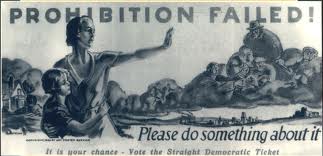
Attn: Apathetic America! We’re Watching You!


Getting out the vote is a term that most of us know, but few of us define. When we hear that politician A beat politician B, because politician A was better able to get out the vote, we all accept that as a standard measure of a successful campaign, but few of understand what that term actually means. We assume this means that politician A’s platform encouraged groups who normally don’t vote to vote, we also assume that politician A has built a ground game that has state and local supporters encouraging their friends and family to vote. We may even think of local people who drive to elderly people’s homes to assist them to their local voting booth. Those who were fortunate enough to receive a letter similar to the one in the accompanying photo, with an accompanying post card, before the November 4, 2014 election, now have an alternative definition of getting out the vote.

Chances are if a voter is a resident of North Carolina, New York, Kansas, Alaska, Illinois, or Florida, and they are a registered voter with a spotty record of voting, in one of these “projected-to-be” close elections, they received something along the lines of this letter. Chances are they were shocked and outraged at the ominous, threatening, Orwellian, and some would say invasive language used in this mailing. Chances are, at one point or another, they’ve heard others complain, and grow outraged, at the invasion of privacy that is occurring in America, but it’s never affected them, so they’ve always found it difficult to get worked up over it. Chances are, if you were one that received one of these mailings that has now changed for you.

Voter-Indimidation-back
Photo from Jim Lakely’s http://blog.heartland.org/

Various election commissioners, and spokesmen, gained some distance from this activity by saying that voters have nothing to worry about with these letters, because they did not write these letters. A public relations firm, they said, wrote the mailings. The election officials may have approved the mailings, but they did not read them, and they had no input into the language used. We can guess that the public relations firm who wrote the mailing devised an answer for the campaign to use in this defense. We can also guess that this is a ‘go away’ answer that PR firms develop to answer the question without really saying anything. The answer follows the Clintonian blueprint of delay, delay, until the situation goes away.  

For those who don’t find this answer acceptable, one election official floated a trial balloon that suggested this ‘get out the vote’ campaign was “Used by Democrats to counter the suppression efforts that Republicans employ” –the most prominent of which is the requirement that a voter provide identification when they register to vote. This tactic attempted to take focus away from the activity in question by focusing it on the enemy. 

This election official, a New York State Democrat Committee spokesman named Peter Kauffmann, then added, “The difference between Democrats and Republicans is they don’t want people to vote and we want everyone to vote.” If that doesn’t do it for you, how about something along the lines of ‘We all need to do whatever it is we have to do rid our country of the politics of hate!’ This might seem like a silly tactic, but it works for those who hope it’s true.

If the reader is still not satisfied after all that, well, they’re just going to have to accept the fact that they received this ‘get out the vote’ mailer, because they are perceived to be a lazy, apathetic person who needs to be threatened with language that a New York Post piece characterizes as “better suited to a mob movie” that culminates in a “Democrats: vote or we’ll kick your ass!” type of message that may intimidate you into turning off the Minecraft to vote!

If the voter is still upset after Democrats remind you that “Our democracy works better when more people vote, not less”, and they consider these tactics to be along the lines of public shaming and a “we’re watching you” form of personal intimidation, they’re probably just going to have to well … shut up. It’s the new way of getting out the vote, as a result of the findings from various behavioral studies, including a 2008 Yale University study, that suggest that these tactics are very effective, so we had all better get used to it.

One would have to assume that if market testers put these mailings before the American public, and they asked these Americans how effective they thought these tactics would be in turning out the vote, these mailings would never go out. We can guess that 99 to 100% of the test subjects would suggest that not only would these tactics not work, and that they might cause a reflexive rebellion. What would be that form of rebellion? One would have to guess that a majority of these test subjects would say that they might include the recipient voting for the opposite party, if they had access to the party responsible for sending them the intimidating letter. “Americans won’t respond well to such intimidation techniques,” is something that most of us would say in our exit interview.

I’m sorry, but you’re wrong, these behavioral studies suggest, and the New York Post piece furthers, reporting that “Such attempts to shame people to vote –what politicos call “social pressure” or peer pressure– has become more common place, and it was used in the ‘get out the vote’ 2012 Obama campaign.”

The Democrat National Committee (DNC), feared a backlash from voters when the idea of attempting to shame them into voting was first presented to them (circa 2006). As evidenced by the mailings received by registered Democrats, in 2014, and an October, 29 2010 New York Times piece on this matter by Sasha Issenberg, the DNC is reported to have received enough evidence between 2006 and 2014 to suggest otherwise.

“Before the 2006 Michigan gubernatorial primary,” writes Issenberg, “Three political scientists isolated a group of voters and mailed them copies of their voting histories, listing the elections in which they participated and those they missed. Included were their neighbors’ voting histories, too, along with a warning: after the polls closed, everyone would get an updated set.

“After that primary, the academics examined the voter rolls and were startled by the potency of peer pressure as a motivational tool.  The mailer was 10 times better at turning nonvoters into voters than the typical piece of pre-election mail whose effectiveness has never been measured.

“Political consultant, and manager of Al Gore’s first Senate campaign Hal Malchow, was intrigued by the results of that initial mailer.  Machow started a direct-mail firm and attempted to coerce its clients, The DNC and the A.F.L.-C.I.O., to use these tactics to increase their voter turnout.  As stated earlier, these clients blanched at first, fearing that the language sounded intimidating, and that they could result in a backlash.

“In reaction to those fears, Malchow softened the language of a future mailer sent to over 11,000 New Jersey residents, as that state prepared for a gubernatorial election.  The language in this letter was less ominous “while still making it clear that recipients’ voting habits would continue to be monitored.”  The softened language of that mailer went as follows: “We hope to be able to thank you in the future for being the kind of citizen who makes our democracy work.”  The result was less effective than the original mailer Malchow had proposed, but it increased voter turnout by 2.5%.  Future letters also thanked voters for their past participation while hoping to encourage current participation at the same time. ”
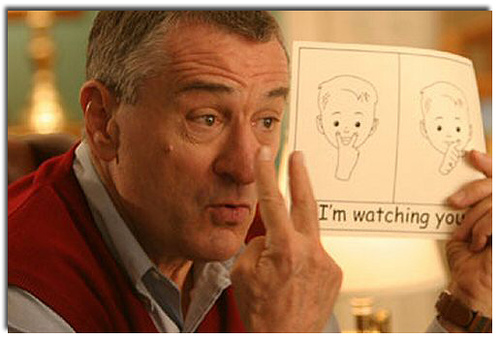
The Issenberg article goes on to describe the various behavioral science techniques employed by others, and the history of behavioral science influencing elections. It does not describe, however, how the language in this mailing went from the softened, thankful language Malchow employed in the New Jersey campaign and the ominous “We’re watching you!” letters received by the residents of the states listed above in 2014.

Another website, called Outside the Beltway, doesn’t provide an explanation either, but it does provide a reason stated by a spokesman of the New York State Democrat Committee, a Peter Kauffmann, behind the need to intimidate people. The exact question put to Mr. Kauffmann regarded why the state of New York would tacitly approve such a mailer:

“This flyer is part of the nationwide Democrat response to traditional Republican voter suppression efforts – because Democrats believe our democracy works better when more people vote, not less.”

The site also lists the intimidation some Floridians experienced from a letter sent by a group funded by the state and national realtors association that included the message:

“Your neighbors will know. It’s public record.”

The final “vote shaming” letter the site presented on this site is one received by residents of North Carolina. The North Carolina Democrat Party sent this particular letter, and as the author of the Outside the Beltway piece, Doug Mataconis suggests, it “contains some of the exact same wording as the New York letter.”

“Public records will tell the community at-large whether you vote or not. As a service, our organization monitors turnout in your community,” the letter says, according to WRAL in Raleigh. “It would be an understatement to say that we are disappointed by the inconsistent voting of many of your neighbors.”

Some versions of these letters include an ominous warning at the bottom that anyone that has had a stern grandmother, or a strict nun for a teacher, will know well:

“If you do not vote this year, we will be interested to hear why not.”

If you had that stern grandmother, or strict nun for a teacher, you know that piercing glare that often follows such disappointment. That piercing glare rises over the horn-rimmed glasses, into the subject’s soul, until we all experience a reflexive shudder. Another, similar version of this letter states:

“We will be reviewing (Your) County official voting records after the upcoming election to determine whether you joined your neighbors who voted in 2014.” 

Remember, while reading the full-fledged letters, and the excerpts contained herein, that registered, Democrat voters are the most common recipients. Those that read such letters may reflexively conclude that the party of Big Brother, the Republican Party, is sending them out. Other than a 2014 letter that Mitch McConnell sent to Kentucky voters that some call intimidating, that after reading numerous times I find difficult to call intimidating, and a 2012 letter in Virginia, I was not able to find another Republican engaging in any similar tactics.

“Who you vote for is your secret,” one of these campaign mailers state, “But whether or not you vote is public record.”

Anyone that has watched the TV series, The X-Files, can imagine these words coming from the smoking man, bad guy –with pictures of Republicans in his background. To show you how shocking this would be if it were on TV, as opposed to real life, this chunk of The X-Files’ dialogue would be coming come from the good guy —with Democrats pictures in the background— the Fox Moulder character.

The sites that show these letters, report the activity, and comment on the text therein, are careful to add that none of these tactics are illegal. The letter, with the accompanying post card, even instructs you that there is nothing-illegal going on here, with its qualifier, “Who you vote for is secret, but …” One has to wonder why they felt the need to include this qualifier? We can guess that they knew the outrage they would receive, but they were willing to endure that if they saw a 2.5-to-10% increase in turnout? Did they fear lawsuits, voluminous calls to the election commissioner, or the secretary of state? Did they add the bit about “Whether you vote or not is public record” to assure you of the letter’s legality? If it did, did it also assure you that the letter wasn’t, in any way, treading along the line of ethics? Did it assure you that this letter wasn’t the least bit creepy? Did it lead you to believe that it wasn’t, in anyway, infringing upon your right to be apathetic? The latter may seem a goofy right to champion, but among the many rights we have in this Republic, is our right to sit on our couch and play Minecraft straight through an election if we want to.

A site called Gothamist listed some reactions from recipients of this mailing in the state of New York:

“I’m a regular voter and loyal Democrat, so I was taken aback by this creepy and almost threatening letter from the New York State Democratic Committee that I got in the mail today,” one disturbed reader in Downtown Brooklyn told us.

“Another who received the mailer on the Upper West Side added, “I can’t believe they think this will actually make anyone more likely to vote, and it certainly doesn’t make me want to vote for any of the Democratic establishment candidates.”

The unofficial target of these letters appears to have been registered voters that do not vote 100% of the time. Another unofficial target, in most of these states, appears to have been registered Democrat voters that do not vote 100% of the time, and the final unofficial target of these letters –that we assume through inference– was uninformed registered Democrat voters that do not vote 100% of the time. (The latter inference is made based on the reasonable assumption that a number of young, Democrat voters registered in the past for the sole purpose of voting for Barack Obama as president, but that they did not have the same passion for the candidates of a midterm election in their state and locale. We also base this inference on the assumption that most informed-to-well-informed voters need less prompting to vote.) For all of these apparent targets, there are other stories of twelve-year-olds being the subjects of these mailings, and others that do not meet the age requirement, and still others that happened to live in another state during an election that they were reported to have missed.

One could say, based on the public shaming and “we’re watching you” form of personal intimidation contained in these letters, that their primary message is that citizens need to fulfill their patriotic and civic duty and vote. Some might suggest that this campaign tactic dates back to the campaign to elect George Washington, but the “we’re watching you” text, the “If you do not vote this year, we will be interested to hear why not,” that the New York Post characterized as a: “Democrats: Vote or we’ll kick your ass!” tactic is new to some of us.

It’s not new that politicians, and political parties, and election commissions, call upon you to vote. What has not been a point of concentration of theirs, or that of our society in general, is the call for people to educate themselves before they vote. Friends and family may call upon you to vote, to fulfill your civic and patriotic pride. They inform the uninformed of the thousands that have died to maintain this right/privilege/honor for them, but if the undecided voters decides not to educate themselves –for whatever reason— on the issues, or the politicians, how is going through the motions of voting doing a service to those in the past, present, or future? They will be filling in ovals, touching computer squares, or punching out chads.

No one is saying that this duty to cast an informed vote requires that the voter buy a subscription to The New York Times, The Wall Street Journal, or the local newspaper. No one is saying that the uninformed voters become political junkies, but every civic-minded patriot that plans to vote should know the basics of the politicians, the initiatives, and the judges they vote on. These people will affect the voter’s community, state, and country. If the undecided voters grows sleepy at the mere mention of the word politics, or you get so irritated by the subject that you run out of the room screaming, once your Uncle Joe starts in, and you’re going through the motions in the voting booth so everyone will shut up about you dishonoring those that have sacrificed their lives. Don’t vote.

Don’t vote if you have a proclivity for voting for the cutest candidate. If you are one that has a propensity for voting for the candidate that is taller than their opponent is, or one that you’d most like to have a beer with, don’t vote. Don’t vote for a person that makes you feel more comfortable, but you can’t put your finger on why. People, and now parties, will try to make you feel guilty for failing to vote, but you should do everything you can to resist heir intimidation tactics. Don’t listen because you know enough to know that your vote could lead to you voting for the worst possible candidate for your community, state, and country. Don’t vote, no matter how guilty others try to make you feel for not doing so, because you know that the best thing you can do to fulfill your patriotic/civic duty to your community, state, and country is to avoid inflicting upon them your willful ignorance.

If, however, you are an apathetic citizen that is wearing down under the weight of all this pressure to vote –even if you don’t educate yourself– just vote! You may not understand it, but you just can’t fight it anymore. If this is you, and you were further intimidated into voting by this letter, with an accompanying post card –even though you find it hard to believe that all of these behavioral studies suggest this works, and that they will continue to use it in upcoming election based upon their findings– go ahead and vote. Take note of the political party that approved this mailing, be it Democrat or Republican, and vote the opposite. If an exit pollster pesters you about the candidate to whom you cast your vote, tell them, and tell them why. Tell them that you don’t care about its legality, or the information they’ve gleaned from their precious behavioral studies. Tell them that you regard the letter as an attempt at personal intimidation, and that you want to punish such behavior.

A Story of Appreciation and Gratitude on Veteran’s Day


Old-time soldiers, like my dad, put their military service behind them for the most part. They were proud to have served their country, and that service shaped the rest of their lives, but they usually didn’t talk about it a lot, or wear it on their sleeve. For the most part, most soldiers like my dad, were humble men who went about their daily lives as anonymously as rest of us. They never sought appreciation, or gratitude, and some of what they did receive embarrassed them a little. This is the story of one day, in my dad’s otherwise anonymous life, he received gratitude and appreciation, from otherwise anonymous people in his favorite restaurant, and how much that meant to him.

VFWMy dad wore his Veterans of Foreign Wars (VFW) jacket, and hat, when he attended the local VFW, because he wanted his fellow soldiers to know that he was one of them. He enjoyed the camaraderie of speaking with fellow soldiers at the VFW, and it made him feel proud to be considered a part of that group. My dad didn’t, however, wear his VFW jacket and hat casually. I can’t remember him wearing them to the store, in restaurants, or in any establishments other than the VFW.

On one particular Veteran’s Day, my dad was feeling especially patriotic. He didn’t know why he felt that way, on that particular Veteran’s Day, he just did. He just wanted to wear his VFW jacket and hat to the restaurant he frequented for breakfast.

“A little kid came up and shook my hand,” he said, “and he said ‘thank you for your service sir’. I thought that was so cute,” my dad said with a smile, “and I shook the little feller’s hand. Then I found out that some anonymous patron in the restaurant informed my waitress that ‘that man, in the VFW jacket, will not be paying for his meal today.’ I thought they had me confused with someone else,” my dad said. “I thought, they confused me with some kind of war hero. Another man, a young man with big muscles, came up to my table and informed me that he was currently serving. He said that he was proud to carry on the proud tradition of serving the country in the manner I did. Other people asked me what war I served in, I told them, and they thanked me for my service. People who were shopping in the [attached] supermarket, came up to my table and whispered how grateful they were for their freedom, and they thanked me for it. They asked me if I was paying for my meal, and I said no. I said that someone else in the restaurant was taking care of it, and they said ‘good’ and walked away. These people would not leave me alone.”

If you knew my dad, you knew that he described these moments of his life in complaint form. He didn’t care for people making a big deal about him. It made him uncomfortable. He didn’t care to be the center of attention. He was just at that restaurant that day to eat a little breakfast, and he was admittedly feeling a little bit more patriotic on that Veteran’s Day than he had in others past, so he decided to celebrate Veteran’s Day in his own quiet, symbolic way. He was overwhelmed by the reaction he received.

“That’s actually sounds pretty cool,” I said when my dad reached a breaking point in his rant.

He paused, a little surprised by my reaction, and said, “It was,” and he continued on with his rant about how he hated being the center of attention. That little acknowledgement, those two words, would be all he would say. If you knew my dad, however, you knew this meant that he was touched by these small displays of acknowledgement and appreciation by a bunch of anonymous people that didn’t want to disturb his breakfast, but couldn’t pass him by without saying a few words of gratitude for his service.

“It has to feel nice though to have so many people appreciate what you did though,” I said. “I mean how many times have people done that to you?”

“This was the first time,” he said, and as it would turn out the only time in his life anyone ever thanked my dad for his service. I did not want to say that he may have had those days more often, if he wore his VFW hat and jacket more often, because I didn’t want to poke holes in his day, but I’m sure he would’ve had more comments of appreciation if he sought them more often.  That just wasn’t my dad. If he had any idea that that would’ve happened on that day, in that restaurant, he probably wouldn’t have worn his VFW hat and jacket.

This particular piece is not about trying to get you to thank a soldier for their service on this Veteran’s Day. I know that some people feel a little queasy doing this. I know that some people accidentally take their freedoms for granted, and they don’t equate the sacrifice most soldiers have made with the ability to take freedom for granted.  I also know that some people feel that being patriotic is a sign of a lack of intelligence, and this particular piece is not about changing any minds in that regard. This is just a little thank you note, I wanted to send to those people that made my dad feel extraordinarily special for one day in his life.

Drug Legalization: Arguments and Ramifications


Young minds are generally convinced that a drug-filled society is the proper course to pursue, but I think we can all agree that most young people don’t think long-term, and they aren’t equipped to gauge the ramifications of their actions well. Young people are also far more susceptible to group thought, and peer pressure, and the subsequent desire to be cool or hip. Most of the people that fall into the “other” category are not adamantly for legalization or against. They don’t want their kids to have easy access to it, but as long as it’s handled responsibly, they don’t get worked into a lather over the issue. Most of the “other” people are simply waiting for a persuasive argument that convinces them that legalization will somehow benefit society.

ProhiII1) The Debacle Argument. “The War on Drugs has failed …” some will say, and some of them will leave their rebuttal at that.  To which the normal reply would be “… and?”  The implied extension on that answer is, “So, the most prominent action we have taken on drugs was a failure, and we should therefore try nothing more, and finally make the necessary moves toward full legalization.”  This is the opening salvo that proponents for drug legalization usually put forth in their argument to legalize. The logical extension of this argument is that controlled-substances should eventually be available at local retail outlets, and that they should be heavily regulated and taxed in the same manner alcohol is currently heavily regulated and taxed. Each outlet would presumably have to vie for a “controlled substance” license from their local government, and they would receive strikes against them for any violations of those licenses in the same manner such outlets now receive strikes for any violations of their alcohol license. This “War on Drugs is such a debacle, so we should eventually make drugs available at retail outlets” argument is equivalent to saying if one fence didn’t keep the mongoose out, we should just load up the chickens and place them in front of the mongoose’s burrow for easier access.

“Legalizing drugs,” former New York City Mayor Ed Koch once said, “Is the equivalent of attempting to extinguish a fire with napalm.”

2) The Alcohol Argument.  The alcohol argument is, far and away, the most popular counterargument for the pro-legalization crowd.  This argument centers around the fact that marijuana is not as addictive, nor as destructive, as alcohol.  They say alcohol makes you aggressive and angry, but marijuana makes you peaceful and happy, but they have no answer for the idea that just because it’s not as bad, does that mean it’s not bad for the person?  They may calculate the damage that alcohol does to a person, and a society, by citing facts and figures, but they usually have no response to question, “Why would you want to make all those facts and figures worse by introducing yet another mind-altering intoxicant into the open market?”  They simply state that “their” preference for altering their mind is not as bad as the other, and they don’t understand why their preference is still deemed illegal.

As Charles Krauthammer has stated: “The question is not which is worse, alcohol or drugs. The question is, can we accept both legalized alcohol and legalized drugs? The answer is No.”

3) The cost-benefits argument. The cost-benefits argument is the second favorite argument of the legalization crowd. They state that all the evidence that you need to know regarding the failure of the War on Drugs can be found in the accounting books of your local, state, and federal law enforcement agencies. It has cost these agencies billions, in enforcement, that has produced results that can, by any measure, be called a failure. They also state that legalization, by contrast, will provide a boon to federal and state coffers through taxation.

As Palash Gosh quotes in a International Business Times article:

Cato Institute, Jeffrey A. Miron, senior lecturer on economics at Harvard University and a senior fellow at Cato, and Katherine Waldock, professor of economics at New York University, found that “Legalization would reduce state and federal deficits by saving approximately $41.3 billion annually on expenditures related to the enforcement of prohibition. Of those savings, $25.7 billion would accrue to state and local governments, while $15.6 billion would accrue to the federal government.

“Legalizing would also free up cops spending time arresting drug offenders.”

The Drug Enforcement Agency’s (DEA) response to such facts and figures is:

“Ask legalization proponents if the alleged profits from drug legalization would be enough to pay for the increased fetal defects, loss of workplace productivity, increased traffic fatalities and industrial accidents, increased domestic violence and the myriad other problems that would not only be high-cost items but extremely expensive in terms of social decay.”

Legalization proponents would probably say that these DEA facts and figures are arbitrary, and not quantifiable, and that they’re subjective to the argument against legalization.  If that is true, and we remain focused purely on economic figures, one would have to say that there is some merit to the argument that legalization could be a financial boon for state and federal governments.  Pro-legalization proponents rightly say that incurring such revenue could, by extension, retire the debt government agencies are now experiencing, and most of us would have to cede that point in the argument if it were followed by an asterisk that was footnoted with: “All other factors being equal or held constant.” The reason that such an asterisk would be necessary is that all other factors would not remain equal, or be held constant, in the aftermath of legalization, if the representatives, in our federal and state governments, were to remain constant.

If current federal and state coffers saw this boom of billions, they would increase their spending habits accordingly. It’s entirely possible that we could experience a boon for a couple quarters, or even a year, that resulted in surpluses and balanced budgets. If the representatives remained the same, however, they would find ways to allocate this “marijuana” money, until we eventually ended up in the same financial situation they are in today. Giving these representatives more money, to resolve the problem of their irresponsible spending, is equivalent to giving a heroin addict more heroin to cure their addiction.

Miron and Waldock’s final line also suggests that by legalizing drugs, “we would free up cops spending time currently arresting drug offenders.”  This implies that drug dealers simply made a career choice, at one point in their lives, to deal drugs, and if we legalize marijuana, cocaine, and heroin, this will prompt these dealers to simply move onto another career in, say, animal husbandry, dental assistance, or the numerous opportunities currently being offered at the Devry Institute.

Their final line suggests that those in the drug world are arbitrarily defined as criminals by a screwy law, and that there isn’t a violent subculture in the drug world that attracts violent people to it, and that legalization will change their nature in a manner that will remove them from the criminal logs, and free up finances and time for law enforcement agencies to pursue real criminals.

Drug dealers do not deal drugs based on a career choice, an ideological belief in the virtues of their drug of choice, or the fact that they found a niche in the marketplace that no one else in their area managed to capitalize on. They are dealers because it’s an easy way to make easy money. To suggest that the problem of drugs in America is more about antiquated, silly laws on the books, than the people getting arrested, is short-sighted.

Speaking to a Congressional subcommittee on drug policy in 1999, Donnie Marshall, then deputy administrator of DEA, said, “There is “a misconception that most drug-related crimes involve people who are looking for money to buy drugs. The fact is that most drug-related crimes are committed by people whose brains have been messed up with mood-altering drugs.”

Drug dealers may no longer be considered drug offenders, if the product they sell is eventually legalized, but that doesn’t mean that they will stop breaking the law, or eating up valuable time and resources that law enforcement agencies currently expend policing those that break current drug laws. All of the time, money, and resources currently being devoted to drug enforcement would have to be reallocated to all of the crimes that occur as a result of increased drug usage and addiction after legalization. Put bluntly, all of the gains that law enforcement agencies see as a result of legalization would be wiped off the books with all of the unforeseen consequences of legalization.

prohibitiom4) The Prohibition Argument. Some “legalize” proponents suggest that the current climate in America today, regarding crime and enforcement, is equivalent to America’s attempt to prohibit use of alcohol during Prohibition.

“Didn’t Prohibition result in more crime though?” drug legalization proponents will ask. Wasn’t Al Capone created by Prohibition, and weren’t numerous black markets created, and didn’t Prohibition result in widespread criminality that ended once we ended the “Great Experiment” of Prohibition? Weren’t homicides reduced, and wasn’t the reach and power of Organized crime syndicates, that sprang out of the market created by Prohibition, reduced once we ended it?

Most of the arguments that use Prohibition, and the Volstead Act, to bolster their argument for drug legalization, pick and choose specific statistics to bolster that argument, but they usually stay general when illustrating Prohibition’s general lack of success.

As a New York Times opinion piece, written by a professor of criminal justice at Harvard’s Kennedy School of Government Mark Moore, in 1989, points out:

“Close analyses of the facts and their relevance, is required lest policy makers fall victim to the persuasive power of false analogies and are misled into imprudent judgments. Just such a danger is posed by those who casually invoke the ”lessons of Prohibition” to argue for the legalization of drugs.”

Alcohol consumption declined dramatically during Prohibition. Cirrhosis death rates for men were 29.5 per 100,000 in 1911 and 10.7 in 1929. Admissions to state mental hospitals for alcoholic psychosis declined from 10.1 per 100,000 in 1919 to 4.7 in 1928. (Editor’s note: Prohibition, or the Volstead Act, was in place between 1920 and 1933.)

Violent crime did not increase dramatically during Prohibition. Homicide rates rose dramatically from 1900 to 1910 but remained roughly constant during Prohibition’s 14 year rule. Organized crime may have become more visible and lurid during Prohibition, but it existed before and after.

Following the repeal of Prohibition, alcohol consumption increased. Today, alcohol is estimated to be the cause of more than 23,000 motor vehicle deaths and is implicated in more than half of the nation’s 20,000 homicides. In contrast, drugs have not yet been persuasively linked to highway fatalities and are believed to account for 10 percent to 20 percent of homicides.

Prohibition did not end alcohol use. What is remarkable, however, is that a relatively narrow political movement, relying on a relatively weak set of statutes, succeeded in reducing, by one-third, the consumption of a drug (alcohol) that had wide historical and popular sanction.

The real lesson of Prohibition is that the society can, indeed, make a dent in the consumption of drugs through laws. There is a price to be paid for such restrictions, of course. But for drugs such as heroin and cocaine, which are dangerous but currently largely unpopular, that price is small relative to the benefits.

5) The libertarian argument. If the most influential minds of the libertarian movement, John Stossel, Ron Paul, and the late William F. Buckley are/were for legalization, how can any self-respecting libertarian be against legalization?  If you listen to their arguments, you have to maintain the belief that if a person wants to destroy their life, they should have the freedom to do that.

I agree with this, in theory.  I agree that what you do in the privacy of your own home should be nobody else’s business.  I agree that we should pursue decriminalization.  Even in a ‘decriminalized’ state like Nebraska, I would not be against further decriminalization, but there is an arbitrary line in the sand to be drawn where moving towards full legalization begins to harm society.  There is a point where the user becomes the abuser, and he’s not only affecting himself, but those in his home, his neighborhood, and the rest of society.  If a user could use, and only destroy his life, then I would be all for it.  It’s difficult to be enthusiastic about the destruction of a human being, in this sense, but if we’re going to have a society built on individual freedom, there is a price to pay for it.

6) The Medical Marijuana Argument.   

An article from Police Chief Magazine listed an article in which the Drug Enforcement Agency (DEA) stated that the “Clear weight of the evidence is that smoked marijuana is harmful. No matter what medical condition has been studied, other drugs have been shown to be more effective in promoting health than smoked marijuana.” They also believe that many proponents of the use of medicinal marijuana are disingenuous, exploiting the sick in order to win a victory in their overall fight to legalize drugs. The DEA cites the fact that marijuana has been rejected as medicine by the American Medical Association, the American Glaucoma Society, The American Academy of Ophthalmology, the International Federation of Multiple Sclerosis Societies, and the American Cancer Society.{3}

What the DEA is basically saying is that the entire medical marijuana movement is a ruse that has preyed on a compassionate society that wants to do whatever it can to prevent any of her citizens from suffering.  It has been rejected as medicine by all the largely non-political groups listed above, and it has been rejected as the optimal agent in promoting greater physical health. Other studies have suggested that it does have some pain relieving agents, and that provided the movement a loophole through which some forms of legalization to those that received all of the various, and in some cases laughable, prescriptions.

Ramifications of Legalization

The one ramification that the pro-drug legalization crowd doesn’t factor into the equation is the influence that corporate America, the Food and Drug Administration (FDA), and the Internal Revenue Service (IRS) would eventually have on these products were they legalized.

This is the realization that would probably have hip, young people, and hippies, pausing in their celebratory leap soon after legalization. For, if these controlled substances were legalized, as opposed to decriminalized, the government, and corporate America, would take control of the manufacturing process, the distribution, and the sale of the product. Most of this process would fall under the FDA’s purview. The compromise that led legislators to voting for legalization would surely require that the FDA set guidelines, and standards, so high that they could only “safely” and legally be handled by major corporations. The IRS would then step in and set taxes on production that are so high that the little guy could no longer compete. The little guy would probably still try to have a foot in the process, but they’d be hit by fines, and probable incarceration, that would result from selling the products without FDA and IRS stamps on them. These fines and incarcerations would no longer come from the DEA, or the various local law enforcement agencies, in other words, but the little guy would still be fined and incarcerated. It would just be other agencies complicating their sales with other charges.

At some point in the process, the influence of the FDA, the IRS, and corporate America, could push the demand to a point where the products are priced out of the budgets of the low income individuals that currently enjoy it, and only the affluent can afford it. It’s probable, at that point, that a black market would rise out of these ashes, and we would all be back in the exact same place we’re in today?

For those that claim that this piece provides evidence of a 180 degree turn from prior positions put forth in previous blogs, I can only write that if you live long enough, and read enough information on a given topic, you’ll inevitably find that you were wrong about a lot of things.  The empirical, and semi-empirical evidence I have found, and in some few cases witnessed, is simply too overwhelming compared to the adversarial reviews of the same information.  The adversarial reviews of the same information provide provocative strains of thought, based in equivocations and anecdotal information, that are appealing in the manner in which they counter traditional views on the subject.  This “What your parents don’t know” form of confirmation bias is very appealing to young people seeking to form an identity that stands in direct contrast to their parents, as it was to me.  As appealing as these arguments are, for all of the reasons outlined in this article, they don’t answer the questions regarding the destruction these controlled substances can have on the individual, the locales that legalize them, and society in general in a convincing, objective, and comprehensive manner.  Until that argument can be made, most of the quiet majority will probably remain quietly against total legalization.

Other reading: Most uses of medical marijuana wouldn’t pass FDA review, study finds

Here’s What Science Says About Medical Marijuana