The Fragile Flame: When Genius Burns Out 


“He got so smart he went crazy like that!” the regulars at The Family Liquor Store said about a fellow patron named David Hauser, and they always snapped when they said “That!” to punctuate the word. They didn’t just think he was so smart, and he went crazy, they thought there was a direct link between the two. They believed there was an intellectual peak, and that David Hauser accidentally crossed it. I believed them too. I believed them because I was young, extremely naïve, and susceptible to suggestion, especially when it came from adults who knew David Hauser, and his story, far better than I did. The problem for me, decades later when I reevaluated this situation in an article, was that these adults was that they were alcoholics.

“I work hard, and I play hard,” they would say when someone would confront them about their drinking. They did work hard, no one doubted that. When they would go into the details of what they did in a day, we would cringe. As for the playing, I didn’t see much of that. I saw them sit in their chair, and they all had their chair, drinking high-octane alcohol at their favorite watering hole, The Family Liquor Store. Then they’d drink impressive amounts of that high-octane fuel to fuel the stories they all told about one another, and when I write impressive, I’m talking from the perspective of a teenager who considered a tolerance for alcohol impressive.

The article that I wrote nearly a decade ago, A Simplicity Trapped in a Complex Mind, poked fun at how naïve I was to believe so many of the wild stories these people would tell. I also poked fun at their “intellectual peak” theory, in that article, and how it pertained to David Hauser. Now, after all this time, decades after my days in The Family Liquor Store, and nearly a decade after mocking myself for being so naïve as to believe them, I’m going to attempt to execute a very difficult and rather painful 360-degree flip on this matter for your reading pleasure. I’m going to admit that those raging alcoholics, who probably killed a warehouse full of brain cells downing their drink of choice, were almost 100% correct all along.    

Before doing so, I’d like to break down the fourth wall that stands between us, look out at you and ask, doesn’t this idea that there is an intellectual peak, a maximum capacity of knowledge, or some kind of line of demarcation, a “Here, there be Dragons” spot on the mental map of the prefrontal cortex that we dare not cross, seem like something Hans Christian Andersen or the Brothers Grimm would write up? It did to me when I wrote that article on it nearly a decade ago.

I didn’t question them at the time, as I said, because for all the damage they did to their brain with the daily dose of the deadly, they were worldly types who had so many more experiences in life than I had. I think all I said was, “What?” with a scrunched-up face.

“All I can tell you is he had the most brilliant brain anyone who knew him had ever encountered one day, and he was talking to imaginary friends in the corner of our friendly, Family Liquor Store the next, just like that!” they said. “From what I heard, it was almost that immediate.” 

As naïve as I was, I couldn’t shake my skepticism entirely. As much as I liked being around these patrons, they were basically the losers of life, and their goal in life was to try to find some way to even the scales with those who succeeded. “Hey, you want to read Tolstoy, Dostoevsky, or any of the Russian authors, be my guest,” they basically said. “All I can say is be careful, because I knew this guy named David Hauser who got so smart he went nuts, like that! I’m not going to tempt fate like that. If you want to do it, go ahead, fart around and find out.” 

They didn’t say that exactly, but they did warn me about “Trying to get so smart.” These warnings, just on the face of it, sounded like something a Will Farrell dumb guy character might say to someone everyone considered smart. Yet, modern neurologists now suggest there might be a thread between genius and madness. They say a mind diving too deep into truth could slip over the edge. It’s not only possible, they suggest, it’s plausible. 

To be fair to the drunks, they spoke to David Hauser’s ex-wife, when she occasionally came down to The Family Liquor Store to “drag my deadbeat ex-husband out of the store,” and they said she told them “Everything there was to know” about her ex-husband. To be fair to me when I wrote that article, I was questioning why I ever believed the secondhand information from a bunch of alcoholics, whose primary source was an embittered ex-wife. Plus, we were all regular joes who had no medical background, or any other level of expertise to back up what we were discussing. The fact that they were daily drinkers of hard liquor suggests that not only had they already killed off so many brain cells that their assessment of the situation was clouded, but that their fears of contracting some sort of mental illness were probably a little more familiar to them. As the writers at Mental Health Foundation suggest, “Alcohol problems and mental ill health are closely linked.” 

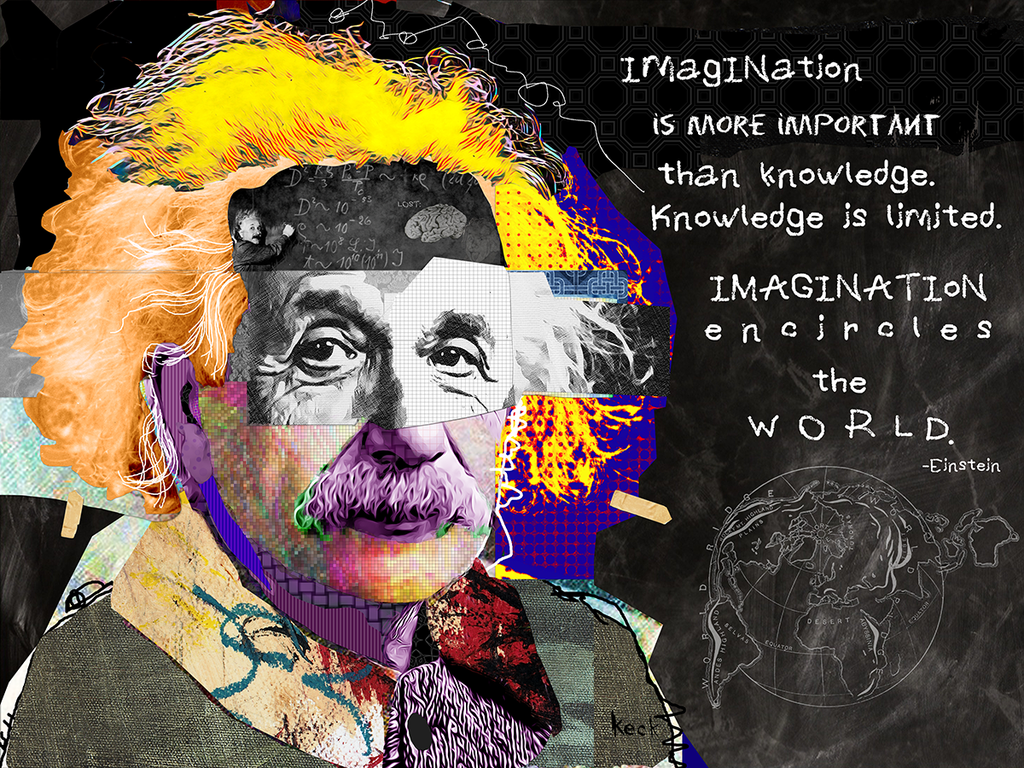
We know that we’re just as susceptible to some form of mental illness as David Hauser. We know that hitting our head just wrong in an accident, or having the wrong genes can lead to some form of mental illness, but can a beautiful mind, a genius, who pushes himself so hard that he crosses some imaginary line, ostensibly called an intellectual peak, fracture “just like that!” and fall to madness? To illustrate this theory, let’s switch the frame to the physical. Is it possible for a pole-vaulter to get injured while trying a jump heretofore considered beyond his capacity. Of course, we can all understand that. Why is it so difficult to imagine the same thing could happen to a man who overtaxes his prefrontal cortex to the point that he gets stuck in overdrive. It’s different but similar, but it’s so hard to wrap our minds around. Observers, familiar with Einstein, claimed he lost his sense of time when obsessing over one of his theories, and those familiar with Newton claim he was known to forget to eat. Would we search medical journals to come up with an apt description of that behavior, or would we just call it tunnel vision? Whatever we call it, we get the image of a piano wire that is tuned too tight, until it snaps “just like that.”

Here’s where we complete the painfully embarrassing 360-degree flip. Those raging alcoholics who “played too hard,” from the comfort of their chair, espousing nonsense about an“intellectual peak,” they were more correct than they probably even knew, and science backs them up. Some now theorize that the genius of John Nash, that led to creative and intellectual breakthroughs, could’ve led to a dopamine overload that could’ve tied into a heightened dopamine sensitive that resulted in a case of schizophrenia. Leonardo da Vinci chased brilliance in hypnagogia, flirting with sleep deprivation’s dark side. Ada Lovelace wrestled numbers and despair in equal measure. We can find examples of anything, anywhere in history, to prove a point, but how anecdotal are they? If we dug deeper, would we find more examples of less heralded minds slipping over the edge? Are these examples of a phenomenon that awaits us all if we dig too deep, or are they evidence of how different each individual mind is? We all have different strengths and vulnerabilities, and some minds might just more susceptible to brief flashes of brilliance followed by a flame out. Perhaps, the examples of this phenomenon suggest that, if nothing else, we might never fully understand the full extents of the complexities of the human brain in our lifetime.

We all envision these geniuses as superheroes, and their insight that reshaped our world as superpowers, but their thoughts, like ours, are tethered to very human brains with all the same frailties, vulnerabilities, and breaking points. Is it possible, or even plausible, that that which fuels extraordinary cognition (intense focus, pattern recognition, relentless curiosity) could also push these geniuses toward collapse. By weaving together cutting-edge neuroscience and the raw, personal stories of brilliant minds, do we uncover a paradox that suggests that the brighter the flame is the faster it could flicker out?

It just seemed so irrational to me, when, nearly a decade ago, I wrote that article that scoffed at the drunken tales of direct links between David Hauser, his intellectual peak, and his roller coaster-like crash into the depths of mental illness. It still seems like dumb people knowledge that we often share at bars to say, “See, see, they’re really not that much better than us. They’re human after all.” After gaining even further distance to comment on me, commenting on me, I will now complete my 360-degree flip with the admission that I probably never should’ve questioned the drunks and their drunken analysis. They were almost 100% right, all along. I’m still not sure what I learned, unlearned, or relearned, but I think I now know enough to know what I don’t know, even though I really don’t know what that means. The one thing I have learned, after chasing the idea of how chasing an idea can lead to madness is that chasing an idea can lead to madness. So, maybe I’ve inadvertently answered my question after all.

Evel Knievel in The Man who Sold the World


Evel Knievel was so cool that he could wear a cape, and no one would question why a grow man was wearing a cape. He was so cool that it just seemed right on him. There was a time when Evel Knievel ruled the world, ok maybe not the world, but he definitely ruled the United States for what some say was about nine years, between the late 60s to mid-70s. He had his own toys, his likeness was on lunch boxes, T-shirts, and I even saw an Evel Knievel pinball machine one time in an arcade. I couldn’t play the pinball machine, of course, because the wait time was far too long for me, but it was fun to watch it. We all had our favorite comic book heroes, athletes, and other assorted entertainers, but there was only one “real” man who could wear a cape in public without anyone asking, “What the hell is going on here?”

Evel Knievel could jump anything and everything we could dream up and never fail. All right, he failed … a lot, but we didn’t care about all that back then. We wanted to see him do what he did “better than anyone else ever has or ever will”, and we pretended to be him when riding our bikes. Robert Craig Knievel probably wouldn’t have listed this in the greatest of achievements in his life, but it was huge in our world. The list of characters we pretended to be was about as exclusive as lists can be. We bestowed this honor on The Six-Million Dollar Man, members of the rock group KISS, and various other mythological creatures we call superheroes, but Evel was a superhero to us. 

Thus, it would’ve stunned us to learn that when the history of motorcycle stuntmen was eventually written, Evel Knievel wasn’t even the best motorcycle stuntman in his own family. His son Robbie Knievel proved smarter, more technical, and more prolific than his celebrated father. (Evel committed to 75 ramp-to-ramp jumps while his son engaged in 340, nearly five times more than his beloved father.) Robbie, it could be argued, even created a better name Kaptain Knievel. How cool is that? The name Kaptain Knievel rolls off the tongue with such ease that I’m surprised Andrew Wood didn’t write a Kaptain Knievel song for his band Mother Love Bone. Kaptain Knievel could’ve and probably should’ve been more famous than his father, Evel Knievel, so why wasn’t he?  

Timing: Evel Caught Lightning in a Bottle

I was not a viable lifeform when Elvis rocked our world, and I was not here for Beatlemania, but I saw, firsthand, the hysteria that was Evel Knievel. The guy hit the scene like a comet in the 70s, a red-white-and-blue blur of bravado that turned him into a myth before I even learned how to tie my own shoes. When my friends and I were old enough to hero-worship, we had Evel’s iconic imagery all over our world, from posters on our wall, lunchboxes we took to school, and T-Shirts on our torso. Evel just owned a once-in-a-lifetime sweet spot in time that no one, not even his own son, could duplicate, no matter how much higher or farther he flew. Before he died, this son, Robbie Knievel, Kaptain Knievel, ended up not only continuing the Knievel legacy, he topped it by all measures, but he could never match the fever-pitch frenzy, and the hysteria, that surrounded Evel Knievel. No one could. It was a very special window in time, and unlike some icons who shied away from the spotlight with something called humility, Evel reveled in his moment in the sun.  

It was not mandatory that every kid in this era have an Evel action-figure, but those who didn’t received that “You don’t know what you’re missing” look, even from the nice kids. Mr. Rogers, from Mister Rogers Neighborhood, would never allow his network to commodify his product in this manner, because he didn’t want kids who couldn’t afford those products to feel ostracized. Evel had no such concerns, as his spangled merch flooded every store in the 70s.

I had three different Evel Knievel action-figures–same figure, different outfits—I didn’t care. I had to have them all. Then, we found out that the Evel Empire produced a windup, energizer accessory. If you were a kid during this era, you probably still owe your parents an apology for all the whining and badgering you did as Christmas day approached, because you were probably as awful to them as I was to mine. When Santa Claus ended up fulfilling my only wish, I wound ‘er up and let ‘er go, and when I was done, I was pretty sure I wouldn’t experience a level of euphoria equal to, or greater than that moment if I lived to be 100-years-old. Decades later, I tried passing those feelings of euphoria onto my nephew with an exact replica of this Evel figure and its windup energizer accessory, he broke it within a week. Weeks after that Christmas, I found this toy I once cherished on the top shelf of toys of his closet to gather dust with the toys he would never play with again. The idea that my nephew had no regard for this toy stunned me. I knew he never heard of Evel Knievel, but I thought it was a standalone, great toy. I was wrong. The euphoria I experienced playing with this toy, at his age, was obviously based on the mythology, iconography, and the hype and hysteria of all things Evel in the 70s.  

The Media: Evel Owned the Airwaves

There was a time when one individual could rule the airwaves, and Evel Knievel did. It was so far back that it almost seems quaint now before cable, YouTube, VCRs, DVRs, and the internet or streaming services. There were only three channels, and they didn’t repeat broadcasts, or if they did, we usually had to wait months for the rerun. If we missed one of his appearances, pre-jump interviews, and the events themselves, we were just out. “You missed it?” our friends asked. “How could you just miss it? I was counting the days till it happened.”

“I forgot. I was out playing or something, and I just, just forgot,” I said to my never-ending shame. It was one of those situations where our friends could recount what happened for us, but it wasn’t the same, and we had this idea that this might mark us for the rest of our lives. 

Robbie, bless him, hit his stride when cable and the internet fractured the game. Sure, he got some TV love—his Grand Canyon leap was aired live after all—but Evel’s regular-network spectacles had a bigger and rarer feel that had that must-see-TV feel, long before the networks coined the phrase. Robbie could share his feats online, but that magic of “counting the days till it happened” were long gone.

Evel Knievel Was Larger Than Life

Back before the internet and 24-hour news shows, we didn’t know everything, all of the time. We didn’t know the negatives about our heroes. We had our naysayers of course, but we could dismiss their ideas as speculative, because they didn’t really know what they were talking about either. We couldn’t pull up a device and search for all nuggets on Evel Knievel to find everything we wanted to know about him. If I ran into him at the supermarket, I wouldn’t have known it was him, because I didn’t even know what he looked like. I figured he probably looked as good as Superman with Batman’s aura of cool. We filled in the blanks of what we didn’t know with what we wanted to think, and we decided to make him god-like. Kaptain Robbie probably ended up pulling off more dangerous stunts, and if we gauged them by qualitative and quantifiable measures, he was probably the better of the two motorcycle daredevils, but Evel was there first. He also pioneered the iconic image of guts and glory in a way that led to a cultural impact that penetrated the zeitgeist in a way no one, not even his son, could.   

Evel was also a Mess

I was a kid during Evel Knievel’s prime, so I didn’t know all the ins and outs of what Evel did, and I was too young to analyze why he had such historical allure. He wasn’t really human to me. He was an action-figure to me, a symbol for everything I wanted to be, but he was no more real or unreal than Batman—an action figure, literally and figuratively. Yet, this obviously wasn’t reason he was so famous among adults. Why did they love him to the point that every source of media had to have some attachment to him in some way if they hoped to compete in the era’s landscape? He crashed. A lot. “You know what I was really good at,” Evel told his cousin, and U.S. Congressman, Pat Williams. “You know what I was bad at was the landing. It was the bad landings. That’s what brought the crowds out. Nobody wants to see me die, but they don’t want to miss it when I do.”

As evidence of that, Evel Knievel’s most iconic video is that of his failed jump at Caesar’s Palace. After he narrowly missed hitting the landing ramp square, he bounced up and over his bike. When he hit his head, he appeared to narrowly avoid life-altering impact, but when his lower back and hindquarters slammed into the ground, the audience at-home could almost feel the hollow thud that must’ve screamed in Evel’s ears. When he rolled about four times, it didn’t look real. He looked like a ragdoll or one of those crash test dummies that we watch react to impact with an emotional distance, because they’re not alive. Anyone who has ever crashed on a bike, in a car, or on a bigwheel knows some small, not even worth discussing level of comparable pain that teaches us the golden rule of crashing: If you’re going to crash, try your best to avoid landing on concrete, because it hurts like the dickens. 

Why did adults of this era watch? Why do non-fans watch NASCAR, hockey, and why do we slowdown for a wreck on the interstate. Adults presumably turned up at the shows and tuned into the broadcasts that carried these performances, because they wanted to be there if someone was going to die that day. 

Whereas the son, Kaptain Knievel, achieved twenty different records, Evel racked up twenty major crashes, and his own Guinness Book of World Records’ record 433 broken bones. 433! Yes, Biology enthusiasts, we only have 206 bones in our body, and no he didn’t have more than double the number of bones the rest of us have. If you’re going to attempt to break Evel’s current record, you’re probably going to have to break the same bones multiple times. Kaptain Knievel decided he didn’t want to go the course of his father, so he chose a Honda CR500, a much lighter bike than Evel’s Harley-Davidson XR-750, and Kaptain Robbie analyzed his jumps and made sure he would succeed. He did succeed far more often than his famous father, but the adult audience probably grew so accustomed to his success that they kind of got used to it in a way that bored them a little.

“I’m not going to watch,” my aunt said before one of the airings of Evel’s jumps, “because I’m not going to contribute to that man’s desire to kill himself, because he will die. You know that don’t you? That fool is going to get himself killed.” 

My aunt was right, of course, as Evel wasn’t very good at what he did. Kaptain Knievel had some crashes too, but they paled in comparison to the severity of Evel’s. When Evel crashed, we felt bad for him, we thought of his family and other loved ones, and some of us even cried a little. We did it, because we cared, and we enjoyed caring, because we didn’t want to see this beloved man get hurt again. Robbie never built that reservoir of love and concern, because he rarely failed, and when he did, he didn’t get hurt as severely, and we viewed him as nothing more than a guy who used a motorcycle to jump over stuff. 

The most memorable jump Evel Knievel performed, for me, was the January 31, 1977 jump at the Chicago International Ampitheatre. This scheduled event suggested that Evel was going to jump over a number of sharks, SHARKS! This event just happened to coincide with the aftermath of the first true summer blockbuster, JawsJaws was a movie so horrific and scary that no one I knew was allowed to see it, but as you can guess that verboten nature led us to talk about it endlessly. We all knew someone who knew someone who saw it, and we recounted for our friends what actually happened in that movie. Thus, when we learned that our superhero was going to test the meddle of the world’s most fearsome maneater, we kind of worried: 

“What if he misses?” we asked one another, in the midst of the hysteria. “What if a shark jumps out of the water, as he’s flying overhead? They do that. No seriously, I’ve heard that they do that.” None of us knew that sharks are actually relatively cautious predators, and the reason their predatory behavior involves them circling unknown prey is that they’re trying to determine if they’re going to get hurt in the process. They know that even a small, relatively innocuous injury can damage their predatory skills and could lead to their premature death. If Evel splashed into the tank, in other words, the sharks that weren’t hit on impact, probably would’ve swam as far away from the point of impact as possible. We didn’t know any of that. We thought they were the impulsive killing machines depicted in Jaws. I later learned Evel’s jump ended in disaster during a rehearsal, and he retired from major jumps shortly afterward, but none of that mattered to me as I was all hyped up on everything Evel. 

We loved to ride bikes in the wayback when kids did things outside, and every kid I knew pretended to be Evel Knievel for just a moment when we took rocks and put plywood on them and “jumped” from one board to another. When we did this often enough, even in our Evel Knievel mindsets, it could get a little boring after a while. To try to match the intensity of our hero, we did everything we could to make our jump more dangerous. We increased the angle of the board, had our friends lay between the two boards, and any and every stupid thing we could think up to make it a little more dangerous. We wanted someone, somewhere to say, “You are crazy!” No one ever said that in an advisory manner, in my memory, it was always said with a tinge of excitement, as in ‘He’s crazy, but I think he’s going to do it.’ I still remember the time I broke Steve’s record on the block for longest jump, but even though it ended with a me-bike-me-bike roll up crash, I still beat it. Was it worth it, if you asked short-term me, I probably would’ve said no, as there was a lot of memorable pain, but when the theys on the block were still talking about it, months later, it felt worth it. They talked about the painful crash of course, and they laughed when they did, but they always mentioned that it set the record for the block.

We unwittingly answered the question why Evel Knievel was more popular and still is more famous than his son Robbie. Evel was either so stubborn, or so crazy, that he didn’t want to do things the way they should’ve been done. He performed with a “my way or the highway” that usually led to him waking up in a hospital. Evel Knievel did succeed on occasion, and we shouldn’t forget that, but when he did, it was almost a relief to see that he didn’t get hurt in the process. Robbie Knievel was so good at what he did, presumably learning from his father’s mistakes, that when he completed a jump, it eventually became less of a daredevil feat and more of a guy jumping over stuff with a motorized vehicle. There was no drama to it, and it lacked the “Is he going to die today?” had-to-be-there-if-he-did status that his father’s jumps did.     

Tesla’s Pigeon


“I loved that pigeon as a man loves a woman, and she loved me. As long as I had her, there was a purpose to my life.” –Nikola Tesla.

I’ll go ahead and leave the discussion of whether Nikola Tesla is the GOAT (Greatest of All Time) or a GOAT to those with far more knowledge on the subject, but if any individual embodied the spirit of a domesticated bezoar ibex, descending from the Zagros and Taurus mountains to join humanity’s ranks, it would be Nikola Tesla.

Some skeptics dismiss the reverence for Tesla, saying, “I wouldn’t call him the GOAT.” Their argument? “He was first, I’ll give you that. He discovered how to harness alternating current, enabled wireless communication, pioneered remote control, and achieved countless other feats that revolutionized humanity, but,” and here’s where they make their c’mon! faces, “don’t you think someone else would have come up with all of that eventually?”

This is where we’re at, apparently. We’ve grown so accustomed to enjoying the fruits of genius that we downplay the achievements themselves. In today’s world, the process of celebrating greatness often involves systematically dismantling it. We begin by humanizing our icons—making their lives relatable and their quirks amusing—to draw in readers. We peel back the layers of their accomplishments, not to marvel at them but to suggest that anyone else, given the chance, might have done the same. We present witty but reductive “but-did-you-knows” about their flaws, as though to bridge the gap between their brilliance and our everyday mediocrity.

We build them up just to tear them down, all to feel better about ourselves.

“See, Henrietta Bormine, my wife? That Tesla guy wasn’t so great. He had outdated ideas about [insert pet issue here]. I could have achieved what he did—anyone could’ve, really, if they put in the effort.”

This is what we do now.

The thing about these “Anyone could’ve done it” arguments is that they’re almost impossible to defeat. Perhaps, with the same dedication—those mythical 10,000 hours—someone could have achieved what Tesla, Einstein, or da Vinci did. Most discoveries, inventions, and breakthroughs lose their superhuman qualities over time. Who invented the television set? “Someone would have eventually.” Who invented the microwave? “Was there an inventor?” Who invented the toaster. “Boring.” The next question is if anyone could’ve invented these things why didn’t they? Another factor that makes these arguments almost impossible to defeat is the idea that we cannot remove the geniuses from the timeline to test their theory.

This debate also leads me to the question I have when anyone drops a GOAT on someone spectacular, what separated the genius from their competition? Was a man like Nikola Tesla simply a right time, right place type of guy? How many people, in his era, were racing to explore the lengths of man’s ability to harness and manipulate electricity for human needs and eventual usage?

When we were kids, we thought Benjamin Franklin invented electricity. I don’t know how we twisted that story in such a manner, but it wasn’t long before a representative from the nerdy brainiacs set up straight. “Think about how foolish that sounds … How does a person invent electricity? He just advanced the idea that it could be harnessed, and some even debate that notion. They suggest that numerous others were conducting similar experiments. think there were a number of people messing around with experiments and displays of harnessing electricity, but Franklin was just the most famous person to put his name to such theories, and his fame and notoriety put all of those long-standing theories on the map.”

Tesla’s name belongs on the timeline of scientific advancements in electricity, but his achievements don’t stand in isolation. His legacy is interwoven with the work of predecessors, peers, and successors whose names are far less known. And here’s the ultimate question: How many “relatively anonymous figures” from history accomplished even a fraction of what Tesla did? For the sake of argument, let’s call this unsung hero “Todd Callahan,” because it feels like the quintessential everyman name for such musings.

This fictional Todd Callahan grew up much like Nikola Tesla—a curious science enthusiast who stood out as the smartest person anyone in his area had ever known. They dubbed Todd an “uncommon genius.” While other kids spent their afternoons throwing balls in open fields, Todd was tinkering with stuff. When other boys his age played with the toys, Tesla and Todd tore theirs apart. They enjoyed destroying stuff as much as every other young boy, but this wasn’t destruction for distruction’s sake. They did it to rebuild the toys, and they destroyed these toys and rebuilt them so often that they developed an understanding for mechanics in a way that set them on the path to innovate and manipulate the natural world.

Todd’s brilliance was evident early, earning him both admiration and envy from those around him. His neighbors marveled at his genius, and perhaps some resented it. Even the tenured professor, who encountered hundreds of bright students every year and would’ve scoffed at GOAT-like superlatives, privately admitted to his colleagues that Todd Callahan was special.

How many Todd Callahans existed during Tesla’s time, and what distinguished them from each other? Was Tesla, as an adult, more daring, more imaginative, or simply more willing to embrace failure and learn from it? We could say D) all of the above, but the most vital factors in Tesla’s journey to success might have been the simplest of all: hard work, patience, and time.

Time, above all, may have been the decisive factor separating Nikola Tesla from the Todd Callahans of history. Tesla devoted his life—every ounce of energy, thought, and purpose—to science. While this now feels like a cliché description we could apply to many “almost Teslas” of history, it’s worth considering its weight. Imagine mentioning at a party, “Nikola Tesla devoted all of his energy, his time, and his thoughts to science.” The likely response? A collective yawn or polite indifference. It’s not the kind of revelation that stuns a crowd—it’s too broad, too general to feel significant.

But for Tesla, it wasn’t just a statement; it was a truth that defined his life. As Petar Ivic wrote, “Tesla’s only love, inseparable and sincere, was science.”

We probably have to add terms like ‘inseparable’ and ‘sincere’ to capture attention, because every major figure in history devoted themselves to something. The modern adjective we drop on someone so devoted to the particulars of their craft is gym rat. Judging by descriptions of Nikola Tesla’s physique, he never spent time in a gym, but the analogy holds true when we learn that he spent so much of his free time in life in labs and various other enclosed rooms that skin cancer was probably never one of Tesla’s concerns.

Even suggesting that Tesla probably spent a majority of his life in small rooms, testing various ideas and experiments probably doesn’t move the needle much, but the difference between Nikola Tesla and the various Todd Callahans of human history is that Todd Callahan was a normal man driven by normal needs, and normal wants and desires. Todd wanted to achieve as much as Tesla did in the fields of science, but as some point, the man wanted to go home. He sacrificed a lot in the name of science, but he loved to fish and hunt on weekends, and he loved playing card games with the fellas. Todd was a normal man who loved science, but he also loved women. He dated a variety of women, until he found his true love, and they settled down to have a family, a dog named Scruffy, and a white picket fence to keep Scruffy and the kids from harm.

Tesla refrained from these normal pursuits in life, fearing that they would take away, or diminish, his pursuit of steadily advancing the science of electricity. We could say that Nikola Tesla refrained from pursuing a sense of human wholeness, or a sense of completion, but we could also say that was his edge.

“I do not believe an inventor should marry,” Tesla said. “A married man is precluded from devoting himself to his work. Therefore, I have chosen to remain unmarried and to pursue my work.” Tesla believed celibacy allowed him to maintain acute focus and channel his energy entirely on his inventions, and as opposed to most science nerds, Nikola Tesla did, in fact, have list of women who were all but beating down his door.

Nikola and His Pigeons

Nikola Tesla took the “hard work, patience and time” devotion to his craft so seriously that he tried as hard as he could to void his life of distractions, physical and otherwise. The only vice, it appears he had, was an utter devotion to pigeons. He could spend hours at a time feeding them at the park. In his pursuit of fowl friendship, he occasionally encountered an injured one. When that happened, he brought them back to his hotel room to nurse them back to health. He was known to leave his hotel room window open to allow pigeons full access to his room whenever they needed. He also had a habit of asking the chef of the hotel to prepare a special mix of seeds for his pigeons to, we can only guess, gain him an unfair advantage among those seeking friendship and more from the pigeon population.

The one thing that those of us who know little about birds, and nothing of pigeons, know is that birds are not what we’d call discriminating when it comes to where they decide to relieve themselves. Bird enthusiasts suggest it is “difficult but possible to potty train a bird,” but there are no indications that Nikola Tesla, a germaphobe before being a germaphobe was cool, spent any of his precious time on Earth devoted to that cause. Thus, we can only guess that Tesla’s hotel room wouldn’t make it in a Better Homes and Garden feature article, and we have to imagine that if that list of potential suitors, mentioned above, got one look, or whiff, of his hotel room it might diminish his demand. The historical record suggests that this was also one of the reasons why some of the hotels he lived in gave him the boot.

Nikola Tesla was willing to sacrifice all of that for an afternoon spent in the company of his favorite beings on the planet, and in the midst of all that, Nikola Tesla found true love for the first time in his life. As with any person who surrounds themselves with people, places and things, we eventually whittle them down to a focus of our attention and love. Tesla found that in one of the pigeons who regularly kept company with him, a white pigeon with some grey highlights. He declared that this pigeon would find him, no matter where he was, and spend time around him. Eventually, as with all pigeons, this one fell to an illness. Tesla took her back to his room and tried to cure her illness, but this man of miracles, could not save his one true love in life. It broke his heart, as it breaks all of our hearts when a beloved pet dies, but Tesla was so broken hearted that some suggest he experienced such a feeling of hopelessness, and such a general sense of purposeless, that he died days later of a broken heart. We’ve all heard tales of an individual who dies shortly after their spouse, and that appears to be what happened here, with Tesla and his beloved pigeon.

Before he died, Tesla informed others that his beloved pigeon visited him on the day of her demise, and “a white light shone from her eyes, brighter that anything I’ve generated with electrical machinery.” Shortly after her death, Tesla told friends that his life’s work was finished.

This story is used by some outlets to diminish Nikola Tesla, and the Tesla quote they use is that he loved a “pigeon as a man loves a woman, and she loved me.” The intent is to suggest he was such a wacky scientist that couldn’t properly manage human relations, so he devoted his passion to this rat with wings. It’s funny on the face of it, but how many of us “love” a dog so completely that when the little fella gets run over by a car, we’re broken hearted? As Jules, from Pulp Fiction would argue, “But, dog’s got personality, [and] personality goes a long way.” It’s true, but when they die, we cry and make damn fools out of ourselves in a way that those who witness it will never forget or forgive. “I’m sorry, but it’s a dumb dog,” they say with derision. How many have the same passionate love for a cat, who in many ways fails to return love in the demonstrable ways a dog can. Some love a pig, a rat, and a snake in much the same way, even though we can’t understand how anyone could develop a quid pro quo relationship with such animals.

Is it a little quirky any time a grown man develops such passionate feelings for a bird, but this happened late in Tesla’s life when we can only imagine he lost much of his drive, passion, and that almost unquenchable thirst for accomplishment was probably quenched, and that probably created a void in which he began to focus on how lonely he was in life. Some part of him may have also regretted not seeking human companionship more in life, but he may have felt that he waited too long, and that the time for all that had long-since past. As such, he may have sought an unconditional friendship that allowed these pigeons to become repositories for his love. Anyone who has read about Nikola Tesla knows he was a passionate man, and when he reached a point where he felt he accomplished everything he wanted to in life, he looked for more tangible ways to express his sense of love. I doubt Nikola Tesla went to the park bench, looking for the type of love only a pigeon can provide. I’m sure it just happened, and we can’t control who we fall in love with.