NFL Pregame Shows are Unwatchable


It’s possible, as stated in the previous entry on this general topic, that the actual NFL game may never reach un-watchable status, but the various NFL pregame shows already have. They’re a joke, a constant joke after joke, that no one, other than the giggling hosts, find humorous. Overnight ratings for the three primary pregame shows were down an average of 11% in week one of the NFL (2014), and this trend will continue as they continue to move away from the strict commentary and specific analysis of the game to the jibber jabber that I assume is designed to entertain.
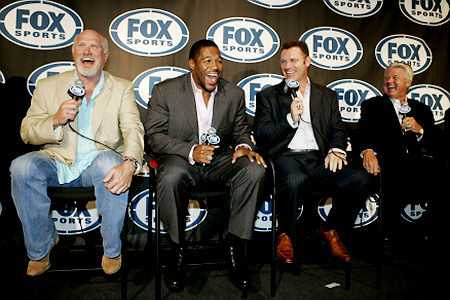
The Giggling
The Giggling

Core, NFL fans of a certain age remember a day when Brent Musburger’s NFL Today Show on CBS, ruled the roost in the ‘70’s and ‘80’s. This was the standard by which all shows, then and now, are measured. Those of of us who loved this show were irritated by family members who wanted to engage in family matters on Sundays, because they would interrupt our viewing. “But it’s not even game time?” they would say. It wasn’t, but we would tell them that we probably love the NFL today Show more than the games. 

The NFL Today Show was a tight, seamless, and informative production that was deemed by most core, NFL fans to be indispensable Sunday viewing. We all missed a few of their broadcasts of course, but the fact that we remember those instances should cement the value this show once had on our love of the game. The NFL Today show did not just add value to the game, for many of us it was the game. Some of the actual NFL games were boring compared to the production that the NFL Today staff, Irv Cross, the Miss America contestants, and Jimmy “The Greek” Snyder put together, and there was a segment of the American youth that couldn’t get enough of it. As covered in the previous entry on this topic, it is obvious that NFL fan is no longer the primary demographic for the NFL pregame shows.

As the decades passed, some NFL pregame broadcasts decided to capitalize on the fact that we couldn’t get enough of football talk, by giving us another hour. Another hour of nothing but football –and in one cable channel’s case two more hours*– was the premise of the promise. Two more hours of football talk before the fellas could even take the field? What red-blooded American, born and raised on football, would be against that? More is more, and more is always better, right? Plus, when the alternative programming, on Sunday, consists of political talk shows, bowling, fishing shows, and mass for the shut-ins, we should be watching right? What happened instead is that this NFL Junkie has actually decided to spend more time with his family.{1}

The eventual, and perhaps inevitable, conclusion that more is not always more, or better, was soon realized as these productions began adding more to make their show more for the specific intention of attracting more, beyond the core. The core, NFL fan is now showered with the dreaded human interest story, the stories that were once deemed the exclusive right of Oprah Winfrey and Ellen Degeneres. We are now inundated with stories that inform us that players are people too, and they have all the same hopes, fears, and dreams that we do. We are informed that some of them laugh a lot, and some of them cry. Some of them have sick children, and some of them engage in charitable activities that help out their local communities, and some of them have wives that can teach us twenty-three ways to reuse a banana peel for those NFL families that need to learn how to budget on an average 1.9 million dollar salary.

Once the dreaded human interest stories conclude, the NFL fan returns from the World Fishing Network to hear some football talk, and we hear playful, radio-lite banter that occurs between the bosom buddy hosts. We learn that these ex-jocks that aren’t afraid to provide us with some self-deprecating, zany anecdotes that will lead to further antics and hi-jinx. Some productions then provide segments that force their hosts to have Abbot and Costello-like adversarial relationships with recurring guests and more hi-jinx, with incessant giggling to follow. And if that isn’t enough, we get to see hot chicks tell us about the weather reports for each stadium, and the sideline reports that inevitably lead to more hi-jinx, antics, and banter.

When all these non-football, NFL-themed human interest segments finally conclude, and the NFL fan does receive some actual analysis of the game, they hear these ex-jocks deliver the least controversial, safest opinions they can find. Long gone are the Jimmy “The Greek” no holds barred opinions on a player’s actual ability to perform on a NFL level, and they are replaced by non-critical, safe, and positive opinions by ex-jocks not wanting to hurt a current NFL players’ feelings.

The ex-jocks, and one professional broadcaster, are then required to spend an inordinate amount of time focusing on those teams with a higher fan base. If the Dallas Cowboys fail to make the playoffs this year, it will be the fifth straight year they’ve failed to do so; if the Jets fail to make the playoffs this year, it will be the fourth straight year they’ve failed to do so; but if the Falcons do make the playoffs this year, it will be the fourth time in five years that they’ve made the playoffs. Yet, the ongoing focus of these shows concerns what the Cowboys and the Jets have to do to be competitive again. Dallas is America’s team, and the Jets have the broader market, but they have both sucked for some time now. They suck so bad that talk of them reveals the attempts these NFL pregame shows are making for what they are … unwatchable.

Howard Cosell often spoke of the degradation of his craft with the admission of ex-jocks in the broadcasting booth. That warning surprised me at the time, because I thought ex-jocks could deliver a unique perspective on the game. As the years passed, and I watched these ex-jocks deliver passionate, and well-rehearsed, analyses on the game, I realized that Cosell probably feared what we would all soon realize: just about anyone can do this.

The central character of these NFL pregame shows is often the professional broadcaster on staff, and he or she, often tosses the analysis portion of the segment to the ex-jock who delivers a passionate testimonial that centers around the idea that a quarterback’s job is to throw the ball to receivers, and that those receivers need to catch that ball. The offense will then need to run the ball to keep the defense off balance, and the defense needs to find a way to stop the offense. In the end, the analyst informs us, one team needs to score more points than the other. Anyone can deliver this message, in other words, and the average fans doesn’t care if they do it well, as long as their heroes –the former titans of the gridiron– do it.

Most core, NFL fans thought that extending a pregame broadcast to two-to-three hours would be an incredible plus, and it was … at first. It was, perhaps, inevitable that these broadcasts, and all of the people who know their demographics, would try to find a way to attract more demographics, and keep that audience longer, beyond a “just the facts ma’am” approach of a Bill Belichick to that which we have today. The extra hour(s) led to a need to cover the game in a different way, until it became about the giggling, and the infotainment, and the One Life to Live type segments with a little Oprah-lite commentary to follow. The core, NFL football watching audience that wanted mano y mano analysis proved not enough to fill a two-to-three-hour broadcast. It became redundant, and it led them to try and find ways to expand their show to attract more, beyond the core.

One has to have some sympathy for those who try to put these shows together in the age of the internet, and the thousands of sports talk radio shows that now populate the airwaves, based on the fact that by the time these shows are set to air, on Sunday, every game has been thoroughly analyzed from just about every possible angle anyone can think of, but the human interest/comedy/infotainment segments these pregame shows have developed to fill the time we once couldn’t get enough of, and they are now un-watchable.

*CBS Sports Network’s Other Pregame Show

{1}http://awfulannouncing.com/2014/aa-nfl-pregame-viewing-experiment-part-pregame- show.html

The NFL is Almost Unwatchable


“Too Many Commercials!” “A Record Number of Flags Thrown!” “Too Many Instant Replays! “The Art of Defense is Over!”

There are other headlines in the National Football League (NFL), but those headlines have the league tottering.

The NFL is still enjoyable for me, thanks to the technological invention of the DVR, but it’s tottering on the brink of unwatchable. My current routine NFL viewing habits involve me taping the game and waiting 45 minutes to an hour before watching the game. This time allotment usually allows me to skip the inane gibber-gabber in the pregame analysis, most of the commercials, and the time it takes for an official to review all of the instant replays in the game now. The latter often involves the broadcast network filling that time by replaying the play in question about 15 to 20 times. If you are still an NFL fan, and you don’t have a DVR, I have no idea how you maintain peak interest. On those occasions when I go to a friend’s house, we usually talk through those delays, until we eventually lose track of the game as it plays in the background. “Touchdown?” we ask. “Did they just score? Is it 17-3? We just missed a quarter of the game.” I have to imagine that the current NFL is grateful for the technological innovation, for if it weren’t for the DVR, I probably wouldn’t be watching anymore.    penalty_flag

Although NFL referees are the face of the problem for the current rise in penalties, they are just following the orders. Those orders are sent down by the the NFL’s Competition Committee (NFLCC). The referees are equivalent to police officers on the street. We blame police officers for the laws they enforce, but it’s our representatives often seated in state legislatures who write and pass those laws the police are employed to enforce. The referees, like the police, are the faces we see enforcing those rules/laws.

The NFLCC was set up to make the game more fair, to protect the players, and to create rules that they think will make the game more popular, such as freeing up offenses to score points. The NFLCC might be the most powerful body of people, controlling what the audience sees on the field. The NFLCC is comprised of representatives from eight different teams, and they are team owners, general managers, presidents, and one coach. They are a reactionary body who pass edicts down to referees. If the NFLCC believes that the offense is holding too often or the defense is getting away with pass interference too often, for example, the audience should expect to see a flurry of flags to try to curb the activity in question in the week that follows.

The NFLCC also tries to find creative and inventive ways to make the NFL a pass-friendly league to the point that quarterbacks (QB) and wide receivers (WR) are now breaking every record on the books. The creative and inventive methods that they once used to tweak the game are now becoming so blatant that it’s obvious to every core, NFL fan that the competition committee doesn’t just want a more pass-friendly league. They want what the cornerback for the San Francisco 49ers, Richard Sherman once called “A more fantasy-friendly league.”

The NFLCC has proven reactionary in some cases, and when they realize that they’re perceived as too friendly to the offense, they call for officials to ramp up offensive pass interference calls, hands to the face calls on the offensive linemen, and defensive holding calls on defensive lineman. To rectify a perceived, situational unfairness, their default position is to call for more penalties. Their goal, I can only presume, is to have as many penalties called on the offense as the defense, but the end result is more penalties.

We should note that with few exceptions most that the penalties being called by today’s referees are not new, but that there is a greater concentration, based on certain points of emphasis, than there were in any of the previous years. Some of them, usually the game’s announcers, defend these new penalties in ways we core, NFL fans find incomprehensible. Most of the coaches in the NFL also call for more replays on more plays, and more penalties, and the only casualty is the game and the fans.

The network announcers are supposed to represent the voice of the fan, but when another yellow flag lands on the field, we usually hear the announcers say something along the lines of, “… and guess what … another flag.” This, essentially, puts the blame on the player who committed the infraction. Yet, when we view the replay of the infraction, we often see a questionable infraction that suggests that the current NFL referee now defaults to throwing a flag. We can only assume that the points an NFL official accrues throughout a week favor a call, however questionable, over a missed call. If I were an announcer, the audience of the broadcast would tire of my “let them play” cries.

The current NFL and college football announcers decry the rare penalties in-game officials miss. “You want more penalties?” I want to scream at the screen. “Who do you represent in this call for more penalties, because I know it’s not me.” I’ve reached a point, a point near no return, where I no longer care if an official misses a call against even my favorite team, if the alternative means another yellow flag. I no longer take any joy from a penalty against the opposition that awards my favorite team a first down. These are relatively new concepts for me, but I’m sick of it. I’m sick of all of the penalties, and I just want the NFLCC to loosen these restrictions up and let the players on the field play some football.

The calls for instant replay are also becoming absolutely ridiculous. I fast-forwarded through a call for an instant reply, the cut to a commercial, and the follow up decision, and I calculated an eight minute span. That time-span occurred on two different occasions in the same game, and that occurred during a rare circumstance where I actually documented the time-span. The other ten to twenty calls for a replay weren’t that long, but I don’t know how other viewers can maintain peak interest in a game that is broken up with such lengthy breaks?

Certain Points of Emphasis

While it may be true that these are not new penalties, no one can argue that these new points of emphasis on some rules have led to more penalties being called, more confusion regarding the consistency of those calls, and more delays in the game. The resultant complaint, as evidenced by Richard Sherman’s, is that the league has turned its officials against the once beloved art of defense.

Most defenses do not have a Richard Sherman, or an Aquib Talib, who can play hands-off and still cover a top receiver, so most defenses have little-to-no hope of stopping the league’s high powered offenses. To rectify this perception, the competition committee put in other points of emphasis to ostensibly level the playing field. Rather than narrow the definition of illegal contact, beyond five yards, they instituted a point of emphasis on offensive pass interference, and pick plays, which has led to led to more penalties being called, more confusion on the inconsistency of those calls, and more delays in the game.

This has all led to the perception that a penalty is called on just about every series of downs, which statistically it is not, but perception beats reality in most cases. It has also led to what seems like a penalty on just about every passing play, which again is not statistically true, but perception beats reality. It has led the game’s greatest fans from the dramatic anticipation of: “Is he, or isn’t he, going to catch that pass?” to “Is he, or isn’t he, going to throw a flag?”

“All your life you grow up saying I’m only going to call a foul if it creates an advantage,” said former official, and former Senior Director of officials, Mike Pereira. “You can’t look at it that way anymore. Any contact, it’s a foul.”

The old saying that the best referees in the game are the ones that you don’t remember when the game is over, is now out the window. Referees now affect drives with their new “When in doubt, throw the flag” modus operandi, and the way the game is played, and ultimately the outcomes of some games. Anyone who doubts this change, need only look to the broadcasting booth where just about every major broadcasting now has a go-to-guy, former referee to help analyze and explain the calls that are being made on the field.

“The officials may take the heat (for this),” Mike Pereira said in an interview with UT San Diego, “But the heat should go to the (NFL’s) Competition Committee. Why do they keep doing this? There already was a league record for most point scored.

“The players will have to adjust, not the officials.”{1}

One of the many enjoyable aspects of watching sports is the historical comparison between athletes of another era. Was Drew Brees as good, or better, than Joe Montana, was Ben Roethlisberger as good as John Elway, is Peyton Manning as good, or better, than Dan Marino or Johnny Unitas? NFL game announcers now speak of current QBs and WRs breaking those old records held by Hall of Fame players. No one cares anymore, in much the same way no one cared about the Major League Baseball (MLB) records that were broken at the turn of the millennium, during the steroid years. Most of those MLB records —the home run records in particular— mean nothing now, and the NFL’s passing yardage, touchdowns, and receptions now carry the same asterisks in the minds of the core NFL fans of the future. “The game is different now,” old NFL fans now tell new ones that claim that current players are just better now. “You just cannot compare them line by line anymore.”

Drew Brees was a great, future Hall of Fame quarterback, but was he that much better than Joe Montana? To a young, NFL fan Drew Brees threw for over 80,000 yards. Montana threw for a measly 40,000 yards. Brees played for 20, largely injury-free seasons, Joe Montana played for 15 years, and his latter years were riddled with season-ending injuries. To that young, NFL fan, Brees was two times better than Montana.

The NFL does not have the rich, century old history of the MLB, and it never will. The popularity of NFL has never been as reliant on records, stats, or historical comparisons, but even its relatively newer, and less pertinent, traditions are being eviscerated through the points of emphasis that now foster a pass-friendly, fantasy-friendly game that breaks records on an almost weekly basis. We all saw what happened to the MLB, when they began desperately tinkering with their game (post-strike) to attract a broader audience, but the powers that be in the NFL seem oblivious to the aftermath that results from all that tinkering.

The idea that the NFL might follow the MLB down the path to total unwatchability seems improbable, as the game has never been more popular. As the NFL institutes on field and off field bells and whistles to broaden the base, the indispensable base is starting to think the NFL views them as dispensable. We’ve burned through a number of DVRs fast forwarding through the pregame commentaries that focus on non-game related activities, and the commercials and replays that test the fan’s endurance. Some of us even go so far as to turn the volume down during a game, so we don’t have to hear commentary from the broadcaster’s chosen analyst defend referees, the NFLCC, and rules in general. We try very hard to ignore the new aspects of the game we don’t care for in favor of those we do, but the NFL is making this more difficult with every passing year. Even while we grumble, however, we have some sympathy for those placed in the impossible place of trying to appease Vegas gamblers, fantasy football players, and all of the people all of the time, but when they stoop to please the others too often the core NFL might reach that point of estrangement that they consider the game unwatchable.

Effective Perhaps, Brilliant No


Effective Perhaps, Brilliant No— “She’s brilliant,” a social commentator, from the Vanity Fair magazine, said when asked to provide some commentary on the social impact Courtney Love had on the 90’s. “I’ve never seen anyone manipulate the media in the manner she does.” If this social commentator knew what he was talking about –and he must working for Vanity Fair— he would know that Love’s method of manipulating the media involves persistent, high volume, and presumably vulgar calls to the offending member of the media that eventuate into threats of physical violence to those who refuse to portray her in a positive light. Effective perhaps, brilliant no.

vicksburgIf this strategy of manipulating the media is brilliant, it’s brilliant in the way Ulysses S. Grant’s strategy in The Civil War was brilliant. His strategy has been called brilliant by some historians, and he has been called a “military genius” by others, but he has also been called a “butcher” for his utter disregard for the lives of his own, Union soldiers in battle. His strategy was based on the fact that the Confederate Army had a tougher time replenishing its forces, so he threw his soldiers at them in what some critics have called a “meat grinder” strategy to eliminate as many Confederates as possible without regard for casualty numbers. The eventual result was so horrendous that President Abraham Lincoln’s wife Mary called Grant “a butcher”, but Grant achieved results. He won strategic battles against the South, where other Union generals presumably worried about the casualty numbers suffered defeat, and history has looked kindly on Grant as a general. After reading through the stats, coupled with the results, it’s difficult to call these tactics, and this strategy, brilliant. Effective perhaps, brilliant no.

This term brilliant is thrown around so loosely, in the modern era, that it’s now as common in the American lexicon as it is in the British one. The Americans used to reserve the term for incredible minds of science, math, and art, where the Brits might define one bite of a crisp brilliant. Those lines became blurred soon after stars began exposing themselves on social media. These posts result in hits, followers, and cachet in our society. Analysts suggest that the star engages in brilliant use of the media. The star might have better looking parts than the rest of us, but other than that, is the star engaging us in an ingenious manner that exponentially exceeds anything we can do on social media? How is it brilliant?

Can I call someone up and verbally abuse them into thinking I’m a pretty good guy? Probably. Can I threaten them in such a fashion that they’ll eventually see things my way? Probably. Could I have sat down at a Civil War planning board to devise Grant’s “meat grinder” strategy? Who couldn’t have? I do not mean to diminish the career of Ulysses S. Grant, because he did what was necessary to win an otherwise disastrous war, and it could be argued that if he hadn’t executed the “meat grinder” strategy, it is plausible to suggest that the Civil War would have lasted longer and eventuated in an equal number of casualties. It’s also plausible, and some historians would suggest likely, that if the “butcher” had not executed such a brutal that the proud South may never have been intimidated into surrendering.

That having been said, I think it would have been difficult for me to live with the unintended consequences of the “meat grinder” strategy, but that may have been what set Grant apart. My question is, was this an ingenious strategy that required a special kind of mind? Is it possible for me to expose physically myself on social media? I’m guessing that fewer people would want to watch me do it, but I do not think it requires a brilliant mind? Effective perhaps, brilliant no.

Points for the Pointless— “Happiness finds you when you least expect it.” I used to pass by these oven mitt and bumper sticker-type sayings on calendars, and in desk cubicles, without lifting an eyebrow, until someone informed me that they’re points for the pointless. They’re for people that are doing nothing in life, have little-to-nothing to look forward to, and need some hope. Do they hope that owning these oven mitts and bumper stickers will make all of their dreams come true? Most of them don’t, but I do think that they’re comforted by the idea that being able to look up at pointless sayings makes their journeys around the Sun feel a little less pointless.

Provocative Statements— “You never know what’s going to come out of his mouth next,” someone once said of me. I lived with that assessment for years, and I spent other years trying to live up to it. Short-term, comfy statements that lead other people to being more comfortable, and happy, have always bothered me. I’m still not entirely over this. I still feel the need to challenge, mock, and expose comfortable thinking for the short-term, uselessness that it is. I’m still tempted, oh so tempted, to add to my already lengthy list of provocative statements, but I’ve realized –with the wisdom that comes from trial and error, and age– that some of the times, it’s better to keep some provocative statements to myself.

Political Hypocrisy— “If the government doesn’t help you, who will?” Some of the most fervent “government solution” types I’ve encountered are often some of the most fervently anti-law enforcement types. They don’t say that they’re anti-law enforcement, few of them do anyway, but they suggest that law enforcement officials “can” get out of hand, and that they “can” take the law into their own hands. Of course some law enforcement officials “can”, and “do” get out of hand, just as I’m sure that there are some shoe cobblers whose actions give their profession a bad name, but to castigate the whole of law enforcement based on the anecdotal evidence of a few is ludicrous. It’s like saying that singers can’t sing based on a performance by Britney Spears. The “government solution” types then extend their complaint to the manner in which law enforcement officials encroach upon our freedom. The funny thing is that these same anti-law enforcement types don’t draw parallels between the enforcement of some dangerous laws that law enforcement officials are forced to enforce and the government officials that pass those laws. Some of them actually turn around and vote for those politicians that complain about the manner in which law enforcement officials conduct themselves on the scene, when the only reason these law enforcers took it to the next level was that the victim failed to comply with the government official’s law. Their solution, I assume based on their premise, is for government officials to pass a law against the law enforcement officials enforcing the laws that the government officials pass.

I used to work in a PC, HR, and “California way of doing business” company. I had an encounter with a supervisor that acted –in a closed door, one on one session– in a very un-PC, anti-HR manner that would’ve left those that think that the “California way of doing business” should be exported, breathless. These people would’ve had their hands over their mouths if I told them even half of what this man said to me –in a closed door, one on one session. If I were as PC as this company informed me I should be, I could’ve made this supervisor’s life very difficult. It’s possible that I could’ve had him fired for the things he said, and the way he acted. It was obvious, from the things said –in this closed door, one on one session— that this was not business, it was personal.

I should’ve spotted this for what it was in the moment. I should’ve called this supervisor out at the time, regardless if I deserved it or not. I should’ve informed him that we live in a new world now, and that this company has adopted the “California way of doing business”, and that those old world, right-to-work Nebraska tactics don’t work in this company anymore. That’s not the way I was raised however, and I don’t write that to establish my bona fides as a tough, no nonsense guy, but to say that I do not think in terms of PC or HR. Regardless what I did to deserve this, just about every employee in the PC, HR department would’ve found in my favor.

The point is that while some of these PC, HR “California way of doing business” measures may help an employee, most of them are very damaging to the way business is done in America today. Most of these measures prevent the company in question from being sued, but there are always unintended consequences to the routine ways of doing business. Good employees are fired, poor employees remain based on the situations in question, but it’s all worth it, apparently, to prevent a probable lawsuit.