What’s your favorite color baby?


“What’s your favorite color baby?  Living Colour” –Living Colour

Do we choose what our favorite color is going to be, or does it choose us?  Is every person color conscious on some level —some more than others— or is the effect of color in one’s life over analyzed by those that think too much?  How much does color affect our shopping habits on those most important purchases we make in life?  If color is important to some of us, why do we choose one color over another, even in the most trivial moments of life?  Does it say something about our personality, where we’re from, or what we do for a living?  Or, could it be that on some existential level, our favorite color has chosen us?
eyeIf we find that perfect house, and it’s gray, and we’re not a gray guy, how likely are we to say, “It’s great, but it’s just not me.” If we’re not what one would consider a color conscious person, we may not be able to put your finger on it, but we know it doesn’t seem right to us.  We may then go through a litany of excuses as to why that house wasn’t for us, but the question is if that house were the perfect color, would we have felt the need to search for those excuses in the first place?  If we’re extremely color conscious, and we’ve braved this world before, we may tell our wife that it’s the color that bothers us most. To this, they’ll likely say, “We can always paint it, or re-panel it.”  We knew that was coming, and we probably already sorted through that, but some part of us knows that we wouldn’t be able to get passed the fact that it is a gray house.

“If you think every person is color conscious on some level,” a person that swears that they’re not color conscious at all will say, “then consider me an anomaly.  Color just isn’t that important to me.”  Everyone considers themselves anomalies to general rules of psychology, and some are, but some of them have probably never considered the role that color has played in their life on an unconscious level.

Do you love lilacs?  Is there some subconscious memory you have of lilacs that causes you to favor that flower, or do you just like the way they smell?  Is your favorite color purple?  How many purple cars are there on the motorways?  If we search through the websites of the major auto manufacturers, we find that purple is not an immediate option, yet if we travel to northern Kansas—home of the Kansas State Wildcats—we’ll find an inordinate amount of people that drive purple cars.  If we travel to Green Bay, Wisconsin, or Eugene, Oregon, we’ll probably find more green and yellow cars there than in any other part of the nation, and we’ll find roughly the same amount of people that will tell us that they did not choose the color of their car based on the local sports team’s colors.  The color of these vital products are just too important to some people to suggest that they made such important choices based on the color of their local, or favorite, team.

Yellow and purple may be exaggerations to prove the point, as most people would not purchase yellow and purple cars without some acknowledgement of team affiliation, but the general point remains that most people have deep seeded affiliations with colors.

Many of us have team affiliations for a variety of reasons.  Some of us have an appreciation of local college football teams, and subsequently their colors, that date back generations.  We cheered on the Nebraska Cornhuskers with our family, and friends, for so long that it’s ingrained, and the colors red, white, and black have an appeal to us that is so undefined, so subconscious, that when someone informs us that we selected a red car based on the fact that it touched this inner core, we get defensive.  “I just liked the color red for that particular model of car.  I thought it looked slick… or pretty… or shiny.  I’m a Cornhusker fan, but I’m not so fanatical that I would select a red car for that reason.  I don’t do fanatical things like that.  I just like the color red.”  The central question is not specific to that particular purchase of that particular automobile, but all the subconscious, and conscious, decisions that we made along the way that led us to believe that the color red was slicker, prettier, or shinier in general?  Was there something about the color red that reminded us of lazy Saturday afternoons cheering on the Huskers with friends and family, on some subconscious level, or did we just think it’s prettier?

When we purchase a shirt from a store shelf, we’re looking to make a statement.  We all know that a shirt will say a lot about us, before we’ve even said a word.  We know that that perfect shirt will send a message out to our world that we are a person to be taken seriously, at least for one day.  Some shirts may say too much, and some may not say enough, but is this message all about color, does it involve a brand name, or does our decision making revolve more around design?  If it’s color, why does grey appeal to us, but brown does not?  Is that decision based on our skin tone, and hair color, or do some colors have greater appeal to us based on aspects of your life that we’re not even aware of?

We do know that after looking at our face, our hair, and our teeth—to see if we’re well-groomed—most people will look at our shirt, and then our shoes, to find out what we’re all about.  A shirt, in this sense, frames everything we did that morning to prepare our presentation for the world on that day.  What if we don’t want to prepare yourself fully every single morning?  What if the process simply exhausts us on some level, on some days, that we rarely think about?  What if you’re one that’s been so disappointed in life, that you feel that completely grooming yourself only leads to greater disappointment?  What color would make that statement, or that anti-statement, for you, on that day, in that perfect way?  That perfect shirt, that frames the color of your hair and face perfectly, can lead someone to believe that some of your limited grooming was intentional.

When we sit before a mirror, with that perfect colored shirt on, have we ever gone back and thought that we needed more grooming based on that shirt of the day?  Has a shirt ever caused you to think that you over groomed?  Is there a perfect confluence of grooming, and color, and shirt, or is this too much concentration on the minutiae?  We may have a general feel for our congruence, but what are the particulars?  Is this conscious thinking, subconscious thinking, or an unrealized convergence of the two, and are the people that think this way aberrations, that should be subjected to ridicule for rectification, or are they on a level of color consciousness that most of us only consider subconsciously?

Some may call it a Forer Effect*{1}, to define a person by color, but the Healthy Living website gives detailed descriptions regarding why you select favorite colors, and what those decisions say about you.  If you’re a red, according to this site, you’re an impulsive person.  A darker shade of red, a maroon for example, suggests a more disciplined red person, and pink suggests a gentler red person.  Turquoise is fastidious, and grays may be attempting to suppress their personalities.  They also say that oranges and yellows can’t help but feel happier, and blues can’t help but feel more relaxed. If you believe in what some call the Forer Effect, but the book The Healing Power of Color by Betty Wood, as synopsized in this Healthy Living article,{2} says about color, then you believe that color says it all about a person.

If it’s true that our selection of a favorite color says a lot about who we are, and if color affects how people think of us, what does it say about those numerous homeowners that choose to buy, or later decorate their homes in beige, or some offshoot of beige?  Various interior design sites list beige, and the various offshoots of beige, as one of the most popular colors used in the interior of homes.  The most obvious, and conscious, reason to select beige is that it’s a neutral color, or as Feng Shui decorators would call it a Yang color, that can offset surrounding Yin accoutrements in “earthy colors that suggests neatness, and conceals emotion”.  Others have suggested that beige appeals to women on a subconscious level, because a beige discharge can be an early sign of pregnancy, and that decorating their home in that color is a constant reminder of the intensely exciting moment in their life when they first learned they would be a mother.  Some others have suggested that the decision to paint our homes beige may be a subconscious decision we made to put us in spiritual convergence with the 20,000 surrounding galaxies, casting their light on us, until we appear beige to them, or as scientists at John Hopkins University call this our “cosmic latte” coloring.  Most of us will state that we didn’t know that fact, and that beige just appealed to us for all of the superficial reasons listed above.  The central question to ask those that deny conscious and unconscious color selections is when we make these vital decisions, on the vital products we own, is are these decisions made flippantly, or impulsively, or are we inadvertently searching much deeper for the answer that no other color will do?

Cosmic latteDoes color selection have something to do with our personality, or does it have more to do with our aesthetic sense, and what does our aesthetic sense say about our personality?  Is it a superficial question to which the answer is: “I just thought it looked nice?”  When we select the color of our home, or the car we drive, or the shirt we wear for the day, do we select the color beige based on the fact that we simply don’t want to stand out?  Are we making an anti-statement against all of the colorful statements being made in our neighborhood, with the hope that our anti-statement will allow us to stand out against our otherwise colorful neighborhood?  Or is our selection of this cosmic latte coloring an unconscious attempt to protect ourselves against those surrounding galaxies, in the same manner the Jews of Moses’s day put lamb’s blood over their door posts to protect their firstborn against the angel of death?  Some of our decisions are conscious, some are unconscious.

*Forer Effect–An effect that leads some individuals to give high accuracy ratings to descriptions of their personality that supposedly are tailored specifically for them, but are in fact vague and general enough to apply to a wide range of people.

{1} http://en.wikipedia.org/wiki/Forer_effect

{2}http://www.care2.com/greenliving/favorite-color-personality.html

The Uncompromising, and Unsuccessful, Band Called Death


“Sometimes, your convictions are just wrong,” is the theme, the moral, and the import of a movie called: A Band Called Death. This line is so integral to this movie that it would have been a pertinent, provocative subtitle for the movie.

This movie tells the story of how a man of strong, artistic convictions –and the rest of the loyal band mates, that backed his conviction in public– decided to tell one of the most powerful men in the music industry to go to hell … and how that decision ended up destroying what could’ve been a storied career in music.

A Band Called Death
A Band Called Death

I realize that I’m not in the business, and I don’t know what sells, but this theme seems so integral to the movie that the producers should’ve considered for the byline to distinguish it from all of the movies of the week, documentaries, and docudramas that focus on the theme of how a man of artistic integrity fought against the man, the industry, and the corporate execs “that don’t know music” and won. 

Such feel good stories are legion in our culture, because they appeal to the idea that a creative man can take on the man and win! Americans love the underdog, and we love the “underdog” mentality. We love it when the lowly individual stands up to the man, tells him to go to hell, and his uncompromising, artistic purity wins out. We consider these stories inspiring and almost romantic, because we’re little guys too, and this idea that a little guy would have what it takes to tell music mogul Clive Davis to go to hell and win out might land him on our personal Mount Rushmore. 

A Band Called Death is not one of these stories.

These romanticized stories are told so often, most often in America it seems, that some of us make the mistake of believing that they are common in an artistic industry like the music business. They’re not, and some part of us knows this, but those same parts of us wish they were true more often, and that’s what makes them so compelling.

What is more common, as illustrated in the movie A Band Called Death, is that the music industry executive, and the man in general, knows more about the industry than the uncompromising, twenty-something artists.

“Nothing against (the corporate, industry honchos),” you often hear the good-natured, ‘no hard feelings’ little-guys-turned-stars suggest. “They know the music industry, but they just did’t understand our music, and our fans, and they couldn’t see what we were trying to do. They were more interested in the cookie cutter bands that do things in a more normal, more popular manner to appeal to Middle America. We held true to our convictions, and the rest is history, our history, baby.”

This history, in this case the history of modern music, would be written without a band called Death in it, because they refused to compromise, a decision that left them in the large slush pile of the uncompromising.

Clive Davis heard the band called Death, and he enjoyed their music so much that he decided to sign them. Even though their music, punk music, was outside his particular area of expertise, he decided to give them a chance. He decided to pay for them to have the studio time necessary to record an album, he offered them a recording contract that amounted to them receiving $20,000 a piece, huge money in 1971, and a man like Clive Davis doesn’t make such offerings without first knowing how tempestuous musicians can be. He didn’t want to change their act, and he believed in them and what they intended to do, but he did have one misgiving: the name of the band.

The other members of the band called Death claim that they were not married to the name. They appeared to like the name, but their convictions did not extend to the point that if a man like Clive Davis informed them that he did not like the name they would not change it. Guitarist, and founder of the band, David Hackney, was another matter. He chose the name of the band. He chose the name as an homage to the death of his father. It was the whole reason David Hackney formed the band, and he developed themes and creative designs around the name Death. He even went so far as to have T-shirts made. He made it clear that he wasn’t going to change the name of the band no matter what. At one point, Hackney even went so far in the presumed, yet not detailed negotiations, as to tell someone involved in the negotiations to tell one of the most powerful men in the music business, Clive Davis, “To go to Hell!”

Before the reader leaps to their feet in applause, they should consider the fact that Clive Davis had enough experience in the industry, and in the market, to know that some artistic convictions just won’t work. Before anyone raises their fist in solidarity of Hackney’s provocative rebellion, they should consider that anyone who worked with talent for as long as Clive Davis had, understood artistic temperament, and that artistic variation was his life’s blood. They should also consider the fact that the man worked with a wide array of artists including: Rod Stewart, Janis Joplin, Barry Manilow, Carlos Santana, and Aretha Franklin. A man who has worked with such a wide array of talent doesn’t do so with an uncompromising ego. We can guess that Clive Davis often went against his own instincts to indulge artistic temperaments throughout his career, and that he may even have encouraged obnoxious rebellion to his requests, but he also learned, along the way, that the road to success occurs at a crossroads between artistic idealism and the realities of the industry.

Davis, like any talent executive, knew talent when he spotted it. He knew that all talent can be tweaked, and that there are some vital ingredients to all artists that makes them unique. He knew that if one tweaked that natural talent too much, they could end up losing the unique quality that made them the exceptional talents that he decided to sign. A man like Davis couldn’t have achieved half of what he did in the music business, if he wasn’t able to recognize when to tweak and when not to tweak.

When dealing with creative artists, a music mogul like Clive Davis also learns how wrong he can be over the years. He knows that for all of his instincts, some of them are impulsive and status quo ideas, so he hires a number of advisers who aren’t afraid to tell him his ideas don’t account for the stratification of the market. He probably signed Death, because he didn’t have any punk bands, and we can guess that he wasn’t a punk aficionado, but his advisers informed him that Death were uniquely talented and gifted. His advisers and fellow investors probably saw Death as a profitable entry into the punk market.  

We can imagine that Davis didn’t like the idea of the name Death for a band, but he was willing to put it to his investors and advisers, and that they nixed the idea too. It’s great for an outlandish artist to be different, and somewhat loony, in other words, but there are lines in the sand drawn by segments of industry, that know their customers’ lines in the sand, and that those lines were far different in 1971 than they are today.

Clive Davis was later proven correct when the members of Death attempted to release a single without him, and they were greeted with rejection every step of the way. The members of the band told the documentarians of A Band Called Death that the rejection they faced had little to do with the music, or their overall talent. The rejection, they said, had everything to do with that moment when they were forced to reveal the name of their band to the various outlets they pursued. One of the band members claimed that after a time, he would cringe when the name of band would arise. He stated that he had nothing against the name, and he knew Hackney’s drive to maintain the name, but the band member experienced negative reactions to the name so many times that he would cringe when it came up. 

After enduring years of such rejection, Hackney finally relented. He changed the name of the band to The 4th Movement, and the band changed their form of music from punk rock to gospel. After this proved unsuccessful, the other band members formed a reggae band called Lambsbread. The band called Death would eventually receive some of the notoriety they always felt they earned, thirty-five years later, and eight years after David Hackney’s death. 

As with every other musical act in existence, it’s possible that Death may have never achieved fame, but the prospect of having the Clive Davis name behind them, his pocketbook, and his promotions team must have caused some internal squabbles and sleepless nights among the Death members. When the final realization struck that their window had indeed closed, one can only cringe when we think about how close they were. That cringe becomes almost painful when we try to imagine what David Hackney must have went through when it finally became clear to him that his righteous, rebellious conviction was wrong, and it wasn’t just Clive Davis who disagreed with him. Everyone did, and it cost him what could’ve been. By the time he finally realized the errors of his way, it was too late. His window of opportunity closed.   

It’s easy for those of us watching the movie A Band Called Death to criticize David Hackney, in hindsight. It’s easy for us to cringe when we learn that the members of his band told him, in private, that his decision to stick with the name of the band was beyond foolish. Hackney believed in his band, however, and he believed that the name Death, and the theme that spawned from it, was the comprehensive idea behind the band gelling so well together. The idea of listening to Clive Davis, however, selecting a different name, and moving onto a career with a different name, may have felt “plastic” to the 1971 Hackney.

We can also assume that the impulse to tell Clive Davis to go to hell felt so right to Hackney, in the moment, based in part on the age he lived in. In the 50’s, music execs controlled the music world, and the stars did everything their handlers told them, because they felt fortunate to be in the position they were in. In the late 60’s and early 70’s the climate began to change, and more bands began carving out their own niches, telling those in authority positions to go to hell and succeeding after doing so. Hackney may have considered the idea that he would, one day, be rubbing elbows with Pete Townshend, Alice Cooper, and all the other top stars of the day, and he may have thought that the act of telling Clive Davis to go to hell would be a point of appreciation among them. We can assume, Hackney loved all the same stories we’ve all heard of rock and roll stars believing in what they did so much that they were willing to tell those who opened doors for them to go to hell, and that romanticized notion may have driven Hackney to do it. We can also assume, he didn’t consider how many of these stories were myths created by the band, or even the record executives, to bolster the renegade, rock and roll image that fans almost require of their rock and roll heroes.

The theme, and moral, of the story of The Band Called Death is that some of the times, some of your uncompromising convictions are wrong, ill-advised, and just plain dumb. Some of the times, the man knows more about the matter at hand than we do, and as much as it makes us feel like a tool to do so, some of the times it’s just better to listen to him. Some of the times, the difference between landing in the slush pile and success involves making some compromises, even when it breaks our heart to do so.

We’ll never know how many of our favorite rock stars made compromises, or the quantity or quality of those compromises to get to the top, as it does nothing for them. It would also do nothing for the  corporate guys who advised them to change something, or anyone else in the hierarchy involved to reveal such information to us. We just know the myth of how their uncompromising, artistic integrity fueled their rise to the top, and we love those myths. We love to think if we were as talented and gifted as David Hackney was, a talent son incredible that one of the best talent spotters of his day, Clive Davis, signed to a contract, that we would tell a Clive Davis to go hell too, and join him in the slush pile of all of the uncompromising artists that were never appreciated in their lifetime.

Drug Legalization: Arguments and Ramifications


Young minds are generally convinced that a drug-filled society is the proper course to pursue, but I think we can all agree that most young people don’t think long-term, and they aren’t equipped to gauge the ramifications of their actions well. Young people are also far more susceptible to group thought, and peer pressure, and the subsequent desire to be cool or hip. Most of the people that fall into the “other” category are not adamantly for legalization or against. They don’t want their kids to have easy access to it, but as long as it’s handled responsibly, they don’t get worked into a lather over the issue. Most of the “other” people are simply waiting for a persuasive argument that convinces them that legalization will somehow benefit society.

ProhiII1) The Debacle Argument. “The War on Drugs has failed …” some will say, and some of them will leave their rebuttal at that.  To which the normal reply would be “… and?”  The implied extension on that answer is, “So, the most prominent action we have taken on drugs was a failure, and we should therefore try nothing more, and finally make the necessary moves toward full legalization.”  This is the opening salvo that proponents for drug legalization usually put forth in their argument to legalize. The logical extension of this argument is that controlled-substances should eventually be available at local retail outlets, and that they should be heavily regulated and taxed in the same manner alcohol is currently heavily regulated and taxed. Each outlet would presumably have to vie for a “controlled substance” license from their local government, and they would receive strikes against them for any violations of those licenses in the same manner such outlets now receive strikes for any violations of their alcohol license. This “War on Drugs is such a debacle, so we should eventually make drugs available at retail outlets” argument is equivalent to saying if one fence didn’t keep the mongoose out, we should just load up the chickens and place them in front of the mongoose’s burrow for easier access.

“Legalizing drugs,” former New York City Mayor Ed Koch once said, “Is the equivalent of attempting to extinguish a fire with napalm.”

2) The Alcohol Argument.  The alcohol argument is, far and away, the most popular counterargument for the pro-legalization crowd.  This argument centers around the fact that marijuana is not as addictive, nor as destructive, as alcohol.  They say alcohol makes you aggressive and angry, but marijuana makes you peaceful and happy, but they have no answer for the idea that just because it’s not as bad, does that mean it’s not bad for the person?  They may calculate the damage that alcohol does to a person, and a society, by citing facts and figures, but they usually have no response to question, “Why would you want to make all those facts and figures worse by introducing yet another mind-altering intoxicant into the open market?”  They simply state that “their” preference for altering their mind is not as bad as the other, and they don’t understand why their preference is still deemed illegal.

As Charles Krauthammer has stated: “The question is not which is worse, alcohol or drugs. The question is, can we accept both legalized alcohol and legalized drugs? The answer is No.”

3) The cost-benefits argument. The cost-benefits argument is the second favorite argument of the legalization crowd. They state that all the evidence that you need to know regarding the failure of the War on Drugs can be found in the accounting books of your local, state, and federal law enforcement agencies. It has cost these agencies billions, in enforcement, that has produced results that can, by any measure, be called a failure. They also state that legalization, by contrast, will provide a boon to federal and state coffers through taxation.

As Palash Gosh quotes in a International Business Times article:

Cato Institute, Jeffrey A. Miron, senior lecturer on economics at Harvard University and a senior fellow at Cato, and Katherine Waldock, professor of economics at New York University, found that “Legalization would reduce state and federal deficits by saving approximately $41.3 billion annually on expenditures related to the enforcement of prohibition. Of those savings, $25.7 billion would accrue to state and local governments, while $15.6 billion would accrue to the federal government.

“Legalizing would also free up cops spending time arresting drug offenders.”

The Drug Enforcement Agency’s (DEA) response to such facts and figures is:

“Ask legalization proponents if the alleged profits from drug legalization would be enough to pay for the increased fetal defects, loss of workplace productivity, increased traffic fatalities and industrial accidents, increased domestic violence and the myriad other problems that would not only be high-cost items but extremely expensive in terms of social decay.”

Legalization proponents would probably say that these DEA facts and figures are arbitrary, and not quantifiable, and that they’re subjective to the argument against legalization.  If that is true, and we remain focused purely on economic figures, one would have to say that there is some merit to the argument that legalization could be a financial boon for state and federal governments.  Pro-legalization proponents rightly say that incurring such revenue could, by extension, retire the debt government agencies are now experiencing, and most of us would have to cede that point in the argument if it were followed by an asterisk that was footnoted with: “All other factors being equal or held constant.” The reason that such an asterisk would be necessary is that all other factors would not remain equal, or be held constant, in the aftermath of legalization, if the representatives, in our federal and state governments, were to remain constant.

If current federal and state coffers saw this boom of billions, they would increase their spending habits accordingly. It’s entirely possible that we could experience a boon for a couple quarters, or even a year, that resulted in surpluses and balanced budgets. If the representatives remained the same, however, they would find ways to allocate this “marijuana” money, until we eventually ended up in the same financial situation they are in today. Giving these representatives more money, to resolve the problem of their irresponsible spending, is equivalent to giving a heroin addict more heroin to cure their addiction.

Miron and Waldock’s final line also suggests that by legalizing drugs, “we would free up cops spending time currently arresting drug offenders.”  This implies that drug dealers simply made a career choice, at one point in their lives, to deal drugs, and if we legalize marijuana, cocaine, and heroin, this will prompt these dealers to simply move onto another career in, say, animal husbandry, dental assistance, or the numerous opportunities currently being offered at the Devry Institute.

Their final line suggests that those in the drug world are arbitrarily defined as criminals by a screwy law, and that there isn’t a violent subculture in the drug world that attracts violent people to it, and that legalization will change their nature in a manner that will remove them from the criminal logs, and free up finances and time for law enforcement agencies to pursue real criminals.

Drug dealers do not deal drugs based on a career choice, an ideological belief in the virtues of their drug of choice, or the fact that they found a niche in the marketplace that no one else in their area managed to capitalize on. They are dealers because it’s an easy way to make easy money. To suggest that the problem of drugs in America is more about antiquated, silly laws on the books, than the people getting arrested, is short-sighted.

Speaking to a Congressional subcommittee on drug policy in 1999, Donnie Marshall, then deputy administrator of DEA, said, “There is “a misconception that most drug-related crimes involve people who are looking for money to buy drugs. The fact is that most drug-related crimes are committed by people whose brains have been messed up with mood-altering drugs.”

Drug dealers may no longer be considered drug offenders, if the product they sell is eventually legalized, but that doesn’t mean that they will stop breaking the law, or eating up valuable time and resources that law enforcement agencies currently expend policing those that break current drug laws. All of the time, money, and resources currently being devoted to drug enforcement would have to be reallocated to all of the crimes that occur as a result of increased drug usage and addiction after legalization. Put bluntly, all of the gains that law enforcement agencies see as a result of legalization would be wiped off the books with all of the unforeseen consequences of legalization.

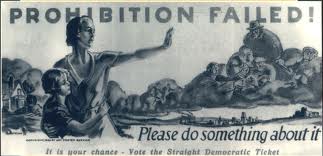
prohibitiom4) The Prohibition Argument. Some “legalize” proponents suggest that the current climate in America today, regarding crime and enforcement, is equivalent to America’s attempt to prohibit use of alcohol during Prohibition.

“Didn’t Prohibition result in more crime though?” drug legalization proponents will ask. Wasn’t Al Capone created by Prohibition, and weren’t numerous black markets created, and didn’t Prohibition result in widespread criminality that ended once we ended the “Great Experiment” of Prohibition? Weren’t homicides reduced, and wasn’t the reach and power of Organized crime syndicates, that sprang out of the market created by Prohibition, reduced once we ended it?

Most of the arguments that use Prohibition, and the Volstead Act, to bolster their argument for drug legalization, pick and choose specific statistics to bolster that argument, but they usually stay general when illustrating Prohibition’s general lack of success.

As a New York Times opinion piece, written by a professor of criminal justice at Harvard’s Kennedy School of Government Mark Moore, in 1989, points out:

“Close analyses of the facts and their relevance, is required lest policy makers fall victim to the persuasive power of false analogies and are misled into imprudent judgments. Just such a danger is posed by those who casually invoke the ”lessons of Prohibition” to argue for the legalization of drugs.”

Alcohol consumption declined dramatically during Prohibition. Cirrhosis death rates for men were 29.5 per 100,000 in 1911 and 10.7 in 1929. Admissions to state mental hospitals for alcoholic psychosis declined from 10.1 per 100,000 in 1919 to 4.7 in 1928. (Editor’s note: Prohibition, or the Volstead Act, was in place between 1920 and 1933.)

Violent crime did not increase dramatically during Prohibition. Homicide rates rose dramatically from 1900 to 1910 but remained roughly constant during Prohibition’s 14 year rule. Organized crime may have become more visible and lurid during Prohibition, but it existed before and after.

Following the repeal of Prohibition, alcohol consumption increased. Today, alcohol is estimated to be the cause of more than 23,000 motor vehicle deaths and is implicated in more than half of the nation’s 20,000 homicides. In contrast, drugs have not yet been persuasively linked to highway fatalities and are believed to account for 10 percent to 20 percent of homicides.

Prohibition did not end alcohol use. What is remarkable, however, is that a relatively narrow political movement, relying on a relatively weak set of statutes, succeeded in reducing, by one-third, the consumption of a drug (alcohol) that had wide historical and popular sanction.

The real lesson of Prohibition is that the society can, indeed, make a dent in the consumption of drugs through laws. There is a price to be paid for such restrictions, of course. But for drugs such as heroin and cocaine, which are dangerous but currently largely unpopular, that price is small relative to the benefits.

5) The libertarian argument. If the most influential minds of the libertarian movement, John Stossel, Ron Paul, and the late William F. Buckley are/were for legalization, how can any self-respecting libertarian be against legalization?  If you listen to their arguments, you have to maintain the belief that if a person wants to destroy their life, they should have the freedom to do that.

I agree with this, in theory.  I agree that what you do in the privacy of your own home should be nobody else’s business.  I agree that we should pursue decriminalization.  Even in a ‘decriminalized’ state like Nebraska, I would not be against further decriminalization, but there is an arbitrary line in the sand to be drawn where moving towards full legalization begins to harm society.  There is a point where the user becomes the abuser, and he’s not only affecting himself, but those in his home, his neighborhood, and the rest of society.  If a user could use, and only destroy his life, then I would be all for it.  It’s difficult to be enthusiastic about the destruction of a human being, in this sense, but if we’re going to have a society built on individual freedom, there is a price to pay for it.

6) The Medical Marijuana Argument.   

An article from Police Chief Magazine listed an article in which the Drug Enforcement Agency (DEA) stated that the “Clear weight of the evidence is that smoked marijuana is harmful. No matter what medical condition has been studied, other drugs have been shown to be more effective in promoting health than smoked marijuana.” They also believe that many proponents of the use of medicinal marijuana are disingenuous, exploiting the sick in order to win a victory in their overall fight to legalize drugs. The DEA cites the fact that marijuana has been rejected as medicine by the American Medical Association, the American Glaucoma Society, The American Academy of Ophthalmology, the International Federation of Multiple Sclerosis Societies, and the American Cancer Society.{3}

What the DEA is basically saying is that the entire medical marijuana movement is a ruse that has preyed on a compassionate society that wants to do whatever it can to prevent any of her citizens from suffering.  It has been rejected as medicine by all the largely non-political groups listed above, and it has been rejected as the optimal agent in promoting greater physical health. Other studies have suggested that it does have some pain relieving agents, and that provided the movement a loophole through which some forms of legalization to those that received all of the various, and in some cases laughable, prescriptions.

Ramifications of Legalization

The one ramification that the pro-drug legalization crowd doesn’t factor into the equation is the influence that corporate America, the Food and Drug Administration (FDA), and the Internal Revenue Service (IRS) would eventually have on these products were they legalized.

This is the realization that would probably have hip, young people, and hippies, pausing in their celebratory leap soon after legalization. For, if these controlled substances were legalized, as opposed to decriminalized, the government, and corporate America, would take control of the manufacturing process, the distribution, and the sale of the product. Most of this process would fall under the FDA’s purview. The compromise that led legislators to voting for legalization would surely require that the FDA set guidelines, and standards, so high that they could only “safely” and legally be handled by major corporations. The IRS would then step in and set taxes on production that are so high that the little guy could no longer compete. The little guy would probably still try to have a foot in the process, but they’d be hit by fines, and probable incarceration, that would result from selling the products without FDA and IRS stamps on them. These fines and incarcerations would no longer come from the DEA, or the various local law enforcement agencies, in other words, but the little guy would still be fined and incarcerated. It would just be other agencies complicating their sales with other charges.

At some point in the process, the influence of the FDA, the IRS, and corporate America, could push the demand to a point where the products are priced out of the budgets of the low income individuals that currently enjoy it, and only the affluent can afford it. It’s probable, at that point, that a black market would rise out of these ashes, and we would all be back in the exact same place we’re in today?

For those that claim that this piece provides evidence of a 180 degree turn from prior positions put forth in previous blogs, I can only write that if you live long enough, and read enough information on a given topic, you’ll inevitably find that you were wrong about a lot of things.  The empirical, and semi-empirical evidence I have found, and in some few cases witnessed, is simply too overwhelming compared to the adversarial reviews of the same information.  The adversarial reviews of the same information provide provocative strains of thought, based in equivocations and anecdotal information, that are appealing in the manner in which they counter traditional views on the subject.  This “What your parents don’t know” form of confirmation bias is very appealing to young people seeking to form an identity that stands in direct contrast to their parents, as it was to me.  As appealing as these arguments are, for all of the reasons outlined in this article, they don’t answer the questions regarding the destruction these controlled substances can have on the individual, the locales that legalize them, and society in general in a convincing, objective, and comprehensive manner.  Until that argument can be made, most of the quiet majority will probably remain quietly against total legalization.

Other reading: Most uses of medical marijuana wouldn’t pass FDA review, study finds

Here’s What Science Says About Medical Marijuana