An Argument About Arguing


“You just love to argue!” a friend of mine said to me.

To me!?

To that point in my life, I had been that person that avoided arguments. I often walked away from them. When that wouldn’t work, I was prone to level the “You just love to argue!” charge against them.

Bear+Attack+Girl+Video+PhotoI don’t think even this friend of mine would accuse me of being a hyena, in the world of arguers, but I was once a limping antelope caught up in a pack of hyenas. It got so bad, at times, that I would examine, and reexamine everything I planned on saying. I feared everything I said would provoke an argument. I just wanted to have one peaceful day at work. When that wouldn’t work, I just stopped talking. I didn’t understand how everything I said could be so wrong, so controversial, debatable, and subject to argument. At one point, I gave up trying to figure it all out.

It was obvious to this pack of hyenas that I didn’t know how to argue, because I wasn’t used to everyone challenging every idea I had, but the fact that they were so confrontational about damning my ideas told me more about arguing than any debate class could.

Being the recipient of such a charge, after those dark years, taught me something. I liked it. It was shocking, but it was also pleasing.

When this accusation began popping up more often, and I began to reflect on the nature of the charge, it dawned on me that there are those that love to argue and the vulnerable subjects of society that they pick on. Some of these vulnerable subjects were less intelligent, but most of them didn’t spend every waking moment of their life arguing, so they weren’t as equipped as those that did. The question I had, now that I was being accused of being the former was, am I guilty of preying upon the vulnerable?

The difference between a healthy debate and an out and out argument is seismic. Even if some of these healthy debates are characterized in this manner, by the hyena that won’t leave you alone, you’ll find yourself leveling the “You just love to argue!” charge to end all future debates, healthy debates, and out and out arguments, and you will grow frustrated when it doesn’t work.

The question the vulnerable subject will have is why do they keep coming back to me with new information, new points to ponder, and a never-ending cycle that appears to be redundant to all observers? Why me? Why don’t they bother Suzy Q over there? She appears to enjoy arguing as much as they do? Yet, they keep coming back to me.

After receiving the charge that I’ve made against many, for so many years, I found the answer. I found the answer to why they sought me out, in my search for why I sought some of them out: I like to win.

Those that hate arguing, hate losing. They fear entering into an argument with a worthy opponent over subject ‘A’, and the revelations that will occur when they find out that the worthy opponent prove to know more about that subject than they do. The worthy opponent has proven, in the past, to be a worthy opponent. Most arguers do not enjoy arguing with a worthy opponent. The best way to avoid such embarrassing and stressful revelations, they think, is to just avoid arguing altogether.

Those that love to argue, on the other hand, appear to think that they learn things about all the players around them, and they may feel they learn things about themselves by arguing. It might all be a complex pursuit of intellect and psychology, for them, but it might also be something very simple: it may be all about winning and losing.

Most arguments seem so simple that they’re not worth having, but some people love to win arguments so much that they seek out the one person in the room that feeds their bear better than anyone else. Is this you? Do you have a person, that no matter how many times you say you don’t want to argue about it, won’t leave you alone about an about an annoying amount of everything? It may be that you’re better at feeding their bear than anyone else. Either you walk away, or you let it be known that you just don’t like arguing. Whatever the case is, they must find your reactions nourishing to their ego, or they wouldn’t keep coming back.

“Why do you insist on arguing about everything?!” is something you might say, in the face of their constant badgering. Or, “Does everything an argument to you?” You may even decide that you just don’t enjoy being around them, that they make you uncomfortable, and that you don’t enjoy their company. You may know that they enjoy watching you scream and squirm on a certain level, but you’ve provided yourself some comfort in stating that there must be something wrong with them if they enjoy doing that. If you’re one of these people, and you’re getting lost in the forest of their argumentative minds, you may want to start looking for the signs that say: “Don’t feed the bears!”

“I know I shouldn’t walk away,” you may say. “But it can just get so exhausting arguing with them.” The problem with this line of thought, as anyone that knows anything about bears will tell you, is that when you feed a bear they keep coming back. It’s the nature of the beast to keep coming back to the spot where their ego was nourished with the least amount of effort involved. They will no longer go out into the wild, where they belong, to keep their instincts shiny and honed, and they will become fat, and lazy, subsisting on your ineffectual, but nourishing responses.

There are some bear feeders, and we all know one, that believe that an argumentative bully can be put down with one clever turn of a phrase, or a well-timed, well-placed shot on the chin. If you’re one of those people, you may want to consider the idea that you’re watching way too much TV. In the fantasy world of television, where the screenwriter of that show has their character deliver that one shot, clever turn of a phrase they wished they said to their bully, that puts their bully in his place. In the fantasy world of television, the bully comes to respect the victim for their moxie, and the two of them may skip off together, hand in hand, in an eventual pursuit of the conflict that led this complex bully to be so insecure that he felt compelled to pick on his victim. If you’re one of these people, you may want to consider either turning the TV off, or switching the channel. The Lifetime Network is doing you more harm than good at this point.

In the world of reality, your single shot results in little more than putting the smell of gun powder in the air. The reason that you fired that shot was not to hurt them, but to try and scare them off a little. As anyone that knows anything about bears can tell you, the smell of gun powder triggers an instinctual mechanism in the bear that will cause them to keep coming at you until you are forced to recognize that it’s going to take a strategic concentration of blows to be delivered over time to put them down. It’s going to take a thorough understanding of the bear, and an ability to defeat them, with repetition and patience, until that moment of truth arrives when they bring up an argument and they try to avoid looking over at you while doing it. Either that, or they will avoid broaching that topic that they know is in your wheelhouse.

_47451911_4compYou will know that you’ve stuck a dagger in their purported “lifelong love of the arguing” when they give visual cues that they’re relieved that for the first time in a long time, you have said nothing to contradict them. These moments, when you become the bear, don’t come around often, and you should feel free to rub it out on the nearest tree as a reward for your constant, and confident, and strategic defeats, of every argument they left by the trash can for your nourishment.

Some unfortunate, and lifelong, victims believe that I am 100% incorrect in my assessment that constant, confident, and calm refutation has any merit, and they opt for a more high-pressured, high-volume attack that they believe will whip the head of the argumentative bully around to a realization that all victim’s desire: the ‘You don’t wanna go messing around with me no more’ realization. This attack often involves a lot of swear words, a red-face, and some ultimate ultimatum. This tactic has never proven effective, in my experience, and I have witnessed it attempted many times, from all sides of the paradigm.

There have been times when I’ve been on the casual observer side, and I’ve heard these argumentative bullies whisper: “Watch this!” before launching on you people. I’ve heard them state with pride that they can get a rise out of you, when you’re not around. They love this, is what I’m saying. They take great pride, almost to the point of arousal, in the fact that they are one of the few people that can cause you to get hysterical.

“Why do you give them that?” I’ve wondered aloud on more than a few occasions. In a few of these occasions, I have been a disinterested, neutral party. I don’t care about the well-being of the vulnerable subject, and I didn’t find the bully’s persecution particularly funny. I just wanted to know if the vulnerable subject understood the dynamic of the situation. The reactions I’ve received are just as red-faced, and laced with profanity, and high volume. It has led me to believe that some people are victims as a matter of happenstance, and some are a species unto yourselves.

Some arguments are germane and vital to a person’s existence, and the best argument I’ve heard for never walking away from them is that you have to teach people how to treat you. Those that love to argue will put a person through the ringer, just to see what they’re made of. These types disgust those that don’t enjoy being tested. They want to live in a world where everyone treats everyone else in the manner they want to be treated. They want to live in a land of peace of harmony. Too bad, say those that love to argue. This is the real world, and we’re going to force you through this tiny, revelatory hole just to see what you come out looking like on the other side. These arguments are often of a more personal nature, and they cannot be avoided. You have to teach others how to treat you.

If a person enjoys arguing, and they seek out arguments of all stripes, they will eventually encounter a person that argues about everything and nothing, and they will do so in the same argument. My advice to those that have any regard for their mental health, is to simply pack up your belongings and walk away. These types of arguments are indigenous to an annoying species of bear called the plane switchers. The modus operandi of the plane switcher is to start an argument. If they find that they have tripped upon a subject their counterpart is well-versed in, until an argument that began with a discussion on the homeopathic uses of emu urine somehow switches to the origins of the Wiccan religion. How did these people do that, might be the first question we ask, as we begin to see all the “Don’t feed the bears” signs around us in the dark and sparse forests of the plane switchers. Further inspection of the argument reveals the fact that the question regarding their ability to deflect doesn’t matter near as why they do it, and I can answer that question with one word: victory.

My advice, again, is to simply walk away. If, however, it is impossible to walk away, as the person may sit in an adjoining cubicle in an office place, or they may be a loved one. In some cases, I have found that the task of switching the topic back to the germane topic takes a steady, subtle hand, and on other occasions I have found that it calls for brute force. If we are able to manage switching the playing field back to the subject at hand, we might find our way out of one argument, on one day, in the everlasting arguments with these exhausting people, and all exhausting arguers, until we run across the person that mistakes us for being a person that loves to argue.

I remember that day, oh so long ago, when that first person accused me of being an argumentative person. I almost laughed in her face. When she did that, they had no idea how many times I said what I said just to get the other guy to shut up for five minutes. They had no idea how many times, I packed up my stuff and walked away from an argument I found tedious, and they had no idea how many times I lost arguments. They also had no idea how many times they presented me an argument, and all I was doing was countering that argument. They had no idea that they just wanted me to lie down, and roll over, and accept their argument in the manner they presented it. If they knew the painful and emotional road I traveled on to get to the point where I received their wonderful compliment, they would have never said it. They just knew the finished product that stood before them arguing against their argument. They didn’t know how many years I spent in the loser’s bin, unable to compete, not knowing the right thing to say, and trying every possible method I could think up just to shut just one of them up. They just knew the finished product. They didn’t know about all the Dr. Frankenstein’s that gave the beast life.

Very few arguers know the argumentative beast living inside them. They don’t know the maturation process that their beast went through, or the weaponry their beast purchased with intangible experience, but they do know that they like to argue with you over any other individual in the room, because they love to see someone else do the squirmy, screamy dance that they used to do when arguers chose them over everyone else in the room. They may not know any of the complex, intellectual, and psychological algorithms of their beast, but they do know that they like to win, and that you –the person that doesn’t like to argue– will always give them that.

The Freedom of the Self-Checkout Aisle


When the first self-checkout aisle was rolled out, circa 2001, I thought that Big Business had finally invested in technology for someone like me. I thought I was being rescued from the inane conversations that seemingly lonely checkers feel compelled to engage customers in in the full-service aisles. I thought price checks might finally become a thing of the past, in my life, with the advent of self-checkout. I thought I was being rescued from ever having to endure the spectacle of a customer waiting to pull out their checkbook until all the items have been scanned and the total has been given. There are no checks allowed in self-checkout after all. I thought self-checkout was a dream, for do-it-yourselfers around the nation, a dream come true. I thought we would all be granted more time to do other important things in our lives.

Self service checkout-1349917As with any dream, that eventually becomes a reality, I feared self-checkout would be a temporary experiment that everyone would have to do their part in if we ever hoped for it to survive. I knew this experiment was conducted for business, and as with any experiments in business there would have to be a learning curve in the beginning. Eventually, I thought, lines in the sand would have to be drawn if the gods that manned the security cameras were going allow us this privilege long-term.

At some point, I thought, we consumers would have to engage in a melding of the minds that defined those that were prepared for the requirements of self-checkout and those that weren’t. I never thought we would reach an age, in the self-checkout era, where a Darwinian divide would have to be laid out. I just thought that those that were perpetually unprepared would eventually weed themselves out.

You can call me a fool if you want on this note, but I thought that this dream-like opportunity would eventually weave its way through our society in just such a manner that the unprepared would begin to decide that self-checkout just wasn’t for them, that it made them too nervous, or that they couldn’t handle the rigors of all that scanning and swiping. I thought some would eventually decide, through trial and error, that they were just more comfortable with full-service, and that they would never attempt to cross aisles after repeated, embarrassing failings. I thought a certain point of harmony could eventually be achieved where the prepared would say to the unprepared, “I have no problem with you brother. I don’t think any less of you, full-service consumers, as long as you learn your aisle, and they stay there.”  Unfortunately, as we’ve all discovered over time, the self-checkout aisle didn’t cut dividing lines, it only exacerbated the notion that most people live with delusions and illusions of who they are.

I probably wasn’t as prepared as I believe I was back in 2001, when I first began scanning my own items, feeding machines my money, and bagging my owned groceries. I probably made some mistakes that would greatly embarrass me if anyone had tape on it. I wanted to be one of the prepared, though, I wanted to perform self-checkouts for the rest of my life, and I thought I would only be allowed this privilege through merit. I never thought I could do it once or twice and be given a special designation. I knew I would have to prove that I was a prepared one every time out.

And if you’ve ever had a hard-nosed teacher in grade school, that granted you a special privilege, you learned this principle too. You learned that if you didn’t constantly prove yourself worthy of that privilege she granted you, on a constant basis, that hard-nosed teacher took that privilege away from you. If you had that hard-nosed teacher, you learned that excuses played no part in her world of privileges. Act right, and you get them, screw up, and they’re taken away from you. That’s what I though this whole world of self-checkout would eventually become.

I thought that the prepared world would eventually acknowledge that there are some products that don’t have Universal Product Codes (UPC) symbols. I didn’t think this message would have to be sent out twelve years in, especially when we’ve all been in full-service aisles where checkers have to look up UPC numbers on those pieces of fruit, or candy, that don’t have UPC stickers on them. We’ve all seen this, and in the universally prepared world, we prepared for that eventuality before we reached the self-checkout aisle.

Others don’t seem to care about the special privilege self-checkout offers us. They don’t think about the freedom performing our own checkouts offer us, or the time it frees up for us. It’s just another aisle to them. They do little-to-nothing to uphold the standard required to sustain this freedom. They just buy a couple of watermelons and stare at them with confusion, with a loaded UPC gun in their hands. At that point in their transaction, I want to run in and block them from all security cameras. I don’t want the gods manning the security cameras to see this. I don’t want them to know that there are still people, twelve years after its nationwide rollout, that haven’t prepared for the self-checkout aisle.

They twist the watermelons over and over, they turn to their tech-savvy teens, and then they ask the self-checkout checker for help. They have no fear that this could be documented, and that the self-checkout could go the way of extinct animals that weren’t properly equipped to sustain themselves. “You’re ruining this for everyone!” I want to scream. The checker, in charge of the self-checkout aisle slides over, and she punches in the code that these watermelon buyers should’ve noted, on the watermelon bin, the moment they realized there was no UPC sticker on them.

These particular customers aren’t satisfied with the checker’s services. They’re even more confused when she finishes punching in the code.  “I thought they were two for one?” they say.

“They’re only two for one, if you …” the checker went on to detail the specifics of the deal, and the customers only grew more confused. The two parties argued a little. I didn’t know the specifics of the deal, and I didn’t care what they were, but I wasn’t purchasing watermelons. If I were, I would’ve known every detail of deal, because I am always prepared. I belonged in this aisle.

The customers then ask this checker to take one of the watermelons off. We’re stretching into the five minute category, at this point, much too long for a self-checkout transaction. ‘They’re watching,’ I want to tell these customers, ‘And they’re taking note of all of your confusion.  Do you have any idea what you’re doing? Do you even care that you don’t belong in this glorious aisle? You need more help lady, you need full-service, and if you ever paid attention to your characteristics, you’d know this.’

Other self-checkout aisles, others that I abandoned based on the fact that they were loaded with fat, doughy customers, are proceeding through their checkouts with speedy glee. I entered this aisle based on the fact that this family was Asian, and you can call me racist, or racial, but I thought they would have enough intelligence to figure this whole thing out. In my experiences with the Asian people, I have found them to be either intelligent enough, or so embarrassed at their lack of knowledge in one particular area that they sheepishly accepted whatever they were told to avoid causing a scene, or an unnecessary delay to those waiting for them. I have found them to be extreme conscientious, in other words, to a point that usually matched mine. These Asians did not match my expectations, and they didn’t appear to care one way or another that they were causing me a delay.

In lieu of this unprepared family’s actions, I lined up all of my UPC symbols, so I could scan in a flurry. I also took out all the cards that would be necessary to complete the transaction. Now you could say that I was slightly unprepared prior to the example set before me, but I knew where all the UPC symbols were before I lined them up, and I knew exactly where all of my cards were. By performing these few actions, I was not only prepared, I was extra-prepared. I would be cutting a thirty-second transaction down to twenty with my extra-preparedness. I considered this a service to those behind me. I considered this doing my part to sustain the legacy of freedom created by the self-checkout gods. I wanted to show all of those around me, and the gods manning the security cameras, that this whole idea of absolute freedom being afforded to the consumer was not only warranted but necessary in a society of impatient people.

‘We’re almost through,’ I thought when the Asians finally began swiping their credit card. I thought about how much of my life I had already lost watching them struggle through the self-checkout process. I also thought about how, if these people had allowed me to cut, based on the comparatively few items I was purchasing, I would already be home, immersed in a conversation with my wife. I was soothed by the fact that they were swiping their card, though, and that this would be all ending soon, until they began having trouble with the swiping process.

As a non-confrontational individual, I decided to communicate my fatigue for their inability to swipe, through body language. I slumped back and began texting, and I sighed. It wasn’t a huge, look at me sigh, but it was audible. When that didn’t work, I began stretching my head up over the aisles to look at other self-checkout aisles, and how much fun they were all having over there. I never intended to go to another aisle, it was too late at that point, but I thought if nothing else comes of this, at least I can inform these unprepared people that they should never go through the self-checkout aisle again. They were just too unprepared for the self-checkout requirements, and if they only learn one thing from this whole experience, perhaps future generations of consumers can be spared from ever having to go through this kind of trauma again.

After the fourth swipe, the Asians cast an obligatory look at the back of their card. After the fifth swipe, they cast the obligatory look to the staff member in charge of helping out self-checkout customers. This staff member slid over again and achieved an approved status on her first swipe, and the customer granted the checker the obligatory excuse for why she couldn’t do it herself. I thought of Larry David.

Larry David is not a good swiper, and he acknowledges this, and Larry David is a relatively intelligent being, and even he can’t explain why he’s not good at swiping:

If you told me twenty years ago that I wouldn’t be a good swiper,” Larry David said, “I never would’ve believed you.”

‘Being a bad swiper is not a sign of a lack of intelligence,’ I repeat in my head over and over, until I begin to believe it. ‘You’ve had some problems swiping in the past, and you’re a reasonably intelligent being. You know this, the gods have to know this, and they have to be making some allowances for these Asians in their notes.’

I am through my self-checkout transaction in under thirty seconds. The people behind me love this, the gods behind the security cameras see this, and I almost sprint with my shopping cart to get right behind the Asians as we exit the supermarket, to show them that a self-checkout transaction can be performed this fluidly by someone that is prepared. I want them to know that in the future, if they’re as unprepared as they were today, they should probably just go through the full-service aisles to engage in witty banter with a checker. I want them to recognize which aisle of humanity they belong on, so they won’t ever venture into our glorious, self-checkout line again. I want to tell them that it’s fine that they’re not prepared, and that I think nothing less of them, as long as they acknowledge the facts about who they are, and they don’t venture into our world ever again. This freedom should not be afforded to all, I will tell them, and we will both laugh when they say, “Those aisles just make me nervous.” That laughter will be fueled by both parties acknowledging that we’re just different people, neither of us superior to the other, just different, and if we could just learn to stay in our separate aisles, the world would be a much better place to live in.

The Music That Chuck Klosterman Kind of, Sort of, Used to Dislike


To promote Chuck Klosterman’s new book I Wear the Black HatEntertainment Weekly (EW) provided their readers a sample chapter. There is no title to this EW installment, but one would think EW, and Klosterman, would go with some form of a modern meme that attracts young people. “Music Chuck Hates,” or “I Hate the Eagles, by Chuck Klosterman,” or some title that would attract young people in the manner the Facebook page has with the title: “I ——- Love Science”.

KlostermanReading through this sample chapter, however, the reader begins to believe that these titles would not work, as Klosterman is not as passionate, or as emotional, about the music in this chapter as such a title would suggest. A better title might be: “The Music I used to hate, but I’ve grown, and I’m a lot more thoughtful now, and I’ve realized that the people making this music aren’t so bad. And I may run into these people, or need them for an interview, so I am at least going to be more cryptic with my critiques.” The book has a theme regarding villains, so Klosterman presumably dismisses various bands as villains to give himself a reason to discuss them in a book about villains. Even with that proviso, Klosterman should’ve exhibited a more commanding tone when discussing his likes and dislikes in music.

In the paragraphs provided, Klosterman discusses the band, the Eagles. Klosterman claims that he hated them as much as anyone else for most of his life, and he says that this was based on the fact that they were/are limousine liberals, but he says that his tastes changed in 2003, when he was forced to re-listen to one of the Eagles songs:

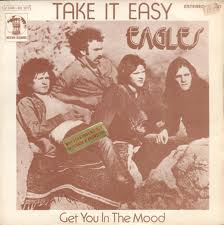
“I listened to “Take It Easy” and I thought about its lyrical content, and I came to a mostly positive — but highly uncomfortable — realization about who I was and how I thought about art.”

Take it easyYou gained a greater appreciation of art, or how you thought about art, from the lyrical content of a song by the Eagles? The Eagles? Lyrical content? Take it Easy? Chuck? What are you talking about? No one would say that the pop genre is without artistic merit. They’re out there, but they’re in the minority, and the Eagles are not in that minority. The Eagles didn’t even write Take it Easy, as Chuck Klosterman admits. Glenn Frey wrote one line of the song, and Jackson Browne wrote the rest of it.

In the midst of this article, there are some “Klostermans”. Klostermans, as I define them, involve Chuck Klosterman’s kitschy breakdown of the lyrics of a song as if they were profound literature, a writing tool he’s used so often in his career, and so well, that the act of doing so should be trademarked “a Klosterman”. For the most part, these breakdowns are hilarious, but when he does it with Take it Easy, it feels like a violation of the term. It almost feels as if he’s asking us to re-examine a song that we’ve all heard far too many times … in the bits and pieces we’ve heard on classic rock radio before we were able to change the channel. There are also moments in life when a person is not able to change the channel or in any other way skip a song, such as in a doctor’s waiting room, when it’s not in a person’s best interests to run screaming out of a room the moment after Take it Easy begins.

We don’t want to hear this song again, Chuck. We don’t care that a guy is having trouble juggling five women. No matter why or how. Let it die for criminys’ sakes. We enjoy it when Chuck analyzes old Billy Joel lyrics, that’s fun and kitschy, but the Eagles? Artistic? Chuck?

Throughout the course of the Eagles career, they’ve created safe, boring, liberal, touchy-feely music that our most simple-minded friends shush us over, and close their eyes, and have a spiritual moment, based on the fact that this particular song was playing on the radio during a seminal moment in their lives. For these people, however, music is largely background noise, until those songs reach the rarefied air of being on the radio so often that they can’t help but become monumental and a slice of Americana. This, in turn, leads the people that sang that song to believe that they are so monumental, and such a slice of Americana that they can wave a magic wand on stage and get audience members to live through their more important (their stress) lives.

The Eagles could be the greatest American band, if we base that scale on popularity, or sales, but suggesting that there is anything artistic about this simple-minded, clichéd, and ubiquitous music is a statement best left to the sycophantic staff of Rolling Stone magazine. Most of us cannot listen to an Eagles song, much less Take it Easy, without feeling a little dumber, more common, and less in touch with who we are as music aficionados, and it’s going to take more than a clever “Klosterman” to get me listening to it again.

On Bruce Springsteen, Klosterman writes:

“I just thought he was so fake, which is the most backward possible reason for hating Bruce Springsteen.

“Old people who read Newsweek believed Bruce was somehow different from everyone else making music, and his willingness to perpetuate that fallacy made me view his integrity as profoundly compromised. It seemed like the difference between acting in a play and lying in real life.

“Any time I meet someone who thinks Springsteen is overrated or artificial, I find myself thinking, this person is extra real. I immediately respect that person more. And yet I do sincerely believe Springsteen is (on balance) a great guy. I don’t hate him at all. So why am I still retroactively trolling him? It’s just something I can’t get over.”

When Klosterman states that hating Springsteen for being fake is, “the most backward possible reason for hating Bruce Springsteen”, this reader wonders if Klosterman is attempting to qualify the opinions that follow. Either that or Mr. Klosterman is attempting to dispel what he may believe to be a consensus on Mr. Springsteen. If that is the consensus, this reader didn’t find anything in the Springsteen section to dispel it. Klosterman does write that he believes Bruce is “(on balance) a great guy”, but isn’t that what fake people are … on balance? I have no idea if Bruce Springsteen is actually fake, and I don’t care enough to put as much thought into it as Chuck Klosterman has. If Springsteen is fake, an observer could say that he hits all of the bullet points. He seems like “a great guy (on balance)”. He gives us the formula he knows we want, to remain in our favor, then he goes on to live the life he wants to live, and no one calls him out for what could be hypocrisy. While it’s difficult to prove, or disprove, one’s authenticity, Chuck Klosterman writing, “I sincerely believe he is a great guy” doesn’t cut it for this reader. We readers don’t care what you think of him personally, Chuck, unless you can substantiate it in some manner.

Does it really matter if we think a musician is fake? Do we think Bob Dylan is fake? No one cares, least of all (it seems) Bob Dylan. Bruce Springsteen does care, or at least he appears to care. Bruce has built a musical empire around the idea that he’s real “extra real”. I co-opt that term from Klosterman, but Klosterman does not write the words “extra real” in the pejorative sense I did, and he does not attach the term to Bruce. Yet, we could attach the term “extra real” to the “generic-yet-kinetic” clothing Bruce Springsteen wears. Would we deem Springsteen authentic if he chose to sing his unionized, small town lyrics in a made-to-measure, custom-fitted Frank Sinatra suit with wide lapels? Springsteen is so big, because he’s managed (artificially?) to remain so small, and that’s what people love about him. Those of us who don’t think Bruce is “extra real”, think Bruce is overrated, and we see through the “great guy” image of the man singing about small town, unionized America, to the idea that once one strips away all the “extra real” layers of Bruce Springsteen, his music is not artistically complex or by any measure diverse. He just puts on “amazing” shows, and few break down how they are amazing.

Klosterman then examines the point of Springsteen being authentic in comparison to Mötley Crüe, when he writes:

“The difference was that Mötley Crüe did not pretend they were real (or at least not in a convincing enough manner). Vince Neil never led me to believe that any element about who he pretended to be was supposed to serve any purpose beyond “the act of being the singer in Mötley Crüe.””

Klosterman nails this point, but he backtracks it in an “aw shucks” manner that suggests he may have been too hard on Springsteen throughout his life writing that “Bruce is a great guy”, and that he “doesn’t hate him”, and that “it’s something he can’t get over”.

Anytime a person has beliefs they can’t get over, they probably have them because they know that there is a fundamental truth to them that they can’t get beyond now that they’re old and so many people are telling them that they’re wrong. I realize that, as Chuck climbs the ladder in corporate magazines, and newspapers, he’s entered a sphere of existence where he’s torn between the readers that put him where he is, and the editors that put a governor on his former “No one gets out of here alive” method of critique, but those of us who read this particular piece in EW were a little disappointed by the apparent need Chuck Klosterman felt to politically tight rope his way through genuine critique. Chuck Klosterman’s previous writings were what separated him from those rock journalists who were afraid to write anything negative about Springsteen, Clapton, Tom Petty, or any of the sacred cows of rock that rock journalists seem forbidden by their editors to write anything negative about. It could also be that I’ve exaggerated Klosterman’s previous writings in my own mind, and that he was never as daring as I considered him, but it seems to me that he was never this cautious either.

On Van Halen, Klosterman writes that he hated Van Halen (or as we called them “Van Hagar”) soon after David Lee Roth and Van Halen parted ways. Chuck then says that he had the same feelings for Mötley Crüe after they replaced Vince Neil.

“Within any group conflict, my loyalties inevitably rest with whichever person is most obviously wrong,” Chuck writes.

It’s a humorous assessment of Klosterman’s musical fandom, but I believe his loyalties are more superficial than that. Chuck and I were about thirteen and sixteen respectively, when the Van Halen split occurred, and neither of us knew much about music, but we knew their lead singers. I may have known the names of Nicki Sixx, Tommy Lee, Mick Mars, the Van Halens, and Michael Anthony, as I was a big fan, but David Lee Roth and Vince Neil were the bands as far as I was concerned. They were the front men, and they were the face of the band in public perception.

A true musician will inform a listener that the front men are the least vital components of the music, and the guitarist is the second least important when compared to the vital back beat of the bassist and the drummer, but in the land of public perception, it’s the exact opposite. Therefore, when the groups separated from these two front men, those of us in public perception land considered the band done. Chuck can try to lay groundwork that suggests that the loyalties of his teenage mind were more complex than that, but down deep, I think he knows that the music of these bands became karaoke after the groups replaced their charismatic lead singers. The bands became a group of guys trying to hold onto a franchise that they struggled so hard to create, and they wanted a few more years added to the legacy before they called it a day. The music of these bands lost their nihilism, their signature, and their “silly and fun arena rock” persona after their lead singers left. They became Pat Boone’s “In a Metal Mood”. They became a bunch of guys trying to play what the youngsters liked. They became a: “You guys gotta keep it together” paycheck their manager promised them after informing them how marketable the name of their band was, and how they would never achieve that kind of plateau again in any other incarnation.

The albums created, post carnage, Mötley Crüe and Van Hagar’s 5150 may have been the greatest albums anyone has ever created, but those of us in public perception land barely noticed, and more importantly didn’t care, when they came out. Those groups were over as far as we were concerned.

ACDCKlosterman does not cover the music of AC/DC, because this was a hate column, and he presumably never hated AC/DC, but their music was some of the most consequential music of our era, and it would be music that I would eventually come to hate.

I didn’t hate AC/DC at first, but I didn’t love them either. Their music was never “my” music in the manner music becomes “my music” to a teenager, but I did have some appreciation for what they did early on when the “cool kids” in my neighborhood introduced me to them. (I knew of their music to this point, in other words, but we had never been properly introduced.)

The album, Back in Black, was my formal introduction to AC/DC, and it blew me away. I did not know that other bands (bands other than Kiss) could make fearless music. The first song I heard was Back in Black, and from its intro on, I knew this was fearless music that my parents, most females, and chart makers would not appreciate. (I probably didn’t think of charts in the truest sense of the word, at that point, but I knew I wouldn’t hear AC/DC on my local, top 40-radio station.)

I also loved the album cover. It was black, nothing but black. I also loved the title, and the band’s name. As a Kiss fan, I thought that every band was required to have brilliant visuals on the cover. I found Back in Black’s lack of visuals brilliantly simplistic.

When I first heard Back in Black, I thought that I now had one other band that I could trust not to make a ballad. (I was still embittered over Kiss’s foray into ballads with the song Beth, but I had learned to forgive them by simply lifting the record player’s arm up over that misstep.) I thought I discovered the second greatest band in the land, in AC/DC, especially when this friend rolled out the other AC/DC album he owned: Dirty Deeds Done Dirt Cheap. I heard that album’s title song, and the balls song, Big Balls, and I swooned in a pre-teen male form of a swoon, looking for a way to catalog his machismo.

AC/DC had a way of singing lyrics, a way that had my adolescent stamp of approval that fit the music and nothing more. There were no self-indulgent, symbolic lyrics. Their lyrics were simple and in your face that fit the music in a manner, I would later term arena rock. The problem with arena rock, and the reason I came to loathe AC/DC, is the lack of variety. As I stated earlier, I never wanted AC/DC, Kiss, or any of the bands I listened to, to go soft, but every album after Black in Black sounded almost exactly like Back in Black. I never felt the need to purchase another AC/DC album, and I came to loathe those who did.

As I wrote earlier, Chuck Klosterman should trademark his kitschy method of dissecting lyrics, as if they were profound literature. He does this so well, and so often, however, that one can’t help but think some part of Chuck Klosterman believes that his favorite lyrics form profound, artistic statements. I’ve always considered lyric writing one of the most overrated art forms. They appeal to us on a certain level, I would argue, because of the musical background that accompanies them. If one were able to remove the music from their mind, and read most lyrics on a blank page, I would argue, we would see that most lyrics do not have the literary merit necessary for the profound literature moniker.

Most lyrics involve double-entendres and cryptic messages regarding how the casual use of controlled substances should be considered kind of neato! I never understood why so many people felt compelled to tell others that they have ingested drugs, and I really had no overwhelming desire to do it, so the descriptions of these cryptic messages always bored me a little.

Don’t get me wrong, I enjoy it when musicians attempt to speak the language of their demographic by mixing in the occasional curse word. I enjoy the general idea of messing with the mainstream, but I was unmoved when a teacher told me that John Lennon was communicating greater messages in his songs than I had realized in my casual listening experiences. I always thought Lennon (along with the rest of the rock community) was most likely a vacant individual who was trying to sound smarter than he really was by using clever lyrics. I’ve always thought lyrics should fit with the music, nothing more and nothing less. It should never be an arena for the college thesis that most lyricists never wrote, because they weren’t intelligent enough to write, but they were clever enough, or cleverly brilliant enough, to make you think they were within the convenient limits of a song.

REMOn R.E.M. Klosterman writes:

“I didn’t relate to the kind of person who related to R.E.M. and I didn’t like textured, nonheavy songs that made me feel like some dour weirdo was telling me I was living my life wrong. Over the next twenty years, R.E.M. would become one of my favorite bands of all time, which means a) the sixteen-year-old version of me would have hated the thirty-six-year-old version of me, and b) I probably was living my life wrong.”

Klosterman nails my feelings on R.E.M. almost word for word, except for that last line. The last line bothers me, because (I would later learn) that’s pretty much what the worldview of the songs of R.E.M. were all about. They were about telling the listener that they were living their life wrong. Those that question such an assessment need only read an interview with Michael Stipe. His answers contain the rantings of an obnoxious, self-involved narcissist. The reader will find that this narcissist does say narcissistic things in all the “right” narcissist ways however.

In one of these interviews, Stipe described Rod Stewart as “icky”. Not kidding he said: “Ick! Ick!!” Now, I’m not sure if Stipe knows Rod Stewart on a personal level, and his judgmental attitudes are based on personal experiences, but I’m guessing that this very personal condemnation does not adhere to what Stipe calls a beautiful refrain ‘Judge not, lest ye be judged’. An observer, hearing this condemnation of Rod Stewart could find Stipe’s supposed adherence to this beautiful refrain a hollow claim.

Stipe also deems those who espouse opposing points of view unacceptable, evil, and presumably icky. He would probably also deem those that consider his rants to be “from an obnoxious, self-involved narcissist” icky. The fact that Stipe may not be as informed as he pretends to be, has never mattered to those interviewing him, however, because, again, all of his icky rants are icky in the ways the journalist has presumably considered non-icky.

If Stipe is going to judge another person, in a public forum, then we can judge his judgment, if we listen to his beautiful refrain. As with most venial sins of this nature, Stipe judges Stewart to leave the reader of the interview, the impression that he, by comparison, is a wonderful guy. He wants the reader to think he has the correct views on all the right subjects, and he lives by the “mean people suck” bumper sticker philosophy that ostensibly declares the driver to be a wonderful. I may be alone in this assessment, but I tend to find such social Darwinist thinking to be icky.

We, music fans, shouldn’t kill the messenger for the message, however, and Stipe and company (R.E.M.) did make some beautiful music. Klosterman should not condemn the music of the Eagles based solely on their politics; Rolling Stone should not condemn Ted Nugent for his views; and we should not condemn R.E.M. or Springsteen for their views. We should just listen to their music with the idea that most musicians don’t know what they’re talking about, but they cannot keep quiet in their quest for a “more consequential” title than that musician guy that prances about on stage. The one thing I have taken from all of the interviews I have read from rock musicians over the years, in my quest to learn what drives them, is that if I want to continue enjoying their music. I should probably just stop reading such interviews.