My Dog the Racist. My dog growled at a pedestrian walking up the block the other day. He then proceeded to bark two more times at the individual. The pedestrian was a black kid. Now you may say that my dog does not have the cognitive ability to be racist, but ignorance of the law is no excuse. You might believe that my dog doesn’t know the difference between a black kid, and any other kid, but I do. I know that any dog unfamiliar with the warnings of George Orwell needs to be taught that in their world, the black kid needs to be considered a non-person, as far as my dog is concerned. It does not reflect well on me, his owner, if he barks at anyone other than white males. I know barking at black people is tantamount to racial profiling, and that based upon my dog’s ignorant behavior he and I need to have an inter-species conversation on race if we don’t want to be considered cowards. In this inter-species conversation on race, I would tell my dog that it is not enough to say that some of the anuses you sniff are black dogs. Those are the excuses of scoundrels seeking a get-out-of-jail-free card on racial sensitivities. I would tell him that his barking could do great damage to that black kid’s self-esteem, and I would tell him that any future barking would be considered a hate-crime regardless of his intentions and motives, and that it could carry with it hate-crime punishments. I also know that no matter how confused my dog may be at a scolding, he will not be doing anything like this again in my home any time soon.
Then…now…who cares?
Haloed Hollywood. A fawning Hollywood article fawned over the “Over forty!” bodies of some celebrities. The article focused its fawning on the bodies of Jennifer Aniston, Halle Berry, and Jane Fonda. One would think that a true feminist would read such an article and think that if these women worked half as hard on their minds, it would do a great deal to further the idealized image of a strong woman for those young females that look up to them. These same, young women will learn that if these women took that time to focus on cultivating their intellect, at the expense of their figures, fawning Hollywood writers wouldn’t care what they thought.
Those impish impoverished. It seems almost innate that those who receive some sort of government assistance despise those that assist them. Is this based on pride, or is it that if the assisted let up on the pressure, those who assist them won’t feel the need to assist them more?
Superior Inferiors. Why is it that if an individual is struggling with a contraption, nine out of ten people would rather laugh than help the struggler in anyway? As an individual who has had more than his share of embarrassing moments struggling with contraptions, I’ve always considered it important to assist those that struggle in a manner I deem appropriate to the situation. The best thing I’ve come up with is to offer communal condemnation of the product:
“Those things are real sons a bitches,” I will say.
This subtle form of empathy seems to help the struggling individual far more than any physical assistance will, for most men don’t want physical assistance. It often furthers their humiliation for someone to step in and fix the contraption for them in a manner that makes it look easy. My little subtle form of empathy not only lessens their feelings of public humiliation, but it keeps the hyenas —looking for any reason to start the laughing— at bay.
If that subtle form of empathy isn’t appropriate for the given situation, I will say:
“Hey, just to let you know, I could not have done that any better myself.”
The old adage: “Treat others the way you want to be treated” comes into play in situations like these for me. Others —the nine out of ten— get a lot of mileage out of watching another struggle … This is the case, more often, if the laughing hyena don’t like you in ways they won’t admit.
On that note, most find it more enjoyable to laugh at those they consider superior. Most people won’t laugh at an individual they consider inferior. It may increase their feelings of superiority to laugh at the inferior, but they often wait till later to laugh about it. If an individual is superior, in some ways, and they are struggling with a contraption, it is deemed acceptable at the time to laugh at them during their struggle. They can take it, the hyena thinks, they have an ego that might need to be diminished a little, and if they don’t, well, they’ll get over it. An inferior individual gains sympathy from onlookers for their difficulties not laughter.
Ah Hole Arrogance. It’s easy to spot arrogant, Ah holes in life, but what about the soft and squishy Ah holes? They’re out there. They just know how to conceal their nature better than arrogant types.
“Please call me Ernie,” they’ll say when they greet you in a formal setting.
‘Well, I wouldn’t be calling you Mr. Brubaker if it wasn’t my job to do so,’ I want to say. I don’t say this, but to their utter frustration, I continue to call them Mr. Brubaker.
“Why do you continue to call him Mr. Brubaker,” fellow associates will ask me. “He said he prefers to be called Ernie?”
I can’t help but think that there is some kind of game being played here. I can’t help but think my fellow associates are either excited that Ernie has allowed them to see themselves as an equal, or that they can’t wait until they have achieved Ernie’s stature in life, so they can copy his formula when they run into one they can deem subservient.
Whatever the case, Ernie is not trying to make you feel better about yourself so much as he is trying to lift his own stature by being ‘one hell of a good guy’ that decrees that you are permitted to be more casual around them … even if you’re not permitted to be by your boss. It makes Ernie-types feel like a wonderful person to allow you this privilege, but it makes those that will call him “Ernie” look like a court jester that has just received permission to look the king in the eyes. At least arrogant Ah holes are in your face with their arrogance.
The Confused Mind of a Cool Celebrity: We’re all fascinated with the lives and thoughts of celebrities. After achieving some fame in the group No Doubt, Gwen Stefani went back to her hometown in Orange County, the “OC”, California. At one point in the concert, she shouted something along the lines of: “We’re happy to be back in the OC!” The crowd all leapt to their feet. After allowing that applause to continue for a while, she said: “Settle down, it’s not that cool.” It was funny, in a nihilistic, apathetic manner, and the apathetic, cool kids in the crowd might have considered her off the charts cool for doing this, but I wonder how many of these kids had their minds changed by what Ms. Stefani said. We’re all striving to be cool, and we don’t care who we have to diminish to get there.
I knew young people from Orange County, and while they were just as apathetic about their hometown as every other teen, they lived with this belief that, at least, they were cooler than all of those nerds from Omaha, Pocatello, and Morgantown. They lived with the belief that they were somehow superior, because they grew up in the hometown of the Beverly Hills 90210 and the “OC” television shows. They had L.A. and Laguna Beach, they were Hollywood, metropolitan, and they believed they knew things that hayseeds and hicks from the sticks could never know. So, like every teen, they had mixed and confused thoughts on the matter, but they told me that they were from the O.C. with a mixed measure of pride. So, when Ms. Stefani said this —in an obvious attempt to appear cooler than Orange County and all of its residents in a attendance— did she change any minds that night?
Most clear, rational thinkers know that Ms. Stefani is nothing more than a mindless celebrity who has a team of people around her that write songs, or complete the lyrics of those songs that she’s written, so that they come off as cool. She might be perceived as brilliant in some small corners of this society, but few of those outside the very young demographic would consider her to be an esteemed social commentator. Those that do, do so based on the fact that she’s so good looking, and we all want to know what it takes to be that good looking. She then takes advantage of this pedestal by crushing all of those that believe they have that affinity people feel being from the same locale. She rips them for believing that being from somewhere means anything, especially if you derive some sort of pride from it.
The import of Ms. Stefani’s message is that it’s not a hometown that makes a person cool is a good one, as it suggests that you’re going to have to work your tail off to create a niche. I believe that Ms. Stefani took this one step further, suggesting that ‘you’re never going to be as cool as I am, just because you’re from the same place’. I don’t know if Ms. Stefani is insecure in her status, if she feels a need to remind her fans that they are beneath her, or if she simply had some bad bacon that morning, but if she was able to convince a bunch of mindless twits that their hometown wasn’t as cool as they thought it was, how much of a reach would it be for these same people to vote for the person Gwen Stefani tells them to, based on the fact that the other guy isn’t cool? Before you say, “That’s a ridiculous leap,” scroll up and look at a photo of her again. She’s slender and very good looking.
President John Calvin Coolidge Jr. said“No!” He said “No!” so often, through vetoes, that he’s still, nearly 100-years since he left office, ranked 9th among presidents for most vetoes. Does his unflinching, non-prejudicial ability to say “No!” so often make him the best president the United States has ever had? “No!” but his courage in the face of mounting pressure does land him on my personal Mount Rushmore.
Before we categorically dismiss this as “The guy said no, who care?” Think about who he said “No!” to. If we became politicians, our first job would be to gather coalitions, or a group of other people to help us amass power. Calvin Coolidge became a governor because he was the lieutenant governor for a successful governor. He became president by being a vice-president to a president who died. If this happened to us, we would probably be overwhelmed by the idea of it, but Calvin Coolidge went back to bed moments after he learned he would be president. When he awoke, he went about saying no to powerful members of Congress, Senators, and the most powerful power brokers in Washington. In every session of Congress and the Senate, there are always those scary politicians and power brokers to whom everyone is afraid to say no, but the historical record shows that Coolidge was not intimidated. He dropped nos on everyone in a patient, reasonable, rational, and nonprejudicial manner.
“No!” carries a lot of power, as any two-year-old, who is just learning the rudimentary power of language can tell you, but “That depends on who you’re saying no to,” the seasoned politician might argue. “Saying no to the wrong person in Washington could just as easily render you powerless.” President Calvin Coolidge didn’t care. He was either one of the least ambitious president in terms of amassing a power base, or simply fearless, as the record states he said “No!” to everyone.
In the near one-hundred-years that have followed that great president’stenure in office, our politicians-turned-presidents have fallen prey to the seductive power of “Yes!”, and they have found creative ways to say “Yes!” to other politicians and constituents. Even the most ardent supporters of “Yes!” would have to admit that the seductive power of “Yes!” has led to more centralized government with the strongest power residing in the office of the president. Before you say, “No, that’s not true,” is your party in power in the moment? Will your opinion change when the other party assumes power? We should all succumb to the power of “No!”
We want to hear our politicians, our leaders, and other authority figures to learn how to say “Yes!” more often, and we throw childish temper tantrums when they don’t. “Yes!” builds affinity and loyalty that can evolve into love when we hear it often enough, but what we want versus what we need are two entirely different hemispheres. Before we categorically reject “No!” we should consider what “Yes!” has wrought us, annual deficits that have lead to a federal debt that is currently spiraling so out of control that economic forecasters predict that an inevitable disaster could happen at some point.
Psychologists say that we not only do we learn to adjust to hearing “No!”, but as much as we hate having any authority figures dictate how we live our lives, we do adjust, and those adjustments can lead to a sense of appreciation for the structure and parameters “No!” provides.
Political scientists might admit that a world of “No!” might be idyllic in terms of economic survival, but modern Americans are too far down the path of “Yes!” to ever elect a Calvin Coolidge President of the United States. The modern United States, presidential election is now a battle of the yeses. Only an unimaginable economic disaster could turn that around, political scientists might agree, but even then, even then, the power of “No!” would hold no sway. At this point in our history, the only difference between the parties, on this issue, is in the creative ways their candidates can find to say yes.
Historians suggest that even as far back as 1918, Calvin Coolidge’s “No!” policies may not have resulted in election victories, as Coolidge ran for Governor of Massachusetts as the sitting Lieutenant Governor, and he ran on the previous administration’s record, and he later assumed the office of the President when the previous president died an untimely death. If he were a relative unknown in either of those elections, it’s probable he wouldn’t have won either of them.
President Calvin Coolidge’s claim to fame was that he was all about budgets. Budgets, creative accounting, and numbers might win you an article on Rilaly.com, but to win a presidential election Calvin Coolidge probably needed to be viewed as an incumbent in a prosperous time period. After reading a Coolidge biography, we get the idea that he was more at home in the company of numbers such as two and zero than he was a Senator, Congressman, or a power broker addressing him as “Mr. President”.
“I believe in budgets. I want other people to believe in them. I have had a small one to run my own home; and besides that, I am the head of the organization that makes the greatest of all budgets, that of the United States government. Do you wonder then that at times I dream of balance sheets and sinking funds, and deficits and tax rates and all the rest?”
Read that how you want, but it’s pretty hard to chant in a convention hall.
Coolidge Enters Stage Right
Calvin Coolidge
Following the Warren G. Harding/Coolidge ticket’s 1920 victory for the office of the president, President Warren G. Harding’s inaugural address set a dramatically different tone from that of the outgoing Woodrow Wilson administration:
“No altered system will work a miracle,” President Harding said, “Any wild experiment will only add to the confusion. Our best assurance lies in efficient administration of our proven system.”
Harding’s ego-less approach was that he would be nothing more than a steward of the American system that worked just fine in the 130 years of America preceding his election. Harding’s stance —as opposed to Woodrow Wilson’s— was that his administration wouldn’t try to outdo the prosperous model The Founders created. Put in this light, what kind of ego looks at the model of America —that was, and is, the envy of the world— and thinks they can do it better? How many of them succeeded in this venture? Harding was basically saying that he didn’t regard himself as a “miracle worker” who would step into office with his think tank notions to tell the nation that he has a “new and improved” model to cure what ails us? Isn’t that what politicians do, yes, but is “Yes!” the solution to our problems or the source of it? If I were running for an office, I would build my campaign around no, “No, we can’t! We can’t, because of the miserable mess we’ve all created. We have to clean this (expletive delete) up!” That campaign probably wouldn’t help me get a job as a drive-thru attendant as Hardee’s, but I would go down with that ship with a righteous right fist held high.
Harding was basically telling the American public that he wouldn’t present what we now call the “New Coke” formula that no one has ever thought of before. The actual “New Coke” campaign involved the Coca-Cola Company attempting to gain greater market share in 1985, by essentially copying the formula of its less popular competition Pepsi-Cola. Similarly, numerous narcissist U.S. presidents, before and after Harding and Coolidge, have attempted to impose formulas that have been tried and tested by other countries in history. The idea that those formulas have failed in those other countries, and America’s is the envy of the world, doesn’t stop “New Coke” advocates from believing they are the ones who can administrate this failed formula to success. The legacy of Coca-Cola’s “New Coke” campaign, and the “New Coke” ideas in politics are influential as a cautionary tale against tampering with a well-established and successful brand. By saying that he would act as nothing more than a steward for the prosperous model The Founders created, Harding was displaying what some call the pinnacle of intelligence by stating that he was smart enough know what he doesn’t know.
One of Warren G. Harding’s first steps was to shepherd through Congress the Budget and Accounting Act of 1921. This bill allowed Harding to create a special budget bureau— the forerunner to today’s Office of Management and Budget— where Harding’s director of the bureau could cajole and shame Congress into making spending cuts. Unfortunately, some of Harding’s privatization policies, combined with some ill-advised appointments, led to bribery and favoritism, and ultimately to something historians would call the Teapot Dome Scandal.
Coolidge as President
After the untimely death of Harding, Calvin Coolidge became the 30th president of the United States, serving from 1923 to 1929. Coolidge sustained a budget surplus and left office with a smaller budget than the one he inherited. Over the same period, America experienced a proliferation of jobs, a dramatic increase in the standard of living, higher wages, and three to four percent annual economic growth. The key to this level of success was Coolidge’s penchant for saying “no.” If President Ronald Reagan was “The Great Communicator,” Coolidge was “The Great Refrainer,” a title Reagan gave Coolidge.
Calvin Coolidge separated himself almost immediately from Harding with his willingness to say “No!” to appointees, Congressman, and to various, other “New Coke” bills. (Coolidge ended up vetoing fifty bills, a total that ends up being more than the last three presidents combined.) Coolidge summed up his penchant for vetoing these bills saying:
“It is much more important to kill bad bills than to pass good ones.”
How many of today’s issues would be resolved with that mindset, that philosophy, and that president? Calvin Coolidge was the type of president, the type of person, that if you asked him what time it was, he would tell you. Modern presidents get their tongues so tied up with advice from advisers, pollsters, and focus group testing, that they’re almost afraid to tell you what time it is based on the fact that a direct answer might be taken seven different ways by seven different networks that appeal to a 24-7 audience.
Within 24 hours of arriving in Washington after Harding’s death, Calvin Coolidge met with his budget director, Herbert Lord, and together they went on offense, announcing deepened cuts in two politically sensitive areas: spending on veterans and District of Columbia public works. In his public statements, Coolidge made clear he would have scant patience with anyone who didn’t go along:
“We must have no carelessness in our dealings with public property or the expenditure of public money. Such a condition is characteristic of undeveloped people, or of a decadent generation.”
Perhaps reflecting his temperament, Coolidge favored what more modern presidents could use to veto a bill without the political consequences of doing so, the pocket veto. This is a method a president can use to reject a bill without actually vetoing it, while giving Congress little ability to override it. Grover Cleveland, whom Coolidge admired, used this type of veto in his day, as had Theodore Roosevelt. But Coolidge raised its use to an art form. The New York Times referred to it as “disapproval by inaction.” Perfect, I say, ingenious. It’s what the world needs now.
The words “perhaps reflecting his temperament” paint a nice portrait of President Calvin Coolidge, for when given the choice between grandstanding on an issue and quietly advocating or dismissing a bill, Coolidge opted for the quiet approach. The most illustrative story on this theme of restraint involved one of the greatest tragedies of Coolidge’s presidency. The great Mississippi River flood of 1927 was the Coolidge administration’s Hurricane Katrina. Rather than appear in a photo op, Coolidge chose not to appear on the grounds of the devastation fearing that doing so might encourage federal spending on relief. Another issue that might define the Coolidge administration in an historical manner involved the Klu Klux Klan. When faced with the problem of how to handle the then powerful Klu Klux Klan, Coolidge quietly avoided appointing any Klan members to prominent positions in his cabinet, and he thereby decimated the power of that group in America. When faced with the dilemma of what to do with farming subsidies, the man from farming country, chose to veto the subsidies. He also vetoed veterans’ pensions and government entry into the utilities sector. What current politician would favor vetoing farming bills and veterans’ pensions? The man had no qualms with vetoing bills he likely, personally favored, because he didn’t want to set a bad precedent.
If a modern politician for any office even flirted with doing any of these things (the maneuver with the Klan excluded), and they listed one of them in their campaign, how many of us would laugh them off the stage? The party’s leaders wouldn’t even consider them for their nomination. The only obstacle for modern politicians is how to find a creative way to say yes that doesn’t tick off too many constituents who might want them to say no.
Yet, how many tragedies does a nation as large as America face every day? How many constituents suffer as a result? The impulsive reaction for any person, politician, and president is to do whatever they can to end their suffering, yet how many unintended consequences arise from a president’s, and Congress’s decision to provide federal aid? Before you reveal yourself as a person somewhat addicted to federal spending, imagine if a President Calvin Coolidge denied federal aid for even “logical” and “heartfelt” expenditures? Imagine if a president said, “I’d much rather not set the precedent of the federal government coming in to rescue all of the people, places and things. I’d much rather leave such aid to the states and local municipalities.”
How many of these problems could’ve been avoided if we had more presidents do whatever they could to train the country’s expectations to be more limited when the subject involves the federal government’s ability to fix their problems. As many informed politicos will tell us, it’s too late now. The country, thanks to nearly 100 years of conditioning from ego-driven, narcissist presidents, seeking praise and adulation for their administration, has come to expect the president to do something. It’s a fait accompli now, and there’s little to nothing anyone can do to roll that back now. All of this may be true, but what if Harding’s special budget bureau survived the politics of the 70’s, and the president and Congress conditioned the country to accept the idea that the federal government has attained from taxpayer’s is finite? Would the American public let the locale drown, or would the most generous people in the world, Americans, do whatever they can to help their fellow American out? Would the American citizen learn to look to their state, local, and even their own communities to aid them in times of crisis? It’s easier and far more popular for a president to just say yes, but I don’t think many objective, dispassionate observers would argue that America would be in a far better place if the presidents who followed Coolidge invested more of their political capital in his politics of no?
“Four-fifths of all our troubles would disappear if we would only sit down and keep still.”
What came first the chicken or the egg? Did the “yes” politicians condition us to expect more yes from them, or did we condition our candidates for the office to say “yes” to everything? How many candidates stubbornly insist that we need to say no more often? Long question short, are we in unprecedented debt, because of the ruling class, or because Americans have the country we want? I don’t know about you, but I would love to see that specific flowchart with historical bullet points.
The current barometer of the presidency is not set on “Yes or no” but “When, how much and how often” they spend other people’s money, Coolidge exhibited a level of restraint politicians often reserve only for their own money.
Despite the budget surpluses the Coolidge administration accrued during his presidency, he met with his budget director every Friday morning before cabinet meetings to identify budget cuts and discuss how to say “no” to the requests of cabinet members, and other politicians up and down the ticket. Think about that for just a moment before reading on. Think about how a modern politician, on any level and both parties, would react to even a momentary surplus. The impulsive reaction, some might even say instinctive reaction politicians have to surpluses is to find the best way to allocate that surplus for greater political gain, and to reward those who played a pivotal role in securing the surplus by allocating funds for a bridge or a hospital in the Congressman’s district. How many politicians, by comparison, would meet with budget directors, Congressmen, etc., to find further ways to cut. Most presidents give in after a time —Eisenhower being a good example— but Coolidge did not, despite the budget surpluses accrued during his presidency.
In a conference call with Jewish philanthropists, Coolidge explained his consistency this way:
“I believe in budgets. I want other people to believe in them. I have had a small one to run my own home; and besides that, I am the head of the organization that makes the greatest of all budgets, that of the United States government. Do you wonder then that at times I dream of balance sheets and sinking funds, and deficits and tax rates and all the rest?”
Speaking of tax rates, in December 1923, Coolidge and Treasury Secretary Andrew Mellon launched a campaign to lower top rates from the fifties to the twenties. Mellon believed, and informed Coolidge, that these cuts might result in additional revenue. This was referred to as “scientific taxation”—an early formulation that would later influence economist Art Laffer to develop what we know as the Laffer curve. Coolidge passed word of this insight on:
“Experience does not show that the higher tax rate produces larger revenue. Experience is all the other way,” he said in a speech in early 1924. “When the surtax on incomes of $300,000 and over was but 10 percent, the revenue was about the same as it was at 65 percent.”
The more recent egos who have occupied the tax payer funded seat of president would likely show a blush at the mention of the power and prestige they have achieved by attaining residence in The White House. That humble blush would be shown in the manner a 70’s comedian would show one hand to reject the applause he was receiving, while the other, jokingly, asked for more applause. Calvin Coolidge rejected congratulatory mentions of his power completely. When Senator Selden Spencer took a walk with Coolidge around the White House grounds, the Senator playfully asked the president, “Who lives there?”
“Nobody,” Coolidge replied. “They just come and go.”
For all the praise that authors like Amity Shales heap on Coolidge, some of his critics state that his policies caused The Great Depression and others say he did not prevent them.
“That is an argument I take up at length in my previous book, The Forgotten Man, and is a topic for another day,” Amity Shales said. “Here let me just say that the Great Depression was as great and as long in duration as it was because, as economist Benjamin Anderson put it, the government under both Hoover and Franklin Roosevelt, unlike under Coolidge, chose to “play God.”
Three lessons we can learn from the Coolidge presidency
Beyond the inspiration of Coolidge’s example of principle and consistency, what are the lessons of his story that are relevant to our current situation? One certainly has to do with the mechanism of budgeting: The Budget and Accounting Act of 1921 provided a means for Harding and Coolidge to control the budget and the nation’s debt, and at the same time give the people the ability to hold someone responsible. That law was gutted in the 1970s, when it became collateral damage in the anti-executive fervor following Watergate. The law that replaced it tilted budget authority back to Congress and has led to over-spending and lack of responsibility ever since. On this note, one could say that Congressional control of the budget is outlined in The Constitution, and that Congress is more representative of the American citizenry. As I wrote above, however, Calvin’s budget director’s primary job was to cajole and shame Congress into making spending cuts. That wouldn’t play in the 70’s, and it definitely wouldn’t play in the modern era. As such, Coolidge’s quote, “I don’t fit in with these times” would definitely describe a modern day Coolidge, as he probably couldn’t be elected dog catcher. The American people have stated that they prefer an out of control budget with massive spending.
A second lesson we can derive from the Coolidge administration concerns how we view tax rates. Our natural inclination is to believe that higher tax rates produce larger revenue. As Coolidge states, “Experience is all the other way.” The reason behind this is a complicated formula that current supply side economists suggest raising taxes results in more people and corporations engaging in less taxable activity. Coolidge’s experience with the code suggested that we should consider lowering taxes, until we find that sweet spot in the tax code that encourages greater taxable activity, and thus more taxable revenue arriving in the government’s coffers. Tax policy can also be a mechanism to expand government. The goals of legitimate government —American freedom and prosperity — are left by the wayside. Thus the best case for lower taxes is the moral one — and as Coolidge well understood, a moral tax policy does not demand higher taxes but tougher budgeting from paid employees of the state that we call our representatives.
Finally, a lesson about politics. The popularity of Harding and Coolidge, and the success of their policies — especially Coolidge’s — following a long period of Progressive ascendancy, should give today’s conservatives hope. Coolidge in the 1920s, like Democrat Grover Cleveland in the previous century, distinguished government austerity from private-sector austerity, combining a policy of deficit cuts with one of tax cuts, and made a moral case for saying “no.” A political leader who does the same today is likely to find an electorate more inclined to respond “yes” than he or she expects. {1}
The point, I believe, is that in the current climate of “yes” in Washington D.C., we could use a little “no”. In the event of a natural disasters, there will always be “unprecedented” disasters in a land mass as large as America, “yes” ingratiates the president to the people of the area, the media, the nation, and history, but it is also “yes” that ends up contributing to the national debt, and the idea that the federal government is a parent that should clean up the messes of her children. It could also be argued that federal intervention discourages smaller scale charity and communities seeing themselves through a disaster of this sort.
“Yes” also lends itself to the already massive egos of those who will sit in our most prestigious seat of representation, and it leads them to believe they can invent “New Coke” formulas, until we’re swirling around the drain in it. These massive egos can’t withstand one commentator saying negative things about them, so they start saying “yes” to everything, because “yes” doesn’t have the political consequences of “no”. Saying no to Congressmen and Senators can bruise egos and cause negative sentiments and statements; saying no to Governors who ask for state aid will lead to political fallout in the media as every story on that tragedy of the day would be accompanied by their “no”; telling a woman who asks for a car in a town hall debate the meaning of the word no, and telling her exactly what time of the day it is, would lead to utter devastation for that candidate’s campaign. Why would a politician, in today’s media cycle, say no and expound on that by saying that’s not the federal government’s role, and refrain from engaging in photo ops that might encourage Americans to believe that it is the government’s role? By saying no, a politician puts his or her nose out, and it takes courage and humility for a politician to risk everything by denying a power grab in this sense. While Coolidge never faced the 24-7 news cycle modern politicians do, a decent search of his history will reveal that his “no” policies did face a relatively intense amount of scrutiny, and he continued to stubbornly say “no” throughout.
It would probably be a fool’s errand to try and find another person in our current political climate who has the temerity and resolve to say no as often as Coolidge did. The nation has stated that they would much rather live in the fairy tale land of yes, even if that means that the New Coke ideas lead to greater complexities, long-term consequences, and probable economic turmoil. The greater question, that appears to be approaching closer every day, is not whether a “a great refrainer” is a better president than one who believes the nation can “yes” their way out of every problem, but if the nation will ever be ready for such an answer without the assistance of a cataclysmic economic incident that affects them directly.
Calvin Coolidge’s obituary states that his prestige at the time of his impending third-term* was such “that the leaders of the Republican Party wished to override the tradition* that no President should have a third term.” His response was, “I do not choose to run for President in 1928.” When a “draft Coolidge” movement arose to select him for the GOP ticket, Coolidge said no. When they attempted to override his desire, believing Coolidge’s refusal to run was a shrewd attempt to avoid revealing his ambition, he told them no again. President John Calvin Coolidge Jr. may not go down as the greatest president who ever served the public, and judging by the quote that he was one of the few who managed to be “silent in five languages” Coolidge will never go down as one of the most charismatic individuals to ever sit in the seat. No, I have Calvin Coolidge’s face on my personal Mount Rushmore for his ability to say “No!”
***
*Calvin Coolidge ended up serving six years, as a result of Harding’s death two years into his presidency, so his re-election would not have been a third term, technically.
*In 1928, the idea of a president serving more than two terms was still a tradition, until the 22nd amendment passed to Constitutionally limit a president to serving two terms. This “tradition” began with George Washington refusing to run for a third term, Theodore Roosevelt continued the tradition, initially, before running again, and some suggest Harry Truman could have run for a third term, because the 1947, 22nd amendment only applied to presidents after the then-current one (which was Truman), but Truman was deemed too unpopular to seek a third-term.
We all love food, but what’s the difference between someone that loves a great steak, and a foodie and foodist. Foodist.ca defines these terms as “a collective of like-minded food worshipers that breathe and sleep in order to eat and drink.” We can all appreciate this classification, to some degree, because we all love food, but at what point in history did those that have an unabashed love of food become so unusual that it was necessary to separate them out with a specific designation?
We could argue that everyone was a foodie, or a foodist, for most of human history, in that they knew that food was so elemental to their survival that they would do anything to get it. Some will say that this obsession with food, such that it can lead to obesity, began when food was so scarce that those of a bygone era gorged themselves to prepare for scarcity cycles. They say that modern man has not evolved past this pattern even though Science and technology have made scarcity a thing of the past for the most part. Some of us might feel guilty about this now, because we no longer need to gorge, but that guilt hasn’t slowed us, it’s just made us feel guilty about talking about it so much. Thus, the birth of the designation foodie, or foodist, to describe those that don’t feel the need to qualify their love of food.
Most foodists and foodies, we should note, don’t necessarily eat more than the average person does, but when they do eat, they’re very selective about what they put in their body. Some have said that foodies are so vocal about their preferences that they come off as snobs that fail to recognize the privileges that modern science and technology have afforded in their chosen lifestyle. Some have said that foodies use their “healthier” lifestyle choices as a hammer of superiority against anyone that doesn’t follow their dietary codes. Some have also suggested that foodies approach you with a “you live your life and I’ll live mine” motto, but that their actions suggest that this is anything but the case with them.
For the rest of the non-foodie population, our love of food is a guilty pleasure that we conceal for fear of having our peers view us as a gluttonous slob. Most people don’t love food so much that they close their eyes when they eat to savor the initial act of digestion as it sends those succulent, savory messages to their brain. Most people won’t take the time to let a piece of food lay on all of the quarters of their mouth for ultimate sensory excitation. Most people won’t inhale and exhale the flavor of their food for just a moment before allowing it into the second stage of digestion. Most people won’t nix the first seven choices of a restaurant, because at a certain age, they know they can only eat one meal a day, and that meal has to be special, different, or at least somewhat memorable. Most consider this mindset odd. Most non-foodies, if you speak with them on this level, will tell you that eating is just an activity one must endure to sustain life.
It makes normal people feel more normal to say they don’t share your love of food. It makes them feel skinny to say that you’re a bit of a freak for loving food so much. It makes them feel rational to say it’s just another bodily function. Whether they believe this or not, we do know that if a fat person dares to mention how much they love food in general, they become a punch line. “That’s obvious,” we say with a laugh. We fear that we might become that punch line if we say that we love a relatively innocuous piece of food on a level that approaches spiritual appreciation, especially if that food is fried and considered generally unhealthy. We know that we would be entering the lion’s den of laughter if we suggest that one great meal is something we can point to in a day when we’ve accomplished little else.
Discussions of food provide us a quandary, as we don’t want to appear too excited when the subject comes up. We run the risk of sounding gluttonous when we become too excited. Yet, food is the event in life that we all share, or that we want to share, and that which we do when we’re bored, and that which gives us comfort when times are bad, and that we would rather die than give up. Life is not as important as food to most of us, and we see that when overeating threatens to damage our quality of life and we can’t stop, or when someone threatens to take our joy of eating away from us.
“By threatening to only feed me intravenously, you are threatening to deprive me of the one joy I have left in life,” my uncle wrote, through a lawyer, in a letter that threatened to sue his health care facility if they went ahead with their plans to begin only feeding him by means of intravenous fluids. I didn’t understand this at first, as I considered the actions of the health care facility to be in my uncle’s best interests. I didn’t understand, because it’s hard to identify with someone threatening to sue another that takes away their oral eating privileges, because most of us have never been in that place in life. Most of us, when told that our life is on the line, will acquiesce to whatever prescriptions our doctors order.
For this reason, and others, it was hard for me to identify with my uncle in this particular situation. My first thought was that I had the food at his health care facility, and it wasn’t worth dying over. This was a joke I made at the time that should’ve procured the response, “But what food is?” It’s just food, they might say, and no food is so good that I’d rather die than not eat it. We might joke that some food is so good, it’s “to die for”, but when push comes to shove, we think we could live without eating orally if it meant our life was on the line. That’s because, my uncle would challenge, no one’s ever threatened to take it away from you … for the rest of your life.
Imagine having a muscular degeneration disease that has deprived you of most of what you enjoy in life. Imagine being a person that is so limited that you just cannot go certain places. A resilient person attempts to wipe such activities from the mind, but people keep bringing those places up. Imagine being the person that works up the courage to go to those places anyway, only to have people stare. “Kids are the worst,” he said. “Kids don’t understand how their naïve, confused stares hurt. They don’t understand that when they ask their parents about you that it hurts to be a product of such curiosity.” Imagine having coughing fits that makes everyone so uncomfortable that they don’t want to be around you when it happens.
These coughing fits made the young, minimum wage workers at his health care facility so uncomfortable that the corporate board of the facility decided to go to the intravenous feedings. The coughing fits also prompted me to ask, “Don’t you see what this is doing to you?” I asked this of my uncle after a particularly grueling coughing fit that resulted from oral feeding. He shrugged. He had obviously weighed the consequences, and he deemed them acceptable in lieu of the alternative. The alternative involved a probable shortening of his life, but it also involved giving up food, “The one joy I have left in life.” It’s hard for a healthy person to identify with that.
It’s easy to think about giving up oral eating, in the short-term, at a health care facility that serves average food at best, but when you add perspective to it, you realize how much my uncle would’ve been giving up if he acquiesced to their wishes. He would be giving up the “event status” of life that is normally associated with food.
“Do you want to go out to eat?” we ask one another on an almost daily basis. “What do you want to eat?” we ask. “What did you eat today, and how was it?”
We not only talk about going out to eat, we talk about what we had to eat, and then we rate it for our friends. “You simply must try the Philly with Cheese at the Sandwich Market, it’s incredible.” We even consider the act of complaining about food an event in life, and food supplements just about every event we attend in life.
Do you cherish the popcorn you eat while watching a movie? Most people don’t. Most people don’t close their eyes and savor the flavor of movie theater popcorn. It’s just something you eat while watching a movie. We don’t put any thought into you. We don’t value it. We just eat it. “I don’t need popcorn to enjoy a movie,” others say. Now try to imagine being deprived of that choice. Imagine being ordered not to eat it…for the rest of your life. That popcorn, you’ve eaten your whole life without really thinking about it, would take on qualities we can’t imagine. We’ve all decided to reject certain frivolities in life, while on a short-term diet, but most of us have never had another force us to abstain from all oral eating for the rest of our lives.
How miserable would it be to attend a baseball game with a friend, when that friend turns and offers to buy us one of those average to poor stadium dogs, and we have to tell him that not only would we prefer not to eat such an average to poor hotdog, but that we can’t eat anything orally based on doctor’s orders. How awful would it then be to tell that concerned friend that the doctor forbids us from ever eating orally again, if we want to live, when he asks, “How long is this doctor saying that you have to be fed intravenously?” In the short-term, it’s easy, as I said. In the short-term, we may get some sympathy for our plight in life, and we may even enjoy that sympathy in the short-term, but after that rubs off we feel like a carnival freak, a plugged in hospital patient, an outsider in the events of life, and our love of life may be a little diminished over time.
We may want that friend to say, “Screw it!” and have that friend buy us that dog and feed it to us anyway. If that happened that average-to-poor stadium dog would likely taste so good that we would suffer the consequences of that one meal with a smile. We might even accidentally cry a little right in front of that macho, manly friend that we’ve never been anything less than macho and manly around. We might want to die that night with that smile on our face as the health care workers lower us onto the pillow, because for at least for one day we felt normal, and we had one normal meal on one normal day in our life.
Eating food orally made my uncle feel a little more human in a manner that only a man stuck in a wheelchair for most of his life can appreciate. It gave him an event in life that was otherwise lacking in event. It gave him something to look forward to, something to appreciate or complain about, and something that made him feel more like a cog in the machine of humanity.
It never dawned on me what a central staple food and eating are, until my uncle went through all that. It never dawned on me how a person, on an enforced diet, could feel left out of humanity, until my uncle directed his lawyer to draw up that document that released his health care facility from any responsibility for anything that resulted from his oral feedings.
How many conversations do we have regarding our overall diet? What’s in certain foods, and what is not in the other, healthier foods that foodies enjoy? How often do we brag that we have the latest and greatest cooking utensils that some other, poor slob has never even heard of? Want to insult a friend that was kind enough to have a cookout, insult his food, or his method of preparation. We can tell him that his conversation topics are relatively boring, that he doesn’t maintain his lawn well, that his kids are obnoxious, or his wife is not as pretty as he said she was, and we might receive defensive replies, but they will pale in comparison to the insults about his food. We might end up in you losing a friend. That was the event he planned, the labor he engaged in, and that which he used to please his guests.
How often do we notice that something like a ham sandwich just tastes better in a park, at a picnic, with friends and family around us, and kids playing in the park, and dogs running around? Is it the smell of the outdoors that enhances the flavor of the meat, or is it the fact that we’re outdoors, involved in the event at which the eating occurs? “Where’d you get this ham?” we naively ask. “At the supermarket,” they reply. We may go home with the realization that we forgot how much we love ham, until we eat it, and we realize it’s just ham. I’ve never seen statistical analysis on our conversations, but I don’t think it’s much of a stretch to say that about forty percent of our conversations involve food. We can see this reflected in our TV shows. How many TV shows discuss food preparation, and the warnings of unhealthy food? We used to have a food preparation break in morning news shows once a week. They proved so popular, that the producers of those shows called for daily segments, until those segments became a staple of morning broadcasts. It wasn’t long before we had entire shows devoted exclusively to food preparation, and then entire networks. We’re a nation obsessed with food in ways we won’t admit in polite company, until someone threatens to take it away from us, and we realize that we can’t comprehensively enjoy our lives without being a part of the group that’s eating food.
 we don’t want to be considered cowards. In this inter-species conversation on race, I would tell my dog that it is not enough to say that some of the anuses you sniff are black dogs. Those are the excuses of scoundrels seeking a get-out-of-jail-free card on racial sensitivities. I would tell him that his barking could do great damage to that black kid’s self-esteem, and I would tell him that any future barking would be considered a hate-crime regardless of his intentions and motives, and that it could carry with it hate-crime punishments. I also know that no matter how confused my dog may be at a scolding, he will not be doing anything like this again in my home any time soon.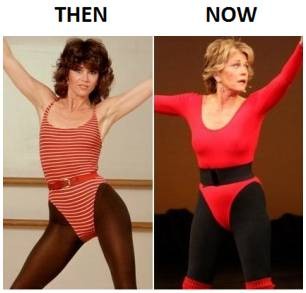
 The Confused Mind of a Cool Celebrity: We’re all fascinated with the lives and thoughts of celebrities. After achieving some fame in the group No Doubt, Gwen Stefani went back to her hometown in Orange County, the “OC”, California. At one point in the concert, she shouted something along the lines of: “We’re happy to be back in the OC!” The crowd all leapt to their feet. After allowing that applause to continue for a while, she said: “Settle down, it’s not that cool.” It was funny, in a nihilistic, apathetic manner, and the apathetic, cool kids in the crowd might have considered her off the charts cool for doing this, but I wonder how many of these kids had their minds changed by what Ms. Stefani said. We’re all striving to be cool, and we don’t care who we have to diminish to get there.
 Rilaly