Indigo Children: The Next Step in Human Evolution


Is your child special? Have you ever looked deep into their eyes and walked away thinking that there was something special about them? Really special? Do they exhibit traits that you consider so beautiful they might be otherworldly special? Do they express a degree of intelligence that you consider unfathomable? Are your children different and special? Do they do things that are different and abnormal? Do they have problems getting along with children their age? Have you ever considered the idea that you may have an Indigo Child?

Indigo Children learn that they are different at a young age, and most of them believe it with enough persuasion. Some Indigo Children claim to have invisible friends, they say that they see dead people, and they have inter-spatial relationships with inanimate objects like products from their Great Grandmothers, teddy bears, and rubber duckies.
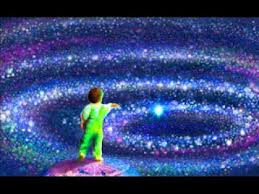
Experts in this field suggest that Indigo Children have a different aura about them, a special, blue aura. Experts claim that Indigo Children see the auras of other kids and adults who surround them. Indigos struggle with the belief that they are normal, because they have experiences that appear to be normal, but they aren’t, and they know it, because their parents, teachers, and psychotherapists tell them so.

Indigo Children, we are informed, are the next step in human evolution, and they came into being, according to CNN reporter Gary Tuchman, following the great Harmonic Convergence of 1978{1}. This Great Harmonic Convergence was an important and celebrated New Age event that many link to the completion of our sun’s 26,000-year orbital cycle around the Pleiades star system and the alignment of our winter solstice with the Galactic Center/Hunab Ku. Many also suggest that this transitional period is reflected in the shift of astrological ages from Pisces to Aquarius.

As is the case with any story of this nature, a little fact checking is necessary. The second entry in a Google search performed on the term “Harmonic Convergence” shows that this “first, great synchronized, global meditation”, announced by Jose Arguelles, occurred between August 16th and 17th in 1987. There appears to be a discrepancy in the dates between this Harmonic Convergence and the next step in human evolution we call Indigo, but this discrepancy is explained by a “crop circle” bridge. Either Gary Tuchman didn’t know of the first reported appearance of a crop circle that occurred in 1978, and the manner in which it bridged the gap between the great Harmonic Convergence and the Indigo evolution, or he didn’t report it. Whatever the case, it appears that the first reported “Consciousness Crop Circles of the New Earth” bridged the progressive gap from The Great Convergence to the Indigo evolution, as referenced in archived data provided by the good people at Crop Circle Connector. {2}

Crop circles have become a joke in some quarters, as most of the crop circles that appeared in the past decades were later declared man-made, but others are of unknown origins. Many believe that the non-man-made crop circles are being impressed upon earth’s grain fields by extraterrestrial, or inter-dimensional intelligences, for the sole purpose of activating dormant sections of human DNA to catalyze the spiritual evolution of the species we call Indigo.{3}

Any who doubt there was a progression from the first reported “Consciousness Crop Circles of the New Earth” to the “Great Harmonic Convergence” and Indigo Children, need look to the numbers. Between the first, reported crop circles in 1978 to the Harmonic Convergence in 1987, there were only forty-nine crop circles reported, for a low average of near ten a year. Following the Great Harmonic Convergence to the last reported crop circle on CropCircleConnector.com, in 2010, there were 3,281 crop circles cited, for an average of 149 reports a year. So while Gary Tuchman’s report on the actual date of The Great Harmonic Convergence may be a little off, it all ties in together with the escalation of crop circle reports, and the emergence, and progression, of the next step in human evolution, otherwise known as Indigo Children.

Another parallel theory on Indigo Children, states that the Indigo Children theory was based on concepts developed in the 1970s by Nancy Ann Tappe, and further developed by Jan Tober and Lee Carroll. The concepts involved in this theory gained popular interest with the publication of a series of books in the late 1990s and the release of several films in the following decade. The interpretations of these beliefs range from Indigoes being the next stage in human evolution, in some cases possessing paranormal abilities such as telepathy, to the belief that they may be evolved creatures that are more empathetic and creative than their peer group.

Indigo Children are said to be children with blessed with higher I.Q.s, in some quarters, that have a heightened intuition, psychic powers, and an ability to see dead people. Some also say they are hard-wired into a sort of supernatural highway. Indigos tend to be rebellious children who may be hypersensitive, but they have been known to display a generosity that allows them to share their special gifts with others. There are even some psychotherapists, like Julie Rosenshine, who have chosen to specialize in specific dealings with the special needs of Indigo Children.

Indigo children display indigo colored energy fields, or auras, about them that some state they can capture in photographs with an aura sensitive camera. Aura camera specialist Nancy Stevens says she can capture such auras on her aura sensitive camera. She says that the auras captured by her camera locate “your physical energy, your emotional energy, and perhaps most important your spiritual energy in photographs.” Manufacturers did not create Aura sensitive cameras with the specific intention of detecting Indigo Children, however, as they also have the ability to give those struggling with their identity insight into whom they are. They can detail for you any strengths or weaknesses you may have, and they can capture some of the challenges you may go through in life.

Such cameras have been able to capture auras of Indigo Children in their natural state, and this has led numerous children to finding out that they are an Indigo Child. This, in turn, has led to less depression in some, to doing better in school, and to performing better in social arenas in areas where they may have felt disoriented about their placement. It has also led them to being more comfortable with their identity, in that they no longer feel like outsiders in life, cursed with the feelings of being different.

Skeptics have said that these children may, in fact, be suffering from an overactive imagination, and that they may also be victims of an ADD, ADHD, or any number of operational defiant disorders. Labeling them as Indigo Children, these skeptics further may assist these kids in having a stronger ego and better self-esteem with such positive, spiritual, and unique labels attached to them, but it may also mask a disorder that requires treatment, through counseling or pharmaceuticals.

Skeptics have also stated that promotion of the idea of Indigo Children might provide unqualified people a way to make money from credulous parents through the sales of related products and services. Mental health experts are concerned that labeling a disruptive child an “Indigo” may delay proper diagnosis and treatment that could help the child. Others have stated that many of the traits of Indigo Children are open to interpretation that provides a more prosaic climate as simple unruliness and alertness. {4} One gastroenterologist has even claimed that the sensitivity that these Indigo Children have may be because of heightened food sensitivities. Parents disavow all such attempts to mislabel their children on the basis that they’ve “seen too many things.”

Some have speculated that a mere 3% of the world’s population may be Indigo Children, but that that 3% are advanced beyond their years, and that they are hyper-sensitive to things in their environment. Indigo Children tend to have a higher I.Q. than most children do, but it isn’t clear whether the evidence for this is anecdotal. Indigo Children do not lay claim to the idea that they know more about concretized facts in History, Math, the Sciences, or any other quantifiable precepts of human knowledge, but that they are smarter about that aspect of the human experience that occurs between the lines, or on the supernatural highway. Those who make such claims declare that Indigos are able to tune into something different and in some cases higher realm of thought patterns that are out of the realm of normal thought patterns.

The unquantifiable intelligence they use to see another’s aura allows them to predict the future, or learn things about you that you might not otherwise want known. Parents of these unique children use the words paranormal intelligence to describe their children’s gifts. They are special children, but they don’t enjoy the term abnormal. They want to play, and run, and build sand castles just like any child, so please don’t ask them to predict the outcome of boxing matches or the rise and fall of the Dow Jones Industrial rate.

Are your children Indigo Children? If you’re curious, you can seek out a number of sources on the net that define Indigo Children. At last check, there were 4,920,000 results on the Google.com search engine. The one qualifier that the curious should take into account before pursuing this information, however, is an observation called the Forer Effect.

The Forer Effect (also called the Barnum Effect after P.T. Barnum’s observation that “we’ve got something for everyone”) is the observation that individuals will give high accuracy ratings to descriptions tailored to their personality, but are in fact vague and general enough to be assigned to a wide range of people. This effect can provide a partial explanation for the widespread acceptance of some beliefs and practices, such as astrology, fortune telling, graphology, and some types of personality tests. {5}

Descriptions of Indigo Children from the net include:

  • the belief that they (Indigo Children) are empathetic, curious, strong-willed, independent, and often perceived by friends and family as being strange;
  • they possess a clear sense of self-definition and purpose;
  • they exhibit a strong innate sub-conscious spirituality from early childhood (which, however, does not necessarily imply a direct interest in spiritual or religious areas);
  • they have a strong feeling of entitlement, or “deserving to be here.”

Other alleged traits include:

  • a high intelligence quotient (I.Q.), an inherent intuitive ability; and
  • a resistance to rigid, control-based paradigms of authority*.

According to Tober and Carroll, Indigo Children may not function well in conventional schools due to their rejection of rigid authority*, being smarter (or of a more spiritual mature) than their teachers, and a lack of response to guilt-, fear- or manipulation-based discipline.

*We list the idea that Indigo Children reject rigid authority with an asterisk to provide the explanation: “Presumed to be related to the fact that their parents’ reject the rigid authority figures that might categorize their children as normal, under-achieving young ones that may otherwise provide consternation to their parents.”

As a future parent, I can attest to the fact that I, too, want to have a perfect child. I want my child to soar high above the levels kids his age achieve in every category designed by men and women that rate my child’s various abilities, and when he doesn’t I don’t want to blame myself for insufficient parenting. I also don’t want to blame my child, in an unnecessary way, for being lazy, rebellious, head strong, or so smart that the schools I send him to dumb down their learning exercises for the dumbest kids in the class to a point that my kid gets bored and acts out.

I’ll also want to tell any that challenge my ability to raise my child, that they cannot hold my child to normal standards, because he’s different. He suffers from a clinical case of ADD, ADHD, that he is an Indigo Child, or that he has had some sort of paranormal experience that has hampered his ability to learn at the same rate theirs has. I will also tell these detractors that my child’s difficulties have nothing to do with me, because I am one heck of a good guy. I’ll know that I’ve tried my damndest, even if I haven’t. Even if some teacher, or parent, tells me that it might be possible that I may have made some mistake, somewhere along the line, I’ll reject that, because (again) I’ll know that I’m one heck of a good guy. I’ll also know that there is always going to be some sort of scientist out there, somewhere that can explain to me why my child is having some sort of difficulty. As I run out of money trying to find explanations for it, I know I’ll run into some guy, some doctor, or some pseudoscientist or psychotherapist that has some sort of Forer Effect to explain it, since it cannot be “explained” to me to my satisfaction by “normal” measures.

We love our kids so much, and they’re so cute and funny, that we cannot accept the fact that there’s something wrong with them, even if there isn’t, and if our kids just aren’t able to meet our expectations in the manner we require. We give tangible love to our kids by doing something to help them, even if they don’t need anything. We want to do that something that someone should’ve done for us to put us on an equal level with our peer group, and to assist them through life, but some of the times the best course of action to take is to do nothing. It may go against every parental instinct we have, but it might be the best thing we ever did for our children.

***

In his book: Late Talkers: What to do if your child isn’t Talking Yet, Thomas Sowell states that there are some children that need to be tested. “Silence may be a sign of a hearing loss or a neurological disorder, and that needs to be addressed sooner rather than later.” He also adds, “There can be negative consequences to endless evaluations and needless testing.” As a father of a late-talker Sowell notes that some parents may want to adopt a “wait and see”, approach for not all late-talkers occur because of a lack of intelligence. This, he states, is best displayed by the fact that one of the greatest minds of all time, Albert Einstein, did not speak until he was three years old.{6}

Most parents are frustrated that their children haven’t escalated to the top of the class soon enough; they are frustrated that their kids haven’t displayed the athletic prowess that they believed their children would; and they tend to grow frustrated that their offspring hasn’t yet developed the ability to stand out in the manner their friends’ have. We vie for some sort of validation, vindication, or explanation regarding why their children aren’t regarded as special in the quantifiable manner that they believe they should be. Is there some sort of frontal lobe damage that they’ve attained from the swing set accident they had when they were three? Was there damage done to them in the birthing process, or the inoculations they received from the hospital before dismissal? Are they Indigo Children, or do they have ADD, ADHD, or some other operational defiant disorder? We need something that relieves us of the guilt of having a child we define as insufficient, strange, or in all other ways difficult. We need a diagnosis, so we can begin treatment, and in some cases we don’t care how bizarre that diagnosis is, because nothing the doctor, the teacher, or the theories of our fellow parents have worked yet. There is help out there, and if the internet has proven nothing else it has shown that it can provide “something for everyone”.

{1} http://www.youtube.com/watch?v=F8B3EhxnoFE

{2} http://www.cropcircleconnector.com/interface2005.htm

{3} http://causeyourlife.com/2011/02/harmonic-convergence-and-crop-circles/

{4} http://en.wikipedia.org/wiki/Indigo_children

{5} http://en.wikipedia.org/wiki/Forer_effect

{6}http://books.google.com/books?id=9aIS36Ls1BUC&pg=PA22&lpg=PA22&dq=slow+homas+homas+sowell&source=bl&ots=nZ-seJyK1F&sig=GnalTbnTctoQj6yT9N3P1oMOoTs&hl=en&sa=X&ei=uHHLULXYFuqc2QwfkYCICQ&ved=0CG0Q6AewCA#v=onepage&q=slow%20talkers%20thomas%20sowell&f=false

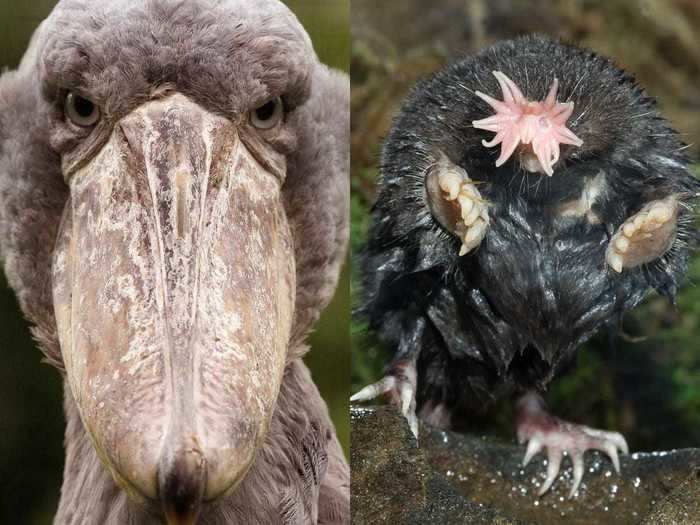
Let Your Freak Flag Fly!


“Some of the times you just gotta let your Freak Flag fly,” my aunt said to her brother. I had no idea what they were talking about, and I didn’t really care, but I didn’t think any definition of this otherwise illusory idiom could remedy my dad’s issues. If Freak Flag is actually a thing and not something my aunt just made up, I thought, my dad may have been as far from having a Freak Flag as anyone on Earth. His primary goal in life was to fit in, and he did anything and everything he could to make that happen. My aunt was the opposite. She did everything she could to stand out as a hip, cutting edge, and appear young, or her definitions of all of the above. She knew more about the hip artists and songs in Billboard Top 40 than I ever have, she wore hip, cutting edge clothing better suited to women ten years younger than her, and she dropped whatever hip terms she heard young people say. When she dropped the term Freak Flag I thought it was yet another one of her embarrassing attempts to appear hip, but that particular phrase stuck with me for whatever reason. I never used it, but when I later heard someone on a hip, top-rated television show say it, I knew something was afoot. Then, one of my friends said it in school, and a week later I began hearing it everywhere.

“Where did you hear that phrase?” I asked my friend.

“Dude, I don’t know. I’ve been saying it for decades,” he said. Unbeknownst to me, this was the key to keeping it cool in the phraseology universe, for no one ever seems to know where they hear hip, cutting edge terminology first. To be fair, it can be difficult to remember where we first heard a phrase we’ve been saying for a time, but purveyors of this particular phrase appeared to conveniently forget where they heard it to leave the impression that they started it.

There’s apparently a lot of prestige wrapped up in starting a phrase, and if someone gets a taste of it, they don’t give it up willingly. Whatever the case is, when obsessively curious types pursue such matters, we often receive everything from blank faces to evasive and defensive responses. Even if the user just started using the phrase last February, those who are evasive and defensive want us to think they’ve been saying it for so long that they dismiss all questions about its origins as uncool.

If we found a truly reflective individual who didn’t mind talking about the first time they heard the phrase, it might result in a humdrum response, “My Cousin Ralphie is da shiznit, and when I heard bra say it I wanted his awesome sauce all over me.” If this individual were that honest, they might run the risk of being so over as to be drummed out of the in-crowd, for the clique might deem that confession a violation of the binary, unspoken agreement those in the in-crowd have designed for the world of phraseology. In their world, users want their audience to consider them the originator of the phrase, and anyone who insists on pursuing this line of interrogation runs the risk of being drummed out on an “If you have to ask …” basis.

Another unspoken rule in the hip, phraseology universe is that we better hurry up and use the terms we enjoy saying as often as we can before a kool kat steps in to declare that the days of using the phrase are now over. “Stop saying that. I’m trying to get the word out that that is so over. Tell your friends.” We might be disappointed to learn that we are no longer able to use words, phrases, or idioms that we enjoy using, but we know that when kool kats step in to warn us that it’s over, it’s a serious blow in this artificial architecture, and we know that by continuing to use such a phrase, we run the risk of being so over. This begs a question to the arbiters of language who declare they’ve been saying this for decades, how is it that you never encountered some kool kat who declared your favorite phrase so over in that time span? Did you ignore them, and if you did, why should I listen to you?

A work associate of mine attempted to play the kool kat by correcting me in front of a group of people. “Dude, stop saying that,” he said inadvertently using the tired phrase to end phrases. “I’m trying to get the word out that that phrase is over. Tell your friends.” Anytime we hear someone issue such a condemnation, it’s human nature to assume that it’s rooted in something the speaker learned from a person with some authority on the matter. In my experience, however, most of these self-professed arbiters of language consider starting a hip phrase fine but ending one divine. Those with no standing in the hierarchy of cool often take it upon themselves to issue such a condemnation without knowing anything more on the matter than anyone else, but they hope that by pushing us down a notch they might improve their standing in the hierarchy.

Like most of those in the lowest stratum of this hierarchy, I knew nothing about this confusing world of using hip, insider, kool kat language, so I was in no position to question my work associate, but by my calculations this feller was a doofus. He was such a complete doofus that I would no sooner consider seeking advice from him on language than I would his words of advice on dating. I still don’t know if this fella assumed a level of authority on this matter based on the idea that he considered me inferior, of if he heard this news from a more authoritative figure, but I decided he did nothing to earn a seat on my personal arbitration board. That situation led me to wonder how we determine our arbiters of words and phrases. My guess is that most people will not heed such advice from just anyone, as that might unveil their status in this hierarchy. My guess is that we make discerning choices based on superficial, bullet point requirements we have for those issuing them? Put another way, if the doofus was more attractive and a little less chubby, I may have been more amenable to his guidance on the matter.

✽✽✽

For fact checkers, a decent search on “Let your Freak Flag fly” suggests that it first appeared in a Jimi Hendrix song If 6 was 9 in 1967. It was later popularized in a David Crosby song Almost Cut my Hair that he wrote for the Crosby, Stills, Nash, and Young album Déjà vu. Due to the fact that these first appearances occurred in an artistic venue, however, we can guess that the phrase made its way through the “in-crowd” circuit long before Hendrix or Crosby used it in their songs.  

The Urban Dictionary defines “Letting Your Freak Flag Fly” as: “A characteristic, mannerism, or appearance of a person, either subtle or overt, which implies unique, eccentric, creative, adventurous or unconventional thinking.” 2) “Letting loose, being down with one’s cool self, preferred usage to occur in front of a group of strangers. Your inner freak that wants to come out, but often is suppressed by social anxiety.” 3) Unrestrained, unorthodox or unconventional in thinking, behavior, manners, etc. One who espouses radical, nonconformist or dissenting views and opinions that are outside the mainstream. When traveling through the bible belt of the U.S., it’s best not to let your freak flag fly high. Otherwise, you’ll be harassed and attacked by these backwater, backward thinking theocrats.

Typical Freak Flag Flyers make very specific decisions to avoid titles. They tend to be abstract thinkers who believe they fly high over those of us who believe in nouns (i.e. people, places, and things). Freak Flag Flyers tend to know more about those nouns than the average person, “Because those people haven’t done their homework.” Some Freak Flag Flyers base their outlier status on anecdotal information of these nouns to whom others swear allegiance, on the idea that if we knew what they, the Freak Flag Flyers know, we would be just as sophisticated in our skepticism about allegiances.

Most people fly under a flag: Americans fly under the Stars and Stripes; the Irish fly under the Irish tricolor; and the British fly under the Union Jack. There are some people, however, who fly under no flag, and they eagerly provide this information to anyone who asks. Don’t expect them to admit to flying under a Freak Flag either, for the very essence of flying under a Freak Flag is designed to give its flyer an open-ended, free lifestyle persona that doesn’t conform to societal definitions such as allegiance or definition … Even if such a definition extends itself to a Freak Flag. They aren’t proud members of a country, political party, or a coalition of freaks. They’re just Tony, and any attempt we make to define them as anything but Tony –based on what they do and say– will say more about us and our need for definition, than it does them. Freak Flag Flyers tend to be moral relativists who ascribe to some libertarian principles when those political principles adhere to matters they find pleasing –those who suggest, as Dave Mason did, “There ain’t no good guys, there ain’t no bad guys. There’s only you and me and we just disagree”- but they tend to distance themselves from economic libertarian ideals, for that might result in too much libertarianism.

Some Freak Flag Flyers raise their flags in political milieus, but most Freak Flags involve simple eccentricities and peculiarities. An individual who prefers to listen to complicated and obscure music could be said to fly a Freak Flag in that regard, but they usually keep that information close to the vest when their more normal family members and friends are around. An individual who enjoys various concoctions of food, philosophies, and other assorted, entertainment mediums could be said to have a Freak Flag, but most of these people live otherwise normal lives. We can have a Freak Flag without being a freak, in other words, but the general term Freak Flag is reserved for those activities we engage in and those preferences we have that could be embarrassing if they found their way back to our normal friends and family members.

Even if we don’t have what others might call a Freak Flag, we can identify with the mindset of those who once dared to let theirs fly. Now that we’re all normal and stable, we might not remember the days when we strove for some sort of definition, or we may be embarrassed by it, but most of us can recall a day when we dared to be different.

A Freak Flag Flying friend of mine, a Dan, worked in a Fortune 500 corporation, and he was a corporate joe from head to upper calf. To maintain some semblance of his Freak Flag status, however, Dan wore a wide variety of loud socks and skater shoes that appeared out of place with the rest of his business casual attire that it was impossible not to notice. I’m not sure if it enhanced Dan’s Freak Flag flyer status or took away from it, but he did have flames of fire on those Converse Chuck Taylors, and he wore these notoriously short-lived Chuck Taylors for about a decade, so he must’ve purchased them on an annual basis to keep his preferred characterization alive.

When I asked Dan why he wore that ensemble, he said, “I just like it” in the typical “I’m just Tony” Freak Flag Flyer vein. I dug deeper, of course, and I saw a man who wanted to succeed in the corporate climate by being everything his boss wanting him to be while not being a complete corporate sellout. He wanted the best of both worlds, and he thought some flames on his feet allowed him to let Freak Flag fly.

I’ve met the “I’m just Tony” Freak Flag Flyers who can’t articulate their need to fly one, and they attempt to nullify any questions about their nature by asking you why you think they’re different. Some think we’re putting them on trial, and we are, sometimes. Sometimes, we’re just interested in their essence. I’ve met others who were just different people, and they were quite comfortable draping themselves in a Freak Flag. They taught me that the ultimate definition of a Freak Flag flyer is a relative concept defined by the individual. It’s almost the complete opposite of my aunt’s attempts to be younger and hipper than her peers, as the true Freak Flag flyer does not engage in Freak Flag flying, they just are who they are in a manner that is more organic than any character my aunt might dream up.

The Quantifiable Lightness of Being


Is one life more important than another? It depends on who you ask, according to author Douglas Hofstadter. In his book, I am a Strange Loop, Douglas Hofstadter attempts to philosophically solve this question by suggesting that all living beings have a soul. According to his theory, certain beings, have less of a soul than others, because they have less recognition of being alive than other beings. He quantifies the theory through a series of ratings that leads to a scoring of that living being’s soul. He uses the term “light count” to describe this recognition that we’ll call Hofstadters. This term is the over-arching term he uses to describe the quantifiable power of the soul.

LoopDouglas Hofstadter provides the reader what he calls a personal “consciousness cone” that he believes describes the level of consciousness a being has of its own existence. He uses the adult human as an indicator, and he gives them 100 Hofstadters, because the adult human has the greatest recognition of his and her own life. The dog has 80 Hofstadters, the rabbit has 60, the chicken has 50, the mosquito has 30, and the atom has zero Hofstadters. Hofstadter lists the atom at the bottom, as a result of the fact that the atom has the least recognition of its own life, and the least sense of consciousness than any other life form. He does not explain, however, how he can quantify the characteristics of the rabbit higher than the chicken, or why he rates the bee over the mosquito. The reader might have numerous opinions on this, such as the bee accomplishing more necessary tasks, and a resulting honing of instincts, but the consciousness cone seems rather arbitrary in places.

The Hostadters given to adult humans are more relative than any other being however, for the adult human has more ability to increase their soul’s light count, and damage it, than any other being. Some humans, Hofstadter writes, can achieve a score higher than 100 Hofstadters, depending on how much meaning they bring to the definition of life, and the manner in which they change the definition of life for the better for others. Jesus of Nazareth and Mahatma Gandhi could be said to be two people who changed the definition many people have of life for the better, and they would achieve more than 100 on Hofstadter’s scale. Adolf Hitler, Josef Stalin, and Mao Tse Tung, on the other hand, diminished the value of life for many, and in general, through their mass slaughter. They will spend the rest of their after-life rectifying the damage they did to life on Earth, and as a result they could be given a score less than one hundred, and presumably less than zero, based on their number of violations against the value of life. 

If Hofstadter kept his scoring process broad in this manner, we might not have a problem with it in the micro, but like most modern philosophers he can’t help but bring modern politics into the discussion. He begins by begging the reader to understand that the term “the soul” he will refer to in future passages, is not “the soul” most normally associated with religion. This distinction is made, presumably, to allow Hofstadter to keep a foot in the collegial halls of academe he achieved with his first book. Hofstadter suggests that his version of the soul is more of a sense of consciousness, a lightness of being, a sense of self, and a sense of consciousness about their life. In Hofstadter’s definition of a soul, the dog has a soul, and that soul is more powerful than the mosquito’s, because the dog has more of a sense of its own life than a mosquito does, but it does not have the sense of life, or philosophy, that the adult human does.

Next, Hofstadter suggests that those adult humans who would kill a man, via Capital Punishment, have less of a soul than those who abhor such activity. This is particularly the case, suggests Hofstadter, if the death row inmate is screaming for his life in the “dead man walking” trip to the gas chamber. So, if the “dead man walking” goes quietly, with lowered eyebrows, dark lighting, and a scary soundtrack, the people leading him to the gas chamber presumably have less to worry in their accumulation of Hofstadters in their light count. One would think that Hofstadter would be point blank in his scale that if you take a life, with malice and forethought, you owe something to the general definition of the value of life that cannot be recovered, and you are destined to a less than zero existence, but for Hofstadter emotion, and remorse, appear to assist in giving that soul a greater “light count” than the unapologetic. The latter half of this paragraph involves interpretation for Hofstadter makes no specific distinction between the two, except to say that the henchmen involved in the death sentence are the ones who suffer by scale. The reader is also left to wonder if Hofstadter might be influenced by the theatrical drama some movies bring to the dead man walking scenario.

Hofstadter then suggests that a two-year-old child has less of a light count than a twenty-year-old, since that twenty-year-old has had more time to build the Hofstadters in their light count, but he writes that he does not tread lightly on the life of a two-year-old since we must recognize the potential that the two-year-old has of building Hofstadters throughout the course of their life versus the mosquito’s limited capacity to build them. The natural progression the reader might make is that the human embryo has an equal potential for building light count, but Hofstadter states that the human embryo has no sense of its own life. He does not however discuss the word potential in the natural manner one would assume he would in conjunction with his statement that the two-year-old, but he equates the human embryo with the atom on the non-entity scale, aside the atom. Hofstadter does not explain the discrepancy. The only conclusion the reader can make is that if Hofstadter has an explanation it is either nakedly hypocritical or inconvenient to his politics. 

There is also no discussion of the potential diminished Hofstadters an aborting mother may incur as a result of deciding to abort this potential light source, as in Hofstadter’s view it is not a potential light source. This is a non-issue in Hofstadter’s narrative. With capital punishment Hofstadter draws disparities between those that would lead a screaming man to his death versus the ones that lead an unrepentant man to his death, but he doesn’t draw any distinctions between the women who would take the potential life that would be screaming if the woman gave it the chance to become a light source outside the womb, and the woman that allows the innocent, potential light source to live. He states that Adolf Hitler, Josef Stalin, and Mao Tse Tung diminished their Hofstadter’s by taking millions of potential light sources from the Earth, but he does not bother to explain the discrepancy. 

If his inconsistencies were a mere sin of omission, we would have nothing to write about, but Hofstadter dives right into the fray and develops hypocrisies that require analysis for their hypocritical lack of objectivity. He fails to draw such lines of distinction along philosophical parallels, in other words, and he loses points in an objectivity count with these inconsistencies.

Hofstadter does have an interesting, and unique, take on the meaning of life. Most readers will whole-heartedly agree with the general premise he outlines, but when we agree are we helping Hofstadter establish a general level of authority that allows him to make philosophical leaps with which we might otherwise disagree? When he ventures out into the particulars that support this theory, this reader can’t help but think that Hofstadter’s key is less about teaching how to achieve a sense of philosophical purity and more about political proselytizing about what he considers the negligible affects of abortion on one’s soul versus the detrimental affects capital punishment can have on the participants, and the detrimental affects eating other animals can have on humans.

Do these same detrimental affects plague the animal kingdom? Hofstadter conveniently fails to list carnivores of the wild in his consciousness cone. He only lists herbivores. This omission allows him to sidestep the argument about the penalties lower life forms (lower than the human), such as lions and tigers and bears, should receive for eating other animals. Do the vegetarian panda bear or koala bear have more Hofstadters than the grizzly bear, because the grizzly prefers to eat fish and deer? Does the grizzly receive an asterisk in this equation, because she is less conscious of the potential light source she is destroying when she eats the deer? Is the human punished on equal level, or do we account for the fact that the human is more cognizant of the potential light source it is destroying, and the the lion, the tiger, and the alligator operate more on instinct? Hofstadter probably knows that any suggestion that meat-eating animals are more evil for eating meat might make his theory appear cartoonish. Hofstadter appears to focus his argument on meat-eating humans to provide himself more virtue among those humans who enjoy eating meat? Is he using his theory to proselytize the virtues of veganism? If not, the omission of tigers, bears, and alligators from his list seems, at the very least, a purposeful omission that Hofstadter cannot square. 

The author informs us that one of the keys to living the compassionate life is defined by placing spiders one finds in his home outside the door, in a gentle, compassionate manner. He does this to celebrate, honor, and respect the idea that lower forms of life have a soul. He implicitly states that you’ll know that you’ve achieved his level of heightened awareness if you’re so overcome by the infinite reserves of compassion in your system if you one day pass out as a result of handing a test gerbil to a research scientist for its use. This revelation informs us, perhaps implicitly, that one of the keys to being wonderful, or accumulating a greater light count, involves not only performing charitable deeds, but publicly declaring them for the publicity one receives for doing so. What’s the point of repeating such incidents, unless you use it to lubricate the reed on your own trumpet? 

Hofstadter’s attempt to toot his own horn is no different than any author in any genre or argument. We all believe we are living a more virtuous life, and we all try to encourage others to see the light. The question is, as always, do our arguments lean objective or subjective? 

Some readers may find Hofstadter’s writing a breath of fresh air, and others may view it nakedly transparent, but if Hofstadter’s purpose is to provide an objective view to import a sense of life, or philosophical view on the value of life, few can deny that his theory is inordinately clouded by his political views. He informs us that he has found resolution to his own conflicts by being so compassionate that he can be overwhelmed beyond his ability to retain consciousness, and that his concern for light counts and souls, both large and small, leads him to being a vegetarian who will not eat those light sources with greater potential for greater placement on his soul scale. He leads us to believe that he is a man in tune with the political variables for resolving conflict, but in the end it is obvious that all of his philosophical peculiarities line up on one specific side of the philosophical aisle, and that he cannot see the inconsistencies that arise from it.