Do the Apophenia


Apophenia is the spontaneous perception of connections and meaningfulness of unrelated phenomena –The term was coined by K. Conrad in 1958 (Brugger)

We do the apophenia when we see the Virgin Mary in the grill patterns of a grilled cheese, when we see a baked turkey in a cloud formation, and in the unmistakable manner in which a river breaks. “Hey, that’s Bob Hope!” we inform friends that never see our apophenia. 
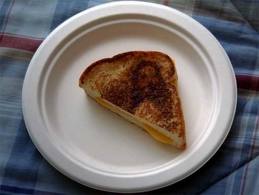
ChessusFor some of us, the physical connections we make are neat coincidences worthy of note, for others it could be a sign, but for others these connections take on a spiritual meaning. These connections are also made in science, math, the manner in which we study the universe, and the way we study one another.

One psychoanalyst sees child abuse behind every emotional problem their patients have. He may have seen one substantial and irrefutable case that proved to have profoundly affected one patient’s life, and it prejudiced that psychoanalyst in every case that followed. Another man of science achieves conclusions that back up the idea of penis envy in females when his females test subjects fail to return the pencils he gave them for the test. Another sees the old adage “don’t step on a crack or you’ll break your mother’s back” as a more substantial reaction to the fears of the act of intercourse, as the stepping on a crack represents the penis entering the vagina. Science, and the drama of daily life, has humans spotting patterns to explain why we do what we do on a daily basis. Some of the times, the patterns exist. Some of the times they don’t, but if we don’t have patterns to our daily life we fear we may go crazy in the chaos of our studies of who we are.

Seeking a Progressive Intellect

Humans are born with a brain that questions the world around them. When we enter our teens, we question everything we’ve been taught to that point in our lives. Our rock stars, movies, and books teach us something different about life, and they’re usually better looking, and cooler, than our parents, so we believe the rock stars. Our parents are idiots. We then enter our thirties, and we begin to then question our teen rebellion. We begin to think our parents may have had a point about certain things in life, even if we would never give them credit for it. We have experienced a little bit of life to this point, and everything the rock stars and celebrities told us about life has fallen apart. Our rock stars may know a lot about coordinating music, but most of their casual asides about life have proven to be short-sighted. Our favorite rock stars become the idiots. When we enter our forties, and experience even more in life, we finally reach a point where we have our own ideas about life that is an amalgamation of rock star advice, parental advice, and personal experience. We now think our parents were idiots again, but we now have confirmation that we were idiots for ever believing that rock stars knew anything about real life. The one consistent aspect of this consistent questioning is that we question everything. We need explanations. It’s elemental to our DNA.

We’ve even gone so far, at various points in our lives, to question the existence of God. Writer Norman Mailer once asked, “If God didn’t want us to question His existence, why did He give us a progressive intellect?” If He wanted ultimate authority, without dissent, why didn’t He just give us the brain of a chimpanzee and be done with it? If God were insulted to the point of damning us, in the afterlife, every time we questioned Him, why did He give us a degree of brainpower that exists somewhere between His and the chimpanzee’s?

He didn’t give us a brain that could comprehend the enormity of the universe He created, but He did give us a brain that wanted to somehow and in some way. He gave us a brain that would try to break it down into bite-sized morsels for easier digestion. He gave us a brain that sought out patterns and tendencies in the universe and developed mathematical and scientific hypotheses based on those readings. He gave us a brain that could develop findings that helped us understand one small tidbit of the universe with the hope that it would eventually lead to a representative pattern of the manner in which the entire universe operates. He gave us brains that will make mistakes, and learn from those mistakes, and laugh at those mistakes, but he gave us a brain that progressively seeks greater answers based on the small windows He gave us. The mistakes that we make are mistakes of apophenia, or connecting unrelated data in a meaningful manner, but in many ways we can’t help making such mistakes. It’s the way of our minds. Some have suggested that God may have made our brains the way He did for His own entertainment, and others have innumerable reasons that they believe, but no matter what the truth is, it’s hard to imagine that He would be insulted or aggrieved by us using the gift He gave us to its fullest extent.

Studying the Patterns in Life

We study the patterns of our politicians to try to understand why they act the way they do, and we study voting patterns to see how their rhetoric is affecting and influencing us. Employers study patterns to try to discover a manner in which they can make their employees more productive. Employees study patterns in their work to attempt to become better employees. Apophenia will enter into these studies, but we will correct those mistakes in the hope of eventually achieving a sound, representative pattern of the way all of our universes work.

We would love to have a comprehensive pattern for understanding the ways of humanity, but that would be as impossible as achieving a comprehensive pattern of the universe. So, we judge humanity based on the patterns we see, and some of it’s anecdotal, and some of it’s wrong, but we can’t help it, it’s the way our minds work.

The difference between the two studies is when one makes an incorrect, or incomplete, assessment regarding the manner in which the universe operates, he is then allowed to input the new data and correct the assessment. When one makes an incorrect, or incomplete, assessment of humanity, he is considered so wrong that he is eventually discredited. All of us read these assessments with the belief that they do not apply to us, so the assessments are therefore incorrect. We are all outliers in every study, because we’re all individuals, and the idea that the study may be based on general rules means nothing to us. It’s just wrong, and it needs to be corrected… Even if it does, in some manner, apply to us in ways we either can’t, or won’t, admit.

These studies do apply to our friends, however, and it pleases us to recognize their patterns in the studies. It gives us a window into an understanding for how they work. We expect them to be shocked when we spot their patterns, or even complimented by the fact that we have paid such attention to them. More often than not, however, they are insulted. They are insulted, because they live with the belief that they are random creatures that live lives that are so complicated that they cannot be figured out through a random sampling of their otherwise simple brethren. Those of us who study these patterns only do so, because we are generally curious and observant individuals that make the most of our progressive intellect, but before we get righteous and indignant we are forced to admit that we don’t think these studies apply to us either.

Our friends always tell us we are wrong, or these studies are wrong about them, and some of the times we are wrong. Some of the times, we read patterns incorrectly. Some of the times, we do the apophenia. What do we do then? Do we simply alter our perceived patterns accordingly, or do we buy into the idea that there may be a lot more randomness occurring than we originally believed. Most people abhor patterns when they’re informed of theirs. They often feel like they’re being calling them simple when another points out how predictable they are. Anyone that has engaged in such conversations has found that these reactions are simple and predictable.

Most people aren’t as complicated as they want us to believe. Yet, some of the greatest joys we may experience in life occurs when we are immersed in patterns. Knowing what’s expected of us, and fulfilling that task provides us the joy of accomplishment. Living inside that box that our employers are trying to get us to think outside, gives us a degree of comfort we don’t recognize until we venture beyond the border. Most people prefer routine even if it leads to some degree of boredom. Chaos and unpredictability often leads to confusion and unhappiness, but most people don’t want to be the one that points this out to them.

The endless loop of life’s patterns and trends may say more about us than the idea of a random world. We want to know why we loop, when we loop, and if looping in patterns and trends is productive or destructive. The study of this may tell us why we’re at the upper end of the animal kingdom, for while animals may seek patterns in their mating and hunting rituals, they are far more satisfied with the randomness of the world than we are. A lion may spot patterns in a herd of antelope, but he is not studying them to learn greater truths about the antelope. He is simply trying to locate the easiest and safest mode to attack them and satisfy his hunger. Humans seek patterns for greater understanding, and while it’s a noble pursuit we often do the apophenia in our pursuit of the truth.

A Study of Apophenia

In statistics, apophenia is labeled a Type I error, seeing patterns where no patterns exist. Mistakes are made in statistics when a statistician engages in apophenia. Of course patterns exist in statistics, and studying patterns is the purpose of the study of statistics, but a statistician has to guard themselves from proclaiming an answer is reached before apophenia has been weeded out. They don’t want to leap to a conclusion, in other words, before they have thoroughly tested these patterns against their own perceptions.

It is highly probable that the apparent significance of many unusual experiences and phenomena are due to apophenia, e.g., ghosts and hauntings, numerology, the Bible code, anomalous cognition, most forms of divination, the prophecies of Nostradamus, remote viewing, and a host of other paranormal and supernatural experiences and phenomena.{1}

Steve Jobs talked about apophenia as it applies to the random function of the iPod:

“As humans, when we come across random clusters we naturally superimpose a pattern. We instinctively project an order on the chaos. It’s part of our psychological make-up. For example, when the iPod first came out and people started to use the shuffle feature, which plays songs in a random order, many people complained that it didn’t work. They said that too often songs from the same album, or the same artist, came up one after another. Yet that’s what randomness does – it creates counter-intuitively dense clusters.

“We’re making it (the shuffle feature) less random to make it feel more random,” Apple CEO Steve Jobs confessed after Apple was forced to change the feature on the iPod in response to complaints from users. Jobs, and company, changed the programming behind the feature. In other words, each new song now has to be significantly different from what came before, so as to conform to our expectation of randomness.{2}

Customers required that Apple programmers build a feature into the iPod that would make it less random, so we were more comfortable with the idea that it fit our definition of random better. Regardless if there was a pattern to the order in which one song followed another, we spotted one, and we complained. To diffuse the complaints, Apple programmers built in a function that would cause a Metallica song to always follow an Elton John song, so we would see significant contrast in the random and thereby stop searching for the pattern. Say what you want about Apple being uncompromising in their pursuit of perfection with their products, but they are as susceptible to customer complaints as any other company when they receive them in volume.

Feeling Special

SpecialHumans have a need to feel special, but the patterns in day-to-day life normally don’t give one such a feeling. Day-to-day life is usually mundane, pedantic, and exceedingly boring, until you try dying. Dying, or experiencing a near-death experience, can revitalize life. It can give one that special feeling that allows them to appreciate the changing of the leaves, as if for the first time. Seeing a loved one die can wake us through comparative analysis, because we never view these moments as coincidental or happenstance. They’re seminal moments peppered with purpose: “I just talked to Ernie the other day, and he spoke about the death of Peter Sellers … It’s almost like he knew.” Or, “I was just on 158th and Main Street the other day. I went through that very cross walk one week before Ernie did. That could’ve been me.” This gives us a special feeling, an idea that there is a reason we’re alive, and that we must have a purpose or that would be us lying in that casket.

We also believe that special forces have a hand in our romantic entanglements. “I just happened to go to a bar that I never go to, and I just happened to go to the bar to order a drink at the exact moment she did. Fate had to have played a hand there. There’s no other explanation for it.”

The idea that true randomness occurs is impossible for us to grasp. It seems impossible to us that our company just happened to assign Mark and Brenda sit by each other three years ago. Now that they’re married, everyone at the wedding acknowledges that there had to be special forces at work. For some of us, this is simply theoretical fun. For others, it is an undeniable truth. There are no smiles when they say it. They consider such patterns almost creepy in the manner they take place. This is a connection of random coincidences that seem simply too numerous and too coincidental to be anything other than special forces at work.

“You mean to tell me that Tom just happened to be standing in the middle of the street. He said he never just stands in the middle of the street, but he just happened to be there at the exact moment our precious Judy was when a cement truck “just happened” to topple over and almost kill her, until Tom, who just happened to be there, just happened to reach out and grab her. You mean to tell me that all of those circumstances just happened that way? That there were no special forces at work?”

Do the apophenia if it makes you feel better, we skeptics say, but you’re never going to convince us that it was anything more than an incredible series of coincidences that occurred to save your young girl’s life. We’ll be extremely happy for you, and we may even cry with happiness (we’re not heartless), but we will probably be one of the few outliers that doesn’t buy into the fact that Judy is special, and she was saved by special forces that have a special purpose for her in life.

Special Forces at Work

How many moments in our lives have we appreciated all that life has to offer? How many times, after a life-altering circumstance, have the mundane routines and patterns that once zapped our energy, attained value with a revitalized mindset? We can’t even remember that person that used to wake without remembering the morning. We love life now, and that freight train, called the mundane, no longer has the power it once did. We think about how much time was wasted waiting for the minutes to click by, until we could go home. We think about all those hours spent waiting for the weekend, until the weekend arrived and we were just as bored at home, on the weekend, as we were in the workplace. When that life-altering circumstance came around and shook our foundation, we felt like there were no more coincidences and random occurrences. We realize that we walked around in a stupor through life, in the same manner we used to grow hypnotized driving familiar paths only to get there without remembering the drive. Our eyes are now open to a purpose we can never explain or achieve. We just know that we do things differently now. One would expect that a survivor of this sort would be more welcome to the random life has to offer, but more often than not it probably just changes the pattern temporarily.

{1} http://www.skepdic.com/apophenia.html

{2} http://smorgasborddesign.wordpress.com/2012/01/27/seduction-persuasion/

 

I’m Disgusting, He’s Disgusting, She’s Disgusting, Wouldn’t You Like to be Disgusting Too?


I considered the national obsession with hygiene a well-played, well-timed joke that we were all in on, until I witnessed two grown men form a friendship based on shared demands for hygienic excellence. In their conversation, they set up a standard of behavioral traits intended to define them as the next step in the evolutionary process that they believed might place them in a pseudo superman, or Übermensch, status beyond the inferior, basic hygiene practices of the common man and woman. I considered their hygienic standard so high that I thought they were exaggerating it for humorous effect. By the time their bond was sealed, however, I realized that this newfound friendship was based not only on respect for the other’s demands for excellence in this regard, but for their hygienic superiority.

I loved the brilliant television show Seinfeld as much as anyone else. I found the main character’s obsessive demands for hygienic excellence so funny that when these two friends of mine began the list of requirements they had for their fellow man an impulsive laugh escaped me. After spending so many years laughing at Seinfeld’s obsessive quirks, my laughter was almost a conditioned reflex, but they weren’t laughing. They had smiles on their faces, but the smiles they shared were not of a sly variety that concealed a clever joke. Rather, they were kind, appreciative smiles, and a recognition that they finally found a likeminded soul in one another.

In the space normally reserved for laughter, they further detailed how the common hygienic habits of their fellow man were gross, and they both agreed that one particular person, our mutual acquaintance, was emblematic of those common habits. Without saying these exact words, they suggested he deserved all the shame that persons of modernity should cast upon him. I spoke with the two men separately a number of times, and they were well versed in the cultural norms, the belief that all men and women are created equal and we should accord them a degree of respect we require of them–unless, apparently, that person decides to leave the bathroom without washing their hands.

The implicit suggestion nestled within this discussion was that as the representative of one with common hygienic practices, I was supposed to recognize that I was gross and completely disgusting, and if I had any designs on becoming friends with either of them, I would have to seriously up my hygienic practices. I was to fear adding input into their conversation for that that might lead to an examination of my hygienic practices and a revelation that my habits were closer to our mutual friend’s than I ever knew. We might also find that what I considered an acceptable hygienic standard to be so disgusting and gross as to be worthy of some sort of public flogging in the public square to set an example for anyone else who might consider basic hygienic standards acceptable.

✽✽✽

“If you’re disgusting and you know it, clap your hands,” is the ostensible mantra of a major news network website that a number of my co-workers visit on a daily basis. The overarching milieu of this site is news, but the regular visitors of the site that I know are aware of little to nothing of the news of the day. Yet, they always have some nugget of information about how we can all improve our hygienic standard of living a little.

“Your kitchen counter is covered with more germs than your floor,” one of my co-workers said when he approached our lunchroom table. “Your dishrags and sponges are cesspools. Using them on a continual basis doesn’t rid your kitchen of germs. It only spreads them around.”

The idea that this particular purveyor of hygienic knowledge was male did not strike me as odd because I considered it less than macho to be hygienic, but he was the first man I met who would prove so obsessed with it. His warning would prove to be the first of many signposts to signal that the obsession I once believed indigenous to the female demographic had now crossed income brackets, social stratifications, and genders.

“Install a lighter-colored counter-top so you can see germs better.”

“Stainless steel is the best defense against the spread of germs.”

“The most germ-ridden room in most homes is the kitchen. Your cutting board can contain up to 200 times more fecal bacteria than your toilet seat.”

“Your fingertips can spread more germs than any tool in your kitchen.” 

The best way to avoid germs, it appears, is to avoid the kitchen, the bathroom, and your fingertips. They’re gross! The bathroom is obvious, but what about your bedroom? Furthermore, if you have any thoughts of going into the basement, you might want to consider investing in a gas mask and a Tyvek suit with hood and boots. Your basement is a cesspool teeming with pathogens no one can pronounce! It’s gross! Disinfect everything! Sanitize! Sterilize! We need more government research on this matter! We could get sick! We could die!

Our mothers taught us that the best way to avoid pathogens is to clean, but modern scientific research dictates that cleaning might be nothing more than a good start. Our mother didn’t know that the optimal way to avoid germs is to religiously and fastidiously clean the cleaning products to the point of sterilization. She used the same sponge and dishrag for more than a week without dipping it into a solution that contained one part bleach to nine parts warm water, and she used the same cleaning products for more than one task with no knowledge of cross contaminants. She didn’t know. 

CBS News reports, “If you’re cleaning up appliances, counter- tops, tables, etc., it’s almost mandatory that you use different cleaning agents. There should be different designated sponges for each function. After you clean up the debris from the meat carcass, place your sponge in this cleaning solution for about a minute or so. That will kill all the potential pathogens.”[1] 

Mom didn’t know.

Mom didn’t consider the idea of placing an industrial air shower to divide the kitchen from the rest of the house, because she was born in a generation that didn’t know anything about these hygienic standards of excellence. She might not have considered putting an industrial-strength anti-radiation shower in her kitchen for the sake of better health practices and greater avoidance of accidental pollination by pathogens. Mom didn’t have the information we do today, so how can we blame her? She didn’t know that it’s best to stay out of the kitchen altogether. Her generation wasn’t privy to the kind of scientific research that discovered that it’s probably safer to stay out of the house, unless that means going outside. The dangers inherent in leaving the house are so obvious that it’s not even worth exploring. We all know that the air outside is just teaming with pathogens, but our mom allegedly had no idea about this. She might have thought it was safe to send us outside to play, but she didn’t have the ubiquitous news sites clamoring for clicks, or the search engines that provide the latest tidbits of science in proper hygiene.

One of the worst conversations the creators of the Seinfeld show, Jerry Seinfeld and Larry David, brought to American life involved this obsessive level of hygiene. Conversations about hygiene occurred before the Seinfeld mindset began invading our culture and corporations began adding antibacterial agents to our soaps and body washes, but in the aftermath of that great show, it seems that every fifth conversation we hear now involves some form of obsession over cleanliness. We all thought Seinfeld’s obsessions were hilarious, but we had no idea how influential this mindset would prove to be. People now claim, with pride, that they don’t just wash their hands. They use a paper towel to open the bathroom door. “Oh, I know it,” the sympathetic listener proclaims with pride, “that handle is gross!”

No one has a problem with better practices that aim for cleanliness or those that strive for greater hygienic practices, but some, like my two friends, are so obsessed with it that they tip the scale of hygienic standards discussions toward superiority versus inferiority. When they spoke of our mutual acquaintance, the hygienic heretic, their disdain for him sealed whatever bond they needed to declare a friendship based on some kind of perverse superiority they felt regarding the man’s inferior habits.

✽✽✽

A Psychology Today (PT) by Rachel Herz piece details this perversity, stating that some obsessives even avoid shopping carts that have crumpled paper in them.[2] Why do they avoid those shopping carts, because they’re gross? A crumpled piece of paper is evidence that someone else used the shopping cart, at some point, since its creation. We know someone has used this cart before, of course, yet we regard visible evidence of it repellent. Supermarket and department store chains throughout the country have addressed this concern by putting antiseptic wet wipes near the shopping cart area, but that does not address the trauma of spotting a crumpled store ad in a cart. The only remedy for that is selecting another cart, but why should we be forced to select another cart? Why doesn’t someone address our concerns better? It would be one thing if the cart was home to a soiled piece of tissue paper, but what crime against humanity did the crumpled store ad commit? It’s evidence of other people, germs, pathogens, and a general lack of uncleanliness on the part of the store. It also initiates in us, “a desire to keep that which is outside from getting in.”

An interesting note about the emotion of disgust that Ms. Herz adds is that it’s both learned and selective. If a hygienic person with obsessive characteristics happens to see the person who left the crumpled ad in the cart and they find that person somewhat attractive, the potential cart user will not be as disgusted by the crumpled ad and the subsequent use of that cart. If they judge that previous cart borrower to be gorgeous, they will be even less disgusted. To take this idea to its logical conclusion, if the hygienic person with obsessive tendencies sees that the previous cart user was an attractive celebrity, that customer may feel privileged to use the cart regardless the celebrity’s hygienic practices. They might even save the crumpled ad and brag to their friends and family that the gorgeous celebrity touched it. If the previous cart user was somewhat overweight or of foreign descent, however, customers are more apt to select another cart, regardless that person’s hygienic standards.

Those who engage in obsessive hygienic practices also tend to be less inclined to be friends with those with physical disabilities, for images of frailty or illness lead us to avoid having anything to do with that person.

If those obsessed with hygienic practices had someone force them to share a toothbrush with someone, they would be more inclined to share it with a relative, rather than the mailman. This makes sense, because we are more familiar with our family members, and we assume we share some of their immunities.

What doesn’t make as much sense to those who believe their disgust has philosophical purity is the decision-making process that concerns those outside our immediate realm. We view our boss, for example, as a stranger who exists outside our immediate realm. We may interact with our boss daily, but this is not with the same level of intimacy we share with relatives. Our natural inclination is to place that boss below our family members, but the study also suggests we place our boss below the weatherman on the list of people with whom we would forcibly share a toothbrush. If our overriding concern were hygiene, why would we prefer to share a toothbrush with a weatherman we’ve never met to a boss we interact with on a regular basis? A weatherman is often better looking. The weatherman is often better-looking, clean cut, and better dressed. Moreover, there’s a greater possibility that we personally dislike our boss.

“Our attraction toward someone,” the Herz writes, “can override our qualms about sharing body fluids.”

There is one point of inconsistency in the PT article: “Those who avoid objects touched by strangers report fewer colds, stomach bugs, and other infectious ailments,” it states in one place, yet in another it offers, “Exposure to benign bacteria stimulates the immune system so that it is better able to fight bad bacteria.” Perhaps the explanation resides in the word “benign,” but other than that, the two purported facts appear to be contradictory.

The Origin of Disgust

Contrary to internet myths and our own preconceived notions on the subject, disgust is not an innate emotion based on self-preservation. Disgust is, rather, a learned behavior that we learn more about every day, exacerbated by every news report and website we read. Despite the fact that a baby might twist up his face in disgust when force-fed strained squash, his expression does not have a direct link to disgust. Studies suggest that the baby doesn’t really know disgust until they’re 3 years old. “If we were to make a look of disgust to a baby, say when we take out the garbage,” Rachel Herz writes, “the infant is more apt to think we’re mad at them for something than to associate the look with disgust, until they’re three years old.”

This is why babies have no problem eating whatever they find on the floor. It is also why they have no problem crawling through what we consider disgusting debris. They have no understanding of what they should find disgusting and what is not, no matter how often we tell them. It’s the reason my brother and his wife had to keep my nephew away from the dog dish, because he didn’t recognize the difference between the liquid his parents served him in a bottle, and the liquid we place in the dog’s dish.

“Even after we achieve three years of age,” Herz writes, “we don’t have a total understanding of disgust. It is the most advanced human emotion that requires reasoning, thought, and deduction. Humans are the lone animal with a brain advanced enough to process the complexity of disgust, and that knowledge occurs with experience and over time. It is also something we learn more and more about every day, and we get more and more grossed out by what could be deduced as minimal when it comes to actual infection.” 

Those of us who used to think exaggerated obsession with hygiene was nothing more than a brilliant characterization and one of the best recurring jokes to support that joke, now know how wrong we were. We’ve learned that these characteristics can aid in the pursuit of psychological dominance, and they can form friendships with fellow travelers on the road to hygienic excellence.

“You’re all just silly,” I told the two men that formed a friendship based on their hygienic standard. “You’re obsessed with all this.”

“Hey, better safe than sorry,” one of them said. I received that response before from the obsessed, so I expected it. I didn’t expect him to expound on that typical response, “If more people were as obsessed as I am, as you say, I wouldn’t have to be the way I am.”

“I guess,” I’ve responded, “but you do recognize that all these reports about pathogens and sterilizing sponges and counter-tops hit home with some people, until they’re afraid to enter their homes or anyone else’s or go outside. I don’t know anyone who takes all these reports seriously, to the point of adjusting their habits accordingly, but I’m sure there are some. If you met such a person, wouldn’t you consider them silly?”

“Well, yes and no.”

I was disgusting and I didn’t know it, until I met these two. I knew I wasn’t disgusting, but group thought can be difficult to thwart when the one in the minority hasn’t studied the subject in question. The idea that these two men were extreme was not lost on me, of course, but I needed an extreme from the other pole to counterbalance their subtle condemnations. For that, I turned to comedian George Carlin:

“I never take any precautions against germs. I don’t shy away from people who sneeze and cough. I don’t wipe off the telephone, I don’t cover the toilet seat, and if I drop food on the floor, I pick it up and eat it! My immune system gets lots of practice! It is equipped with the biological equivalent of fully automatic military assault rifles, with night vision and laser scopes … and we have recently acquired phosphorous grenades, cluster bombs, and anti-personnel fragmentation mines …. So, when my white blood cells are on patrol, reconnoitering my blood stream, seeking out strangers and other undesirables, if they see any—any—suspicious-looking germs of any kind, they don’t [mess] around. They whip out the weapons, and deposit the unlucky fellow directly into my colon! Directly into my colon! There’s no nonsense. There’s no Miranda warning, there’s none of that three-strikes-and-you’re-out [mess]. First offense, BAM! Into the colon you go.

“Speaking of my colon, I want you to know I don’t automatically wash my hands every time I go to the bathroom, okay? Can you deal with that? Sometimes I do. Sometimes I don’t. You know when I wash my hands? When I [mess] on them! That’s the only time, and you know how often that happens? Tops, tops, two to three times a week … tops! Maybe a little more frequently over the holidays. You know what I mean?

“And I’ll tell you something else my well-scrubbed friends… you don’t need to always need to shower every day, did you know that? It’s overkill, unless you work out or work outdoors, or for some reason come in intimate contact with huge amounts of filth and garbage every day, you don’t always need to shower. All you really need to do is to wash the four key areas; armpits, [anus], crotch, and teeth. Got that? Armpits, [anus], crotch, and teeth. In fact, you can save yourself a whole lot of time if you simply use the same brush on all four areas! [3]

[1]http://www.cbsnews.com/2100-500178_162-697672.html?pageNum=2&tag=contentMain;contentBody 

[2]Herz, Rachel. “The Cooties They Carry.” Psychology Today. August 2012. Pages 48-49.

[3]https://www.lingq.com/lesson/george-carlin-fear-of-germs-235986/

How to Succeed in Writing part IV: Steal your Way!


“Where do your ideas come from?” has to be the dumbest question a reporter/interviewer can ask an author.  If they asked the author where did your idea for this particular novel come from, that might be a question that could yield some interesting results, but if an author were to give an honest answer it might take some of the mystique away from the piece their trying to promote in the interview.  The honest answer, most assuredly, would be that these stories had humble and inconsequential origins.

The more general question is a dumb one, because no writer has a personal vault of ideas from which they draw inspiration.  They’re just making stuff up as they go along like the rest of us.  They’re no different than us, they’ve just focused their energy in one particular area for so long that some ideas popped out. I don’t know what the interviewer expects, but the answer they receive is usually vague and long.  The author usually doesn’t know anymore what to do with the question than the interviewer.

Some authors use the question to mystique their piece up a bit, but most of these mystique oriented answers are as fictional as the writer’s pieces.  Hemingway liked to tell interviewers that he traveled to exotic hotels in Paris, France to write his novels.  It could, quite possibly be true, but I’m thinking that the birth of these novels was a lot more mundane.  I’m thinking that the truth is that his novels were born in dark, dusty basements where he sat alone thinking about all of his adventures.  I’m thinking that most of his grand ideas came from the same place most authors’ ideas come from: long, laborious hours spent doing nothing but writing–only to have some little gem pop its little head out of all of the clutter that he’d written through the years.  He did, after all, say that 99% of what he’d written was wastebasket material.  The truth, that is not as mysterious as most writers want to admit, is that great writing leaks out the cracks of laborious hours spent alone, reading and writing, and crafting, editing, and editing again.  That’s how it’s happened for me, anyway, and I think if you stripped away all of the promotion and mystique writers try to add to their productions, most writers would agree, but writer Austin Kleon doesn’t agree.  He says that all ideas come from other people’s ideas, and if you’re not stealing them now, you probably should be.

Originality is dead, Long Live Creativity

Austin KleonAuthor Austin Kleon has a book out called Steal Like an Artist.  The book declares there is no way to be original anymore.  It’s all been done before, so why is everyone climbing all over themselves trying to be original?  “Get over yourself,” he says, “and this idea that you’re a creative genius, and get busy writing something good.”

Author Christopher Booker’s book “The Seven Basic Plots: Why we Write Stories states that there are only seven basic elements to stories: 1. Overcoming the monster.  2. Rags to Riches.  3. The Quest.  4. Voyage and Return.  5. Comedy.  6. Tragedy.  7. Rebirth.

The Internet Public Library lists seven different types of conflict:  1. Man vs. nature. 2. Man vs. man. 3. Man vs. the environment.  4. Man vs. machines/technology.  5. Man vs. the supernatural.  6. Man vs. self.  7. Man vs. god/religion.   Some have listed addendums to these basic plotlines and conflicts, but the gist is that all of the basic plots and conflicts that can be dreamt up have already been dreamt up hundreds of thousands of times before, dating back to Homer.  Your voice should be in great supply in your novel, of course, but you can stop driving yourself up a wall trying to be brilliantly original.   It’s almost impossible.

Austin Kleon’s method of stealing is to take single words from newspapers or Google.com and use them as idea building blocks.  He chooses a word, at random, and he blocks out the rest.  He then tries to build an idea from a series of these words to try to create an image.  The incredible and Bowieincomparable Thin White Duke, David Bowie, used this method, as did William S. Burroughs.  You can get visuals, and a more thorough explanation, of this method on Kleon’s website in the link below.{1}

Have you ever read a novel, a plotline, or a scene that you thought you could do differently?  Have you ever thought:  “I loved that scene, but I wish they would’ve done this…”  We’re not trying to do the author one better when we do this, we’re just trying to personalize a scene that touched us in some manner, and every author that we steal from should be complimented by our theft.  Their brilliance inspired thought in us after all, and if someone stole from us in this manner, we know we’d feel complimented.  While it’s not important that we avoid our influences in this manner, we should do everything we can to conceal them.  We do want to edit them out as much as possible, so that they might not even be able to spot the influence

Where do my ideas come from?  My favorite brand of fiction involves idiots doing stupid things, and in that regard, I have found that I am a font of inspiration.  My friends also provide me great material, as most of them are as stupid as I am.  We all do stupid things.  TV shows have capitalized on this.  YouTube went from being a video-sharing site to a staple in our daily life based on this principle.  Phillip Roth once considered retiring from fiction with the idea that even his creative mind couldn’t top the non-fiction out there.  We can still write great fiction though, we can steal great fiction, and lift from life.  We just need to see it when it smacks us in the face.

I’ve stolen stories from the water cooler at work, from within the walls of my humble abode, and the bar where I sat trying to escape the walls of my home and the water cooler at work.  They’re dumb stories that no one wants to read.  They’re senseless stories that no one will care about, because they’re so senseless that no one can follow them.  They’re accidental stories, that no one will want to read unless we put enough pluck and circumstance into them to make them illustrative, intelligent, and hilarious stories about human nature and life in America today.

SeinfeldThese little stories are everywhere in life, they’re the minutiae that Larry David and Jerry Seinfeld opened up for the world.  Those two weren’t the first to do this, and they obviously won’t be the last, so we all need to jump on board and tell the world how stupid we are.  Stupid, little stories like “The Leans”{2} are the stories I’m talking about that we ignore in our attempt to write the next The World According to Garp.  There isn’t much to them, and they don’t necessarily feed the ego that writers have of being the next great writer, but there are times in our writing careers where we need to walk softly with our big stick.

You have to feed the female dog if you ever want her to fatten up is what I’m saying.  Creating fictional accounts of what “really” happened (my definition of creative non-fiction) taught me more about storytelling than crafting original stories did.  Crafting original stories is, of course, the goal, but if you can juggle the two you may be on your way to a behemoth.

But how many original ideas strike us in one month?  How many times do we have flurried inspiration that leads us to twenty pages of excellent fiction, and how many of these stories hit the proverbial brick wall after twenty pages?  Aspiring writers need to learn how to hone that muscle that will eventually get struck by lightning.  We need to learn how to flesh out ideas.  Is there a better way to hone that muscle than stealing another author’s idea and making our own, or fleshing out our foibles and our friends’?  If there is, I haven’t found it yet.

I’m all about getting over humps.  I’m all about writing anything and everything that is entertaining.  I don’t believe in writer’s block.  When I hear someone complaining about a block that has slammed down in front of them, my first thought is why don’t you just walk around it?  It’s not like it’s the great block of China or anything that has created a border to completion.  It’s just a block, and there are hundreds of ways around it if you just settle down and look at them for what they are.

{1}http://www.austinkleon.com/2011/09/24/steal-like-an-artist-at-the-economists-human-potential-summit/

{2}https://rilaly.com/2010/01/27/the-leans/