Gorillas’ Guacamole and Yogurt 


When I first tasted guacamole, I was suspicious. How could something other than the strawberry, taste so good and be so healthy for you? I understand that kale and watercress are healthier, but they taste healthy. Guacamole is loaded with healthy fats, potassium, and vitamins C, K, and B6? It’s an excellent source of monounsaturated and polyunsaturated fats, and it tastes so good? What is going on here? The one negative I found is its fat content, it can be high in calories, but as long as you eat it responsibly, you can enjoy all the health benefits coupled with its almost unrivaled glory in the mouth.

Do you love guacamole? Who doesn’t in the great Southwest? Right? Let’s hear it for guacamole! Everyone put your hands together and pay tribute to the mashed-up avocado. How many people applauded? What was that about … 50/50? It’s slimy, and there’s some kind of unusual aftertaste that you can never quite get out of your mouth. I get it. It’s an acquired taste. I don’t think anyone tastes it for the first time and thinks yum! When you get older and health and nutrition become more important, however, and you think of all the choices you have before you, avocado and guacamole isn’t that bad, until you actually start to like it. That’s where I’m at now. I’ve heard all of the ‘Guacamole is slimy, unappealingly green, and it just looks like vomit’ charges, and I actually defend it now. Yes, I’ve put my reputation on the line to defend some pretty stupid things before, but defending a fruit to the point that I get all amped up about it is strange, even to me, but I thought it was one of nature’s most perfect products. Screw the egg. Give me guac on toast, and guac from Chipotle’s in particular. I tried to put it on top of everything, from every sandwich I’ve ever put in my mouth to pizza to soup. Soup doesn’t work so well, by the way. 

Avocado is a fruit. Does that sound strange? Look at it, that’s a fruit? Would the appeal factor go up, if it was a vegetable? Vegetables are supposed to be green. The fruity world is all vibrant with a dizzying array of colors, they’re all juicy, and most of them share a satisfying texture (I’m looking at you apple boy!) The texture of the avocado is just weird. It’s not all soggy and gross, like the peach, but it’s not slide your teeth along the texture apple either. Everything about it says vegetable to me. I’m wrong, and I must admit I’ve been wrong for an embarrassingly long time. The avocado comes from a flower, so it’s a fruit. Anyway, who cares, I read the literature on the avocado, and I fell headlong in love with the fruit, until I went to the zoo. 

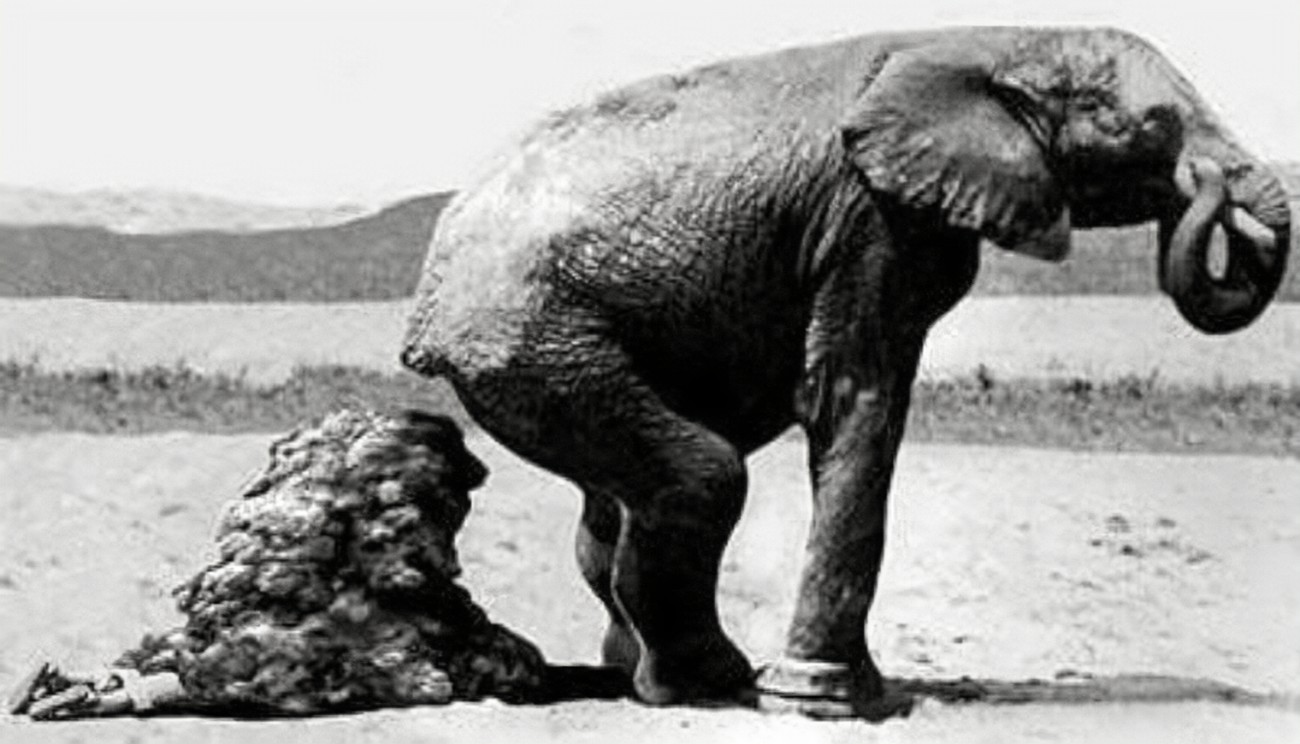
You know where I’m headed here, I say to those who know where I’m headed. At the zoo, I saw a beautiful gorilla with a mean case of diarrhea. Now, if you’re anything like me, you appreciate the good, the bad and the ugly of nature, but this was so runny and so guacamole-colored out that if I was the type who lost my appetite over disgusting matters, I might not be able to eat guacamole for the rest of my life. You didn’t know that’s where I was headed? Well, buckle up, because you’re in for a bumpy ride.

Another gorilla stepped in, and I don’t know if it was a boy or a girl, because I didn’t check, but we’ll call him Hank for the purpose of distinguishing him from Diarrhea Dan. Hank appeared to have a hankering for the food that went through Diarrhea Dan’s intestinal fermentation process, except Hank didn’t go to the guacamole-colored dung pool just below his brother’s anus. Hank preferred a more personal approach. He preferred that which still clung to the hairs just outside his brother’s anus. I debated whether or not this was a product of evolution, because gorillas, as smart as they are, never figured out how to make their own toilet paper, or if this gorilla just fancied the taste of dung.

We know that the primate is not alone in enjoying the byproducts of the gastrointestinal system. Dogs love it, rabbits and rodents don’t mind a nibble here and there, and they all have their reasons for doing so, so why don’t we?  

‘Because they’re animals,’ we say, trying to distance ourselves from them and any definition of us as descendants, ‘and they don’t know any better.’ That’s fine and true, but we confuse kids when we talk about how cute and incredibly intelligent they are. Kids combine what we teach them with of all the anthropomorphic actions they see in cartoons, and they’re stunned when they see gorillas and chimpanzees get so violent with one another, masturbate, and eat each other’s crap. ‘They’re animals, and that’s just what they do,’ we say to help them achieve distance. When they do cute, anthropomorphic, almost human things, we inform our children how intimately related with are to the gorilla and the chimpanzee. When they eat other’s crap, they’re primates, and that’s what primates do. We sever all ties and any links. 

“Hey, if you want in the family, you’re going to have to keep yourself clean back there, and learn how to use toilet paper or something, for God’s sakes. If you’re not going to abide by our customs in this manner, you will need to refrain from eating it, and I don’t care if you have a problem cutting back Hank. I’m sure we could develop a program or something if you need it, but if you continue down this road, you’re out of the family.” 

If we are such close relatives, why did we choose to invent a device, the toilet, to take our waste matter as far away from us as possible? Some of us might look at it for a second for health-related reasons and pure curiosity, but then we want it taken out of sight, out of mind. Why did we invent toilet paper, for that matter, and why do we use it so often? ‘We want to keep our backsides clean,’ you answer. Well, they do too. They just have a different means of doing so, and their method might be some sort of evolutionary tactic they developed to protect members of their clan from health related concerns and predators. Is that why we do wipe and flush it from memory, or do the links to the chimpanzee on the Hominini genera still pop up after four million years in odd moments and weird times in the form of us considering our neighbor’s waste matter visually stimulating. “Hey, Dan, you still have some serious dung hanging. Could you do something to get it out of my sight my man. I can’t take it anymore.” 

When we view animals like humans, in certain ways, we call it anthropomorphism, right? When humans act like animals we call it zoomorphism. We’re not talking about mascots or furries. We’re talking about the little things we do, like a child nibbling on a nut, like a squirrel. These links are everywhere, some real and some imagined, but if we watch an ape long enough, we’re going to see some fascinating anthropomorphic links. 

Some of the times, we choose to pursue our links. Like when we go camping in the wild, nature hikes, or in some way we think brings us closer to our native origins, getting closer to nature, and our natural beginnings. We also go on primal diets, like the paleo diet, and our primary reason for doing so is to ape the diet of those more closely related to the ape, the paleolithic man. The entrepreneurs of the paleo diet pitched it saying that these early humans had lower rates of obesity, heart disease, diabetes, and other chronic health conditions due to their differences in diet. You can say that you bought into the diet to thwart diseases and the other conditions, and you probably told your friends that too, but you know, down deep, that you just wanted to be as skinny as the picture of that paleolithic man. It made sense to us too on some level. I mean, have you ever seen a fat paleolithic man? We also know that all the sugars, like fructose syrup, are man-made, unnatural chemicals. It makes sense when we learn that these are things our body doesn’t know how to digest properly, and we know that all these chemicals and enhancements make us fat. The paleolithic man ate natural foods, because that’s all they had. 

It all sounded great, and I had people from various walks of life talking about it, pitching it, and telling me that the paleo diet should provide a pathway for all humans. “We’re all going to be on it soon,” one of my friends said. “Soon after we cross the big 4-0.”    

I spotted the fly in the ointment right away, from the get, and I’m not saying I’m a genius, or that my initial reaction was ingenious. I thought it was a common-sense question, ‘Wasn’t there life expectancy thirty-five?’ That’s a fly in the soup, right? It’s something that we might need to fully explore before completely overhauling our diet. Some didn’t, and we all know one. They went whole hog into it without asking that question. They saw the images of the paleolithic man, and they said, you can say what you want about his intelligence and the fact that he probably needed a full body wax, but that man was slim and trim. 

Dietitians now say that one of the problems with the paleo diet is that it can lead to cancer, heart disease, loss of bone density, and fatty liver. They don’t mention the life-expectancy of thirty-five, but I think we all get the point. Now that the paleolithic craze is mostly behind us, the question is what did we go wrong? We did it to get skinny, and it worked, but that whole heart disease and loss of bone density got to us. What if the one thing we missed in the overall diet of the paleolithic man was coprophagia, or the eating of another’s dung? That’s right, scientists developed a term for it, and yes, I had to look it up, because I’m not so well versed in the language that I knew we coined a term for it. 

I also never knew that a guy developed this term coprophagia. It had to be a guy, right? Someone had to say, ‘Hey how about coprophagia?’ and the others in the group had to say, ‘All right, Oskar, we’ll give you this one.’ Except there wasn’t an Oskar, or anyone else who wanted credit for coining the term. I never found a name in all the research I did, because the guy who invented it obviously didn’t want credit for it, and we can only imagine that he didn’t want credit because he didn’t want to face all of questions regarding why he coined the term, including the most prominent, why? All we get is a group of Austrian psychiatrists developed it, but we have to think there was one individual who stepped forward and linked the Ancient Greek terms kopros (feces) and phagein (to eat), but that individual’s name is lost to history, and it’s probably because he wanted that way.  

What if all of the flaws inherent in the paleolithic man’s diet and our attempts to mimic it could be resolved with a little coprophagia? Eating our neighbor’s guacamole, or allocoprophagy, or eating our own autocoprophagy (other “why?” terms). Nutritionists would immediately nix autocoprophagia, because that would be redundant, but what about allocoprophagy, eating your neighbor’s poop? What if paleo-diet researchers found that by eating your neighbor’s poop, you could nullify the unhealthy elements of the diet? Would we still follow it?

“Hey Darryl, I’m on this diet now … This is so embarrassing, but the wife thinks I need to drop twenty pounds, and I cannot shake my Frito’s addiction, so I hope this doesn’t put a strain on our friendship, or you think less of me, but … but could you start saving your … bowel movements. I know this is a hell of an ask … but I brought my own Tupperware …” What if autocoprophagia fixed some of the flaws of the paleolithic diet, and you could live the 72.81 years as skinny as the Paleolithic man? We all want to be skinny, but at a certain point, I think we would start asking ourselves about quantity of life versus quality. 

And speaking of quantity versus quality, what do we think of Hank the gorilla’s primary concern with the dung in his brother’s anus? Quantity or quality? Quantity, right? He’s a gorilla, more is more. They’re not smart enough, or cultured enough to have preferences. Am I alone in limiting their species in this regard? They eat to survive and thrive. Fatty foods might taste better to them, but that’s because they need it to stay warm for the winter, but does the bear notice that salmon tastes better than the low-fat alternative tilapia? If they caught a tilapia, would they throw it back? Whatever the case is, I found out how wrong I was after Hank scooped out Diarrhea Dan’s moist dung and ingested it. The point of this observation is not whether or not he’d go back to the source for more, it was how fast he went back. More is always more, right? If Hank enjoyed Dan’s product as much as we think he did, our next guess is he would go back for more as quick as possible to beat all of the other allocoprophagics in his enclosure who were looking to get in on the action. I was wrong. I was so wrong that I think my mouth actually opened when I saw Hank take his time while ingesting his brother’s byproduct, in the way I will when I happen upon a guacamole or that perfect strawberry. Mother Nature is imperfect, but every once in a while, she produces something close to perfection. Have you ever had this strawberry? There’s always at least one a bushel. It’s not too sweet and not too dull. I call it the Goldilocks strawberry. When I taste a Goldilocks strawberry, I take a moment to savor its absolute perfection. I roll it around on my tongue, so it hits every sensor while I chew. I close my eyes, and I flutter. I find it euphoric, and I’m glad I lived long enough to experience this moment. It’s almost instinctual, and it can be embarrassing, but I can’t help it. 

Hank did this. I might be exaggerating a little, and the correlation might not be 100% exact, but I swear I saw Hank roll his brother’s waste matter around on his tongue to let it hit every sensor. Then, he closed his eyes slowly, like I do with the strawberry, and I swear on my mother’s rotting carcass that I saw some fluttering of the eyelids. There wasn’t much fluttering, but the one thing I will write without equivocation is that I wasn’t looking for it, because I didn’t want to see it. I didn’t want to see Hank do that in the first place, but to see him savor it was almost too much for me. Before that afternoon, I didn’t think gorillas savored. We’ve all seen dogs lick their lips, but is that savoring, or is it the dog making sure there isn’t a drop of food they missed? Whatever the case is, I wasn’t looking for a sign of an ape’s relative definition of quality versus quantity, and the eye fluttering or any form of savoring. I wasn’t looking for anything that I wanted to see. The whole moment, every little thing Hank did, convinced me that this was his definition of ecstasy. 

I didn’t want to see what I saw. Not only did it gross me out, but seeing this little slice of anthropomorphism actually made me a little uncomfortable. I instinctively moved to shield my kid’s eyes, because it made me so uncomfortable to watch the ape enjoy that so much that I didn’t want to answer my kid’s questions in the aftermath of it.

Now, was I uncomfortable watching it because I wanted to give Hank his privacy? I don’t know, but when we see someone experience a moment of ecstasy, we want to leave them alone in it, especially when they’re displaying it in public. I wasn’t sure if he knew he was in public, but I had what I considered the instinctive response that displays like these should be kept in the privacy of our bedrooms, and bathrooms, and then I thought well, this is kind of his bedroom slash bathroom, and I wondered if zoo animals realize they’re in public. Think about that for a second, if you were being watched 24/7, you might become so accustomed to it that you forget that at any given time, ten people could be watching you. 

As I stepped away, it dawned on me that this whole experience might be a message from God that I am to deliver to you here tonight, and that message is this, your whole definition of taste, flavor and preferences is in need of a complete philosophical overhaul.  

Seriously, think about your tastes and preferences for just a second. What’s the first thing we think about when we think about taste? Eating and drinking right? Well, taste and flavor apply to the arts too, when we’re talking about appeal. In the arts, one man’s dung is another man’s Goldilocks strawberry.  

Everyone is trying to appeal to someone else’s taste when they write, paint, sing, and cook, and some of the times we change what we do to try to appeal to taste, but what does the everyman find appealing? Something that we enjoy so much it makes our brain tingle, does not do anything for our brother. Do you have this brother, raised in the same home, you talk all the time, and he’s almost 180 degrees different from you? How does that happen? That’s an entirely different article, but the point is that taste is so relative that it’s almost impossible to create a flavor that has widespread, universal appeal. The word flavor should have a capitalized (‘F’) on it, as it focuses on such a wide spectrum of taste. It should be an umbrella term for all sensorial sensations. Food and drink have a flavor of course, but so do music, literature, and all of the arts in the sense that some of it creates the same but different brain tingles and eye fluttering.  

Some taste is a reward for fulfilling a need. Have you ever heard that? I find it fascinating that our brain rewards us for fulfilling a biological need. The brain convinces us that by fulfilling a need that item of food tastes better. It’s sort of the brain’s way of tricking us into eating, drinking, or otherwise ingesting more of whatever that was that we just ingested. I eat one strawberry, and it tastes like the greatest piece of food I’ve ever eaten. It’s glorious. Why? Because I’m fulfilling a need the body has for vitamin C. I don’t know if this is an exact correlation, but it seems like the greater the need, the greater that strawberry tastes. The brain rewards us for satisfying a need. That strawberry tastes like the best fruit, the best piece of food we’ve ever had. It’s euphoric. It can almost feel like a religious experience.

Which brings us back to Hank. Was Hank experiencing a nutritional depletion that his brother’s guacamole satisfied. Is that why he not only ate it, but savored it to the point that his eyes fluttered? The roles those two gorillas played in that enclosure defined for me what proved to be similar to what I consider one of the most unusual and successful pairings in music history: Ben Folds and William Shatner. 

Do you know Ben Folds? I’m a fan, and I’ve been a fan for a long time, but my taste in music is such that he’s never been one of “my guys”. He has had some fantastic songs, but if I were to run into Ben Folds, and I informed him how close he comes to reaching me, so often, with so many of his songs, I’m sure he wouldn’t care. Not only would he not care, he shouldn’t care. If I met him and told him that most of his music just barely misses the mark for me, he should say, “That’s on you brother. I can only do what I do. I can’t worry about pleasing you, offending you, or entertaining you. If it pleases enough people that I can make a living at this game, that’s great, but I’m not going to change what I do to please you or anyone else.”  

William Shatner is not one of “my guys” either, but he’s always been around. He’s the green bean casserole of the entertainment world. I doubt anyone who has yet to try green bean casserole would look at it and think, “Oh, sweet savior, give me some of that!” I thought it looked gross when I was a kid, but it was always there, and it has always been there for corporate functions, family get-togethers and potluck dinners. When we eventually “what the hell” it, we discover it’s not that bad. Then, as long as we don’t overdo it, repetition can even lead to some level of fondness, until we find ourselves looking forward to the next get together or potluck dinner that has a tray of it. That’s William Shatner. He has his die-hard fans, but most of us don’t love him. He’s never bothered me, but I don’t think I’ve ever watched anything he’s been a part of just because he’s in it. He’s not the worst actor, or the greatest, but he has been in so many movies, TV shows, and other formats that we now look forward to seeing him pop up in various productions. 

No one should confuse the term “my guys” with an analysis of talent. I’ll drop the typical line that people drop to explain this discrepancy. “I respect the heck out of what Folds and Shatner do, and I always have, but they just don’t reach me on a personal level.” They’re both so talented that they’ve carved out prolific, decades long careers in their own cut-throat business, and I’ve enjoyed their output, but neither of them are my guys.

Some purists think that if you like this guy, then you have to loathe that guy. You ever play this zero-sum game, where you have to take sides. People zero-sum John Lennon and Paul McCartney all the time. We can’t like both of them in certain social circles. We have to pick, because they take sides. I prefer John Lennon. Okay fine. “Yeah, but I don’t think Paul McCartney is talented at all.” I understand that we all take sides in any competition or rivalry, but to suggest that a talent on par with Paul McCartney has no talent is ludicrous. Yet, the Silly Love Songs vs. Important Songs debate rages on in some quarters, as Lennon fans suggest Lennon was not only more creative, he was more important. These people relate more with Lennon, and because of that Lennon was “their guy”, but to prove that point, they belittle McCartney’s Silly Love Songs talent. The man is in the Guinness Book of World Records for most songs written. Don’t tell me he doesn’t have any talent for God’s sakes. 

I missed the Folds and Shatner collaboration for years, because they weren’t “my guys”. When I eventually heard the album Has Been, however, I was blown away. Forgive me for mixing metaphors here, but it reminded me of one of my favorite concoctions: cranberry granola and banana flavored yogurt. Banana flavored yogurt is too sweet for me on its own, and while the cranberry flavor of granola is tasty, I probably wouldn’t eat it as a standalone. When I put the two together, however, I enjoy it so much that I’ve considered submitting it to the overlords as my reward for living a decent, moral life. When I pass on, I want to meet my long-deceased relatives of course, and I wouldn’t mind it if someone played me a Braham’s Sonata on the harp, but if they’re wondering how best to reward me for a life well lived, might I suggest that the floors and walls of my reward taste like the banana-flavored yogurt and cranberry granola concoction I created.  

When we eat concoctions like these, we spoon too much of one flavor most of the times. Some of the times, we spoon too much yogurt, and some of the times, we spoon too much granola, but there are occasions, at least once a container, when we hit a Goldilocks spoonful. The album Has Been is the Goldilocks concoction of talent for me, and when I listened to it often enough to recognize its brilliance, I fluttered my eyes and savored the moment. I did so, figuring that this pairing would be a one-off. I loved Has Been so much that I went back to the other concoctions they’ve made together, and then I went back to their solo work to see if I missed something, but none of them hit the mark in quite the same manner. On their own, Shatner and Folds create interesting, quality material that doesn’t quite hit that Holy Crud, brilliant mark for me, but together they created what I consider their Goldilocks moment. I would think that such moments are so fleeting in any artist’s career that when they hit one, they would immediately run back into the studio to dispense another collaboration, but perhaps they don’t think they can create another Goldilocks moment together. I know they did singles together before and after Has Been, but that album was so good that I would think it would drive them right back into the studio to do another collaboration. We know that Folds’ affinity for Shatner brought them together, and that their work together impressed Shatner so much that he called Folds a genius, but we don’t know why they don’t make more albums together. Perhaps they think that fate and whatnot only permit one Goldilocks moment a life. 

Now, you might go home to your gramophone and place the Has Been phonograph on it, but before you hand crank it to life and place the needle where ever you place it, just know that you might not like the Has Been. It’s silly in parts, and our synonym for silly is stupid. It might never appeal to your refined palette, and you might mock me later for loving such silly songs. To combat such artistic differences, I used to turn on my tormentors and ask, “Oh yeah, well, what’s your favorite album? Yeah, that album is crap.” I’m beyond that now. I’d prefer that you dig deep to find your jewels, but you don’t care what I think, and I don’t care what you think. I don’t care who your favorite artist is anymore, as long as you’re not an “I dunno” gal. We all go on autopilot to some degree, but “I dunno listeners” miss months and years, because they’re not plugged in. It doesn’t have to be albums or music, it can be an absolutely beautiful book, a painting that moves you, or a small, seemingly insignificant scrape of dung from your brother’s anus. Find something that moves you, is my advice in life, and makes you think something different about your world. You might never experience euphoria when you hear music or taste a strawberry or a container of cranberry granola and banana flavored yogurt, but if you don’t passionately seek output from others’ dispensaries, how superior are you to our distant brother Hank? He enjoyed something so much that he fluttered his eyes to savor what he found for just a moment. We might consider that weird, gross, and disgusting, but he experienced a relative level of natural euphoria that most of us never will. He experienced a slice of life that we might never find, because we’re not looking for it, because we’re a bunch of ‘I dunnos’. Knowing how varied tastes are, and that God sent me here today to deliver the message that your whole definition of taste needs an overhaul, is why I’m not afraid to put on a show like this here tonight.  

The Curious Case of the Commonplace     


“It is the time you have wasted for your rose that makes your rose so important.” — Antoine de Saint-Exupéry in The Little Prince

“I know one guy we’ll be able to find in the dark,” some anonymous kid whispered loudly in the halls of our school.

And it wasn’t just him. I was getting it from all corners, and they were pounding me and hounding me for wearing a pair of bright, baby blue shoes to school. I thought of saying things. I could’ve said, “They’re shoes for God’s sakes. They’re just shoes,” but I’m sure victims of public executions screamed similar things to those calling for blood. I thought of telling them that my dad picked these shoes out and a number of other lies, but I was overwhelmed, and they were in a mood. The truth was I took my time and carefully considered these shoes. I thought they might finally help me establish myself as a freak of nature who dared to be different, and they did.

“Are you sure?” my dad asked me before we took the shoes to the checkout stand, “because I wouldn’t wear them in public.” I wasn’t sure. I wasn’t sure of anything, but I thought the shoes were flashy, and I was anything but flashy. I also thought they were Michael Jackson, and I loved Michael Jackson, but when you go Michael Jackson, you better prepare for some attention. The thing was I thought I was prepared. I did things to garner some attention, but the moment I walked into the town square, that we call the classroom, with those shoes on, I realized this was another league. 

My dad implored me to try on a pair of more conventional pair of white canvas shoes with blue stripes, and I did, and I knew the “theys” in my school would accept them, but I was drowning in the but-Is. But I love those baby blues, but I don’t want conventional shoes, and I knew I should go the comfortable, conventional route, but I was just accused of being a conformist by some of my really good friends.  

“You only like the Rolling Stones, because Paul does, and you only like the Seattle Supersonics, because Mike does.” They were kid charges, but I was a kid at the time, and they were true. I wouldn’t admit anything of the sort to them, of course, but I had to admit it to myself. Prior to this humiliation, I still considered Michael Jackson the greatest entertainer in the world. Michael Jackson was still about twenty million albums sold away from reaching a level of market saturation that required us to say, “Michael Jackson sucks!” to pledge allegiance to the cool, so I still loved Michael Jackson. I didn’t know anything about rock or the Rolling Stones, but Paul did, and Paul was the coolest kid in school, so I decided to become a Rolling Stones fan. I also thought David Thompson and Johnny Drew were the greatest basketball players in the NBA. I didn’t even know the NBA had a franchise in Seattle, but after Mike told me they were his favorite team, I looked into them, and I saw that they were green, and I liked green teams. I also liked the alliteration in the team’s name, because I loved the letter ‘S’. When I learned that their best player had the exotic name “Downtown” Freddie Brown, and another one named Gus, I began following them and cheering them on, because I loved those names. Then they went and won the NBA championship that year, and I became a huge fan, but I wouldn’t have been a fan, in the first place, if I didn’t want to be like Mike.

To compound my humiliation, one of my other good friends informed me that the whole Stones/Sonics thing was a big set up. “The idea that you are so susceptible to suggestion has been the source of silent whispers for weeks,” he said. “The fellas loved it, and Paul and Mike loved it so much that they decided join in.”

“Paul?” I said. “There’s just no way. You’re making that up.” 

“You didn’t know it, but he told you that he thought the Rolling Stones sucked, two weeks ago, just to see if you’d go around telling everyone that you thought they sucked, and you did,” my good friend reported. “Then, last week, he told you he was a huge fan of The Stones, and you went around telling everyone you loved The Stones.” 

I did it, I realized with a sizable gulp. I fell for all it. The sense of betrayal went deep, because prior to that incident I considered Paul a best friend. Had I developed a brain complex enough to examine my actions with some objectivity, I might’ve said, “Listen, I don’t have older brothers, like the rest of you, and I don’t have any kids on the block to school me in even the most basic, kid version of the critical thinking involved in knowing the Michael Jackson sucks and the Rolling Stones rules. My whole identity is wrapped up in this amalgamation of your ideas about what it means to be cool, and I thought you, my best friends, wouldn’t mind showing me the way. I was wrong, and you were right, but who’s the bad guy in this production, he who follows, or he who leads … astray?” 

I was on my own, in other words, and I figured that these shoes might inform them that I finally had an identity free from others’ influences. I thought that once my friends recovered from the shockingly bright colors of the shoes, they would come around to see them for what they were. I thought they were just a beautiful pair of shoes that captured my personal definition of beauty, and I naively believed a pair of shoes might accelerate my gestation into a bright, baby blue butterfly. Of all the driving forces I’ve listed here to becoming a freak who dared to be different, I honestly don’t remember which was my primary motivation, but I remember learning, for the first time, the swift, harsh, and resolute penalties for independent thought.

As much as we hate to admit it, some calls for conformity can actually be a good thing, as we all teach each other what is socially acceptable. We don’t do this for altruistic reasons, of course, as we enjoy judging others who don’t know, because it makes us feel like we do. We do it to be mean, and to make others laugh, but we inadvertently spare our subjects the pain they might experience later on down the road. As I stated earlier, I had no one to teach me societal and cultural norms, so “they” stepped in and taught me in all their mean and funny ways. There were other things they taught me, but I learned that as much as I wanted to be a freak who dared to be different, I didn’t play have the constitution necessary to pull it off, so I diverted. 

“How did that survive high school?” I now asked adults who never diverted and weren’t afraid to let their freak flags fly. 

“It’s who I am,” they’ve said in varying ways. I could’ve said that too, as I believed in the power of baby blue, but that would’ve opened a whole can of why I didn’t pursue it that I did not want to talk about. They also said, “It’s who I am,” with such power and conviction that I couldn’t help but think about how I went back to the store to return those bright, baby blue shoes. The “It’s who I am,” crowd were a little freaky in all the ways I was, and there was probably something wrong with them in the manner there was something wrong with me, but they didn’t duck and run for cover, they stood tall. Rather than be ashamed of their eccentricities, they embraced them. The potshots they took from all corners only emboldened them, and their current freakish appearance stated they obviously maintained that posture into adulthood. They fascinated me, because there’s a part of me that wishes I would’ve held onto my own relatively small level personal freakdom freedom, even if it was nothing more than a relatively odd, different, and a little freaky color of shoes. I just didn’t have what it took to defeat the comments, jabs, and ostracizing, but I do wish I would’ve put up a better fight.

“It is the time you have wasted for your rose that makes your rose so important,” Antoine de Saint-Exupéry wrote in The Little Prince. The “It’s who I am” crowd won the battles that defined their identity crisis, and I lost, but one of the reasons they probably fared better in those battles is because it was far more important to them. The battle for my baby blues seemed important to me at the time, but I gave up so easily that it obviously wasn’t. Whatever the particulars were, the “It’s who I am” crowd probably wasted so much time and energy on their fight that they became what they were fighting for. I think about these angles, all of them, when I see a face full of piercings, a body completely covered in tattoos, or freaky hairstyles and colors, and I wonder if that’s the extent of their creative expression. I gained a limited perspective on what they must have gone through, and I envy the fortitude they obviously displayed in their battles, but I wonder if they fought so hard back then that that’s who they are now. 

I lost, I got pounded into smithereens, and I walked away with my tail between my legs, but I eventually took a full three-hundred and sixty degree turn back into myself to discover other freakish avenues better suited to me through my ideas of creative expression. Who wins? It’s all relative to the person, of course, but I believe the other avenues I chose proved more conducive to the kind of freak I am today. When I chose this avenue, writing articles like this one, I found that I was able to say, “It’s who I am!” with an exclamation point as opposed to a comma. My definition of different is more subtle than those superficial ornamentations, it’s more cerebral, and more conducive to becoming a person who focused his creativity on matters other than the “It’s who I am” crowd who explore superficial expressions on their body. It’s always subject to internal debate, of course, but I’ve finally reached a point where I can appreciate all of the hundreds of battles, big and small and internal and external, I’ve been through in life, and how they whittled me into what I’ve become. 

The “Pull the Plug!” People


“We can rebuild you. We have the technology. We can help you live longer.”

“But I don’t want to live longer!” we say when we find out they’re talking about aggressive, life-prolonging treatment. “I want to die with dignity!”

Most of the conversations we have on this weighty topic do not involve doctor, patient confidentiality, in doctors’ offices or emergency rooms. Most of them occur in bars and employee cafeterias, where we say, “I hope I never have to face such a situation, but if I do, I don’t want machines keeping me alive. I’ll choose dying with dignity.” The conversation participants are often thirty-to-forty somethings who hopefully won’t face such scenarios for forty-to-fifty years.

“What we’re talking about is being hooked up to machines and/or computers, and that’s scary.” Of course it is. If it’s not scary, then the patient is either the bravest person we can imagine or someone who doesn’t understand the question. Some take it to terrifying heights in hypotheticals, which leads me to believe they’ve probably seen too many worst-case scenarios, in the movies. They think if we fall prey to our desire to mess with nature, or God’s plan, by living a few more months or year, they’re going to wake in a hospital to see a half machine, half human cyborg staring back at them in a mirror.

“I don’t care, I don’t want any tubes sticking in me, and I don’t want wires sticking out of me,” they say, “I ain’t going out like that. I want to die with dignity.”  

Talk is cheap of course, and I think most of us will choose life, depending on the bullet points of the detailed explanation we face, but there are the “I don’t care. I ain’t going out like that” types who become combative when someone approaches them with a mask, an intravenous needle, or an intubation tube. 

We’ve all heard real-life scenarios involving gruesome illnesses, and we sympathize with the decisions that have to be made, but I just don’t understand the hypothetical and categorical denials of advanced care. I think it boils down to tradition, as we’ve all heard the horror stories our loved ones envision when it comes to technological advancements, and their repetition influences our answers. It makes no sense to them that machines and computers can prolong life. “Anytime you put something in, something else falls out,” and “For every action there is a reaction,” they say to make note of the unnatural, irrational, and in some ways immoral technological extension of life. They believe that messing around with nature, or God’s design, will produce unforeseen consequences.

“When it’s my time, it’s my time, and I’ll be ok with that,” they say, and we all smile and gain greater respect for them saying that.

“Ok,” I want to say, “but what if there is a chance that you could live a quality life following a procedure. Will that definition of a quality life be somewhat reduced, likely, but what if it could still be a quality life?”  

Most of the people I know, through these conversations, categorically reject any form of hypothetical talk of some diminishment, and they drop that “Dying with dignity!” line. It might just be the people I know, or it might be human nature, but most of us default to cynicism when we make leaps to worst-case scenarios when it comes to the technological advances that other faceless entities developed. It’s that term faceless entities that we

\


latch onto, as we develop fears that these technological advancements have occurred with little to no human involvement. (I think we can thank/blame the repetitive messaging from sci-fi movies for that.)  

I heard a story about a person who was so adamant that they let her die that “she became fighting mad” when the talk of prolonging her life occurred. In her defense, the prognosis was that “they” figured they might only be able to prolong her life six months to a year, with treatment. Those last two words stoked her ire. “What does with treatment mean?” she asked, but she stopped them in the midst of their explanation. She didn’t want to know. Talk is cheap, as they say, but she didn’t want to hear such talk. “I don’t fear death, or being forgotten. I want go out gracefully.”

Hearing what she went through, and her fighting stance, this is my proclamation: “If I’m lying there on my death bed, with nothing but machines keeping me alive, don’t pull the plug, resuscitate as many times as you have to, and keep me alive no matter what. I don’t care if I’m a vegetable who can only communicate through a series of beeps, like that Stephen Hawking guy. I love life, and I don’t want it to end. Once it’s gone, it’s gone.” 

That’s funny, right? Is it funny because no one says that, even at lunch in employee cafeterias and afterwork, barroom hypotheticals. Everyone I talked to says pull the plug, turn it off, and do not resuscitate. They don’t even need a moment to think about it. It’s almost an instinctive response now. No one says I want to live as long as I can, no matter what. Most people choose death with dignity, because the opposite is the opposite that they don’t even want to discuss. Yet, if you talk to these people often enough, you’ll learn that dying with dignity seems more important to them than living with dignity. Some of the things they do, and we have to keep in mind that if they’re telling us about these things, what are they too ashamed to reveal. When you hear these things, you realize that they don’t mind doing things that make us think less of them in life, but when it comes to death, they choose dignity.

We’ve been spooked. Someone somewhere convinced us that medical procedures, technological advancements, and even a brief stay in hospitals (“I hate hospitals!”) is worse than the alternative. What’s the alternative? “I’ll tell you what the alternative is. It’s preferred!

“If I found out I have diabetes,” Bruce continued, after his award-winning preferred joke. “I’d rather die than go through all their treatments. Have you heard what the treatments are for diabetes? No thank you. I’m not going to monitor my blood sugar levels, take insulin and other oral drugs. They talk about having a healthy diet to combat your symptoms, and that sounds all great and all when you’re sitting in a doctor’s office, until you learn what a healthy diet means. If you want me to maintain a proscribed weight, I have a warning for you. I won’t. I’ll tell you that I will, and I’ll mean it in the moment when I’m sitting in a hospital gown with my ass exposed, but once I put my denim back on, I’m going to eat whatever the hell I want. You might think it doesn’t take much to ascribe to a healthy diet, until they start in on that list. At some point, a healthy diet comes into conflict with what the quality of life. They also talk about engaging in regular physical activity. Regular physical activity sounds as doable as a healthy diet when you’re all scared in a doctor’s office, and we’ll agree to exercise more … for about a week. Then we’ll fall back into our usual routine when we’re feeling all healthy again.” After a couple months, or however long it takes for our refusal to follow their edicts to catch up to us, they’ll eventually put me on kidney dialysis. Do you know what that is? It’s basically a machine that they hook you up to to take all your blood out of your body, clean it, filter it, and all that crap, until it’s time to put it back in us. Can you really picture me doing that, seriously? The final straw will take place when they tell us to at least monitor my sugar intake. The message, therein, will be to try to avoid sugar and carbohydrates as much we can. I’ll be frank with you, I’d rather die. I’d rather die than have anyone see me say no to a Snicker’s bar.”  

Anytime I think I exaggerate the glamorization of death some fixate on, I hear stories that mirror Bruce’s “I’d rather die than go through all that.” I also hear stories about people purchasing caskets, tombstones, and plots when they’re in their thirties! “I want a casket in a quiet, shaded area, because I was forced to live by a railroad that was always so noisy.” We dream about our funeral, picturing our people crying and all that, and we want them to say something like, “She denied treatment, because she didn’t want to go out like that. That’s the way she wanted it, and we respected her wishes in the end.” We might get that conversation, but it might also get interrupted when the home team scores a touchdown on the television in the reception area. That’s fine, but it’s so important to us that our friends and family remember that we ‘died with dignity’ that we creatively expand that line. We don’t want the ‘how she died’ to earmark us throughout history. We don’t want others to say, “Did you see her at the end? It was so sad. She was so vibrant and fun for most of her life, but in the end, she was a vegetable.” We don’t want to see that look of disgust, because we know that look, we’ve given that look to others. We all hope that we’re never in these situations, where doctors force our loved ones to make decisions, and if we are, we want them to know we’d rather die. 

Most of us will never face such a situation, with our lives or the lives of immediate family members for whom we must make such decisions, but those who see it on a regular basis, choose death. A recent study found that 88.3 percent of doctors who regularly pursue aggressive, life-prolonging treatment for patients facing the same prognosis, said that they would choose “no code” or do-not-resuscitate (DNRs) orders for themselves. They see what their patients go through, and they prefer death.

Let’s not gloss over this. Those who know far more than we do about these situations choose a dignified death. We can talk about situational hypotheticals all we want, and the intrinsic value of life over death, but those who see the suffering of patients on a daily basis, who know what family and loved ones go through watching their loved one die, would prefer to forego pursuing aggressive, life-prolonging treatment. Is that shocking? I think it is, but I’ve only had one experience with a loved one in such a situation, and the decision we made was basically a forgone conclusion by the time we made it. Needless to say, my answer is an uninformed one, but those I spoke with in cafeterias and bars were just as uninformed as I was, and they chose death. 

The most common response for “no code” and DNR decisions is the quality of life, followed by medical prognosis, personal beliefs, autonomy and avoiding becoming a burden. The latter, we can only guess, is largely financial, but there is also the physical burden of counting on your loved ones to provide physical assistance. Most people don’t care for all that, they prefer death. 

Contrary to much speculation, we won’t get to come back and see how our decisions affected our loved ones. Once we’re gone, we’re gone. Life is over and there ain’t no coming back. Who cares what they say or think, I say, live long and prosper. If there is an afterlife, and we end up looking up, down, or around at the aftermath of our decision, my bet is that we’ll wish that we wrung every droplet of water out of the sponge before we went into the great unknown? I don’t know what I’m talking about here anymore than you do, but if that fateful day ever arrives, and I’m forced to make that decision, I think I’ll choose life.