Groundhogs, Led Zeppelin, and Our Existential Existence


We love to define ourselves through artistic venues. We believe that listing off our current musical preferences provide a concise definition of who we are, and who we aim to be. Our preferences in all art forms define us in relative ways, but music appreciation appears to be the common denominator we use to define ourselves among other fans of music. Most adults continue to listen to the hit singles and albums they enjoyed back in that insecure, confusing period of our development that occurs roughly between age 15 and 25. I don’t know if it’s a sense of nostalgia we seek, or if we’re trying to relive an era of our lives we didn’t appreciate enough at the time, but most of us find ourselves trapped in that era when others defined good music for us on the sliding scale of cool. If others helped us define all of the variables inherent in the definition of cool music, and we regard our musical preferences as a concise definition of who we are, how much control did we have in shaping the people we’ve become? We might prefer to believe that we’ve left those mercurial teenage years behind us, as they become smaller and smaller in our rear-view mirrors, but some social scholars state high school is like a line from a hit single that preceded my era, but was nonetheless as ubiquitous in it, “You can check-out anytime you like, but you can never leave.”

What this means, to some, is that it is almost impossible to reach such a level of confidence regarding our identity. It is possible to know thyself to elevated degrees as we age, but remain forever susceptible to getting this definition slapped around by the prevailing winds of cool and uncool? This spawns another question: Do we ever reach a point where this dimension of our identity is absolute and true? Those of us who reflect on our life and analyze our actions believe we learn more about ourselves as we age, but others state that even though the core tenets of our personality mature as we age, our core identity forms in the early stages of life. How often was that core identity slapped around by the prevailing winds of cool and uncool? “You listen to who? Uncool man, uncool.” This spawns another question: Do we ever reach a point when this dimension of our identity is absolute and true? We all prefer to believe we’ve made individual choices regarding the music we listen to on a regular basis, but are those preferences ours, or were they shaped by group thought, rebellion to group thought, and/or rebellion to rebellious thoughts?

✽✽✽

Why do research scientists study other animals to get to the root of human psychology? Is it because the nature of the reactions other animals have are more primal? Humans are often more difficult to test, particularly in groups, because we tend to project idyllic images of who we prefer to be, rather than who we really are. Animals test much better because they remain closer to the primal state, because one animal might tell us more about our psychological base than hundreds of idyllic human test subjects can.

I understand the general point about the primal state, but I don’t understand how animals can teach us about the comparative complexities of the human mind. As far as we know, animals do not have the mental capacity to sit around and contemplate greater questions of individual identity. Most concepts of this nature are too foreign and complex for them, but how simple and primal are their brains? 

On nature shows, we witness groundhogs watch one of their own fall prey to a predator. We assume their desire to watch a predator eat one of their own is born of simplicity, but could it be more complex than we’ve ever imagined? Is the desire to watch similar to our complex desire to rubberneck an accident on the interstate, or is that a primal, base desire on our part?

Groundhogs screech and chatter when a predator eats one of their brethren. We assume these screams are a mechanism they use as a last ditch effort to try to save their brethren. We also assume that they are attempting to warn other groundhogs in the vicinity, but could these screeches be similar to those that we engage in during horror flicks when we scream while watching a predator slaughter one of our own in a slasher flick? Is their fascination with horror similar our own, in that they’re horrified, but they can’t look away? Do they chatter about the images they saw later, in the manner we do when walking out of a theater, and do they mourn the lives of former friends and relatives in the aftermath?

When humans die, we attempt to minimize the deceased so we can live better lives in the aftermath. “Richard was a great guy and all, but he was old,” we declare to minimize the pain and horror of his death. We might say something along the lines of, “He smoked,” or “he ran himself ragged for so long that it was bound to happen sooner rather than later.” One has to wonder if groundhogs have a similar need for detachment to help them achieve some sort of distance from the deceased, so they can deal with the complexities inherent in life and death better. Do they say, “Alfonso was great guy and all, but he was slow. He didn’t work out enough, and building and rebuilding his home was really one of the only forms of exercise he engaged in. I knew he was going to die, and to be frank, I say good riddance.”

Do groundhogs like and dislike other groundhogs based on personality traits? If this is the case, how far do they take it? Do they ostracize those who have strange growths on their head, or are they more accepting of differences than us? Do they castigate others based on work ethic, the obnoxious behavior of their pups, and would one groundhog ever exclude another from the cool kid, groundhog group based on a titty twister?

I used to give titty twisters all the time. If you were in my contingent, and I considered you a mentally stable male, I probably gave you a titty twister. I thought it was funny, and I considered it harmless. These titty twisters had no sexual motivations as far as I was concerned, and I didn’t do it to establish dominance over a twistee. I just considered it a funny thing to do to a guy standing there, doing nothing, and acting far too normal. I thought a good twist might shake them out of an otherwise boring, normal day. It’s who I was, and who I will probably always be. I don’t force people out of the norm with physical actions in that manner anymore. I prefer more subtle measures now.

When I gave a titty twister to this one guy, however, he punched me in the chest for it. I twisted his titty. He was being too normal. He had a normal expression on his face, and he didn’t say anything for a spell. I gave him a titty twister, because I thought he needed a random shake.

His reaction might have left me doubled over on a normal day, as I loved impulsive, obnoxious reactions, but his reaction carried a mean face with it. I assumed we were friends, but his mean face informed me that the punch sent a message that rejected everything I valued, and that our friendship was officially irretrievable. I’m sure groundhogs reject other groundhogs’ over over-the-top attempts at humor, but do they hold grudges? This guy told people he hated me after that, and he added an insulting characterization of my manhood.

Does a groundhog ever do anything to shake up the norm, or is their existence so primal that they’re simply happy to be alive for one more day? Does that attribute say more or less about human beings? Do we take life for granted to such a degree that we’re no longer happy just to be alive? Is this desire to shake our lives out of the norm a complex desire, or is it a simplistic, biological need to keep our brains firing at a rapid pace?

If a groundhog decided to perform an act of procreation in a different position, for example, would we document that decision as simple or complex? If the groundhog displayed a sense of listlessness prior to trying the new position, how would we document his actions? If the groundhog performed his act on other groundhogs when his selected mate wasn’t around, would we view the adulterous act as complex or simplistic? If we could see inside the groundhog’s brain and witness a dream of an army of aliens shackling him to a wall, while suckling on his reproductive organ for the semen nutrient they needed to survive, would we consider this a complex need for fantasy or a simplistic, base desire?

That former friend of mine, whom I titty twisted into an enemy was a heavy metal dude, and I was a heavy metal dude. I mistakenly assumed that commonality would serve as the glue to our lifelong bond.

Most of the people I grew up around were heavy metal dudes. We called all like-minded souls, hessians. I so badly wanted to be a hessian that I was willing to do just about anything to make it happen, but I had a tough time gaining entrance into their world. I didn’t like Rush or Iron Maiden, but I did like KISS. They regretted to inform me that my application to into the world of hessianism would require a rejection notification at this time, for KISS was too popular and mainstream. Feel free to reapply, they said, when your preferences evolve to more of an outlier group. If I stubbornly resisted Rush or Iron Maiden, they said, then I should feel free to explore the worlds of Slayer or Megadeth. “Sorry,” I said. I wanted to be a hessian, but I didn’t care for those musicians. Their album cover art was cooler than cool, with cool monsters and satanic imagery, but their music was beyond me. I wore the mandatory denim jacket and donned the requisite mullet, but for some reason I was on the outside looking in for most of my young life. It may have had something to do with the fact that I didn’t say the “Dude” but I didn’t give “a durn about nothing”, and I found authority figures laughable. I thought that should be enough.

One thing I learned in the beginning of my public square humiliation was that my practice of calling my grandma “My Nana” would be out, if I wanted to be a hessian. I didn’t have to hate her or anything she stood for, as that was a trait reserved for punkers, but I didn’t have to like her so much either. A hessian was to remain somewhat unimpressed by his grandmother’s entrance into a room. He might consider shaking her hand as an alternative to hugging her, and a “Hello ma’am” is a viable alternative to running across a room screaming, “Nana!” When the greeting reaches a conclusion, the hessian is then to go on about his business, as if he’s not concerned with her existence. Ignoring such staples could consign the music aficionado to the perception shared by Genesis and the B-52s listeners.

Genesis lovers valued simplicity over the adrenaline rush we found in the force of heavy metal, so we hated them, and hating things gained us a lot more mileage than any expression of love, adoration, or a fondness for anything or anyone. Hatred gave a hessian character and complexity. To the question, “Do you enjoy the music of Phil Collins?” one must answer, “No. I think he’s feminine.” Loving something subjects one to scorn and ridicule, and it gives a hessian the license to hate another. What you love is irrelevant be it KISS, Happy Days, or your Nana. Loving something is a weakness to poke and prod, until the recipient of such scorn is too embarrassed to love anything, unless it’s Metallica. One can say, “I love Metallica,” and their hessian membership card will remain unblemished, but that’s the extent of love in the hessian world.

If the scorned has never heard the music of Metallica, friends will instruct them to run out to the store tomorrow and buy Ride the Lightning, Master of Puppets, or And Justice for All…” If the listener stubbornly refuses to worship these three albums, after repeated listens, they run the risk of having a ‘poser’ label cast upon them. That person may as well take the denim jacket off, cut their mullet, and start calling their grandma “My Nana” again, because they’ll never gain entrance into the hallowed halls of the hessian.

Hessians can smile and laugh, but they need to reserve those reactions for moments of scorn and ridicule. A hessian can like KISS and Van Halen, but as I said that’s not enough. They cannot –I repeat cannot– like Poison, Cinderella, or Faster Pussycat. Doing so, will open up the floodgates for scorn and ridicule, granting all card-carrying hessians in attendance the smile and laugh allowance. I assume that social media forums have made life easier for teens in America by comparison, for a person can now block those who question their musical preferences.

This complex world of identity through music became a lot easier for me when I became a Zeppelin guy though. Prior to experiencing the sensorial, shocking world of Led Zeppelin, I assumed they could be lumped in with The Doobie Brothers, Foghat, and all the other relatively nondescript bands of seventies music. When I discovered how faulty that assumption was, I became a Zeppelin guy.

Most of the fellas I knew wanted to befriend Zeppelin guys. They wanted to talk with us, be like us, and accept us into their community. I could hang out with Zeppelin guys. We could talk for hours about the band’s iconography and folklore. I could even proselytize others into the Zeppelin world if I wanted another friend. I could just play the Led Zeppelin albums II and Zoso, and create a friend, complete with all the shared associations and memories that went along with it. After becoming a Zeppelin guy and creating more Zeppelin guys, I decided to progress from being just a Zoso and Zeppelin II guy to a Physical Graffiti and Zeppelin III guy. I learned every lyric and every beat on those two Zeppelin albums, and to some Zeppelin guys I progressed from being a Zeppelin guy to the Zeppelin guy. For loving those two albums as much as I did, other Zeppelin guys assigned complicated and mysterious Zeppelin guy characteristics to me.

“Yeah, II and Zoso are great,” I said to beginners, “but wait till you start listening to III and Fizzy Graph,” (Fizzy Graph was the nickname the Zeppelin guys gave to Physical Graffiti.) “I’ll lend them to you when you’re ready.”

It was a glorious world to enter into, a world of opportunity. In this world, Zeppelin girls existed, and one could taste forbidden fruits and still be one of the fellas. Hessians, punkers, and even some Genesis guys could stand side by side, in mutual admiration. This society involved musicians and music aficionados of all stripes. We could talk, laugh, and listen to the greatest music ever produced, for as all Zeppelin guys know, all music stems from Led Zeppelin.

Zeppelin guys felt like rule breakers, for who broke more rules than Jimmy, Robert, JPJ, and Bonzo? Rule breakers do have rules though, albeit unspoken ones. We Zeppelin guys still had to avoid giving a durn about most things, as being a Zeppelin guy wasn’t a cloak against being ostracized. We still had to despise Beverly Hills 90210, Michael Jackson songs, and Tom Cruise movies, and the fake, superficial, and artificial matters, they espoused. We also could not permit fellow Zep guys to call their grandma “My Nana” either, especially if they aspired to the Zep guy status.

We also had to fortify our Zeppelin guy status on a continual basis, then the Zeppelin guy status if we were lucky enough to achieve it. A Zeppelin guy still had to guard himself against complacency in the Zep guy world, or we could lose our status entirely. It was all right to enjoy the music on In Through the Out Door, for example, but a true Zeppelin guy could not love it, because the music on that album relied on synthesizers too much, and John Paul Jones had far too much influence on it. It lacked the raw Page/Plant magic of the first six albums, and every fella who wanted to maintain the Zeppelin guy status had to know that.

We all know that the brain of a groundhog is less complex than that the human brain, but we also know that even the most simplistic, primal minds react to music. If a groundhog listens to the same music, however, will he, over time, develop an affinity for it? Will certain groups of groundhogs break out of the pack and develop discerning taste? Will these groups begin to develop an affinity for Zeppelin over Genesis? Will they begin to ostracize Genesis lovers just to gain some cachet within their own groups? Will groundhogs reach a point when it is no longer about the music for them but the iconography and complexities they developed in their particular group in the groundhog community for the music they chose to love? Will their love for the music strengthen over time, and if it does, will it reach a point when one can characterize that love as complex, or will we simply deem it a simplistic desire to belong to that group of groundhogs who listened to the same music other groundhogs considered cool, and will the groundhogs ever begin to see the distinction for what it is?

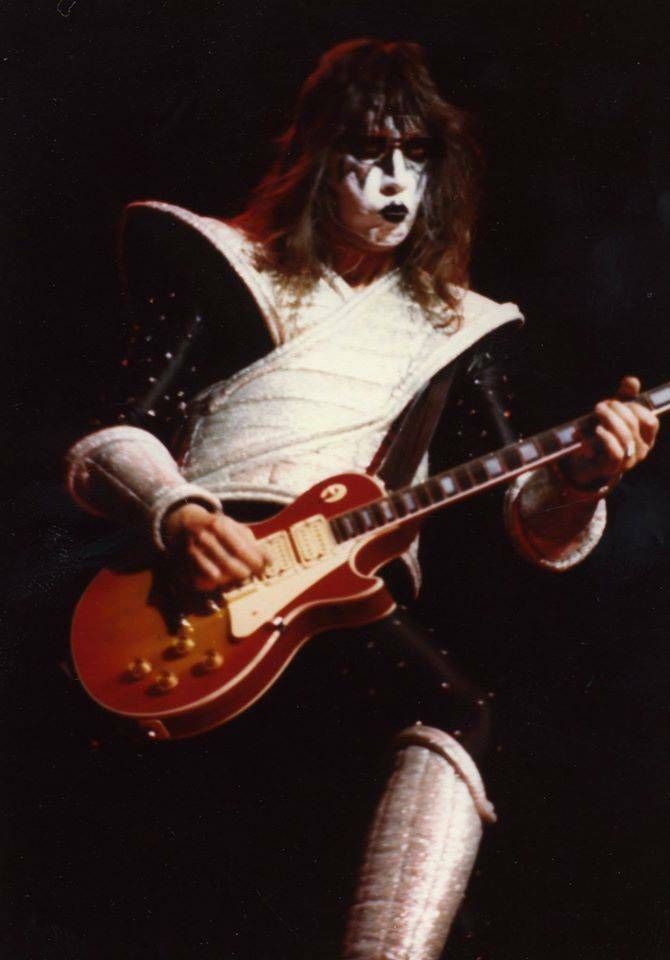
Ace Frehley’s book: No Regrets. A Review


Ace Frehley has No Regrets. It’s the title of his book. He has no regrets, apparently, about wasting whatever God-given talent he was given, and he has no regrets about doing little-to-nothing to make his “right place right time” moment in history a little better. That’s great Ace, you stuck your middle finger right up into what Gene and Paul have been saying about you, but what about those young fans who defended your legacy for much of their young lives? Do you have No Regrets about all that?

The author of this piece was a fan, a HUGE KISS fan, and more specifically an Ace Frehley fan. Like the Beatles’ fans of the 60s, we all had our favorite member of KISS, mine was Ace Frehley. Chicago Bears running back Walter Payton was my favorite person and Ace was number two. I still have a soft spot in my heart for the man, but Ace Frehley’s new book No Regrets has even tainted that.

Ace Frehley states that he is clean now, and like so many other rock bios that adorn the shelves of bookstores across America, Frehley takes the vantage point of an outsider commenting on his past debauchery. Alcohol and drugs were the way Frehley dealt with the ups and downs of stardom, but he has No Regrets about this. As comedians in the past (Pryor and Carlin) have done, Ace chooses to laugh at his lifestyle choices. He chooses the “now that I’m clean” theme to detail for us the hilarity of being so out of control that you don’t know what you’re doing. As a lifelong Ace Frehley fan, I found many of the Ace Frehley stories funny, troubling, and disenchanting, but Ace has No Regrets.

The “breath of fresh air” arrives when Ace details for us the tale of KISS. Ace is more honest and forthcoming about the formulation of KISS than any of the other members have been to this point. The reader begins to realize that Ace is going to be the first to tell the story of KISS without a marketing plan. There is no KISS mysticism attached to this version of the story, the KISStory, such as the stories faithful KISS readers have been inundated with by Paul and Gene. This is the KISS story as told by “the fun and spontaneous member”. This is the more “real” version of the story. Unfortunately, the more “real”, Ace Frehley version of the story substantiates many of the charges Stanley and Simmons made against Ace’s apathy and his poor work ethic. The No Regrets book also substantiates the charge that Ace wasn’t particularly elemental in the formulation of the eventual KISS product, that he was basically just along for the ride, and that he has No Regrets about any of this.

In one particular story, Ace says that the producer of the KISS album Destroyer, Bob Ezrin, began pushing Ace to come up with guitar solos for the songs on the album. Ace complains that Ezrin’s pushing proved counterproductive, because Ezrin didn’t understand the spontaneous nature of artistic creation. This, for me, is the most illustrative moment in the Ace Frehley story, because I understand the spontaneous nature of artistic creation, and I know how much downtime musicians have between albums. They might be touring, doing promo spots, and other forms of promotion, but there’s still a lot of time to sit around and fiddle with the guitar to create solos. If Ace entered the studio with around ten to twelve solos, it’s possible none of them would’ve fit the songs perfectly, and that’s where the whittling and tweaking come into play. To listen to Ezrin and Ace’s characterization of this confrontation, Ace walked into the studio with no solos, or any ideas for solos, and Ezrin expected him to come up with one to fulfill his contribution to the song. 

At that point in his career, Ace Frehley was one of most revered guitar players, known for his creative solos. Ace’s lone contribution on a majority of the KISS songs was a brief solo between verses, and he couldn’t even come up with that by the time KISS’ Destroyer album came out? At this point in the story, I would’ve been mentally lambasting Gene and Paul for presumably leaving out some necessary details of the story. That’s not the case here of course. This is Ace telling the story. As I said, it’s all troubling and disenchanting, but he had No Regrets.

The question that this reader has for Ace, on this particular issue, is, “How much time, between albums, did you have to work on these spontaneous solos?” Spontaneity can be tough to generate on the spot, of course, but how much better would those solos be if by the time he entered the studio, he had a pallet from which to choose? Talented artists, of which I think Ace is one, know better than to do nothing for months and then expect some sort of divine inspiration to strike when they need it. Most who depend on spontaneity for a living know that they have to constantly hone the muscle. Artistic creations take time, devotion, and discipline.

I’m not a blind fan don’t get me wrong. I recognize KISS music for what it is. I don’t put it on par with Monet or Picasso in the world of art, but even KISS music takes a degree of involvement, work ethic, and commitment. Ace Frehley was a significant part of a group that put out products that many of us spent our allowance on, but Frehley thought Bob Ezrin pushed his artistic sensibilities a little too hard, because Ezrin didn’t understand the gentle process of artistic creation. In this gentleman’s disagreement, we have the artiste named Ace Frehley who many have charged, and Ace basically substantiated in his book, had a very poor work ethic and chose to party when he wasn’t in the studio versus Bob Ezrin. Ezrin, to that point, worked with Aerosmith, Alice Cooper, and Lou Reed. Ezrin also produced albums for a wide array of artists including: Pink Floyd, Hanoi Rocks, Deep Purple, and many others before and after Destroyer. Even fan boy here, who wants to take Ace’s side in this episode, cannot side with him. My educated guess, based on the characterization of Ace Frehley by others, and by Ace Frehley in this book, is that he arrived in the studio totally unprepared, and Bob Ezrin got mad at him for it. Ace then got mad at Ezrin for getting mad at him about it. Yet, Ace Frehley has No Regrets.

Few have questioned Frehley’s God-given gifts, but he apprently did little to formulate and finesse the gifts that were given to him. What were you doing between albums Ace, other than touring? The answer: Sex, drugs, and alcohol. No Regrets. You read Ace detail this portion of his story, and you realize that Ace may have been paying a little bit too much attention to his press clippings. He may have been listening to those adoring fans that put him on a pedestal. He may have thought there was a degree of mysticism to his art that couldn’t arise as a result of a request from a meager human, but it had to be waited for in the manner of some divine artiste. Say what you want about Gene and Paul, and many have (Ace does in this book in good ways and bad), but Gene and Paul knew there was nothing divine about what they were doing. They simply worked their tails off for the legacy they eventually achieved (and I cringe a little taking Simmons and Stanley’s side here).

Ace chastises the KISS bassist Gene Simmons throughout the book as a man who took the KISS product a little too seriously throughout the process of building it. Ace talks about how he couldn’t do it. The movie KISS Meets the Phantom is an example of the “KISStory” that Ace admits he basically sat out. He looks good in hindsight for having sat that one out, because the movie is generally considered a bomb. Ace talks about how he didn’t enjoy making the album “The Elder”, and how he generally sat that one out too. Ace then talks about how he wasn’t much of a part of the making of the album Destroyer either. The latter is a little more painful to him, as evidenced in his words, but this may be due to the fact that Destroyer is generally considered to be KISS’ best album. Hindsight shows Ace regretting that he wasn’t a greater part of the successes, but he doesn’t mind telling us he had little to nothing to do with that which is generally considered less successful artistically and financially. How convenient.

Ace condemns Gene as a business man who has no friends. He says Gene needs to cut loose and have a beer every once in a while. To be fair to Ace, he does thank Gene and Paul for everything they built, and he’s not as negative as I thought he would be. I read where Gene leveled Ace in many areas, and I expected the return fire to be explosive. He pounded home the point that Gene has no friends by saying that the Gene Simmons Roast only had comedians in it (and family members), but he doesn’t have as many negative things to say about Gene as this review and others may lead one to believe. The point he’s trying to make is Gene isn’t very fun, warm, or an extreme joy to be around. Ace knows Gene better than most, and he makes an informed analysis, but I don’t really care that much. I met Gene once, and he was very nice, but who cares? Gene could argue that he devoted his life to an enterprise that a lot of people really enjoyed. Whatever talents in life Gene was granted, he made the most he could out of them. When the final epitaphs are written, the idea that Ace had a ton of friends, and he was a fun-loving, good time rock-n-roll dude, sometimes at the expense of his dedication to his craft, will prove a testament to his character, but Gene’s dedication to his craft, at the apparent expense of human relationships, will prove just as vital to his legacy. As Ace once sang, it was, “Two sides of the coin, which one should I choose.” Thanks in part to No Regrets, many hardcore Ace Frehley fans now know which side he chose, and it did some damage to his legacy.

Those of us who were Ace Frehley loyalists for much of our life, have one quick question for Ace. The question is based on the fact that we defended Ace among our friends and those who informed us what Gene and Paul said about him. Why would you write this? Why would you tell the world that you didn’t have as much play in the formulation of this KISS product as we thought you had. Why would you tell your biggest fans that you were basically along for the ride, for much of the time? Why would you say that other than some minor artistic differences, there’s no real huge story to your departure? Or, that you simply got sick of it?’ We know nothing lasts forever, and some of the times good things need to die. Most of us would agree with you that KISS overstayed their time on stage, but your notes on how little it meant to you when it meant so much to us, when we were kids, was a little deflating.

Ace does mention the fact that he may not be alive if he were still in KISS, but it’s clear that that was totally on him by that point. The only one who encouraged Frehley into greater debauchery, Peter Criss, was long gone by the time he quit, and Paul and Gene were basically dry as stated time and again throughout the book. Did Ace envy the success Guns N’ Roses guitarist Slash had with his autobiography? Did he know that his story was similar, and he wanted a piece of that pie?

In a promotional interview for this book, Ace did on The Today Show, Ace talked about how proud he was to add published author to his list of accomplishments. That’s great, some of us thought, and it’s a laudable goal for any high school dropout. The question is what did you accomplish? What did you publish? Was it a novel, a short story collection, or a bio that detailed for the American public a dossier of artistic accomplishments? What this published author managed to have published was a tome of a wasted opportunity, a waste of talent, and a largely wasted life. My guess is that Frehley saw all of acclaim and sales that went to Guns N’ Roses guitarist Slash and realized that his story was similar. It’s as entertaining as Slash’s was, and it’s received as much praise, but at what price?

The reader is left with the idea that Ace led a blessed and lucky life, but when it came to actually working, and finessing that gift to even greater heights, Ace got artificially turned on and tuned out. Ace will undoubtedly receive a lot more praise for being “more real” with his story, but those of us that considered ourselves true fans wish he had been a little less real to keep the myth of Ace Frehley alive. Don’t get me wrong, it’s a fun (and in spots a funny) read, stories of debauchery always are, but it’s also a little sad and disenchanting.

Are You Superior?


I met a guy who didn’t mind dressing me down psychologically. Yet, he probably wouldn’t admit it, even if I called him out on it. Dressing people down in such an obvious manner is uncouth, and it suggests that the purveyor is superior while doing it. I could feel him doing it as walking down the aisle toward him. I was smiling, and I felt him analyze that smile. I could tell that he perceived smiling as a weakness. When he looked at the shirt I wore, the manner in which I walked toward him, and the way I greeted him in a nice manner, I could tell he was scoring me on an analytical chart, and I could tell I wasn’t do well. As much as I hate to admit it, his superficial analysis of me affected our initial interaction. My natural insecurities took over, and I felt inferior to him in a way that I spent weeks trying to redefine. 

This loathsome character is anecdotal evidence of a strange psychological phenomenon in our every day conversations. He’s anecdotal, because most of us don’t examine others in such an obvious manner, but do they psychologically dress us down in a more subtle, less obtuse manner? Do they score us on their personal analytical charts without intending to do so during our casual conversations? They probably don’t know why they do it. If they did, they likely wouldn’t attribute it to a search for superiority, but they do know that they’re searching for something that will give them some intangible, hard to describe feelings of superiority.

If an individual is muscular in a noteworthy manner, or gifted in the athletic arena, they already know the feeling of superiority, as most of us grant physical traits superiority. For the rest of us, this search is not as simple. How do we compare to others? How do we stack up? It’s often difficult, and fruitless, to stare into a mirror and gain true, objective definition, so we do it on the backs of others through our day-to-day interactions to try to gain some information about our identity.

The searches may occur in the first few moments we begin speaking to them, and it often involves scrutiny of our physical appearance. Are we well groomed? Do we brush our teeth? Are all of our nose and ear hairs trimmed? Do we have a socially acceptable hairdo? How much did we pay for that hairdo? How much did we pay for the clothes we wear? Do we wear fashionable clothes? If clothes make the man, what kind of men are we? Some say it’s all about the shoes. Others say that by creating a pleasing dimple in our tie, by denting that tie with the thumb in the tying process, we can create quite a first impression. Most people don’t speak in terms of superiority or inferiority in polite company. Yet, those same people worry about the first impressions they make. What are impressions, but an attempt to define ourselves among our peers?

Is it all about the clothes, or do we make a better first impression through a confident posture, the way we sit, the manner in which we hold our head when we talk, or whether or not we look our counterpart in the eye? Do we have a tongue stud? Are we tattooed or non-tattooed, and who is superior in that dynamic? It’s all relative.

First impressions can be difficult to overcome, but some suggest that what we say after the first impression has greater import. If we have a noticeable flaw we can garner sympathy or empathy, through an underdog status, with what we say in the follow up impression we provide.

To further this theory, some believe that if we notify our counterpart of our weakness –say in the form of a self-deprecating joke– it will redound to the benefit of a strong follow up impression. The subtext involves the idea that doing so will end their search for our weakness, and the feeling of superiority they gain will allow them to feel more comfortable with us. This, we hope, might result in them enjoying our company more. 

Comedian Louie Anderson turned this into an art form. Moments after taking the stage, Louie Anderson informs his audience that he’s overweight in the form of a well-rehearsed joke. The first impression we have of Louie is that he is overweight. When he addresses that first impression up with a quality, self-deprecating joke it disarms us. We thought we were superior to him, based on his physical flaw. By acknowledging that flaw, Louie takes that feeling of superiority away from us, and he gives it back to us with his definition of it. That re-definition of our superiority allows him to go ahead and manipulate us in all the ways a comedian needs to manipulate a crowd. The distraction of our physical superiority is gone, and we’re now free to enjoy the comedic stylings of Louie Anderson.

The problem with a successful follow up rears its ugly head when we begin to overdo it. When our self-deprecating humor works in the second stage of impression, we attempt to move into the more personal third and fourth stages of getting to know our counterpart better. In these stages, we begin to feel more comfortable with the person on the receiving end, and we let our guard down. The problem we encounter, partially due to our insecurity, is that these people might not be as entertained by us as they were in the second, more self-deprecating stage of impression. As a result, we might begin to fall back on the more successful, second impression to lessen the impact of our attempts to be more personal with them. “Of course I’m nothing but a fat body, so what do I know,” is a qualifier that we insecure types add to an insightful comment we make that they don’t find as entertaining. When that proves successful, and our counterpart begins laughing again, we begin committing to this qualifier so often that we become it in their eyes. They can’t help thinking this is who we are, because it’s the impression we’ve given them so often that it becomes part of what they think of us. One way to test if we’ve fallen prey to this progression is to remove that successful, qualifier that we have been adding to the tail end of our jokes and stories to gain favor with them. If we have been adding it too often, the recipient of the qualifier might add, “That’s true, but aren’t you fat?” to the tail end of our story for us.

Some of the times, we commit to these additions to complete the rhythm of a joke or story, but most of the times we do it to insert some element of superiority or inferiority. Thanks to certain situation comedies, and the effect they’ve had on the zeitgeist, some jokes, stories, and thoughts feel incomplete without some element of superiority or inferiority attached to it. I used to be a qualifier, until I realized that too many people were exploiting my qualifiers for their own sense of superiority. It was so bad, at one point, that I couldn’t say anything halfway intelligent without someone adding, “That’s true, but aren’t you fat?” at the tail end of it.

***

It’s my contention that most of us are in a constant search of indicators of superiority or inferiority. If our counterpart is religious, we may feel superior to them because we’re not. If we are religious, we may want to know what religion they are, and we may base our feelings of superiority on that.

“They’re all going to hell,” a friend of mine whispered when we passed a group of Muslims. When I asked why she thought this, she said, “They don’t accept the Lord, Jesus Christ as their personal savior.” 

I’ve heard Christians use that condemnation many times, but I rarely heard someone use it as a weapon of superiority. I realized some time later that this was all this woman had. She hated her job, her kids hated her, and she was far from attractive, or in good shape. She needed that nugget of superiority to help her get through the day, and to assist her in believing that she was, at least, superior to someone in some manner.

On the flip side of the coin, a Muslim friend of mine seemed forever curious about the American way of life. She would constantly ask me questions about the motivations I had for doing what I did. I didn’t mind it at the time, for I didn’t mind jokes about how Americans seem to be driven by sex, violence, and other “unclean” motivations. I also didn’t mind that some of her questions involved me, as I didn’t mind being self-deprecating. It didn’t dawn on me until later that she was searching for points of superiority. She saw the Muslim religion as a clean religion from which she gained a feeling of purity. There is nothing wrong with that, of course, until she used that as a weapon of superiority against me.

The search for where we stand in this chasm of superiority and inferiority can be a difficult one to traverse, so we often attempt to answer our questions on the backs of others. It’s a shortcut around introspective examination and self-reflection. Some feel superior to another, based on another’s religion, their politics, their race, or their education level. Some even gain feelings of superiority based on the manner they use to brush their teeth. Those who brush their teeth top to bottom are not doing it in the manner advised by the American Dental Association, but do those of us who brush our teeth in circles find vindication and validation from our dentist? Others base their comparative analyses on the manner in which they shave their pubic hair. If one person leaves a strip and another shaves Brazilian who is superior, and who is inferior, and where does the person that lets it all grow wild stand in that dynamic? We all have some positions of superiority and inferiority, and most of them are relative.

This modern battle for psychological definition often calls for the subtleties and nuance of guerrilla style warfare. The age of standing toe to toe occurred in the days of duels, and The Civil War, are over because most modern field generals would never risk their troops in toe-to-toe battles that former battalion leaders considered the gentleman’s way to fight. On that note, no one of the modern age would ever ask their counterpart if they think they’re superior for that might involve some sort of equivocation that details the strengths and weaknesses of both parties in which no one is a winner and no one a loser. No, the battle between two modern day, psychological combatants, more often than not, involves a never-ending battle of guerrilla warfare-style pot shots.

***

Long before my mind’s eye was opened to the comprehensive nature of this conversation, I met a kid named Walter in high school. A decent description of Walter is that he was at the bottom of the teenage boys’s totem pole. He was the rabbit and the ground squirrel at the bottom of the food chain. An indecent way of describing Walter is that he was a target for every other boy who feared being in the crosshairs of every other boy. In this indecent description, I was superior to Walter. If I was above him, I was clinging to the divider by my fingernails.

Walter did all the things boys like. He never let a slight go by without reply, and his replies were feckless screams of indignation. Teenage boys love nothing more than knowing they can get under another boy’s skin, and there’s nothing the subject can do about it. It makes them feel superior to drive another boy crazy, and it gives them a greater sense of superiority when that kid acts as if he’s being attacked by a hive of hornets. 

It would’ve been so easy to join the pack of jackals, as I saw an overwhelming number of my peers (those of us clinging to the border that divided us from Walter) join in on the barrage against Walter. The fact that I did not was based on sympathy and empathy. I knew what it felt like to be on the other end of a barrage. If Walter dominated the bully charts, I was in the top five. I thought we rabbits and ground squirrels should stick together and advise one another on how to deal with these awful moments in our lives. Not only did Walter fail to heed my advice, because why would he, I suffered from almost as much abuse as he did, but he joined the barrages against me to take a step up on me in this superior vs. inferior world.

‘Et tu, Walter?’ I wanted to yell, ‘but I refrained.’ You gave me ample opportunity to ride you, like a horse, to the promised land, but I refrained. Did I expect gratitude, respect, or appreciation from Walter ? Did I expect him to recognize me as one of the goodfellas who chose to refrain? If you knew Walter as well as we did, you knew he had a no-one-gets-out-of-here-alive mentality. I knew that, but I thought he might consider the numerous times I refrained. Not only did he fail to value, or even recognize my efforts for what they were, he apparently thought less of me for doing it. 

I don’t remember if I wanted Walter to recognize my previous efforts of refraining, or if Walter joining a barrage against me fueled some competitive animosity I gained for him, but I joined in on the next barrage against Walter. The funny thing was Walter didn’t react any different. 

For those, like me, who might feel guilty about cashing in on those opportunities to nuke another person for the purpose of gaining superiority, there is no reward for refraining. Even the most inferior will take any opportunity they can find to make another look bad. They enjoy it without reflection or feelings of empathy or solidarity, especially when they consider the new target to be superior in some way. Others don’t enjoy this, as we have intimate knowledge of the embarrassment that can accompany looking bad in front of others. We also feel some empathy for those who expose flaws that can be easily corrected. We hold our fire. In a perfect world, others would value such judiciousness, and they would return it. For various reasons, including the idea that most people do not know when we’re refraining, it is not valued. Some may even consider any refraining a display of inferiority on our part.

In a perfect world, our interactions would involve others recognizing inferiority and superiority in a gentlemanly manner. We would wait for enemy fire before firing, to win the battle off the field as well as the one on it. The problem with refraining too often, or only firing in self-defense, with those we battle in psychological warfare, is that most enemy combatants do not view refraining as an order to hold your fire. One would think that in the absence of pot shots, the other party would recognize any cease and desist order. In my experience, they don’t. They sense weakness, and they open fire. Something about the human condition suggests that even the most empathetic and sympathetic souls stay vigilant. Every once in a while, we need to fire off a few rounds just to keep our enemy combatants hunkered down behind shields. Are we superior, are they inferior? We don’t care. We just want to keep them level with us, as we learn that the individual with their mind’s eye open to the psychological games we all play must keep firing, if for no other reason than to remind all of our opponents of the arsenal we have at our disposal. 

If you enjoyed this article, you might enjoy the personal experience that drove it: Are You Superior? II