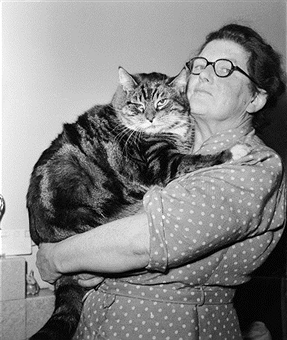
Scat Mask Replica (20)


1)  I never noticed how profoundly TV affects the culture, until I stopped watching it as often. I now hear people repeating common phrases I’ve never heard before. I hear people laughing at the same jokes, gesticulating and posturing in similar ways when they tell jokes, and they may start laughing at jokes others tell before the joke is even finished. They seem to know the same stories and the same jokes. They seem to have the same rhythm to their jokes, and they all land on the same note when they hit their punch line. It gives us all comfort to hear a story or a joke that we know, and to know where it’s headed. Our brain rewards us with a shot of dopamine when we figure out the pattern of a story, joke, or song before it’s concluded. Dopamine makes us feel good for a moment, so we all watch the same TV shows and listen to the same songs over and over again, because we know where they’re headed, and we hang out with people who say “okay, right” and tell the same jokes in the same manner and land on the punch line in the same note, because they make us feel intelligent and funny and we get our dopamine rewards, and we couldn’t do it without them, because we are the complex species who need companionship.

trout2) Movie studios spend big money to put attractive people in movie roles, and we pay big money to watch them walk and talk with one another on screen. It’s not about being gorgeous, however, because audiences often spend time trying to spot the flaws in the flawless. Those who appear on screens most often have a quality about them that we enjoy watching for 90 minutes. Part of this quality is beauty, but another part of it is that elusive, indefinable “I don’t know, but I know it when I see it” quality.

3) As a ten year old, I was able to fool most of the adults most of the time. I played the role of the innocent child who didn’t know any better. More often than not, I did know better. My peers knew that, but the adults were bent on understanding me better and being sympathetic. My fellow ten-year-olds would scoff in my general direction. We adults should be scoffing, but we don’t. We don’t because we want to be viewed as intelligent and sympathetic individuals. We want to understand criminals, but more than that we want to be seen as individuals who are trying to understand. We don’t want to believe in absolutes. We say there are no absolutes, and this makes us feel like our structures are complex. Maybe there aren’t any absolute 100% truths, but isn’t a truth that is true 50.1% of the time enough to act on? The ten-year-old mind deals more in absolutes than the progressive, complex mind of the adult, but there are times when the absolutes are a lot closer to the truth.

4) I had a friend who described himself as “very sincere some of the times.” How can one be “very sincere” some of the times? I can see how a person would be very sincere about some things and insincere about others, but how can one characterize themselves as very sincere some of the times in a general manner?

5) There is a struggle in every mind to be intellectual. There is also a resultant struggle to be perceived as an intellectual. Unfortunately, many forego the internal struggle of the latter and place too much value in the latter.

6) I’m toilet trained, but every once in a while I imagine what I would look like if I suckled breasts as big as mountains. Would I have crooked teeth and mongoloid eyes?

7) Some people complain that they have no choice in life. This is a fallacy, for the most part, but they lean on this to explain why they are not doing what they want to do in life. If it is true, in the present, the only reason they have no choice is because of the decisions they made in the past. This is true of most people, and you are not an exception to this rule.

8) Relaxing the mind during the respites of relaxation reserved for artistic venues (i.e. movies) can produce a Chinese water torture effect. What starts out as meaningless drips hitting your forehead can incrementally evolve into accepting ideas that we would not otherwise consider.

9) I’ve tried being one of those guys that changed his underwear every day. It never got me anywhere.

10) If all theory is based on autobiography, then what does it say about those who pose theories on why and how people think. On that note, what’s the most terrifying motive for slaughtering a bunch of people: nothing. We search for motive, because we need a motive, and the thought that a person could do kill people for the thrill of the kill might prevent us from leaving the home as often as we do.

11) I walk into a department store and I see aisles upon aisles of things I’ll never need, yet some of them are red and sparkly. I wonder if these products could change my life. What will happen if I don’t purchase this latest, greatest, and top of the line product that has resulted in happiness and peace on earth for those who weren’t afraid to purchase now at a new, low price. Would my stubborn decision not to purchase such products result in me being forever portrayed in black and white, with a miserable face that results in complete anguish and a degree of dissatisfaction in life that the rest of the human species was in before they decided to indulge in this incredible convenience. I need to be in color again. I need to be the guy in the after picture with a smile so bright he doesn’t mind the backbreaking work of this task anymore. This guy in black and white suggests a certain nutrient depletion that I simply can’t go back to. Look at the scowls that guy makes as he works with the product that has served me well for so many years. Was I ever that miserable? I don’t want to be miserable anymore. Look at that guy. He looks like the most miserable guy since that feller that had his chest picked at by the bird in Greek mythology.

12) Pet peeve: People who quote Hollywood stars and give that star sole credit for that quote. “You know it’s like Jack Nicholson says …” If that quote came from a movie, I want to say, it’s likely that quote wasn’t a Nicholson creation. More often than not, it was a line a screenwriter wrote for him. The primary reason this bothers me –other than the fact that few put any effort into finding the actual writer of that quote, and even fewer will give that writer the credit he has earned– is that when a naïve, moronic star (not Nicholson) says something political, we listen. Why do we listen to them, because if that star is smart enough, or lucky enough, or in the right place at the right time often enough, he can compile enough lines over time to achieve a certain degree of credibility with us that he can take off screen with him. After they deliver enough of these lines, over the years in movies and TV, our conditioning might be such that we believe that these stars are smart based on lines written for them by other people.

13) Some people look at total strangers and think they’re total idiots. Others look at total strangers and think they have life all figured out. I got a little secret for you though. Something that may change your life: Most of us aren’t looking back at you. Most of us don’t care about you. So, move on. Live your life and deal with it as it is. Quit worrying if anyone’s impressed with you or onto you. We don’t care about you, or what you think about us. 

14) One of the worst things Jerry Seinfeld and Larry David brought to the American conversation is the hygienic conversation. I heard these conversations sporadically before Seinfeld hit the air, but in the aftermath of the great show it seems every fifth conversation I hear involves the minutiae of cleanliness. People now proudly proclaim to their friends that they not only wash their hands, but they use a paper towel to open the door. “Oh, I know it!” their listener proclaims proudly. “It’s gross!” I have less of a problem with clean freaks. They can get out of hand, but it’s hard to find fault with the general principle of trying to be as clean as one can be. It’s the nonstop conversations we have about it that gets under my skin? Last week, I saw two fellas form a friendship on the basis that they both used disposable paper towels to open public bathroom doors. They both respected one another’s bathroom ethics, and they are now friends. It’s all a little silly at some point.

15) Another aspect of life we waste a lot of conversational time on is cell phones. We talk about our cell phone plans in a competitive manner. We talk about the ‘Gigs’ on our cell phone, the time it takes us to pull information off the web, the portability, the horrors of our prior plan, the ease with which we can text, and the apps our service offers, and we do it all with personal pride. We tell our peers that our phones are superior, as if we had something to do with their creation. We may not know where we stand on the various totem poles of life, and we may still have no idea what Nietzsche was going on about, but we know that our cell phone is superior to yours, and some of the times that’s enough.

16) Talking head types love to be unconventional as long as it ticks off the right people. I’ve always thought there was something conventionally unconventional about that.

17) I’ve always wanted to have a name like Bert Hanratty. When I do something wrong, my boss could scream: “Hanratty!” I would then walk to the boss’s desk like a 70’s sitcom star who is always messing things up in a comical way. My current name last name has two syllables in it, and there’s nothing funny about two syllables.

18) The anti-religious don’t have to think objectively, for they are objectivity personified by the fact that they are objectively objective.

19) What would you do if you scratched an itch on the back of your neck, and your hand came back with a tiny screaming alien on it? What would you do if another alien was perched on your other shoulder, and that alien said: “Quit living your life in preparation of disaster.”

20) The other day I laughed at the antics of our local radio show’s morning program. Scared the hell out of me. I ran to the bathroom and looked in the mirror, and I confirmed that I was, in fact, laughing. I cannot remember what it was that caused the laughter, but whatever it was I hurried up and shut the damn thing off. I picked up Finnegans Wake and read a few pages. This is my usual punishment for enjoying the idiotic humor of zany morning radio stars.

When You’re Strange


“Be nice,” is the advice we should give anyone accused of being crazy. “Be nice and smile a lot,” we would add. Someone, somewhere might say, “She’s crazy,” but they usually don’t mean it. By jumping past all of the progressions we have for casually noting that someone might be a little off, we’re trying to be provocative when we joke and say someone is crazy, and provocative is funny. They might start out at weird, followed by strange, a little nutty, a little off, and just plain different, but most people won’t make the leap to crazy in a serious manner. So, when our peers start putting their opinions together about us, “Be nice and smile a lot.” 

This doesn’t sound like an adequate defense to such a malleable charge, but if someone accuses us of being crazy there’s probably not much we can do to change their mind. This defense acknowledges that by suggesting we convince those who surround us that we’re kind, and we genuinely care about them. By doing so, we might gather some loyal defenders who will form a team that mount a unified defense against any and all accusers, until our accusers begin to think they’re in the minority.    

Most of us have never had anyone seriously question our sanity. They might say things like, “You’re crazy,” or “You’re insane,” but they often say that with a wink and a nod. To those who have seriously been accused of being so far outside the mainframe that it has diminished their quality of life, we offer this advice because we’ve witnessed others rush to the defense of a person they consider nice, regardless what anyone else says. These defenders are prone to dismiss most eccentricities of the nice and kind as endearing qualities. As these eccentricities begin to build up, people will talk. They will share stories and compare notes, but again, if the subject of this scrutiny is considered nice, sweet, or genuinely cares about those around them, their defenders will fight for the accused.

One of the primary components of selling this nice façade is a warm, pleasant smile. A genuine smile not only speaks of peace of mind, it disarms observers searching for cracks in our foundation, and it might serve us well in our attempts to conceal our eccentricities. Anyone who has seriously been accused of being crazy might be surprised to learn just how disarming a simple, warm smile can be. “You think she’s crazy?” observers might say in the face of another’s accusations, “because I think she’s nice.”

“And you’re basing that on what? Her smile?” the accusers counter. “Because Ted Bundy had a pretty, radiant smile. Do you think he was normal?” It doesn’t matter, for the idea that a crazy person seems nice, based on nothing more than a warm, glowing smile is the primary point and the end of the discussion for them.

Another key plank to insert in your fight is to show concern for others. If you find out, through the grapevine, that your worst accuser’s grandmother is sick, take a moment out of your day to ask her about her about it. “Hey, how’s your grandmother doing today?” This will touch her in a way from which she might never recover. If you do it right, and your concern is genuine, your greatest accuser might end up your greatest defender.   

We have bullet points that we seek when trying to spot crazy people. It’s a self-defense mechanism we use to protect ourselves in the dark, wild, and sometimes savage environs of the average workplace. Are these bullet points fair? It doesn’t matter. We have created them to help us avoid saying, or doing, the wrong thing to the wrong person who might go crazy on us, and one of the most prominent bullet points we look for is nastiness.

Being nasty is the subject’s best defense mechanism. Most of us don’t choose to be nasty, but we’ve been attacked so many times over the years that we’re defensive when we meet new people. Attack before being attacked is the go-to some have to protect their vulnerabilities. They’ve become so accustomed to being attacked over the years that being nasty is the first arrow they reach for in their quiver. The goal of this preemptive attack is to convince others to avoid them. That could lead to them missing out on some quality workplace relationships, and even some friendships, but most crazy people have not found a better alternative to avoid being attacked. The problem with this strategy is that they might find otherwise sympathetic souls joining in on the discussions of our unpredictability, until they reach an agreed upon characterization that we do not expect.

“You’re telling me to be nice, and smile, and say nice things to these awful people?” crazy people ask us. “Do you have any idea what these awful people have said to me? Has anyone ever accused you of being crazy before? If not, you have no idea what we go through.” 

We’re not saying this solution is foolproof, but we saw it. We were there, and we saw the accused do the worst possible thing she could’ve done. Our solution is so simple that most crazy people don’t consider it a viable solution. “Be nice and smile a lot,” we say. If Abbie Reinhold tried it, I have to think it would’ve disarmed most of her accusers.

“When youre a stranger
Faces look ugly
When youre alone.”

Jim Morrison and Robbie Krieger

I used to work for an online company. This company rewarded its employees with a month long sabbatical for tenured service. While I was on this sabbatical, my department hired a number of new people. One of them was a crazy person named Abbie Reinhold. One of the first things Abbie did, to introduce herself to the group, was defeat any impressions we might have about her. This preemptive attack involved a confrontation approach to anyone who might challenge the impressions she may have made. Her defense gained her a reputation, however unfair, of being a cat lady.

To this point, no one knew if Abbie Reinhold owned a cat. She simply fit the stereotype, arrow for arrow, bullet point for bullet point. We joked that Abbie could’ve been the prototype for the cat lady on the television show The Simpsons. The stereotype is an affixed staple in our culture, because there are examples of it. It’s not true that all women who own cats are crazy, of course, for we’ve all met perfectly sane women who have an inordinate number of cats as companions. We’ve also encountered women who scream at these cats, as if they’re human, and they find that they get along a lot better with cats than they do humans for all of the psychological underpinnings that are indigenous to a cat lady.

When I arrived back at work, after my sabbatical, I found that those in charge of making seating arrangements placed an Abbie Reinhold across from me, in a cubicle I faced. Did I know that Abbie Reinhold was a little crazy? How could one not sense that something was off about her, based on her preemptive attacks?

My attempts at building a psychological profile on someone, based on first impressions, had been so wrong, so often, at that point in my life that I decided to give Abbie Reinhold a chance. Mary, one of the precedents for how wrong I can be, sat right next to Abbie Reinhold. I was so wrong about Mary that I decided Abbie Reinhold might be another Mary. Mary was a woman of solitude, and a little “off”, but it turned out that Mary was a happy person who was so nice. She had an ever-present smile on her face, and she was always asking about my dad. Mary, it turned out, was such a sweet woman in all other matters that she became anecdotal evidence for how wrong the psychological profiles we build can be.

As that first day wore on, I noticed that Abbie talked to herself a lot, and while I do deem those who talk to themselves a lot a little crazy, I cut all new employees a little slack. Some of the cases we worked on for this company, could be quite difficult, overwhelming, and stressful, and I had firsthand knowledge of how difficult and overwhelming the job could be for a new person. For this reason, I paid little attention to Abbie Reinhold on that first day.

On the second day, Abbie Reinhold began talking to herself when I sat down at 8:00 A.M. up and to the point when she left at 5:30. Man, I thought, this poor woman is really struggling. Abbie’s frustrations were on display for all to see, but as I said I empathized. We all have coping mechanisms for dealing with the stress and pressure of the job, and we all know that coping mechanisms can vary, and they are often unique to the person. If this woman’s coping mechanism included talking to herself, who was I to judge? She did talk to herself a lot though.

The third day was something altogether different. The coping mechanism of talking her way through a case progressed to silent screaming. Abbie developed the habit of silently screaming at her computer. Everything about her face and mouth suggested she was screaming, except for the sound. Her head was bopping, and she bared her teeth. I glanced around to determine the source of her frustration. I couldn’t find anything. She was new though, and I continued to offer her some slack, but the progression didn’t ebb and flow in the manner it had in the past days. Abbie’s frustrations had progressed. Matters, such as these, don’t usually phase me. I’m a calm and levelheaded guy, but I had one foot pointed to the door in case her frustration reached an ultimate resolution.

I worked in various computer companies for nearly a decade at that point, and I saw so many anomalies of human behavior that her idiosyncratic behaviors were noteworthy. Nothing more and nothing less. Did those of us around her laugh when she laughed for no apparent reason, we did. Did we share raised eyebrows when some noises escaped her otherwise silent screams, we did. Those who might call us out for those judgmental reactions have to understand that it’s human nature to laugh at something we don’t understand. When we witness what we consider a confusing anomaly, our impulsive reaction is to either laugh or cry, and I wasn’t so afraid of her that I would cry. I came close the next day, when I saw her eat a cookie, as everything about that act appeared to crystallize the notions I had that she might be crazy.

I would never go so far as to say that I’m a macho man who fears nothing, but I can say without fear of rebuttal, that I’ve never experienced anything resembling fear watching another person eat a cookie. I don’t think I feared her, in the truest sense of the word, but watching her eat that cookie gave me goosebumps.

Some have theorized that goosebumps are a physiological phenomenon that we inherited from our animal ancestors. They’re useless to us now, because most of us don’t have a coat of hair, but the reason we have them, some guess, is that our ancestors either used the elevations in the skin and hair to protect themselves against the cold or to make themselves appear larger when confronted by a potential predator. I didn’t consider Abbie Reinhold’s ravenous consumption of the cookie an act of predation, but the biological phenomenon occurring on my arm suggested that my brain was telling my body that we might want to consider appearing larger just in case.

I assumed she was diabetic, as I have known many diabetics who were calmed by a cookie. I don’t know if that was the case with her, but she ate that cookie in the manner I suspect one would after starving themselves for days.

I watched every bite she took. I don’t know what I was waiting to see, but I was watching. Watching is probably the wrong word to describe what I was doing, for I was not looking at her. By the time Abbie Reinhold began eating the cookie, she established a set of rules that I was not to talk to her, refer to her in anyway, or look at her. I trained myself to pay attention to her, without looking. I was looking at my computer, but I wasn’t typing or doing anything work-related. I was staring at her without looking. When she finished that cookie without any progressions, I did not sigh, but I was relieved.

In the days that followed, I would see her progress from talking to herself, to silently screaming at her computer, to laughing. Most people, who have never been hired to work on a computer ten hours a day, four days a week, have no idea the level of solitude we experience. The employee knows they were hired to work cases in the company’s queues. They know that they are not there to socialize, and they learn to keep non-work-related, social interactions to a minimum. They learn to avoid the temptation of “So, how’s your day going?” because that can lead to a minutes long conversation that might be documented somewhere. I write this to inform the reader who has never worked in an office, with miles of cubicles, that a ten-hour day, sitting behind a computer, can lead to the mind drifting.  

Those of us who worked in the service industry dreamed of the day when we didn’t have to interact with people, because some people are bitter and angry about whatever life did to them, and they vent their frustrations on whomever happens to be standing in front of them at the time. Once we achieved that complete overhaul from too much human contact to none, we realized how much we needed it. To satisfy this need, we can accidentally drift back to the rude thing the supermarket checker said to us the other day, and we conjure up a perfect comeback while staring at our computer. We remember the hilarious thing our friend said to us at the bar over the weekend, and we think up the perfect addition to their joke. This can lead to spontaneous and embarrassing emotional outbursts such as laughter. When it happens, we stop as quick as we can, drop the expression and scan our surroundings to make sure no one saw any of it. This woman didn’t seem to care about any of that. Her conversations with no one turned into silent, uproarious laughter, her grimaces turned into silent, vehement screams, and she didn’t catch herself in the midst of these reactions, and she didn’t look around to make sure no one saw them. 

In the professional climate of office workers reading the words on their computers, the white noise of the sounds of typing, can lull employees into a safe harbor of the mind. Anything and everything is distracting. Drop a pencil on the carpet, and six people might turn to watch you pick it up. In this climate of solitude and servitude, whispers are distracting and annoying. The relatively benign sounds of soft laughter can lead the bored to roll over to see what you’re laughing at on your computer. In the early days of Abbie Reinhold’s tenure on our team, some employees would roll over to her desk to see why she was laughing. After a number of these incidents, fewer and fewer rolled over to Abbie’s desk to see what caused her emotional displays. We would laugh, but it was a laugh of empathy, for we knew how often we drifted into our own daydreams. We managed to restrain ourselves from displays of emotion, but we knew how close to that line we were. Over the course of our brief tenure together, Abbie shattered the shackles of embarrassment by reenacting scenes from her life without shame. When a non-team member would stop by our desk to ask us a question, and they would see her turning left and right with laughter or anger, they would ask us about it, and we would say, “Just ignore it.” On one such occasion, she placed a hand between her breasts and apologized to her computer screen for laughing so hard. She wasn’t speaking to me, the unfortunate witness to her activities. She wasn’t speaking to anyone.

When Abbie Reinhold talks to herself, she gesticulates in a casual manner that one uses to expound upon meaning. These gesticulations progress to a flailing of the arms, in a manner reserved for partygoers having one hell of a good time. She swirls in her computer chair, in a Julie Andrews, The Hills are Alive manner, when she appears immersed in a wonderful moment in her life, and she says mumbles responses to the fictional characters who surround her.

I wondered one day if she is talking to people in the future or the past, or is she one of those rare individuals who –like a Kurt Vonnegut character– is unstuck in time, and is living in the past, the present and the future at the same time?

I wondered what Abbie Reinhold would think of me if I started talking to myself, followed by silent screams, uproarious laughter and wild gesticulations. Would she laugh from a distance at my bizarre actions, to reveal how oblivious she is to her own? Would Abbie laugh at me with full knowledge of her actions, but by ridiculing me, she hoped to gain some distance from the things that crazy people do? Would she view my bizarre display as an opportunity in which she could define herself to others, thus lifting herself above those who engage in such activities for the purpose of either changing the minds of those around her, or vindicating her beliefs in her own sanity? The unlikely alternative, I suspect, is that she would see what I was doing and identify with in a manner that might establish some sort of solidarity between us. Even if I mimicked her without any discernible form of mockery, I doubt that she would defend me against anyone who ridiculed me for talking to myself. I doubt she would say anything along the lines of, “Hey, I talk to myself, how dare you crack on my people.” I doubt that she was that objective.

On one of the days that followed, Abbie Reinhold stood. She was not looking at a fellow employee named Natalie, but she wasn’t looking away either. She was just standing. She did stand near enough to Natalie that Natalie thought Abby had a work-related question that she couldn’t figure out a way to articulate. Natalie was a senior agent on the team, assigned to answering agent questions.

“What’s up?” Natalie asked her.

“Just stretching,” the crazy lady said.

“What’s wrong with that?” I asked when Natalie informed me of that brief conversation.

“She was standing still,” Natalie informed me. “I don’t think she moved a muscle.”

“Did you ask her what muscles she was stretching?”

Abbie Reinhold also eats her earwax. She pulls it out, examines it, and she eats it on occasion. Some of the times, Abbie Reinhold looks at it and discards it. I often wonder what her selection process involves. What’s the difference between a good pull, and a bad one?

I wondered if I cracked a joke about people who eat their own earwax, what Abbie’s reaction would be. Would she laugh from a distance at such foolish people, or would she defend her fellow earwax eaters? “Hey, I eat my ear wax, how dare you crack on my people.”

“When youre strange
Faces come out of the rain
When youre strange
No one remembers your name.”

Jim Morrison & Robbie Krieger

Some readers might find this piece mean-spirited, as we should never discuss (much less laugh at) those who have vulnerabilities. To those charges, I submit to the court of public opinion, exhibit A: Abbie Reinhold.

As much as we might want to defend Abbie Reinhold, she was not a sympathetic figure, and witnesses to Abbie Reinhold’s demeanor would testify to the fact that Abbie Reinhold could often be witnessed laughing as hard, if not harder, at the idiosyncrasies of those around her as anyone else. (This raucous laughter might have been born of the relief of being on the other side of that laughter.) We understood that she was defensive by nature when we met, but she began leveling attacks against us before we knew her last name. We have no knowledge of the frustrations that drove her to attack us, and we empathize with anyone who has been attacked for their characteristics, for we have all experienced such attacks throughout our lives.  

When it comes to using past grievances to fuel nastiness, anything can provide an impetus. Perhaps she made unfair associations that led her to unfair conclusions about us, but we were ambivalent to her presence, until she attacked us with her shield. Abbie Reinhold brought her past grievances to the table not us. We did not seek to chastise, or ostracize, Abbie Reinhold. We viewed her as nothing more than another employee in a large company, until she made her presence known.

For those in the court of public opinion who are not willing to take some anonymous author’s word for it, we submit exhibit B: Sheila Jones. Sheila Jones was what we might consider the prototype for a nice, sweet, woman who has lived long enough, and experienced just enough, to know the best and worst of humanity. Sheila is the type of person who chooses to view humanity from the magnanimous position of believing that her waste matter stinks too. 99 times out of 100, Sheila was uncomfortable talking about other people, and conversations about another’s vulnerabilities made her so uncomfortable that she tried to end them as patiently and politely as she could. She knew this is what we all do, but they made her uncomfortable. Not only was Sheila an audience to the stories we told about Abbie Reinhold, she broke the mold we had for her by contributing to them.

I make no claim to being as nice and understanding as Sheila was, is, and always will be. She is one of those rare individuals who are nice, understanding, and empathetic to the plight of the 99.9 percent of the population. When the subject of Abbie Reinhold arose, not only did Sheila join the pack of hyenas, ripping at the carcass, she laughed as hard as any of us did, even if it was behind a hand.

The question I have, now that I have achieved enough distance from this story to have some objectivity on it, is would anyone like Sheila want to trade such stories about Abbie Reinhold if Abbie was a genuinely nice person who wore a hearty smile on her face, regardless what she’d experienced? Would anyone as nice as Sheila laugh as hard as she did, if Abbie Reinhold was a sweet person who just happened to have been afflicted with some noteworthy eccentricities? The males might have, for males are predisposed to enjoying stories that pertain to the weaknesses and frailties of another, a trait that we can trace to their king of the hill mentalities. Mean girls might have too, for many of the same reasons. We’ve all heard of people raised with Midwest values and Southern hospitality. Sheila had all that, plus a personal level of sympathy for others that those of us who knew her considered unmatched. Thus, those of us who know Sheila know that if Abbie was anything from ambivalent-to-nice to Sheila Jones, she would have shut down any discussions about the woman’s eccentricities with a simple word about decorum and being nice. If Abbie was a nice person who just happened to do odd things, the nice women in our group would’ve followed Sheila’s lead in shaming us against engaging in such discussions. “She’s a nice person,” is something she and all the nice women in our group would have said, and they would’ve dismissed every characterization of Abbie Reinhold on that basis. The fact that these women not only laughed uproariously at the stories of Abbie Reinhold’s idiosyncrasies, but shared their own experiences with her, and drove the discussion in many cases, should suggest to any people seeking to proactively diffuse any attempts at characterizing them in an unfair and exaggerated manner, that the best way to ingratiate themselves to those who might end up defending them, is to simply be nice and smile a lot. 

The Leadership Mystique


George Orwell once wrote that “a ruling class has got to have a strict morality, a quasi-religious belief in itself, a mystique.”

George Orwell was referring to world leaders when he used the term ruling class, but the quote can also be assigned to leaders that are closer to home, such as those in the work place, the home, the softball team, and all walks of life.

There are good leaders and bad leaders on every level. There are two different types of leaders, those who are born to lead, and those who learn the ropes in the everyday interactions they have with their subordinates.

The question I have, as it pertains to any that display leadership qualities, is how does a Human Resources representative (HR rep) for a Fortune 500 corporation select their company’s leaders of tomorrow?

HR reps will tell us that they can spot their candidate five seconds after they enter the room? How often are they convinced that a man or woman has the characteristics necessary to lead, based on their superficial qualities? How often is an HR rep convinced by characteristics that are symbolic as opposed to substantive? Is there a quality that HR reps look for, or is it all based on intangible and indefinable determinations?

For those not born with magical, born leader qualities, self-help guides list off a number of quantifiable qualities of leadership that anyone and everyone can memorize for an interview, but a qualified HR rep should be able to see through all that to the core of a person to determine if they are a leader.

If the HR rep is attempting to look beyond a self-help list of qualities to the true man, what is it they are looking for? Are they looking for the charismatic qualities of a leader, and can these qualities be faked throughout an hour-long interview? This degree of charisma could arguably be called a person’s leadership mystique.

Can a quality candidate fake indefinable qualities the self-help guides teach us? What are self-help guides, but a way to assist those lacking in natural leadership qualities into projecting a leadership mystique? Some of us memorize a few Churchill quotes and go into that interview with the idea that we, too, can be leaders of men and women. Then the HR rep sees right through us, and they hire the other guy. What happened?

Did that person project that image better than we did. Is it easier for an attractive person to project that image? Is it easier to convince another of leadership qualities if that person is in great shape, freshly groomed, well dressed, male or female, of a certain ethnicity, and born into a certain economic class? Or does the HR rep go into the series of interviews with a mindset that specifically goes against these archetype definitions of a leader to prove that they can better spot a leader? Is it a series of lies, façades, and mindsets, or can an HR rep truly spot a qualified leader in one hour-long interview?

I’ve worked in corporate America long enough to know that even the most solid, experienced HR rep, with their breadth of experience in interviewing people, cannot see through a façade that candidates have created for them before that interview started. Some candidates are simply better at constructing a façade than others, and most people, HR reps included, cannot see through it. I’ve witnessed too many eventual managers —put through the grueling, three tiered interview process— come out as incompetent, dishonest people, to continue to believe that HR reps know more about the leadership mystique than I do. I’ve witnessed it so often that I can’t help but believe what one of my managers told a friend of mine: “If you want to get anywhere in this company, lie your ass off!” This leader turned out to be the worst employee I’ve ever worked with, and I’ve worked in the fast food industry. How did she get through the grueling three-tiered interview process? First, she was great at answering questions quickly and confidently. Those answers involved lies, half-truths, exaggerations and deflections to successfully construct an image, and mystique, about herself that made great impressions.

I’ve had too many poor managers, and I’ve worked with too many poor non-management types, and upper level employees, to continue to believe that there is something more than the search for an unquantifiable mystique at play. The first question an HR agent must ask themselves in the post-interview grading process is can a candidate think fast on their feet? Yes, if they are good liars. There is a reason that a leader must be a good liar, and it has everything to do with perpetuating the myth of their own mystique, and the mystique of the company at large.

A good, somewhat dishonest manager will never tell you, for example, that they haven’t heard about the latest update on the company website. A more honest manager might tell you that they’ve never heard of the update and ask you to relay it to them. The dishonest manager may have a stock answer at such a point, and it’s often something along the lines of, “Why don’t you tell me what you think it is.” The manager may also look the information up later. They both arrive at that same point of knowledge, but the manager who maintains the mystique better has learned how to fib their way through a scenario like this one to uphold the mystique by never letting you see them in a temporary moment of vulnerability.

We perpetuate this myth by what we say about the manager after we return to our desk. If the manager was forthright and said she didn’t know about the update, we return to our desk with this salacious bit of information about the leader. We all seek to poke holes in their myth at every opportunity. We feel better about ourselves in lieu of the fact that we now know that our emperor has no clothes. It’s the American way to dress down our leaders, but there is also a part of us that feels a little uncomfortable with the fact that our leaders have notable holes in their garments. This is why the perpetuation of the myth is so important. This is why it’s important that the honest manager tell you that she’s heard about the latest update when she hasn’t.

It’s important, because if the good, dishonest manager successfully preserves the mystique, the employee will go back to their desk and tell their co-workers, “She said she knew about it, but I know she didn’t.” That co-worker might then questions the employee’s assessment of the leader, until the employee begins to question their own assessment. “Why did I feel the need to question their leader’s leadership qualities?” they might ask themselves. “What does this say about me that I felt the need to do that?”

The obfuscation that the dishonest manager employed feeds the myth, so that it can survive another day. The employee finds that they are actually more comfortable in a world where questioning leaders exists without substantial proof of the leader’s vulnerabilities. Everyone walks away happy.

Does anyone know how to define leadership qualities are on a case by case basis? No, but you know it when you see it. It’s a certain mystique that they have constructed and maintained over time, be it honest or dishonest.

Another manner in which the mystique is perpetuated is in the grading process. The leader is in charge of the grading of the performance of their employees, and their method of grading will provide the employee the most tangible proof of their myth. If the manager grades that employee poorly, the employee feels less substantial and a greater need to prove themselves to their leader in the next quarter, even if the poor grade doesn’t portend eventual dismissal from the company. On the other hand, a better grade means a better chance at promotions and raises, but it’s more than that to us. We want their approval, and we’re willing to do whatever it takes to please them and the way they want things done.

Some of the grading process is based on tangible qualities, such as production numbers, but in many instances —in my corporate America experience— the process is often more arbitrary than many of us know.

Employees, in my most recent employment experience, were graded on a scale of one to five. Fours were given to the best, most outstanding employees, and twos were given to those employees most in need of assistance.  I know what you’re thinking, you think the grading scale went from one to five. I heard of one case in which an individual received a one in a particular category of employee’s assessment. I also heard of more than one instance in which an employee received a five in an individual category, but those instances were so rare that they should be considered anecdotal. My guess is that the supervisors were informed by their managers that we don’t want to demoralize an employee, and a score of one will do that. My guess is that the supervisors were informed that a score of one should only be used in extreme cases, and that they would be held to account for each and every score of one that they issued. My guess, and this is an educated guess I have based on the evidence I provide below, is that a score of five was held to the same standard. All scores between two and four inform the employee that they may either have to do some serious work to meet the grade, or they have to do more work to reach what they might believe to be perfection. Whatever the case is, the employee still has more work to do to prove themselves.

Whether he was making a conscious effort to poke a hole in this area of the myth of leadership or not, one particular supervisor in our company decided to give every one of his employees fives across the board. He stated that he genuinely believed that every one of his employees were “five” employees. This particular supervisor was chastised for this action, by our company. The company forced him to go back and change the scores to lower scores.

“Why would you think that is unfair?” I asked the friend who told me about this event and thought that this manager should be forced to adjust his scores.  

“Because it’s unfair to the rest of us,” the friend said.  

My friend, a true believer in the system, had no idea how correct he was, or on how many levels he was correct. What made the “all fives” scores, for every employee on his team, unfair was the arbitrary nature of it. His employees were lucky that they had been arbitrarily assigned to a supervisor who would arbitrarily score them so high, and the rest of us were unlucky that we weren’t arbitrarily assigned to his team, and we had been arbitrarily assigned to a team that had a supervisor who arbitrarily assigned us lower scores. Except they didn’t arbitrarily assign our scores. They followed the manager’s order.

This supervisor created a problem in the company, because he exposed the myth to we “three” employees that our threes were arbitrarily considered by our arbitrary supervisors, or that they had a cap on their scoring that would merit scrutiny if they went to an extreme. The message that we threes learned is that the scoring process is not a precise measurement of ability. It’s equivalent to a multiple choice question in which the student learns that it is statistically proven that the best guess is (‘C’).

‘Why try?’, we “threes” asked, if we happened to learn of the supervisor who arbitrarily gives out fives, and we compared them to our arbitrary threes. If I have a supervisor who follows the HR rules, to the letter, and they feel the need to abide by the rules inherent in the leadership mystique by arbitrarily giving out threes, what’s the point of busting my tail for the company.

“Keep your own records,” a friend of mine said when he was put in a position to deliver me my manager’s scores. “So, you’re saying that these scores I received are set arbitrarily low?” I asked. “What evidence do you have to prove your supervisor wrong?” he asked. I didn’t have any, and I told him so. “Keep your own records,” he repeated. “Keep your accomplishments in a spreadsheet that you can present at the time of grading, and then present them if you decide to dispute their scoring.”

It’s all arbitrary.

The overriding point of the naysayers occurs in response to this flood of information is nestled somewhere in the idea that we all need something, or someone, to believe in. As the information piles in to suggest that our federal government is either corrupt, incompetent, or something that we should remain skeptical about, we learn that our state government may be as corrupt, and that our local government is full of incompetency. Learning these details from an informed skeptic might illuminate us, but we maintain a certain level of detachment from it, because we hate politics, and we think most political discussions don’t hit home. When we question the method of operations of the company we’re employed in, however, or the supervisors or managers that we’re employed under, it hits so close to home that it makes us a little uncomfortable. 

If we can believe in nothing else, even ourselves, we want to believe that our company knows us, and that they put forth their due diligence into properly evaluating us, and judging where we stand among our peers. We understand that it’s difficult, based on the size of our company to always be exact, but we want them to be as exact as humanly possible.

When information begins piling in to suggest that this might not be the case, we learn that our fellow employees are left feeling uncomfortable by our findings. The first thing they do is question our scores, as if low scores will reveal our frustration for what it is. When they find out that our scores are similar to theirs, they either say “Shut up!”, or a kinder, gentler “Okay, I got it” dismissal that borders on patronizing condescension. Whatever their actual response is, they unknowingly inform the skeptic that they do not want their personal foundation shaken up in such a manner, and they prefer to draw a line in questioning the idea that that which they’ve used to define themselves against mediocre employees cannot be based on a “Fudge” in the system in which we all operated. The alternative is too random. They need to believe in the system, even after it’s pointed out to them that the apathetic guy that sits next to them, received the same arbitrary scores that they did. They need to believe in something, so they choose to reject all that you’ve said, and they prefer to believe in all the illusions, delusions, and the mystique of leadership that they are fed on a day-to-day basis.

The cynical portion of my brain can’t help but think that the grading process was also created to provide distance between the follower and the leader to strengthen the mystique of the manager, leader, and score decider. A “five guy” may think he’s two steps away from the leader, and he may think less of the manager in that light, but a “three guy” knows he has a lot to work to do if he ever wants to consider himself on par with his leader.

“I’m only a three?” I asked, after receiving my evaluation in a one on one. I worked harder for that company than I’ve ever worked for a company in my life. “Actually,” my manager said, “You are a 3.8, but the grading process requires that we round down.” I was confused. “So, a 3.99999 is still a three?” The manager had a half-smile, “A three point eight is great. You should be proud. It puts you in the upper tier. It means you have fewer areas of concern than a 3.00 employee might.”

That manager is then deemed by those subjected to her arbitrary scoring process, a leader worthy of impressing for the coming quarter, or that’s the hope. She’s on your side, in this matter, and she’s going to go to bat for you, even if this relationship exists on a superior and inferior plane.

The Orwell quote, “The ruling class has got to have a strict morality, a quasi-religious belief in itself,” placed the focus on the leaders, but in my experience the role the followers play is just as vital to maintaining a mystique. Leadership requires that the followers believe that “our” leader has qualities that they may not have. If we believe that our leader exhibits the qualities we assign her, we may see it as in our best interests to kiss her coccyx in a figurative manner. It’s my contention that kissing coccyx is a function performed by two relatively innocuous individuals for a mutually agreed upon result that benefits both parties involved. The person that a follower chooses to assign such characteristics achieves that level in a vicarious manner, and while they may enjoy ridicule or skepticism directed at leaders, or the systems those leaders abide by, most followers do not enjoy it directing at “their” leader for it undercuts one of their primary functions.

In my experience with the psycho dynamics involved in the leadership mystique, those who obnoxiously “question everything” are vulnerable. They are often the most surprised by the evidence we’ve unearthed regarding matters so close to home. We are also more susceptible to falling back in line when our peers scorn them for questioning everything they took for granted. They took for granted that their company’s scoring system was a fair, well-thought out quantifiable system that awarded merit, as opposed to a manager arbitrarily deciding scores. The reason for this, I can only guess, is that they want to believe that their decision to follow their leader was already skeptical and informed, and anyone who says anything otherwise serves to undermine everything they’ve achieved to this point. The problem with questioning everything everyone believes in is if your argument has any merit at all it might serve to undermine it, and at that point they will have nothing. It’s at that point when the busybody who unveils a chink in the amour of the leadership mystique that everyone reconsiders that we’re embittered “three” employees, because everyone wants to believe in something.