The Obscure Presidents of the U.S.: Part II


Joggers and those who take regular walks know that they’ll step in something sooner or later. I see historical nuggets in much the same way. When we read and research matters of history, some of it will find its way into the grooves in our shoes and stick and some of it is so old or cold that it just falls off. That being said, I don’t think a display of nugget knowledge is a display of intelligence, but a byproduct of interest. Those who are fans of the show Friends, or Jennifer Aniston, could probably tell me a number of interesting little nuggets that might shock me. I happen to be interested in the history of the United States through its presidents, and the following is a list of the nuggets that have stuck through the years. I’ve known these little nuggets for so long that I assume everyone knows them, but when I provide the big reveal, the reactions. They either think I’m a huge nerd, a vat of useless knowledge, or an interesting conversationalist. I add the latter as a narcissistic possibility, but I’ve rarely seen evidence of it on my audience’s faces. They usually pause politely and carry on the conversation I interrupted as if I didn’t say anything.
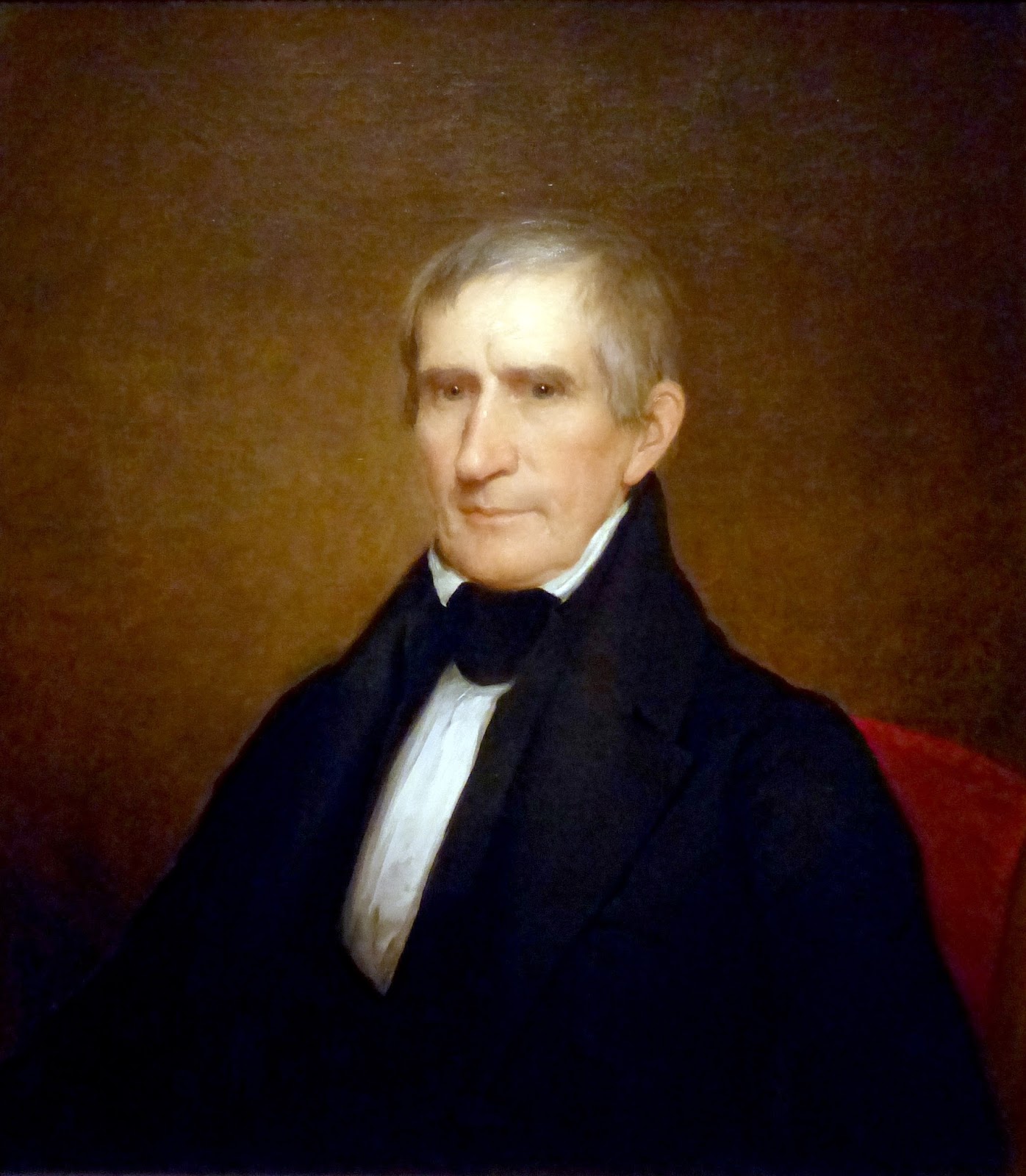
William Henry Harrison

“Tippy canoe and Tyler too,” my great-aunt sang for no reason. 

What is that?” I asked her.

“It’s a saying,” she said. “I don’t know where it came from, and I don’t think anyone does. It’s just something to hum.”

My great-aunt was old when she sang that, and I was accustomed to old people knowing everything about everything, but she didn’t know the origin of a song she sang all the time. 

Decades later, I learned that Tippy Canoe and Tyler too was a song used to influence the 1840 presidential campaign of William Henry Harrison and vice-presidential candidate John Tyler. They nicknamed William Henry Harrison Tippecanoe, because he led the forces that defeated Tecumseh on the Tippecanoe River, and John Tyler was the other guy on the ticket, the candidate for vice-president, or the “too”. 

James K. Polk

Though one of the country’s shortest presidents at 5’8″, Polk accomplished the “no small feat” of annexing Texas, New Mexico, Oregon, and California. Polk was instrumental in acquiring more than 800,000 square miles and expanding the country by roughly one-third. 

Presidential candidate Polk won his election by pledging to reduce tariffs, reform the national banking system, expand the country, and that he would accomplish all that in four years. He pledged he would not run for reelection. 

Polk was one of the few presidents to accomplish all of his core pledges while in office, and he accomplished the latter after his term ended, and he did not submit for reelection. While in office, Polk was well-known as a workaholic, working to accomplish all of his campaign pledges. Some suggest that he worked so hard, and for so many hours, that his four years in the White House wore him out. He died months after leaving office of cholera on 15 June 1849 at the young age of fifty-three.

James Knox Polk is rarely listed among the great presidents by non-historians. Historians often list him in the upper half, some list him in the upper third. He gets high marks for crisis leadership and administrative skills, but he fails in other areas, according to historians. Yet, he often gets lumped in with the relatively forgettable presidents that took office after Andrew Jackson and before Abraham Lincoln. 

Theodore Roosevelt

Needless to say, campaign speeches are vital to every presidential campaign. With modern technology, a presidential candidate can deliver speeches in his basement, but candidates did not have such luxuries in 1912. The only way, save for print, for a candidate to deliver his message, display his charisma, and woo prospective voters, was to take a train, or whatever lesser mode of transportation they could find, to stop in various locales and speak directly to voters. The various campaign speeches a candidate delivered across large and small pockets of the nation were sink or swim for him. 

That said, we can bet that candidates toughed it out through a case of a sore throat, a flu, and other, more severe illnesses or minor broken bones to speak to the public. As tough as those candidates needed to be, I don’t think voters was prepared for: 

“I don’t know whether you fully understand that I have just been shot,” Theodore Roosevelt informed an audience in Milwaukee, after asking for silence. To confirm what he was saying, Roosevelt unbuttoned his vest to reveal his bloodstained shirt. “But it takes more than that to kill a bull moose.”
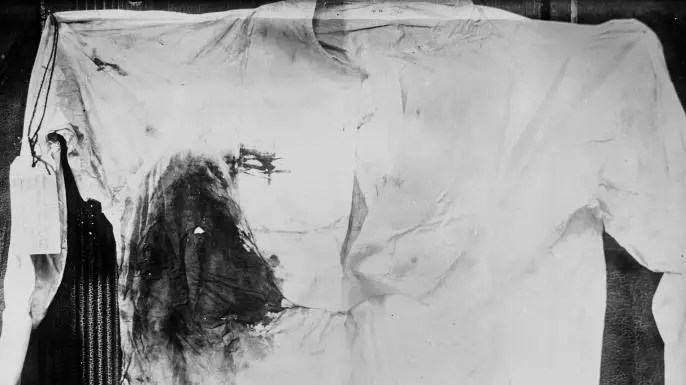
To reassure them that he was able to deliver the speech, he said, “Fortunately I had my [50 page] manuscript, so you see I was going to make a long speech, and there is a bullet—there is where the bullet went through—and it probably saved me from it going into my heart. The bullet is in me now, so I cannot make a very long speech, but I will try my best.”

As History.com furthers, the projectile had been slowed by his dense overcoat, steel-reinforced eyeglass case and the hefty speech squeezed into his inner right jacket pocket.

The unsuccessful assassin, “John Schrank, [was] an unemployed New York City saloonkeeper who had stalked [Roosevelt] around the country for weeks. A handwritten screed found in his pockets reflected the troubled thoughts of a paranoid schizophrenic. “To the people of the United States,” Schrank [wrote]. “In a dream, I saw President McKinley sit up in his coffin pointing at a man in a monk’s attire in whom I recognized Theodore Roosevelt. The dead president said—This is my murderer—avenge my death.” Schrank also claimed he acted to defend the two-term tradition of American presidents. “I did not intend to kill the citizen Roosevelt,” the shooter said at his trial. “I intended to kill Theodore

Bullet Holes in Speech

Roosevelt, the third termer.” Schrank pled guilty, was determined to be insane and was confined for life in a Wisconsin state asylum.

Roosevelt tried to use the story of the assassination attempt to secure a third term as president. He did so as a third-party Progressive candidate that they nicknamed “The Bull Moose Party”. He was successful in splitting the Republican vote, squashing his frenemy, William Howard Taft’s reelection bid, but all his efforts did, in reality, was allow one of the worst presidents to ever sit in Washington D.C. to take office Woodrow Wilson. 

James Garfield
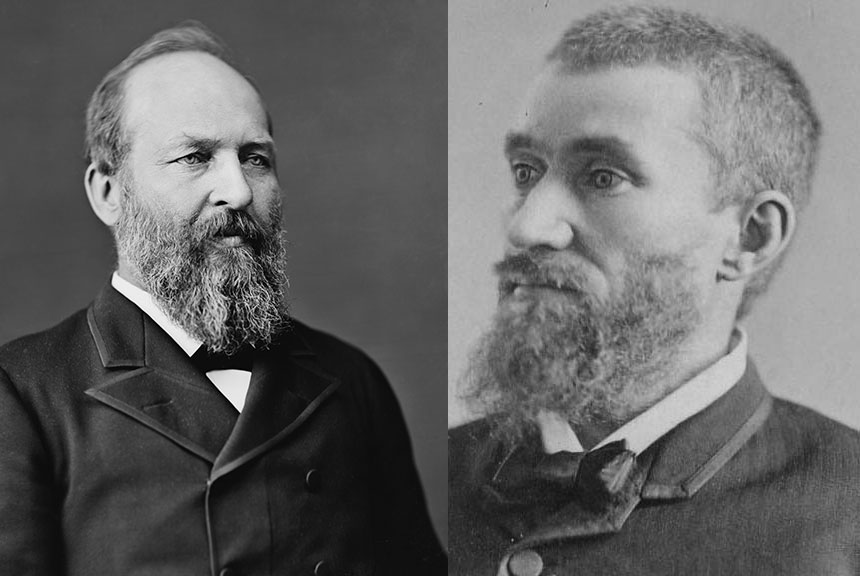
Garfield and Guiteau

As with presidents William Henry Harrison, Warren Harding, and to a lesser degree John Kennedy and Abraham Lincoln, Garfield’s tenure as president is better known for his death than his tenure in office, as he was assassinated while in office. Some historians say that this is one of the biggest tragedies in U.S. History, because Garfield’s potential to be one of the presidents on the Mt. Rushmore creation (that occurred much later), is high. Due to the assassin’s bullet, and his doctors historical ineptitude, James Garfield served a mere six months in office, and historians say he was only in peak form for three-to-four of those six months. 

A self-avowed communist named Charles Guiteau shot President Garfield, claiming “I am a Stalwart and [Vice-president Chester A.] Arthur is president now!” 

History.com notes, “Doctors were unable to locate the bullet in [Garfield’s] back. Even inventor Alexander Graham Bell (1847-1922) tried–unsuccessfully–to find the bullet with a metal detector he designed.” Medical professionals would later say that if Garfield’s doctors simply left the bullet in Garfield’s body, as they later would with Theodore Roosevelt, Garfield’s chances of survival would’ve greatly increased. On September 19, 1881 — 79 days after the shooting — President Garfield died of a ruptured splenic artery aneurysm due to sepsis and pneumonia. It is believed that Garfield probably would have survived his wounds had he been treated properly.

This was well-known at the time, as evidenced by Charles Guiteau’s attempts to avoid a death sentence, saying, “I did not kill Garfield after all, his doctors did. I just shot him.” As the Crime Museum notes, Guiteau’s bid was unsuccessful, and he was executed on June 30, 1882, less than a year after the shooting. This defeat did not depress Guiteau however, as he danced to the gallows and recited a poem, before waving to the crowd, and shaking hands with the executioner.

***

Charles Dickens provided the best line to describe the present state of the human being, “It was the best of times. It was the worst of times.” How can both exist at the same time? It can’t, but it does, in the present. In the present, you might sing “I got to admit it’s getting better, a little better all the time,” but you can always find someone who sings the, “It can’t get no worse,” part of the refrain. 

If you’ve ever discussed the issues of the day with your grandpa, you’ve heard him say something along the lines of, “That’s exactly what we were obsessed with when I was younger. Let me guess, fall of the Republic? Most divisive issue of our day? Yep, yep, that’s exactly what we said.” If you’ve ever discussed the wonderful advancements your generation has made with him, he’s probably said something along the lines of, “Well, when you don’t know the difference, you find a way.” You walk away thinking the good times and the bad times are probably a bunch of hype that you bought into. 

Pick the issue, and you’ll hear people take conflicting opinions sometimes in the same sentence, “The technological advancements we’ve made in the present are greater, by leaps and bounds, but I worry about AI.” The same conflicting opinions revolving around the nature of presidential elections we’ve had, occurred some 200 years prior in 1825. Our present suggests it couldn’t get much worse, and that the Founders messed up presidential elections by creating this device called the Electoral College. The 1825 presidential election between Jackson and Adams occurred while most of them were still alive, thirty-seven years after The Constitution was verified, and other than a brief entry by Alexander Hamilton in Federalist 68, that discusses the virtues of popular will, I find no letters that state anything specific about the errors of the Electoral College. They probably didn’t love the idea, but they compromised to make sure smaller states felt greater representation in the decision of their leader. Remember, the Founders were overly sensitive to cries of lack of representation after they were denied it by the monarchy. This lack of representation and the mess that followed in the Jackson v Adams presidential election of 1825 happened in their lifetime, and they probably saw the elements of their Constitutional solutions as the lesser of two evils. 

Andrew Jackson V. John Quincy Adams

In 1824, the nation was just coming out of the “Era of Good Feelings” after James Monroe (1817-1825) led an era of peace in the aftermath of War of 1812, and he led the country to a period of true strength, unity of purpose, and one-party government, after the death of Alexander Hamilton and his ideas of Federalism.    

Those good feelings of unity ended quickly in the ensuing 1825 election race between John Quincy Adams and Andrew Jackson. The country appeared as divided as its ever been with Andrew Jackson winning a plurality, but not a majority, of either the popular and the electoral votes. This election pushed the country into its first dispute between the Electoral College and the popular vote, as neither Jackson nor Quincy Adams accumulated the plurality of votes needed to secure the 1825 presidential election. As Tara Ross reports, this election was between Secretary of State John Quincy Adams, Secretary of the Treasury William Harris Crawford, Speaker of the House Henry Clay, and Tennessee Senator Andrew Jackson. This conflict resulted in the first time in the young Republic’s history that no presidential candidate secured enough Electoral votes, so, as the 12th Amendment dictated, it was on the House of Representatives to elect the president. 

The House of Representatives were given three options: Adams, Jackson, or Crawford. The Constitutional provision did not allow Henry Clay to be considered because he placed fourth. 

The latter note proved crucial to the final outcome allegedly, because knowing that he had no avenue for victory, Henry Clay, the Speaker of the House, allegedly entered into a “corrupt bargain” with John Quincy Adams. The “corrupt bargain”, as Jackson supporters theorized, was that Clay met privately a month before the House vote. In that private meeting, Jackson and his supporters allege that Clay informed Adams that he would throw his powerful support, as Speaker of the House to Adams if Adams would use the victory to later nominate Clay to a cabinet position. Adams, for his part, denied the allegation, but Clay’s support gave Adams the 13 House votes Adams needed to secure the presidential election. 

Jackson conceded to the peaceful transition initially, until Clay was nominated to arguably the most prestigious position in the cabinet, Secretary of State, three days later. Jackson, and his supporters viewed that appointment as proof that a “corrupt bargain” had been made.

Adding fuel to the fire, reports later emerged that Clay initially tried to strike a deal with Jackson, but Jackson refused to “go to that chair” except “with clean hands.” Had Adams taken a deal when Jackson would not? As with modern politics, Adams never admitted to anything, and no reporters in the era ever uncovered a truth or any evidence that would incriminate or absolve Adams. Hence, even with 200 years of hindsight, “We shall probably never know whether there was a ‘corrupt bargain,’” historian Paul Johnson concludes. “Most likely not. But most Americans thought so. And the phrase made a superb slogan [in the 1828 Jackson v Adams rematch].”
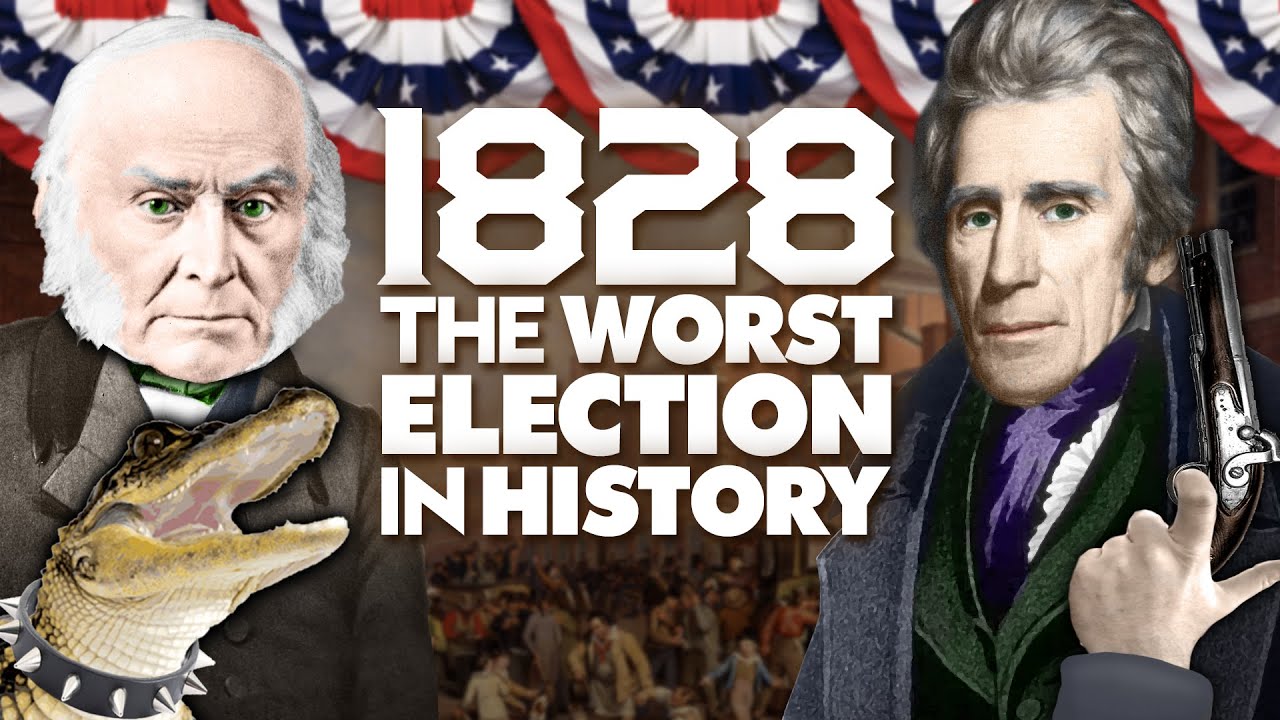
Some allege that this idea of a “corrupt bargain” not only cost Quincy Adams his reelection in the 1828 rematch with Andrew Jackson, but it severely damaged the future political career of Henry Clay too. In this era, the Secretary of State was viewed as a natural stepping stone for the presidency, as four of the seven previous Secretaries eventually sat in the highest office in the land. Clay’s resume not only listed House Speaker and Secretary of State, he was a Congressman, and a Senator before rising to prominence. He helped found both the National Republican Party and the Whig Party. He was well-known as the “Great Compromiser” and was part of the “Great Triumvirate” of Congressmen. He also received Electoral votes for president before the 1825 election. On his resume alone, Clay was a could’ve been should’ve been who never was president. He would rue the day he accepted the Adam’s appointment, because whether it was true or not, the charge of the “corrupt bargain” stuck to him throughout his political career.  

If you’re as interested in U.S. History through relatively obscure presidents as I am, read Obscure Presidents part I


The Rise and Fall of Billy Squier


“One day, everyone I knew had Billy Squier’s record Emotions in Motion, and the next day nobody mentioned his name.” It wasn’t that immediate, but it felt that way. Billy Squier had a long, relatively prosperous career, but there was a time, circa 1980-82, when the man had trajectory. Rock critics, corporate insiders, and his peers thought William Haislip Squier was the next big thing. At one point in his career, Billy Squier said, he was outselling Sinatra. 

Emotions in Motion was one of the staple records of the era. Everyone I knew had Men at Work’s Business as Usual, Foreigner’s 4, Journey’s Escape, and Emotions in Motion. If someone didn’t have all of these albums, their collection just didn’t appear complete. All of these artists came out with other albums and had decent careers, but they would never achieve the peak of popularity they experienced during this 1981-1983 run. Our initial inclination is to feel sorry for these artists who experienced so much unimaginable success so early on in the careers when they were too young to appreciate it, but most artists never have such a run. The skilled, lucky, and timely ones do, and some have longer runs than others. Very, very few artists prove so popular that they can sustain a relatively high level of popularity throughout their career. Billy Squier’s run occurred early on in his career, but that run was so fruitful, with so many hit songs, that many predicted he would be one of the few to, at least, have a long, prosperous run. He was so huge that Andy Warhol agreed to design an album cover for him, and Jim Steinem agreed to produce one of his albums. Every run comes to an end, but the change in Billy Squier’s trajectory happened so quickly that many fans from the era still wonder what happened? “Of course I remember him,” many fans of 80’s music said, “Whatever happened to him?” 

One look at his bio suggests a very simple answer, Billy Squier stopped writing chart-topping songs. He wrote chart-topping songs for the first few years of his career, and then he didn’t. No matter what happened in 1984, if Squier continued to write chart-topping singles, he would’ve overcome “the video”. Numerous others, including Billy Squier, say, “No, it was the video.” They say that his trajectory altered dramatically after “the video”. That just seems utterly impossible to those of us on the outside looking in. How could one video bring such a high-profile artist’s career down?

Well, “the video” was a bad. Even viewed in hindsight, alongside all of the horribly embarrassing videos made in artists’ names in the era, Billy Squier’s video for Rock me Tonite stands out as the worst videos made in the era, and according to the authors of the 2011 book I Want My MTV, it was the worst video ever made. “The authors of this book interviewed over 400 people, primarily artists, managers, filmmakers, record company executives and MTV employees. They said that none [of them] could agree on the best video, but all agreed that “Rock Me Tonite” was the worst.” The authors devoted an entire chapter to describe how and why this video was so bad, and how and why it diminished one of the biggest rock stars of the era.

The counterpoint to the claim that a poorly conceived video can irreparably damage a recording artists career is Dancing in the Streets. Dancing in the Streets is arguably one of the top-five worst videos ever made with equally awkward dance moves and embarrassment for the artists involved. Yet, that equally bad, career-killing video that did little to tarnish the career and legacy of David Bowie and Mick Jagger. Those two artists, however, had stronger careers before their embarrassing video, and they created music after “their video” that they helped us forget their egregious misstep. 

Rudolph Schenker of the Scorpions said, “I liked [Billy Squier] very much … then I saw him do the video in a very terrible way, and I couldn’t take his music seriously anymore.”

***

Right around the time of Billy Squier’s Emotions in Motion, I had my own money. I had a job, and I never had a job before. I also had disposable income that was not subject to my dad’s approval, and I wanted music. I didn’t know anything about who music magazines declared “who’s hot and who’s not”. I just knew that when I heard either Everybody Wants You and Emotions in Motion, I dropped on the floor and skated at my local Skateland, and every else I knew did too. I also saw Quiet Riot’s Metal Health cassette on the store shelves, and those two albums were the only ones I knew that catered to my need for hard charging guitars. My musical tastes were based on the influence of friends, what local, Top-40 radio Disc Jockeys decided to play, and what my neighborhood Skateland decided to play to try to get me on the floor. In these arenas, Billy Squier sat atop my Mount Rushmore, but so did Quiet Riot. I had the income, and I had the need. I purchased both.

I thought the Quiet Riot singles Come on Feel the Noise and Metal Health (Bang your Head) hit all the bullet points a young man and woman had, I was wrong. In one of the first lessons I learned about the difference between genders, the reaction to those songs was divided among the boys and girls circling the no-go zone in the middle of the skating room floor. The singles Everybody Wants You and Emotions in Motion, however, put everyone on the floor. The opening guitar riff from Everybody Wants You caused girls to shriek and guys to pump their fists as they rounded the floor. The speed skating and broad smiles that resulted were infectious. Bill Squier’s musical creations were so ubiquitous that everyone who was anyone wanted his songs in their home. So, what happened?

***

Some critics suggest that Billy Squier’s move away from guitar-based rock to keyboards and synthesized rhythms, on 1984’s Signs of Life, alienated many in his fan base. Others say that while that album had some guitars, they were mostly used as an afterthought to appease his fans. The Signs of Life album appeared to be Squier’s attempt to transition from heavy, hard-charging guitar-based music to keyboards and synthesized rhythms to stay up with the times, while trying to appease his guitar-driven fan base at the same time. He tried to appease all the people all of the time, in other words. The primary critiques I found of Billy Squier is that he tried so hard to keep it going after Emotions in Motion that he probably tried too hard, and he ended up becoming a parody of himself. (We should note that Signs of Life went platinum, which kind of surprised me when I read that, because Billy Squier was persona non grata in my social circles after Emotions in Motion.) 

Anyone who studies any form of art knows that most artists are prone to become parodies of themselves at one point or another. Few artists in music, in particular, are able to reinvent themselves just about every time out, I cite David Bowie and Bob Dylan as two such exceptions to the rule. For the rest of the world, there is the Thelonius Monk quote, “A genius is the one most like himself.” 

How does an artist stay true to themselves and their fans, while trying to reach out and broaden their fan base? Billy Squier had an idea. Rock historians and critics now call it “the video”. Prior to the short shelf life the video for Rock me Tonite experienced on MTV, the 1984 album Signs of Life was flying up the charts. It charted high on Billboard’s top selling charts, but it stalled and eventually fell after the video for the song Rock me Tonite premiered on MTV. Some, including Billy Squier, say the video ruined his career.

Why was it so bad? Watch it. There’s nothing anyone can say to describe how bad something is than to say, ‘just watch it for yourself.’ Wikipedia provides the most succinct description of the video, “It shows Squier waking up in a bed with satiny, pastel-colored sheets, then prancing around the bed as he gets dressed, ultimately putting on a pink tank top over a white shirt. At the conclusion he leaves the room with a pink guitar to join his band in performing the song.” The song also shows Squier putting on a shirt, then ripping it off in an apparent display of lust that just happens to reveal his “good-looking sexy chest.” There’s also the requisite sprawl on the ground in which the sexy beast pulls themselves forward on the ground to evocatively display the character’s primal lust. I don’t know which video director displayed this first, but it became a staple in 80’s videos.  

There is some debate regarding why the video was so bad. Some, including Squier, suggest he appeared too feminine in the video, but we could say that that characteristic didn’t alter David Bowie’s trajectory, Marc Bolan’s, Twisted Sister’s, or even to a lesser degree Alice Cooper’s (Cooper was more about shock value and makeup than he was femininity). Others say it was more about Billy Squier’s ill-conceived dance moves. Were the dance moves feminine? Yes, but anyone who watches “the video” knows that its problems do not begin and end with “being too feminine”. The video is just awkward, and so weird, and so out of the artist’s personae. Even those of us who didn’t know the persona he had before the video can watch it and know he probably shouldn’t be doing that in public. “But,” the defenders of Squier said, “These were the same dance moves he did in concert every night on tour.” We’ve all been to those concerts, and we’ve all cheered any dance moves the lead singer engages in. It’s almost as if we’re starved for entertainment, and a dance move here and there, regardless the quality of the moves, is met with ecstatic approval as it adds to the collective energy we can feel from the speakers. Even ill-considered, poorly choreographed dance moves seem more in context, in an auditorium, than they do from the perspective of watching them on TV. If Saturday Night Live tried to do a spoof on all of the awkward staples of 80’s videos, they couldn’t have done much better than Billy Squier did in this video. The video reminds us of the conversations the fellas had at the high school dance, seeing all the beautiful girls on the other side of the floor, wishing we could dance. “I can dance,” one of our friends said, and he showed us something he probably practiced a million times in the mirror with no objective criticism to inform him how hilariously bad his moves are. We can only imagine that Squier watched all of the hot, risqué videos of the era, from Madonna and Prince, and thought, “Hell, I can do that.”

As Squier said, “I was a good-looking sexy guy.” The video appears to be Squier’s attempt to show the world how good-looking and sexy he could be, to use his natural assets to make it to the next-level. Perhaps, he thought this video would help him make the leap from rock icon to sex symbol. We can only guess that Squier designed Rock me Tonite to elicit comments like “steamy” and “too-hot-for-TV” comments to attract the prized female demographic. The use of pink, as the predominant color in the video, reinforces that guess. 

After the fantastic success of Emotions in Motion, we can only imagine that record company executives sat Billy Squier down in a boardroom to discuss his future. In this boardroom, Public Relations advisors entered with charts and graphs detailing Billy Squier’s popularity from 1980 to 1982, with comparative lines listing his male-centric base against a projective arrow of what his numbers could be with some kind of paean to the female demo. Whether Squier saw the trends and tried to up his game, or he received some bad advice, his gambit failed miserably.

The fallout from the video was so immediate that Squier claims he went from packed stadiums before the video to half-filled auditoriums almost overnight. He fired both of his managers within a month of the video’s airing, and he tried to put all the blame the video on director Kenny Ortega.

“If anything, I tried to toughen the image he was projecting,” [Kenny Ortega] told the author of a 1986 book about the record industry. He claims he and the video’s editor had their names taken out of the credits when they got frustrated over their lack of creative input. “Let there be no doubt, ‘Rock Me Tonite’ was a Billy Squier video in every sense. If it has damaged his career, he has no one to blame but himself.”

Research shows that the video for Rock Me Tonite didn’t kill Billy Squier’s career, as the album Signs of Life went platinum, and the next two albums both sold 300,000 a piece. How many artists would kill to sell 300,000 albums? The video did appear to alter the trajectory of his career that peaked with the multi-platnium album Emotions in Motion, but it’s entirely possible that his run just ended, as most runs do. The most imperfect way to solve the dilemma that appeared to haunt Billy Squire to his dying day is what would’ve happened to Billy Squire’s career if he never made “the video”. While I understand that rappers use his samples in their songs, his legacy and overall influence just isn’t as strong as a Marc Bolan’s is. Both artists experienced massive success early in their careers, roughly ten years apart, and their sales numbers leveled off after a couple albums. Comparatively speaking, they both experienced decent runs and comparatively long careers in an otherwise unforgiving industry. Neither of them were one-hit wonders, in other words, as they both ended up having about ten chart-topping singles. At some point in their careers, they both got lost in the shuffle, and their runs somehow ended. When we write somehow, Billy Squier might correct us, if he were alive today, saying it was “the video”. Yet, if he came out with another chart-topping song or album, he could’ve put the ill-advised, poorly timed, and utterly embarrassing video behind him, but he never did.   

Living, Dying, and Getting a Haircut


The world has changed in many ways since I was a kid. One of the big ones is the return policy most department stores employ on most items. The stores still have a “no return” policy on some items, but back when I was younger, they erred on the side of no returns for just about everything. They put you through the wringer too. “Why are you returning this? What was wrong with it? According to section D sub point B of our return policy, there has to be something wrong with it for us to give you your money back. Was it the wrong size?” Ummm, yes, that’s it. “Then get another size.” I don’t want another size. “Well, you can’t have your money back on this item, unless you have a qualified reason listed under the return policy.” If this doesn’t read confrontational, go back and read it in the most confrontational, dismissive, and rude manner possible. After working in the service industry, I wondered who hired these awful, angry people, and did they analyze all of their employees and put the most confrontational ones on the returns desk? I still have anxiety issues whenever an item goes bad, doesn’t fit, or I somehow realize I’ve made a bad purchase. I mentally prepare for the battle that more often than not, doesn’t take place now. For those who still have issues returning items, I developed a battle plan.

Try to find the teenage male working behind the counter, if you’re returning an item. They don’t give a crud about the bullet points on the return policy of the company. The typical teenage male does everything he can to avoid confrontation. They might even speed through your transaction before the manager nears, in fear of doing something wrong. If there is no teenage boy available, go male over female, and young over old. If the only checker available is an old woman, either stand in the longer line, or just go home and come back another day. Older women tend to treat your return like a pop quiz on the laws and bylaws of the company’s policies on returns they’ve studied so well that they don’t even have to look them up.   

If you’re getting a haircut, flip it. An older woman has paid her dues, learned her craft, and studied the finer points of her profession so well that she treats every haircut like a pop quiz on cutting hair. She might not talk to you, but her skills and techniques are so refined that she may speed through your haircut without anything but the necessary Q&A’s. If you see a young, attractive female, she will talk to you, and if you’re lucky she might even lead you to believe that you’re young and attractive again, but you’ll probably walk out looking like Mo Howard from the Three Stooges. And wait in line or just go home, if the only available stylist is a twenty-something male, because they don’t give a crud. 

***

“I’m Geoffrey, Geoffrey Guardina, and I’ve been diagnosed with cancer,” Geoffrey said. Geoffrey caught me off guard with that unnecessary addition. I asked him a very pointed question about his kid. Geoffrey answered the question, but he basically since I have the floored me with that comment about his health. It caught me so off guard that I pictured myself having cancer, and I took a moment to thank The Creator that I didn’t. He had an unmistakable look in the space that followed. The look asked, how come he hasn’t said I’m sorry to hear that yet? His look condemned me. It’s social protocol for him to say that, yet he refuses.

I missed my spot, I admit that but I just met this guy, and he just talked about how he was his kid’s high school baseball coach. I didn’t expect him to pivot into a terminal diagnosis. He did, and I failed to fulfill my contractual obligation of social protocol.

“They’ve given me four years to live,” he added.

“I’m sorry to hear that.”

Who was wrong? Geoffrey told me he had a fatal condition about one minute and thirty seconds after our greeting. I did not fulfill my end of the social contract. Geoffrey presumably wanted to inform me that he was a fighter, and he expected all the kids on his baseball teams to be fighters. We could also say that death defines the life of a person soon after they learn that it will end soon. It defines a life as much, if not more than any accomplishment in life. Yet, I come from a long line of men who defined strength through silence. What’s the first thing they say about a person who died a long, slow death. “He knew for years that he was dying, but I never heard him complain.” A man who works his diagnosis into his intro probably does a whole lot of complaining. Regardless how I think Geoffrey Guardina reacted, it leads me to wonder how I will react to the news that I am informed that my time as a resident of Earth will end soon.  

***

WE want athletes to retire before they’re ready, so WE can remember how good they were. OUR ideal scenario involves them retiring one year too soon over one year too late, but some athletes love the game so much that THEY want to play one more year beyond their expiration date. WE find that absolutely revolting, because WE want to remember how great they were in their 20’s.

Nothing lights up message boards like a premier athlete who stays one year too long, and he becomes nothing more than one of the better players in the league. Due to the fact that some of us live vicariously through athletes, we take their desire to play one more year as some kind of personal insult.

“He was too old two years ago,” WE write on message boards. “Now MY lasting memory of him will be of him will be of him being a good player, but I wanted to remember him as great.”

Imagine you’re this professional athlete. You’ve sacrificed more than anyone knows. We rarely talk about the lonely, arduous hours spent in gyms and weight rooms. We rarely talk about how some of the best to ever play the game didn’t hang out with the fellas when they were teenagers. No one cares about the boring details of a gym rat, spending all of their free time doing something, anything they could think up, to get whatever edge they could find on an opponent. Some probably played some video games in their free time, but how many of the premier athletes spent a tedious amount of time studying game film, trying to spot a weakness or tendency of your opponent? We’ve all heard stories of athletes hanging out with their professional peers, drinking, doing lines, and groupies, but how many of them went to bed, because they believed sleep would help them heal and play at maximum efficiency. After all those sacrifices that didn’t feel like sacrifices at the time, because they loved the game that much, you turned 30, and a bunch of people who know nothing about the sacrifices you’ve made in life, and continue to make, to get better, are demanding you retire. They claim you’re doing it for the money, but you don’t need the money, and you haven’t for about ten years.

You love the game, and you’re not ready to end your career. You know your physical skills have diminished slightly, but you think you still have something in the tank, and you love the game. Isn’t that the most important thing? You love it more than the twenty somethings who coast on God-given talent. You remember when that was you, but you’ve mentally matured to the point that you’ve learned from past mistakes, and even though your physical skills have diminished a little, you’ve developed techniques to compensate for that. You think you can make up for diminished physical play with smarter play, and you finally appreciate everything you took for granted when you were a twenty something.

You were wrong, as it turns out. Your skills diminished more than you thought, and you realize that you are over-the-hill. Now that that’s clear, you can go into next fifty some odd years of life knowing you left the game on your terms, for the right reasons, and that you left it all out on the court or field.

Imagine being in your early 30’s, two years removed from being one of the best athletes in the world, and the sycophantic broadcasters who once called you one of the game’s greatest are now telling you to call it a career. NBC broadcaster Bob Costas was one of the worst, in recent memory, at doing this. He asked the question everyone was supposedly afraid to ask, but everyone asked. “Have you given any thought to retiring?” To listen to Bob Costas, every player should retire at 26, one year after the average physical peak, just so he/WE can remember them for who they were. The world according to Bob would have it that every aging athlete should be forced to retire after that championship game, so he/WE can live with the memory of them as champions. After listening to Bob Costas broadcast the 2022, American League Championship Series, some audience members stated that his performance suggested that he may have stayed one year too long. I instinctively blanched at the notion that anyone but the individual, and the individuals who sign their checks should decide when someone is done, until I remembered how often Bob spoiled an athlete’s jubilation by asking his sanctimonious questions. I now view it as karma.

Theodore Roosevelt once talked about how hard it was for him to deal with the idea that he peaked so early in life. (T.R. was in his early forties when he became president.) Imagine how difficult it must be to peak in our twenties, when most of us are too immature to process and appreciate, such is the life of the athlete. They still have fifty some odd years of life left, and active aging athletes learn how difficult that can be, secondhand, from those who’ve lived it. So, the athlete plays a year, or a couple years, longer than they should have. We don’t want to remember Franco Harris in a Seahawks uniform, Muhammed Ali v. Larry Holmes, Michael Jordan in a Wizards uniform, and Willie Mays looking lost in the outfield. With the perspective of time, we now know that the athlete doesn’t tarnish their moment in the Sun, but what does it say about us that WE continue to fear that it will? The aging athlete wants to arrive at the definitive answer that they’re done. Better that, they might think, than living the next fifty years, thinking they could’ve played one more. WE don’t think that way. WE think they should’ve retired a year earlier, so WE can remember how great they/(WE?) were in their prime. It’s their lives, and they sacrificed everything for the game, and they were so great at one time that someone is willing to pay them to see how much they have left. WE have nothing on the line, and they have so much. They’ve earned the right to make the decision when they are done. It should be none of our business, but WE make it our business every time an aging athlete decides to play one more year.