Race Potty: The 4th Stage of Potty Training


First Rule of Race Potty: Don’t talk about Race Potty. Don’t sit your son down and tell him the pros and cons of doing it. Don’t analyze it with him in anyway. Second Rule of Race Potty: Don’t talk about Race Potty. If you decide to try it, just do it. Third Rule of Race Potty: Don’t talk about Race Potty. Just announce that it’s on. Say, “Race Potty!”, jump out of your couch and race him to the bathroom.  

As with all parents, we started with The Potty Chair and all the prescriptions laid out in parent guides to help us through the 1-3 stages of potty training. His mom had some experience with potty training, but she forgot most of it over the course of decades. So, we read some books on the subject, watched some YouTube videos, and sought advice from friends, family, and his physician. Their advice progressed us to stage four, an arbitrary description we’ve developed to describe the luxury boys have of urinating in the toilet while standing up. By completing the first three stages, our son was completely potty trained, except he preferred to sit. While standing to urinate is not a mandatory stage of child development, in general, or potty training, every man wants his son to take advantage of the biological luxury of standing while peeing. As such, the focus of this article will be limited to the fourth stage of potty training procedures for males.

The three of us found ourselves so mired in this agonizingly repetitious stage that we felt helpless. Our son knew what to do, how to do it, and when, but he just couldn’t put them altogether. 

One of the best ways to teach a two-to-three-year-old anything complex is to talk to them. The more we talk to them, the more they understand. They probably won’t understand 3/4ths of what we’re saying, but it might be a tone that suggests that there are reasons for everything we do, and it might help lay the foundation with them. Regardless our approach, parents are going to make a ton of mistakes, and the best antidote to making mistakes is time. If we spend enough time with your child, and talk to them while we’re there, we’ll round off the corners of any mistakes we make. In these areas, it doesn’t hurt to try to sympathize with our child. We might try to empathize, but we can’t remember how difficult it was to learn all of this at once. If we take a step back and think about how overwhelming learning this overflow of information must be, in such a small space, it might help us relate to them better and focus our lesson plans. My lesson plan has always been to KISS (Keep It Simple and Silly) it. I probably overestimate and underestimate him, alternately, three times a day, but I don’t obsess about that near as much as other parents do. I correct myself accordingly, and I try to keep his learning grade gradual.  

We don’t need to talk about everything though. Some matters require tactical maneuvers through the maze of their limited psychology, and any discussion of such tactics only undermines whatever results they might achieve. Even when they get disappointed by losing the
Potty Race, don’t say, “I’m only doing this because we are desperate to find something to aid you in this stage of potty training.” By keeping my intentions unspoken, I might have overestimated my two-to-three-year-old, but I thought if I discussed it, he might see Race Potty as the tactic it was. 

After we successfully completed those mandatory stages, we began whooping and hollering, and plying him with the treats experts prescribe. Our enthusiasm was genuine, because it was exciting to watch the learning process. He wanted to learn, he wanted to succeed, and he showed how much it meant to him by celebrating his accomplishment with us. A problem arose in stage four. He stood once, and a microscopic amount fell out. When he was done he was done, he thought he was done. It was one of the best days of his young life, and he hadn’t heard such praise since he first learned how to talk and walk.   

“What an accomplishment, am I right?” his beaming-with-pride expression said. “I’ll be honest with you guys, I’m glad that’s over, so I can go back to the more comfortable routine of sitting down when I go.” 

If you have a child, you know this reaction well. You spend countless hours repeating the process in the hopes that you might eventually help him establish some sort of routine. You don’t expect instant success, and you learn how vital patience is in stage four, but at some point you reach the “He isn’t getting it, and I’m not sure he ever will” level of frustration. You don’t show your disappointment to him, and you don’t say it to anyone but your spouse, but you feel it. The repetition becomes second nature to him, but he has his fallbacks. Those stuck in this stage also know the shrug you get from friends, family, and physicians when their advice doesn’t work, “Every kid is different. What do you want me to say?”   

I don’t know how to potty train your child, and you don’t know how to potty train mine. No one knows. It’s a guessing game. Did my guess work, or did I use it at a time when he was finally ready to learn and anything would’ve worked at that point? I don’t know, you don’t know. So the next time an author writes a piece, such as this one, and they suggest they’ve discovered the foolproof, take it to the bank, works every time method of potty training, symbolically place it in the trash bin right next to the heaping pile of diapers you’ve accrued since you started employing their method.

Is it about stubbornness, intelligence, or some sort of behavioral issue? We don’t know, because every kid is different. Every complex, little brain full of mush tackles complex tasks in such unique, individualistic ways that one of the best methods involves learning what makes your child tick. What makes him smile with pride? My little fella showed an ambitious nature pretty early on, and to try to turn the repetition into routine, I keyed in on my son’s competitive nature. I found a trick that might only apply to my son, but it worked so well for us that my wife began dropping it at work to parents who were having their own trouble with their kids in stage four. 

Prior to Race Potty, we tried everything. We went nuts on the microscopic dribbles that fell into the water. We tried standing him in front of the toilet for an extended period of time. We tried having him watch me so often that we hoped something might click. It didn’t. A friend of ours suggested putting Froot Loops in the water and telling him to sink them. That seemed like a fantastic idea. It sounded fun. I showed him how. He cheered me on. He told me what colors he wanted me to sink. “Why don’t you try to sink a few?” I asked him. He gave me a devilish grin that led me to believe he was in on my dastardly plan. He wasn’t. Nothing worked, until I developed Race Potty.

It plays out like this. It’s potty time. You know it, and he knows it, but he doesn’t know what to do with it. “Potty time!” you yell spontaneously, the more spontaneous the better, and you race him to the bathroom. He’s running with you, but he doesn’t know why. The only thing he knows is he wants to do is win. Some parents might not want to do this, because they fear instilling or fostering a competitive nature in their son, but as I said my son was very competitive early on, and I encouraged that in every way I could. 

Race Potty is not a mean method, as you’ll read, but you do have to move past the nice stage. Being supportive and whooping and hollering work great in stages 1-3, but their effectiveness begins to wane in stage four. There are, however, some details of Potty Race that might make some parents squeamish. 

Once at the toilet, you have him whip it out with you, as we’ve done probably a hundred times before at this point. This time, however, you issue a challenge: “Let’s see who can hit the water first.” 

This is the point where some fathers might grow squeamish, for I prescribe a touchdown dance once victory is secured. The more obnoxious the better. Which touchdown dance is appropriate? For that answer, we might want to consult NFL rules. We should not get in the face of our child, for that might draw a taunting penalty, and we shouldn’t celebrate in groups. We also shouldn’t engage in a lewd dance, otherwise known as twerking. Most fathers don’t want to do a touchdown dance after beating their two-to-three-year-old son at anything. It feels weird, and you’re sure that some pointy-headed child psychologist will frown at you for doing such a thing, but there’s a reason you’re desperately stuck in stage four, and it has everything to do with that frustrating “Every kid is different” phrase. The touchdown celebration stokes the fire. 

He almost beat me on a Tuesday, but I refrained from celebrating his accomplishment. I celebrated mine instead. He was frustrated. It stoked his fire. It stoked his ire. On Wednesday, he came closer, and he was frustrated that I no longer celebrated him hitting the water.

When the pain of his disappointment hits us, our inclination is to soothe him. We might want to tell him that it’s just a game, or that you’re just joking around. My advice, change the subject. Don’t let him grow despondent, wallow in the misery of his frustration, or let him cry. Change the subject to something he beats you in. Do whatever you can to avoid negative connotations and build up his pride, but don’t give up the game, and don’t talk about Potty Race. Just do it. 

My patience and diligence paid off on Thursday, when he beat me, and it was glorious … for him. I feigned the agony of defeat. My inclination was to share the victory with him, but I refrained from doing so, knowing that I had to stoke that competitive fire to keep it bright orange. I was inconsolable in defeat, and he loved every minute of it. 

He was almost undefeated from that point forward, and whatever wounds he experienced in the early stages of Potty Race were healed. To show how healed they were, he would shout, “Potty Race!” and I would have to chase him down the hall to pointlessly try to defeat him.

He still sat to pee, particularly when I wasn’t around to race him, but the repetition of potty race eventually established the routine in ways my wife couldn’t believe.

She didn’t care for potty race when it began, of course, and she all but bit her tongue as I continued to employ it. She didn’t appreciate the philosophy behind it, the methodology, or the lack of results. She had particular disdain for the touchdown dances, as she didn’t see them as constructive. Potty Race did not work in the beginning, but what does with a two-to-three-year-old? “We’ve tried everything else,” I said. “I say we try something else.” She conceded the point, but I could tell she didn’t think my idea would ever work, until it did. She’s such a convert now that she’s spreading the gospel even though I told her you don’t talk about Potty Race. 

Jack McKinney: The Forgotten Man


“He created “Showtime!” Norm Nixon said. “That should never be forgotten. You can talk about me, Kareem, Earvin, and Pat Riley all you want. But Jack McKinney created “Showtime!”

If you were paying any attention at all in the 1980’s, you knew the Lakers, Earvin “Magic” Johnson, Pat Riley, Kareem Abdul-Jabbar, and “Showtime!” A fella didn’t have to watch the NBA to know the names Magic Johnson or “Showtime!” We didn’t even have to enjoy watching sports to know these names. They were in the news, on the news, and the news. Decades later, the names “Showtime!” and Magic Johnson still resonate so well that networks like HBO and Apple+ are willing to pay top dollar for retrospective broadcasts that recall how special this era was in sports and entertainment. 

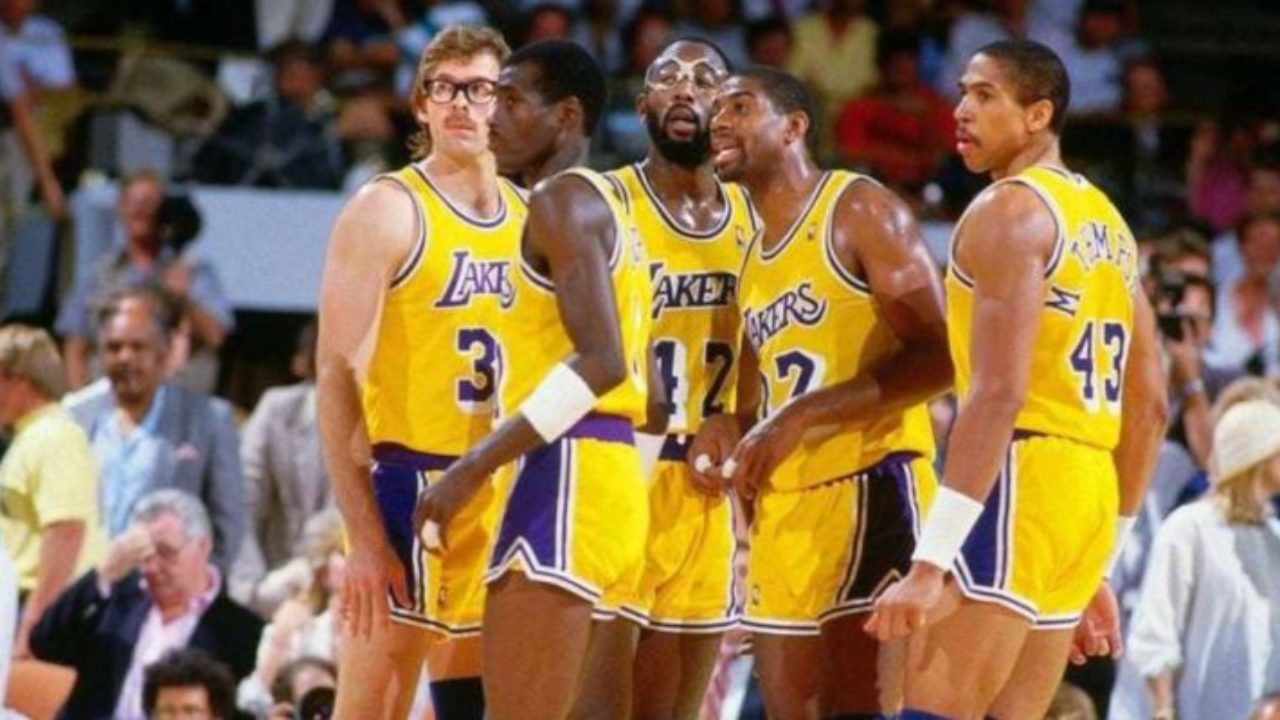
Lakers former head coach Jack McKinney on the sidelines cheering on the team from sidelines in first quarter action.

The term “Showtime!” is still so flashy that this writer feels compelled to surround it with quotes and follow it up with an exclamation point. Even though we weren’t yet teenagers, we knew the names Kareem Abdul-Jabbar, Norm Nixon, Byron Scott, Michael Cooper, Jamal Wilkes, James Worthy, Kurt Rambis, Pat Riley and Earvin “Magic” Johnson. We knew the big names, we couldn’t escape them, but as with all sports franchises, title runs, and dynasties, those names not in lights often contributed far more than we ever knew. The name almost criminally absent from this list was the architect of the “Showtime!” game plan of the run the Lakers enjoyed in the 1980’s: Jack McKinney.

Jack McKinney might be the last name we think of from this era, but the first name that comes to mind when talking about the Lakers 1980’s “Showtime!” run is Magic Johnson. He was the superstar, the smile, the face of the franchise, and a celebrity on and off the court. He was one of the few athletes of his era who lived up to such over-the-top billing. Prior to the ’79-’80 Laker season, Magic lead his college basketball team, the Michigan State Spartans to a college basketball championship, then he was the number one pick out of college. In his rookie season with the Lakers, Magic was one of the few to prove the hype machine correct when he awarded the Lakers for using a number one draft pick on him by winning an NBA Championship in his rookie season. He had some help, of course, including a man named Kareem Abdul-Jabbar, who many argue was the best basketball player of all time, and if statistics matter, Jabbar still has the most points ever scored by an individual over the course of his career.* In the 1979-1980 season, however, the 21-year-old rookie from Michigan State had every spotlight the national media owned on him, and he succeeded beyond all expectations. 

Just about every highlight of the Lakers in the 80’s contains something Magic did. Whether it was some crucial shot, powerful dunk, or one of his highlight reel passes. Magic Johnson could get anyone the ball at any time, at just about anywhere on the court.  

Was Magic the best fastbreak point guard of all time, perhaps, but we might also ask the question was Magic Johnson so great because he fit McKinney’s scheme so well, or did owner Jerry Buss hire McKinney, because he wanted the scheme, and he knew his first draft pick would flourish in it?

As Jeff Pearlman wrote in the book Showtime, the Lakers’ strategy prior to the arrival of Magic and McKinney, was “See Kareem, wait for Kareem, pass to Kareem, watch Kareem shoot and hope ball goes in.” 

Was Magic better in McKinney’s scheme than he would’ve been in Jerry Sloan’s with the Chicago Bulls? (The Bulls lost a famous coin flip for the rights to draft Magic Johnson in 1979.) Was Magic so great that he would’ve been great wher eever he played, or did the “Showtime!” game plan play to his strengths? If McKinney didn’t fall prey to the accident, and he coached a different team, with all of his facilities intact, would he have succeeded regardless? Or was the Magic/McKinney gameplan a marriage made in heaven? 

Would Joe Montana have succeeded regardless when and where he played? Was he so driven to be great that it would’ve happened no matter where he played, or did he fit the scheme the coaches implemented? We could ask this of any coach, scheme, and player marriage, but while most of the credit is given to the player, most sports nuts divide the credit more equally. How many sports nuts, the freaks of sports knowledge, know enough to know the name Jack McKinney. 

Prior to being hired by the Lakers, Jack McKinney was a basketball lifer who lived and breathed basketball. He was a college basketball assistant coach and a head coach, then he was an assistant coach for five years in the NBA. At the age of 44, he was hired to coach his first NBA team, the Los Angeles Lakers. It’s not an exaggeration to say his whole life had been leading up to that moment. How many hours, months, and years of his life did he sacrifice to one day see his dream to fruition? How many dark, quiet rooms did he sit in all alone, watching tape, learning the game, developing game plans, and correcting and perfecting it when others were out living a life? He sacrificed his life for basketball, and when all his work finally started to pay off, it was all taken away from him.

If Shakespeare were alive today, he would’ve devoured Jack McKinney’s narrative as a modern tragedy of epic proportions. He probably would’ve started his production with McKinney’s solo bike ride in which his gears locked up. Jack McKinney was thrown off the bike, and he landed in a manner that put him in a coma. The serious injuries he experienced would plague him for the rest of his life. It took him so long to recover that the Lakers named Paul Westhead coach, and then they named Pat Riley, the man credited with the Lakers fast break offense that we would eventually all call “Showtime!” This accident happened 14 games into Jack McKinney’s tenure as coach of the Lakers. He would never coach them again. 

Prior to the accident, Jack McKinney implemented his revolutionary fast break offense, and the Lakers used that game plan to win the ‘79-’80 NBA Championship, their first of that era. When McKinney’s successor Paul Westhead later tried to institute a different gameplan, it didn’t work for the talent on the court. Pat Riley took over, re-instituted McKinney’s gameplan, and the rest is history, Pat Riley’s history. The Jack McKinney story is interesting whether you are a Lakers fan or not, but it also interesting because prior to HBO’s retrospective broadcast Winning Time, based on Jeff Pearlman’s book, this sports aficionado had no idea how instrumental Jack McKinney was. The Jack McKinney story is interesting because it highlights the “forgotten man” in sports history.

“This is the guy who made my career possible,” McKinney said that Lakers’ coach Pat Riley always said when introducing McKinney, “This is the guy.”

The question author Jeff Pearlman put to Lakers’ point guard Norm Nixon decades later was, “Is Jack McKinney universally acknowledged as one of the greatest coaches in the history of the NBA?”

“I have no doubt that he would be [were it not for the accident],” Nixon said. “No doubt whatsoever.”

How many forgotten men and women, like McKinney, have changed the landscape in their world? How many little guys and girls helped the names in lights edit an otherwise flawed premise, or rescued an otherwise flawed scientific finding by disproving it so well that the genius had to go back to the drawing board to find a more perfect resolution? How many little-known advisors instructed world leaders to follow a different plan that resulted in a different outcome that defined history? We all know the names in lights, the names that sell newspapers and collect internet hits, but how many lesser-names who shunned the spotlight defined history as we know it. 

I don’t know these names, and either do you. I didn’t know the name Jack McKinney prior to this year, and unless you’re a die-hard Lakers fan, or you’ve watched the story of the Lakers in the 80’s Winning Time on HBO, you didn’t either. I heard some foggy details about a coach who started out with Magic, but I heard he died weeks into Magic’s rookie season. I didn’t know what role he played, if any, and I had no idea how instrumental he was. I just thought he was hired, and he died shortly into his tenure as coach. Jack McKinney didn’t die. He went onto coach a couple other teams, and he won coach of the year in ’80-’81 coaching for the Indiana Pacers, but after working so hard, as a coach in college and an assistant in college and the NBA, he never achieved the dream he could have with the talent Jerry West, Jerry Buss, and the rest of the Lakers’ brain trust amassed in ’79-’80, and the years that followed. McKinney is recognized by those in the know as one of the great basketball minds of his generation, but how many outside that very small world have even heard his name?     

“McKinney is not a bitter man,” Jeff Pearlman writes to close his intro on the now-deceased McKinney, “but he is human.” 

“Life isn’t always fair,” McKinney said. “I’m OK with how everything has turned out. I’m loved. But, well, it’s not always fair…”

“Jack McKinney is the man more responsible for the birth of the Showtime era of professional basketball,” Pearlman writes, “If only he could remember it.” 

If that doesn’t give you chills on how unfair life can be, then I don’t really know what I’m talking about. We talked about the scheme, player marriage earlier. Magic Johnson might not be “Magic!” today, were it not for Jack McKinney,  James Worthy might have been an all-star and nothing more, Jerry Buss might have been nothing more than an American businessman who tried and failed to resurrect the Lakers franchise, and Pat Riley might’ve ended up nothing more than a failed sports announcer. What if’s, and could’ve been, should’ve beens dot history, but the ’80’s Laker dynasty we know today, probably wouldn’t have happened were it not for one forgotten man in history, the late-great Jack McKinney. 

The Adoration of the Music of Pavement


Some people remember their first kiss, some remember the first dollar they earned, others remember when they first met their wife, the birth of their child. I remember the first time I heard Pavement’s new song Stereo. My irrational exuberance, after spending two years listening to Wowee Zowee,  was such that Pavement could’ve released a three-minute single of Stephen Malkmus clearing his throat, and I would’ve been singing that for the next month, in anticipation of the release of an album they decided to title Brighten the Corners. My passion for them was silly, inexplicable, and embarrassing, but who can explain love?

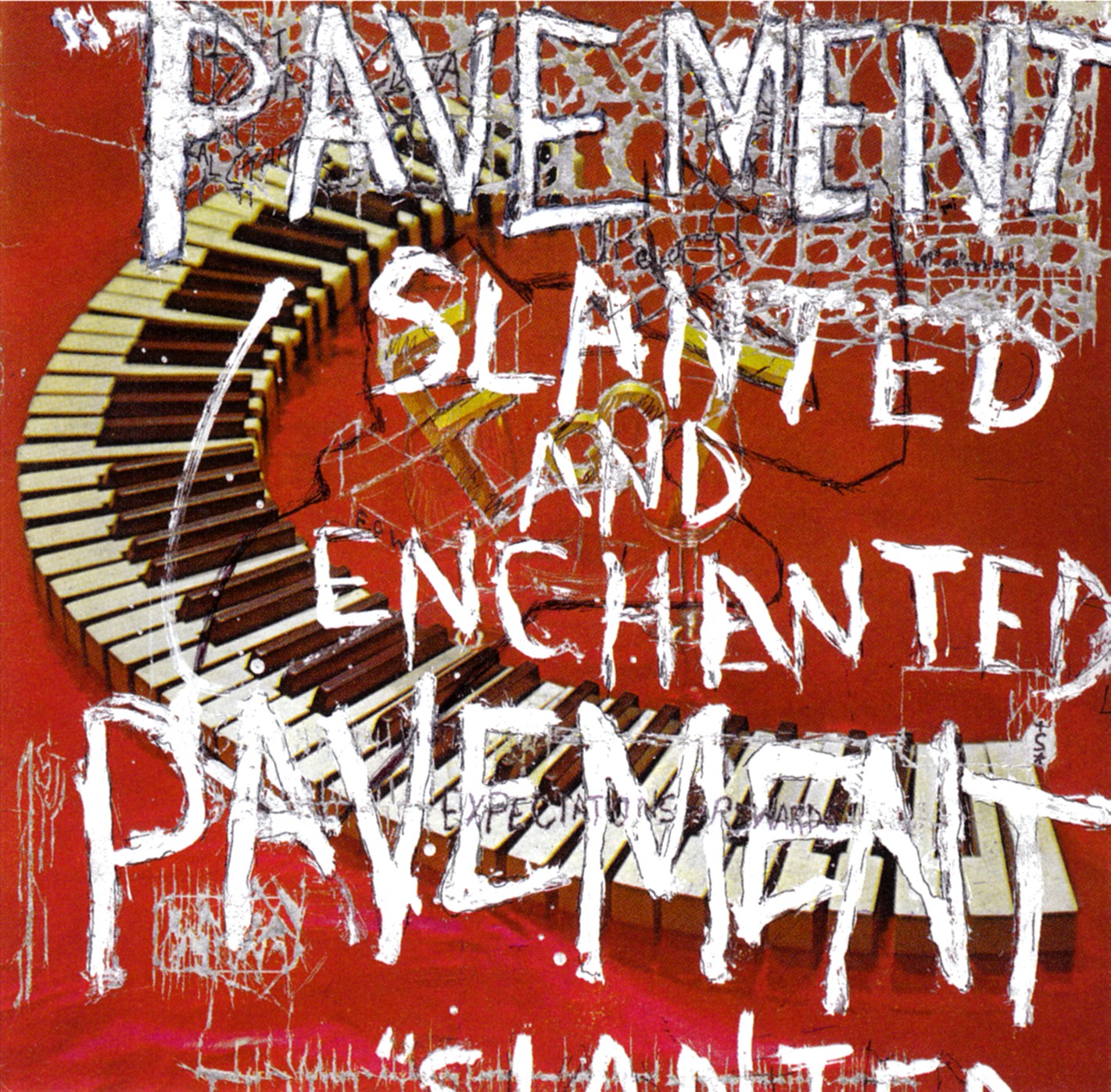
Before Apple Music, Amazon Prime, and Spotify, consumers had to take a shot in the dark on musical artists. In the early 90’s, there were no college radio stations in my area, and the radio stations we did have, played the songs their advertisers demanded. We could choose between Billboard top 40 and classic rock stations. The only outlet lovers of relatively obscure music was corporate music magazine music reviews, and most of them only reviewed top-tier artists. Every once in a while, however, the corporate chieftains would allow a reviewer to review some obscure album that didn’t  help the sales of the magazine. I never cared about the names of album reviewers. I just read the review, and some of them clicked, 99% of them didn’t. When I read a review for an album called Slanted and Enchanted from a group of nondescript fellas I’d never heard of before, I liked it so much I bought the album. I don’t know why I bought the album, but the reviewer said something along the lines of “Slanted and Enchanted is an undiscovered gem from a band who will be making some noise in coming years”. Did this guy know what he was talking about? I didn’t know, and I really didn’t care, but for whatever reason, I decided to give these guys in a band called cement, concrete, or something like that, a shot. 

Whoever that guy was, he knew his music. I listened to Slanted and Enchanted as often as I did the Seattle bands of 1992. I wasn’t around the Cali scene, when Pavement were paying their dues, but I was one of the first person I knew to own a Pavement cassette tape. It was not love them at first listen however. Slanted and Enchanted was so different and so complicated that it took a number of spins to click. To my mind, the raw Westing (by Musket and Sextant) only reinforced the idea that these guys could piece together some of the most original music I ever heard. I’ve heard some suggest that Pavement, like all artists, were a culmination, or a compilation, of their influences. If that’s the case, these cats grew up listening to music I never heard before. They weren’t punk (by my narrow and uninformed definition), hard rock, or any genre I heard. They were something different, and to my mind that’s the greatest compliment we can give any artist in the crowded field of music.  

“A genius is the one most like himself.” –Thelonius Monk.  

In 1994, Pavement doubled down on something different, when they released an album called Crooked Rain, Crooked Rain. I could go through this album and four-star and five-star the singles, but I won’t bore you with my narcissistic analysis. I will just say that I played this disc so often that almost all of the singles were playing during a seminal moment of my life between ‘94-’95. Crooked Rain, Crooked Rain cemented Pavement in the upper echelon of my favorite bands. 

As brilliant as these two albums were, top to bottom, they did not prepare me for the “Holy ‘it, these guys are it” effect Wowee Zowee would have on my psyche. As lead singer Stephen sang somewhere, “Song is sacred.” The brilliance on this disc floored me. After hearing it the first 100 times, I decided that everything Stephen Malkmus and Scott Kannberg wrote to that point culminated in Wowee Zowee. Slanted was the seed, Crooked Rain was the fertilizer, and Wowee Zowee was the flower. This analogy might be oversimplifying the evolution, and it might unintentionally denigrate the brilliance that can be found on the other two discs, but what Stephen Malkmus and Scott Kannberg (Spiral Stairs) put together on Wowee Zowee reached me on levels those other albums couldn’t.

When I write that Pavement were different that should not be confused with weird or strange. Compared to the other cassette tapes housed in my wall fixtures, Pavement were mainstream pop. When I would play their albums in my home, in my car, and in other people’s homes and cars, they were confused by what they were hearing. “I can’t believe you like this,” they would say. They were so accustomed to hearing obnoxiously complicated, noisy and difficult music coming out of my car speakers that they couldn’t believe I considered Range Life an absolute classic. The more they listened, the more confused they grew as each lyrical and musical stroke of paint Pavement put on their audio canvases had their own accessible inaccessibility.

The question Pavement, more than any other band I listened to, asked was how does we explain appeal? Why does one listener enjoy weird and obnoxiously complicated music, while another prefers a smoother flow? Drilling down deeper, why do most Pavement fans prefer one of the first two albums and I prefer the third? “Because the other two albums are superior,” you might say, “and you choose to be different for all the mileage you think that gains you.” I can’t deny that provided some initial appeal, but I’m still chasing the dragon of those obnoxiously complicated, noisy and difficult musicians, and I still love Wowee Zowee more than the other two. I don’t search for weird for the sake of being weird, but when a group like Ween can create contextual oddities, I’m all over that. If Pavement were in any way weird, it was so contextual that the listener had to dig through the cracks to find it.   

Back when the sole, mobile unit for playing music was the cassette, I think I went through three different copies of Wowee Zowee, as many will attest cassettes, and their players, weren’t built for hundreds of repeated plays. I also bought a CD version of the album later (you’re welcome fellas). After exhausting the albums, I bought all of Pavement’s cassingles (cassette singles), EP’s, and any and every musical production that had the group’s name attached to it. So, when it came time for a new Pavement album to come out, two long years later, I thought it would be the next logical step in Pavement’s evolution. (Spoiler alert: It wasn’t) I never stopped to think of artistic peaks at the time, and how Wowee Zowee just happened to dot all my personal I’s and cross my T’s in a way no album ever had. I thought if Slanted was great, Crooked Rain was even better, and Wowee Zowee had such personal appeal, then Brighten the Corners had to be an end product of whatever gap great, better, and ingenious left.     

Some people prefer to only listen to music outside the mainframe, some only listen to music that charts in Billboard top 40. There is a conceit relative to both parties, as the Billboard guy brags about his rock star’s record sales and top hits, whereas the obscure guy condemns the rock star’s audience for not knowing how deep to dig for true, quality music. I don’t know where Pavement sits in this paradigm, as I know they’ve had some record sales, some appearances on Billboard charts, and some play on MTV. I can’t deny dining out on the obscure side, but Pavement were one of the few bands that if everyone loved them, or no one did, I would continue to worship their art. 

This statement might shock those in other parts of the country, but I’ve yet to meet a tangible person who listened to Pavement at any point, and I’ve only met a few outside of my inner circle who actually heard of them. In my locale, Pavement was so obscure that people wondered how I heard of them, and other groups like Mr. Bungle and Captain Beefheart. Someone once asked me where I find such obscure music. I told her they could be found at a place called a record store.   

My frustration that no one had ever heard of these relatively obscure artists abated long before Pavement’s Wowee Zowee came out, and I put the whole “You have to hear these guys. They’re incredible” personal promotion machine behind me years prior. Very, very few people listened to my recommendations anyway, and on those occasions when I would loan my CDs out to them, they never came back saying, “You were right, these guys are incredible.” Between roughly 1992 and 1996, some Pavement album was spinning in a CD player, or spooling in a cassette player, and no one cared, and I didn’t care that they didn’t. 

The only problem for me then was that it was far more difficult to know when a relatively obscure band was coming out with a new disc in 1997. The internet has changed that dramatically. We can now subscribe to their site, check their Facebook page, or search the name of their band to learn about a new release. In 1997, we had a dry erase board at our local mom and pop record store with dates of releases and names written in fluorescent ink. “2/17,”, the whiteboard said one day, “Pavement: Brighten the Corners.”  

As a 27-year-old man, I was that kid who found out Santa was coming. I actually formed my own personal countdown that I would say to friends, “You know what today is?” I would ask, tongue-in-cheek. “Day 11, until the release of Brighten the Corners.”   

The people I knew and loved craved career advancement, money, romance, or some other form of concrete, identifiable advancement that defined them as a greater man. My identity was wrapped up in music. It’s almost embarrassing now to admit how much music has meant to me throughout my life. I had nothing to do with the music, or course, and I didn’t prosper in any way when one of “my artists” came out with a new disc, but I felt some kind of personal glory when they came out with a spectacular, spine-tingling release.  

When Pavement released the single Stereo, I grabbed a copy of it in the aforementioned record store in a manner that suggested I thought a melee might break out if others knew it was sitting on the shelf. When I listened to it, I thought it was a harbinger of the greatest album ever made. As I mentioned earlier, the progressive, five-year build up to that disc let my imagination go wild. I not only loved every album that built up to it, but their B sides were some of my favorite songs, and I dove deep into their EPs, particularly the Give it a Day/Gangsters and Pranksters EP. When one of Pavement’s songs appeared on a soundtrack or compilation tape, I snapped it up quickly, even if I didn’t care for any other artist on it. (My favorite single among those released in this manner was an R.E.M. homage called Unseen Power of the Picket Fence. It appeared on a No Alternative compilation, and it now appears on the Crooked Rain, Crooked Rain: LA’s Desert Origins anniversary edition.) With all that, I looked forward to Pavement’s next release as I would Quentin Tarantino’s next release after Pulp Fiction and everything that contained Mike Patton or David Bowie’s.   

The question I should’ve asked myself, in preparation for the release of Brighten the Corners, is how could Pavement possibly top Wowee Zowee? I didn’t ask that question, because they already established a track record of constantly topping themselves the next time out. I had such a nebulous understanding of artistic peaks that I didn’t even consider it. The artists themselves don’t understand them. If they did, they’d know how to duplicate it.

Some suggest that artistic peaks are a time and place phenomenon relative to the fan. The idea behind the time and place phenomenon suggests that a band such as Green Day wouldn’t have enjoyed the commercial success they did, if they released their first album ten years earlier or later, and if Nirvana’s Nevermind were released ten years earlier or later, it wouldn’t have had the enormous sales it did. While I find the idea thought-provoking and fascinating, it also suggests that if we somehow flipped the release dates of Brighten the Corners and Wowee Zowee around on another timeline, I might’ve consider Brighten the Corners the masterpiece and Wowee Zowee the comparative disappointment, because of the place I was in, in 1995. I don’t see it. Wowee Zowee just hit too many of my personal touchstones, and it crossed every one of my T’s and dotted my I’s so well that I considered it such an artistic peak that my anticipation for its follow-up was unprecedented, and I never looked forward to another artist’s future release so much before or since.  

As such, Brighten the Corners proved to be the most disappointed I’ve ever been in an album. Was it bad? No, not even close, but I didn’t know that at the time. I listen to the album now, and it has a number of classic Pavement songs on it. Aside from Stereo, the next three songs on the disc were, and are, really good, and Embassy Row might be one of my favorite Pavement singles. There really isn’t a terrible song on Brighten the Corners, but it had the unenviable chore of trying to follow one of my favorite albums of all time.      

The fact that I still remember the time and place I first heard Stereo shouldn’t suggest that the song was that great either. It wasn’t. It isn’t. It was good, really good, but it couldn’t possibly meet my expectations. It was the album before that, and the album before that, and the album before that. 

Some Johnny-on-the-spot, 1995 reviewers stated that with Wowee Zowee, Pavement seemed to be “self-sabotaging, of being afraid of success”. Prior to Wowee, Pavement were critical darlings, but the critics considered the disc a gigantic leap down from what they considered their legendary first two discs. I had to read those words three times to try to make sense of them. These critics weren’t jumping off the Pavement ship, but they thought it was a gigantic step down from five-stars to four and a half. Go to just about any site that reviews albums now, Allmusic.com in particular, and you’ll read unending praise of the first two discs, coupled with five-star ratings. More often than not, you’ll read that Wowee Zowee has a four and a half star rating. It doesn’t sway my opinion in the least of course, but it does lead me to wonder if the critics didn’t fall prey to the time and place theory or if I did, but I still view Wowee Zowee as the absolute pinnacle of Pavement’s artistic peak.

It seems to me that critics penalize Wowee Zowee by half a star for following Pavement’s epic releases. I also wonder if, in the critics’ minds, Pavement lost their indie/alternative cred by that point, and they viewed them as more established artists, even if they never managed huge sales. If the former is the case, should we penalize Slanted and Crooked for not being as good as Wowee. No, I still give all three five stars. I don’t know when it started, but many critics and fans have attempted to retroactively whitewash their initial reactions to Wowee Zowee by now calling it Pavement’s masterpiece. I honestly didn’t care why the critics slammed it then, and I don’t care how they try to clean it up now. I was so artistically moved by the album that I thought their next artistic adventure would break through whatever stratosphere Wowee Zowee didn’t. I never sat down and tried to imagine how it could, as I wrote, but Pavement did so much in such a short span that they made me believe anything was possible. If I were an obnoxious critic, I might retroactively assign Brighten the Corners four and a half stars, to assuage my guilt for initially calling it the most disappointing album I’ve ever heard.  

As Pavement puts a cap on their career with a now 23-year retrospective release of Terror Twilight, called Terror Twilight: Farewell Horizontal, those of us who loved them can say they released three incredible albums, one great one, and another that put a really good exclamation point on their career. Pick any artist who seeks artistic adventure, and you’re going to be able to pinpoint an artistic peak. “They’re not as good as they used to be,” is a phrase we love to say to build up an artist and tear them down, so we can identify with them better. We also think it gives us some form of critical panache to say such things, but in retrospect it makes us all look a little silly.