Smashing Pumpkins’ Cyr Will not be Mellon Collie


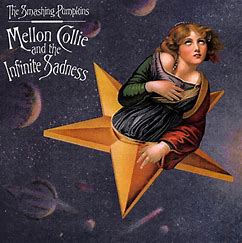
“It’s not Mellon Collie and the Infinite Sadness,” will be the theme of the critical reaction to the new Smashing Pumpkins new album Cyr. The songs we’ve heard from this upcoming album thus far aren’t too bad, but they’re not Mellon Collie. At this date, some 25 years since its release (!), Billy Corgan probably has a love/hate relationship with the album called Mellon Collie and the Infinite Sadness. We can guess that he loves the fact that he created what many call a masterpiece, for not many artists do, but he probably hates that everything he created lives in its shadow.

We all have varying tastes, of course, and some might say they prefer one of the other Smashing Pumpkins’ albums, but even they would admit Mellon Collie and Siamese Dream had special, timeless, and transcendental qualities about them that are difficult to recapture. Some of us call them masterpieces in their own right, and others say they are the products of Billy Corgan’s creative peak.

What is a creative peak? It is as difficult for artists to create, as it is to maintain. It is equally as difficult for the rest of us to explain. We can say that our reaction to it was a time and place phenomenon, and we could say that Billy Corgan’s creation of it had something to do with this phenomenon too. The finished products, coupled with the worldwide reaction to them might have satisfied Corgan’s need to prove himself, and he’s never been able to duplicate that inner drive. Those of us who have never accomplished such feats don’t know how hard it must be to recapture the elements that drove Corgan to create these albums. I don’t intend that to be a commentary on Billy Corgan’s work that followed, for I think most of his work post-Mellon Collie has been better than the vast majority of his peers, but he set such a high bar for himself with Siamese Dream and Mellon Collie. Every artist goes through peaks and valleys, and most of them cannot explain them. We can’t explain them either, as I wrote, we couldn’t explain why we prefer some art to others, but we know it when we see/hear it, especially in hindsight.

When creative peaks prove as fruitful as Corgan’s was, most of us laymen just assume that they will last forever, and when they don’t, we express our disappointment by saying, “It’s a good album, but it’s not as good as their masterpiece. It’s almost like they’re not trying anymore.” Everyone assumes that Kurt Cobain would’ve just gone on, had he lived, writing top-notch albums, but as Cobain wrote, “Teenage angst has paid off well. Now I’m bored and old.” It was almost as if he was preparing us for what was going to follow, if he lived of course.

If we lump Siamese Dream in with Mellon Collie, and we add Aeroplane Flies High and Pisces Iscariot into the mix, I think we can say that Billy Corgan had an enviable five-year run. Some of the songs on those latter two productions were definitely B-sides, but if we removed some of the top-notch songs on Aeroplane, we might be able to put together two high quality albums. We diehard fans have done so on blank cassette tapes and MP3 playlists. It just seems unfair to compare everything he’s done since, and everything he will do in the future to that creative peak, but such is the nature of art.

Billy Corgan and Co. were a songwriting machine from roughly 1993 to 1996. It was an incredibly creative period for Billy Corgan, Jimmy Chamberlain, and James Iha. (I’m sure Chamberlain, Iha, and D’arcy had more creative input than reports suggest, but from what I’ve read Corgan was the maestro/dictator in the studio.) Personally, I loved the album Gish, and I devoured that album before Siamese Dream’s release, but I wouldn’t put on the same shelf as Mellon Collie and Siamese Dream. I realize that some of the material on the boxset likely predates Siamese Dream, so let’s be generous in our estimate and say this creative period stretched out over a five year, incredibly prolific creative peak. How many musicians would give whatever remains of their otherwise damaged livers for 1/5th of the creative output the Smashing Pumpkins had in those five years? Personally, I think it was one of the most prolific periods of music for one artist in rock history, but I think it’s fair to say that the high bar Corgan set during this period ended twenty-five years ago.

I remember when the Smashing Pumpkins released the single Ava Adore. Oh boy,we thought, here we go again. The leap wasn’t as great as the one between Siamese Dream and Mellon Collie for some of us, but we all fantasized that the single was a sign that this peak would last far longer than we thought it would after the Pumpkins released a double album of material followed by a boxset. Siamese Dream was, after all, the opposite of a sophomore jinx. Once Siamese Dream hit our tape deck, it rendered Gish obsolete, and any flirtation we had with the idea that there might be a junior jinx ended the moment we heard the single Bullet with Butterfly Wings. So, when the single Ava Adore came out, it seemed feasible that Corgan was simply a hard rock/pop prodigy who would blow us out of the water every two to three years until the end of his life.    

How could one man, and his band, release so much material in such a small amount of time, and come up with yet another great album? The answer was he couldn’t. The peak was over. I still think that if Corgan saved about eight of the best songs on Aeroplane Flies High, and combined them with the six best songs on Ava Adore, I think he could’ve satisfied critics and fans so much that they would’ve listed Ava Adore as his third best album and part of the creative peak. What motivated Corgan to release the boxset, I suspect, was that he wanted to put Mellon Collie, and everything attached to it, behind him. I think he wanted to defeat the idea of a creative peak in his own mind and challenge himself with a restart.   

***

When critics savaged R.E.M.’s first effort without Bill Berry, 1998’s Up, Michael Stipe complained that he thought Up was a great album. He said that critics unfairly compared Up to their previous five albums, i.e. their creative peak. He said something along the lines of, “If an up and coming band created Up, you critics would be salivating all over it, but because it wasn’t Automatic for the People, Monster, or New Adventures in Hi-Fi, you think the album stinks.” Perhaps Stipe and Co. were frustrated that the high bar they set for themselves that couldn’t be maintained forever, or that they felt like the critics helped cut that peak short prematurely. It’s also possible that the departure of Bill Berry was more profound than anyone imagined. Whatever the case was for them, the critics were right, as Up proved the creative peak was over for R.E.M. They would release four more albums and except for a few singles here and there, those albums only provided further evidence that peaks end for every creative artist.

Stipe’s greater question is worthy of exploration however. How would we regard albums like Ava Adore or Machina, if they came out before Mellon Collie or Siamese Dream? It’s impossible to answer of course, but it’s an interesting question.

Artists can artificially attempt to realign the stars back to the configuration they experienced during their peak. They can bring back ex-members, hire the producer who helped finesse their masterpiece, and they can go back to the basics, after expunging their need to experiment. They can eat nothing but bacon and drink nothing but the flavor of Snapple they drank when they created their masterpiece, but something will forever elude them.

Our immediate reaction to a new Smashing Pumpkins album now is, they just lost it, whatever it is. They can write some great singles here and there, but as far as writing awe-inspiring magic that drove them to create deep cuts and B-sides that are better than most bands’ hit singles, those days are over. The greater question I would ask is, “Did they ever have it?” The answer to that question, to my mind, is an undeniable, “YES! Yes, they did. For five years, Billy Corgan and Co. created some of the most beautiful, most aggressive, and most pleasing music some of us have ever heard.” For all of the comparatively greater praise devoted to bands such as Guns N’ Roses, Metallica and Nirvana, they only had two influential, transcedental albums. As great as Mr. Bungle and Soundgarden were, they only came out with two fantastic albums. How many great bands came out with songs that blew our minds, but they failed to follow those great songs up with enough deep cuts to make a great album? It’s debatable, but I would suggest that great singles blind most people to the fact that most of the albums they were on weren’t as great as we thought they were.

In some ways, legends like The Beatles, Queen, David Bowie, and Led Zeppelin spoiled us by setting such an unreasonable standard for the rest of the bands in music by having more than two great albums. For those who are lucky enough to have more than one great album, they should go on to make the best music they can, but they should know that they will probably never be able to recapture that ‘time and place’ magic that usually only happens once in a lifetime. If it happens twice, live it and love it for as long as it lasts, for it will probably never happen again. This note also goes out to all critics, fans, and everyone in between who judge decent to good albums on the basis that they’re not as great as the albums these artists produced during their peak. How many of our favorite artists never made one great album, top to bottom?

As one reviewer on Allmusic.com wrote, “You can’t blame Billy [Corgan], he already did his best.” This reviewer reminds me of other non-creative types who have never created one piece of art. The implicit suggestion some make is that once a creative peak ends the artist should just quit. They should just ride off into the sunset, collect their royalty checks and consider their life a life well lived. They do the same with athletes. They suggest that after a professional athlete wins a championship that he should just retire. They proved that they did the best they could with their talent, and we all know that it’s downhill from here, so we want them to quit so we can live with a fond memory of them. What we forget when we make such self-serving requests is how hard it is to accomplish great artistic and athletic feats. They require massive amounts of practice, time spent doing this while their friends did something else, and a level of commitment and passion that critics and fans will never understand. That passion doesn’t just end even if they come to terms with the idea that they’ve peaked. The passion is their reason for being, and we don’t have to pay tickets to see them do it, but to call for them to end their career is self-serving. I think the passion and love that drove Bill Cogran to create the masterpieces Mellon Collie and Siamese Dream is obvious in the beautiful music he’s created since, even if what he captured during that five-year peak isn’t.   

Guy no Logical Gibberish


My dad didn’t pronounce words correctly. It embarrassed me so much, when I was younger, that I matured into something of a wordsmith. A wordsmith, in my personal definition of the term, is not necessarily more intelligent than anyone else is. We do not have a better hold on pronunciations than anyone else does, and we don’t have a gift for spelling or proper word usage. A wordsmith is someone who focuses (see obsesses) on such matters. A wordsmith is also so embarrassed by past, present and future mistakes that we make that don’t think we’ll ever live down. Such matters didn’t embarrass my dad at all. He didn’t care about any of it. 

Even though I put more effort into pronouncing words correctly, spelling them correctly, and using them in a proper manner, I still make errors all the time. I mispronounced a famous person’s name one day, and it was so embarrassing to me that I don’t think I’ll ever live it down. Someone mispronounced the name, I thought that mispronunciation was hilarious, and I began mispronouncing it on purpose, as a joke, until I did it in front of two people I sought to impress. I’m sure if I asked those people hear me do it what they thought, they probably wouldn’t even remember it, but it haunts me. I used a word that that we don’t recognize as a word in my formative years, and I used a tense of an adjective that is not considered one of the tenses for that word. I also used the word (“had”) too often, as in “if he had lived to see the day”. I hear professional speakers use incorrect terms and words all the time, and I hear them mispronounce words as often, and I don’t mock them. I’m mortified for them in a manner that constitutes the difference between empathy and sympathy. 

People I knew and loved mocked my lexicon so often, in my youth, that I made it my life’s mission to eradicate all errors. (I’ll let you know if I ever accomplish that feat.) I could handle most of the mean-spirited mockery directed at my other, numerous errors, because they meant nothing to me. The mockery directed at my lexicon concerned me, because I knew my dad’s casual disregard for the conventional rules of language, and it embarrassed me as a teenager.

They say that if we spend enough time in another part of the country, we might carry accents, and/or peculiar pronunciations for words that are otherwise indigenous to that area of the country. My dad said the word wash for most of his life, until he traveled to Tennessee. He spent one week there, and for the remaining decades of his life he said, “warsh.” Correcting that proved an insurmountable hurdle for him, as did “eckspecially”. He made up contractions, such as ‘kout’ for lookout and (‘Q’) or “kyou” for thank you. He also made various plural-sounding names singular and vice versa. McDonald’s was McDonald and Burger King was Burger Kinks. Don’t ask me how he arrived at that second (‘K’). He also said intentendo, instead of Nintendo. We could fault his hearing for some of it, but after numerous corrections, the man stubbornly maintained his fault-ridden lexicon. He subconsciously picked up on errors in usage, but he never picked up on my numerous corrections. 

Speaking of word choices, how did we arrive at the word anus to describe what Etymology.com describes as the “inferior opening of the alimentary canal”. The first question the more insecure among us might ask is, “How do you know mine is inferior? How dare you!” Beyond that, we have to imagine that those in the front of the receiving line of word choices place a lot of trust in those in charge of the language used in medical periodicals and biology textbooks to choose words that cannot be misappropriated for the purpose of humor. There are a number of choices common folk have that have a greater propensity for humor, but why did these serious professionals coin such a cute term for such a repugnant organ to be used by other serious professionals in serious situations? 

How extensive was their search for the ideal, unfunny sounding word? How many voices did they hear, pro and con various other terms before they eliminated all others and ended up with anus? “The search is over, we’ve found the ideal word to describe the organ that sounds professional and doesn’t lead to uncomfortable smirks and giggles. Going forward, we shall all refer to the organ as the anus in doctors’ offices, biology text books, and other professional settings.” No one can blame the collective we, for etymologists say the term predates English. The word anus derives from the Latin word anus, meaning “ring”. The Latin derivative annulus means “Little ring”. So, modern professionals cannot be blamed, and for that we must go much further back, but there had to be a first person to coin the term. 

In the search for the ideal term, the first thing they had to do was rule out the other, less professional alternatives. Imagine if your doctor said, “You’re fifty years old now, it’s time to see what’s going on inside your smelly freckle.” If my doctor used such a term, in such a sensitive situation, I wouldn’t care if they were trying to add some levity to an otherwise uncomfortable situation. I would seek another physician.

The term they decided on sounds so unusual and cute that all humans, no matter their age, gender, or background, giggle when they hear it. If we could remove all of the connotations the word has with otherwise repugnant biological functions, we might picture a cute, little bug if we heard the word for the first time. If the word had no connotations to our little ring, imagine if comic book writers used the word to name one of their bad guys. “Join Spider-Man, in next week’s issue, as he takes on the Anus!” There’s something so unusual and cute about the word that I don’t think it would strike fear in the reader, until we learned what her powers were.    

We giggle, because it makes us feel uncomfortable in a way we can’t explain. One explanation might involve the idea that they chose such an unusual, cute term to describe such a repugnant orifice. What better punchline is there than, “… and I ended getting it stuck in my anus.”?

There was never a board of lords assembled to determine what term we should use to refer to the inferior opening of the alimentary canal a term. As stated, the word has roots in Latin, and Old French, but the Indo-European language family that dates back to 4500 BC to 2500 BC influenced those languages. As with other words and terms, we can arrive at the first recorded use of a word, and Wikipedia states that the first recorded use of the word anus dates back to 1650-1660, but there was probably never an official orifice decree that suggested all professionals should start using the word anus in professional settings. Anytime we try to source a word, we encounter its complicated roots through a maze of variations of language based on migrations, and subsequent regional dialects that affect different shifts in pronunciation, morphology, and vocabulary. We then encounter various efforts at reconstruction of the Proto-Indo-European roots of the word to arrive at the conclusion that it’s almost impossible to source the origin of some words and terms. The one thing we can agree upon is that the modes of communication were so archaic in 1650-1660 on back that most words achieved staying power places via word of mouth, and that it just sort of caught on after that. Even with all that, the question remains why did one prehistoric person, with some biological knowledge, pass this agreed upon, unusual, and cute-sounding term anus to another, and how did it pass the smell test?  

The continued use of this term probably has more to do with hundreds to thousands of years of tradition, and a certain level of consistency attached to it, as I wrote, but the professionals who continue to use the term whenever they produce a new textbook or periodical of any sort have a choice every time they pass it on. The question they might ask is what’s the best viable alternative? The answer is there probably aren’t any now, the term is too ingrained, but we have to wonder how many alternatives the linguists and lexicographers of yesteryear passed on, before they agreed the word anus should be the preferred choice for those in professional and scientific circles. If they hoped that their final decision might end all of the snickers, giggles, and uncomfortable smiles when the subject comes up, then I think we can all agree that they failed.

“Don’t text me during the game,” I text. “I’m taping it. I don’t want to know if it’s a good game or a bad game. I won’t even check my phone during the game, so save your, “You’re going to love this,” “Don’t bother watching,” or “Get out of your house, there’s a small Cessna heading toward your house.” I don’t know why it bothers me so much when someone texts me about a game I’m taping, but I think it has something to do with a compact I have with the game I’m watching. It seems pointless, to me, to watch an otherwise exciting 7-yard out route, on third and six, when I know the outcome. Thus, when someone texts me some hint about the outcome of the game, it frustrates me so much that I want to coat my naked body in some sort of glistening liquid and run through the city streets, just to teach humanity a lesson. I know that I couldn’t live with that memory though, so I just avoid my phone during games.

Big Things vs. Little Things. We dream of big things, but we cannot accomplish big things without tending to all the little things that make big things possible. Before writing the Great American Novel, for example, the author has to write. That first page can be tough, but it’s not near as tough as page two. Page one is often the flurry of inspiration that led us to sit down and write. That inspiration probably struck them at a relatively boring moment in our life. Page one often ends up gibberish, however, and that doesn’t make it past Chekov’s Razor test. Page one often ends up being deleted or tossed into the waste paper basket. Page three is often where the book begins, according to Anton Chekov. Page one is important to the author, but it’s not as important as page three, or any of the pages that constitute continuing.  

An important note I heard recently that contradicts that paragraph is, we don’t have to accomplish great things to be great. By taking care of the little things in life, we can still be great. We can be a great father, mother, businessman, and student. I knew a man who accomplished great things in life, but he turned out to be something of a failure as a father. I call it the Larry Bird Complex. There’s an old saying that “those who can’t do it teach” but the flipside proves to be true too. Those who can do it, often cannot teach others how to do it. Larry Bird was a man many considered by many to be one of the greatest to play the game, but he wasn’t a very good coach. The man I knew with a Larry Bird Complex had a personal resume so loaded with prestigious accolades that we might have to break the story of his life down to chapters. When they buried him, however, those of us who sat in the second row of his funeral realized that he couldn’t take his accolades with him. We also realized those who sat in the first row were his legacy, and they were confused adults who lived a life of chaos. Was that his fault? It’s debatable, but he obviously didn’t do enough in his life to relieve them of their pain, and they were/are how the rest of us measured him. A man of great accomplishment enjoys telling people about his great accomplishments, but if he often fails to tend to his backyard, and that will end up his legacy.

So, You Want to go Into Business. “My employees think I’m Daddy Warbucks,” an owner/operator of a local franchise said with a laugh. “They don’t understand how thin profit margins are.”

“Most people don’t,” I said. “I don’t for the most part. I’ve never owned my own business. Most of us think that anyone who does is in the money, especially if that business is a franchise. Most of us have no idea of the expenses involved in running a business.”

Most of us know-nothings loosely define profit as the difference between the wholesale and retail prices. We don’t consider the idea that an owner/operator uses that profit to pay employees’ wages, rent, utilities, various forms of marketing, the franchise fee, insurance, repairs, remodeling, various forms of security, and all of the other numerous costs associated with owning a business. Once the small business owner factors these numerous costs in, they still have to pay all of the federal, state, and local taxes and any fees associated with registering and owning a business. Some of us even begrudge the business owners for writing off expenses when it comes time to pay taxes. Yet, if we deprive them of the ability to do that, then they would have little to no profit at all. After paying off all of these expenses, the middle class owner/operators also have to pay off the loan the bank gave them to open the business.

Another element of the equation that should’ve been obvious but wasn’t until I attended a “Welcome to [the franchise]” meeting for potential owners of a nationwide franchise, is that the individual franchisee has to purchase everything from the vowels on the sandwich board, to the floor, to the franchise chairs and napkins from the corporation. If the owner/operator’s franchise runs out of napkins, for instance, the owner/operator cannot simply run to the supermarket to purchase napkins, they have to fill their napkin holders with napkins that have the corporate logo on them. Failure to do so could result in franchise infringements penalties. To ensure individual franchises are adhering to the level of uniformity the franchise, and their customers, expect throughout the chain, the corporation hires what some call secret shoppers. The primary goal of these insects is to prove the value of their employment, so they grade the owner/operator’s franchise on everything from the significant to the seemingly irrelevant. They find things to write in their report, because they fear if they gave the franchise an (‘A+’), “no infringements found” the corporation might not hire them again. The infringements they find could lead to more penalties and other unforeseen costs for the franchisee.

The corporation will also send out trainers who train the owner/operator and the incoming staff on how to do things “the corporate way”, and the franchisee then “helps” pay their salaries.

The corporate advisers, who provided us this “Welcome to [the franchise]” presentation, did not provide an itemized list of the total costs of purchasing and running a franchise. I had to do my own research to find some of them. One look at this list and every potential franchisee should wonder how anyone makes any money in this business. When I emailed some leading questions regarding my findings, to the advisers, they said, “[This corporation] will help you with any costs and expenses,” they wrote using the specific name of the company. “[This corporation] wants to help you open a location in your city, and they will do whatever they have to to help you make it happen.” This was a blanket statement the corporate advisers made throughout their presentation, and it was the theme of most of their answers throughout the “Welcome to [the franchise] presentation”, but they often avoided providing specifics. 

“Profits in food service are so thin that I would seriously advise you consider another business,” a former owner of a mom and pop restaurant advised me. “We obviously didn’t have to pay all the franchise costs you list, and we barely made it month to month. You probably won’t make money for years, and even then you’ll probably want to consider opening two or three different locations if you want to make any real money and each of those franchises will each take their own time to turn a decent profit.”

A franchise owner/operator then wants to pay the person most responsible for opening the location. Themselves. They want money for their time and headaches. “Expect to work at least 60 hours a week,” the mom and pop owner told me. “At least 60 hours. You’re the one responsible for all the hiring and firing, and after a number of incidents, you’ll probably develop a greater tolerance than you predict for misbehavior and poor performance. You will put up with whatever you have to from your employees, to avoid going through the headaches involved in firing an employee, hiring a new one, and training them. Other than all of the headaches and time involved, you’ll eventually view it as an unnecessary expense. Then, you’ll have to fill in for those who call in sick, and when you finally pay yourself for all the hard work you’ve done, before taxes, you should expect to make less, per hour, than you’re making now. Most business owners, like your friend think it’s cute and funny when their employees consider them Daddy Warbucks in the beginning, but when they hear it four or five times, they might accidentally launch into a rant about how wrong they are.”

Some of us celebrate when we see “big business” fail in our neighborhood to the point of closing down. We see their big name as a blight on our community. Some of those franchises are corporate owned, but a number of them are not. We might see it as sticking it to the man when we contribute to their failure, but that failure might be a man or woman who is seeking an alternative way to feed a family of four.    

Why do flies, moths, and other insects want into our home so badly, and they want out just as badly and just as quickly? If it were nothing more than a mistake, why do they bump against the glass trying to get out? Are they just dumb? No, they’re not dumb, some argue. Okay, then why do they immediately fly to the nearest glass trying to get out shortly after getting in?

Light guides most insects at night, and the only light at night that guides them is the moon. Their internal guidance systems lead them to fly according to the light of moon, and our artificial light messes with their internal guidance system. Do they then recognize their faux pas soon after making it? If the moon explains the nighttime insects wanting in our home, how do we explain daylight flies trying to get in? Do they smell our food? When do they recognize their faux pas? Some of them might be attracted by the smell of our trash, but they rarely visit our trashcan. They usually bump to get in and turn around and bump to get out. Do they recognize their error to get in, or are they just dumb beings driven by instinct?

Why do birds only fly so high? We’ve all witnessed a predator fly higher than other birds. Why do they fly so high? Answer, they want achieve a vantage point where they can see their prey. Why don’t other birds fly just as high? Answer, they’re more affected by low levels of oxygen, as they’re not as equipped, as their predators to extract necessary oxygen from the air. The temperature is also cooler at greater heights, and most birds cannot generate enough heat within their muscles to counteract that. These latter two paragraphs describe the mysteries and functions of the every day lives of some of its smallest contributors to our daily life.  

My Favorite Teacher of all time performed a miracle. He led me to believe the subject of Economics might be interesting. He made the subject so interesting that when I left high school, I became an Economics major. In college, I discovered how boring Economics could be in different hands. On the flipside, I considered Shakespeare so boring in high school that I found it difficult to hide my disdain for the material. In college, I found a passionate teacher who made Shakespeare sound like a genius. My takeaway, every subject is one good teacher away from being interesting.

Presumptuous Qualifiers


“If we want to understand the totality of this philosopher’s character, we must know their flaws too,” he said, “because character matters”.

“Why are we questioning her personal character here? We’re talking about her philosophy.“

“She wasn’t kind to her husband. She stepped out on him, and she didn’t treat her children well, and she doesn’t agree with you on [some unrelated position].” 

If we planned on dating or marrying the philosopher, an exposé on her character might be vital. If the only thing we want from a philosopher is her philosophical road map for life, and we could use it to be a better spouse, parent, friend, and person, why does anything else matter? If a couple bullet points from her personal life sways us to question the otherwise useful tenets of her philosophy, then we’re probably do it wrong. 

Those who tells us about her personal flaws want us to dismiss her philosophy, but what if she wrote some brilliant philosophical nuggets that either broke the complex down to simple, understandable nuggets, or she provided some insight into the human condition that was so brilliant we cannot shake it. What if she wrote something that changed how we view a substantial matter in our life? How often has anyone, philosopher or otherwise, achieved that? If we considered those nuggets brilliant, and we could use them to make our life a little better, shouldn’t that be the end of the conversation?

“What if she disagrees with you on [some unrelated position]?” Detractors think that if they can trip us up on some unrelated position, we might dismiss the entire cannon of her philosophical beliefs. Wrongo Bongo! We do not have a litmus test on philosophers. We are only concerned with the information we think we can use. 

Unless detractors are able to disprove her theories, I don’t care to read anything they write about her. The detractors can even provide substantial proof that she was a hypocrite in that she didn’t personally follow any of her beliefs, and it won’t matter to me. I’m only concerned with how I can apply her principles to my life. If she decided to violate those principles, that’s on her.

Some detractors don’t even bother trying to refute the message of a philosopher anymore. They just go straight to character assassination. I listened to it, and I factored it into the equation at one time, but they’ve fired this cannon so many times, and in so many ways, that they’ve rendered all cannon fire meaningless. If the detractor was able to hold their fire and only take out certain characters, we might consider their charges. As it stands, everyone is awful, and if everyone is awful, no one is. They give weight to the cliche all humans are flawed.   

Prove or disprove the message, I say, and do it so well that you can convince me that it’s a quality rebuttal. Her philosophical nuggets may prove so influential in my life that even a substantial refutation of her philosophy might not sway me, but I will at least appreciate the elements of their approach.

Assassinating the character of the messenger approach might prove more effective if her followers engaged in some form of celebrity worship. I think detractors believe we idolize the messenger in the manner they worship their celebrities. They write scathing pieces about her personal life. They explain how that information serves to undermine everything she taught. They seek to expose some personal flaws about her to taint her message. Some of us don’t care. We only seek the message. 

They also seek to insert a qualifier into everyone’s brain when someone discusses the brilliance of her philosophy. “She was brilliant, sure, but wasn’t she a (fill in the blank).” Who gives flying fig leaf? 

The progression of the qualifier has reached a point where we place so much emphasis on the faults of the messenger that their message gets lost. If I fell prey to such matters, I would consider this dilemma so confusing. “You mean we should do research on everyone who ever lived, and if they have a tickets for jaywalking we should dismiss them?” I say. “What if they could provide me some valuable insight into matters that otherwise trouble me? What if amid everything she wrote, she provided a nugget that directly applied to that troubling situation? Should I dismiss that nugget of information based on the fact that she was unkind to her children?”    

We obviously enjoy the messenger’s presentation more than others do or we wouldn’t be reading her books, but we never idolized her so much that if someone pointed out a relatively insignificant flaw, we’re going to trash all of her philosophical tenets. “If you thought I was that superficial, then you read me wrong.”

We might find her message informative, entertaining, or some combination of both, but the moment after she dies, the next messenger takes the baton. Dear detractors: It’s not about the messenger it’s the message.

If John Doe developed a brilliant technique on the general, agrarian practices of South Dakota, some detractors might attempt to have his technique dismissed by discussing what he wrote about the Peloponnesian Wars. In their perfect world, if John Doe wants people to take his unique and possibly helpful ideas on agrarian practices seriously, he is now required, personally and professionally, to inform his readers of his views on the Peloponnesian Wars. Why?

Why does anyone care that John Doe married four times, and that he wasn’t very nice to his kids? “Because character matters.” It does matter, in general, but it doesn’t make his ideas on South Dakota agriculture any less brilliant? Those who disagree with John Doe’s ideas, expose his philandering activities in the hope that no one will follow him. If we say that we’re going to follow Doe’s ideas, and someone says, “Are you sure you want to do that? You know he cheated on his second wife don’t you?” Yes, I know all that, but I don’t plan on dating him, marrying him, or having any personal relationships with him. I just think he has great ideas, and I prefer to listen to anyone who has great ideas. “They work,” we say. “Try them.”  

If we haven’t had military service, we cannot comment on anything involving the military without thoroughly informing the public of that qualifier. If we haven’t reared a child, we cannot have a philosophy on raising kids. We must cede the point that if someone poses an idea on agrarian practices in South Dakota without ever stepping foot in the state that person might not know enough to comment, but we shouldn’t dismiss them outright. If their outside-the-box ideas work that’s the end of the conversation. We might need some qualifiers to make informed decisions, but too many people dismiss otherwise great ideas based on a messenger’s personal resume.

If we know nothing about the qualifiers they introduce, we cower. “I didn’t know that,” we say. Okay, now that we do, what are we going to do about it? Digest the information, take the qualifier out, and put it back into the philosophy. Does it make a difference? Does that philosophical nugget still work for us, personally? Did it enrich our life all the way up to the point that we found out that our favorite philosopher was a (fill in the blank)? If so, continue to use that nugget for all that it’s worth. So, the emperor has no clothes now, was she that enjoyable to look at with her clothes on? If we idolized her prior to learning that bit of information, then we were doing it wrong. Drop the superficial idolatry. It doesn’t fit you anymore. Seek substance.