Being Little and Big in Mister Rogers’ Neighborhood


When Tom Junod’s editor commissioned him to write a 400-word bio on Fred Rogers from the wildly popular kid’s show Mister Rogers’ Neighborhood, Tom Junod thought BIG. He wanted to write a big scandal piece based on what he uncovered, or at the very least he wanted to compile a bunch of little things in an exposé that revealed the character of the main character of the show was a big old fraud. “Isn’t it my job to tell my audience that everything they love and cherish is an absolute fraud?” is the modus operandi of most modern reporters, and Junod had a history of exposing celebrities in his history of reportage. Whatever goes up must come down. “You build them up, and I’ll tear them down.”

In A Beautiful Day in the Neighborhood the actor playing reporter Tom Junod saw it as his job to expose the beloved Mister Rogers as a fraud. At this point in Junod’s career, Junod was the dictionary definition of the cynical reporter bent on uncovering unsavory characteristics about his subjects. “These people are not my friends,” the actor playing Junod says in reaction to his editor telling him that the reason she assigned him to interview Fred Rogers was that no one else would speak to Junod. At this point in his career, Junod had a bad reputation of exposing the warts of the subjects he covered. 

The nature of his defense was, “Isn’t it my job to report on these people, warts and all? If the American public doesn’t want to see the warts, they need to see them. Shouldn’t I focus on the unsavory elements of the subjects I interview? Isn’t that the modus operandi of the serious reporter?” Ton Junod, like so many cynical and broken people, want to destroy institutions one person at a time. We give them awards, we make docudramas that memorialize their plight, and we can now repeat the inconsistencies they discovered at the drop of the subject’s name. 
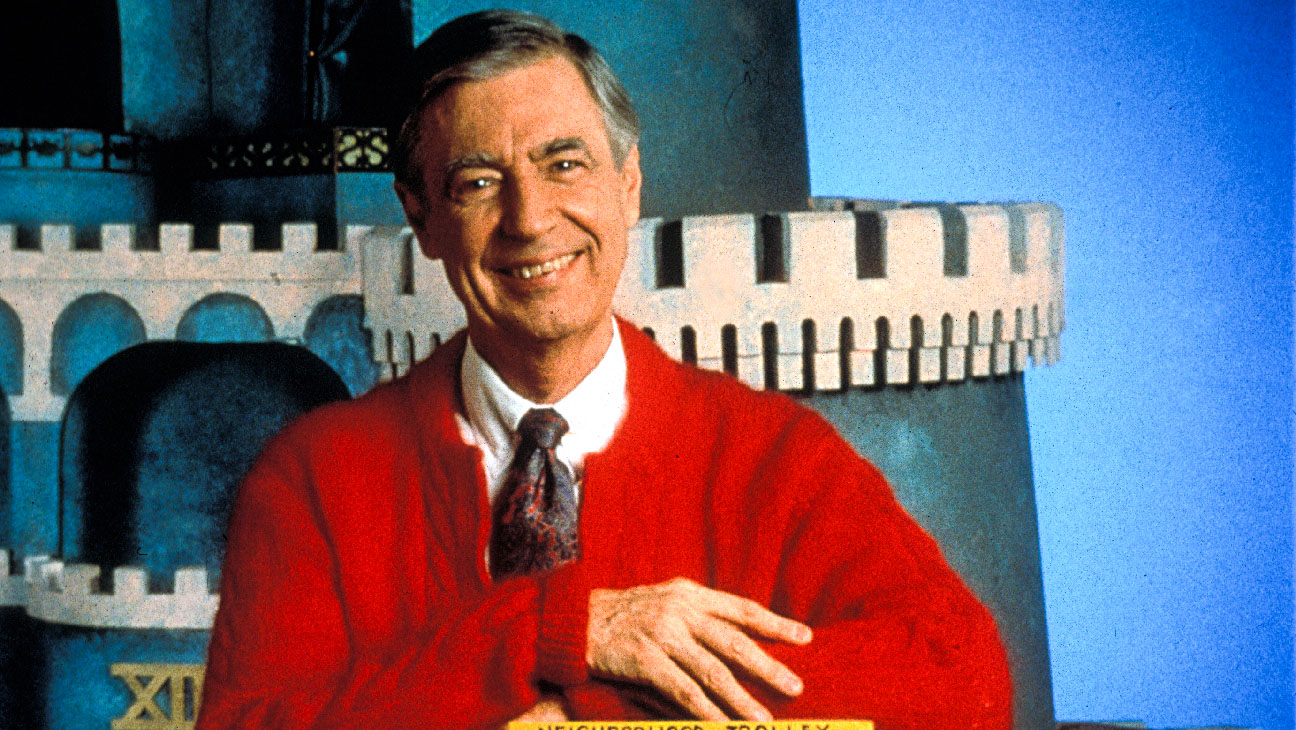
Fred Rogers from “Mister Rogers’ Neighborhood”

These themes lay the foundation for Junod’s mission to try to destroy Mister Rogers. At one point in the film, we hear Junod openly state that he thinks Mister Rogers is a fraud, and that he thinks it’s his job to expose him. After his initial interview with Mister Rogers is cut short, Junod complains that Rogers and his people aren’t giving Junod enough time to interview Rogers properly. His complaint feeds into our general suspicions that anytime a reporter seeks to interview a subject that subject, and his handlers, are going to do anything and everything to protect the reputation of the subject, particularly when their main character is on a children’s show. 

We suspect, along with Junod, that Rogers and his people, know Junod, and we suspect that they advise he give Junod short, evasive answers to prevent Rogers from slipping up and revealing everything they want/need to hide. Even though the movie doesn’t go to great lengths to portray Junod’s frustration, we suspect that Junod probably asked Rogers and his people, “What are you hiding?” In a turnabout from what Junod was probably accustomed, Fred Rogers personally creates more time for Junod. This leads to a series of interviews in which Mister Rogers begins asking Junod questions about his life.
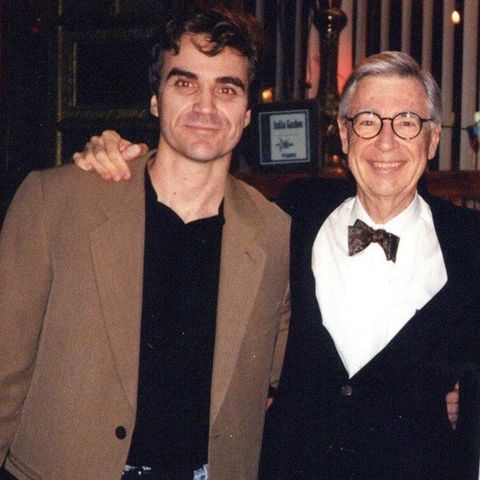
“I’m supposed to be interviewing you,” Junod says at one point. Again, Junod and the rest of us know that subjects use many rhetorical tactics to protect themselves, and this tactic sounds a lot like obfuscation. Fred Rogers answers some of Junod’s questions throughout, but we can only guess that the cynical, seasoned reporter has witnessed a wide array of rhetorical tactics subjects use to avoid answering questions, and he believes Rogers is engaging in them when Rogers continues to ask Junod questions. We can also guess that the actual interaction between the two men grew more heated than the movie portrays, as Junod attempted to expose Mister Rogers’ inconsistencies. The interesting turnabout happens when Junod realizes that Fred Rogers isn’t using rhetorical tactics, as he pokes and prods, and that the man genuinely cares about this self-described broken man named Tom Junod. The movie doesn’t involve the usual tropes that most on-screen exchanges do in which one of the two parties eventually experiences an obvious epiphany. It depicts Rogers as a somewhat naïve character who genuinely believes in what he’s saying, and he reinforces that notion with his answers. The implicit suggestion of these exchanges are that Rogers continues to ask Junod leading questions, because he genuinely cares about the broken man before him in the manner he cares about most complete strangers, and that implies that his care for children is just as genuine.

Tom Junod’s final report does not culminate in a finding that leads to scandal, and he is not able to uncover an inconsistency that reveals what is wrong with Mister Rogers. Instead, he writes a story titled Can you say Hero? that thematically asks what could be a semi-autobiographical question, what is wrong with us? Why do we want/need to see the warts? Why do we need to complicate our heroes with inconsistencies that lead us to think/know that they’re actually frauds? Is there a part of us that thinks everyone and everything is fraudulent, and do we somehow enjoy the idea that we were once so naïve that we believed in them? Some of us enjoy the ‘I got nothing to believe in’ narrative, because it suggests that we’re so knowledgeable that we simply can’t believe in anything anymore, and we pity those who do because they’re just not very informed. As such, we enjoy it when reporters strip away the glossy varnish we all know to uncover dulled, dirty facts that lead to a much more comfortable suit of cynicism. We call these details facts, and the accumulation of facts, knowledge, and knowledge is power. 

Throughout the movie, and the Junod story on which it’s based, we learn that Junod was unable to uncover the big scandal, and he discovered that there wasn’t some big exposé beneath the rubble of the Fred Rogers character. Did Junod initially believe that he didn’t do his job well enough? Did he, after conducting exhaustive interviews with everyone who knew, loved, and worked with Rogers, initially believe that the fortress around Rogers was fortified with loyal subjects who wouldn’t give up the dirt on him? We have to think this plagued Junod initially, even if the movie didn’t cover this section. In his search for something big, Junod eventually uncovered some very little things about Fred Rogers. These revelations developed over time, incrementally, through incidents. The movie portrayed these incidents as those Junod experienced firsthand, but research shows that he learned about them secondhand, through the numerous interviews Junod conducted. The consistency of these seemingly exhaustive interviews led Junod to a startling revelation: Fred Rogers and Mister Rogers might be one and the same, and they might be, could be real. Junod poked and prodded Rogers and everyone who knew him, until he came to the conclusion that Fred Rogers might be “the nicest man in the world”.

The reason I love this angle in this movie is that we all know and enjoy “the story” of the nicest man in the world, who has an “inconsistency” of some sort that evolves into a narrative we can recite at the mere mention of the man’s name. “Kids love him, and their parents love him, because of how much their kids love him, but we now know, thanks to Junod’s exposé on him that it’s all based on a lie?” We love that facts=knowledge, and knowledge is power angle, and we prefer that angle. We love reporters who remove a brick from our foundation to reveal them, us, and all of the institutions in between as absolute frauds. We grew to love and admire the various screen stars who, in some small ways, helped shape who we are today, and we all love to learn, in a bittersweet way, that it was all based on a big lie. Either that or we enjoy seeing those who portray themselves as a paragon of virtue torn down, so we don’t have to feel so inferior in that regard. As Junod’s bio on Fred Rogers details, he couldn’t find that angle that would’ve and could’ve destroyed everything Fred Rogers built. He couldn’t produce that devastating exposé to win that loyalty, love and awards from his peers for tearing down the American institution that was/is Mister Rogers. What he found instead was a man named Fred Rogers, whom he called “the nicest man in the world”. 

Tom Junod later summarized his time with Mister Rogers in a piece for the Atlantic, “In 1998, I wrote a story about Fred Rogers; in 2019, that story has turned out to be my moral lottery ticket,” Junod wrote in The Atlantic. “I’d believed that my friendship with Fred was part of my past; now I find myself in possession of a vast, unearned fortune of love and kindness at a time when love and kindness are in short supply.”

My takeaway from the legacy of Mister Rogers, or Mr. Fred Rogers, as presented by the movie A Beautiful Day in the Neighborhood, is that he was a great man. Mr. Fred Rogers also helps some of us define what a great man is. Our typical narrative is that the great man does great things, i.e. big things. The great men of the past discovered penicillin, helped eradicate hunger, or proved a decisive leader on the world stage when the world needed a powerful leader to save the world. Mr. Fred Rogers didn’t do anything that would qualify him as a great man in these terms, but he did a whole bunch of little things, every day, that when we compile them, we could call big, transformative, and even huge. The impact he made largely involved one-on-one conversations with children, and if you ever watched his show Mister Rogers’ Neighborhood, you know those conversations were one-on-one. 

For everything Fred Rogers accomplished in life, and for all of the absolute goodness he presented to children and helped spread, his greatest accomplishment may have been that he mastered the art of being present. Being present might sound like a foo foo term, because it is, but it’s also about the simple art of listening to another without distraction. It’s about making a concerted effort, often a more natural and more organic form of distraction-free listening. The next question you have is how can we put forth a concerted effort to be more natural and more organic at anything? Aren’t those basically antonyms? Yes, but when one puts forth a concerted effort to be more natural and more organic anything, they can give the impression that they are naturally gifted and more organic. 

Being present, for example, is not a gift one accrues as a gift. It’s not, as far as we know, a particular ingredient available to some in their DNA and unavailable to others. If your parents were great listeners and present, it has no bearing on your abilities or faults in this regard. It is more a learned art to momentarily forget about all the big stuff, for just a moment, to concentrate and focus on the little. When Mister Rogers talked with children, he listened to them with the same level of acuity he did with adults, and he didn’t follow the typical bullet points of adults talking to children, or the prototypical and successful formula of adult personalities on a children’s show talking to children that now appears so condescending compared to the manner in which Fred Rogers spoke to them. Fred Rogers didn’t talk to these kids as if they were cute or precocious, and he didn’t attempt to draw that cuteness out to make them cuter for the enjoyment of any adults watching. Fred Rogers spoke to them in a manner that didn’t remind any of us of the way we to talk to children. He just talked to them.

We could see how this affected the kids on Mister Rogers’ Neighborhood when Fred Rogers listened to them. It caught them off guard. Our initial reaction to their open-mouthed awe is that they’re suffering some stage fright. Not only are they on a stage, they have a mess of kids behind them, and they’re also on TV. Who wouldn’t experience some stage fright? As their conversation continues, the kids slowly meld into the Mister Rogers conversation. They’re shocked that he is listening to them, and they’re further shocked that he is giving weight to what they say. Why are they shocked? Fred Rogers acted different from every adult they’ve ever met. Kids and pets adjust to our patterns, our rituals, and our habits. When we act in a way somewhat different from that, they notice. When Fred Rogers listened to their stories, their ideas, and their complaints, it was so different that every kid in the room noticed, and they wanted to speak to him. 

Most of adults go big, and the bigger the better. We want a huge resume in life before we call it a day. More money and better status equal a better life. To achieve bigger things, we must learn to multitask. We can define the difference between a good employee and a suboptimal one on their ability to multitask. Some are better at it than others are, and depending on what they do, multitasking might be required, but how many of those tasks do we accomplish at optimum efficiency? Do the results of some tasks suffer in lieu of others when you’re multitasking, or are you just that much better at it than I am? It’s impossible to know the totality of a man from movies, books, magazine articles, and various YouTube, but from what I gathered Fred Rogers was the opposite a multitasker.   

Anybody who lived during the era of Mister Roger’s Neighborhood knew and loved the creative and elaborate intros of the various children’s shows. Some of us loved those intros so much that that was all we watched. There were explosive graphics, great music to accompany those graphics, quick screen switches, and a healthy dose of fast movement to captivate us. The intro to Mister Roger’s Neighborhood involved a man changing his shoes while singing a dumpy, simple song called Won’t you be My Neighbor? The pace of Fred Roger’s creation was as purposefully simple, disturbingly quiet, and as painfully slow as that intro, and those of us with varying levels of ADD or ADHD couldn’t watch the show even when we were Fred Rogers target audience. Everything about the show bothered us so much that when Eddie Murphy devised the Mister Robinson’s Neighborhood skit, we were laughing harder than anyone else. For most of us, Mister Rogers Neighborhood was a great premise for a joke. The movie A Beautiful Day in the Neighborhood and HBO’s Won’t you be my Neighbor reminds us of the big things that led us to tune him out and the little things that annoyed us, and they informed us of Fred Roger’s little and big theme.

Actor Tom Hanks said he watched hundreds of episodes of Mister Rogers Neighborhood to prepare for his role in the movie, before he realized Fred Rogers created the show for children. As the comedian that he is, Tom Hanks left the ironic, obvious punchline as a standalone after he received a laugh. If he continued, I think he would’ve said that every minute and ever second of Fred Rogers’ creation was devoted to children. Fred Rogers took great pride in how quiet his show was, for example, and when he spoke, his tone was so measured we could almost hear the punctuation fall into place. Linguists say that our ums and ahhs are quite useful, because they help listeners follow our sentences better. Fred Rogers didn’t um and ahh, but his tones were so carefully measured and methodical that those of us with ADD and ADHD couldn’t watch his show. We wanted him to finish his sentences quicker. When he told us he was feeding his fish, it drove us nuts. “Just feed the fish!” we screamed at our TV. There was a method to this madness. He developed this routine after a blind child wrote him to say she was worried that he wasn’t feeding his fish. He fed the fish, as part of his introduction on the show, but she didn’t know it. So, he began telling his audience that he was feeding his fish. Then, there was the silence.

Watch an adult show on cooking, making things with tools, or anything that involves a methodical process, and you’ll see them skip certain, obvious parts of the process. They will list the ingredients, inform us how to mix, slice and dice, and cover all of the methodical steps in the process, then they’ll show us the finished product. They skip the obvious and tedious parts of the process. Mister Rogers didn’t skip anything. If he brought in an expert on how to build or fix something, there were long periods of silence involved in the process. This drove some of us nuts, but it was a carefully orchestrated part of the show, designed to help children understand the methodical, quiet approach needed to build things.

Some cultural writers state that the approach of Mister Rogers Neighborhood, and Fred Rogers personal approach, suggest that he was anti-consumerism. While I don’t doubt that, I don’t think there is direct correlation to the idea that Fred Rogers was an anti-capitalist. I don’t think he was anti-capitalist or pro-capitalism. As with everything Fred Rogers did, his stance was all about children. He directed his ire at marketing, and marketing to children specifically. I don’t think he minded when an XYZ company would say that their product was better than their competition’s product, for example, in a pure marketing ploy. What bothered Mr. Rogers was this idea that some marketing ploys lead people (children in particular) to feel shame. I think he disliked this idea that some marketing ploys encourage children to think they need the latest and greatest toy, and I think he abhorred the idea that another child might feel a sense of shame for being stuck with what some marketing ploys encouraged them to believe was an “inferior” toy. I think he detested the idea that marketing arms created the need kids felt to have more products and better products than their friends, and if they didn’t, they felt incomplete. I think his concern for children was was unfettered by anti-capitalist. pro-capitalist ideals, or anything ideological. It can be difficult for a cynic like Tom Junod, this writer, or anyone else reading this to believe, but I believe Fred Rogers’ concern for children consumed him, affected his every thought and action in a way that proved apolitical.  

My favorite illustrative moment occurred when Fred Rogers saw a very young boy wearing battle gear. Adults might wear T-shirts that have strong messages to inform our peers that we’re strong on the inside, but most of us don’t wear Masters of the Universe battle gear anymore. Our natural reaction is to consider it cute when we see kids all decked out in costume battle gear. When Fred Rogers met this kid, the kid immediately showed Fred Rogers his sword. Fred examined the sword and complimented him on it. Other than that, Fred spoke to the child in the manner he spoke to all kids. This child refused to break character, as it were, no matter how nice Fred Rogers was to him. The young child refused to show any of the signs of endearment to which Mister Rogers was more accustomed from children. This bothered the kid’s mother, as she feared Rogers might perceive her child as rude. This did not bother Mister Rogers in the least. After the child’s mother failed to convince her child to say something nice to Mister Rogers, Fred Rogers leaned in on the kid and whispered something in the child’s ear. When asked what he whispered, Fred Rogers replied:

“Oh, I just knew that whenever you see a little boy carrying something like that, it means that he wants to show people that he’s strong on the outside. I just wanted to let him know that he was strong on the inside, too. Maybe it was something he needed to hear.” If you’re anything like me, you read such a line and marvel at its profundity, the big bold word profound, but I can only imagine that Fred Rogers didn’t deliver it that way, or repeat it to others in the manner the rest of us do when we’ve said something profound. I imagine that it was just a little thing Fred Rogers thought up in the moment, because he thought it was something that kid needed to hear.

Mister Rogers Neighborhood wasn’t a big show, and A Beautiful Day in the Neighborhood wasn’t a big movie. They focused on the little things, the little things Fred Rogers did, and the little thing’s theme of Fred Rogers life. These ideas run counter to the whole idea some of us have to ‘go big or go home’. One of the many profound things Fred Rogers said was we shouldn’t get so tied up in trying to accomplish big things that we forget about the little things. “There’s nothing wrong with you, if you don’t accomplish stupendous things,” he said in various ways. “I like you just the way you are.”

How many of us like our friends and family members just the way they are? How many of us want more from those around us? How many of us like ourselves just the way we are? If someone approached us and said, “Don’t you want more from life? I really think you’re going to regret the fact that you didn’t strive for more in life.” What if we said, “I like myself just the way I am.” They would probably dismiss that comment as an excuse to be lazy, an excuse to avoid broadening ourselves onward and outward, or they would think that we’re just being obnoxious. It does sound like an obnoxious reply, unless you’re the host of child programming. I mean, who likes themselves so much that they’re just going to keep doing what they’re doing for the rest of their lives? They’re never going to strive for more? The obnoxious could reply that their interrogating friend probably doesn’t like themselves very much, and they think that striving for more, for a better definition of success, or a definition of something they think they might eventually like better.    

Most people don’t think this way at the end, according to health care workers who sit bedside as dying patients issue their last words. Most dying patients, they say, regret living the lives others told them to live. “I wish I’d lived my life the way I wanted, not how others expected me to behave.” This could be anecdotal evidence of the human experience, of course, or it could be indicative of the idea that most of us wish we had the courage to like ourselves just the way we are, and we wish we had the courage to defy others’ expectations of us and live the way we want to live. Imagine if that certain someone we like, love, and respect most said something along the lines of: “I have no problem with you striving for more, being the best you can be and all that, but before you go about doing all that, I just wanted you to know that I like you just the way you are.” Now imagine you, being on the other side of that paradigm saying that, however you want to say it, to someone else. Is it better to give such a compliment or receive? Again, I see Fred Rogers way of viewing the world as profound, but I have to imagine if I had the chance to ask Fred Rogers about it, he would downplay it saying, “It’s just a little thing I say to help children feel better about themselves.” It was a little thing he said, but if we all attended to the little things better and more often, for the rest of our lives, as we fortified our connections to the little people around us, who are just like us, I have to imagine that all those little things could roll up into something big. 
They’re Platypus People! They’re Platypus People! It’s a Kookbook!


“Doesn’t he have cable?” Rodney asked, referring to our co-worker Russell Hannon. Some laughed hard, the rest of us tittered through our cringe. We couldn’t help but laugh, because it was spot-on, but it was so spot-on that we thought it could be misconstrued as a little mean, which made us uncomfortable. I tittered after a pregnant pause. I was so drenched in thought that I didn’t hear anything said afterward, because I thought Rodney nailed it so well that he probably didn’t know how hard he nailed it. 

Russell was so weird, strange, or just plain different that we didn’t even bother analyzing it, discussing it, or devoting much thought to it. It was such a given that when someone dropped a “Man, he I weird,” or “He says such weird things,” we just dismissed it with a “That’s just Russ.” We never considered the idea, until Rodney alluding to it, that the man could be operating from a different frequency. We never considered the idea that with some small variations, we’re so on the same wavelength that we’re speaking the same language, and we don’t even notice it anymore, until a disruptor comes along and defines it by contrast.

Everyone liked Russell, he was a nice guy. Uncomfortable? Yes. Easily embarrassed, unsure of himself, needy, all that, but he was such a pleasant and unassuming type that we were all cheering for him. His over-the-top efforts to fit in with the rest of us were often so cringeworthy, however, that Rodney’s comment echoed what we were all thinking. 

Prior to Rodney dropping that line, someone else called Russell Hannon “the round joke killer.” That joke didn’t land in the moment, in the manner Rodney’s would. It was true, but it wasn’t hilarious. “It’s what we call a snowball joke,” Clark Dunn said after a few of us began using it when Russell killed another one of our round of jokes. “It’s a joke that gathers as it gathers.” A round of jokes can be similar to singing in rounds in that they often start with someone telling a slightly humorous story from their day. These stories are often so true that they’re humorous but not laugh-out-loud funny, until listeners begin adding their comments and/or potshots directed at the storyteller. These rounds also gather as they gather, until they eventuate into a big old ball of laughter.

Anyone who has worked an overnight shift knows how starved the staff is for entertainment, and the rounds can be the cure for all what ails us. We cherish every joke, appreciate any decent form of entertainment, and we all want to add to keep the ball-a-rolling as long as we can. As such, it can be almost impossible to kill the momentum and the stop the laughter, but Russell brought all the laughter to a crashing halt, night after night. He often added comments that were so weird and so incongruent that we’d all stop laughing just to try and figure out how they fit. “The round killer strikes again!” someone whispered to another when he did it once. On another occasion, when someone started in on his story of their day, someone said, “Beware, the round killer!” in a voice as loud as the storyteller. We cringed. We didn’t look at Russell, fearing that any glance might give the joke up, but we cringed in his general direction. Thankfully, Russell was oblivious to the idea that the snowball joke was all about him. 

Some of us laughed politely, sympathetically, at his round-killing comments, because we knew how hard Russell was trying. Others thought he was being obnoxious, but we knew better. We knew Russell Hannon, and we liked him. Our polite laughter must have encouraged him, because he kept killing our rounds. He did it so often, over time, that all of the round-killing and “lack of cable” jokes lost steam. 

“What are you talking about?” Sherri Kudron asked him, and she had a mean face on when she asked it. “I swear you say some of the weirdest things, some of the times.” She later told me that she said that to try to encourage him to stop trying so hard.

Russell tried to explain his round-killing jokes at times, but most of the time, he tried to shrug off the silence that followed with notable embarrassment. Those of us who knew Russell better than Sherri knew he wasn’t trying to be weird, strange, or just plain different. He was trying to fit in. He just wasn’t very good at it, and I thought that was key to understanding the man.

The “Doesn’t he have cable?” comment didn’t put an end to our attempts to understand Russell, but it framed the situation so well that some of us thought it whenever Russell said something weird from then on. The comment also contained some multifaceted subtext that suggested one of the reasons we didn’t understand Russell was that we were all operating on the same mainframe, because we all grew up watching way too much TV. The brilliance of the comment, whether he intended it or not, was that it poked fun at Russell, Rodney himself, and us.  

Whereas Rodney eased the confusion we felt by suggesting that the only reason we didn’t understand Russell was that he didn’t waste his life watching TV, I thought Russell’s oddities were more fundamental than that. I knew Russell better than Rodney did, and I heard him make so many odd, incongruent comments that I didn’t think a lack of cable growing up captured the essence of Russell’s nature. Russell, I thought, wasn’t just the odd duck Rodney made him out to be. Russell Hannon was a Platypus Person.  

The Weird, Strange and Just Plain Different

Platypus People do not have a duck’s bill or an otter’s body, but in many ways they are almost as foreign to us as the semi-aquatic, egg-laying mammals were to members of the scientific community in Britain when they were first introduced. 

FullSizeRender_1__lThese weird, strange, and different people tend to stray from a premise we might not even know that we share, until we hear someone say something so shocking and so far outside the mainframe that we think it suggests they’re operating from an altogether different one.

Members of Britain’s scientific community were so rocked by the appearance of the platypus that they thought it was an elaborate and well-conceived hoax stitched together through taxidermy. It shocked them, because they thought they had a comprehensive catalog of the animal kingdom before its introduction. Those of us who have had some experience with Platypus People empathize, for before we met them, we thought we had a decent catalog of human nature.

We did not physically dissect the Platypus Person to try to discover the truth. We did probe, however, and we came away thinking they were genuine, unlike those Brits who remained skeptical even after seeing a live platypus, but we had no idea how to process the things they said. The more we learned more about our Platypus Person, the more that shock turned to intrigue as we began to think that their funhouse mirror perspectives might tweak our worldview.

The Different and The Different

vandevelde1732010t152920

Platypus People are perfectly normal in their own home, but if we’re on the outside looking in, they appear weird, strange, and just plain different. We won’t know why they’re different if we see them in a supermarket aisle, but we know it when we see it. If we meet them in the workplace, at school, or in any venue where we can sit with them, talk with them, and really get to know them, we begin to see their duck-like bill, the webbed feet, and the beaver-like tail.

Through them, we also see the difference between those who exhibit organic differences and those for whom weird, strange and just plain different thinking is a bit more contrived. The latter are weird for the sake of being weird, they disagree just to disagree, and they follow the edicts of their overlords to become cool. “Dare to be different,” they say, but what is different? Their definition of different is often the same as everyone else’s, and we learn this by comparing and contrasting them to those who genuinely operate from a different premise. When viewed through this looking glass, we learn that if we’re all the manufactured the free-thinking, independent spirits we see on TV, then none of us are, and the channel the Platypus People are on affects us in a manner that motivates us to learn everything we can about their philosophy before we reach whatever version of a philosophy we consider our own. 

When we meet someone who appeared to go through the same intellectual progressions we did, only to arrive at an entirely different conclusion, we want to know how they did that. When we meet someone who obviously went down so many different roads, we don’t know how to approach them, and they make us feel uncomfortable. Some of us shut them off. “He is just so weird,” they say when they explain why they leave the room as soon as he enters. Some of us enter that room he’s in, because we want to know what makes him tock (as opposed to tick), and we want to know the anthropological origins of his thought process.

As much as we tried to defend Russell Hannon, we knew he was “just so weird,” and operating from a different premise. The question was how did he arrive at such sensibilities? The reflexive reaction is to suggest that “he didn’t have cable?” growing up, but I thought it went deeper than that. I might’ve been wrong then, and I could be wrong now, but I wonder if someone as different as Russell Hannon, and his Platypus People peers, are born and raised from a different premise. If we were able to gain an intimate perspective on his parents and grandparents, would we see evidence of some of the hundreds to thousands of tiny, day-to-day adjustments he made to their vision of the world? Do the underpinnings of the Platypus Person lay deep in the roots, past the parents, to the grandparents, great-grandparents and beyond?   

Such a discovery process would be complicated, fraught with a battle against subjective search for answers, and possibly a need for some large earth moving equipment to dig through the layers, but we might find an answer beyond “Doesn’t he have cable?”

Jokes, like those, help us avoid the need to understand better, it allows us to dismiss what we cannot understand. “You’re right. He is just so weird. Buh-bye!” It’s rare that we consciously dismiss another based on a couple jokes, but when those jokes are so spot on, we will have them bouncing around in our head in all future interactions we have with the Platypus Person. The next time he says anything off the wall, we can just say, “Aren’t you the guy who didn’t have cable growing up?” and walk away laughing.

Some witty types, like Rodney are so quick that they can sum up an hours-long discussion in one, quick hilarious line. Some of us are processors who need time to process information, and we enjoy hearing from numerous sources before forming a conclusion. We might obsess over such matters so often that we’re considering a search through their family tree for answers, but we can’t understand how someone can come up with a quick, almost-reflexive line like “Doesn’t he have cable?” and consider the matter settled. Do they develop this ability, because they are more comfortable in their own skin and that confidence allows them to swat different, complicated thoughts away? Or, do they develop this ability to come up with a quick assessment of a person, because they are so insecure that they need to thwart unusual thoughts before they question the fundamentals of their being? Is it a defense mechanism they use to help them avoid dwelling or obsessing on such topics, or do they consider most of the mysteries that plague the rest of us settled?

Being Weird is a Choice 

grosz7I realized this matter was far from settled for me when I met some weird, strange, and just plain different types in the years that followed my interactions with Russell Hannon. One of the best ways I found to define a relative term like weird is to define what it is not. It is not, for the purpose of this discussion, strange. The term strange, by our arbitrary definition, concerns those afflicted with natural maladies. They had a variance inflicted upon them that they could not control, and they could not escape its influence. As opposed to a person we might consider strange, a person who chooses to be weird, can easily find their way back to the premise. They simply choose, for a variety of reasons, to step away from it for a moment. Platypus people, however, have no natural maladies, but they cannot find their way back for reasons that are less philosophical and more anthropological, as their philosophical makeup has been passed down their genealogical tree.

We don’t define these separations to be nice, though we do deem it mean-spirited to mock, insult, or denigrate anyone who arrives at their differences in a more natural manner. We don’t create this rhetorical device for our readers to consider us wonderful, more understanding, or compassionate, but we deem those who go out of their way to poke fun at the strange to be lacking in basic human decency. We also don’t want to leave the reader with the impression that we might be more normal, or more intelligent, than any of the species on display in these articles. We design this arbitrary separation for the sole purpose of providing classifications for those who had no choice in the matter, against a backdrop of those who inherited their oddities or chose to be weird through the odd decisions they make in life.

The Strange Psychology

We might think anyone who chooses to be weird must suffer from a strange psychology. In my experience, it’s quite the opposite. For most of us, our decision-turned-need to be something different started out as a form of rebellion in our youth. Our parents, and various other authority figures, had a strong philosophical and spiritual hold on us. They set the premise from which we were to operate for the rest of our lives, whether we enjoyed it or not. Most of us didn’t enjoy it, of course, and we sought to break those shackles in any way we could. For some of us, this involved momentary and situational breaks, but the rest of us sought total philosophical freedom. We wanted to be perceived as weird, strange, and just plain different as those we were conditioned to dismiss and avoid by our friends and family.

My dad sensed this early on, and he did everything he could to guide me toward a more normal path. Through the decades that followed, he attempted to correct my weird ideas with more sensible, normal lines of thought. “That isn’t the way,” was a phrase he used so often that my refusal to acquiesce to his more structured ways of the world was one of my primary forms of rebellion. There were so many intense arguments, and debates in our household that no observer could escape it without thinking that it was, at least, combustible. Before we explore the ways in which the old man was strange, I would like to offer a posthumous thank you to the man for putting so much effort into trying to make me normal. I now know, through decades of reflection, that he did his best to overcome his own obstacles to provide his children the most normal upbringing he could.

I rebelled to the relatively strong foundation he built without recognizing the luxury I was afforded. The primary reason for my gratitude is that some of the more organic weird and strange Platypus People I’ve met since I left my dad’s home led chaotic lives that can be a little scary. They came from very different homes, with a less than adequate foundation, and they ended up expending as much effort trying to prove they were normal as I did to be considered weird.

This premise is often generational, as our parents pass on the fundamental knowledge they learned from their parents. As we age, we begin to see the cracks in that foundation. At some point, we assume our parents are so normal that they’re boring. They might have some quirks but who doesn’t? They might even have more quirks than others, but doesn’t that just make them quirky? When we add these quirks up, as we age and gain a more objective perspective, and we compare them to others’ parents, an uncomfortable, irrefutable truth emerges in this dichotomy: Our parents are very strange people. They aren’t just mom-and-dad goofy weird, like we thought, they might have some serious, bona fide, almost clinical, deficiencies. If we reach that very uncomfortable conclusion, we know we can no longer find comfort in the idea that our parents just have some different ideas about some subjects. 

This revelation can shatter many of our “that’s just dad” illusions and delusions that we had when we witnessed, firsthand, so many confusing elements of their thought process, but it wasn’t until we put all the pieces together that that uncomfortable truth emerged.

After that relatively daunting epiphany clears, a sense of satisfaction takes its place. Our rebellion to their quirky ideas was the right course for us to follow, and we now see how justified we were. At some point in our various stages of processing this newfound information, we realize that for much of our life, our parents were our beacon of sanity in an otherwise confusing world they were charged with helping us understand. When we couple that information with everything else we’ve realized, it’s no longer as funny as we thought it was. We reach a point where we want/need them to be normal, and we ask them not to express themselves in front of our friends, because if our friends learn how strange our parents truly are, how long will it be before they connect those dots back to us?

My dad was abnormal, to say the least. Some might say he was a kook, and others might suggest he was an odd duck. In the frame we’re creating here though, he was a Platypus Person who was difficult to classify. Either he was born with certain deficiencies, or they were a result of self-inflicted wounds. One could say that those self-inflicted wounds were choices he made along the way, and if that is true, I believe he made them as a result of some of his natural deficiencies.

The point of writing about the man’s deficiencies is not to denigrate the man, but to point out what separated him from what one would call a normal man. Those deficiencies plagued him, and he put forth a great deal of effort to convince the world around him that he was as normal as they were. The trials and tribulations he experienced in this regard marked his life, and he didn’t want his children to have to go through what he did. He didn’t want anyone to consider us as abnormal as he was, so he tried to establish a normal home without too much chaos. In his subjective approach to life, he thought fitting in with others and being normal were the keys to happiness, and he tried to pass that along to us. I rebelled to those teachings, because I couldn’t see his efforts for what they were at the time. From his perspective, he provided us a graduated premise of a more normal premise, a luxury that we chose to violate by being weird. 

Even after years of reflecting on this, and recognizing what my dad’s efforts for what they were, I still like to dance in the flames of the weird, but once the lights come up I’m as normal now, and as boring, as everyone else. As hard as my dad tried to force normalcy on me, however, he couldn’t control the impulses I had to indulge in the artistic creations that glorified life outside the norm. I knew weird ideas were out there, and I pursued them with near wanton lust.

When I left the relatively normal home my dad tried to create for us, I ventured out into a world outside the realm of his influence. I lived the life I always wanted to live, and I found weird, oddball philosophies so intoxicating that I had trouble keeping them in the bottle.

My dad’s overwhelming influence on my life was such that I preferred the company of normal people long-term, but I was always eager to invite weird people in for a brief stay to challenge my status quo. Their brief stay would present me with different and weird ideas of thinking, weird platitudes, and oddball mentalities that shook the contents in my bottle a little bit more. I needed to know what made them tock (as opposed to the ticks we knew all too well). I became obsessed with the abnormal to find out what made them different, or if they were, and I had to deal with him, my friends, and other family members telling me that I should be avoiding these people, because they weren’t just weird. They were strange. I couldn’t, I said, not until I consumed all that they had to offer.

A Piece of Advice to the Young Weird Wannabes

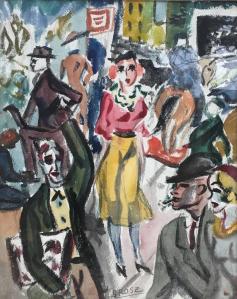
george-grosz-new-york-street-scene-nd-webIf there are any young people seeking to disappoint their parents, and anyone else who has expectations of them, in the manner we did, we have one word of caution. Pursue the life of a freak, become that rebel that makes every square in the room uncomfortable. Violate every spoken and unspoken cardinal rule of our culture, and become that person everyone in the room regards an oddball. Before going down these roads, however, an aspiring rebel needs to consider learning everything they can about the conventional rules that they plan to spend the rest of their life violating. Knowing the rules provides us a blueprint for successful rebellion.
All rebels think they know the conventional ways of the conventional, and they might think there’s no point in studying them, but if there’s one thing that I learned as an aspiring rebel, and in the many conversations I had with other rebels since, it’s that a rebel needs to know the rules better than the squares do. The violation of rules and social decorum comes with its own set of principles and rules for those seeking to violate in a constructive and substantive manner. Failure to learn them, and the proper violation of them, will allow those who set the rules to dismiss a rebel as one who doesn’t know what they’re talking about, and a rebel without a cause.

Most rebels seek clarification and inspiration for the best way to rage against the machine, and their preferred source of inspiration are the screen stars who violate standards and upset the status quo in their presentations. These stars provide color by number routes to rebellion that are provocative and easy to follow. These manufactured rebellions also look great on a screen, but those seeking inspiration often fail to account for the fact that the screenwriters and directors of these productions manipulate the conditions and side characters around the main character to enhance their qualities. We all know this is true, on some level, but most of us do not factor it into our presentation. In real life, there are situations and forces that even a rebel with strong convictions cannot control. There are people who will present the rebel with scenarios for which they’re unprepared, and a failure to study the conventional rules from every angle possible, will often lead the audience of the rebel’s argument to forget it soon after they make it.

James Dean was A Rebel Without a Cause, though, and James Dean was cooler than cool. For ninety minutes he was, and with all of conditions and side characters portraying the perfect contradictory behavior he was. If you study films, books, and other stories from a perspective other than the offered one, we learn how the subtle art of manipulation can lead us to find the main character funny, fearsome, and cool. In these productions, the main character interacts with the side characters who represent the straight men, who represent the status quo. Those straight men are cast in their roles, because of their ability to sacrifice themselves to enhance a James Dean character’s rebellion as cool. The real life rebel cannot manipulate his conditions and side characters in such a manner to enhance their presentations in the manner all the behind the scenes players did in that movie. In real life, the extraneous players who outdo the uninformed rebel with corrections consider the rebel, a rebel without a cause, and a rebel without substance. They might even regard him as uninteresting, after the initial flash of intrigue with their rebelliousness subsides. 

Our advice to all aspiring rebels is to listen to those squares who are so normal they make them throw up in their mouth a little, for they may teach a rebel more about what they’re rebelling against than those who feed into their confirmation bias.

Everyone has that aunt, uncle, or friend of the family who knew everything there was to know about “Good and honest living”. They teach us the elements of life that bore the (fill in the blank) out of us with their preachy presentations. They don’t know where it’s at, as far as we’re concerned. We seek entrée into the “Do what you feel” rock and roll persona that leaves carnage in its wake, and we debate her point for point in our ‘shake up the premise’ argument. We know the elements of our rock and roll lifestyle well, and they know their “Good and honest living” principles, but they can’t debate us point for point. When compared to the rock and roll figures of our culture, out aunt has poor presentation skills. She’s overweight and an unattractive child of farmers, and our favorite entertainers are attractive and thin who have strong jaw lines.

Our rock and roll philosophers taught us that life should be easy, judgment free, and fun. It shouldn’t involve the moral trappings of what is right and what is wrong. As long as no one gets hurt, a person should be able to do whatever they feel like doing. Viewing all of this in retrospect, however, we realize that our boring, pedantic, obese, and unattractive descendants of farmers family members taught us more in ten minutes than any of the entertainers did. The entertainers were just better at packaging their presentations.

The crux of our rebellion was that we wanted to expel whatever our body couldn’t use into the face of the mainstream. We want to be so weird that the “theys” could taste it. The responsible grownups who played such a prominent role in our development had a boring sameness about them, and the prospect of doing something different led to some growth in our undercarriage. They vied for this sameness in life, and they wanted the same for us, but no matter how hard they tried to make us normal, we continued to explore the abbie normal side of humanity.

A Conversation with the Weird

If we want to make friends and learn more about anyone who surrounds us, we need to gain their trust. The walls that Platypus People build around their vulnerabilities are more fortified than most. Building this level of trust requires spending quality time with a Platypus Person, and the only occasions I have been able to achieve an environment in which they feel free to speak their mind was in the prolonged confines of shared employment. On one occasion, I developed what we could call a cerebral crush on one of my fellow employees. We had numerous, fascinating conversations on a variety of unrelated topics. In one of our last non-work-related conversations, she replied to one of my stories with a, “Wait a second, did you just say you want to be weird? You actually want to be weird? People don’t want to be weird. They either are, or they aren’t.”

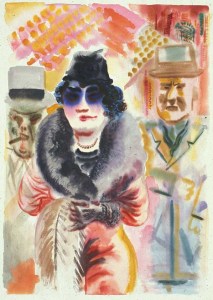
george_grosz_blue_ladyHer response wobbled me. I thought she was trying as hard as I was to be weird. I thought we were soulmates in that regard, laughing at all the other people climbing all over one another to achieve absolute normalcy. I thought she was weird in all the same mechanical and inorganic ways I was. She laughed as hard as I did at some of the thoughts we shared. I thought she was being self-deprecating. I thought she was messing with peoples’ heads in the same manner I did. I thought she wanted to be considered weird too. I had no idea that the things she did and said were more organically weird, strange, or just plain different. Her response informed me that not only was this not a game to her, but I had no business playing with her toys. It also wobbled me, because I never heard anyone defend the organic nature of being weird before. The conversation went on for a couple minutes, but no matter what I said, she kept cycling it back to this two sentence theme: “People don’t want to be weird. They either are, or they aren’t.”

I would try, numerous times, after that conversation to steer her back to what I considered a fascinating topic, but she would have none of it. I wanted to know what she considered weird and what she thought it meant to be weird. I wanted her to point out all the differences she saw between between her and me, but unbeknownst to me, she considered that conversation over, and she found all of my subsequent questions on the topic condescending.

Therefore, I can only guess that the condemnation of my efforts was based on this idea she thought weirdness should be a birthright. It should be natural and organic. It was a ‘how dare you try to be one of us, if you’re not’ reaction to those who regard the organic nature of their oddities a birthright. She presumably regarded this as equivalent to a person who wears glasses to look sexier when they don’t have to wear them, an act that ticks off those required to wear them.

I felt exposed in the moment. I thought of all the attempts I made to have another consider me weird, and I thought of how inorganic they were. I felt like a fraud. As I said, my dad raised me in a manner that forced me to accept the norms, and I’m going to take another moment out of this piece to say something I didn’t when he was alive, God bless you Dad for forcing a foundation of normalcy down my throat. God bless you for teaching me the premise from which we should all operate and for creating a base of normalcy from which I rebelled, for without that base I wonder what I may have become if left to my own devices.

My guess was that this woman’s upbringing was probably chaotic, and she spent most of her adult life striving for what others might call normal. She was weird in a more natural and fundamental sense, and she condemned anyone who might dare play around in what she proclaimed her birthright, but there was also an element of sadness and misery in her being that was obvious to anyone who knew the details of her struggle.

Those of us who had enough involvement with her to know her beyond the superficial, knew that chaos dominated much of her life, and we learned that it led her to desperately seek the refuge of any substance she could find to ease that pain.

I realized through this friend, and all of the other Platypus People who have graced my life before and after, that there was weird and there was weird. There is a level of weird that is fun, a little obnoxious, and entertaining in a manner that tingles the areas of the brain that enjoy roaming outside the nucleus. The other level of weird, the one that we could arbitrarily define as strange, is a little scary when one takes a moment to spelunk through the caverns of their mind.

Was this woman a little weird? Was she so weird that we could call her strange by the arbitrary definitions we’ve laid out, or were her sensibilities so different from mine that she was operating from an altogether different premise from which I sought to classify her in some way to help me feel normal by comparison? Or did she just not have cable TV growing up? 

When compared to all of my other experiences with Platypus People, she was an anomaly. Was she weirder than I was though? “Who cares?” we might say in unison. She did. It may never have occurred to her –prior to this particular conversation– to use the idea of being weird as a cudgel to carve out some level of superiority. In that particular conversation, it was for her, and she didn’t appear to feel the least bit unusual doing so. It appeared, in fact, to be vital to her makeup that I acknowledge that she had me on this topic. She was weird, and I was trying to be weird. Who tries to be weird? Phony people. That’s who. Check, check, check. She wins.

What did she win though? Some odd form of superiority? How long did she search for some point of superiority? How many topics did we cover, in our numerous, unrelated conversations, before she was able to spot one chink in my armor? If either of these questions wreaks of ego on my part, let’s flip it around and ask how many battles did she lose trying to appear as normal as her counterpart was? She needed a victory. I had numerous conversations with this woman before we drifted apart, and I never saw this competitive side of her again. She thought she had me on this one weird, strange, or just plain different topic, and I can only assume it gave her some satisfaction to do so.

Are you weird, strange, just plain different, or an unclassifiable Platypus Person? No one cares, you might say, and quit judging people with labels. Fine, but our subjective reactions to define anomalies helps us defines us. Some of us try to cut analysis short with a well-placed, quick joke, and others accuse anyone who obsesses over differences judgmental and lacking in compassion. Those of us who dwell (obsess) over these topics don’t understand how others can turn this part of their brain off, because we think our story lies somewhere in the sedimentary levels of the strange and weird Platypus People.

We all know some weird people, and we’ve encountered those who are strange, and some are so different that they’re difficult to classify. The one answer we could provide is that we all have a relative hold on the various truths of life, and those answers help us keep the idea of random chaos at bay. If you have had any prolonged involvement with a Platypus Person, however, you know that they have their answers too. Those answers might be different from everything we’ve heard before, but does that make them weird, strange or just plain different? The frustration that those of us who search for answers in life know is that some of the times there are no concrete answers to some questions. Some of the times, questions lead to answers and some of the times, answers lead to other questions, intriguing, illuminating questions. Am I weird, strange, or so different from everyone else that British naturalists might have trouble classifying me? Do these questions require the level of exhaustive analysis we devote to it, or does it have more to do with the idea that some of us didn’t have cable growing up?

Mindhunter


“The stories and legends that have filtered down about witches and werewolves and vampires may have been a way of explaining outrages so hideous that no one in the small and close-knit towns of Europe and early America could comprehend the perversities we now take for granted. [These] Monsters had to be supernatural creatures. They couldn’t be just like us.” John Douglas and Mark Olshaker wrote in an excellent memoir titled Mindhunter to explain that serial killers are not a recent phenomenon.

What’s more scary the idea that monsters are real, or the idea that your quiet, unassuming neighbor could commit monstrous acts? Before we giggle at our predecessors for believing werewolves and vampires walked among them, we need to keep a number of things in mind. They were afraid, and they sought to find answers that might comfort them. We’re still afraid, but our fear is driven by the fact that we know that those who commit such monstrous acts are ordinary people who aren’t that much different. We might have better theories and educated guesses, thanks in part to the interviews conducted by John Douglas and Robert K. Ressler and many others, but we still don’t know enough to stop current and future monstrous acts. When we’re afraid, we want answers, and future generations might giggle at us for our “more modern, informed answers”. The answers we have, thanks to advancements in the fields of law enforcement, science, and technology inform us that we’re not surrounded by vampires, werewolves, or any kind of literal monsters, but ordinary people who are in some ways triggered to commit monstrous acts. The question is, do these answers provide us comfort, or do they make us more afraid?

Our predecessors obviously considered the latter more horrific, and they developed the idea of monsters to help create some distance between themselves and those who would commit such acts.

We could very easily say that our predecessors were less informed on such matters, but that is almost solely based on the idea that they didn’t have the science and technology we have to help them explain matters. (Anyone who thinks it’s a stone cold fact that we’re smarter now, on average, need only take an 19th century 8th grade examination to compare.) I don’t think they were less intelligent, or that most of them truly believed that men all over the world were turning into wolves and vampires. I think they wanted an explanation that might help them avoid discussions on the subject of whether the quiet, unassuming man they met in the apothecary was capable of such monstrosities.

Those of us who watch the NFL often enough begin to think we know what we’re talking about when we question our favorite team’s general manager (GM) moves. If I were a GM, I would open my press conference with eleven words, “You know nothing. Please keep that in mind throughout our Q&A.” If I led an investigation on a psychopath committing serial crimes, I would issue the same intro. Most of us know nothing about law enforcement. Most of us know nothing about the long, laborious task of collecting evidence, and the mind-numbing task of studying case files. We might think we do, because we’ve logged thousands of hours watching movies and TV shows on the subject, but we know nothing.

If we were to devote our lives to learning more, by way of TV shows, movies, and the books in the true crime section of our favorite book store, we might one day reach a point where we know next to nothing. If, that is, are engagement is studious. I knew nothing when I first picked up the book Mindhunter decades ago, and I probably know next to nothing today. I knew nothing when I proceeded to buy all the books written by Douglas and Olshaker, and all of the other books that line the true crime section of the book store, and I know next to nothing now. I do know that Mindhunter was the best of these books, and I couldn’t believe it took over two decades for someone to make a movie, or a TV show on Doulgas’ excellent memoir.

Those who have yet to watch an episode of season one of the Netflix series, based on the book, should know that the consensus is that it starts out slow and confusing. To some, each episode of the series is slow and laborious, because it does not involve FBI agents knocking down doors, taking over investigations, or engaging in gun fights. Mindhunter is not the typical profiling show of FBI agents trying to catch a serial killer before he acts again. It is the story about two FBI agents who used the information gathered during interviews with psychopaths to understand such people better for the purpose of helping law enforcement identify them sooner, apprehend them later, and then convict them. Uber fans of the book, who never understood why no one made a movie about this chapter in John Douglas’ life, and this chapter in criminal justice, realized that sometimes even fantastic books don’t play very well in visual mediums. The Mindhunter series on Netflix is largely cerebral, and if you have no interest in this subject, the pace can appear plodding in parts.

Those of us who loved the book and wanted viewers to see the genius of the book for themselves cringed through the slow start, because we know that a slow start can be the death knell for any series on a streaming device. The reason for the slow start is that a series such as this needs to establish the modus operandi (M.O.) behind the FBI agents interviewing criminal minds to understand the criminal mind better, the series also has to establish the characters involved to spark interest, and the series creators needed to add the requisite (albeit fictional) romance. The characterization and the modus operandi of the FBI agents is necessary for any show, of course, but if I were the head writer of the series, I would’ve opened with the Ed Kemper interviews and dropped the backdrop information in accordingly. I might have also attempted to integrate the M.O. into the first episode, but I would have done so after the initial Kemper interview. My cringe was not because the series was done poorly, but as a member of the short attention span generation, I cringe when a series start out at a snail’s pace, because I can hear the millions of viewers who didn’t read the book, flipping to the thousands of other options available at their fingertips. Those who are patient enough to work through the largely fictionalized characterizations, will learn of a fascinating retelling of a 1995 memoir, by the same name, written by John Douglas and Mark Olshaker.

Although Mindhunter, the book, would influence some award winning movies and TV shows, the more faithful-to-the-book Netflix series, contains little to no action scenes. The book, and the series, are more about the groundbreaking work two FBI agents did to change the procedures law enforcement officials use to investigate violent crime. This story is more about the cerebral tactics these two agents advanced to a level unseen in the FBI prior to their arrival. Previous work done in the FBI influenced their work, as did the work of local level law enforcement officials, and the occasions when law enforcement officials brought in a psychiatrist to assist them with a case. In the book Mindhunter, John Douglas also noted that his work derived some influence from literature, specifically, Sir Arthur Conan Doyle’s Sherlock Holmes, Edgar Allen Poe’s The Murders in the Rue Morgue, and a British novelist named Wilkie Collins.

The work Douglas and Robert Ressler did inspired the creation of numerous gun-toting FBI-chasing serial killer Hollywood movies, including Manhunter, The Silence of the Lambs, The X-Files and hundreds of other movies and TV shows, but John Douglas says he didn’t care for any of those portrayals.

“They don’t put across accurate portrayals, and [that] aggravates me,” he said. “I can’t look at those movies.” As for the Netflix series, Douglas says, “They’re going by the book and I am very pleased.” Watching the series, he said, “is like reliving my life all over again.”

We can guess that Douglas didn’t care for the Hollywood attempts to tell his story because they felt the need to Hollywood his story up, and I join him in this general sentiment. I loathe movies that do whatever they can to add action scenes, and a romantic angle, to involve the audience in the lives of their characters.

After watching the Netflix series, however, I now understand why various producers, directors, and all the players involved in making the Hollywood versions of his tale, felt the need to Hollywood it up in their versions of the story. If they maintained a stance that their versions would adhere to the book more faithfully, they probably wouldn’t receive funding for it. Their rejections would probably state that no one wants to watch FBI agents doing behind the scenes work.

John Douglas characterized his twenty-four year career in the FBI, as putting himself in the mind of the hunter. To do so, Douglas developed a process of interviewing and studying psychopaths for the purpose of understanding their methodological approach to choosing victims, securing their removal from the public space, and covering their trail.

On the latter, Douglas wrote, “No matter how much a criminal thinks he knows, the more he does to evade detection, or throw us off the track, the more behavioral clues he’s going to give us to work with.”

When asked how John Douglas would describe his role in these investigations, he said, “If you’re a cop and I work with you on a case, I help to develop a more proactive technique.”

Douglas also tried to clarify the role the Investigative Support Unit (which is part of the FBI’s national Center for the Analysis of Violent Crime at Quantico) played in investigations:

“We do not catch criminals. What we try to do is assist local police in focusing their investigations, then suggest some proactive techniques that might help draw a criminal out.” Douglas then writes, “We (also) try to formulate a strategy to help the prosecutor bring out the defendant’s true personality during the trial.”

My analysis of John Douglas, the work he did after the interviews in the field of profiling, and what I once considered the most brilliant books I’ve ever read on the subject, might sound like a love affair gone awry from this point forward. Like an impulsive, physical attraction to another person, I was gaga over this book, and my initial impulses resulted in me failing to view this book objectively.

Before I get into that, however, there is one chapter that no one will ever be able to make me see the light on: Everybody has a Rock. In this chapter, Douglas writes that he attained a confession from an alleged perpetrator by placing an ordinary rock in the corner of the room. It was not the rock that various law enforcement officials believed the alleged perpetrator used to inflict blunt force trauma to the head of Mary Frances Stoner. It was just a rock that Douglas found that he considered roughly the same size and shape as the one law enforcement believed a perpetrator used in Ms. Stoner’s murder, and he placed it in the corner of the interrogation room before the interview. Douglas used numerous behavioral techniques in that interview with the alleged suspect to inform him that he knew the suspect as well, if not better, than anyone who interrogated him previously. Throughout the interview, the suspect kept glancing over at the rock waiting for Douglas to broach the topic of the rock. John Douglas never did. He used it as a triggering stressor, combined with the detailed information he had on the suspect, to make him sweat. Long paragraph short, the man confessed, and Douglas concluded this by writing:

“If the triggering stressor is a legitimate, valid concern, it will have a good chance of working. [The rock] could be mine. Yours would be something else and we’d have to try to figure out in advance what that would be. But there would be something. Because everybody has a rock.”

We all have a vulnerability, in other words, a susceptibility of sorts in the case against us, and it’s law enforcement’s job, and the prosecutor’s job to find it. It’s not a ground-breaking idea, of course, but when it works, it can sound so perfect, as in this case, that it sounds like a magician revealing that he’s had a rabbit in his hat the whole time.

Most also credit John Douglas as a pioneer for a controversial art form called profiling. When I first read Mindhunter, I was an unquestioning fan. I considered John E. Douglas a flat out genius, and I thought he personified the idea that every problem is one genius away from a solution. In the decades since, I’ve read numerous naysayers state that many of the profiles Douglas and other profilers have created for unknown subjects (UNSUBs), are equivalent to Forer Effect.* I was a little shocked by the pushback for I considered profiling an art form, if not a scientific approach to help law enforcement locate and determine which type of criminal was most probable. I considered profiling on the verge of hard science. I was also shocked to learn that many law enforcement officials groan when profilers enter into an investigation, because they don’t believe profilers can help them in investigations any more than they believe psychics can.

One of my naysayer friends asked me the pointed question if I thought psychics could help law enforcement locate and determine suspects. “Of course not,” I said, “but that’s not what John Douglas does.” After a back and forth that involved the details we both knew from the book, the naysayer encouraged me to re-read page 151 of his Mindhunter book.

Page 151 of Mindhunter contains John Douglas’s description of profiling, a description I now consider tantamount to a confession:

“What I try to do with a case is take in all the evidence I have to work with –the case reports, the crime-scene photos, and descriptions, the victim statements or autopsy protocols– and then put myself mentally and emotionally in the head of the offender. I try to think as he does.” So far so good, this was the summary I provided my naysayer friend. The next part is what I presumably skimmed over in my first reading. “Exactly how this happens, I’m not sure, any more than novelists such as Thomas Harris who’ve consulted me over the years can say exactly how their characters come to life. If there is a psychic component to this, I won’t run away from it, though I regard it more in the realm of creative thinking.” {Emphasis mine.}

The next paragraph in the book details Douglas’s praise of psychics, “I’ve seen it work,” he says. Douglas does admit, however, that hundreds of psychics were brought in to help law enforcement officials solve the Atlanta child murders, and they weren’t even close in their descriptions of killers and methods.

Other naysayers who argue that the effectiveness of criminal profiling John Douglas is suspect, ask how many of his profiles were wrong? One suspects, if other naysayers are correct, and what Douglas does is equivalent to what psychics do, that he is wrong more often than he is right, but that he might say that that’s the nature of profiling. Mindhunter is John Douglas’ book, and he can include the data to support his argument, but if Douglas and others’ profiles had a praiseworthy track record, I think he would’ve proudly listed those statistics. He probably still would’ve added that profiling is an art form, and not a science, but he could’ve added something along the lines of “Our figures show that qualified profilers have been proven correct ‘X’% of the time since we developed the technique for law enforcement.”

It’s been a long time since I read the book word for word, but I can’t remember the chapter listing the success rates, and there is no statistics of listing in the index. In the end, this is a memoir of John Douglas’ life as an FBI agent, and the many successes he’s had. As I wrote, he doesn’t have to list anything he doesn’t want to list, but for those of us who want to believe in him and his techniques, these facts would’ve given us ammunition against his naysayers. Having said all that Mindhunter is a great read, and he never claims he found a scientific approach to crime solving.

As has been reported, season two of this Netflix series will focus on profiling and the Atlanta child murders, but those who might fall prey to the belief that profiling is a hard science that will result in some sort of exactitude must keep all of this in mind.

They should also keep two key facts in mind when watching the focus on the Atlanta child murders. The state was able to convict suspect Wayne Williams of killing two grown men, but they were never able to convict him of a killing a single child. As Biography.com states, “Once the trial (of the case of those two grown men) was over, law-enforcement officials declared their belief that evidence suggested that Williams was most likely linked to another 20 of the 29 deaths the task force had been investigating. DNA sequencing from hairs found on different victims revealed a match to Williams’s own hair, to 98 percent certainty. But that 2 percent doubt was enough to prevent further convictions.” (One has to imagine that the various levels of law enforcement were disgusted with the prosecuting attorney’s office for their unwillingness to pursue these charges to preserve their success record.) 

I noticed that the first season of Netflix’s Mindhunter paid little attention to the art of profiling. I cannot remember if the series used the term, unless they said something like, “we could use this information to build a profile on him”. As far as I remember, the first season didn’t use the term at all. Perhaps, that was because Douglas didn’t coin the term in the time period season one covers, or it may be that the series producers wanted to stay away from the controversial term. (If they used it, I expect fans will help me correct the record.) Regardless, I read that they will put more focus on profiling in season two.

The almost painful confession I must make in regards John Douglas, and his insight into criminal profiling, is that I believed it 100%. Even though Douglas confessed in his book that profiling was more art than science, I considered the art of profiling based on science, behavioral science, and I considered John Douglas an indisputable genius. Even though he said, if someone were to accuse him of using psychic components, “I won’t run away from it.” He then added, “I’ve seen it work.” Any rational mind would respond, “Okay, fair enough, but how often do psychics provide unequivocal assistance to law enforcement work? How often does their information lead to a suspect who is later convicted?” I’m sure there are some who might cite anecdotal evidence with a case for me that pinpoints a case in the history of law enforcement where a psychic helped solve a case, but my rational mind takes me back to that question, “If this particular psychic has a gift, and they were able to help law enforcement solve a case, how often have they been wrong throughout their career?” If there were more documented stats on the powers of even one psychic, perhaps juries and the overall court system would accept and acknowledge evidence that was obtained with a psychics insights in the courtroom. At this point in history that has not happened.

In my excitement, I failed to read his book with enough skepticism. I do this, because I enjoy falling in love. I’m a relatively intelligent person who appreciates how math and hard science can help explain most of the inner workings of the universe, but I will not apologize for the emotional, almost romantic attachments I have to ideas before the facts roll out. I continue to believe, for example, that for every problem that plagues man we are one genius away from finding a solution, but I am now more skeptical of the former FBI agent’s influential approach, techniques and procedures than I was when I first read his book. Although I was wrong, painfully wrong, I believe a book such as this one highlights the discussion of belief. When I learned that many in law enforcement do not value criminal profiling as much I thought they should, and I reread Mindhunter in a more skeptical mind frame, I was swayed that it wasn’t the hard science I assumed on initial reading. I’ll take the arrows when they come my way, but I won’t give up the optimistic beliefs that have served me well over the years.

——————————-

*The Forer Effect is the observation that individuals will give high accuracy ratings to descriptions tailored to their personality, but is in fact vague and general enough to be assigned to a wide range of people. This effect can provide a partial explanation for the widespread acceptance of some beliefs and practices, such as astrology, fortune telling, graphology, and some types of personality tests.