Boring Investment Advice from a Know Nothing


You don’t know what you’re talking about,” is the most valuable piece of advice I’ve ever heard. I didn’t hear it so much as I learned it while watching customers follow their instincts and impulses. The information overload I experienced  while working there was intimidating, overwhelming, frustrating, understandable, illuminating, and intoxicating. I thought I knew something when I finished working there, and I was eager to put that knowledge into play in the market. Every time I did, “You don’t know what you’re talking about,” kept coming back at me as a refrain to my pain.

Watching the brokerage’s customers put their knowledge into play in the stock market only reinforced the idea that I didn’t know what I was doing, because these customers knew so much more than I did that it was intimidating. Some of them could recite the company’s profit numbers dating decades back, they could explain cyclical trends in a company’s industry and they could convince me how these were indicators for future success. They were eternal optimists on the subject of their stock, yet their results ended up being as unimpressive as mine. 

Some of these callers didn’t have the money to pursue their once-in-a-lifetime opportunity, some didn’t have the stomach to pull the trigger, and others didn’t have the brains as evidenced by the fact that they asked me for advice on what they should do. Those in the latter group were more memorable for the creative ways they tried to blame the company, and me, when their too-primed-to-fail moves fell through. The theme of these calls was, “You, and your company, shouldn’t have allowed me to do this.”

My lifestyle at the time was such that I provided friends the opportunity to use all of the clever and humorous variations of the word frugal. I had money at my disposal in the post-Reagan era that preceded the tech bubble bursting. Momentum, growth stocks were exploding all over the place, and the excitement from these gamblers (not investors, gamblers) was infectious. I forgot everything my grandpa and dad taught me about investing, and I put my foot in the tide. I learned the hard way, that if I was going to make any money in the market, the last thing I should be counting on was my knowledge, or my knowledgeable instincts.

Invest in What you Know

“Invest in what you know,” the wizard of Wall Street, Warren Buffet, advised those of us who feel overwhelmed by the information required to invest in the stock market. The question I ask those who follow this wisdom is how often do our personal preferences align with the popularity of products?

An aficionado of coffee might know that the blend corporation ‘X’ (I do not use ‘X’ as an actual brand or ticker symbol. It is used in place of an actual brand or ticker symbol) puts together is superior to their competition, but do they really know that, or do they think that? More vital to the subject of personal investing is the question, does the coffee aficionado know anything about the business practices of ‘X’? They might know that ‘X’ produces a superior blend, because ‘X’ only uses the finest quality bean, but do they know how much that bean costs the company? Do they know what percentage of that cost the company passes onto the consumer? The idea that ‘X’ might charge the lowest possible cost possible to the consumer might be a key component to their personal loyalty to the brand, but how does that affect ‘X’s profit margin? On another note, how many knowledgeable consumers have been frustrated by the number of consumers who for whatever reason, stubbornly insist on drinking what they consider an inferior blend? We might insist that our friends try our brand with the hope that they might switch, but how many of them do? They often stubbornly insist on drinking their brand, because they’ve been drinking that coffee for years. It’s called brand loyalty, and brand loyalty can trump any definition of quality. Repeat after me, “I know nothing.” Buffet’s advice might be great for novices who have some money to play around in the market, and for them investing in ‘X’ is another way to show brand loyalty, but for serious investors seeking a path to some level of financial independence, it’s been a formula for failure in my experience.

Why do our employers provide us a select list of mutual funds for our 401k? They do it to protect us from indulging in our creative impulses. They know that the key to long-term investing involves slow growth, and they study the mutual funds and exchange traded funds (ETFs) markets to determine which funds will produce long term and consistent growth.

“Investing doesn’t have to be boring,” I’ve heard creative investors say in response to the adage that if you find investing exciting, you’re probably doing it wrong. Creative investing involves an otherwise intelligent person finding creative end arounds to prove they are as skilled in the investing world as they are in their profession. Creative investors seek to impress their friends with exclamation points!!! They want to tell their friends that they were in on the ground floor of an idea that made them millions, they want to show their friends a physical product to “wow!” them, and they want their friends and family to talk about that investment that put them over the top in the arena of accumulated wealth. Any common Joe can invest in a slow growth, blue chip companies that has an extensive record of paying consistent dividends. Investments in those companies requires little to no creativity or ingenuity, and they are the antithesis of sexy, creative investing. Watching such companies plod onward with minuscule, but consistent profits is about as boring as the professions most common people have, but seasoned investors will tell us that long-term boredom might provide the most probable route to long-term success.

On that note, a vital mindset that an investor should maintain is one that recognizes the continental divide between investing and gambling. Some seasoned investors might say that all investing is gambling. If that’s true, we maintain that there is a continental divide between gambling on an upstart and gambling on a blue chip stalwart that has a proven history of consistent returns. There’s nothing wrong with investing in momentum and growth stocks versus defensive stocks, but most momentum/growth stocks are more volatile than defensive stocks.

The difference between stalwart, blue chip stocks that some call defensive stocks and momentum, or growth stocks are often found in their volatility. A theoretical measurement of a stock’s volatility is the beta number. If a stock has a .44 beta number, for example, the investor knows that that company is theoretically less volatile than most of the stocks listed in the market, a .62 is a little more volatile, but not as theoretically volatile as most stocks. A 2.15 beta, on the other hand, is a number that suggests that that company’s stock is more volatile than the rest of the market. This number is a theoretical variable that suggests that a 1.0 stock moves in line with the market.

The opposite of investing in growth stocks that promise growth based on momentum are the defensive stocks that generally sell the staples of consumer related products. Defensive stocks generally provide more stable earnings when compared to growth stocks, and they generally provide more consistent dividends to the investor, regardless what’s happening in the rest of the market. There is always going to be some volatility in any company’s stock, of course, but some would say that a blue chip, defensive stock offers a dividend could be a better investment for a potential investor than a bank’s certificate of deposit (CD).

At this point, many of these companies offer a yield (dividend) that is better than what most banks can offer in the form of a CD, and taxes are lower on dividends from stocks than they are on interest from a CD. The one caveat on investing in a dividend paying stock is the prospect of losing some, or all, of the principle investment in the stock, whereas a bank enters into a locked in agreement on the principle, and the interest, with the consumer when providing a CD for a specified amount of time.

Some call blue chip companies the major players in their industry, or the household names. The Dow Jones Index, for example, lists thirty of the leaders of their particular industry. These companies have a propensity to either move with the market, or dictate the movement of the stocks in their industry, and the subsequent moves of the overall market over an unspecified amount of time. The stocks listed in the Dow Jones Index are blue chip stocks that generally offer slow growth and dividends to its investors. These investments are what a creative investor might call boring investments.

Be Boring 

I am not an investment advisor, and I don’t pretend to be one on this site, but when I talk about investing it inevitably leads some to ask me what particular investments I would advise they put their money in. I tell them that I wouldn’t be able to sleep at night thinking that they might purchase a stock I’m tracking, because I know how much their family is counting on them to make wise investments choices. My one piece of general advice is that they avoid creative or sexy investing and develop an investment strategy that involves getting boring. I tell my friend if he wants to up his income, the best economic opportunities available to him are at the office and in his work ethic and loyalty to the company, for that might result in raises and promotions. His best course of action, if he wants to get rich, would be to invest in himself, take that chance that he might be more valuable than he knows. If he wants to get filthy, stinking, and “I hate you now because you have so much money” wealthy, the best route to accomplishing that is to have your money working for you. “Working for you” can mean a variety of different things to a variety of different people, but I would advise that an investor invest in an optimum situation with whatever disposable cash he has on hand to find the least volatile, blue chip company that pays a consistent dividend. If he is in the optimal situation, meaning he has no outstanding debts, as it doesn’t make a lot of sense to invest over one shoulder with nagging debt over the other, he should set up a Direct Reinvestment Plan (DRIP) on that stock to watch the slow growth accumulate over the long term.

Those readers who blanch at the notion that “You don’t know what you’re talking about” is solid investment advice, should know that it parallels the advice Warren Buffet gave elsewhere. “If you’ve got 150 IQ and you’re in my business, go sell 20 or 30 points to somebody else, ‘cause you really don’t need it,” he said. “You need emotional stability. You need to be able to detach yourself from fear or greed, when that prevails in the market. You’ve gotta be able to come to your own opinions and ignore other people. But you don’t need a lot of brains.”

I agree with everything Buffet says here, except for the idea that the novice investor should ignore the advice of others. I’ve advised my friends to create a fake portfolio on one of the platforms that provide that function. I’ve advised they to input data that suggests that they’ve made a purchase of some shares at the amount of that day, and then chart that stock’s progress for however long they find necessary, and read all of the data and analytical reports that their chosen platform provides. Then, allow some earnings quarters to go by and read, or watch, interpretations of the company’s quarterly report, and digest all of the negative and positive data provided. (The optimum is to read the company’s quarterly reports, but most of these are about as long as Ernest Hemingway’s Old Man and the Sea and about one-tenth as interesting.) If the investor is still uncomfortable with his knowledge regarding individual stocks he chose to fake invest in, I told him to delete the stocks in that fake portfolio and start charting mutual funds and index funds in it. Investing in these vehicles requires as much homework as investing in an individual stock, but some outlets like Morningstar.com provide comprehensive ratings on various mutual funds. They also provide a description of the risk the potential investor will experience if they ever decide to push the buy button, a full breakdown on the mutual funds’ investments, or asset allocation, and an outlook that ranges from one month to ten years.

Investing in mutual funds and index funds might be even more boring than investing in blue chip stocks, as it takes away the personal rewards investors seek when picking an individual stock and riding it to the top. If the investor is using the art of investing to prove their craftiness, I suggest that they might want to consider the far less expensive route of downloading one of the thousands of strategy and war games in app stores to satisfy this need. If they are seeking immediate returns on their money, just about every state now has craps tables and roulette wheels in their casinos that provide gamblers a guaranteed payout. For those who have worked hard for their money and now want their money working hard for them, it’s vital that the investor take stock of what they don’t know, as opposed to what they do, or what they think they do. For those people, “You don’t know what you’re talking about” is the best advice I’ve ever heard.

https://leonardodavincigallery.com/what-is-leonardo-da-vinci-sfumato-technique/

Da Vinci’s Sfumato and Chekov’s Razor


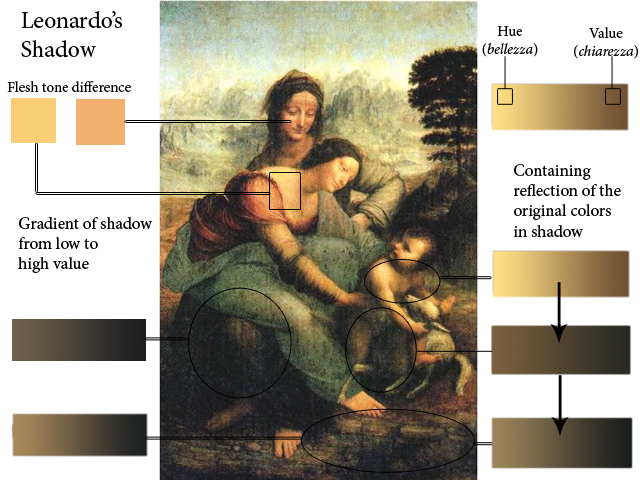
“Leonardo was so obsessed with using shadows and reflected light that he wrote fifteen thousand words on the topic, and that is probably less than half of what he originally wrote,” Walter Isaacson opined.

Using shadows and reflected light is a technique that doesnt have to be limited to painters or image creators, in my humble opinion. It can be used by article writers, novel writers, and just about every form of writing, if they’re not using it already. This mindset resulted from a technique da Vinci used in his paintings called sfumato, or “gone up in smoke”. I use it so often that I don’t think of it as a technique anymore, but I found it interesting to read the explorations of it by one most famous artists in history. The basic tenet of the sfumato technique, da Vinci made famous, was to avoid using specific and concrete lines in his paintings. This might not sound like a novel technique to the accomplished artist of the day, but it was groundbreaking in its day. Da Vinci did not invent this technique, as some evidence suggests it dates back to the chiaroscuro effects used by ancient Greeks and Romans, but da Vinci took it to another level.

When the writer begins writing a story, they characterize their main character with bold lines through unique, individualistic, and semi-autobiographical lines. The more an author explores that character, the more they chip away at strict characterization and allow their main character to breathe for themselves in a manner that adds dimension. They characterize with shading and reflection, or refraction through supporting characters, until they have done little to characterize the main character except through their interactions with others and events. Their main character becomes more prominent through these literary devices, until the central character becomes the literary equivalent to an eye of the storm.

A perfect example of this occurs in modern situation comedies. Most sitcoms have an “eye of the storm” character, we can characterize as the “us” character. The us character reflects us, but the us character also inadvertently defines the other characters as often as the other characters define him through interactions. The characters interact, and the us character is our way of dealing with all of their zany ideas and acts of the side characters, until we learn more us and all of the characters involved. Defining a character otherwise can leak into a term we want to minimize as much as possible. Think about that in terms of the sitcom. If the main character stood before the camera and told us about his likes, dislikes, and a little bit more about him, how boring would that be? It works in some cases, Larry Sanders, or The Office, but it doesn’t work in most cases. 

In most cases, we want to see characterization in action, we want to see what da Vinci called sfumato technique, or what we call the “show don’t tell” technique. The author uses supporting characters and setting to define their main character, and they use all of this to bring the events involved in their stories to bring them to life. The takeaway might be that the optimum characterizations are those characterizations that appear more organic to the reader. In other words, the author should be working his or her tail off to make the work appear so easy that the reader thinks anyone could do it.

Chekov’s Razor

Checkov’s razor is easy to understand. Write the first three paragraphs, pages, or whatever you need to familiarize yourself (the author) with your material and write the rest of your piece. Once the author is done with that piece, go back and delete the material that you had to write to start and start at the most compelling piece of your article. If you have germane sentences in that intro, save them, and work them into the body of the piece. Delete the chunk of exposition that it turns out was only written for you. Let the reader enjoy the rest. 

“But, wait, what if it’s brilliant,” we say to counter that argument. It could be, it might be, but it likely isn’t. Some of us get so locked in and locked up by the ‘we are a man of golden words’ notion. It’s the whole, ‘there’s no such thing as mistakes,’ philosophy, generated by artists the likes of Pablo Picasso and James Joyce. There are mistakes in writing, and leaving that big chunk of exposition at the beginning of your article is one of them.

“There’s no writer’s block. There’s lazy. There’s scared, but there’s no writer’s block. Just sit down and realize you’re mediocre and you’re going to have to put a lot of effort into this to make it good.” –Jerry Seinfeld

Writer’s block, according to Jerry Seinfeld’s definition, is the desire to start writing brilliantly. It’s the “If you can’t be the best, why do it?” block that inhibits writers from writing a single word, or the writing, deleting, writing, and deleting merry-go-round. It’s the dreaded, blank page, or the blinking cursor syndrome that prevents us from writing a single word. Jerry’s remedy is to accept the idea that you’re probably not half as brilliant as you think you are, and once you reach a point that you might be mediocre, it might be possible to write something that’s actually pretty good. My philosophy is similar, but I no longer think about greatness or mediocre distinctions. I just write until something good poops (and yes, I meant poops!) out.

We might call this the discovery phase. In the discovery phase, the writing is gibberish to everyone but the writer. This is the “all play no work” phase for most writers, as it allows us room away from our aspirations to true creativity. Some of the best room for creativity occurs when we have an ending in mind, as it’s fun to fill in the blanks. Filling in the blanks might also lead to a new ending. 

The takeaway for aspiring writers is to get the idea down before you forget it. Don’t worry about sequencing, chronology, grammar, spelling, or if this story is the base for the next great American novel. Just write it down and worry about all that later. Just write a bunch of gibberish down that only the writer understands, until the subject matter begins to open up to the writer. Once the author is in, the material might have the wherewithal to be in a near proximity to where a story lies, but the real story could take paragraphs, or pages, to develop.

Chekov’s razor focuses on threes, the first three paragraphs, and/or three pages of a manuscript, short story, or essay, but I’ve found this length arbitrary. When I begin a story, I think I have a full-fledged introduction on my hands. I don’t think anyone writes gibberish just to write gibberish, it feels like this could or should be the story at the time. I lock myself up when I try to determine if the writing is up to my standard, or if it’s going anywhere. I unlock myself by writing it all down, all of the important and unimportant that comes to mind, then I delete the unimportant.

Chekov’s razor comes into play when we go back and delete the unimportant. That is rough too, because all writers live with the “Golden words” mentality. Everything I write is not only good, it’s vital, and germane to the story. The writer needs to ask themselves am I a good writer or a good editor? The answer, if you’re going to try to write for others, is you’re going to have to be a little of both. Or, you can have a friend read it, or pay to have someone edit it for you. If you’re as megalomaniacal about your words as I am, you’ll either find a way or you won’t, and your work will suffer for it.  

In the course of writing past the blinking cursor stage, we discover pivot points that take us to the next stages of the story, but we don’t consider them anything more than what they are at the time. In the course of rewriting, however, we discover the pivot point is the story. The frustration falls on two tracks, the first is that we fell in love with that original idea, and it’s tough to just walk away. The other is that we “wasted” so much time writing “the other” story that we loved. When writers achieve the ultimate point of objectivity, when they realize story is sacred, they begin sacrificing all the information they love to leave information you will. 

Thus, I don’t believe there is magic in the power of threes in employing Chekov’s Razor to storytelling. A central idea, or pivot point arrives in the course of writing, but the point of Chekov’s razor is to dump and delete the useless information the writer used to write the story.  

An important note to add here is that if most authors work the same way I do, we do not write for the expressed purpose of finding the core of our story. Our perspective is, we think we already have the story, and that the only chore involves building upon it. The discovery of the core of story often humbles the author and slaps them back to the realization that no matter how many times we write a story, the art of writing involves mining the brain for ideas rather than having a brain loaded with brilliant ideas. That conceit eventually reveals itself to those willing to write a lot of material, and it’s up to the author to recognize the difference for what it is, if they want a quality story.

It happens in the course of writing it, editing it after we’re done, or in the daydreaming stage that can last for days, weeks, or months. I do not enjoy deleting the chunks of material I’ve written, and I don’t think anyone does, but the quality author will develop the ability to recognize what portion of the story is for them and which portion is for the reader, and they will crib note or delete the part of the story that is for them.

I don’t consider the revelation of these techniques a glamorization of my process. I think it demystifies the process by suggesting that anyone can do this, as long as they write as often as they need to discover what should become the central focus for the reader. Every author needs to move past their conceit of their self-defined brilliance to find the story they’re trying to tell, and learn how to work from within it.

As I’ve written elsewhere, the most prominent use of Chekov’s razor can be found in Franz Kafka’s Metamorphosis

Plumber: “That’s Not Dirt!”


“In my professional opinion,” my plumber said. “I think we’re stuck.” The plumber said after assuring me that the “power auger” on his truck would make “easy work” of clearing the lengthy sewer line from my home to the street. “My baby hasn’t failed me yet,” he said of his power auger. “Check that, once,” he added. “I couldn’t snake through once, but that plumbing line was just a mess. You should’ve seen it. It was a disaster.” After I informed him that he was the third plumber I’ve called in the space of about two years, he added, “You give us [he and his auger] fifteen minutes, and we’ll fix you.”
Prior to this call, I tried to stay away from the big guys. I much preferred the mom-and-pop operations that are filled with hungry, skilled workers who aren’t required to upsell me on the products I don’t really need. My frustrations with the little guys led me to call a Big Guy who had a never-fails power auger attached to his machine, a well-known reputation, and all the Big guarantees that Big Guys offer. I was so frustrated and desperate, and this Big Guy told me everything I wanted to hear. He assured me that “We will fix your mess for good.”   Most plumbers, big and small, do their job as if it’s a job. They often go from A to Z without changing expressions, and they don’t offer customers like me any of their personalties. This guy, a young twenty something, wasn’t burned out yet. He was not only a confident man, he appeared to really enjoy doing what he did.  I was also impressed when this employee of a big national chain informed me that his power auger could make a quick process of it, for that went against everything I heard. Everyone from the tree experts I talked to, to the plumbers who attempted to snake this drain before told me that the silver maple leaf trees were the worst possible tree a homeowner could have when it comes to plumbing. Our silver maple leaf was about sixty-feet tall, and the previous plumber informed me that that means it probably goes just as far, if not further, down, “And as I’m sure you can guess, a sixty-foot tree does not go straight down. It builds itself a foundation by spreading outwards infiltrating everything in its way.” I told this Big Guy what all the little guys told me, but he insisted that his truck’s power auger would make easy work of this task. “Just watch,” he said with his finger on the switch that powered the power auger connected, via cable, to a motor on his truck. “Just watch!” he shouted as it powered to life. And I was finally happy, relieved, and even a little excited with the surprising progress the Big Guy initially made. After about forty minutes, he and I shared a smile amidst the evidence of that auger’s progress lining my basement in the form of piles of debris on newspapers scattered throughout. The debris consisted of numerous examples of the silver maple leaf’s roots, twigs, and massive amounts of dirt that I assumed followed the twigs in the drain. “Well,” I said, looking down at these piles. “It should be easier to work through now that all of this dirt is wet?” “You’re kidding, right?” he said looking down at the mound of debris. “There is some dirt in there, no doubt, but most of that is not dirt.” I looked at him in confusion for about half a beat, until it dawned on me what he was saying. I, initially, considered that apt description quite embarrassing, and the plumber saw that embarrassment and smiled. After bathing in that embarrassment for about two seconds, I said, “Wait a second, isn’t that what we’re supposed to have in there?” “Sure,” he conceded, “but it’s not all dirt.” The plumber’s confidence turned out to be false bravado, as evidenced by the fact that the effort he and his power auger put into clearing the line failed to clear 100% of my drain. He and his power auger cleared 95% of it, but there was an annoying clump that he couldn’t clear.  After repeated efforts to assist the power auger, he flipped the switch off and attempted to physically free the one final chunk of filth over the lip of the drain cleanout inside our home. He didn’t say a word regarding his power auger’s failure, and how this might be only the second time he and the auger failed. He simply went manual, and he said he was “So close. Look at it,” he added the latter pulling the filth to the fore. We agreed that it almost looked like a rodent, teasing us, popping its head in and out of a hole. He couldn’t manage to get it over the lip though. He put forth a valiant effort, but that eventually, physically drained him. His hopelessness led him to call the home office. When they said they didn’t have anyone available to assist him, he put out personal calls to his professional colleagues. After they didn’t answer numerous calls, he called the home office back for advice. “I hate to ask you this,” he said, turning to me in a peak of frustration. “And I’ve never done this before, and I’m sure my colleagues would frown at this, but … would you mind helping me here?” After I agreed to do just that, he added, “I think the two of us should be able do this together, don’t you?” He put me on the lead, and he said he would be pulling the auger from behind. He said something about the art of tug-of-war, and how the guy at the end usually does most of the work. I agreed with that analogy, and I was already to start when he stopped me. “Before we begin, let me say two things. I want you to pull as hard as you can, but when I say stop. Stop! He asked me to look at him when he said this, and he repeated that line to assure him that I understood the importance of stopping, and then he asked me to repeat to him what he said. I repeated his instructions dutifully. As I began to pull, however, I began to make significant progress. It became pretty obvious to both of us that I, an ordinary citizen with no professional training, was making more progress than a certified plumber from a Big Guy corporation. I was proud. I was even more proud when he stopped pulling from behind, as I considered that a compliment to not only the progress I made but my surprising strength. That was my ego talking, of course, but when he said, “I think you’re getting it,” that fueled me to put every ounce of strength I had into it. I don’t know about anyone else, but when another fella tells me that I’m displaying feats of strength beyond his own, it invigorates me. When I’m outdoing a professional at his own profession, I try to live up to that compliment and expound upon it. As I sought to expound upon it, the primary source of our concern appeared in the sewer cleanout fitting built into the wall of our basement. I was excited, I thought I was accomplishing something huge, but the plumber informed me that working it through the fitting was often the hardest part. I had this in mind, coupled with the progress I made, and I decided to show him how strong I was. My first couple pulls were somewhat cautious, as I awaited the instruction to stop, and the glop continued to pop up to the lip and drop to continue our “rodent popping out of a hole to torment its predator” analogy.   After those first couple of tantalizing pulls failed, I let the snake go slack and regrouped for one final pull. I inhaled and grabbed ahold of snake line, with the no-slip grip gloves he provided, and I put everything I had into that one final pull.
“Stop!” the plumber shouted, too late. The mass, that was not dirt, intertwined with silver maple leaf twigs, finally made it through the closeout fitting. Its release, combined with the force of my pull, caused me to fall backward until I was flat on my back. The result of that flat fall not only prevented the mass that was not dirt from hitting me, but it put me in a perfect position to watch the mass fly up over my toes, my body, and my head. I remember this occurring in slow motion, but as anyone with a fundamental understanding of physics knows, this did not happen in slow motion, and what goes up must come down. Yet, the glop did not go up by a significant measure, and it did not come down. It shot almost flat across the room, so fast, that I didn’t see the glop hit the plumber in the face. I didn’t expect it to hit the plumber in the face, of course, as I didn’t know its trajectory in reference to the plumber, so I didn’t wonder if  the plumber failed to duck, or if it happened so fast that he didn’t have time to, but we have to assume the latter. Regardless what his reaction was, most of the glop that was not dirt landed square on his face, dirtying his nose and eyeglasses. I heard a disgusted “Uh!” before I turned to see what caused it. When I turned to see the mess on his face, it took him about as long as it did me to completely digest what just happened. Once he did, the “Uh!” turned into a series of expletives. One of those expletives could adequately describe some of material that was not dirt, now on his face. He blamed me for not stopping when he told me to, he blamed himself for not waiting for a professional colleague to assist him, and he displayed some anger at the world, in general, for a moment. Throughout this understandable tirade, the plumber did not wipe the glop from his face. He just stared at me, and with me, in mutual disgust for what just happened. “This is, by far, the most disgusting thing that’s ever happened to me,” he said after he cooled down a little, “and I’m sure you can guess that as a member of my profession that’s a bold statement, as I’ve compiled a lengthy list in the last six years!” I considered that a great line, enhanced by the visual that he permitted me to enjoy. As a writer, I figure I probably appreciate great lines more than most, but everyone understands how visuals enhance even the best of lines. I wasn’t sure if he valued great, comedic lines as much as I did, but I wondered if he allowed this glop to remain on his face for a full five seconds, because he thought it might enhance the comedic value of that line.   I don’t know what he was thinking, or if I was assigning my values to his reaction, but my guess is his six years spent as a plumber raised his tolerance level for what others consider unspeakably disgusting. I decided that had to be the case, because I have to guess that some infinitesimal nugget below 100% of the non-plumber population wouldn’t allow the glop, that was not dirt, to remain on their face for a full five seconds, even for laughter. We can all agree that five seconds is a relatively short amount of time, relative to normal situations, but count out five seconds real quick, right here, and imagine leaving a glop, that was not dirt, on your face for that long. I still can’t understand why wiping this glop off his face wasn’t such an instinctual response that he’d have most of it off within two seconds of furious wiping. I now wonder if some part of him thought he was paying homage to the great comedians who proceeded him by physically agreeing to the principle that some of the times we have to suffer for our art. Whatever his reasoning, he delivered one final classic while wiping it all off his face and glasses, “All I can say, and I never thought I’d say this, but I’m glad that I need to wear glasses.”