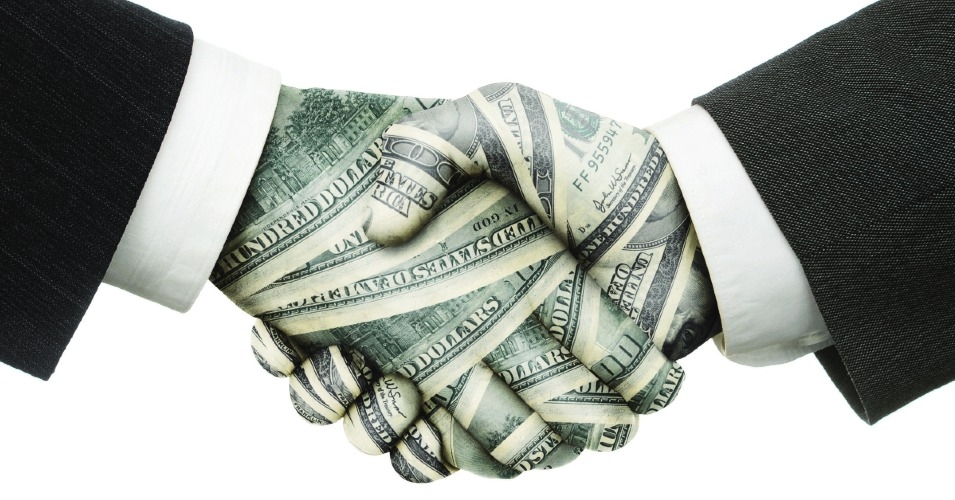
Trickle-Down Economics or Trickle-Down Government?


““Trickle-down economics”, also referred to as “trickle-down theory”, is a populist political term used to characterize economic policies as favoring the wealthy or privileged.” –Google definition.

One of the primary duties of a search engine is to provide concise definitions for their customers. So, I do not fault Google for providing what I consider an incomplete definition. To my mind the ideal definition of the term would be the following: ‘Trickle-down economics’, also referred to as ‘trickle-down theory’, is a populist political term used (primarily by opponents) to characterize economic policies (with which they disagree) as favoring the wealthy or privileged.’ (Those who helped to write the definition of the term, for Wikipediahave included the first (primarily by opponents) parenthetical addition.)

(Credit: Center for Media and Democracy)

I realize that, in some ways, these additions might result in the perception that the search engine is taking a side in the argument, but as economist, Dr. Thomas Sowell, writes in his book Basic Economics that “the term trickle-down is not a proper characterization of the laissez-faire, supply-side economic theory. Their goal is attained through a lowering of regulations on business, a lower capital gains tax, and a lower corporate tax rate, would not provide benefit specific to the wealthy or privileged, as much as it would all enterprising risk takers, regardless of their income.”

One of the biggest myths that those overwhelmed by the intricacies and complexities involved in understanding economic theory buy into is that an increased tax rate always leads to more revenue for the government. It seems like simple math to suggest that if the government taxes a corporation one percent on 100 million of their profit, the government will receive one million dollars, two percent equals two million, and the higher the tax rate the more a government receives to then redistribute accordingly. This is what supply side economist Arthur Laffer has characterized as the “arithmetic effect”.

What the arithmetic effect does not account for is the effect high taxes have on the amount of taxable activity that occurs. As economist Arthur Laffer points out, “Everyone knows that if you tax a corporation 0%, the government will receive 0% in revenue. What may not seem as logical on the face of it is, if the government taxes a corporation 100%, the government will also receive 0% in revenue, because the taxed individual, or corporation, will begin to lessen their activity to avoid greater taxation.”

What this illustrates, by means of exaggeration, is that there are points in between at which companies, and individuals, decide that it doesn’t make good business sense to continue to engage in taxable activity, at full capacity, if the tax rate on that activity is too high. There is a point in between, suggests Laffer, a point that some now call the Laffer Curve, that suggests that there is a sweet spot in the tax rate that encourages more taxable activity, broadens the tax base by encouraging greater employment, and can end up increasing the tax revenue for the federal government.

If the supply-side argument were solely concerned with a “trickle-down” effect, one would think that they would be obsessed with the rich keeping more of their money. If that were the case, the supply-side argument might suggest that the tax rate should be as low as possible. They might even suggest that the tax rate should be 0%, or a single-digit tax-rate. That is not the argument that Laffer, Sowell, or any supply-side economists put forth. Rather, they call for a tax rate that encourages greater economic activity that they believe will result in more taxable activity that they believe should result in more revenue for the government. If they directed their sole focus at the rich keeping more of their money, their arguments would also focus more on the federal income tax rate. What they are more concerned with is lowering the corporate tax rate, the capital gains tax, and lessening burdensome government regulation to allow for a more stratified economy by encouraging more middle class investment and risk taking. The middle class risk takers comprise a large percentage of employers of our society, and most of them are not successful in their efforts, much less wealthy. The politicians who raise these taxes often talk about how they need to create jobs, but if the supply side economist theories are to be accepted, these politicians do more harm than good to those who employ when they tax beyond the sweet spot.

Warren Buffett and the Already Wealthy

Ask any wealthy, or privileged, individual about paying taxes, and they will inform inquisitive minds that they don’t mind paying taxes, that they’re not paying enough in taxes, or that they think they should be paying more. The listener cannot help but consider such an answer wonderful, altruistic, and patriotic. What Warren Buffett will not add is that paying more in taxes will not hurt him, because he already has his money, and he doesn’t mind paying as many taxes as he could possibly pay, until the IRS comes to collect those taxes, and Warren Buffet takes them to court and succeeds in keeping more of his millions.

A person like Warren Buffett may have been for lower taxes, decreased regulations, and a lessened role of government in the economy when he was starting out, but it no longer benefits him in the manner it may the enterprising risk taker that deigns to compete with one of the blue chip companies in Warren Buffett’s stock portfolio. The already wealthy and privileged few –like Warren Buffett– would be more apt to encourage federal regulators to regulate and tax the industries of the companies from which he has shares. In doing so, a wealthy and privileged type like Warren Buffet hopes the government can aid him in diminishing current competitors and drive away any future risk takers who might aspire to compete with a Wells Fargo, IBM, Coca Cola, or any of the other big, blue chip companies in which he owns shares. Yet, any time Warren Buffet appears on TV, everyone is surprised to hear him sound more like Barack Obama than Ronald Reagan. Why wouldn’t he, it benefits him to do this, and he already has his.

The Straw Man Argument

Some trace the term “trickle-down economics” to the humorist, Will Rogers, and his attempts to demonize the policies of President Herbert Hoover to the benefit of the Franklin D. Roosevelt campaign. Those, in certain circles, use the term now to voice opposition to such theories, as a straw man argument of what the other side believes. 

As Thomas Sowell writes in his book Basic Economics:

“No recognized economist of any school of thought has ever had any such theory (Trickle Down) or made any such proposal. It is a straw man. It cannot be found in even the most voluminous and learned histories of economic theories.

“What is sought by those that advocate lower rates of taxation or other reductions of government’s role in the economy is not the transfer of existing wealth to higher income earners or businesses but the creation of additional wealth when businesses are less hampered by government controls or by increasing government appropriation of that additional wealth under steeply progressive taxation laws. Whatever the merits or demerits of this view, this is the argument that is made – and which is not confronted, but evaded, by talk of a non-existent ‘trickle down’ theory.

“Whether in the United States or in India, and whether in the past or in the present, ‘trickle down’ has been a characterization and rejection of what somebody else supposedly believed. Moreover, it has been considered unnecessary (by opponents) to cite any given person who had actually advocated any such thing.

“The real effect of a reduction in the capital gains tax is that it opens the prospect of greater future net profits and thereby provides incentives to make current investments that create current employment.”

If one were to corner me in a supermarket and ask me about supply side economics, based on the curve that Arthur Laffer reintroduced to the world, that opponents call trickle-down economics, I might have conceded to the idea that those who formed the economic theory intended it to favor the wealthy and industrial types first. I believed that those who espouse the theory state intend for the fruits of this process to pinball its way down. Even back then, back when I thought it was a decent theory on its face, I didn’t think it made sense. How does one answer for the argument that in a trickle down economy, the idea of greed counters the idea that the money will ever find its way to the worker.

The answer is that our economy is more stratified, and a stratified economy calls for the success of the businesses across all classes, and when the government steps in with its invisible hand to determine winners and losers, it messes that dynamic up by crushing the little guys first. Thomas Sowell would say that even that is a fundamental misreading of the manner in which economic processes work.

“Economic processes work in the directly opposite way from that depicted by those that imagine that profits first benefit business owners and that benefits only belatedly trickle down to workers.

“When an investment is made, whether to build a railroad or to open a new restaurant, the first money is spent hiring people to do the work. Without that, nothing happens. Even when one person decides to operate a store or hamburger stand without employees, that person must first pay somebody to deliver the goods that are being sold. Money goes out first to pay expenses and then comes back as profits later – if at all. The high rate of failure of new businesses makes painfully clear that there is nothing inevitable about the money coming back.

“Even with successful and well-established businesses, years may elapse between the initial investment and the return of earnings. From the time when an oil company begins spending money to explore for petroleum to the time when the first gasoline resulting from that exploration comes out of a pump at a filling station, a decade may have passed. In the meantime, all sorts of employees have been paid – geologists, engineers, refinery workers, and truck drivers, for example. It is only afterwards that profits begin coming in. Only then are there any capital gains to tax. The real effect of a reduction in the capital gains tax is that it opens the prospect of greater future net profits and thereby provides incentives to make current investments that create current employment.”

The ignorance of the many (myself included) of the complications inherent in economic theory allows opponents of economic theories to frame and fragment that them in such a way that they are able to reduce it to a misleading soundbite that trashes Trickle-Down economics. I do not think I’m alone when I write that even though Dr. Sowell has a talent for making the complex understandable, the quotes I’ve provided here can lead to Irritable Cerebral Digestion (ICD) for which rereading is the only cure. In the midst of such confusion, opponents step in to provide relief from this confusion, and arduous reading, by giving us a ‘benefit the wealthy and privileged’ soundbite.

The Big Corporation and Big Government Relationship

One of the methods novices can use to try and understand a complex economic theory, such as that espoused by Dr. Sowell and others, is to understand what it is not. What is the opposite of lessened regulations, and lower business specific taxes? Some call it Keynesianism economics. Keynesian economists often call for more government intervention in times of crisis (i.e. recession or depression). Keynesians often call for “work ready jobs”, and what others call “shovel ready jobs”. Opponents characterize these jobs as one group of employees digs a hole, while another group covers that hole. The short-term purpose of such jobs is to get us over the short-term, temporary, bump of a failing economy. The problem that results from these temporary, short-term resolutions is that when government establishes a role in the economy, for emergency purposes, it rarely rolls those temporary measures back when the emergency has been resolved, as most politicians will not concede that an emergency, which voters elect them to fix, is ever resolved.

This ends up establishing a greater, and more accepted involvement of the government in the economy. Big Corporations hire accountants and lawyers to teach them how to survive in an environment of a burdensome federal government, until a mutually beneficial relationship is established. The mutually beneficial relationship is realized when Big Corporations learn how to not only survive, but thrive in such an environment, until an incestuous relationship develops to create a climate some call crony capitalism. Some may find this hard to believe, but Warren Buffett, his blue chip companies, and all of those listed in the Dow actually favor more regulations, higher corporate tax rates, higher capital gains rates, and a larger role of federal government in their respective industry.

‘Why would a Big, greedy Corporation call for more taxes, more regulations, and more complications within their own industry?’ some might ask. ‘Doesn’t that affect their profit margin?’ The answer lies in fine print of the reason that there are now more millionaires in Washington D.C., per capita, than in any other place in the United States. It is also the answer to the question how an indicator of the health of an economy, such as the Gross Domestic Product (GDP), can continue to grow at an anemic rate while the stock market soars to record levels. Crony capitalism results in Big Corporations (and their lobbyists) joining hands with government officials (and their agencies) to pass onerous regulations and high corporate tax rates on an industry. The result is that the rich companies in that industry get richer and the poor get poorer, and this creates a truer form of what could more appropriately call trickle-down economics with the government and Big Corporations holding hands at the top.

When the Food and Drug Administration (FDA) recently passed regulations on E-Cigarettes, or Vapor cigarettes, for example, they did so in a manner that should have shocked those who loathe corporate America and favor regulating Big Corporate America in a way that they believe benefits everyone else. The FDA regulations actually ended up favoring the Big Three Corporations in the smoking industry, or those that have the means, and the set aside money, to comply with all of the FDA regulations and the resultant applications. The Little Guys who attempted to establish brand names in the industry, and carve out their own niche in the industry, will eventually be unable to afford these expenses and still turn a profit on the product, so the Big Three will be the only ones left that can afford to sell and distribute E-Cigarettes and Vapor cigarettes. Why would these Big Three corporations do this, if they are already in the E-Cigarettes segment of the market, but not dominating it yet, or if they are not already in the market, but they have plans to be? They are utilizing Big Government regulation and taxation to crush the little guys in their industry. The very definition of what some politicos call crony capitalism.

Some may say that the FDA’s regulations in the E-Cigarette, or Vapor cigarette, industry may have inadvertently helped the Big Three in their plans to dominate this segment of the industry. They would add, however, that the primary goal of the FDA was to help the consumer understand that E-cigarettes and Vapor cigarettes either contain toxins that are harmful to their health, or that the companies in the industry must prove that they don’t, and they must warn the public if they can’t. In the case of this particular FDA regulation, however, Michael Siegel wrote that there were alternative routes the FDA could’ve explored to protect the consumer in the ways the FDA stated that these regulations would, but that the FDA chose the route most beneficial for the Big Three. 

One could deduce, based on the particulars of the regulations listed in Siegel’s piece that the FDA acted in a manner that the Big Three’s lobbyists called for, as evidenced by the fact that a member of the Big Three helped the FDA carve out the legislation. Even with all we’ve  written here, it still makes no sense that a Big Corporation would help write onerous legislation to crush the little guys if they are eventually going to take that industry over. They would then have to comply with those regulations. As we’ve written, after the legislation, they’ll buy up the little guys (as has happened in this industry), and they’ll be the only ones left standing. 

Long story short, a bunch of little guys gathered and carved out a niche in an industry that the Big Three had some difficulty dominating. The Big Three grew weary of the competition in that industry, and they “secretly negotiated” with advocacy groups and lobbyists to help form the legislation. 

As a spokesman of Altria, the biggest of the Big Three, Brian May, stated: 

“(Altria) did support FDA extension of authority over e-cigarettes and other tobacco products. Our goal is to be a leader in vaping space.”

“In terms of what they’re trying to do, (tobacco companies) want to limit competition and encourage the cartelization of their markets,” Jonathon H. Adler, the author of the “Baptists, Bootleggers” article, wrote in an email. “They want regulation of e-cigarettes because it lessens the competitive threat to traditional cigarettes and because it makes the remaining e-cigarette market something that’s easier for them to dominate.”

Some are also suggesting that the manner in which the Big Three in this industry conspired with the government to take over the E-cigarette segment of the business, lays a road map for how they will take over the marijuana industry if that product achieves legalization in the United States.

So the next time a powerful politician suggests that “trickle-down economics” does not work, remember that is in their best interests to re-characterize the supply-side economic theory, without informing their audience of the particulars of that theory. Also, keep in mind that if their theory on economics continues to prevail, the government will remain atop the various industries in this country. The politician will be in a seat of power that will continue to allow that politician to “trickle-down” benefits in all the ways listed above, and in the form of taxpayer subsidies, bailouts, and no-bid contracts that benefit the corporations that meet the politician’s political bullet points. (One also suspects that Big Corporations might line the pockets of such politicians with legal contributions.) 

Also, remember if supply-side economists had their way with the government’s economic policies, the regulations and tax code would have appeal that is more comprehensive for those individuals (little guys) who aspire to take a risk in our economy. The intended result would be greater prosperity among all economic classes. The method of doing so would involve removing the roadblocks that Big Corporations hire accountants and lawyers to help them avoid. The intended result would also involve freeing up of middle class risk takers in a manner than should result in a broader tax base, more diverse forms of employment for individuals across economic classes, and it should end up resulting in more money in the coffers of government.

The opponents have learned, however, that the best way to pettifog an issue is to get out in front of it, and proactively define the debate in question. When a person defends their personal motivations on an issue by saying it’s not about the money, the first thing the listener should know is that it’s all about the money. On a similar note, when a politician allocates tax payer’s hard earned dollars –in the form of tax payer subsidies– to one company in an industry, and they say it’s not about picking winners and losers, the listener can be assured that it’s all about picking winners and losers. That particular company just managed to hit most of the politician’s political bullet points, and he or she began transferring wealth to the company in a form of trickle-down economics in which the politician was standing alone at the top of the pyramid flexing their muscles for the rest of corporate America to witness.

I don’t know what the goals of other side of supply-side economics were hoping to accomplish in their end game, but I would guess that most honest businessmen now find it disgusting to watch their fellow businessmen panhandle government officials into drowning their competition in legal red tape, onerous regulations, and tax rates. I would think that most honest businessmen would, at least consider the practice unethical. I’m quite sure that the other businessmen –those declared to be unethical by their peers– would turn to their friends and say something along the lines of, ‘To succeed in this climate, you need to learn how to operate within it. It’s called crony capitalism.’

Impulsive vs. Reflective


I have learned, the hard way, to avoid the impulses that drive one to make impulsive purchases. I have learned to define my desire for said product through separation. Take a step away and try to take the newness element out of the product and imagine it on you, in you, or under you one month from now. The problem with these impulses I have is that they drive me to purchase shocking, ridiculous, and useless products that satisfy a short-term desire to be different.

Craftsmanship means as much to me as anyone else, but when it comes time to purchase products, the subtlety of a craftsman’s curve in a rocking chair has never spoken to me on a personal level. I much prefer a new-age piece of furniture that has some innovative sex appeal with a couple exclamation points behind it. I want a piece that causes people to ask questions that have no suitable answers.

Had I followed the impulses that have controlled me at various points in my life, I would now be driving a bright orange Jeep with black trim. I might even have a bright yellow colored living room with equally bright orange furniture, and some kind of multicolored carpet that accentuates the overall theme. I might also have a visually striking painting of a screeching gargantuan, gold eagle, with beaming blood red eyes, flying above shadowed villagers scampering to safety on a red felt background. Those products would fulfill a definition I have for the immediate, shocking, discomfiting, and shocking elements of beauty. It’s a definition of who I was, and who I am, that I know would shock my visitors into thinking there might be something we need to sit down and discuss before it gets out of hand.

Two things prohibit me from following these impulses: A wife and a child. A wife, or any person on the inside looking in, tempers such impulses with rational refutation. When a single man, with no children, follows his impulses, people sort through the psychological damages he must have accrued throughout his life, and they laugh it off as a bachelor pad. When that same man has a child, however, that child has extended family members that care about that child and worry about their well-being when they see that one of his primary role models has created a living room that requires sunglasses. When one of that child’s primary role models also has a painting of a bloodthirsty eagle flying above doomed villagers, above the hearth, they might question his ability to raise a proper child.

The other thing that prevents me from following these impulses now is that I’ve been there, done that. I’ve been the person others tried to understand, and I’ve been a person that others gave up trying to understand, until they conceded that the person they thought they knew is a lot weirder than they ever thought. I’ve purchased a shockingly bright, baby blue pair of shoes that I considered an expression of my personal definition of beauty. I tore these shocking baby blue pair of shoes off the shelves on sight and without thought. I figured I was in for a psychological pummeling from those who consider anything different a source of ridicule, but I was willing to ride it out for the effect I thought the pair of shoes would have on my essence.

Others echoed these fears by informing me that I should expect the worst from my classmates, if I had the temerity to wear these shoes to school. “People do wear such shoes,” they warned, “when they workout. They don’t wear them at work, in school, or on the path to and fro.”

Hindsight may be 20/20, in this case, but I remember tingling with anticipation over the effect I thought this would have on my classmates. I couldn’t wait to introduce them to the new me. I then made a statement about the old me, by throwing away my old, sensible shoes.

Those who tried to prepare me for the psychological pummeling that would follow, would have been shocked at how successful my attempt to shock people was. I lost loyal friends over it, as they attempted to distance themselves from me to avoid having shrapnel rain down upon them. The experience was such that I thought of a short story called The Boy with the Bright, Baby Blue Shoes. I remembered a nature documentary in which a pack of hyenas brought a zebra down bite-by-bite, and my sympathy for that beast churned to empathy after this moment in my life. For those who abhor judgments of any kind and seek the karmic justice for those who do, this was one of the many for me. It did not feel good, and the pain I experienced changed me. If you’re going to judge others, you should prepare for them to judge you.

I did not have the confidence, or temerity necessary to stare these people down back then, and they broke me. I did learn that when one dares to be different, there are whole bunch of guidelines and borders, and most of them are superficial. I also learned one golden rule of life that I would pursue for much of my life to arrive at a final answer, and that was that most people consider it a worthy goal to dismiss as many people as possible in life. A wearer of bright, baby blue shoes becomes a wearer of such shoes, for example, until that person becomes a barometer of agreed upon truths that need to be agreed upon in the most brutal fashion possible.

At some point, I did find the subtle beauty of a craftsman’s curve in the gap of others’ writings, in certain lyrical phrases, and in the margins of dialogue and characterization. I discovered something in the intended, and unintended, philosophical truths of various artistic expressions of organic craftsmen. In those phrases, lines, paragraphs, and comprehensive thoughts, I discovered a shockingly different beauty that replaced my need for superficially shocking modifications.

My need for character-defining purchases also led me to be a sucker for innovation. My impulses drive me to purchase the latest and greatest technology my fellow man created for my convenience, and it led me to spend a great deal of money in the “As Seen on TV” aisles of prominent stores, and the “As Seen on TV” stores in malls. I purchase these products in the hope that they will simplify otherwise arduous and mundane tasks, but I’ve purchased these types of products so often that I now know that whatever short-term convenience these products provide pale in comparison to their suspect long-term durability. These innovations do sell, of course, because people, like me, get amped up on the idea that a collapsible garden hose will free up so much space on my back patio. The question I ask myself, now, when wrestling with the impulses that drive me to purchase anything that will make my life easier is, if this “new and improved way of doing things” product were in fact better than the more traditional products in the main aisle, wouldn’t the new products replace those traditional products that my dad and my grandfather used in the main aisle. If the new and improved products are as great as the manufacturer’s claim, it shouldn’t take long for them to replace the old, traditional products, but for reasons endemic to this article they never do. 

For those who still can’t rationalize their impulses away, I have one piece of advice when attempting to define your desire by separation. Those bright, baby blue pair of shoes that look so deliciously freakish sitting in that aisle will eventually become nothing more than a pair of shoes over time. A Jeep will become nothing more than a mode for transportation, and a chair will eventually become nothing more than something to sit in, once the effect of being shocking wears off. The person who makes these impulsive purchases also realizes that these products provide onlookers data about the person that purchases them in a manner that the purchaser will likely regret long term. I hoped that by purchasing a pair of bright, baby blue tennis shoes that I would make a statement that no one in my vicinity would soon forget, and they didn’t, and I realized that I allowed them to dismiss me as a person that wore bright, baby blue shoes. I learned that every day beauty requires a study of the subtle forms of beauty that will grow on a person, and when the otherwise impulsive learn this they will decide to purchase the white Jeep with black rims.

It’s ‘Okay to Like’ Guilty Pleasures


“It’s okay to like your favorite shows again, even if they have no cultural value or societal significance,” a person informed my friend.  “As long as the preference for the show is characterized as a guilty pleasure.”

After receiving permission to enjoy the show my friend once so enjoyed, she began binge watching the show on Netflix. She watched this show in the manner of one catching up with an old friend, after a prolonged absence. She knew the show was a silly sitcom, and she also knew that the premise of that show –though somewhat relevant in its era– had become dated and insignificant. So, even though she had always loved the show, she stopped watching it, even in private, until that friend of hers ‘gave her permission’ to end that prolonged exile, informing her that ‘it is now okay’ to enjoy that show again.

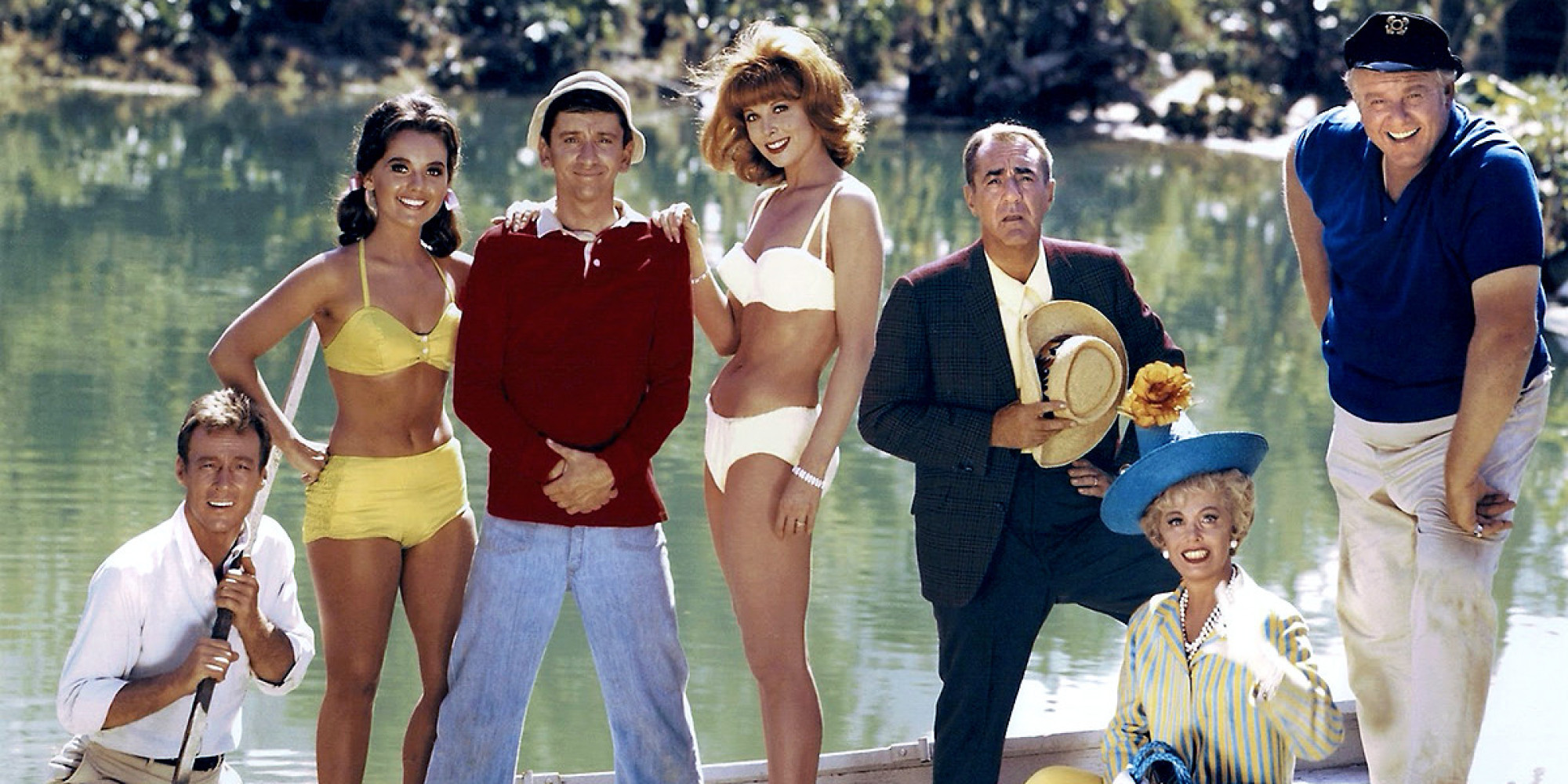
o-GILLIGAN-facebookAs with ubiquitous idioms of this sort, I heard the terms ‘given permission,’ ‘guilty pleasure,’ and ‘it’s okay to like’ before. When everyone begins saying such things, however, I’m left wondering where I was in the gestation cycle of the phrase. I didn’t think the phrases funny, when I first began hearing them, or if they were intended to be funny. I didn’t think they provided an interesting twist on the art of decision-making, and I didn’t think that I would ever be incorporating them into my decision-making process, or the explanations to others regarding my choices.

I just thought it was an odd way for one person to frame the dietary decisions she had made, and that’s where it started for me.  I’d heard people, largely women, framing dietary cheats this way. ‘I’ve been good,’ they would say before they took a bite of something they knew damaged the discipline they had exhibited to that point. They then gave themselves permission to eat what they wanted based on that established discipline, and they called those cheats guilty pleasures. At some point, these phrases made a crossover into other decisions, until people began framing all of their decisions with these qualifiers. They also began informing me that I should frame my decisions in this manner, that I should give it a spin, as it were, and that with these qualifiers, I could now make my decisions free from the guilt associated with prying eyes.

“Why wouldn’t it be okay for me to like the television shows I enjoy?” I would ask when the phrases began crossing over into entertainment choices. At this point in the gestation cycle of these phrases it was obvious that something had already happened. I didn’t know if it happened in the shows I never watch, some movie I missed, or if the phrase had been repeated in a commercial, or a number of commercials, but some vehicle had imprinted these phrases so deeply into the craniums of the people I speak with that they were using the phrases without knowing why. I’ve often found that the best way to cut to the heart of the matter is to ask a question so obvious that no one ever thought of it before.  ‘Why isn’t okay for me to like what I like?’ and ‘Why am I then required to qualify my choices in a manner that prevents you from thinking less of me?’ I began asking variations of these questions of those that posed these notions to me, and as with most idioms of this sort, no one knows why. They just hear other people framing their decisions in this manner, until they find themselves doing it.

After questioning a number of these people, I made the mistake of dismissing these phrases on the basis that no one understood why they did it, and I assumed that it would have a very short shelf life, until everyone I knew began repeating these phrases in almost the same context, and Google searches began revealing websites that were being built around the idea that ‘It’s ok to like’ this today, and ‘it’s okay to dislike’ other things. I even found a Twitter page that gave its visitors permission to like some things and to like other people that like other things. It’s difficult to determine how tongue-in-cheek these grants of permission are, or if these people enjoy being on the cutting edge of cultural trends.

Then, I hear that my friend is now binge watching her favorite show of all-time again, and she’s characterizing it as her ‘one guilty pleasure’. She drops that phrase, I could only assume, to prevent me from thinking less of her for watching such a dated, irrelevant show. She cared what I thought of her, in that instance, and I rationalized that unless we have a master plan of dropping out of the human race, we all care what others think to a point where we need to develop some kind of shield to protect our inner sanctum from prying eyes. Those that have attempted to loft the very high school era idea that they don’t care what anyone thinks of them have inevitably run into the ‘thou doth protest too much’ wall that reveals that they probably care more than anyone else. One could say that this ‘guilty pleasure’ allowance has not only ‘given us permission’ to enjoy the shows we enjoyed so much at one time, it gave rise to an industry in which cable channels like TV Land could prosper, and a Netflix was born, and the whole idea of binge watching became a permissible and acceptable guilty pleasure.

The first question I would’ve asked this ‘guilty pleasure’ friend of my friend that granted her permission to like her favorite show again is, ‘How many guilty pleasures is one person permitted, and what happens to that person that violates the excessive quantity principle of the lack of quality edict?’ One would assume that the term guilty pleasure is intended to be exclusive to one, or at least a few, products.  Are these guilty pleasures exclusive within industries? Can one have more than one television show they consider a guilty pleasure, and if so, is it specific to genre? If one has more than one ‘60’s era, silly sitcom, that they characterize as a guilty pleasure, is that a violation of guilty pleasure principle, and if the person has too many guilty pleasures will they end up spending so much time pleasuring themselves that they may find themselves walking around with burdensome guilt? Would that person be deemed unimportant, and would that lead them to being ostracized from the hip, in touch groups in a manner reminiscent of a Nathaniel Hawthorne novel?’ Who are these social architects that dictate to society what is and what isn’t okay to watch? And how did this need for the ‘guilty pleasure’ qualifier come about, so that we can watch what we want without undue scrutiny?

We’ve all been informed that The Brady Bunch and Gilligan’s Island are okay to dislike, by these people, because these shows, and all shows like them, are impossible to take seriously. They say that these shows depict a silly and foolish era that we’ve all moved beyond, and ‘good riddance!’ they often add. At some point, however, they decide there is some quaint, retro glory in these shows, and they decide that ‘it’s now okay’ to go back and like these shows again, as long as the individual qualifies those viewings as a guilty pleasure. I would not listen to these people regardless how prestigious others deem them to be, but to those that do listen, I would ask, ‘What gives them the credibility to decide for you?’ It would seem to me that they gain their bona fides solely by making the claim that they know what it is that’s ‘okay to like’ and what is not, and what should be listed as a guilty pleasure.

***

My lifelong enjoyment of Gilligan’s Island could be called a ‘guilty pleasure’, if the term is defined as: “Something, such as a movie, television program, or piece of music, that one enjoys despite feeling that it is not generally held in high regard.” I know how dumb and silly the show is. I also know that in the broad, cultural sense it has no redeemable qualities. Yet, I do not feel guilty about any association I may have had, or will continue to have with the show, and I have no problem floating back in time to that place in time when I watched Gilligan’s Island every day for years.

This leads to that silly argument of extension that suggests that anything one is not ashamed of, must be something for which they hold such a sense of pride that they should be willing and able to defend, and those that don’t do either are taking the spineless, Switzerland position of critiquing both sides while trying to avoid vulnerability on the point. I understand that complaint, but remember we are talking about television shows here, and if I were forced to mount a defense for this television show –to avoid the spineless Switzerland position– it would be made in defense of silliness.

Gilligan’s Island was silly and dumb, as I’ve said, but so was one of the most celebrated, critically acclaimed, and award winning shows of our time: Seinfeld.  If we were to break this brilliant show down to its core, we would find silliness. The keys to Seinfeld’s success, it would seem to me, lay in its creative way to turn a phrase, and its ability capture a comprehensive thought with creative brevity. The writers were also hell bent on making a story flow through an arc and return to the theme of an episode with a “no hugging and no learning” themed resolution.

Gilligan’s Island could be said to be one of the predecessors of this “no hugging and no learning” theme that would later specifically be employed Seinfeld. It could also be argued that most of the shows of that era were based on this “no hugging and no learning” theme, and that the cultural relevance brigade with their “applause ready” soundbites, “poignant, thought-provoking, and very special” plot lines, with lots of hugging, and learning, and crying came later. It could also be argued that Seinfeld, and its “no hugging and no learning” theme was a return to that era when sitcoms didn’t try to be more than they were. They just wanted to make people laugh in an era when no one felt guilty about doing just that.

If the reader knows anything about Gilligan’s Island, and a growing number of people do not, they know that Gilligan’s Island would never be confused with having anything to do with cultural relevance. The creator of the show, Sherwood Schwartz, stated as much when he said that if there was anything political about the show it existed in an intended apolitical theme. His exact quote, as listed in a Mental Floss piece on the show, was that Gilligan’s Island represented, “A metaphorical shaming of world politics in the sense that when necessary for survival, yes we can all get along.”

As a political person that has been reminded, throughout my life, how divisive politics can be, I think we could all benefit from more “no hugging and no learning” shows. The problems with such shows is that no one feels important watching them, and we all have a need to feel important. Some of us even strive so hard for importance that we claim that we watch shows we never watch, read books we have not read, and listen to important music that no one listens to. Silly shows will never make a person feel important, they will not win awards, TV critics won’t talk about them, and water cooler speakers don’t often talk about “no hugging and no learning” shows, or if they do, it’s not reported on by TV critics that consider these type of shows guilty pleasures.

Seinfeld is the exception to all of these statements, of course, but that show developed such a groundswell of popularity that it caught people by surprise. The quality of the writing on the show was never in question, but there was never a “very special” plot line that critics could wrap their arms around. Critics sought a seminal episode to explain the ethos, and the manner in which it intertwined with the culture, explained it, or rose above it. When none of that happened, they decided to ‘give us permission’ to like she show based on the ‘guilty pleasure’ of watching a show about nothing.

The problem for the other silly, non-award winning, and panned by TV critics’ shows, is that quality writers don’t want to write for them, as most formulaic shows that eschew politics in their “no hugging and no learning” apolitical themes offer little in the way of sprucing up resumes.

What’s hilarious about the world these cultural doyens draw up, with their ‘it’s okay to like’ and shows ‘it’s okay to dislike’ parameters, is that they’re often aghast when a cultural figure from the other side of the aisles decree that there are shows ‘it’s okay to like’ and shows ‘it’s okay to dislike’, based on that cultural figure’s political and psychological underpinnings. With no objective understanding of what they do, the cultural doyens chastise the cultural figures for having the temerity to suggest that they can dictate what anyone should or shouldn’t watch. These people then ask us to join them in directing a “very special” special finger at the dastardly decision makers that they believe should be granted exclusive rights to that finger. Yet, I believe if we viewed these arguments in an objective manner, we should be able find a “very special” place in our hearts to provide both sides that finger.

As Jennifer Szalai details in her The New Yorker piece, the term guilty pleasure is almost exclusive to America. She provides an example in the way of a Frenchman interviewing for a job in America, in which he was asked what his guilty pleasures were. The Frenchman was confused. He claimed that he had never heard the term, and that the best translation he could find applied to matters no one he knew talked about. If a Gilligan’s Island was popular among the cultural elites in France, in other words, no one would knew it, because they didn’t talk about it. In America, on the other hand, it’s something we enjoy talking about almost as much as we do watching the shows.

“You make sure to talk about (your guilty pleasures) –which is why the term exudes a false note, a mix of self-consciousness and self-congratulation. Aside from those actively seeking out public debasement, if you felt really, truly ashamed of it, you probably wouldn’t announce it to the world, would you? The guilt signals that you’re most comfortable in the élite precincts of high art, but you’re not so much of a snob that you can’t be at one with the people. So you confess your remorse whenever you deign to watch (a show like Gilligan’s Island) implying that the rest of your time is spent reading Proust.”