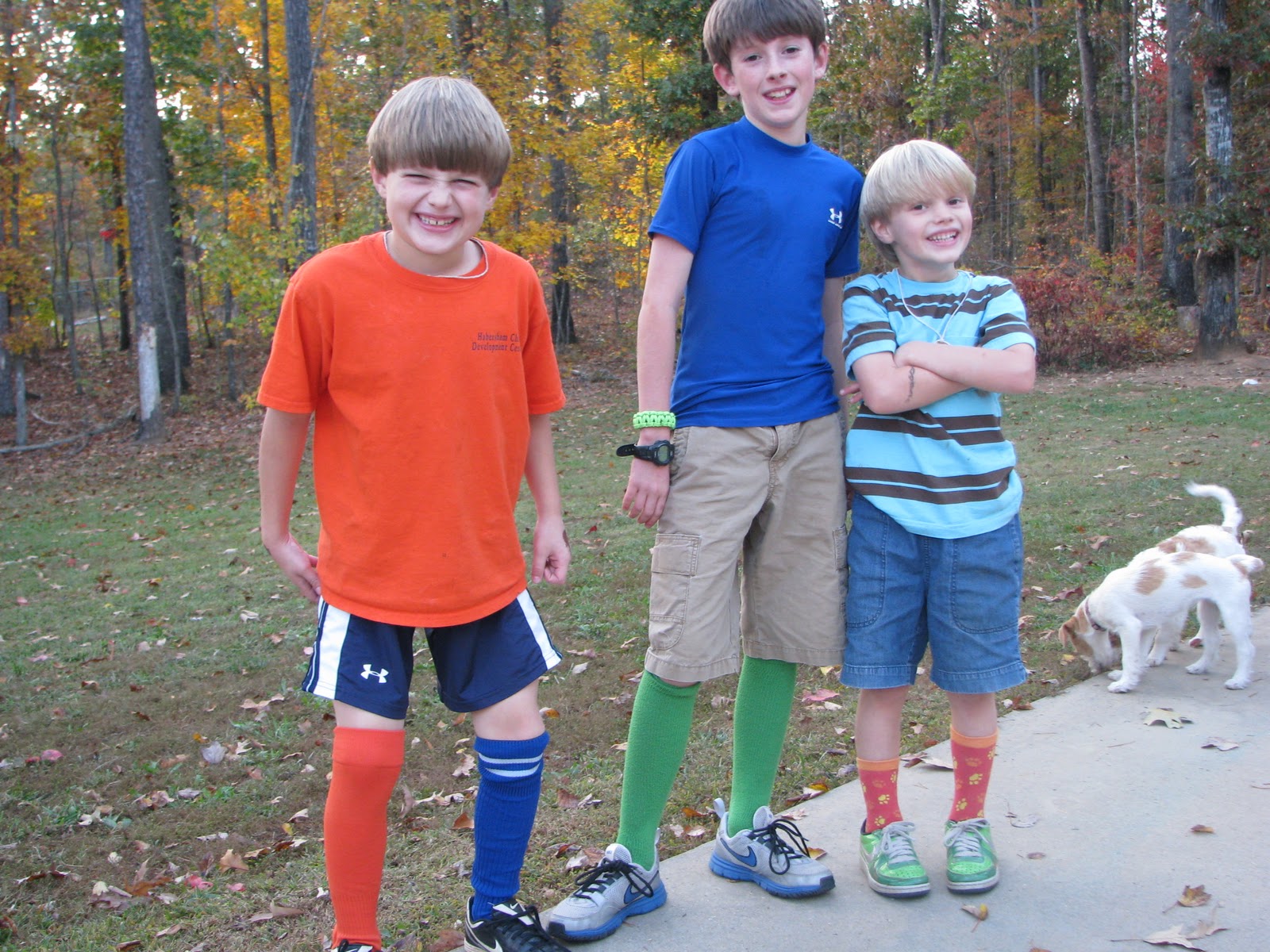
“Why do you insist on wearing tennis shoes?” Thomas asked me.
That was how Thomas greeted me at the door of his home. Prior to his greeting, his mother told him what my name was, but that was of secondary concern to this kid who couldn’t believe an eleven-year-old would wear tennis shoes. His mother chastised him quietly for being rude, but she did so in a way that appeared to quietly accepted him for who he was. He asked me that question as if he knew me for years, and he was bothered by my insistence on my foot apparel, but this was the first and only time we met. Thomas said tennis shoes with a level of disgust one might have for another who chooses to have leprosy. His question also laid a depth charge that would detonate throughout the course of this evening in the form of a theme: There was something I missed, some crucial element of being a pre-teen years that could hinder my preparation for the life beyond.
 Thomas’ confidence was difficult to mirror, as we were on his home turf, and I was the visitor with all the insecurities of entering another’s home. I don’t think I was four steps in his home when he blindsided me with that scrutiny. I was vulnerable to what other kids thought as any other kid, and Thomas was an older kid to boot, which only increased my feelings of vulnerability thought, and he took full advantage. If I were better prepared for the question, I would’ve mentioned the fact that I didn’t pick my shoes out, but even if I did, I’d never given much consideration to the process of buying shoes. I was a kid, my dad bought my shirts, my shorts, and my shoes. I just wore them. My memory might be faulty, but I don’t remember focusing much of my attention on what I wore, and I don’t think anyone my age did either. There’s always the “cool factor” of course, and I knew my shoes weren’t cool, but the idea that tennis shoes were now considered a “tired” part of the kid ensemble never occurred to me.
It wasn’t the first time that my identity would be challenged, nor would it be the last, but this kid did a masterful job of placing me in a state of vulnerability. As soon as I formulated some kind of half-hearted answer to a question I had never been asked before, Thomas was onto something else. The theme of our conversation was that he had little time for me, because I was a kid, and even though he was only one year older, he obviously preferred to only speak to those he respected.
He was an older kid, and in the kid world older equals cooler, until we find out otherwise. Thus, when Thomas offered not so subtle hints that he had no respect for me I was not shocked. What did shock me was that his preferred audience, and the individual he turned to as a respected peer was my dad. What kid prefers to speak to adults? If my dad gave off vibes that he was cool, hip, or in any way attractive to young people seeking a mentor or a guide, I never saw evidence of it. Even as a kid, I knew my views of him were subjective, but no kid I met said anything along the lines of, “Your dad is actually kind of cool.”
I briefly considered that this might be Thomas’s idea of a devastating insult, “You’re so uncool, I’d rather talk to your father.” As their conversation played out, however, it became clear that Thomas’s goal was to impress the man. What were your dads’ questions, you might ask to get some insight into what prompted Thomas to direct his attention on someone other than me. He asked Thomas typical questions like, “How do you like school?” and “Do you have a girlfriend?” Thomas loved it. That told me more about Thomas than anything else that happened throughout the evening. My dad was just more his speed, and he asked Thomas questions that Thomas enjoyed answering. The typical response from a pre-teen to such questions, responses we learn from our cool contemporaries, is to be polite but dismissive, with a heavy dose of the latter.
Not only was this kid respectful, he appeared to prefer the company of my dad before knowing anything about him. He also appeared to vie for his approval. It was so out of the realm of my experience that I was fascinated, after I determined that this kid was in full control of his facilities. His answer to my dad’s typical question consisted of a verbal flowchart of the path he had planned for his adult life, built on various contingencies and variables that he could not foresee at that point. Thomas built himself to impress adults. The impression I had of Thomas was that his fashioned his life, his personal curriculum vitae, or resume, on getting cheeks pinched by aunts and hair mussed up by proud fathers. His views on eleven-year-olds “insisting,” on tennis shoes became clearer in that light. I realized that by asking that question, he hoped to impress upon the adults in the room that he was one of them in all ways but age, and I continued to think that, until he called me out on my hairdo.
“That bangs thang isn’t working for you anymore,” he said after his mother all but shoved him out of the room. There were no adults around when he said that. He was the first boy I recalled meeting who had a hairdo. As I said, he was one year older than me, and I wondered if this kid was emblematic of what I’d be facing in a year. He also had a girlfriend.
The girlfriend thang damaged the whole profile I had been building on him. I had been planning to tell all my friends about this kid, so we could laugh him, and they could join me in considering this kid a laughable aberration of the pre-teen world. The girlfriend thang would damage that presentation, I knew, for in the pre-teen world, having a girlfriend nullifies all other deficits of character, unless that person cherishes her.
If a kid our age was lucky enough to have a girlfriend, he was to be dismissive of her. Among the fellas, she was to be a fait accompli. She was the “of course” that follows when we announce that we have a girlfriend. “Of course you do,” we want our friends to say, because you’re so cool that all of the ladies want to spend time talking to you. The average and typical pre-teen didn’t talk about the process, because the process usually involves asking her to be your girlfriend, sometimes pleading with her. The process involves talking about things she wants to talk about and doing whatever you have to do to get her to laugh and want to be around you more often. There’s little-to-nothing to be gained from describing the process, because saying you have a girlfriend was often more important, back then, than actually having one. A guy with a girlfriend also doesn’t talk about how he feels about her. He just carries his badge of honor among boys, knowing that no other fella is going to ask him for details. This Thomas kid not only told me that he had a girlfriend, but he said he was in love with her, and he wasn’t afraid to talk about how much he cherished her. He never actually said the word cherish, but he introduced me to the love letters he kept enshrined in a central location on a dressed, in his impeccably clean bedroom.
“Man, she must really have it bad for you,” I said, looking at the size of that stack of letters.
A dismissive “yeah” may have been called for at this point to keep it cool between the fellas, but this Thomas kid didn’t say anything of the sort. “They’re mostly letters from me expressing my love for her,” he said. “I keep copies. In those letters, I talk about my plans to marry her.” He added the latter with a big, broad smile that my aunt would’ve considered so cute and sweet that she might have pinched his cheek. “We’re in love,” he said. Had Thomas not set a proper foundation for that line, I might have searched for the hidden camera documenting my reactions. He said he thought about her all the time, and he maintained that gooney smile throughout. He talked about the fact that he badly wanted her to be his wife one day. He said that most of his letters detailed those long-term goals, and that some of the letters in that stack were from her, and they contained positive responses to his plans. “And if that never happens,” he concluded, answering a question I never asked, “I’ll be just as happy with a kiss from her.” This was all said, I must reiterate, without any parents, or aunts, in the room. This was just two fellas sitting in a room talking. Thomas didn’t want to play with his Atari 2600, his Star Wars action figures, or “anything that involved the outdoors.” He didn’t enjoy playing. Thomas just wanted to talk about his girlfriend, and the plans he had of becoming a respectable and responsible adult.
***
Thomas had a deeper voice that he reserved for conversations with adults, a voice I presumed that was an affectation he had developed to garner more respect from them.
“I prefer Thomas,” he said when I asked him if he went by Tom or Tommy. “My birth certificate says Thomas,” he said when I asked him what the fellas at school called him. “So, I prefer Thomas.”
Thomas was such a violation of everything I held dear that I toyed with the idea that I was missing out on something. I knew responsible kids who talked about getting good grades, eating right, and being respectful and nice, but Thomas’ violations of everything I held dear went deeper than the nerdiest nerd in my class. The theme of my evening with Thomas was that youth is nothing more than a way station to bigger and brighter things, and he was impatient for it to end, because he thought it sucked.
I met tons of kids who thought being a kid sucked, but they hated it because being a kid meant that they were subjected to authority, going to school, eating vegetables, and the general idea that they didn’t have the freedom that adults enjoy. This kid hated the good stuff about being a kid. Without saying anything of the sort explicitly, he basically stated that he envied those with responsibilities. To illustrate his goal in life, he asked one of those open-ended questions we ask to compliment ourselves, “Why is everyone so surprised that I’m so mature?” In real life, most pre-teens ask why everyone considers them so cool, so attractive, and so athletic. We ask that to drop a depth charge in everyone’s brain to get them to think it’s such a burden in life to be the envy of the world. No one I knew placed the relative nature of their maturity on that mantle.
If Thomas asked that of me now, I might say, “Maturity is overrated kid, enjoy your immaturity for as long as it lasts, because it doesn’t last long.”
This kid adored his parents so much that he envied them, he loved school and bragged about his grades. I didn’t see anything wrong with the latter, until he told me that he worked hard in school, because he wanted to prepare for his future. You say such things to an aunt, and you say it as if you’re reading from a Teleprompter. You repeat what your dad said when speaking to your grandmother, but you don’t say such things to another kid when there are no adults around. Once we were alone, and away from all parents, I half-expected this kid to let me in on the joke, ‘I just say things like that to keep my mom, the old bag, off my case.’ He didn’t say anything like that. He, in fact, upped the ante on such matters when we were alone, and we were supposed to be playing.
When I later learned that that the whole reason Thomas’ parents invited us over was that they wanted Thomas to be around kids his age, it clarified that whole evening for me. Thomas wasn’t technically an only child, but his siblings were so much older than he that he might as well have been. Though this was never discussed, and I wouldn’t have understood it if it was, Thomas was probably a whoops baby that older couples accidentally have. His parents were older, and my dad was older, but the difference between Thomas and I was that I had a ton of friends who taught me how to be a typical kid. Thomas obviously didn’t, and he liked his parents so much that he probably spent too much time around them. His parents rightly feared that their son didn’t know how to be a kid. Thomas obviously knew their intentions more than I did, because he rejected me, the idea that I was a kid, and his parents objective to teach him how to be more well-rounded. Taken in this backdrop, it would be obvious to anyone who wasn’t there that Thomas’s goal was more about his attempts to reject what his parents were trying to do than me. Except for that one little nugget that we’ve repeated so often throughout this article. Thomas rejected me and all of my typical kid notions in private, one-on-one, with no one else around. If we define character as what a person does when no one else is around, then Thomas’s rejection of me, the traditional norms of childhood, and his parents attempt to teach him how to be a kid was so thorough, complete, and personal that he tried to cajole me into rejecting it with him.
I never saw Thomas after that evening, so I have no idea if one of the paths on his flowchart panned out, but we spent so much of that evening discussing how much Thomas had going on, and how much I’d missed out on by being such a kid that I can only guess that he spent a portion of his adult life trying to recapture what he missed out on. My guess is that the reason the two of us focused on how much I missed out on was a defense mechanism he developed to prevent those of us who enjoyed being a kid from focusing on how much he had missed out on. My guess, not knowing how Thomas’ life panned out, is that if one of the elements of his flowcharts panned out, and he addressed all of the variables that he couldn’t foresee as a kid, he began playing with his Atari 2600, or whatever system was popular at the time. He probably started watching cartoons, another element of childhood he vociferously rejected when it was just he and I, and he probably spent a majority of his adult years wearing nothing but tennis shoes. My guess is that at some point in his adult life he realized that being a mature, respected, and responsible adult isn’t all it’s cracked up to be. If he landed what he deemed a dream job, he realized all the stress and drudgery of being an adult that people could count on. The dirty little secret that Thomas didn’t know at the time is that becoming a mature and responsible adult that people can count on is not a one-stop shopping event. We have to prove ourselves so often every day that I have to imagine it eventually lost the allure Thomas assigned it, and he wished he could go back to those days of youth when he didn’t have to be so accountable for his actions, so he did just that. He probably started out by filling his free time with retro activities, and he indulged in some relatively curious and embarrassing pursuits that ostensibly helped him get in touch with his inner-child. At some point in his life, Thomas pursued the irresponsible and immature activities with as much gusto as he did responsibility and maturity, and he that probably put some divorces on his docket, some noteworthy issues with the substances that permitted him to act inordinately silly and immature without consequences, and he probably had friends and family who couldn’t stand to be around him when he acted like that. For all of the little jabs, cringes and lectures he gave me about wanting to be a kid, my guess is he rejected all of the little jabs, cringes and lectures people gave him about wanting to relive a childhood he felt he missed out on. He likely wouldn’t see it this way of course, but at some point, I think the Thomas I knew learned how let his hair down, live the life he rejected as a kid, just to have a little fun in life, and from what I saw all those decades ago, that would’ve been quite an overhaul.

 Rilaly