A baby, in the arms of her father, watched a line of adults proceed by her in church. She watched them proceed past with little interest. She watched them as I watched her, both of us looking at nothing until something caught our eye. Something caught her eye. She went from absently looking at people to intense focus. I turned to see what caught her attention. It was another daughter being held by her father in a different manner. The watcher and the watchee locked eyes for a couple seconds, and the moment passed, or so I thought. The watcher then wriggled herself into another position. “What are you doing?” her father whispered, looking down at her movements and adjusting his arms according to her wishes. When she was done finagling her fathers’ arms to her wishes, she ended up in the exact same position as the watchee in her father’s arms. I found her exposé into the human condition fascinating, because it suggested that keeping up with the jonses is just plain human nature, as opposed to learned behavior.
 What does it mean? Does her mimicry reveal our innate need to achieve conformity, or the thought that we, even when very young, believe everyone else is doing it better?
***
Ever shake hands with a young kid, say seven-to-nine-years-old? They put their hand out vertical, but they add no grip, and their completion of the ritual is almost robotic. Adults apply meaning to this superficial, symbolic ritual. Kids just do what they’re told, the way we did when we were kids. They don’t know any better, we do. Yet, if we know better, what do we know? We think we gain special insight into a man by the way he shakes another man’s hand, but what do we gain? How hard is it to fake a great handshake?
 “I never respected a man who didn’t shake a man’s hand,” my father-in-law said. “If a fella gives you a firm, but-not-too-firm handshake, and he looks you in the eye while he’s doing it, you know he’s a man’s man, and a man you can trust”
“Fair enough,” I said, “but can it be faked?” It was a leading question, but I was also so curious about this staple of the insightful man’s definition of a man he thought he could trust on sight.
“You can feel it,” he said.
That seemed preposterous to me, but he had a closing tone that suggested further interrogation on my part would be viewed as disrespectful. It was not my intention to be disrespectful, as I knew this man knew ten times more about reading people than I’ll ever know. He spent a forty-year career learning the difference between honest people and deceitful ones, and he was, by all accounts, very good at his job.
I didn’t think my other questions were disrespectful, but the more I thought about it, the more I realized that they were leading questions that asked him if he knew how wrong he was. So, I just shut it.
If I continued down this path, I would’ve told him about the weasel I met who knew how to shake a man’s hand, and he was so good at it that I thought, ‘Now that’s a handshake.’ I never put much stock in handshake readings, but this man had such a great handshake that it influenced my first impression. The weasel then spent the next twenty minutes trying to find creative ways to get me to part with my money. Piece of junk is what he was, but he had a nice, firm handshake, and he looked me in the eyes while he did it. I’ll give him that.
What does it mean? We think it’s a little cute that a young one doesn’t understand the complexities involved in the hand shake, and we dismiss the child’s failure to provide any data to our information-gathering exercise. As we age, we learn that a proper handshake conveys trust and respect, but some of us learn how to fake this customary ritual to mislead people. Relying on the knowledge we’ve attained from the meaning behind a great handshake is flawed. I’d much rather talk to them, watch them, and read them to learn the refrain in their brain.
***
“I wish I had all the money and love that guy had,” a young feller said referring to an NBA player who happened to be the son of a former NBA player. To paraphrase the Tina Turner song, What’s [Money] Got to do With It? Money can buy us all sorts of things, but there comes a point when the power of money ends.

At some point, money becomes an afterthought. Once we have enough money to support us for the rest of our lives, it’s “one less thing to worry about,” as the Forrest Gump character said. Name recognition is another powerful tool, as it can open doors for us, but once we’re in, we’re in. What do we do then? If we don’t have game, at some point, no one cares what our name is. Money can’t buy respect from our peers in school, at the workplace, or on the court. That’s where names are made and lost. When we fail, money won’t help people forget. Love and an excellent support system are the coin of the realm there. When I failed in school, the workplace, and in athletics, I would’ve loved it if someone said, “You’re going to fail, it’s what we do, it’s what we do the moment after we fail that defines us.” I would’ve also loved it if they added, “And when you fail, just know that you have me, the person who cares more about what happens to you than anyone else in the world, standing right behind you.”
What does it mean? We all know those cynical types who think that in one way or another, money solves everything. My guess is this is said most often by cynical types who never had any, because it is an excellent excuse to explain to ourselves why they haven’t measured up. We could list all of the players in our culture who never had a dime growing up, but that would be redundant. We all know that money does not help us deal with momentary failures, but we have to admit that if we didn’t have what we believed to be a quality excuse those temporary failures could crush us. If quality excuses help us get over speed bumps, what do we do then? Most of the successful people, I’ve met tell me stories of their no-money, no friends in high places rise, and I’ve heard a number of tales that detail trials and errors, and rock bottom, insomnia-rich, where-do-I-go-from-here failures that eventually lead to success. “How?” will be your first question, and your second question will be an unspoken, “What’s the difference between you and me?” Where did their inner drive come from? Their answers will usually be a frustrating amount of nothing really, except that they had an unwavering spirit behind them, often a parent, who provided support, guidance, love, and a whole bunch of other elements that taught them that momentary failure is nothing more than a learning experience.
***
 I hear parents rewrite their past all the time at their kid’s baseball games. Mythologizing ourselves into an ideal image is just kind of what we do when we’re watching our kids play ball. This “They’re not as good as we were,” mentality helps us control the narrative of our lives by highlighting our character-defining moments to attempt to rewrite our character. Yet, when we’re telling our kids about the seminal, pivotal memories of our lives, how often do we “misremember” key details that never made it into our highlight reels? When we see our kids act in a somewhat less than aggressive manner, we’re despondent. “That’s not how I did it!” we say. Is that true? It is, because it’s how we remember it. It’s possible that we remember it correctly, but it’s more probable that we remember our highlight reels as opposed to our reality. It’s also possible that we’ve rewritten our past so thoroughly that that is genuinely how we remember it. I do this, you do it, we all do it. Our grandparents probably did it to our parents, our parents do it to us, and we do it to our kids. It’s so common that we could probably call this chain of rewrites human nature at this point.
What does it mean? Our rewrites are an attempt to correct the past that we think might help us correct our present and future. They’re not lies, however, as we genuinely believe them after reviewing our highlight reels. Yet, the best rewrite we could possibly write is the one in which we try to escape the clutches of this chain. It could alter our kids future if we rewrote the mistakes our parents made with us. We may not want to recount our failures for them, but we could talk about how we dealt with adversity, moments of embarrassment, and humiliation. We could offer them a love and support rewrite that includes our own version of the “And when you fail…” note of support listed earlier that we wish our parents offered us?
***
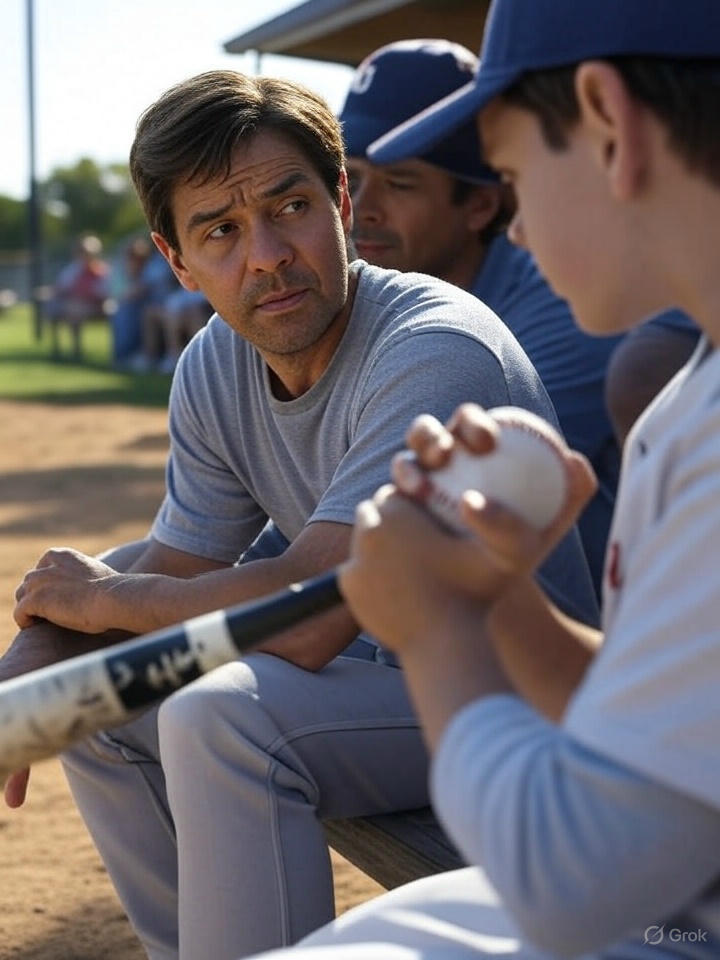 Alan “the neighbor” offered Ben “the neighborhood teenager” some advice on his game. The Ben, in our scenario, forgot everything Alan said two seconds after he’s said it, which made Ben the perfect repository for Alan’s otherworldliness worldliness. I wanted to tell Alan to “Save it” about halfway through his spiel, because other, more prominent types in Ben’s life offered him similar advice, and he didn’t listen to them either. Ben was all about achieving independence, or at least a level that made him immune to responding to advice. I didn’t say anything, because I knew this really wasn’t about Alan helping Ben improve his game. Allen just wanted to display his unique understanding of the human condition to us.
What does it mean? We all offer one another advice, and we all politely avoid listening to those who are kind enough to offer us some advice. Not only do I know people who act this way, I know I am one of them. There are a variety of reasons and excuses for why we don’t listen to anyone, but my advice to people who give advice is, “Save it! No one’s listening.” That’s dumb advice I know, because when we spot a flaw in someone’s game, or in someone’s life, some of us sincerely want to help them, and we can’t avoid trying to prove the knowledge we’ve attained along the way. The problem with us hearing such advice is that most of us believe doing the same thing over and over will eventually produce different results.
***
 We all try to help one another when we spot flaws, but you ever tried to get a senior citizen’s mind right on a passion project of yours? When I watch it happen a big, neon-flashing “SAVE IT!” crosses my mind. You have an opinion, we have an opinion, and the only thing that keeps some of us going is the belief that their opinion is uninformed, because it goes against our sources. Before we go about getting their mind right however, we might want to consider the demographic of our audience. Marketers have what they call a key demo, and they pay big bucks for ad space in a show that appeals to audiences between the ages of 18-49, because their intense market research suggests that they’re still susceptible to suggestion.
When we’re under 18, we’re even more susceptible to suggestion, but we don’t have any money. The 49+ demo have all the money, but advertisers don’t waste the corporation’s time or money trying to persuade them, because through market research they’ve learned that the 49+ mind is already made up. I’ve met the anecdotals, my aunt was an anecdotal. She thought adhering to the prevailing winds of change gave her a more open-minded presentation, and she hoped it made her appear fresh, hip, and younger. It didn’t, but she got a lot of mileage out of being anecdotal. Generally speaking, the +49ers stubbornly adhere to the patterns they’ve developed, and all the routines and rituals they’ve had for a majority of their lives.
What does it mean? Market research dictates that most of the 49+ demo is so loyal to the products they’ve consumed for years that they’re branded. So, go ahead and tell them your opinions, because that’s your right, but just know that you’re probably wasting your breath if you think you’re going to get their minds right on your pet topic, because they’ve aged out of anyone ever changing their mind on anything. If you disagree, go ahead and ask someone who spends millions trying to tap into the culture and reach the widest audience possible. The marketing agencies, and various marketing departments of corporations have decided that pouring millions into advertising to +49ers is equivalent to pouring money down the drain.
Once you’ve arrived at your conclusion, you might want to join me in my quest to get marketing teams to stop directing a portion of their advertising budgets to streaming services. If that fails, we should focus on getting them to offer a +49 opt out on button on commercials for those who’ve aged out of the key demo, because their beloved fast-forward thumbs are developing callouses.


 Rilaly