Youth is Wasted on the Young


“Youth is wasted on the young,” a famous old person, who is now dead, once said. If they have the opportunity to see us now, I wonder if they say, “Life is wasted on the living.”

We can do just about anything and everything we want, but we don’t because everything is “SO BORING!” When we’re younger, we have the health and energy to do more, but we don’t because there is this “Is that all There Is?” mentality to doing extraordinary things. There are some exciting people to meet, places to go, and things to encounter, but most of what we experience in life could be characterized as mundane, trivial and meaningless to those with experience in such characterizations. To those who no longer have the energy of youth or the health necessary to do a number of things, they view youth as wasted on the young.  

Remember brooding in the corner, because that comically weak chin strap on your birthday hat snapped, while everyone else was running around laughing, screaming with joy, and just having a whale of a good time. Wouldn’t you love to redo that day and all of the other fun and frivolity that you missed because you thought life was “SO BORING!”   

I used to look forward to birthdays. I used to count the days until a bunch of people screamed “Happy Birthday!” to me with hats on, kazoos in their mouths, and party favors all around. I remember Batman-themed birthday parties, Scooby Doo parties, and a Shazaam! birthday party. My seventh birthday stands out, because I played my best friend, and biggest rival, in the most popular football video game of the era, and I beat him! It was such a great birthday party that it set a precedent that no future birthday could match. Every birthday after that “Sucked!” because they were “SO BORING!” Not even the “Welcome to the roads!” 16th birthday, the “Happy Bigenoughtobarday!” 21st, the dirty thirty, or the still-fun@40 birthday party could match that seventh birthday party. At some point, we all stop looking forward to birthdays, and we start to look back. No one knows what specific age this starts happening, but we lose our jubilant “This is my day!” smiles as our odometer clicks by.

The older I get, the colder I get. I’m freezing all the time now.

The older I get, the bolder I get. I used to pretend to love things they told me to love, “You don’t love The Lone Ranger?” they asked. I pretended I did, because I was a kid, and a boy, and they expected every boy to love their brand new, The Lone Ranger toys. Now that I’m old and bold, I want to go back in time and tell everyone I knew that I never loved The Lone Ranger. I was told to love it, and I was taught to like it, because every good boy does. I tried to like his horse Silver and his buddy Tonto, but everything they did was “SO BORING!” to me. I pretended to love Cheech and Chong later, because everyone expected me to love their risque, naughty brand of humor. Now that I’m old and bold, I can finally say they only had one joke that they did over and over in as many ways as they could think up, but it was one joke, and I never considered that joke that funny. Everyone expected me to love Animal House when I was in college, because laughing at that movie is what college-aged students do. Now that I’m older and bolder, I no longer have to pretend to like the guitar-smashing, the zit-popping mashed potato joke, or the uncomfortable in the blues bar joke that I’m expected to remember so fondly that I still get a tear of laughter whenever I think of it. I didn’t dare say any of that before, because everyone expected me to coat my love all over of it. I pretended that I did, because I wanted to fit in.   
One of the few joys of getting old is that we no longer have to play pretend. We don’t have to say we love things to fit in, to spare someone’s feelings, and we no longer feel that need to constantly prove ourselves. I no longer feel the need to enter into that crucial, seminal argument on the issue of the day, because I want everyone to know how well informed I am. I no longer consider it my mission in life to change minds. I now see it as pointless. “You think you’re going to change her mind today at lunch?” I ask. “You’re going to battle against thirty-five years of conditioning. She’s been dying to prove her bona fides on this issue, and so have you. You’re not going to get anywhere if you sincerely hope to change her mind.” 

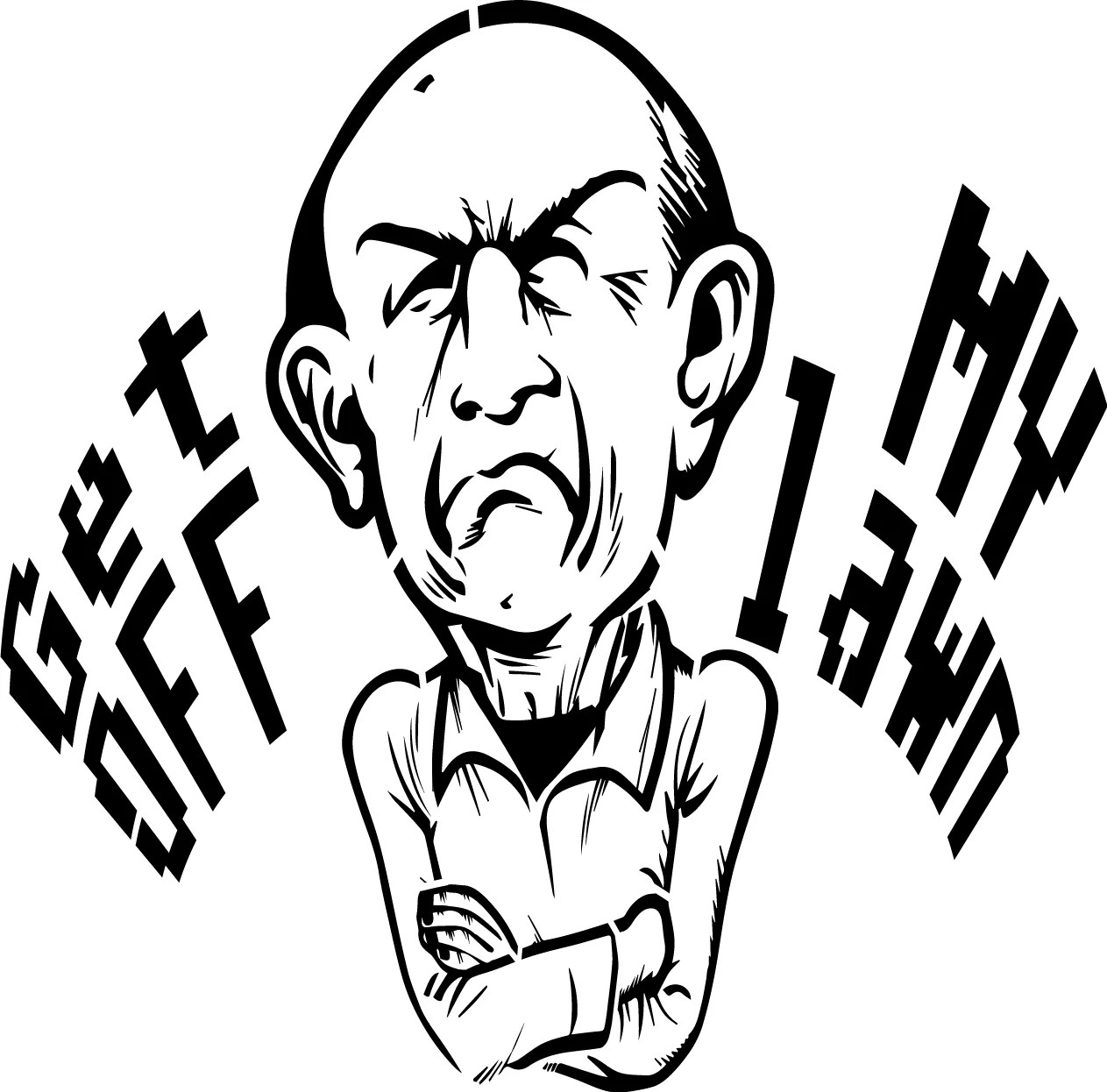
They no longer expect us to love inconsequential matters now. They expect us to grumble about food portions, the cost of living, how much better things were in “my day”, and something about kids getting off my lawn. 

I never thought I’d reach an age when I cherished life, but I never expected to be this old either. I didn’t expect to die young of course, but I didn’t expect I’d get this old either. I never thought I’d actually be grateful for decent health, because I thought that’s what old people did. I never thought I’d be happy to be alive, and greet each morning with a new-day smile. I never thought I’d try to make today better than yesterday, but I never expected to be this old either. “Youth is wasted on the young,” because they have the energy to live life and love it, they just don’t. 

We watch clocks when we’re young, because we can’t wait to get out of one place to get to another. We watch clocks to escape the great “youth-thief” we call school, and then we watch clocks until it’s time to get off work. When we finally get out of those places, we go to other places with the same faces, because everything is overrated, overhyped, and eventually, “SO BORING!” Do clocks move slower in youth and faster in our senior years? I don’t know, but I was never happier in life than I was when complaining about it. 

I remember when an old person told me that “We should be grateful for our health.” I was polite, and I said something like, “We do take good health for granted,” but I didn’t mean it. I thought good health was “SO BORING!” Now that my body is no longer the incredible, recuperative machine it once was, I appreciate moments of good health. 

Some moronic celebrity was going on and on about a late-in-life career choice they made, and I didn’t hear most of what they said. The late-in-life characterization stuck with me though, so I looked the idiot up and learned we were the same age? I’m late-age now? I’m over-the-hill? What’s the hill? What age is the crest of that hill? My boss confessed, “My better years are behind me now, I know that.” He was 40 at the time. If my better years are behind me, why do I enjoy life now more than I ever did? Why didn’t I enjoy my better years more? You don’t. We don’t. No one does. It’s natural, human nature, and the way of life. “Youth is wasted on the young.” You can mourn the lost years, regret that you didn’t do more, or you can try to live the best life you can live now to try to make up for it. 

“Life is what you make it,” an old stranger once told me. 

“Uh huh! Now, could you move aside!” I wanted to say. “I’m not going to appreciate my life or my good health, stranded outside Walgreens like this, where the weather is suboptimal. I can’t make it better, until my dad finally picks me up, and he’s already forty-five minutes late!” When I finally get to the place where I’m supposed to be I’m probably going to say, “This is SO BORING.”

Living, Dying, and Getting a Haircut


The world has changed in many ways since I was a kid. One of the big ones is the return policy most department stores employ on most items. The stores still have a “no return” policy on some items, but back when I was younger, they erred on the side of no returns for just about everything. They put you through the wringer too. “Why are you returning this? What was wrong with it? According to section D sub point B of our return policy, there has to be something wrong with it for us to give you your money back. Was it the wrong size?” Ummm, yes, that’s it. “Then get another size.” I don’t want another size. “Well, you can’t have your money back on this item, unless you have a qualified reason listed under the return policy.” If this doesn’t read confrontational, go back and read it in the most confrontational, dismissive, and rude manner possible. After working in the service industry, I wondered who hired these awful, angry people, and did they analyze all of their employees and put the most confrontational ones on the returns desk? I still have anxiety issues whenever an item goes bad, doesn’t fit, or I somehow realize I’ve made a bad purchase. I mentally prepare for the battle that more often than not, doesn’t take place now. For those who still have issues returning items, I developed a battle plan.

Try to find the teenage male working behind the counter, if you’re returning an item. They don’t give a crud about the bullet points on the return policy of the company. The typical teenage male does everything he can to avoid confrontation. They might even speed through your transaction before the manager nears, in fear of doing something wrong. If there is no teenage boy available, go male over female, and young over old. If the only checker available is an old woman, either stand in the longer line, or just go home and come back another day. Older women tend to treat your return like a pop quiz on the laws and bylaws of the company’s policies on returns they’ve studied so well that they don’t even have to look them up.   

If you’re getting a haircut, flip it. An older woman has paid her dues, learned her craft, and studied the finer points of her profession so well that she treats every haircut like a pop quiz on cutting hair. She might not talk to you, but her skills and techniques are so refined that she may speed through your haircut without anything but the necessary Q&A’s. If you see a young, attractive female, she will talk to you, and if you’re lucky she might even lead you to believe that you’re young and attractive again, but you’ll probably walk out looking like Mo Howard from the Three Stooges. And wait in line or just go home, if the only available stylist is a twenty-something male, because they don’t give a crud. 

***

“I’m Geoffrey, Geoffrey Guardina, and I’ve been diagnosed with cancer,” Geoffrey said. Geoffrey caught me off guard with that unnecessary addition. I asked him a very pointed question about his kid. Geoffrey answered the question, but he basically since I have the floored me with that comment about his health. It caught me so off guard that I pictured myself having cancer, and I took a moment to thank The Creator that I didn’t. He had an unmistakable look in the space that followed. The look asked, how come he hasn’t said I’m sorry to hear that yet? His look condemned me. It’s social protocol for him to say that, yet he refuses.

I missed my spot, I admit that but I just met this guy, and he just talked about how he was his kid’s high school baseball coach. I didn’t expect him to pivot into a terminal diagnosis. He did, and I failed to fulfill my contractual obligation of social protocol.

“They’ve given me four years to live,” he added.

“I’m sorry to hear that.”

Who was wrong? Geoffrey told me he had a fatal condition about one minute and thirty seconds after our greeting. I did not fulfill my end of the social contract. Geoffrey presumably wanted to inform me that he was a fighter, and he expected all the kids on his baseball teams to be fighters. We could also say that death defines the life of a person soon after they learn that it will end soon. It defines a life as much, if not more than any accomplishment in life. Yet, I come from a long line of men who defined strength through silence. What’s the first thing they say about a person who died a long, slow death. “He knew for years that he was dying, but I never heard him complain.” A man who works his diagnosis into his intro probably does a whole lot of complaining. Regardless how I think Geoffrey Guardina reacted, it leads me to wonder how I will react to the news that I am informed that my time as a resident of Earth will end soon.  

***

WE want athletes to retire before they’re ready, so WE can remember how good they were. OUR ideal scenario involves them retiring one year too soon over one year too late, but some athletes love the game so much that THEY want to play one more year beyond their expiration date. WE find that absolutely revolting, because WE want to remember how great they were in their 20’s.

Nothing lights up message boards like a premier athlete who stays one year too long, and he becomes nothing more than one of the better players in the league. Due to the fact that some of us live vicariously through athletes, we take their desire to play one more year as some kind of personal insult.

“He was too old two years ago,” WE write on message boards. “Now MY lasting memory of him will be of him will be of him being a good player, but I wanted to remember him as great.”

Imagine you’re this professional athlete. You’ve sacrificed more than anyone knows. We rarely talk about the lonely, arduous hours spent in gyms and weight rooms. We rarely talk about how some of the best to ever play the game didn’t hang out with the fellas when they were teenagers. No one cares about the boring details of a gym rat, spending all of their free time doing something, anything they could think up, to get whatever edge they could find on an opponent. Some probably played some video games in their free time, but how many of the premier athletes spent a tedious amount of time studying game film, trying to spot a weakness or tendency of your opponent? We’ve all heard stories of athletes hanging out with their professional peers, drinking, doing lines, and groupies, but how many of them went to bed, because they believed sleep would help them heal and play at maximum efficiency. After all those sacrifices that didn’t feel like sacrifices at the time, because they loved the game that much, you turned 30, and a bunch of people who know nothing about the sacrifices you’ve made in life, and continue to make, to get better, are demanding you retire. They claim you’re doing it for the money, but you don’t need the money, and you haven’t for about ten years.

You love the game, and you’re not ready to end your career. You know your physical skills have diminished slightly, but you think you still have something in the tank, and you love the game. Isn’t that the most important thing? You love it more than the twenty somethings who coast on God-given talent. You remember when that was you, but you’ve mentally matured to the point that you’ve learned from past mistakes, and even though your physical skills have diminished a little, you’ve developed techniques to compensate for that. You think you can make up for diminished physical play with smarter play, and you finally appreciate everything you took for granted when you were a twenty something.

You were wrong, as it turns out. Your skills diminished more than you thought, and you realize that you are over-the-hill. Now that that’s clear, you can go into next fifty some odd years of life knowing you left the game on your terms, for the right reasons, and that you left it all out on the court or field.

Imagine being in your early 30’s, two years removed from being one of the best athletes in the world, and the sycophantic broadcasters who once called you one of the game’s greatest are now telling you to call it a career. NBC broadcaster Bob Costas was one of the worst, in recent memory, at doing this. He asked the question everyone was supposedly afraid to ask, but everyone asked. “Have you given any thought to retiring?” To listen to Bob Costas, every player should retire at 26, one year after the average physical peak, just so he/WE can remember them for who they were. The world according to Bob would have it that every aging athlete should be forced to retire after that championship game, so he/WE can live with the memory of them as champions. After listening to Bob Costas broadcast the 2022, American League Championship Series, some audience members stated that his performance suggested that he may have stayed one year too long. I instinctively blanched at the notion that anyone but the individual, and the individuals who sign their checks should decide when someone is done, until I remembered how often Bob spoiled an athlete’s jubilation by asking his sanctimonious questions. I now view it as karma.

Theodore Roosevelt once talked about how hard it was for him to deal with the idea that he peaked so early in life. (T.R. was in his early forties when he became president.) Imagine how difficult it must be to peak in our twenties, when most of us are too immature to process and appreciate, such is the life of the athlete. They still have fifty some odd years of life left, and active aging athletes learn how difficult that can be, secondhand, from those who’ve lived it. So, the athlete plays a year, or a couple years, longer than they should have. We don’t want to remember Franco Harris in a Seahawks uniform, Muhammed Ali v. Larry Holmes, Michael Jordan in a Wizards uniform, and Willie Mays looking lost in the outfield. With the perspective of time, we now know that the athlete doesn’t tarnish their moment in the Sun, but what does it say about us that WE continue to fear that it will? The aging athlete wants to arrive at the definitive answer that they’re done. Better that, they might think, than living the next fifty years, thinking they could’ve played one more. WE don’t think that way. WE think they should’ve retired a year earlier, so WE can remember how great they/(WE?) were in their prime. It’s their lives, and they sacrificed everything for the game, and they were so great at one time that someone is willing to pay them to see how much they have left. WE have nothing on the line, and they have so much. They’ve earned the right to make the decision when they are done. It should be none of our business, but WE make it our business every time an aging athlete decides to play one more year.