Drinking Me Under the Table 


“There were only two people I couldn’t drink under the table,” Ozzy Osbourne once said. “(Lead singer of Motorhead) Lemmy Kilmister and Wrestling Great Andre the Giant.”  

“I could so drink you under the table,” Angie said. 

“I’m sure you could,” I said, and I turned away to do whatever I was doing prior to her challenge. That discussion was over … for me, but our friends stared at me, waiting for me to add something to it.

Nat broke the silence, saying, “So, you’re chickening out? You’re chickening out to a drinking contest against a girl who’s … what are you Angie ninety-five pounds?” 

I would love to write, right here, that I had a clever reply or something that put me back in a position of power. I didn’t. I said something along the lines of, “Well, I’m an extremely competitive person, and a light weight. That combination often leads me to drink so much that I’ll probably do something that we will never forget.”

“Isn’t that why we’re here, my brother?” Nat said with a gleam in his eye, “to do unforgettable things?”

I’m talking about embarrassing, sloppy drunk things, like vomiting all over this beautiful carpet of yours. If I don’t vomit, and that alcohol stays in my system, I’ll probably fall into your precious glass table, pass out in your bedroom, or proposition one of your good friends. Depending on what I end up doing, you’ll all probably have a good laugh at my expense, but I will have to live with it. Admitting that a ninety-five pound girl could probably drink me under the table is the least humiliating course for me to take here.” 

If you’ve ever seen those Old West movies where a fella backs down from a shootout, you know the eyes I saw that day, those silent, judgmental eyes. Those eyes tell us that we’re not matching up, fitting in, and we just don’t have what it takes to be a fella. There were probably four people in the room at the time, but in my memory there were at least twenty, condemning me for my weaknesses. Even in the moment I knew that those judgmental eyes were much better than the eyes I would’ve received after that drinking contest, and all the things I would’ve said and done with massive amounts of alcohol unlocking them. “That man cannot handle his alcohol,” would’ve been the refrain they shared at work that Monday.   

I’m one of those guys you hate playing with or against, because I don’t play games to have fun. I play to win, and if I don’t win, I freak out. It’s childish and pathetic, and I’ve learned to control it to a degree. I no longer make a spectacle out of myself anymore, but it’s still such a part of me that if I were involved in a game of Barbies, I might try to find some way to win. 

I grew up playing every major sport except hockey, and I would throw tantrums if I lost. I’ve flipped playing boards, stormed out of rooms, and knocked something off the wall on my way out after losing games of Tiddlywinks and Chutes and Ladders. I know this about myself, and I know that if I entered into a drinking contest, a game I really don’t enjoy, I would have to win. I did it before, and if I felt some level of conquest or glory, I don’t remember it. The one time I did know the glory of victory, it was fleeting, as the embarrassment of blowing chunks across a table that sat before the couch I passed out in superseded it.   

With as much training as I put in, you’d think I would’ve developed a greater tolerance to alcohol eventually. I never did. I don’t know if the ability to drink more than others has something to do with genetics, but if it does, how  did my ancestors do? Alcohol and drinking were important when I was younger, but it was almost mandatory when they were young and kicking it. Did they avoid drinking alcohol? It might have had something to do with the pack my dad decided to run in, but when I was a kid, every adult I knew drank something. We all knew everyone’s drink of choice, because it defined them. 

Our history with alcohol is not recent, as archeologists have found evidence of humans intentionally fermenting beverages as far back as 13,000 years ago. So, somewhere just below our hierarchal need for fire, was our need to get wrecked, and sometime shortly after we experienced the euphoria of killing brain cells for the first time, someone probably challenged someone else to a test of tolerance, and the victor felt vindicated. Did this help our species evolve, or did it inhibit evolution? Who cares brutha, why you always talking such nonsense? Let’s get ripped.  

We tried –the United States, inspired by efforts in other countries tried— to curb our enthusiasm for alcohol, in a temperance movement that culminated in The Prohibition in the U.S. It failed in historic proportions, because “You can’t legislate morality.” That was the takeaway anyway, but the other takeaway might be that we love alcohol so much that we were willing to fight for it. We fought the law, and we won! We then celebrated that victory hard for nearly 100 years. (Recent polls suggest drinking alcohol is now down to 54% among young people, in favor of smoking pot.)  

TIM 

“We have food and beverages for everyone,” one of the primary organizers of our kid’s school event said after stepping to the fore, “but there is no alcohol.” The parents groaned, some sarcastically, others not, and the organizers apologized. I empathized a little, as school functions are almost always so painfully uncomfortable for parents who barely know each other that alcohol lubricates our anxiety.  

I knew that of course, but as I worked my way around the social circles of parents in attendance, I was pretty sure that the “no alcohol” complaints were nothing more than conversation starters. Some were genuinely ticked off, however, and they reminded me of the kids at my friend’s seventh birthday party. We fellow seven-year-olds knew Scott Taylor’s parents were anti-sugar, because Scott was not allowed to eat the desserts on his lunch tray, so we’d trade him for his sugary snacks. Their sugar prohibition never affected us until we attended their son’s birthday party, and we learned that everything from the candy, to the birthday cake, and ice cream at the party would all be sugar free. And it was not surprisingly good, it was gross, and we were as disappointed, angry, and ready to revolt as those adults at the alcohol-free kid’s function, which is fine when viewed through that lens, but when we flip it around and compare the adults’ reaction to the kids’ it’s illustrative.

Amidst our groans and complaints, that guy stepped forward. I’ve now been among parents at a kid functions often enough now to know they all contain that guy. That guy, in this alcohol-free production, was played by a man named Tim, and we began to view Tim as our superhero when he gathered us up and led us to his locked and loaded SUV. I didn’t hear the angels sing others swore they heard when Tim opened his hatchback to reveal three coolers. I also didn’t feel the warm, gold glow wash over me that others did when they saw the wide array of alcoholic drinks he had in them. I did find it hilarious that this forty-year-old man was so prepared for the administrator’s alcohol restriction that he loaded up his car before leaving home. Even though I wasn’t seeking alcohol as much as the other parents, I enjoyed being included in Tim’s select group.

I felt naughty too. I felt like a naughty teen sneaking hootch into the high school dance. I felt twenty years younger, and I must admit that when I mixed Tim’s naughtiness with the organizer’s lime-aid, it tasted so much better for all of those wrong reasons. It felt like we were undermining authority and challenging the establishment. The first sip tasted dangerous, and the second one had a shot of humor in it, but every drink after that tasted a little foolish. We were forty-year-olds at our kid’s function. What were they going to do to us if they caught us? Their best punishment, I decided, would involve them reminding us that we were forty-year-olds at a kid’s function. 

What the administrators didn’t understand was that alcohol was never just a rite of passage for us, it was the reason to get together. Once we got together in that “Event of the week” there was always one party goer who drank responsibly. They drank in moderation. I met one woman who managed to milk a hard seltzer for two hours. When she was “done” she had a fourth of a bottle left. I’m a little embarrassed to write these lines now, but I thought there was something wrong with her. I thought she didn’t know how to live. We were entertaining, healthy, and young people, why wouldn’t she want to maximize all that while it lasts? “Don’t you want to have fun?” I asked her. “I mean c’mon.” She was an attractive, but I could’ve never imagined a relationship with her or anyone else who was alcohol-free.

The Definition of Drinking  

We defined ourselves in drinking contests and games to try to outdo each other in the ancient tests of tolerance. Our definition of victory involved leaving our opponent so incapacitated that they lost control of their functions, fell off a chair, and ended up under the table. “Huzzah!” we shouted in unison, when the defeated vomited little orange pellets across the floor.

“I think it was cereal,” Patrick said.
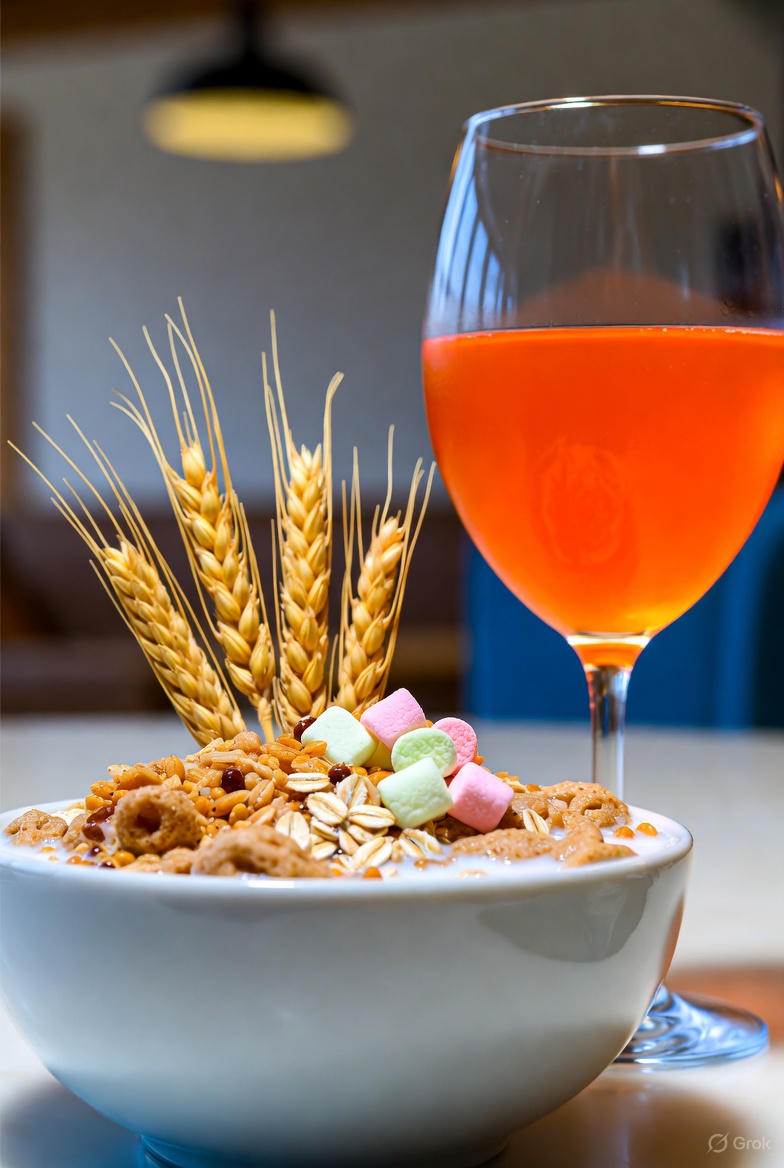
“Yeah, those little pellets were tiny marshmallows,” Brian responded. “I think the orange coloring was whatever he drank. Wasn’t he drinking orange coolers?”    

The defeated never recovered his reputation, and the victor lived on his victory for months, as if drinking twenty beers in an hour was a physical accomplishment. It was a physical feat, but it was an unnatural one that required training, and no one wanted to watch a montage of his training exercises. No one wanted to see the man sitting quietly in his favorite Barcalounger sipping quietly between tears. We wanted to live the Bachelor Party (the 1984 film starring Tom Hanks) lifestyle, and this is how we imagined we were living.

I can’t remember all of the parties, but there were some killers. The one party I will never forget is my first adult, non-alcohol party. There were probably twenty people there, and no one was drinking. I asked where the beer was, and no one answered. I asked what was going on, and no one answered. Their silence was uncomfortable for both of us. We were in our early thirties, so we were still young enough to recover from whatever damage alcohol inflicted relatively quickly. We had no kids at the time, and a long weekend, so the idea that we were going to spend an evening around other adults talking about our day seemed inhuman to me. I realized that I didn’t like any of these people that much. We drank bottled water and other non-alcoholic refreshments, while talking about our day, as if it were a Thanksgiving Day reunion with the extended family. I hate to sound like an alcoholic, but this party was such an aberration that I talked about it for weeks. I wanted someone to back me up on what an aberration that was. I wasn’t ready to curb my enthusiasm just yet, and I couldn’t believe my friends were. I wanted to ask when the decision to go alcohol-free was made, and how come I wasn’t part of it?  

It didn’t take long for me to recognize that there was something afoot. My friends were implicitly stating that not every get-together had to involve alcohol, and that there was probably something wrong with drinking massive amounts of alcohol. Though I was a little late to this particular party, we began drawing a new demarcation line in the sand. The hilarious hyjinx of the inebriated was becoming a little sad at some point. I should’ve seen that coming, because I saw my dad get wrecked so often that it wrecked our relationship, and most of my friends saw similar things with their parents. It wrecked us to chase our parents out of bars, to hear their alcohol-induced gibberish on the ride home, and it did some lasting damage to our relationship with them when we had to put them, our parents, to bed.  

Now, we drank, and we wrecked our teens and thirties, but by the time we decided to have kids, we decided that we didn’t want to put them through the confusion and the role reversals we experienced. Our kids have never had to spend the precious hours of our childhood in a bar, bored, begging to leave. Our kids see us get together, and they see us drink a beer or two, but they don’t see their guides and role models getting hammered every weekend. 

As we criticize our parents, and their generation, however, we should note that they saw things. We led cushy, comfortable lives because of them and thanks to them. We never knew The Depression, a real war, or any of the other things that they needed to forget, and we were too young to understand the what fors. All we saw was the drinking, the laughing, the absolute blast everyone was having, and all of the connections we made. We also saw the aftereffects, the “Don’t tell anyone about this,” embarrassing aftereffects. The chasing of imaginary windmills, the crying, and their inability to climb the stairs to get into bed. How does an adult ever reclaim their rightful place atop the hierarchy of a home after their kid has to clean up their puke, wipe their tears, and fight to get them into bed? 

I could be off, but I think my generation were the pied pipers in the move away from alcohol. We give younger, twenty-somethings all of the credit for cutting ties to alcohol to 54%. They deserve some of the credit, of course, but we started to see the light and learn our own lessons, inspired by the idea that we didn’t want our kids to see us in weakened, pathetic states. Our kids never had to see us chase imaginary windmills, and they never had to sit in a sad, lonely, and pathetic dive bar begging us to leave. They didn’t have parents whose whole lives centered around alcohol.  

Minimum Weight 

Bob was an elegant drinker. He had fun, but he never made a fool out of himself, and he never had bad hangovers. He was the life of the party that I always wanted to be, but I was a sloppy drunk who could never handle his alcohol. I envied him at the time, but now that it’s all over, and we’re old, I wonder if Bob still has a problem with alcohol? My body informed me, early on, that we didn’t have either the genetic constitution, or the will to do what it took, to become a quality drinker, but he did it so well in the window in time that I knew him that I seriously wonder if he has a tough time quitting, cutting back, or leading a more responsible life?  

Bob was a fun drunk for hours. The man could drink. I was a fun drunk for a little while, but my tolerance was such that I often turned the smiling faces in the room to cringes. Bob almost single-handedly proved that when it came to drinking games and contests, it didn’t matter how much I trained, I would have to artificially reengineer my genetic chromosomes to achieve the term lightweight.

According to BoxBets.com, there are now eight weight classes listed below lightweight, including featherweight, flyweight, light flyweight, and minimum weight. In the drinking and drunk world, I would probably list myself somewhere between light flyweight and minimum weight, because I could probably handle most of the 90lb. females who’ve never had a drink, in the minimum weight class, but after witnessing my performances in those bouts, my manager would probably caution me against challenging for even that meager belt. My competitive spirit, combined with my stupidity, would have me challenging and winning that ignoble belt from a 90lb. female, but I would not do well among the 100lb., light flyweight females.  

If a genie offered me a once-in-lifetime chance to fix 100 of my flaws, moving up in weight classes would not make it on that list. I enjoyed the way alcohol allowed me to shed inhibitions, and the laughing and fun that almost always followed beer consumption, but I never really enjoyed drinking it. I might be rewriting my past, but I don’t remember wanting to become a better drinker who could outdo opponents. I viewed alcohol as a social lubricant, and I considered it an opportunity to become someone else, anyone else, someone like Tom Hanks in the Bachelor Party.

I didn’t want to be a minimum weight of course, as that has connotations to lacking masculinity, but I never wanted to do what was necessary to become a heavy weight either. Even if I wanted to, I don’t think I would’ve been capable of it, as I think our constitutions are relative, based on genetics. Some of us will never be able to competitively run 26 miles, no matter how hard we train, some of us just don’t have the mental acumen necessary to compete in big-time chess matches, or the physical gifts some seem born with to dominate in fencing, and some of us have a genetic disposition that leads us to problems trying to outdrink a parakeet, no matter how hard we train.  

I was a fun drunk, but I didn’t know when to say when, because I always wanted to have more fun, and more alcohol equals more fun when you get that close to having more fun. It made sense to me when I could see the crest of the hill on the horizon, until I looked around to see the sympathetic and horrified faces informing me that I was already careening wildly down the other side of that hill.  

I silenced the room by conceding that Angie could probably drink me under the table. I damaged my man points, and there was a palpable sense that our mutual friends were embarrassed for me. They couldn’t believe that I would admit to such a thing, and they began attempting to impress each other with how much they could drink. I checked out of the conversation, because I fell for various peer pressure tactics so often in a previous life that the accumulation of decades of tiny doses of it inoculated me to immunity.

“I feel bad for people who don’t drink.” Frank Sinatra once said. “When they wake up in the morning, that’s as good as they’ve going to feel all day.” That quote is funny in a cringey sort of way, because we all know that alcohol makes us feel better. It makes us funnier, livelier, and more social. We also become “the drunk,” which can have negative and positive connotations. In this case “the drunk” is our other persona, and who we can become with a couple of belts in our system. The problem, we realize after several attempts, is that we can never become that person. We eventually have to return to that person who isn’t that funny, social, or as lively. We also know that we will never become the celebrated drinker who puts that other guy under the table. At some point, we need to learn to say something along the lines of: “I’m going to say no to your drinking challenge, because I’m just a casual drinker who drinks for fun. I can’t handle massive amounts of alcohol.” 

Ozzy Osbourne said that he only met two guys he couldn’t put under the table, and while I would never belittle anothers’ accomplishments in life, I can’t imagine that being a note I would want that to be one of the things my family remembered about me. I had fun drinking alcohol, and I’m quite sure Ozzy, Lemmy, and The Giant had more fun than I did, but the two rock stars were informed that they wouldn’t continue to live if they continued drinking alcohol (there’s no documented evidence of such a warning issued to Andre). Ozzy eventually achieved sobriety late in life, but Lemmy refused to listen to the men in white coats. When they issued their warning, Lemmy switched from whiskey to vodka), and when they informed him that he needed to drink more water, he put an ice cube in his vodka. It’s funny, and some might raise a fist in solidarity for a man living, even in his last days, on his own terms. He openly bragged about drinking a bottle of Jack Daniels a day, and he died with one in his hand. He never apologized for his drinking habits, never quit, and he never said he regretted it. It’s not only possible it’s likely that that’s all true, and we’ve all known people like that, but I wonder if people like Lemmy, and the aforementioned Bob, knew they couldn’t continue to life with alcohol, but they couldn’t imagine life without it. 

The Fragile Flame: When Genius Burns Out 


“He got so smart he went crazy like that!” the regulars at The Family Liquor Store said about a fellow patron named David Hauser, and they always snapped when they said “That!” to punctuate the word. They didn’t just think he was so smart, and he went crazy, they thought there was a direct link between the two. They believed there was an intellectual peak, and that David Hauser accidentally crossed it. I believed them too. I believed them because I was young, extremely naïve, and susceptible to suggestion, especially when it came from adults who knew David Hauser, and his story, far better than I did. The problem for me, decades later when I reevaluated this situation in an article, was that these adults was that they were alcoholics.

“I work hard, and I play hard,” they would say when someone would confront them about their drinking. They did work hard, no one doubted that. When they would go into the details of what they did in a day, we would cringe. As for the playing, I didn’t see much of that. I saw them sit in their chair, and they all had their chair, drinking high-octane alcohol at their favorite watering hole, The Family Liquor Store. Then they’d drink impressive amounts of that high-octane fuel to fuel the stories they all told about one another, and when I write impressive, I’m talking from the perspective of a teenager who considered a tolerance for alcohol impressive.

The article that I wrote nearly a decade ago, A Simplicity Trapped in a Complex Mind, poked fun at how naïve I was to believe so many of the wild stories these people would tell. I also poked fun at their “intellectual peak” theory, in that article, and how it pertained to David Hauser. Now, after all this time, decades after my days in The Family Liquor Store, and nearly a decade after mocking myself for being so naïve as to believe them, I’m going to attempt to execute a very difficult and rather painful 360-degree flip on this matter for your reading pleasure. I’m going to admit that those raging alcoholics, who probably killed a warehouse full of brain cells downing their drink of choice, were almost 100% correct all along.    

Before doing so, I’d like to break down the fourth wall that stands between us, look out at you and ask, doesn’t this idea that there is an intellectual peak, a maximum capacity of knowledge, or some kind of line of demarcation, a “Here, there be Dragons” spot on the mental map of the prefrontal cortex that we dare not cross, seem like something Hans Christian Andersen or the Brothers Grimm would write up? It did to me when I wrote that article on it nearly a decade ago.

I didn’t question them at the time, as I said, because for all the damage they did to their brain with the daily dose of the deadly, they were worldly types who had so many more experiences in life than I had. I think all I said was, “What?” with a scrunched-up face.

“All I can tell you is he had the most brilliant brain anyone who knew him had ever encountered one day, and he was talking to imaginary friends in the corner of our friendly, Family Liquor Store the next, just like that!” they said. “From what I heard, it was almost that immediate.” 

As naïve as I was, I couldn’t shake my skepticism entirely. As much as I liked being around these patrons, they were basically the losers of life, and their goal in life was to try to find some way to even the scales with those who succeeded. “Hey, you want to read Tolstoy, Dostoevsky, or any of the Russian authors, be my guest,” they basically said. “All I can say is be careful, because I knew this guy named David Hauser who got so smart he went nuts, like that! I’m not going to tempt fate like that. If you want to do it, go ahead, fart around and find out.” 

They didn’t say that exactly, but they did warn me about “Trying to get so smart.” These warnings, just on the face of it, sounded like something a Will Farrell dumb guy character might say to someone everyone considered smart. Yet, modern neurologists now suggest there might be a thread between genius and madness. They say a mind diving too deep into truth could slip over the edge. It’s not only possible, they suggest, it’s plausible. 

To be fair to the drunks, they spoke to David Hauser’s ex-wife, when she occasionally came down to The Family Liquor Store to “drag my deadbeat ex-husband out of the store,” and they said she told them “Everything there was to know” about her ex-husband. To be fair to me when I wrote that article, I was questioning why I ever believed the secondhand information from a bunch of alcoholics, whose primary source was an embittered ex-wife. Plus, we were all regular joes who had no medical background, or any other level of expertise to back up what we were discussing. The fact that they were daily drinkers of hard liquor suggests that not only had they already killed off so many brain cells that their assessment of the situation was clouded, but that their fears of contracting some sort of mental illness were probably a little more familiar to them. As the writers at Mental Health Foundation suggest, “Alcohol problems and mental ill health are closely linked.” 

We know that we’re just as susceptible to some form of mental illness as David Hauser. We know that hitting our head just wrong in an accident, or having the wrong genes can lead to some form of mental illness, but can a beautiful mind, a genius, who pushes himself so hard that he crosses some imaginary line, ostensibly called an intellectual peak, fracture “just like that!” and fall to madness? To illustrate this theory, let’s switch the frame to the physical. Is it possible for a pole-vaulter to get injured while trying a jump heretofore considered beyond his capacity. Of course, we can all understand that. Why is it so difficult to imagine the same thing could happen to a man who overtaxes his prefrontal cortex to the point that he gets stuck in overdrive. It’s different but similar, but it’s so hard to wrap our minds around. Observers, familiar with Einstein, claimed he lost his sense of time when obsessing over one of his theories, and those familiar with Newton claim he was known to forget to eat. Would we search medical journals to come up with an apt description of that behavior, or would we just call it tunnel vision? Whatever we call it, we get the image of a piano wire that is tuned too tight, until it snaps “just like that.”

Here’s where we complete the painfully embarrassing 360-degree flip. Those raging alcoholics who “played too hard,” from the comfort of their chair, espousing nonsense about an“intellectual peak,” they were more correct than they probably even knew, and science backs them up. Some now theorize that the genius of John Nash, that led to creative and intellectual breakthroughs, could’ve led to a dopamine overload that could’ve tied into a heightened dopamine sensitive that resulted in a case of schizophrenia. Leonardo da Vinci chased brilliance in hypnagogia, flirting with sleep deprivation’s dark side. Ada Lovelace wrestled numbers and despair in equal measure. We can find examples of anything, anywhere in history, to prove a point, but how anecdotal are they? If we dug deeper, would we find more examples of less heralded minds slipping over the edge? Are these examples of a phenomenon that awaits us all if we dig too deep, or are they evidence of how different each individual mind is? We all have different strengths and vulnerabilities, and some minds might just more susceptible to brief flashes of brilliance followed by a flame out. Perhaps, the examples of this phenomenon suggest that, if nothing else, we might never fully understand the full extents of the complexities of the human brain in our lifetime.

We all envision these geniuses as superheroes, and their insight that reshaped our world as superpowers, but their thoughts, like ours, are tethered to very human brains with all the same frailties, vulnerabilities, and breaking points. Is it possible, or even plausible, that that which fuels extraordinary cognition (intense focus, pattern recognition, relentless curiosity) could also push these geniuses toward collapse. By weaving together cutting-edge neuroscience and the raw, personal stories of brilliant minds, do we uncover a paradox that suggests that the brighter the flame is the faster it could flicker out?

It just seemed so irrational to me, when, nearly a decade ago, I wrote that article that scoffed at the drunken tales of direct links between David Hauser, his intellectual peak, and his roller coaster-like crash into the depths of mental illness. It still seems like dumb people knowledge that we often share at bars to say, “See, see, they’re really not that much better than us. They’re human after all.” After gaining even further distance to comment on me, commenting on me, I will now complete my 360-degree flip with the admission that I probably never should’ve questioned the drunks and their drunken analysis. They were almost 100% right, all along. I’m still not sure what I learned, unlearned, or relearned, but I think I now know enough to know what I don’t know, even though I really don’t know what that means. The one thing I have learned, after chasing the idea of how chasing an idea can lead to madness is that chasing an idea can lead to madness. So, maybe I’ve inadvertently answered my question after all.

Drug Legalization: Arguments and Ramifications


Young minds are generally convinced that a drug-filled society is the proper course to pursue, but I think we can all agree that most young people don’t think long-term, and they aren’t equipped to gauge the ramifications of their actions well. Young people are also far more susceptible to group thought, and peer pressure, and the subsequent desire to be cool or hip. Most of the people that fall into the “other” category are not adamantly for legalization or against. They don’t want their kids to have easy access to it, but as long as it’s handled responsibly, they don’t get worked into a lather over the issue. Most of the “other” people are simply waiting for a persuasive argument that convinces them that legalization will somehow benefit society.

ProhiII1) The Debacle Argument. “The War on Drugs has failed …” some will say, and some of them will leave their rebuttal at that.  To which the normal reply would be “… and?”  The implied extension on that answer is, “So, the most prominent action we have taken on drugs was a failure, and we should therefore try nothing more, and finally make the necessary moves toward full legalization.”  This is the opening salvo that proponents for drug legalization usually put forth in their argument to legalize. The logical extension of this argument is that controlled-substances should eventually be available at local retail outlets, and that they should be heavily regulated and taxed in the same manner alcohol is currently heavily regulated and taxed. Each outlet would presumably have to vie for a “controlled substance” license from their local government, and they would receive strikes against them for any violations of those licenses in the same manner such outlets now receive strikes for any violations of their alcohol license. This “War on Drugs is such a debacle, so we should eventually make drugs available at retail outlets” argument is equivalent to saying if one fence didn’t keep the mongoose out, we should just load up the chickens and place them in front of the mongoose’s burrow for easier access.

“Legalizing drugs,” former New York City Mayor Ed Koch once said, “Is the equivalent of attempting to extinguish a fire with napalm.”

2) The Alcohol Argument.  The alcohol argument is, far and away, the most popular counterargument for the pro-legalization crowd.  This argument centers around the fact that marijuana is not as addictive, nor as destructive, as alcohol.  They say alcohol makes you aggressive and angry, but marijuana makes you peaceful and happy, but they have no answer for the idea that just because it’s not as bad, does that mean it’s not bad for the person?  They may calculate the damage that alcohol does to a person, and a society, by citing facts and figures, but they usually have no response to question, “Why would you want to make all those facts and figures worse by introducing yet another mind-altering intoxicant into the open market?”  They simply state that “their” preference for altering their mind is not as bad as the other, and they don’t understand why their preference is still deemed illegal.

As Charles Krauthammer has stated: “The question is not which is worse, alcohol or drugs. The question is, can we accept both legalized alcohol and legalized drugs? The answer is No.”

3) The cost-benefits argument. The cost-benefits argument is the second favorite argument of the legalization crowd. They state that all the evidence that you need to know regarding the failure of the War on Drugs can be found in the accounting books of your local, state, and federal law enforcement agencies. It has cost these agencies billions, in enforcement, that has produced results that can, by any measure, be called a failure. They also state that legalization, by contrast, will provide a boon to federal and state coffers through taxation.

As Palash Gosh quotes in a International Business Times article:

Cato Institute, Jeffrey A. Miron, senior lecturer on economics at Harvard University and a senior fellow at Cato, and Katherine Waldock, professor of economics at New York University, found that “Legalization would reduce state and federal deficits by saving approximately $41.3 billion annually on expenditures related to the enforcement of prohibition. Of those savings, $25.7 billion would accrue to state and local governments, while $15.6 billion would accrue to the federal government.

“Legalizing would also free up cops spending time arresting drug offenders.”

The Drug Enforcement Agency’s (DEA) response to such facts and figures is:

“Ask legalization proponents if the alleged profits from drug legalization would be enough to pay for the increased fetal defects, loss of workplace productivity, increased traffic fatalities and industrial accidents, increased domestic violence and the myriad other problems that would not only be high-cost items but extremely expensive in terms of social decay.”

Legalization proponents would probably say that these DEA facts and figures are arbitrary, and not quantifiable, and that they’re subjective to the argument against legalization.  If that is true, and we remain focused purely on economic figures, one would have to say that there is some merit to the argument that legalization could be a financial boon for state and federal governments.  Pro-legalization proponents rightly say that incurring such revenue could, by extension, retire the debt government agencies are now experiencing, and most of us would have to cede that point in the argument if it were followed by an asterisk that was footnoted with: “All other factors being equal or held constant.” The reason that such an asterisk would be necessary is that all other factors would not remain equal, or be held constant, in the aftermath of legalization, if the representatives, in our federal and state governments, were to remain constant.

If current federal and state coffers saw this boom of billions, they would increase their spending habits accordingly. It’s entirely possible that we could experience a boon for a couple quarters, or even a year, that resulted in surpluses and balanced budgets. If the representatives remained the same, however, they would find ways to allocate this “marijuana” money, until we eventually ended up in the same financial situation they are in today. Giving these representatives more money, to resolve the problem of their irresponsible spending, is equivalent to giving a heroin addict more heroin to cure their addiction.

Miron and Waldock’s final line also suggests that by legalizing drugs, “we would free up cops spending time currently arresting drug offenders.”  This implies that drug dealers simply made a career choice, at one point in their lives, to deal drugs, and if we legalize marijuana, cocaine, and heroin, this will prompt these dealers to simply move onto another career in, say, animal husbandry, dental assistance, or the numerous opportunities currently being offered at the Devry Institute.

Their final line suggests that those in the drug world are arbitrarily defined as criminals by a screwy law, and that there isn’t a violent subculture in the drug world that attracts violent people to it, and that legalization will change their nature in a manner that will remove them from the criminal logs, and free up finances and time for law enforcement agencies to pursue real criminals.

Drug dealers do not deal drugs based on a career choice, an ideological belief in the virtues of their drug of choice, or the fact that they found a niche in the marketplace that no one else in their area managed to capitalize on. They are dealers because it’s an easy way to make easy money. To suggest that the problem of drugs in America is more about antiquated, silly laws on the books, than the people getting arrested, is short-sighted.

Speaking to a Congressional subcommittee on drug policy in 1999, Donnie Marshall, then deputy administrator of DEA, said, “There is “a misconception that most drug-related crimes involve people who are looking for money to buy drugs. The fact is that most drug-related crimes are committed by people whose brains have been messed up with mood-altering drugs.”

Drug dealers may no longer be considered drug offenders, if the product they sell is eventually legalized, but that doesn’t mean that they will stop breaking the law, or eating up valuable time and resources that law enforcement agencies currently expend policing those that break current drug laws. All of the time, money, and resources currently being devoted to drug enforcement would have to be reallocated to all of the crimes that occur as a result of increased drug usage and addiction after legalization. Put bluntly, all of the gains that law enforcement agencies see as a result of legalization would be wiped off the books with all of the unforeseen consequences of legalization.

prohibitiom4) The Prohibition Argument. Some “legalize” proponents suggest that the current climate in America today, regarding crime and enforcement, is equivalent to America’s attempt to prohibit use of alcohol during Prohibition.

“Didn’t Prohibition result in more crime though?” drug legalization proponents will ask. Wasn’t Al Capone created by Prohibition, and weren’t numerous black markets created, and didn’t Prohibition result in widespread criminality that ended once we ended the “Great Experiment” of Prohibition? Weren’t homicides reduced, and wasn’t the reach and power of Organized crime syndicates, that sprang out of the market created by Prohibition, reduced once we ended it?

Most of the arguments that use Prohibition, and the Volstead Act, to bolster their argument for drug legalization, pick and choose specific statistics to bolster that argument, but they usually stay general when illustrating Prohibition’s general lack of success.

As a New York Times opinion piece, written by a professor of criminal justice at Harvard’s Kennedy School of Government Mark Moore, in 1989, points out:

“Close analyses of the facts and their relevance, is required lest policy makers fall victim to the persuasive power of false analogies and are misled into imprudent judgments. Just such a danger is posed by those who casually invoke the ”lessons of Prohibition” to argue for the legalization of drugs.”

Alcohol consumption declined dramatically during Prohibition. Cirrhosis death rates for men were 29.5 per 100,000 in 1911 and 10.7 in 1929. Admissions to state mental hospitals for alcoholic psychosis declined from 10.1 per 100,000 in 1919 to 4.7 in 1928. (Editor’s note: Prohibition, or the Volstead Act, was in place between 1920 and 1933.)

Violent crime did not increase dramatically during Prohibition. Homicide rates rose dramatically from 1900 to 1910 but remained roughly constant during Prohibition’s 14 year rule. Organized crime may have become more visible and lurid during Prohibition, but it existed before and after.

Following the repeal of Prohibition, alcohol consumption increased. Today, alcohol is estimated to be the cause of more than 23,000 motor vehicle deaths and is implicated in more than half of the nation’s 20,000 homicides. In contrast, drugs have not yet been persuasively linked to highway fatalities and are believed to account for 10 percent to 20 percent of homicides.

Prohibition did not end alcohol use. What is remarkable, however, is that a relatively narrow political movement, relying on a relatively weak set of statutes, succeeded in reducing, by one-third, the consumption of a drug (alcohol) that had wide historical and popular sanction.

The real lesson of Prohibition is that the society can, indeed, make a dent in the consumption of drugs through laws. There is a price to be paid for such restrictions, of course. But for drugs such as heroin and cocaine, which are dangerous but currently largely unpopular, that price is small relative to the benefits.

5) The libertarian argument. If the most influential minds of the libertarian movement, John Stossel, Ron Paul, and the late William F. Buckley are/were for legalization, how can any self-respecting libertarian be against legalization?  If you listen to their arguments, you have to maintain the belief that if a person wants to destroy their life, they should have the freedom to do that.

I agree with this, in theory.  I agree that what you do in the privacy of your own home should be nobody else’s business.  I agree that we should pursue decriminalization.  Even in a ‘decriminalized’ state like Nebraska, I would not be against further decriminalization, but there is an arbitrary line in the sand to be drawn where moving towards full legalization begins to harm society.  There is a point where the user becomes the abuser, and he’s not only affecting himself, but those in his home, his neighborhood, and the rest of society.  If a user could use, and only destroy his life, then I would be all for it.  It’s difficult to be enthusiastic about the destruction of a human being, in this sense, but if we’re going to have a society built on individual freedom, there is a price to pay for it.

6) The Medical Marijuana Argument.   

An article from Police Chief Magazine listed an article in which the Drug Enforcement Agency (DEA) stated that the “Clear weight of the evidence is that smoked marijuana is harmful. No matter what medical condition has been studied, other drugs have been shown to be more effective in promoting health than smoked marijuana.” They also believe that many proponents of the use of medicinal marijuana are disingenuous, exploiting the sick in order to win a victory in their overall fight to legalize drugs. The DEA cites the fact that marijuana has been rejected as medicine by the American Medical Association, the American Glaucoma Society, The American Academy of Ophthalmology, the International Federation of Multiple Sclerosis Societies, and the American Cancer Society.{3}

What the DEA is basically saying is that the entire medical marijuana movement is a ruse that has preyed on a compassionate society that wants to do whatever it can to prevent any of her citizens from suffering.  It has been rejected as medicine by all the largely non-political groups listed above, and it has been rejected as the optimal agent in promoting greater physical health. Other studies have suggested that it does have some pain relieving agents, and that provided the movement a loophole through which some forms of legalization to those that received all of the various, and in some cases laughable, prescriptions.

Ramifications of Legalization

The one ramification that the pro-drug legalization crowd doesn’t factor into the equation is the influence that corporate America, the Food and Drug Administration (FDA), and the Internal Revenue Service (IRS) would eventually have on these products were they legalized.

This is the realization that would probably have hip, young people, and hippies, pausing in their celebratory leap soon after legalization. For, if these controlled substances were legalized, as opposed to decriminalized, the government, and corporate America, would take control of the manufacturing process, the distribution, and the sale of the product. Most of this process would fall under the FDA’s purview. The compromise that led legislators to voting for legalization would surely require that the FDA set guidelines, and standards, so high that they could only “safely” and legally be handled by major corporations. The IRS would then step in and set taxes on production that are so high that the little guy could no longer compete. The little guy would probably still try to have a foot in the process, but they’d be hit by fines, and probable incarceration, that would result from selling the products without FDA and IRS stamps on them. These fines and incarcerations would no longer come from the DEA, or the various local law enforcement agencies, in other words, but the little guy would still be fined and incarcerated. It would just be other agencies complicating their sales with other charges.

At some point in the process, the influence of the FDA, the IRS, and corporate America, could push the demand to a point where the products are priced out of the budgets of the low income individuals that currently enjoy it, and only the affluent can afford it. It’s probable, at that point, that a black market would rise out of these ashes, and we would all be back in the exact same place we’re in today?

For those that claim that this piece provides evidence of a 180 degree turn from prior positions put forth in previous blogs, I can only write that if you live long enough, and read enough information on a given topic, you’ll inevitably find that you were wrong about a lot of things.  The empirical, and semi-empirical evidence I have found, and in some few cases witnessed, is simply too overwhelming compared to the adversarial reviews of the same information.  The adversarial reviews of the same information provide provocative strains of thought, based in equivocations and anecdotal information, that are appealing in the manner in which they counter traditional views on the subject.  This “What your parents don’t know” form of confirmation bias is very appealing to young people seeking to form an identity that stands in direct contrast to their parents, as it was to me.  As appealing as these arguments are, for all of the reasons outlined in this article, they don’t answer the questions regarding the destruction these controlled substances can have on the individual, the locales that legalize them, and society in general in a convincing, objective, and comprehensive manner.  Until that argument can be made, most of the quiet majority will probably remain quietly against total legalization.

Other reading: Most uses of medical marijuana wouldn’t pass FDA review, study finds

Here’s What Science Says About Medical Marijuana