“It was a fact-finding mission,” Ty Tabor told a Congressional Committee devoted to finding out what happened during supposed alien invasion. “We were never on the brink of war or in the midst of an invasion,” Tabor added with a condescending tone. “It was a desperate mission, on their part, to see how we reacted to combat. I mean no disrespect for those who lost their lives in the combat that erupted, but these were brief skirmishes that resulted in some unfortunate death for both humans and aliens. They could’ve annihilated us with their advanced weaponry, and the genetics they designed specially for battle, but they didn’t. With all due respect to you and Congress, we should devote the rest of these hearings on why they didn’t wipe out the human race when they could’ve.“
As Tabor suggested, Earth wasn’t the first planet the aliens visited, and it wasn’t the last, but as we will detail in due course it turned out to be the most informative for them. They used one little nugget they discovered in their battles with Earthlings to save their small, resource-rich planet from constant war and possible extinction.
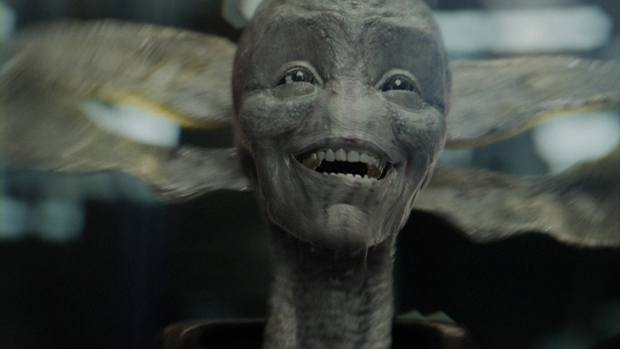
They proved to us that they’re generations ahead of us in gene manipulation, because the constant invasions they experienced over the the course of generations forced them to use their advancements in science and math to build the ultimate warriors that we witnessed on the battlefield. They sorted out their gene code to make their warriors run faster, and their hands operate faster and quicker. They’re now genetically designed to think quicker on the battlefield, and their methods of destruction are far more creative and devastating. The scientists from their species messed around with their gene code until they created more intelligent mathematicians and engineers to help their species create better weapons, and they monkeyed around with genetics, until they created beings who could go longer stretches without food and water.
War became a way of life for them, as the other alien species set down upon their planet for its resources. The young warriors we witnessed, and most of their species knew nothing but war for the whole of their lives. War and population replacement were their two primary concerns for so long that the only evidence of peace on their planet existed in their history books.
 The moment after they developed a genetic superiority of some form, the invaders would capture a carcass and copy their genetic manipulations. Before long, the battles between alien species involved one genetically altered warrior against another, and the results of these battles ended up a 50/50 proposition, or what we might call a coin flip.
When they sent envoys to Earth, they found that we were largely inferior on the battlefield. When they stole our carcasses for study, they also found our genetic codes inferior. As we all know, not all of their battles on Earth were successful. We won some, but they won a whole lot more. When their alien counsel questioned their scientists and engineers, the scientists and engineers theorized that total annihilation of the human population would prove difficult if not impossible? Again, this wasn’t their primary directive, but the alien council wanted to know how the scientists and engineers came to this conclusion.
“It has nothing to do with any form of inferiority on our part,” one scientist theorized. “We are superior to them in every way that we can determine, save for one. Perhaps. If you want to call it that.” The alien council pressed the scientist on this topic. “I want to stress that this is but a theory, and I do not know if it is a superiority or an inferiority, but we found that humans have a greater desire to live than our superior warriors do. They do not do what is necessary to win a battle, most of the time, but their crafty solutions on the battlefield were informed by their desperation to keep living. Our warriors, again superior in every other way, did their jobs, but we found that most of them didn’t do what was necessary to survive. That difference proved to be the humans only advantage on the battlefield.”
“Why?” an alien council member asked.
“We’ve asked ourselves this many times,” the scientist said. “In preparation for my testimony today, my teams and I developed a number of complex answers that we thought our warriors could use against our enemies, but for every answer, we developed about ten more questions. The one answer we developed, which arrived as a recurring theme that no one noticed until someone did, might be the simplest answer but the most complex one for us to implement is that humans just seem to enjoy elements of life, and life in general, more than we do.”
The alien council was not satisfied with that answer and most of them rejected it for the record, and one even wanted it stricken from the record. After the scientist left the boardroom, one member of the alien council said, “The idea that we don’t want to consider what our esteemed scientists found should make it the one idea we consider most.”
The council brought in a number of the surviving warriors who saw action on Earth. The council wanted to focus on those who weren’t as successful to find out why. Most of them were so embarrassed by their failures that they wouldn’t admit, or didn’t know, why they were not completely successful. Their answers were so situational that they did not prove useful to the council.
The council finally brought in their most successful commander who won over 90% of his battles, yet they wanted to know why the commander thought his troops weren’t 100% successful.
In their interrogation, the council was careful to avoid any questions that might embarrass the commander, and they did not want to influence his answers with any of the answers they received prior to him taking to the floor. They wanted honest appraisals of the human beings to use for future manipulations of their species’ gene codes.
The commander started out situational, explaining why he thought they were successful in some locations and unsuccessful in others, but he mentioned that he thought some people in a very specific location had a greater will to survive than others did in other locations. When he concluded, a council member focused in on that idea of their greater will to survive, an idea the commander only mentioned in passing.
“They do have a will to live that surpasses any species we’ve encountered,” the commander said in an unprompted repetition of what the scientist said. “As opposed to most of the captured combatants I have witnessed throughout my career, most humans gave up whatever we wanted to know when we tortured them. We regarded this as a weakness at first, but we came to appreciate how much they wanted to survive.
“When we asked them why they wanted to survive so badly, some spoke of wanting to see their offspring grow to be adult humans, others spoke about enjoying their freedom, and some spoke of enjoying their lives in some sort of philosophical fashion.”
The alien council found those answers so esoteric that they struggled to understand how could use them. They brought in another commander who echoed many of the answers of the first, but he added:
“We captured one male who called himself Ty Gabor. Ty Gabor refused to give up any secrets that he knew,” the second commander said. “We killed Ty Gabor over twenty times in the most painful ways we’ve developed. We removed his limbs and his sensitive reproductive parts, and we damaged and repaired his mind so many times that we thought he would give up, but this man wouldn’t give up any information. In our after-torture interrogations, we found that he was willing to withstand this torture if he thought it meant that his nation and his world would live for one more day. We suspected, based on our precedents, that the primary reason he was holding out was for his offspring. So, we located his daughter and his son, and we killed them in front of him in one of the procedures he knew firsthand, he told us everything we needed to know with the hope that we would bring them back to life, as we did him. When we asked him why he held out so long, he talked about those offspring, but he also mentioned silly things, such as wanting to see a painting one more time, he said something about wanting to taste an animal called a ribeye one more time, and he said he missed hearing music after such a long incarceration.”
“What is a ribeye?” one of the council members asked.
“It is a species that they feed and maintain specifically to eat,” the second commander said. The commander then went down other roads, discussing some of the tactical maneuvers the humans used to thwart total annihilation that the council might be able to use in future battles, but one of the council members cut him off.
“Describe for us why you think eating this ribeye is something he enjoyed so much that that he wanted to continue life.”
“To be quite honest we did not expect the council to focus on this so much,” the commander said, rifling through his notes, “but Ty Gabor said, oh, here it is, he said that he enjoyed eating this animal so much that he experienced what he called euphoria, which he basically described a heightened emotional reaction. Our interrogator noted that he got so emotional about the ribeye that he cried, but it should be noted how long he spent in isolation, how many times we tortured and killed him, and how many times his mind was altered and repaired.
“We did notice,” the second commander continued, reading from the notes of various other interrogators, “that when we killed our captives’ children, took their limbs and ruined their minds so much that we thought we took away their will to live, our analysis showed that their minds switched to the smaller things, like the paintings, the music and the ribeye. One of them hoped that we might set him free so he could run in an open field with flowers in it. Some of them talked about doing a sporting event again, creating something artistic, and experiencing a heightened level of fondness that they have with another they call love.
“The human beings are not strong in mental or physical ways,” the commander concluded, “but they do not give up hope, and that does prove to be a strength in its own regard.”
Going forward, the alien council focused the rest of their interviews on the idea of this ribeye in conjunction with the human’s unusual propensity to desperately want to live. The problem the council had with the humans’ desire for freedom, and their desire to continue living for their offspring was that the aliens genetically altered those codes out of their warriors. It would take them a generation to correct that error, and they might lose many battles, or their planet, in the interim. They decided they might use all of the information long term, but they needed a quick fix too, and they decided that the ribeyes might provide them this.
“Humans need food to sustain life,” one of the council leaders suggested after the interviews were done, and they discussed the data their people found, “but we do too. The difference is that humans appear to enjoy eating food so much that it adds to their quality of life. Is it possible that we might give our warriors a small edge by giving them a quality of food that is better than our adversary’s and that their desire to eat more of it might lead them to want to live longer and thus increase their win percentage in battle?”
“We have survived this long by focusing on the larger ideas,” one of the other council members added at the tail end of the meeting. “We have better knowledge and technology, but we basically built robots to protect us. We erased the genetic codes that promote emotion. Now, I am not saying that was wrong, because we would not be here if our warriors knew fear and were overcome by feelings of pain, but by erasing their emotions we might have accidentally erased many of the details that drive the humans to some success in battle. The humans from Earth taught us a great deal about values and principles and desire and all of the messy details of existence that we worked so hard to erase. We can give our current warriors ribeyes, but we should probably reset some of the genetic codes that promote feelings about genetic offspring, spouses, and the general sense of family, their nations, and our world to give them something to fight for and survive for, as the humans have.”
The simple experiment of allowing their warriors to eat ribeye proved so successful for the aliens in the short term, because their warriors reacted in the manner they hoped, but even more than that, their adversaries couldn’t figure out how these aliens were winning such a high percentage of their battles. The adversaries studied the alien carcasses and scanned for the modifications of their genes. They couldn’t find anything of course, and they sought complex answers that drove them away from the simple answer the aliens derived from their skirmishes with the humans. The problem for the alien council was that there were a limited number of ribeyes on Earth that they found humans called cows, and that the ribeye was but a piece of that cow. They decided that they wouldn’t steal all of the humans’ cows, so they began capturing select bulls and cows to create their own. The next problem that arose was that the warriors suggested that the reward of eating ribeye diminished over time. The aliens sent more enjoys down to Earth to study the human digestive tract for other dietary choices they could offer their warriors. By probing the anuses of the humans, the aliens found that some humans enjoyed eating an animal called pork more than the cow, and others enjoyed eating a bird called chicken. They implemented these animals into their warriors’ diets, and they added all of the various plants they found in the humans’ digestive tracts. The surprising results suggested that not only did the warriors want to survive their battles more often, but their overall health improved, and their life expectancy increased.
The alien council’s suggestions proved so successful for so long that their adversaries simply gave up trying to conquer their planet, and this resulted in an unprecedented level and length of peace and prosperity on their planet. This peace and prosperity lasted so long that the generations of aliens who followed only knew war through history books. This presented the alien species with new problems, as they found that when their citizens weren’t living every day in fear of war, they focused their unhappiness on other things, and for this future alien councils found that they could not turn to Earthlings for answers.
 Rilaly