Whenever a gifted artist dies, there’s always a sense that they’re irreplaceable, but there’s something different about music. There’s something special, cathartic, and spiritual about the music that uniquely gifted creative artists offer to bind us all. We can’t explain our connection to these artists, but we enjoy the beauty and craftsmanship of their art so much that when they die, we feel a sense of loss that’s almost painful. Most of us never met the artist, yet in a strange, inexplicable way, we feel we know them. Losing an ingenious comedian might be the only comparable loss, as they offer us the precious commodity of laughter. An ingenious musician might offer everything but laughter, but when they die, some unusual, inexplicable part of us dies with them. The connection is so strong and heartfelt that, in some cases, their death almost feels like the death of a family member.
 Who’s your favorite musician? Are all of your favorite musicians from a certain era? Some of us go retro, some of us try to stay hip to music’s latest styles and trends, but most of us remain true to the era of music we listened to in our formative years, usually between the high school years and college years. My friends and I love music from every era, but our sweet spot occurred somewhere between ’86 and ‘99.
We all know the artists from the 60’s inspired the artists of the 70’s to try to do something somewhat similar but different and better, and the 70’s artists inspired the 80’s, and so on. Did the 70’s stable of hard rock artists do it better than the 80’s or the 90’s? It depends on whom you ask. Yet, if we were to hand out grades for the various eras hard rock, we might have to give the 60’s a (‘C’) based on the idea that most of the artists of the era focused on pop, and we might give the 70’s an (‘A’) and the 80’s a (‘B’). Due to the unrealized gains in the 90’s, however, we would have to give that decade an (‘I’) grade, as in incomplete.
 Most general debates about the greatest music in rock n’ roll focus on the 60’s and the 70’s. Yet, even with the sense that the 90’s were incomplete, it was such an insanely creative period for underground and established artists that some of us consider it the most underrated era in music. We could provide a list of the incredibly diverse and creative albums produced in this era, but few would argue that it was one of the most free, most wide-ranging eras in music history. When we dig beneath the surface, and we account for the unrealized gains from this period, in a hypothetical contest with other eras, the idea that 90’s was the greatest era in rock could’ve been a fact as opposed to one man’s opinion.
Unrealized gains is a tool investors use to determine what their profit might be if they sold a stock they own today. That profit is not realized, in other words, until they sell the stock. I realize I am taking some literary license when I use this term to define how much greater the 90’s could’ve been, but if we are going to compare these eras, in an artistic sense, a tweaked definition of this term unrealized gains illustrates this thesis that the era could’ve been so much greater if so many of its young, talented artists didn’t die, and they realized their full potential.
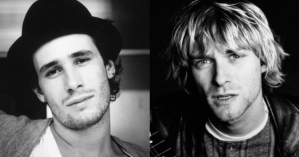
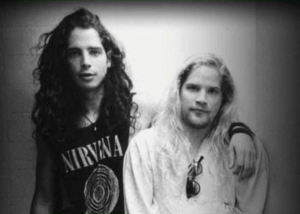
There are a number of artists we could list in this space whose lives were cut short in the 90’s, but there are three in particular who some believe could’ve changed the landscape of music had they survived. Andrew Wood, Kurt Cobain, and Jeff Buckley were three very different artists, but when we take the creative output they achieved, and we speculate about the potential they had to create more diverse and creative songs, we arrive at substantial unrealized gains for music and the culture during this era.
Based upon the frequency with which these artists completed production on their albums in that era, usually biannually, I figure that the three of them, combined, could’ve probably released ten more albums before the close of the 90’s, and this does not account for any side projects, or solo projects, they might have pursued. How many of those ten albums would’ve been classics, and how many of them would’ve helped redefine that era and beyond? We can only imagine, unfortunately, that these artists would’ve grown bored in their genre and would’ve explored other genres and enriched us all with their creativity in so many fields of music. We can also speculate that those ten albums would’ve spawned a greater algorithm of other artists taking their influence and trying to do something different and better with it before the end of the 90’s.
The one asterisk we must account for in this equation is that it’s possible that these three artists would’ve never made another decent album again. They may have gone solo, as all but Buckley were members of groups at the time of their demise, and they might have quit the music industry altogether, but that proposition seems improbable. They might have been nothing more than products of a system that helped them create, finesse, and complete these albums. They might not have been as creative and ingenious as we assume. They might have owed their creative output to more to other people than we’ll ever know. Their music might’ve relied on a uniquely gifted producer, a quality mixer, or a specific band member who propelled their creative output. Losing those people could’ve exposed these artists as nothing more team players, as opposed to uniquely gifted creative artists in their own right. Whatever the case is, they might not have been as talented as we assume. We can only comment on what we know, and we don’t think anyone can listen to a collection of the best material from these three artists without thinking about how much more they had to offer. All three of them were in their 20’s when they made some of their best earth-shattering songs, and they all had, at the very least, ten more years of quality songwriting ahead of them.
Andrew Wood might be the most tragic, as he died of a heroin overdose in 1990, at age 24, shortly before his band Mother Love Bone would release their first album Apple. Kurt Cobain died at 27 years of age, in 1994, and Buckley died in 1997 at age 30, but I don’t think anyone would argue that Cobain and Buckley achieved a greater narrative arc than Andrew Wood did.
Some suggest that Cobain’s group Nirvana was so groundbreaking that it killed the brand of arena rock called heavy metal, but others might argue that the death of the charismatic and creative Andrew Wood was another contributing factor to its demise. If he survived his overdose and decided to go clean, Wood might’ve kept heavy metal on life support with his creative and inventive flourishes.
The 90’s also involved the death of Shannon Hood, lead singer of Blind Melon in ’95 at 28 years-old, and the death of Sublime’s lead singer Bradley Nowell, in 1996 death at 28 years-old. We could also include Layne Staley on this list, but he died of an overdose in ’02, at 34 years-old, and the 90’s saw a great deal of his creative output fully realized. When comparing the various eras, however, the idea that the 90’s could’ve been so much richer with the potential creative output these incredibly artistic artists could’ve and should’ve produced is an almost painful thought.
We have a love/hate relationship with the idea of comparisons. Most people would caution us against comparing any artists, particularly when those comparisons involve icons. “Comparisons often have no basis, and they usually anger more than they intrigue,” some say. “My advice is to avoid doing them.” In the spirit of throwing caution to the wind, let’s get nuts. Andrew Wood wrote silly love songs, as Paul McCartney did. Kurt Cobain wrote social songs that appealed to young people on such a profound level that some call him a voice of his generation, as they did with John Lennon and Bob Dylan in the 60’s. Jeff Buckley wrote beautiful, soulful melodies that appealed to our spiritual side in the manner George Harrison did. The point in bringing these comparisons up is not to suggest that these artists could’ve been as talented as those icons, but to suggest that we cannot talk about the 60’s without mentioning Harrison, McCartney, Lennon, and Dylan. Leaving them out would not only be foolish, it would feel incomplete. Those of us who love the 90’s feel it’s almost as unfair to compare the 90’s to other generations without considering the potential of what it could’ve produced and the prospect of its unrealized gains in the vein of those artists who died during the era, with special consideration devoted to the prospect of what Wood, Cobain and Buckley could’ve produced.


 Rilaly