
Scat Mask Replica VIII


How much money does the average Fortune 500 Company spend learning the mind of the consumer? How many psychologists, linguists, and marketers do their preferred research firms and marketing agencies consult before starting production on a commercial? Their job is to know what makes us laugh, what makes us cry, and what intrigues us long enough to pitch a product or idea. They also have the unenviable chore of finding a way to keep us from fast forwarding through commercials. The average commercial is thirty seconds long, so advertisers need to pack a lot into a tight space. With all the time, money, and information packed into one thirty-second advertisement, one could say that commercials are better than any other medium at informing us where our culture is. One could even go so far to say that each commercial is a short, detailed report on the culture. If that’s true, all one needs to do is watch commercials to know that the art of persuasion has altered dramatically in our post-literate society.

Booksellers argue that we don’t live in a post-literate society, as their quarterly reports indicate that books are selling better than ever. I don’t question their accounting numbers, but some of the commercials big corporations use to move product are so dumbed down and condescending that I wonder if fewer and fewer people are buying more and more books.

When advertisers make their pitch, they go to great pains, financially and otherwise, to display wonderful messages. They then hire a wonderful actor, or spokesman, to be the face of the company. By doing so, of course, the companies who employ the advertising agencies want the consumer to find their company is just as wonderful. If you’re not a wonderful person, their carefully tailored message suggests you can be if you follow their formula. If I am forced, for whatever reason, to watch a commercial, I find their pitches so condescending that they almost make me angry.

Thirty seconds is not a lot of time when it comes to the art of persuasion, so advertising agencies take shortcuts to appeal to us. These shortcuts often involve quick emotional appeals. The problem with this is that people who watch commercials adopt these shortcuts in casual conversations, and they begin using them in everyday life.

I find the quick, emotional appeals these research and marketing firms dig up so appalling that I avoid commercials as much as possible. I find the opposite so appealing, in comparison, that I probably give attempts at fact-based, critical thinking more credit than they deserve. I walk away thinking, “Hey, that’s a good idea!” whether it’s actually a good idea or not, I appreciate the thought they put into making a rational appeal.

Some quick, emotional appeals add crying to their art of persuasion. “Don’t cry,” I say. “Prove your point.” A picture says a thousand words, right? Wrong. We’ve all come to accept the idea that powerful figures and companies require an array of consultants to help them tailor their message for greater appeal. Yet, if one has facts on their side, they shouldn’t need to cry. They shouldn’t need to hire consultants, they shouldn’t need attractive spokesmen, and the idea that they “seem nice and wonderful” shouldn’t matter either. I know it’s too late to put the genie back in the bottle, but I think the art of persuasion should be devoid of superficial and emotional appeal.

***

Marketing firms and their research arms also spend an inordinate amount of time discussing “the future”. Some ads intone their pitch with foreboding tones, and some discuss it with excitement. Our knowledge of the future depends on our knowledge of the past. As evidence of that, we look to our senior citizens. They don’t pay attention to the present, because they find it mostly redundant. “What are you kids talking about these days?” they ask. We inform them. “That’s the same thing we were talking about 50 years ago.” Impossible, we think, we’re talking about the here and now. They can’t possibly understand the present. They can, because it’s not as different from the past as we want to believe. The one element that remains a constant throughout is human nature.

You’re saying that all the change we’ve been fighting for will amount to nothing? It depends on the nature of your fight. Are you fighting to change human nature? If so, there’s an analogy that suggests, if you’re trying to turn a speedboat, all you have to do is flick a wrist. If you’re trying to change the direction of a battleship, however, you should prepare for an arduous, complicated, and slow turn. My bet is that once we work through the squabbles and internecine battles of the next fifty years, the future will not change as much as these doomsayers want it to, and if it does, it will probably be for the better.       

***

Brian Dettmer

How many people truly want to create works of art? “I would love to write a book,” is something many people say. How many want it so badly that they’re willing to endure the trial and error involved in the process getting to the core of a unique, organic idea? How many of us know firsthand, what a true artist has to go through? If others knew what they have to go through, I think they would say, “Maybe I don’t want it that badly.”

We prefer quick, emotional appeals. How many overnight geniuses are there? How many artists write one book, one album, or paint one painting to mass appeal? How many of them were able to generate long-term appeal? We should not confuse appeal with best seller. The idea of best seller or attaining market appeal is, to some degree, not up to the artist. They might have a hand in the marketing process, but appeal is largely up to the consumer. The only thing an artist can do is create the best product possible in the large and small ways an artist creates. In this vein, creating art involves a process so arduous that most people would intimidate most.

On the flip side, some say that there are artistic, creative types, and there are the others. There’s no doubt that there are varying levels of talent, but I believe that with enough time and effort most people could create something beautiful and individualistic.

Leonardo da Vinci was a talented artist, who painted some of the greatest pieces of art in world history. From what I’ve read about the man, however, he achieved so much in the arts that it began to bore him. After working through his apprenticeship and establishing himself as one of the finest painters of his day, he received numerous commissions for various works of art from the wealthy people and government officials around him. He turned some down, never started others, and failed to complete a whole lot more. One theory I’ve heard on da Vinci is that if he had a starving artist period, he probably created hundreds of thousands of pieces in that period, but that a vast majority of those pieces were lost, destroyed, or are otherwise lost to history. By the time, he achieved a level of stature where those in his day wanted to preserve his work, painting bored him so much that he created comparatively few pieces. Either that, or in the course of his attempts to create that elusive “perfect piece” da Vinci began studying the sciences to give his works greater authenticity. In the course of those studies, he became more interested in the sciences than he was in painting. These are just theories on why we only have seventeen confirmed pieces from Leonardo da Vinci, but they sound firm to me.

***

There is a hemispheric divide between creative types and math and science types. One barometer I’ve found to distinguish the two is the Beatles. So many types love the Beatles that we can tell what type of brain we’re dealing with by asking them what Beatles era they prefer. With the obvious distinctions in style, we can break the Beatles down into two distinct eras, the moptop era includes everything they did before Sgt. Peppers Lonely Hearts Club Band, and the “drug-induced” era that followed. Numbers-oriented people generally love the moptop era more, and the creative, more right brain thinkers tend to prefer Sgt. Peppers and everything that followed. The moptop era fans believe the Beatles were a better band during the moptop era, because “they were more popular before Sgt. Peppers. Back then,” they say, “the Beatles were a phenomenon no one could deny.” Moptop era fans often add that, “the Beatles got a little too weird for my taste in the “drug-induced” albums that followed.” Although there is some argument over which album sold the most, at the time of release, it is generally argued that the latter half of their discography actually sold more than the first half. Numbers-oriented people should recognize that the latter albums were bound to sell more if for no other reason than the moptop Beatles built a fan base who would purchase just about anything they created after the moptop era. Those who lived during the era, however, generally think that the Beatles were less controversial and thus more popular during their moptop era, and if you’ve ever entered into this debate you know it’s pointless to argue otherwise. We creative types would never say that the pre-Sgt. Peppers Beatles didn’t have great singles, and Revolver and Rubber Soul were great albums, and we understand that those who lived during the era have personal romantic attachments to their era of Beatles albums, but we can’t understand how they fail to recognize the transcendental brilliance of the latter albums. We think the brilliance and the creativity they displayed on Sgt. Peppers and everything that followed provided a continental divide no one can dispute.
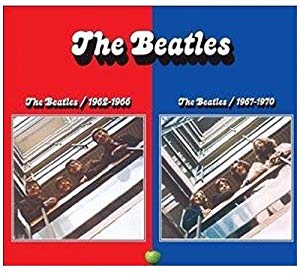
Further evidence of the popularity of the latter half of the Beatles catalog occurred in 1973. In 1973, the Beatles released two greatest hits compilations simultaneously for fans who weren’t aware of the Beatles during their era. The blue greatest hits album, which covered the 1967-1970, post Sgt. Peppers era has sold 17 million to date, while the red greatest hits 1962-1967, moptop-era album has sold 15 million. As anyone who has entered into this debate knows, however, it’s an unwinnable war.


Anti-Anti-Consumer Art


I may be in the minority, but I prefer the work of angry, bitter artists who are unable or unwilling to adjust to cultural norms. If I deign to offer an artist my bourgeoisie, Skittle-eating, domestic beer-drinking, and modern TVwatching opinion on their artistic creation, and they don’t hit me with a red-faced, spittle-flying, “Your opinions are excrement!” rebuttal, I might begin to question if they have the artistic temperament I require of those who lack any other means of venting their rage on the world than through artistic creation.

If I am to view their art in a serious manner, they had better view me as a symbolic substitute for the America-loving, God-fearing, football fan of a father they had, the man who ruined everything they held dear in their youth. I want them to view me as a symbolic substitute for the art critic who deigned to call their work pedestrian, the fellow artist who told them, “You’ll never make it in the art world,” or the art teacher who advised, “You might want to seriously consider changing your major to economics.”

The path to artistic purity is different for every artist, of course, but for most true artists, the primary motivation is not to create pieces consumers enjoy. For the great majority, the struggle of artistic expression is to locate and expound upon their individualistic interpretation of nouns (people, places, and things). While the idea that others may share a love for their interpretations might be exciting and fulfilling, it is not why they feel the need to express themselves. Outside adulation is of secondary concern to them, but it is also gravy. Some, however, create complicated pieces of literature or other forms of art for the expressed purpose of airing their complications. For these artists, the loathing they harbor for the common man’s opinion is so complete that they’re often looking at something else before we can complete our second sentence. Even authors of bestsellers, writing for the sole purpose of writing a bestseller, will argue until they bleed that their intention was not to create something consumers love. “I just happened to accomplish that,” they might argue, as if popularity was an inadvertent side effect of the quality of their creation. No matter how much we might disagree, we really can’t blame them for if they state that they intended to create a product of mass appeal, few would consider them serious artists.

If a starving artist declares how much they love their fans in their artistic statement and they’re hoping to one day see their art exhibited in a New York City gallery, they may do well to avoid the heartache, and headaches, and just consider another profession. If they have that mindset, it might behoove them to try out for the Atlanta Falcons instead. The chances are probably better that they’ll make that team than any team of artists considered for an exhibit in a New York City art gallery. A true artist can say they value input from those who have experienced their work, but they must word these critiques in such a manner that adamantly avoids any form of fan appreciation.

The best chance an artist has for achieving a spot in a prestigious gallery is to condemn everything purported by the consumer standing before them. Their best bet, in fact, is to find an artistic method of denouncing everything everyone believes in, to generate and work from an anti-consumer theme.

The anti-consumer theme has a timeless quality about it, one that goes to the heart of the artist. Its provocative nature does not yield to pop culture winds. It is anti-pop culture and a hot ticket in any era that appreciates its artists.

Little old ladies, in a blatant attempt to appear young and hip, will walk up to an artist in these galleries and try to find some way to tell the artist they find the most disturbing pieces in their portfolio, “Wonderful”, “Amazing”, and “Wonderful and amazing!”

“You are so not my demographic,” a true artist of an anti-consumer piece of art might say in the wake of such comments coming from a little, old lady. A vehement rejection of this sort could enshrine the artist in the word-of-mouth halls of the art world, and their opportunity for such prestige might increase if they added some sort of exclamation to that rejection, such as a healthy stream of spittle dropped on the little old lady’s shoes.

Receiving a compliment from a little, old lady must put an anti-consumer artist in an awkward place. Most artists feel a reflexive warm glow rising whenever they receive a hard-earned compliment from anyone, but the non-conformist artist knows better than to concede to some display of it. The intention of their creation was to reject everything most consumers hold dear, its purpose was to disturb the little old ladies of the world, and its goal was to shake up her conformist mindset. To hear that such a woman allegedly gets the artist’s attempt to disavow and denounce her generation –the generation that the artist purports screwed us all up with their toys, and wars, and unattainable gender-specific imagery– must be vexing for the artist.

Thus, the best way to handle such a situation might be to spit on her shoes. An enterprising, young, anti-consumer artist might even want to create such a scenario in which such an opportunity will arise. They might want to use a found-footage, shaky cam method of capturing the scene for a publicity junket. The artist who pulls such a situation off might just become the talk of the town if she managed to pull it off.

“Did you hear what happened when some old bag complimented Janice on her anti-fifties piece?” other artists would say to one another. “She spit on her shoes.” If such an incident made it through the artist community grapevine, it could become part of the artist’s folklore.

Criticism from some remnant of the 1950’s would be the next-best reaction for the angst-ridden, bitter, angry, anti-conformist artist. “Good, it was meant to unsettle you,” the artist could say. “Its purpose was to cause you to reexamine all the harm your generation has caused us.”

If the patron is not of the fifties generation and they deign to criticize anti-consumer art, they might want to consider the idea that they might be part of the problem. The artist might instruct them to venture outdoors more often to find out what’s going on in the world, or they may want reexamine the full scope of the artist’s narrative. The sociopolitical theme of anti-consumerism invites and hopes to incite criticism, because it is immune to most criticism by its very nature. If that were true, why wouldn’t a curator want their gallery lined with anti-consumer pieces?

The anti-consumer artist doesn’t have to worry about using current products in their projects either, for an anti-consumer artist can employ whatever consumer-related products are necessary to denounce the ethos of an era. A pro-consumer piece does not have such allowances, for to try to create an artistic expression that professes an enjoyment of Superman cereal, the consumer must have some experience with Superman cereal, in order to relate to the theme. That piece will likely evoke little more than some elements of quaint nostalgia. If the artist is unwilling to include some underlying, angst-ridden subtext regarding all the ways in which eating Superman cereal created unrealistic expectations in the patron’s mind and thus messed up that patron’s childhood the artist can be sure the piece will not fetch the kind of price that a bitter, condemnation of being forced to ingest the cereal (and thus the ideals of Superman as well), will.

Is there a sliding scale on anti-consumerist statements? I’m sure many anti-consumer artists would love to know it. If their piece contains subtle, sophisticated irony in its anti-consumer theme, with an ironic twist, what kind of return can they expect for their time? Are vehement declarations of such themes more profitable? Does the price point increase in conjunction with bullet-point adherence to the sociopolitical, anti-consumer theme?

The amount of anti-consumer art for sale in a gallery can be overwhelming, for this has become the most consumer-related, rebellious, radical theme for starving artists to pursue. In fact, “What are you waiting for?” might be the question that fellow artists and curators have for those who hold out. They might even inform the holdouts that anti-consumer art has become the safest theme to explore for any artist that wants to have their work exhibited.

Curators don’t have to worry about fads or trends in the art world, for the very idea of fads and trends violate the anti-consumer artist’s tenets. All a curator has to do is rotate collections of anti-consumer art year round, and their gallery can exist in the radical, counterculture milieu 365 days a year.

How long have anti-consumer pieces held primo spots in top galleries around the nation? One would think the ubiquity of this anti-consumer theme in art galleries would invite a rebellion that would expose it as the market force it purports to detest. It would take a rebel willing to expose the counterculture in their work, regardless of how it affects their pocketbook, because the current art world would not view their work favorably.

As such, framing the concept of their piece would provide an obstacle for the rebel. The rebel would have to word their artistic statement carefully, for it would be career suicide to have their anti-anti-consumer art confused with pro-consumer art.

Grimace-e1414637657704
“Eat at McDonald’s”

“It says ‘Eat at McDonald’s,’” a curator might say with absolute disgust.

“Right on,” the anti-anti-consumer artist would reply. “It’s my attempt to highlight the stereotypical art of anti-consumerism. My portrayal of the McDonaldland character Grimace is used as a vehicle for the larger idea through which I attempt to explore the tendency our counterculture has to use social media and propaganda to prescribe narrow, contrived definitions of art to individuals and the nation.”

The hip, avant-garde patrons of an art gallery would be prone to view the anti-anti-consumer artist’s piece as a stab at consumerism that contains sophisticated irony. They might consider it quaint, hilarious, and an incredible salvo sent to consumers around the world, the people who really don’t get it.

If this anti-anti-consumer artist was available for a Q&A session, and the artist made the mistake of imploring their artistic friends to accept their anti-anti-consumer theme for what it is, the hip, avant-garde smiles would likely flatten. Some might consider the piece obnoxious, and they might even consider the anti-anti-consumer artist a whore for corporate America.

“I just want to celebrate the history and tradition of the McDonaldland character Grimace,” the anti-anti-consumer artist’s intro would be. “My painting is an effort to explore all the joy and happiness Grimace has brought to so many lives.”

“Is that sophisticated irony?” the patrons would ask.

“No. It’s an anti-anti-consumer theme that I am attempting to explore here.”

“So it’s … a pro-consumer statement?” one of the more obnoxious patrons might say to intrude upon the artist’s pitch.

“Good God, no!” the artist must respond, if they hope to generate the amount of interest that might result in a sale.

If the anti-anti-consumer artist has the artistic temperament of one who doesn’t care about the sale, however, and they’re able to maintain focus on the artistic theme, they might have to engage in a substantial back-and-forth with the patrons of their piece before they conclude that the artist isn’t putting them on or being obnoxious.

As stated earlier, being obnoxious in an anti-consumer theme is not just acceptable it’s expected. Stubbornly pursuing an anti-anti-consumer stance, however, will cause others to deem the artist obnoxious and pro-consumer.

Thus, attracting patrons to the anti-anti-consumer exhibit would not even represent the beginning of the artist’s problems, as no self-respecting curator would deign to display their work. I’m guessing most curators aren’t bad people, and they might even have some sympathy for this anti-anti-consumer artist’s frustrations. If the curator’s knowledge of the industry was such that they knew enough about it to be objective, they would probably sit the artist down to inform them of the inner workings of the industry.

“I know you are a passionate artist,” the curator might say, “but you really should reconsider this whole anti-anti-consumer theme. I know you built it to counter the counter, but you should know that this will not play well over the long haul. If you want serious cachet in the art world, there are two genres to consider. These genres include art built on an anti-consumerism theme and the anti-consumer works that are vehement in their theme. I suggest you drop this whole anti-anti-consumer artistic statement and make it known that your work contains a subtle, sophisticated irony with an anti-consumer twist, if you ever hope to sell anything.”

If the anti-anti-consumer artist somehow managed to achieve some degree of success with their theme, they would likely become the scourge of the art world. At some point, fellow artists would also approach the artist, as a coalition of condemnation for the audacity of the anti-anti-consumer theme. “You’re ruining this for all of us. Why would you do this to us? What do you think you’re doing?”

The anti-anti-consumer artist should look them in the eye and ask, “Is that subtle, sophisticated irony?”

Artistic Images vs. Artistic Creations


Imagine that someone tells you that an artist’s self-portrait is now on sale.  “Who is it?” would probably be the first question you ask, and if it turns out to be the work of a relative unknown, “What’s his story?” would probably be your next.  If the answers to these questions aren’t very satisfying, all of your follow up questions would probably involve the story behind the particular self-portrait painting in question.  If these questions yield no satisfactory answers, your final question might be, “Why should I be interested in this piece?”  The quality of any artistic piece is subjective, but most art enthusiasts generate enthusiasm based on a number of factors, most of which have little to do with the actual quality of the piece.

It may be a little unfair to criticize the desire some art enthusiasts have for “a story”, or more information, of a self-portrait of a relatively unknown author before vesting any interest in a piece, but in the case of artist Bryan Lewis Saunders such interest has been generated.  This event leads to the question, how does a relatively unknown artist generate interest in his work?

That’s easy: paint a masterpiece.  Most works of art are not masterpieces, however, and they fall into the subjective, relative arena of appealing to the patron on some level.  Very few pieces of literature, musical productions, or sculptures are so great that they can attract an audience without a great accompanying story.  Most art falls into the middle ground of subjectivity, and it’s that subjectivity that requires a great story we can identify with, or that which tantalizes us in some fashion.

Computer Duster (2 squirts)

The self-portraits of Bryan Lewis Saunders appear to be –to the non-enthusiast crowd– marginal works of art at the very least.  For those that are interested in making their own determinations on his art, these works can be viewed here and here.  In the second link, and in Jon Ronson’s piece on Mr. Saunders for the Guardian, you can learn of the story behind these self-portraits, and how they involve Mr. Saunders doing roughly fifty different self-portraits on fifty different drugs, be they of the prescription or controlled substance variety.  This story has generated a tremendous amount of interest in Mr. Saunders, and his work, and it appears to have added tremendous value to his pieces among the chichi crowd that wants to have his story hanging on their wall.

Let’s say, for a moment, that I’m right about the artistic merit of Mr. Saunders’ work, and the greater value exists in the narrative.  Are you one that would love to give that narrative to visitors of your home?  Are you one that would love to have a Saunders hanging above your shabby chic armoire, so that you could say, “Mr. Saunders did that while wrecked on the prescription drug Klonopin, otherwise known as Clonazepam.  And let me take you down the hall here,” you say with excitement.  “This is Mr. Saunders interpretation of himself after experimenting with butane honey oil, and in our master bedroom is my personal favorite that Mr. Saunders created after taking 250mg of Cephalexin.  He actually mixed some of the cephalexin into the painting with water and a watercolor pencil.  It’s the prized piece of my Saunders collection,” you say with pride.

If your audience isn’t necessarily impressed with the paintings, they would probably find the narratives so exotic, that they probably wouldn’t want to discuss the actual artistic merits of the piece.  They also probably wouldn’t want to enter into a moral discussion of recreational drug use, and how your piece seems to glorify it in some way.  Most people do everything they can to avoid appearing puritanical, and they want others to perceive them as hip and cutting edge.  That having been said, if the pieces are as marginal as I believe them to be, most of your friends will silently wonder if your interest in the narrative may have clouded your judgment.  They would probably not call you out on it, however, with something along the lines of: “So, if it came out that Mr. Saunders was actually completely sober when he did these pieces, would you feel like you were robbed?”

What if you spoke to the author of the painting, at a gallery that presented his work, and you found out that he was actually a loving father of four that had a full time job as a UPS truck driver, and he did the particular piece you love on a caffeine buzz, as a result of putting down an extra cup of Folger’s, and the only reason he came up with the whole “drug thing” was to build some sort of mythology that his artistic career lacked.  Would you give that narrative to prospective admirers?  What if it turned out that this author had a sensible haircut, wore Levi’s jeans, and spoke in a manner that never wavered from the Queen’s English?  How would you enhance your admirer’s enjoyment?  What if your friend didn’t enjoy the piece you purchased, what kind of defense would you have?  What would it say about you that you even purchased such a piece?

Too often, the definition of art is conflated the image of art, and we like those images to be festooned with notions of troubled, reclusive individuals that suck in a potent drug at high volume; and we prefer them unhappy, inconsistent, singularly focused, and driven by the vagaries of the heart as opposed to a concrete, rational mind.  We want to hear that our artists are so singularly focused that don’t understand how toasters work; that they didn’t know how to tie a tie, until they were forty; and they don’t understand the intangible merits of kissing.  The only images we want in artistic profiles are those of quirky individuals that never learned how to fit in with society properly.  The normal person that happens to have a creative flair about them are just not very interesting, so we choose to believe that all artists, true artists, fit an image we’ve constructed in our head.

If you’ve ever watched a docu-drama about an artist, you know these images well.  By the time these movies are over, you’re left with the impression that it’s far more virtuous to be labeled a creative genius than it is to create art.  The constraints of these entertainment vehicles being what they are, the director cannot have a 90-minute movie about a guy painting.  That wouldn’t be very entertaining.  It might also be just as boring to have the characters sitting around discussing interpretations of the pieces, but when the directors of these movies portray the polar opposite, and focus on nothing but the narrative behind the artist, and the subsequent image of the artist, the notion of the narrative of art being more important than art is fostered, until it’s possible that some truly brilliant, yet unnaturally normal artists could remain obscure.

Those of us that have heard about the near divine inspiration that informed the masterpieces we all know, occurred within an elegant hotel room that overlooks the streets of Pamplona, Spain –where the running of the bulls occurs– begin to question these narratives after hearing them for the thousandth time.  Is it a marketing campaign that they use to influence the perception of the final product, or do some people really go to “different places” and receive a degree of insight into the human condition that overwhelms them to such a degree that a seemingly inhuman masterpiece is born?  It’s possible, and it’s likely that it has occurred on occasion, but for the most part, most art is created in boring places, on the backside of all of the mundane routines, and the dogged determination that has persevered through all of the trials and errors that eventually led to a product that an enthusiasts might find so pleasing that they litter their walls and book shelves with them.

Artistic brilliance can be defined as an individual perspective of the world, and the presentation of said material.  It can come from the most unusual places, but it can also come from such usual places that it doesn’t fit the mold of artistic brilliance.  Does this presentation of material require a narrative, does a well-crafted, somewhat spruced up narrative make a final product more beautiful or more interesting?   Maybe, maybe not, but I’m sure that every mid-level artist that has made their way into the chichi art world would tell you, it doesn’t hurt.

Mr. Saunders work can be used as the idyllic form of the mold, but it shouldn’t suggest that there is any less merit to the artistic creations Mr. Saunders decided to produce.  That’s his art, his niche, and it’s what he does, and how he perceives the world through a purposely unfocused lens.  What should bother anyone attempting to create art is the manner in which the world views the artistic world.  If you create an excellent piece of do you have to indulge in mind-altering substances to tantalize the imagination of the chichi contingent, or should you just lie and tell them that’s what you’re doing?  My advice would be to do the latter, and simply give them a narrative to sell to their friends.  Your art may be better received for it, and you may be invited to live the artistic life, for the chichi crowd is vehemently against drug-testing, even if it means that they’re being duped into believing in it.