Baseball is an embarrassingly simple game … on paper. Pitcher throws ball, hitter tries to hit it where they ain’t, and fielders try to catch it. If we introduced the concept of the game to aliens from another planet, they wouldn’t understand how such a simple game found its way into the fabric of our world. “You mean to tell me that your national past time, and the game that is one of the most popular games in your world, involves one human being throwing a ball and another hitting it?” this alien might ask. “And humans find it so entertaining that you not only watch it, play it, and read about it, but some of you devote your lives to it? That’s pretty much all we need to know to go ahead with our plans to take over this planet.”
Anyone who has played the game of baseball, or tried to coach it, knows it’s anything but simple. A player doesn’t have to be 6’6” 250 lbs. to play it. Hall of Fame inductee Wee Willie Keeler was 5’4”. He proved that anyone and everyone can do it, but most can’t with regular success. As hard as it is to consistently throw a ball accurately, it’s harder to hit it where they ain’t. Even relatively young hitters learn that they can be heroes one day and zeroes the next. The simple complexity of hitting a ball consistently can prove maddening, demoralizing, and even a little humiliating to a young kid, because it seems so simple. They cannot figure it out for themselves, however, they need coaching, guidance, and as much support as we can offer.
These three ingredients to improved play, and the resultant character development that follows, are essential, but the three most mandatory ingredients to accomplishing anything in life, are time, patience, and repetition. The latter might be the hardest for a child to grasp, as the typical nine-year-old complaint to mind-numbing repetition centers around, “I can hit, catch, and pitch now. Why do we have to keep practicing them so often?” As I’ve written elsewhere, there is little-to-no room for creativity in sports. There are quick-fixes, they’re out there, but my guess is their efficiency numbers pale in comparison to kinesthetic learning, or the knowledge gain by doing it so often that we know what to do when there is no time to think.
Time, patience, and mind-numbing repetition turned an eight-year-old named Isaac into a decent fielder, so the coach put him at shortstop in year one, but he struggled with hitting so much that the coach put him at the bottom of the batting order. He had the typical problems an eight-year-old experiences of looping under the ball. He had so many strikeouts in year one, and he reacted so emotionally to each one, we began to think that baseball probably wasn’t for him.
“Why does he get so upset?” one of his teammates asked. “He shouldn’t get that upset. It’s just baseball. It’s supposed to be fun. No one else gets as upset as he does.”
We wanted Isaac to lighten up and enjoy himself. Baseball is a game, and when we play a game, we’re supposed to have fun. We’re out there with our friends, and we’re supposed to enjoy playing with them. “Don’t get mad, learn,” was a line repeated so often in our backyard that we both got sick of hearing it.
The answer I would now give Isaac’s teammate is that Isaac wanted it more than his teammates. Some might find this a character flaw in need of correction, but in order for Isaac to have fun doing something, he has to be good at it, and he thought he would be good at baseball before he stepped on the field. His first year was supposed to be nothing more than a display of his athletic talent. When that didn’t happen Isaac did not want to do the elementary things he needed to accomplish his goals. What eight-year-old does?
Why can’t I hit the ball?
Nothing came easy for an eight-year-old Isaac. The core problem for Isaac was that he had a counterproductive image of himself as a good hitter. He thought he should be there before he even picked up a bat, and the evidence he saw to the contrary (in his first full year playing baseball) was demoralizing. Every failure, to him, was an epic denunciation of his ability and his character. The eight-year-old world is dramatic, traumatic, and fatalistic.
Our motto entering year two was keep it simple and overcome adversity. Things happen in baseball. A batter can hit a ball square and a fielder can catch it. A hitter can strike out three times in a game. What happens next defines that batter. How does the batter respond in their next at-bat? “The best batters in the world go 1-3,” I told Isaac, and “baseball is the second hardest game in the world behind golf. What happens after we commit an error in the field?” I asked him, adding, “I’ve committed every error in the field that you have, and I’ve done some that were far worse. I’ve committed errors in front of other people that still keeps me up at night, twenty years later.”
Most of the coaching, consolation, and support I offered Isaac went in one ear and out the other, so I’m not sure if anything I said worked. I think time and repetition had more to do with it. Isaac and I spent time doing an exercise I called 40-40-40. Forty ground balls, forty flyballs, and forty reps doing whatever he wanted, usually forty at bats or forty pitches. We also went to batting cages.
Whatever it was we did clicked. His turnaround, from year one to year two was so 180 that the coach eventually put Isaac in the coveted three hole in his batting lineup. Isaac started the second season in his customary position at the bottom of the order, and he gradually worked his way up to the two hole. This is a summation, as the progression proved painfully gradual, but he was in the two hole by game eight. Before the start of game eleven, Isaac believed he was the best hitter on the team, but instead of putting Isaac in the leadoff spot, the coach put him in the three hole.
“I’m getting on base coach,” Isaac said. “Why are you putting me in the three hole? Why am I not in the leadoff spot?”
“We need your power in the three hole,” the coach said.
I’m going to try to be objective here and say that in year two, the nine-year-old Isaac was one of the three best players on his team throughout the 15-game regular season. He might have had one bad game all year.
Isaac was one of the primary reasons that his team won their divisional playoff game. He went two for two, drove in two runs and scored two, in a 5-2 victory. He also, and more importantly, pitched the final two innings, and he only gave up one run.
He didn’t do too well in the final playoffs, but the rest of the team carried them to victory.
In the championship game, however, Isaac went absolutely nuts. He went 3-3, with 5 RBIs, and one run scored, in a 9-8 game. Isaac accounted for six of his team’s nine runs. He was cracking these hits into the outfield, whereas most of his hits, and his teammates hits, barely clear the infield.
Isaac’s best at bat occurred in what could’ve been his final at bat, and possibly the team’s final at-bat of the season. Before the inning even started, I began counting the batters before him, worrying that Isaac might be the final at-bat. My worst fears came to light as two batters walked and two batters struck out. Isaac stepped up to the plate, down two runs, with two runners on base, and two outs. The score at the time was 6-8, and the opposing pitcher was throwing a surprisingly lively fastball for a nine-year-old.
For two innings, Isaac’s teammates couldn’t come anywhere close to hitting this pitcher. The pitcher was the other team’s ace, brought in to close the game out and secure their championship. Isaac and the pitcher battled to a 3 balls 2 strike full count. Isaac fouled a couple of hits off that told me he might be overmatched. Then, he uncorked at unbelievable hit that ended up tying the game and forcing the opposition to bat in the bottom of the inning.
Isaac pitched the final inning and gave up one unearned run to lose the game.
Earlier in the season, Isaac pitched an almost perfect two innings, striking out 5 of 6. I told him that he would probably never come that close to perfection again. I said that to try to take the pressure off him in his attempts to duplicate that performance. Guess what, he topped it. That final at-bat was so clutch.
We all went nuts on a catch Isaac made in the outfield, earlier in the game, but I told the other parents that that catch was nothing compared to delivering a tying hit in the bottom of the last inning. Isaac’s nickname around the household is either three for three, or Mr. Clutch.
As Isaac walked out of the dugout, his coach stopped him: “I just want to say how enjoyable it’s been watching your development these last two years.”
How does a nine-year-old develop the skills necessary for some sort of progression in athletics? They have to want it, first and foremost. No matter how much comfort, coaching, and support we offer, if they don’t want it, they’re not going to get it. The next ingredient, as I spelled out earlier, is time and repetition, or as one famous basketball player once said, “Practice!” The more time we spend doing anything, the better we will be at doing it. As Malcolm Gladwell suggests, we can master just about anything with 10,000 hours of concentrated practice.
Keep it simple. No tricks. Don’t worry about velocity or location, and don’t think about the future. Someone suggested that Isaac might, one day, play in the majors, and others whispered other, sweet nothings in our ear. If a three-year-old plays with a rocket, we’ll probably hear someone in the room say he might become a rocket scientist. People do this to be nice, and because they probably can’t think of anything else to say. Smile, say that’s nice of you to say, and walk away, then return to the mind-numbing repetition of playing catch, fielding ground balls, and throwing the ball around. They’ll be proud of their progress, and they’ll want to quit when they regress. They’ll learn, and they’ll make tiny adjustments, until some sort of muscle memory develops over time. That might sound simple, but think about all of the mechanics involved in muscle memory. A young baseball player can be coached, taught, advised, and tweaked, but until a kid does it so often that they know it, they’ll never learn it. These principles, and this whole article, are devoted to baseball, but we can just as easily apply the principles discussed here to just about anything in life.
I used to be a baseball guy, a Major League Baseball fan, until I wasn’t. And it wasn’t the 1994-1995 strike either, as it was for so many of my friends. I was a long-suffering Atlanta Braves fan, and the Braves were in the World Series four out of six years in that era. I was then glued to the McGwire v Sosa v Maris run. I attended the 8/30/1998 game against Atlanta in which McGwire hit #55. I remember feeling torn, because he hit one off my team, but I felt a part of history. If he broke Maris’ record, I rationalized, I could always say I attended #55. No, from about 1985 to about 1998, I was a huge baseball fan.
Something happened shortly after the strike that conspiracy theorists believe helped Major League Baseball regain popularity. Some suggest the steroid era loosely existed between the late eighties to the late 2000’s, but most baseball fans would suggest that it only became an issue requiring attention between 1997 and 2000. Some diehard baseball fans suspected that something was amiss early on. Something intangible and tangible changed about the game. It was no longer a secret, but many in my inner circle of MLB diehards chose to deny it was happening.
I don’t remember ever considering the idea that an MLB player might take performing-enhancement drugs a moral issue in a larger sense, but during the 1997-2000 run, Major League Baseball became Sega, Nintendo, or Playstation baseball. In just about every console’s baseball game of that era, the obsessed gamer found ways to artificially edit a player’s attributes to monstrous proportions, and we believe the upper echelon either encouraged such actions in Major League Baseball, or they turned a blind eye.
Some deniers argued that steroids can’t help a major leaguer see the ball better, and they don’t help a hitter turn his wrists quicker. Those arguments are true, but we argued that they could make an average major leaguer better, a good major leaguer can become great, and a great one can break every record on the books with steroids. The question of the era gradually shifted from why would they take steroids to why doesn’t every Major Leaguer do it? If everyone took steroids, it would level the playing field, right? Yes, until we measure their ability against past performance. The best argument against steroids I heard at the time was most barstool debates about baseball involve its storied history. Was Ty Cobb better than Babe Ruth? Was Ted Williams better than Joe DiMaggio, and has any modern star earned a mention in those debates? Other than some subtle changes involving spit balls and the height of the mound, the game largely remained consistent for over one hundred years, until the steroid era.
The question I always asked, in debates with agnostic and apathetic friends, was are Mark McGwire, Sammy Sosa, and Roger Clemens that much better than Roger Maris, Roberto Clemente, and Sandy Koufax? Statistically, it appears as though they were, but to level the playing field Maris, Clemente, Koufax we probably would need to go into a time machine and give them some steroids.
It was an era of “no one’s guilty, so everyone is” that stated “we all know that Greg Maddux and Ken Griffey Jr. are on the juice. Every Major Leaguer was.” I didn’t believe that. I thought some of those big names weren’t, and I held them in high regard for avoiding that temptation. I honored them for playing the game clean, but we were never sure who was clean and who wasn’t. Plus, if everyone else was on the juice, why wouldn’t they join in, to level the playing field? This question of the morality of taking steroids was such a confusing, complicated one that baseball fans debated it ad nauseam, and it led to a level of cynicism that ruined the core of the game for some of us.
FOOTBALL
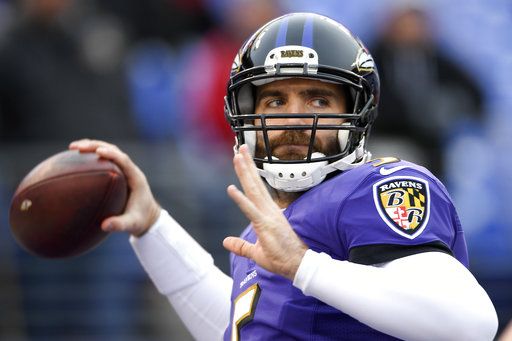
On a separate but similar note, the NFL passing and receiving records are now an absolute joke. Whatever barstool chatter we once had, regarding the comparisons of one generation’s superstars versus another’s is so ridiculous now that I can’t imagine anyone is still having them. On the current, NFL’s all-time passing yards list, Joe Flacco and Kerry Collins surpassed a man that many, who saw him play, declare the greatest quarterback of all-time Johnny Unitas. Flacco and Collins are also ahead of Joe Montana, a quarterback who many of my generation bestow that crown. Flacco and Collins had fine careers, but those of us who saw them play never thought they would end up in the top 20, and no one imagined that they would boot Joe Cool and Johnny U out.
At one point, we can only guess, The NFL Rules Committee decided that their game is not a tradition-rich game in the vein of baseball, and they eviscerated the comparative-analysis barstool discussions for the now. With NFL ratings constantly topping previous years, it’s obvious The Rules Committee made the right choice, and the collective ‘we’ have determined that we want now too, and the who’s better now is the only discussion we can have, as it’s ridiculous now to debate the statistical merits of current players versus the past.
Writers and broadcasters state that Tom Brady’s highly disciplined regiment and diet are the reasons that he’s been able to have such a long career. That is a huge part of it, but no one asterisks that conversation with modern rules against a defense touching a quarterback outside legally designated areas. Couple that with the updated pass interference penalties, and the defenseless receiver penalties, and you open up the game, and make every passing record nonsense when compared to previous eras. Tom Brady, Drew Brees, and Peyton Manning compiled impressive stats throughout their respective careers, but were they that much better than Joe Montana and John Elway, Terry Bradshaw and Roger Staubach, or Jonny Unitas and Sonny Jurgensen? The NFL game is so different now that you just can’t compare different eras in true side-by-side comparisons, without adding five asterisks at the very least.
Thanks to those rule changes, Emmitt Smith and Walter Payton’s records will never be threatened, because very few teams run anymore, except to throw the defense off. Why would you run? I’ve read well-researched articles stating even running to throw the defense off is a waste of time. I disagree with those articles, but I wouldn’t say they’re ridiculous.
Lynn Swann played in an era when cornerbacks, safeties, and linebackers could maul a player at the line and rough them up throughout their route, and no receiver who valued their career went over the middle. Due to the rules at the time, Swann could only play nine years, and his opportunities to catch the ball often occurred only on third down. To catch Shannon Sharpe at #50 on the list of most receiving yards of all time, Swann would’ve had to double his career total. The NFL rules tightened up on that during Rice’s era, but they became ridiculous during Megatron’s and Julio’s current era.
I’m a fan of NFL teams, but for some reason individual players ruin teams for me. I loosely cheered on the Packers for much of my life, but I really enjoyed the Brett Favre era. Favre was confident/brash/arrogant, but I loved it. The same characteristics could be applied to Aaron Rodgers, but I dislike him for his play on the field, and I’ve disliked him for as long as he’s played. It has absolutely nothing to do with anything else he’s done. I loosely cheered on the Matt Hasselbeck-led Seahawks, but I can’t stand Russell Wilson or Pete Carroll. My fickle nature is not based on winning or losing either. I liked Tom Brady and Peyton Manning throughout their careers, but I couldn’t stand Terry Bradshaw or Joe Montana. I also liked Ben Rothlisberger and Steve Young, so my preferences are not team specific either. Every time I think I’m above the soap opera of the NFL, then I go about disliking some players for no clearly defined reasons.
HOCKEY
As hard as I’ve tried to force myself to like hockey, I just can’t. I appreciate how grueling it is, and I respect the idea of how much mastery the game requires. I respect the idea that it might be one of the toughest sports to master, and how those playing it might be some of the toughest athletes in all of sports, but I just can’t force myself to enjoy a match.
Basketball
Magic v Bird was my entry point into the NBA. I followed the NBA loosely before Magic Johnson and Larry Bird were drafted, but I don’t remember ever sitting down and watching a game tip to :00. I knew of Kareem Abdul-Jabbar and Dr. J before Magic v Bird, but Magic v Bird was the beginning of the NBA as far as I was concerned. I watched their regular season matches with mild amusement, but their Finals’ matches were must-see-TV for me.
Save for some Bad Boy years, a disruptor became the game in the form of Michael Jordan. I watched Magic v Bird from the comfort of my home, but Michael Jordan in the Finals was an event that required get-togethers, on par with crucial Cornhusker games and Super Bowls. The roles reversed and the Bad Boys, the Knicks, and Magic v Bird became the disruptors, or the side show. Every male and female I knew during that era loved or hated Michael or Jordan. Few called him Michael Jordan, and no one, other than a few announcers, called him Mike. He attained the one-name status previously enjoyed only by entertainers like Cher or Madonna. Just about every male I knew wore something with his iconic image on it, or they dribbled a basketball with his name on it, while sticking their tongue out.
After Michael left the game, I gravitated to Chris Webber and the Kings v Lakers, but it just wasn’t the same. I also held on, somewhat, to watch Tim Duncan and the Spurs team game, then Chauncey and his defensive Detroit Pistons, but the epitaph for my love of the NBA was Game 6, 2002.
Before the Boston Red Sox won the World Series in 2004, Red Sox fans talked about something called The Curse of the Bambino, as if it was a real thing. Chicago Cubs fans talked about a billy goat and Bartman, and various other sports organizations’ fans developed their own myths for why the guys on their team couldn’t defeat the guys on the other team. No myth, in my lifetime, would prove as popular, or as profitable, as the The Curse of the Bambino however. Most people who watched baseball know of the sale of the greatest athlete of his generation, Babe Ruth, from the Red Sox to the Yankees, and it might be the one myth that has any merit, albeit in the short term.
At the point of sale, the Red Sox won five World Series, and the New York Yankees hadn’t won one yet. After the sale of Babe Ruth in 1920, and up until 2004, the Yankees won 26 World Series and the Red Sox didn’t win any. More important to this myth, the Yankees won four World Series between 1920 and 1932, with Babe Ruth, and the Red Sox weren’t even in contention. As anyone who knows anything about sports knows, winning breeds winning, and the Yankees went on an unprecedented run between 1936 and 1962 that some Red Sox fans attributed to the sale of Babe Ruth.
Was it a mistake to sell Babe Ruth, or do we fail to understand the logistics of the time? Most of us have experienced a bout of insomnia after making a crucial mistake, but how many of us have made a mistake so crucial that we couldn’t shake it? Most of us are blessed with a short-term memory, and we forget. We’ve all made mistakes though. We’ve made errors in judgment based on uninformed choices, and dumb decisions that seemed so right at the time. Most of us are able to move on in life, even after making decisions we deemed catastrophic at the time. Most of us have never made a decision, or series of decisions, that proved so catastrophic that people will be talking about them nearly one hundred years from now. Most of us have never had others characterize our mistake as one of the worst in human history. Other than those decisions made by the players involved in the Black Sox Scandal, there might only be one person, in baseball, who continues to be mocked, ridiculed, and derided over one hundred years after he made a series of historically poor decisions.
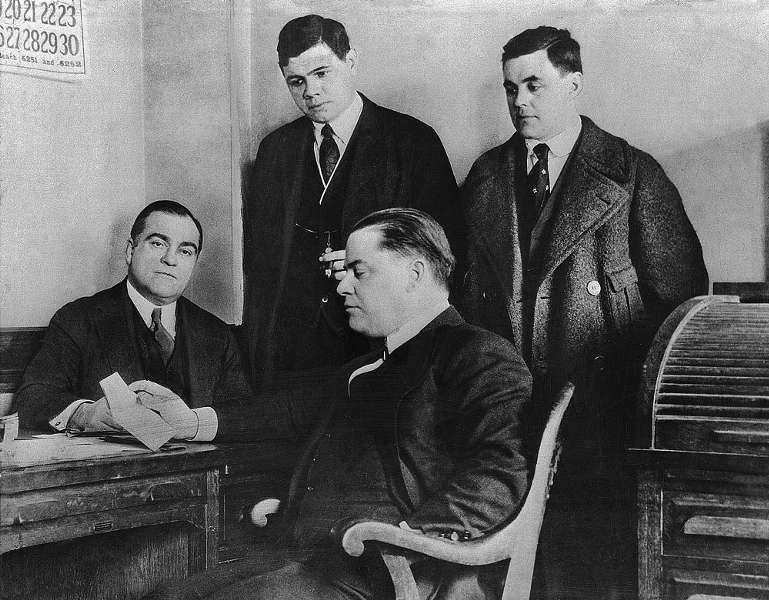
Ed Barrow, Babe Ruth, and Harry Frazee
Harry Herbert Frazee (June 29, 1880 – June 4, 1929) was an American theatrical agent, producer, and director, and he remained relatively successful in this field until the day he died. He also happened to be a successful boxing promoter who once landed one of heavyweight champion Jack Johnson’s matches. Harry Frazee then bought the 1915 and 1916 World Series champion Boston Red Sox, who won the 1918 World Series for him. After that World Series, Frazee sold a player who helped the Sox win those three World Series championships and the 1912 World Series championship. That error in judgement might’ve haunted any other normal man, but it was only the start for Harry Frazee. He proceeded down this road, selling and trading almost all of the best players on those teams. Yet, for all of those moves, and the successes of Harry’s life outside baseball, many believe his tombstone should read, “Here lies Harry Herbert Frazee, the man who sold Babe Ruth.”
Most writers love to write provocative articles from an angle no one has ever considered before. We enjoy taking a well-known story and providing a non-traditional angle on a story that opens our readers eyes to “the other side”. The other side of the story we now call The Curse of the Bambino involves a suggestion that the conditions surrounding Harry Frazee’s sale of Babe Ruth to the Yankees were a lot more complicated than most people know. The author of such a provocative article is then obligated to back up his assessment with data that supports his thesis. This thesis becomes more provocative when the author can provide data that most people don’t know.
The Curse of the Bambino, the book, suggests that the sale of Babe Ruth from the Red Sox to the New York Yankees prevented the Red Sox from winning the World Series from the point of sale in 1920 to the publication date of Dan Shaughnessy book of the same name in 1990 (the Red Sox finally won the World Series in 2004). Some of the authors, who attempted to write the other side of the sale of Babe Ruth and eight other players from the Red Sox to the Yankees, looked at the data from a baseball perspective, others chose a financial lens, and some had slide show presentations that suggest while history will never judge Harry Frazee kindly, the reactions to his sales and trades were evenly divided among fans and sportswriters at the time.
Anytime an author suggests a matter is far more complicated than we ever knew, our natural inclination is to weed through their narrative to find simple truths. One simple truth that permeates all of the articles written on this topic is that Harry Frazee made historical mistakes, and those mistakes led to the Yankee dynasty of the 1920’s and the early part of the 1930’s.
Another simple truth that is all but impossible to ignore is that the Red Sox won three World Series in four years before the sales and sale/trades, and they finished no higher than fifth in the thirteen years following the sales/trades. Other than a blip in 1925, a year in which Babe Ruth was injured, the Yankees finished no lower than third in their league, and they won seven pennants and four World Series championships over the same thirteen-year period, following the trades and sales. Another fact that’s impossible to ignore in all of the data is that among all the players involved, there were three people most responsible for this shift in the balance of power, Babe Ruth of course, Harry Frazee, and former Boston Red Sox manager-turned-New York Yankee business manager (general manager) Ed Barrow.
Those of us who enjoy reading authors take those simple truths and attempt to provide another perspective on them, enjoyed the article written by Glenn Stout titled Harry Frazee. In this article, Stout writes that TheCurse of the Bambino, and the subsequent demonization of Harry Frazee, was largely a myth created by writers to help Boston Red Sox fans explain their team’s disastrous loss to the Mets in the 1986 World Series. The thesis of the TheCurse of the Bambino was there was no other way to describe that inexplicable loss. Stout writes that 1986 Red Sox fans were looking for someone to explain the inexplicable to them. They wanted a scapegoat, and they found one in Harry Frazee. His actions, over sixty years prior, allowed them to think there was more going on than some clutch hitting by the Mets, and an error in game six of the series that led to the Red Sox defeat that year. It was, of course, the ghost of Babe Ruth haunting them.
Stout writes that Harry Frazee was not a greedy owner who wanted money more than a successful franchise. He writes that Frazee was independently wealthy from an early age, and he died that way. He also writes that Frazee was a wealthy and successful man before and after the trades that depleted the Red Sox and built the Yankees eventual dynasty. He writes that when Frazee died, a majority of the fan base, a majority of the sportswriters, and a majority in baseball didn’t hold him singularly responsible for the fall of the Red Sox. He states that while history might make Frazee appear incompetent, the reality of the situation that occurred during the 1920-1923 period was a lot more complicated than most people know.
To illustrate his point, Stout wrote a book with Richard A. Johnson called Red Sox Century, in which they provide a note Harry Frazee wrote to explain that the sale of Babe Ruth was based on Ruth’s contractual demands, and “[Ruth’s] disruptive influence on the team, and the fact that [Ruth] had “jumped the club” at the end of the 1919 season.” In the book, they also provide Frazee’s frustrations with The Bambino:
“While Ruth without question is the greatest hitter that the game has seen,” Frazee wrote in a 1,500-word statement. “He is likewise one of the most inconsiderate men that ever wore a baseball uniform.”
The Red Sox owner said Ruth had “no regard for anyone but himself” and was a “bad influence on other and still younger players on the team.”
He continued: “A team of players working harmoniously together is always to be preferred to that possessing one star who hugs the limelight to himself. And that is what I’m after.”
The sale of Ruth aside for a moment, Glenn Stout attempts to defend the fire sale of the other eight players by writing that the minor leaguers the Red Sox received in those subsequent trades didn’t pan out, as some of them suffered career-ending injuries.
Injuries are a part of the game, of course, and they can make owners and General Managers look bad when they make deals for players who were injured so early in their careers that they appear anonymous to history. This attempt to defend Frazee is valid, until one asks the question how many minor league prospects end up reaching their full potential? How many minor league prospects weren’t as talented as scouts projected, how many were unlucky with injuries, and how many simply didn’t have the drive to pursue their talent to its fullest extent? Whatever that answer is, it surely pales in comparison to the prospect of whether or not the players who played a primary role in at least one World Series victory if not three, might succeed. Stout does not specifically address this particular idea in his defense of Frazee.
Stout also writes, “no one could know that Babe Ruth would become Babe Ruth”. Fair enough, but at the point of sale in 1919, Ruth played six seasons for the Red Sox, and in that brief span, he set the record for home runs in a season twice, and he led the league in eight different batting categories in 1919, the year before Frazee sold him. He was also a dominant pitcher early in his career, before he switched to hitting.
As one of his peers, Rube Bressler said in his interview for the book The Glory of Their Times “[Ruth] played by instinct, sheer instinct. He wasn’t smart, he didn’t have any education, but he never made a wrong move on a baseball field. He was like a damn animal. He had that instinct. [Animals] know when when it’s going to rain, things like that. Nature, that was Ruth!”
Stout’s point that Frazee couldn’t know Ruth would be one of the top five players of all time is valid, but it sounds like if Frazee wanted to know the potential The Babe had to be great, all he had to do was ask around. Some of those who provide an alternative view of this story suggest that Frazee saw how undisciplined Ruth was, and how unintelligent he was, and he figured that Ruth’s 1919 season was a peak performance, and he wanted to receive peak value for his services.
Stout, and numerous others, state that the previous owner of the Red Sox was calling in Frazee’s loan, and that Frazee was in a tight spot financially. If Frazee didn’t pay the loan back that year, he might have lost the franchise. Yet, Stout and others assure us Frazee was never personally broke and none of the sales between the Yankees and Red Sox involved Frazee’s attempts to enrich himself personally. If that’s the case, and I appreciate the author’s attempt to dispel this notion, I cannot understand the deals Frazee made with the Yankees following the Ruth sale. If those latter deals involved Frazee’s continued efforts to save his franchise, one would think he might dip into his considerable personal finances and help the Red Sox over a temporary blip. I prefer to think, as Daniel R. Levitt, Mark Armour, and Matthew Levitt write, that Frazee became addicted to making deals with the cash rich Yankees to help him resolve the Red Sox short-term debts and help make the Red Sox franchise more profitable for him.
Those of us who know history, cannot put blinders on. No matter how many alternative “time and place” perspectives various writers put before us, we know that Frazee sold Ruth for money, and no matter how much money he received from that sale, it paled in comparison to the money Ruth would’ve eventually generated for Frazee, and the Red Sox, in the coming years. Stout’s argument that, “no one could’ve known that Babe Ruth would’ve become Babe Ruth” is a decent one when we think about how many could’ve been should’ve beens dot baseball history, but Frazee received $100,000 and a loan of $300,000 from the Yankees for the services of Babe Ruth.
At this point, and I think this is crucial to determining how Frazee sold Ruth to the Yankees, we can speculate that this wasn’t the initial offer from the Yankees, and we can guess that Frazee and his people tried to drive that initial offer up by detailing for the Yankees Babe Ruth’s current, 1920 market value versus a detailed prospective forecast on Ruth’s future and marketable prospects to drive that price up further. We can speculate that in those dark room negotiations, Frazee and his people displayed intimate knowledge of Ruth’s current and future market value to persuade the Yankees to pay more for Ruth than any major league franchise had ever paid for a single player before. Other reports from baseball insiders of the day state that many around the league considered the Yankees fools for paying that much money for one player, and we can only guess that the Yankees initially considered Frazee’s proposed price tag insane, how did the Harry Frazee and his advisors convince the Yankees to pay that much?
Harry Frazee tried to feed into this with his explanation for selling Ruth, “With this money the Boston club can now go into the market and buy other players and have a stronger and better team in all respects than we would have had if Ruth had remained with us.” Sportswriters and fans believed this at the time, for they probably shared the sentiment that one man does not a team make. With the amount of money the Yankees were paying, many inside baseball thought Frazee got the better end of the deal, but no one could’ve predicted how addicted Frazee would become to using the Yankees’ money to escape debt. No one, it seems, except Ed Barrow.
***
Ed Barrow
Authors Daniel R. Levitt, Mark Armour, and Matthew Levitt introduced this name Ed Barrow to us in an article titled Harry Frazee and the Boston Red Sox. Ed Barrow, they state, played a prominent role, perhaps the most prominent role, in the sales/trades the Red Sox made to the Yankees following the sale of Babe Ruth.
“[Glenn] Stout and [Richard A.] Johnson claim that Frazee made sound baseball deals with the Yankees and that he could not have foreseen what the trades would do for either club,” Daniel R. Levitt, Mark Armour, and Matthew Levitt write. “This argument does not hold up. Ed Barrow, manager of the Red Sox from 1918 through 1920, left the Red Sox to become general manager of the Yankees. Barrow knew the Red Sox players as well as anyone, and he spent the next few years grabbing all of the good players, like future Hall of Fame pitchers Waite Hoyt and Herb Pennock, catcher Wally Schang, shortstop Everett Scott, third baseman Joe Dugan, and pitchers Joe Bush and Sam Jones, among others. In fact[,] Barrow liked his former players enough that he got the Yankee owners to give Frazee $305,000, convincing evidence that both teams agreed that the talent [from the trades] was imbalanced. To argue that Frazee made good deals is to suggest both that Barrow and the Yankees somehow lucked into their dynasty and that the money was not the central piece of the deal for Frazee.”
In my opinion, the answer to the many questions we have regarding why Frazee sold so many players to the Yankees revolves around the question why Ed Barrow quit his job as Red Sox manager to become the business manager (general manager) of the Yankees? An answer to that question involves the insider information Barrow had about Harry Frazee, the debt the Red Sox were experiencing in those years, and how Frazee planned to resolve that debt.
Before Ed Barrow left the Red Sox in 1921, we can assume that for most of his three year tenure, he was satisfied to be the Red Sox manager, and that if it were up to him he would’ve spent the rest of his baseball career as their manager. He led the Red Sox to the 1918 World Series championship after all. When Frazee sold The Babe, it probably came as a shock to Barrow, but we can guess that Frazee sat him down and explained to his manager why the sale was necessary. When Frazee sold four more players, we can guess that Barrow required a more detailed explanation, as Frazee opened the books for him to show the manager the finite details of the debt Frazee incurred as owner of the Red Sox. This moment, right here, resulted in the changing of the tide in baseball more than any other. We can be sure that Frazee and Barrow had many such talks over the years, and that Barrow walked away knowing that Frazee desperately wanted to make the Red Sox financially profitable, and/or he fancied himself a wheel and dealer who could build his own winner, as opposed to inheriting one.
Ed Barrow also knew, as many did at the time, that due to the “Black Sox Scandal” and Frazee’s disputes with American League Bam Johnson and the other teams in the American League loyal to Bam that Harry Frazee was limited to dealing exclusively with the Yankees. (Note: There is a consensus among the writers of the articles I read on this particular topic that these circumstances forced Frazee to deal exclusively with the Yankees for that reason. The idea that Frazee and the Red Sox could have dealt with a team in the National League is not mentioned in any article I’ve found, and there is no reason listed for why this wasn’t a possibility for him.) Whatever the case was with Frazee, we can also presume that in his closed-door meetings with Barrow that Barrow saw the writing on the wall for the Red Sox franchise, and his owner’s willingness to sell his team down the river for large sums of cash.
As anyone who has experienced debt knows, if we find one way to resolve some of our debt, we are prone to follow that path wherever it leads to hopefully become debt-free. Barrow may have experienced some disgust when Frazee began selling his 1918 World Series Champions, but he was probably one of the few who knew the situation so well that when the Yankees general manager died in 1920, Barrow probably raced down to the Yankees front office to pitch them on how he, if hired as their next general manager, could persuade Frazee to sell more players to the Yankees and help them build a dynasty.
As the new business manager (later termed general manager) for the Yankees, Ed Barrow helped the owners of the Yankees engineer four subsequent trades with Frazee and the Red Sox that involved 12 players and $305,000 “to help Frazee recover from debt”. As the Levitts’ and Armour article suggests, the idea that Barrow convinced the Yankees to add $305,000 to the deal provides compelling evidence that both teams knew the Red Sox were getting the raw end of the deal. If we are to believe the writers who write from another perspective, it’s simplistic to say that Frazee made these maneuvers for the money, and “the reality of the situation was a lot more complicated than most people know”. If he didn’t need the money, as they write, and it was his goal in life to continue to own a profitable, winning major league baseball franchise, then he was either an incredibly poor business man, or someone who did not know baseball very well. Whatever the case was, Barrow knew who he was dealing with, and he knew how to convince Frazee to sell/trade twelve more players to the Yankees.
When Barrow’s new team, the New York Yankees, won their first World Series two years later, in 1923, four of the eight starting, position players were from the Red Sox, and four of the five starting pitchers on that championship roster were former Red Sox players. The Red Sox finished last in the American League that year, and “their skeletal remains would be the doormat of the league for years to come.” With this team of former Red Sox players, Barrow would oversee the Yankees win six more pennants, and three more World Series. During his tenure as general manager, the Yankees would win a total of fourteen pennants and ten World Series. This level of success, initiated by Barrow’s maneuvers with Frazee, would lead many to call Barrow an “empire-builder for the first quarter-century of the Yankees’ dynasty.” These sales/trades also landed Ed Barrow in the baseball hall of fame and Yankee Stadium placed a plaque of him in center field.
As Harry Hooper, the center fielder for the ‘15,’16, and ’18 World Series champion Red Sox, states in an interview, in the book The Glory of Their Times, “The Yankee dynasty of the twenties was three-quarters the Red Sox [dynasty lineup] of a few years before. All Frazee wanted was money. He was short of cash and he sold the whole team down the river to keep his dirty nose above water. What a way to end a wonderful ball club.
“Sick to my stomach at the whole business,” Hooper added, as he followed Ruth’s hold out with a hold out of his own just to get out of Boston before it all came crumbing down. After the holdout, Frazee sold Hooper to the Chicago White Sox.
It would be devastating to any franchise, of any sport, to sell one of the top players of his era, who would go on to become one of the top five greatest players to ever play the game. Yet, even selling a once-in-a-generation talent like Babe Ruth is not enough to sink a franchise for eighty-four years, in the manner The Curse of the Bambino suggests. It’s even difficult to believe that Ed Barrow taking advantage of Frazee to the point of selling/trading twelve other players over the course of three years can curse a franchise for that long, but winning breeds winning. In the course of those eighty-four years (1918-2004), the Red Sox did have some high quality, competitive teams. Various Red Sox teams won division titles, pennants, and they competed for the World Series in 1946, 1967, 1975 and 1986 only to fall short. The Yankees, of course, would win 26 World Series championships in the same time-frame, and they would appear in 39 World Series. Many of those Red Sox teams were unlucky, but unlucky is difficult to grasp when it occurs over the space of eighty-four years and the score with their cross town rivals is 26-0 in World Series championships. Some people need an explanation, any explanation that would explain the bizarre plays and unlucky events that lead to a championship drought, and the 45% of the population who believe in ghosts thought they found that reason in Babe Ruth, Harry Frazee, and The Curse of the Bambino. Now that it’s over, and the Boston Red Sox soaked the curse for all that it was, what do Red Sox fans talk about now that the franchise has won the World Series four times since 2004?
 These three ingredients to improved play, and the resultant character development that follows, are essential, but the three most mandatory ingredients to accomplishing anything in life, are time, patience, and repetition. The latter might be the hardest for a child to grasp, as the typical nine-year-old complaint to mind-numbing repetition centers around, “I can hit, catch, and pitch now. Why do we have to keep practicing them so often?” As I’ve written elsewhere, there is little-to-no room for creativity in sports. There are quick-fixes, they’re out there, but my guess is their efficiency numbers pale in comparison to kinesthetic learning, or the knowledge gain by doing it so often that we know what to do when there is no time to think.
 Nothing came easy for an eight-year-old Isaac. The core problem for Isaac was that he had a counterproductive image of himself as a good hitter. He thought he should be there before he even picked up a bat, and the evidence he saw to the contrary (in his first full year playing baseball) was demoralizing. Every failure, to him, was an epic denunciation of his ability and his character. The eight-year-old world is dramatic, traumatic, and fatalistic.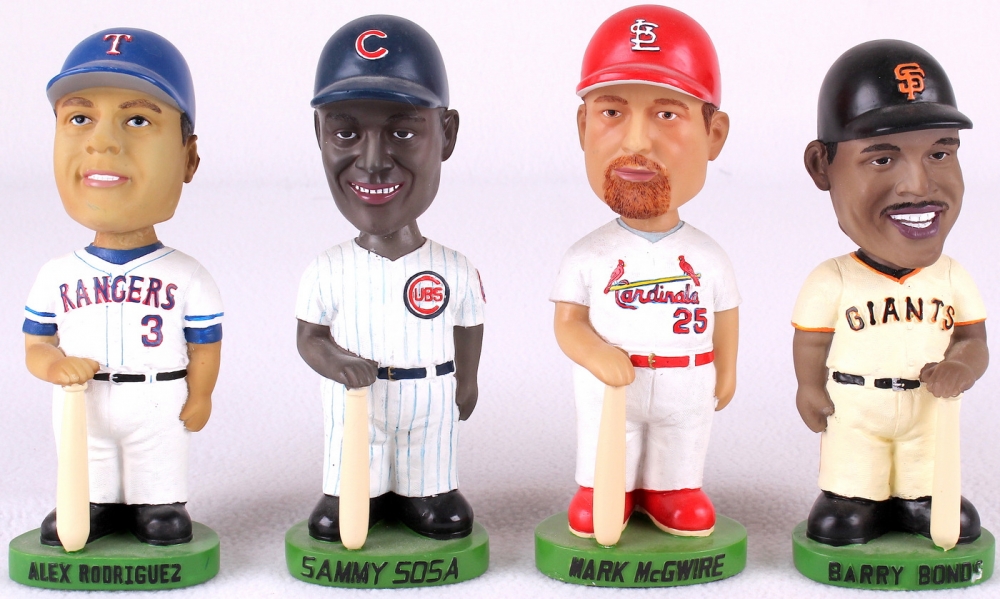




 Rilaly