“That’s my name, don’t wear it out!” was a sassy, cheeky way to respond to someone calling us out in the 1970s.
Generations who weren’t on planet earth when this line was in the hot space can’t believe we were so into it. When I put it in context for them and informed them that this was our playful way of saying that we did not fear confrontation, they didn’t say anything. I told them it was the equivalent of, ‘Hey, I heard you the first time,’ when someone confrontationally called our name out a second time. When I told them that line could engender a “Woh!” from onlookers, they couldn’t understand it. “It’s not funny, it doesn’t sound effective, and are you sure this wasn’t just a you thing?” ‘No, it was all over the movies, the TV shows, and the commercials,’ I informed them. ‘We really thought we were onto something with this line.’ I twisted and contorted this so many ways I wasn’t sure if I was trying to defend the line or pursuing the most objective response I could possibly get from the other generation, but when they said, “It just doesn’t work on any level,” the matter just closed.
 I could not be objective on this topic, because when this idiomatic expression, or saying, first hit the streets, I was in grade school, and all the cool kids were saying it. For a short time, it was the definition of a wise-cracking, cool fella making his way through the world. I tried to make it work for me to make it work for them, but I either didn’t have the level of creativity or the intellectual heft necessarily to pull it off. It was too situational, and I could never find the perfect situation. I don’t know if I needed an older brother, or a neighborhood kid to bully me into perfecting the nuances of such a situational joke, but it always sounded awkward coming out of my mouth. My struggle with this, even decades ago, left me almost incapable of providing an objective viewpoint.
Since I didn’t have anyone to teach me, when I’d hear the cool kids around me say the same thing more than once, I would ask them where they got it. How uncool is that?
“It’s just something I say,” the cool kids responded, and I’d drop it after that. I didn’t know how to be cool, but I knew the pratfalls to avoid to appearing too uncool, and I knew it was so uncool to try too hard to figure out how or why something is cool. Cool is what it is, as they say. I knew trying to define the indefinable was not only difficult, it was self-defeating, but I’d obsess over trying to figure it out.
As usual, with someone trying to figure out something so nebulous and ever-changing, I overestimated my peers. I was always late to the party, but when I found out that the cool kids learned their favorite sayings from TV, movies, and music lyrics I couldn’t help but be disillusioned by the whole process. I thought the difference between cool kids and me was their ability to organically create sayings. I wanted to be them, so I copied them, and I thought more of them. Learning that their sources were as simple as mine made it feel like all that I wasted a lot of time idolizing them. Then, when I saw one of their favorite sayings appear in a wiener commercial, and I realized I really needed to figure this out because I impulsively thought less of them, but I also realized that it said something about me too, because they were my personal inspiration for what it meant to be cool?
Another huge inspiration for my definition was Danny Zuko, but when I heard him say, “That’s my name, don’t wear it out!” I was so late to the party that I didn’t know that all of the cool kids got this line from that movie, because they saw Grease long before I did. I was also surprised to hear Danny Zuko say it, because I didn’t think he needed it. I thought he was so cool, so charismatic, and so everything that I wanted to be that I couldn’t believe he was saying what we were all saying to try to appear cool. It was the first time in my life that I thought someone was already so cool that they didn’t need to do anything to achieve that lofty title. I thought he was the personification of cool, and he had that it quality that the rest of us would never know. I wasn’t sure if I considered his effort redundant or overkill, but it tainted the character in a manner I couldn’t quite grasp.
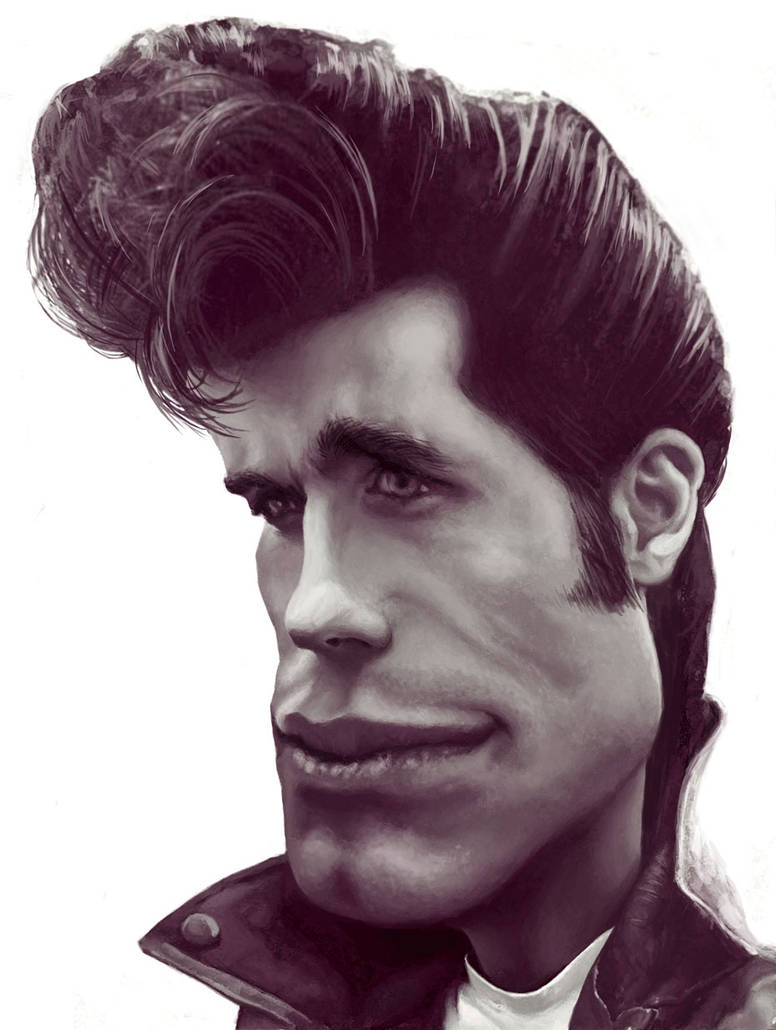 I was an eight-year-old who knew nothing about screenwriters and directors. I didn’t know that their primary job was to manipulate us into thinking their characters were cool, and I didn’t know that casting agencies were hired to hire supporting actors for the expressed purpose of further manipulating the audience into believing that Danny Zuko was cooler than we were. I didn’t even have a firm grasp on the idea that there was an actor named John Travolta playing the role of Danny Zuko who had makeup people to enhance his skin, hair stylists to fashion his hair, and wardrobe personnel to fashion him into a cool character. I knew I wasn’t seeing 90 minutes of a person’s life captured for my enjoyment, but I didn’t know how manufactured and choreographed the images on the screens were. I just thought Danny Zuko was the essence of cool, and when I envisioned what it meant to be cool, he was my prototype.
I’d love to say I quickly processed the difference between the definition of cool and cooler than cool as effortlessly as John Travolta, and the team behind Grease did, but I didn’t. It took me a long time to grasp. The writers, directors, and supporting actors made it look so easy to be cool that I developed my personal definitions. We all did. We learned what lines to say and when to say them, but when Danny Zuko used that line we were all saying, it exposed the effort he put into it. If a Danny Zuko needed to learn the lines of the zeitgeist necessary to get in the club, in other words, then everyone did. When I later saw other screenwriters and other directors pursue the cool motif for the characters of their movies, it further exposed the effort to me. Danny Zuko and The Fonz were my prototypes for cool guys, and the rest of them were frauds chasing after that characterization.
If we could be cool by following their formula, my mind went to how do I become cooler than cool? If everyone followed that formula, what would they think of me if I refused to follow it?
The first thing I learned is no one appreciates a ‘dare to be different’ motif when it’s subtle and silent. We prefer the shocking and provocative definitions of that term. Quiet nonconformity doesn’t sell. It doesn’t impress people to the point that they want to be our friends. It confuses them, and they rarely seek to define that confusion. They often just back away. When we want friendships, especially in our youth, we have to offer the kids around us a comfortable place they know. I struggled with all this, until I lost my conviction, and I didn’t try to find it again for years. No one who knew me then, or now, would say I found a “cooler than cool” place, and if you asked them if I was even cool, they’d probably laugh, “I don’t think so.” They would probably also add, “But I can tell you that I’ve never met anyone quite like him.”
That was kind of it. They knew I was different, but they couldn’t see how those differences were in service of anything, so I didn’t really see a return for my efforts. They just thought I was weird.
Between ages eight and whatever age led to my personal age of enlightenment, I had no writers feeding me lines, and no directors giving me notes on how to project cool. I realized that I was on my own when it came to trying to figure this big mess out, because I wasn’t good-looking enough to play Danny Zuko, and my supporting cast was either not able or willing to play their roles in such a way that would manipulate our audience into thinking I was cool. The best course of action I found was “To be [my]self, because everyone else was taken.” I knew I’d run the risk of “impersonating my shadow” and I’d eventually become a shadow of my former self, but I already tried to be other people, I tried those masks on, and while I admit that it was a lot more fun than playing myself in this production, it never worked out the way I thought it would.
 Rilaly