“Taken care of me? Mike, you’re my kid brother, and you take care of me? Did you ever think of that. Ever once? Send Fredo off to do this, send Fredo to take care of that… take care of some little unimportant night club here, and there; pick somebody up at the airport. I’m your older brother Mike and I was stepped over! … It ain’t the way I wanted it! I can handle things. I’m smart. Not like everybody says, like dumb. I’m smart and I want respect!” –Fredo from The Godfather II
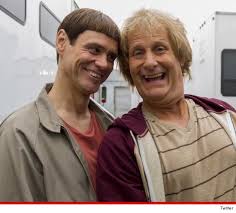 “What happened?” we ask ourselves. “I thought I was going to be one of the smart ones. I know, I was a disinterested student in school, and I probably cared too much about partying for far too long in the afterlife (the life after high school), but I thought I would’ve gathered enough wisdom by now that someone, somewhere would consider me wise, but I have to face it. I have a mean case of dumb guy’s disease.”
Dumb guy’s disease doesn’t necessarily mean that the carrier is dumb, but that they are not as smart as they thought they would be at this point. We all know dumb guys, those men and women who by social calculations don’t know enough to enter into the league of intelligence. We never considered ourselves one of them, until someone far more intelligent than us gave us a condescending “you don’t know do you?” smile. We would love to dismiss that look with the notion that they had an agenda, but we know we choked in crunch time, because we didn’t know. When enough of these moments happen, we conclude that we’re not half as bright as we thought we would be at this point in our lives.
To prove ourselves to us, we sought less structured forms of education. We thought this might result in us becoming what smart people call autodidact, or a self-taught person. (Yes, I had to look that up.). We might begin reading better websites and better books, we might watch more documentaries, and listen to a wide array of podcasts. No matter what venue we choose, we will focus our renewed thirst for knowledge on defeating the structured concepts we failed to learn in school. This is our way of putting all those poor grades behind us by rejecting traditional, accepted knowledge as a form of intellectual rebellion.
“Everything they taught you in school is wrong,” is click bait for dumb guys who hope to succeed beyond the fools in school who regurgitated accepted facts back to the teacher. We dumb guys learn the truth, but this version of the truth should not be confused with the truth, in most cases, but rather a subjective truth that various authors spend decades writing in various forms and incarnations. This is one of the many attempts dumb guys make to rectify the past.
***
“Too many lyricists attempt to write a song, as if it’s a college thesis,” a musician replied. “I just write lyrics that fit the music.”
That’s pretty much it, right there, I thought. We dumb guys spend the rest of our afterlives (those years after high school) focused on informing the world that we’re not as dumb as everybody thought we were in school or in the immediate aftermath where the focus of their life was partying. The musician’s quote informed me that when I injected politics and music appreciation into my fiction, I was writing my college thesis to impress upon my peers in high school the idea that I was not as dumb as they thought I was. Some big name fiction authors make political overtures to enlighten their readers, and they attempt to woo us into listening to their favorite groups with forays into music appreciation. I used to write about my main character’s appreciation for my favorite group of the moment, in the manner the big name authors do. My modus operandi was if they can do it, why can’t I? My second thought was they could get away with it, because they were big names in the fiction world, and I wasn’t. I knew their music, everyone did, it was ZZ Top, AC/DC, The Ramones, and just about every tired, formulaic classic rock group we hear every day on classic rock radio. The author’s point was to instill in our minds the idea that his character was risqué, because he enjoyed listening to rock and roll. I enjoyed the author’s brand of rock and roll back when I was trying to define myself by listening habits, but I grew tired of the classic rock monochromatic formulas. This author obviously didn’t, and it defined his work for me. In his attempts to appear hip, naughty, and rebellious through his rock choices, I also saw his attempts to appear meaningful, thoughtful, and intelligent for what they were, and I realized that he was writing his college thesis for ushis big name author didn’t introduce his political, or music, preferences as well as I thought he had when I was blinded by his big name.
In the years I spent trying to prove I was not a dumb guy, I never heard the notion that intelligence and brilliance should be considered different strains of intellect. (I realize that in the strictest sense of the terms, some might consider another so intelligent, in a structured manner, that they consider them brilliant, but for the sake of argument let’s say that brilliance and intelligence are parallel roads.) The two strains of intellect could be broken down to left-brain versus right brain, as in one type of brain has a natural aptitude for math and science, while the other is more of a creative type. One could also say that an intelligent person knows the machinations of a saxophone so well that they can fix it and tune it while the other knows how to play it brilliantly, and while both can learn how to accomplish the other’s feat, neither will ever do it as well as the other, for their brains work in decidedly different ways.
This idea applies to dumb guy’s disease, because some creative types do not discover their aptitude for creativity, until the afterlife, the life after school. We recognize some forms of artistic expression, such as an ability to draw or play an instrument, early on, while an aptitude for creative writing often occurs later in life. The math and science types discover an aptitude for the structured learning, memorization, and problem solving in school, and it puts them in the upper echelon of learners, whereas the young, creative types live outside the bubble, looking in with jealousy. Screaming, as Fredo did in The Godfather II, “I’m smart. Not like everybody says, like dumb. I’m smart and I want respect!”
***
“You’re not already there,” would be the first piece of advice I would give a younger me if I could go back in time and give my younger self some advice. “You’re not special,” I would add, “and you don’t know how to play basketball already.” These are the pathogens of dumb guy’s disease, and the bacteria reproduces and multiplies rapidly infecting every matter it comes across.
I would also advise myself to find a way to learn the structure of the system and succeed within it, but I was never adept at structured learning–I’m still not–so, that would be pointless. What I would say instead is learn more about yourself, who you are and how you can succeed with your gifts and talents while keeping an eye on your limitations.
I would also ask myself to work harder to acknowledge that there’s nothing special about me. I wouldn’t tell myself to stop watching Tom Cruise movies, but I would suggest that I stop watching them, thinking that the theme of those movies applies to me. “You’re not the chosen one, or the one that shouldn’t have to accept mediocrity. Accept mediocrity. Learn it, love it, and live it, until you can surpass it.”
I wasn’t a better athlete, student or employees because I thought I already was, and the frustration I felt when faced with the fact that I wasn’t, was tied to that idea that I thought I was already there, or should’ve been. When I failed in athletics, it was such a mystery to me that I threw temper tantrums, because I was frustrated that I wasn’t as great as I thought I was. It was also a message I sent to my teammates that that wasn’t me. That was but a snapshot of my abilities, and I was so much better than that. The problem for dumb guys is that oftentimes the message is enough. We don’t feel the need to get better, because “We already know how to play basketball.”
We get in front of ourselves at times. We never learn how to slow our roll long enough to work within the confines of who we were to succeed within the constraints of who we are.
If I could advise myself thirty years prior, I would say slow down, realize who you are when you’re doing it. Analyze your shot in basketball and try to figure out how to make the shot more often, and when some tries to give you some advice, don’t shoot them down by saying, “I already know how to play basketball.”
“You’re not the all star athlete you think you are,” I would add. “You’re not a great employee, and you’re not near as smart as you think you are. You’re actually pretty dumb, because you refuse to listen to people, like that obnoxious 50-year-old waiter who nodded at everything you said, because he said he used to say those same things.”
“He was a waiter, a 50-year-old waiter, so what the hell does he know about life?” my younger self would argue. “He was an oafish, avuncular type, who was always kind of a fool.”
“Until he got you alone, away from all your friends, and he turned all serious on us, saying, “You’re doing it wrong, and the only reason I know is because I was doing it wrong at your age, the same way as you. I was a dumb kid, just like you, but I knew better. I knew how to play football already, and I was good enough at Math to pass the stupid class that I probably would never use anyway. I didn’t get good grades, and I thought it was kind of funny, and I fell asleep in study hall too. I did just good enough in school to keep everyone off my back, so I could go out, enjoy my youth and have some fun in life, and here I am a 50-year-old waiter. If I could somehow switch places with you, right here, right now, I’d do my life differently.”
Now that the roles are flipped, what would we do differently? I’d drop the whole Tom Cruise “I could be the chosen one” mindset, because Michael Jordan wasn’t the chosen one, until he sculpted himself into it. I’d drop the whole “I already know how to play basketball” mindset and listen to those teaching me the “finger tips, rotation, follow through” tedious mechanics of the game. I know those mechanics now, now that it’s too late. I was never an adept student with all that structured learning, and I’m still not, but if I would’ve had more patience with myself and learned more about myself earlier, I might’ve been able to chip away at the granite stones I placed in my path to create something, as opposed to inviting that ‘I’m already there’ pathogen that caused my dumb guy’s disease.




 Rilaly