Rilalities XIII


“80% of success is showing up,” Woody Allen once said.

“So, what you’re saying is if I want to succeed, I should show up?” you ask. To answer that question, we ask another question, how many people don’t? How many apathetic and self-destructive types didn’t show up for the opportunities-of-a-lifetime Woody Allen received? Was Allan Stewart Konigsbeg (Woody Allen) the most talented person in his troupe, or did he show up so often that he got the job, the jobs, and the career that the apathetic and self-destructive did not, because they weren’t there.

In his book I’m Dying Up Here, author Arthur Knoedelseder suggests that Woody Allen’s 1978 Annie Hall winning numerous Academy Awards that year opened up all kinds of opportunities for standup comedians, comedic actors, and writers of comedy. Most of those who would land multiple picture deals would go onto be the faces of comedic humor in the ’80’s and beyond. The question is was Woody Allen funnier than those peers, or was he in the right place and the right time in Hollywood history?  

To listen to modern screenwriters tell their tale, Woody Allen’s story isn’t the type of story we enjoy. We’d much rather hear the story about “the kid,” “the natural,” or the one everyone agreed was the most talented person in the room who finally got his big break, and in the next scene, they’re asleep or dead with a heroin needle hanging from their arm. It happens so often on screen, that it’s a trope, but is it true? We’re sure it’s happened, but has it happened so often that it’s a truth, or do we just love to cringe so much that screenwriters feel compelled to write about it.

I can only imagine that the screenwriter tries to sell his script pitching about “the kid,” “the natural”, and the potential Hollywood producers asking “Okay, but where is the arc? What does the American public love more than anything else, the rise and fall. We build him up as the kid, the natural, and then, on the cusp of him finally realizing his talent on a national, worldwide scale his dysfunctional, self-destructive traits rear their ugly head. It’s the Freddie Prinze story. People love that story. They love to cringe.”  

It can be a little scary to put all of our potential to succeed, and all of our hard work, on the line. How many of us have the potential to succeed, and how many can stand before others, relatively anonymous and proverbially naked, to showcase our potential? Are you a fraud, or are you so confident that you’re just waiting for an opportunity to show your talent? Are you the type who creates your own opportunities, or do you wait for them to happen? If you’re the latter, will you not show up, because you’re afraid you’re not ready? Even if you’re “not ready” in a relative sense you’ve defined, that might just be your opinion. If Woody Allen’s quote holds any weight, it might redound to your benefit to show up anyway to see what happens.   

Some of us cringe when we hear tales of the dysfunctional and self-destructive types, others laugh, and we all feel sorry for them, but they’re the ones we replace. We’re the ones who show up and do it so often that we might overcome whatever relative level of talent we might have.

Showing up is also starting up. How many of us think about doing something, how many of us daydream, and how many of us actually do it? Showing up suggests that you’re ready to make it happen. You’ve surpassed the dream stage, and you’re there. You’ve shown up and you’re ready to work with others to make it happen.  

Stop Letting Your Bullies Bully You

There are few things that bother me more than watching a victim of bullying make their problem worse by the manner in which they deal with a bully. When I hear, read, or see a member of an audience become so offended that they’ve become outraged at something a standup comedian says, I say, “You’re going about it wrong! You’re doing it all wrong!”

There might be some exceptions to the rule, but my bet is every standup comedian was a former class clown/bully. The essence of the craft is such that it attracts guys and girls that someone, somewhere once called a class A jerk. (A class A jerk is someone other than the class D jerk who pokes fun at others for sport and backs down if anyone informs them they’re offended in anyway.) 

When real life darkened their door, most standup comedians admitted they didn’t know what to do. They were as lost, or more, as the rest of us. “I don’t know what I would’ve done if my predecessors didn’t do what they did in this craft to make it what is it today. Not only am I not good at anything else, I didn’t particularly like doing anything else.” What is it they’re doing, on stage, every night? What is it they enjoy doing so much that it saved them from the depths of despair? If we dig through all the particulars of the craft, we find that making fun of other people is the core of standup comedy. Where do you think they discovered their talent, and how did they hone it? They did it on your back, and your delicious tears told them they might be onto something. It’s what they do. It’s who they are.

One other special ingredient that defines the difference between most great comedians and the ones who never made it to the main stage, pushing boundaries. What does that mean? We think pushing boundaries is about filmmakers teaching us what we don’t want to hear, and it is, but it’s also about standup comedians telling us what we don’t want to hear. They’re mutually exclusive, diametrically opposed, and the same. Tell a standup that they can do anything they want except this, and this will be the only thing they want to do. Tell them that they can make fun of everyone, except these people, and a joke about those people will probably make it into their intro. My problem is not with standup comedians. We all know who they are. They’re bullies. The problem is with the offended. If the standup comedian is wrong, tell them why, and do it from a position of power not weakness.

If we ever effectively find a way to diminish, deter, or defeat bullies as a whole, the one detriment might be our inability to deal with bullies. The only solution we’ve found at this point is to inform them that we’re offended by something they’ve said. Who cares if you’re offended? Some do, of course, and there are probably more now than ever before who aren’t afraid to say that they’re offended, but I can tell you one person who doesn’t care, the offender. I’ve been offended by something a comedian said, and I always think that’s just one man’s opinion, and it’s not an informed one. (I use the term offended, here, for the purpose of illustrating a point, because I can’t think of any comedian who has ever offended me.) You getting offended is exactly what the offender wants. It’s what their audience wants too. How many nice guys finish first in the world of standup? What is it .0001% The nature of the beast is such that if a comedian goes clean and tries to avoid offending anyone, the audience might chuckle politely, but the chuckle will be soft and almost internal, as they wait for that hurtful haymaker to punctuate the joke. Most good guy, clean comedians are widely regarded as too safe to be truly funny. We, as a whole, want our standup comedians risqué, we want them to push boundaries, and we want them to speak out against unsafe targets. Who are the unsafe targets though? That’s the question skippy, and that’s the point Howard. The unsafe targets have shifted from my guys to your guys, and from my issues to yours. We didn’t handle it well, claiming offense and outrage, and now you’re doing the same. 
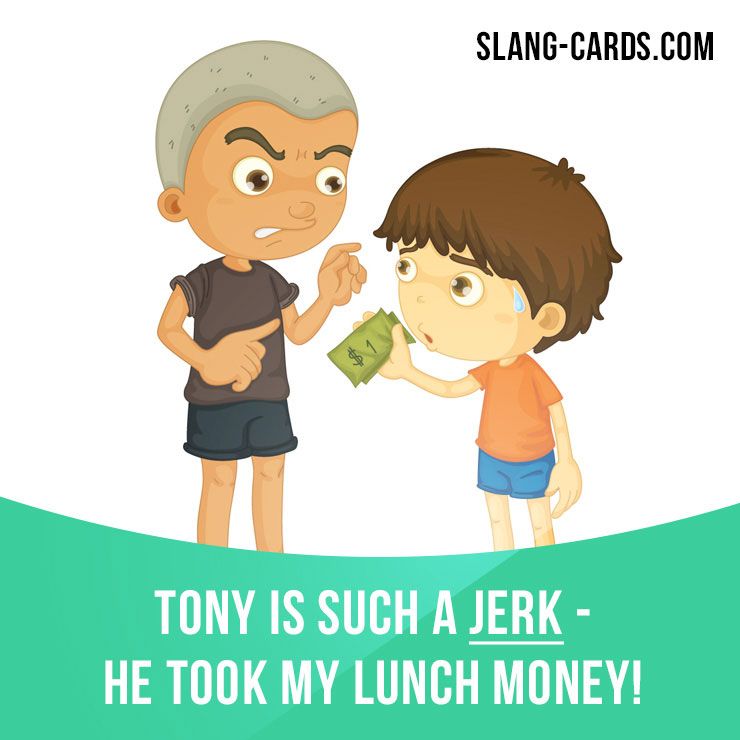
If this is true, wow do we stop the mean-spirited comedian then? I don’t think you do. I think they love it so much there’s nothing we can do or say to stop them. You can see it on their face. They were born to do this, they love it, and they wouldn’t want it any other way. They define your offense as effective penetration. Their audience, comprised mostly of former bullies and class clowns, love it too. Do we get in their face and try to mow them down? Have you ever been bullied by a class A jerk? They’re unusually very good at what they do. They’re often unusually smart, and not only are they smart, they’re quick, and not only are they quick, they’re funny. It’s often that final nugget, funny, that just tears into our soul. They come up with material quick, and how do we defeat them? If it’s a class A jerk, we’re on their turf when we’re trying to outfunny them. The only way to defeat them is to switch the playing field to our internal home court and outdo them there. If we can convince them, there, that they’re not getting in, we’ll take all their fun out of it for them. That’s all I got, and I know it’s not great, but it’s obviously better than everything you’ve come up with thus far. You’re encouraging them and making them think they’re onto something when you declare that you’re offended. You’re making it worse.   

Crazy Joe Davola

Crazy Joe Davola (actor Peter Crombie) has died, and Fox News reports that his friends suggest that even though “he was cast as a bad guy on Seinfeld, and he played numerous interesting and complicated characters, including Bernard Goetz, he was very sweet in an old-school way. When not working as an actor on stage or in front of a camera, he was genuinely humble, preferring others to talk and take main stage.  He was always helpful, giving and funny. He was one [of] the kindest, soft-spoken, loving and caring people I have ever met. A gentle giant.” It’s a fitting tribute, but it’s not funny? We might not want funny to be on site forever more, but in private, on stage, I think Peter Crombie would’ve loved it if someone, someone like Lewis Black, offered Crombie a comedic sendoff. “It wasn’t much of a challenge for Peter Crombie to play the awful characters he did, because he was awful. He was an awful human being. I remember one day he saw a kid with ice cream, and he stole it. He didn’t want their ice cream. He didn’t even like ice cream. He would pitch it in the nearest receptacle. He did it just to do it. Just so he could say he did it. He said that he liked to hear kids cry. “The younger the better,” he said.”   

Review of Self-Reliance

If there’s one thing an aspiring writer can learn from the movie Self-Reliance, it’s that your audience doesn’t want anything bad to happen to the fictional characters of your stories, until they nothing does. Leaving out all of the other particulars of the plot, the primary plot of this movie is that a bored, lonely man is offered a proposition. If you can survive for thirty days, with murderers trying to murder you, we will give you $1 million dollars if they are unsuccessful. There is a catch for the murderers, however, they cannot kill him if he’s within three feet of another person. The need to have someone near him, leads the character to realize that in his life before the contest he forgot to make real, human connections throughout his life, and he forgot to live life to the fullest. That underlying theme would’ve been engaging if, IF, it was properly balanced with the character narrowly escaping harrowing threats. The problem with this movie is that this viewer (you might be different) never feels the threats are anything more than an excellent plot device to sell the movie. There are some threats made on the character’s life throughout the movie, but they are easily, too easily, vanquished. This reveals to us that the threats on the character’s life are basically ancillary to the underlying theme. It’s as if the writer said, I want to write a post-COVID script that reminds the audience of the need for human connection and companionship. The problem is how do we go about writing about that without getting too gushy? I got it. Let’s develop a contest for the character in which he needs to have people around him. All of that would be fine, except the writer/director forgot to concentrate enough on the threat therein. 

Anyone who watches this movie will realize as much as we don’t enjoy cringing, we enjoy cringing. We want to see scenes where the character stupidly gets into harrowing situations that he can’t possibly escape, until he does, and we’re awash with relief when he does. We want to experience the ups and downs of what it must feel like to have people trying to murder you. We want to scream, “Don’t go in there!” when he approaches the wrong door. We want to see pianos fall behind him while he’s talking on the phone, comically unaware of what just happened. We want to grip the arms on our chairs when a gigantic ball comes rolling after him, as he runs through a cavernous region in which there’s no lateral escape, and we want o see a poison-tipped arrow hit a guy standing somewhat near the main character after the main character bent down to pick up a piece of garbage that some rube just threw on the ground. “Hey, it’s called littering man!” The main character shouts at the litterer, as the man with the arrow in his neck, behind him, slowly falls gurgling to the ground. There can be humor intermingled in the tension, but we want/need the tension. What we get from Self-Reliance are all of the hypotheticals a man who must survive a scenario might have to go through to insure his survival. The movies is really about the social interactions a person might not go through if there wasn’t an ever-present, or in this case never-present, threat of death. My takeaways are that the movie accomplishes two things: It teaches writers what not to do with a thriller, and it leaves you with the weird, uncomfortable feeling that you actually want bad things to happen to fictional characters. Those of us who know and enjoy so many of Jake Johnson’s projects, enjoyed this one too. He’s a funny, interesting actor, and Self-Reliance is not a bad movie in anyway, except for that lack of threat, and the ending is more of a wrap-up than an exciting conclusion. The character basically tells us what happened at the end, and he shows us some shots that visualize what he’s saying. 

Ellis Reddick


{Disclaimer: The name Ellis Reddick is arbitrary. I do not know a person named Ellis Reddick, and any similarities to anyone named Ellis Reddick are purely coincidental. This non-fiction story about Ellis Reddick is based on a man of another name.}

“GET OUT!” Ellis Reddick screamed with unequivocal force. Prior to that outburst, we never knew when Ellis was kidding, and he was almost always kidding. He could yell at us with teeth showing, and it was all a big, weird, and unnerving joke. He was serious some of the times, but we never knew the difference. When he eventually made it clear that he was serious this time, I was absolutely terrified. I was the other kid, the kid he was forced to babysit that day, so we could chalk my fears up to seeing another kid’s parent lose it. Yet, his daughter, who presumably knew him better than most, was just as terrified as I was. 

Why did thoughts of Ellis Reddick horrify me throughout my youth? He didn’t have the barrel chest, the Popeye-sized forearms, or the booming voice my Uncle Frank had. As I would later learn in life, Ellis Reddick was probably 5’5” at most. He needed glasses, based on his girth, he looked about seven months pregnant, and he was cursed with a squeaky, nasally voice that should’ve cast fear in no adult or child. If they put out an open call for voice overs of cartoon characters, casting agents would’ve had my Uncle Frank do voices for lions. Ellis Reddick would’ve only probably only found work for the voices of mice, yet I found Ellis Reddick so horrific that I would plead with my mother to try to find some other babysitter for the weekend. I couldn’t articulate why I feared Ellis so much back then, so my mom didn’t listen, and her options were obviously so limited that she forced me into the Reddick home so often that when I now drive by their house I consider it the other place where I spent so much of my youth. 

What made Ellis Reddick so horrific was obviously not his stature, appearance, or voice. No, what made Ellis so scary to us was his unpredictability, and when you’re seven-years-old, you don’t know it until you meet someone like Ellis, but predictability is your greatest comfort. Most adults are so boring that seven-year-olds inadvertently create a mold for adults. We learn how to act and react around them to keep everyone happy, and everyone knows the rules of individual adults. Ellis was something different. He was foreign to our experience with most adults. We tried to prepare ourselves for his erratic behavior whenever we were around him, but he loved to break whatever mold we created for him, and that he loved engaging in erratic behavior, that shook up our preconceived notions of adults, but nothing he did prior could have prepared us for this.

“GET OUT of my car Julie!” he repeated.

We were idling near a curb on a residential road, about a half mile from their house, with the sound of the rattling little engine of his red Vega echoing Ellis’s ultimatum.

“I don’t want to get out,” Julie said in defiance.

“Then give me the thirty-five cents.”

“Make me,” she said to ward off this challenge.

‘Make me’ was a popular, ritualistic challenge in our seven-year-old world. It suggested that the challenger was willing to take this matter to the next level if necessary. It was a reflexive challenge seven-year-olds made, without knowing what the next level was. The scary element of ‘make me’ for the challenged was that the challenger knew what the next level was, and they weren’t afraid of it. The other import of the challenge was that the challenged does not want to see how the challenger defines the next level.

Whether Ellis was aware of the psychology of such a threat, or if he contemplated the horror of going to the next level with his daughter, is unknown, but he did decide to make her. He went after the thirty-five cents she found in his car. He went to her hands. He tried to pry them open. He began wrestling with her. She was laughing. I was laughing. We believed that these actions were another in a long line of hilarious, erratic reactions from the wacky and always unpredictable Ellis Reddick. He was always doing stuff like this. He was irrational in a non-adult manner. He was obnoxious in a manner we didn’t understand, and he kept us on edge trying to figure out what he would do next, and we loved it.

We didn’t always understand Ellis, or Ellis’ sense of humor, but our relationship was that he was the adult, and we were the kids. In a kid’s world, an adult is next-level funny, and we were always trying to prove that we were sophisticated enough, and smart enough, to “get” adult jokes in a manner our unsophisticated peers could not. Thus, when adults joke or act erratic, we “get it” and then we hold it over those who don’t with our laughter. When other kids looked at us with confused faces, we just laughed harder whether we understood the jokes or not. 

Ellis put a surprising amount of strength into this effort however. We didn’t know why, but it turned the whole dynamic of what we thought we knew about Ellis Reddick on its head. He was still struggling, still fighting, and for a moment, we laughed harder at his progressed, erratic behavior. This wasn’t a part of the usual non-adult, obnoxious Ellis Reddick however, but we thought he might be taking his obnoxious, unpredictability to a new level of hilarity, and Julie and I were always competing with one another with regard to who got it more.

When Julie pulled out of his tussle with the thirty-five cents she had a terrified look on her face. The terrified look affected my reaction, initially, but I decided I would be gaining greater stature if I continued laughing, until Julie could come around to the sophisticated extent of this particular joke. I didn’t want to be viewed as the naïve kid who didn’t “get it” when the joke was revealed.

He went in again. Julie’s attempt to avoid whatever tactics he dreamed up would’ve been admirable had she been able to avoid crying. Her crying, combined with his screaming, caused my smile to falter, as I began to realize that I might be witnessing an altercation between an adult and a child, and if it was, it was my first.

When she popped out of the bent position she had taken to protect the coins, her face was beat red. She was confused and scared.

“Get out of the car Julie!” he screamed.

If there had been a progression from this notion that Ellis always acted erratic to one that any observer could define as a true altercation, I must have missed it. I retraced the steps that led to this point in a hopeless effort to understand, but I missed it. This erratic behavior-turned-altercation began with a conspiratorial, competitive whisper that ticked me off.

“I just found thirty-five cents,” Julie had whispered to me with a sense of superiority about her.

“Where?” I asked.

“In the cushions of the car,” she whispered. 

In a seven-year-old world, as in any faction of our world, money is power. Having money is power, earning money is power, but finding money provides the finder a special degree of power that places them in a seat of superiority in a seven-year-old world. I began searching through the seat cushions around me in vain. I was angry. I thought about how if I would’ve been sitting in the front seat, instead of her, that would be my money now. She lorded this over me for another half a beat, and she added something more to it that I didn’t hear. I didn’t want to hear it. She was mocking me with her new found power.

“That’s mine,” Ellis responded. His voice always had the elements of whine to it. Yet, it had more whine to it here, more urgency, with an ingredient of desperate powerlessness added to it. His voice sounded so powerless that most observers who knew Ellis’s penchant for humor through erratic behavior might have mistaken it for comedy. “That’s my thirty-five cents, and I want it.”

“Finders keepers,” Julie said with a confident smile.

Every seven-year-old knows this truth too. If one loses something, and another finds it, too bad. You’re out baby!

Ellis lost control. What began as pre-pubescent whining from a grown man speaking to a child, evolved to outright screaming as he informed her:

“It’s my car Julie, and what you find in my car is mine!” When that didn’t work, he reminded her: “I paid for your McDonald’s, and if you don’t give me my thirty-five cents, then you can just walk home!”

“Mmm mmm,” she said. Her response didn’t have as much conviction as the previous ones had. As I reflect back on this, I think even the seven-year-old Julie sensed that this might spiral out of control. Julie was his daughter, and she probably knew him better than 99.9% of the population, but the one thing that she probably knew better than the other 99.9% of the population was that no one could know Ellis Reddick well enough to know how he would react. In a world of children versus adults, a child’s existence is dependent on figuring out how the adults in their world will react. Some kids’ parents are on the weaker side, and some were so strict that we repeated their rules to one another so often that we had them down by heart. The one thread running through the rules of other kids’ parents was predictability. There are some parents, and I only met one, who don’t follow any patterns. Some adults are so unpredictable that a kid could spend their whole lives trying to figure them out, and they will fail. Some adults are unknowable. Julie’s reaction told me that she recognized this idea with her dad long ago, but her stubborn refusal to acquiesce suggested that she thought it was probably too late to turn back now.

This was the point when Ellis issued his first “GET OUT!” ultimatum. Then, after approaching the next level of ‘making’ his daughter on two different occasions, he reached a peak of frustration that led him to issue her this final ultimatum. He reached across her. She flinched. He opened the door:

“I want my thirty-five cents,” he said. “Or, I want you out of my car.” 

He screamed various versions of this final ultimatum, with the engine idling and rattling a half mile from her house, until she finally exited.

Julie’s whole body shook with tears, as we pulled away from the curb. I saw Julie cry before. Seven-year-olds cry when they’re hurt, scared, and when something confused us. Crying is just how seven-year-olds deal with some matters, and Julie was no different. She never cried like this before, and I never saw anyone cry like this before. I was so confused that I almost cried.

I couldn’t understand why Ellis had yelled at her with such force over thirty-five cents, but that confusion took a back seat to my fascination with Julie and her tears. The image being laid out here, may lead some to believe that I was mocking her, or that I was enjoying my new ‘seat of superiority’ in lieu of the competitive whisper she gave me when she first found the money, but I wasn’t enjoying it. I was watching realization in her tears. I didn’t know it at the time, of course, as my young mind couldn’t grasp what I was seeing, but reflection on this scene has led me to believe my fascination with watching her cry was borne of seeing a young, idealistic person lose her innocence for the first time. I was seeing a young girl lose her naiveté, as the seeds of cynicism wormed their way into a young brain that didn’t know what cynicism was.

One of the primary roles of a parents is to be a beacon of sanity in a world that is so difficult for young children to understand. Seven-year-old kids don’t see this for what it is, and one of the greatest compliments a seven-year-old can relay to a parent is that they take it for granted they will always be there for them. What happens when a child learns that their parents will not always be there for them? What happens when that parent informs that child, through their actions, that not only will they not be there for them, but they will add to their confusion? I saw the latter standing on the sidewalk, screaming with tears, as we drove away. 

The tears she cast weren’t sad tears, or even bad girl tears that result from an act that requires correction. These were the convulsive tears of a young girl having her heart broken by the one man, in whom, she thought could invest unconditional and unqualified trust. To that point in my life, I never saw devastated, broken-hearted tears before, and I couldn’t stop watching them from the rear window as we drove away.

How does a child deal with a level of betrayal that affects the rest of their life? They forget. ‘How can anyone forget something like that?’ you might ask. I’ve had other friends involved in devastating, heart-breaking events incidents and accidents, and some of them managed to forget them. My first inclination has always been, “How? How could you possibly forget it?” I could see forgetting, or losing some of them minor details of such an event, but they say they don’t remember the situation at all. Are they lying, because they don’t want to talk about it? Some might be, but others sincerely state that they don’t remember the situation you’re describing. 

“Wouldn’t you?” is the obvious question. Of course, but my question is not about should they remember but how can they forget? I would think that such incidents might mark their life in such a profound manner that they’re forever altered. I would think they would be the subject of their nightmares, and daymares, for the rest of their life on earth. The answer is that they choose to forget.  

If the subject of an incident such as Julie’s, which might seem relatively minor in the grand scheme, but in a seven-year-old world was an absolute betrayal of trust in horrific proportions, wants to avoid living a life in which they trust no one, not even their immediate family members, they’ll  manage to forget what happened to them. If they want to live a happy life, they have to learn how to move passed the fact of life that some people die prematurely. Some people just leave the Earth when we need them most. They also have to deal with the fact that some of the survivors are horrible people, and some of those horrible people happen to be parents, their parents. What do seven-year-olds do when they’re having such trouble dealing with the word as-is, only to have death and destruction heaped on top of that? They move on, they adjust, and they forget. 

Sigmund Freud, and the Freudian acolytes who followed, suggested this is the polar opposite of how survivors should deal with such matters. They suggested that the road to quality mental health was paved with memories, both good and bad. They suggested that psychiatrists must pound that road into their patients’ heads, until the patient either finds some mechanism to deal with it, or works their way through it. They suggested that while we might choose to forget, the subconscious never does, and the ramifications of trying to forget would lead to some form of a debilitating breakdown. Modern psychologists find that this is not always true, and some of the times finding a way to forget is almost vital to greater mental health and overall happiness. This still doesn’t answer the question I have of how someone could forget. I know the answer involves something along the lines of “day-by-day”, and “you just do what you can to move on”, but that doesn’t register with me. After some mistakes, with other people, I now know to avoid asking questions do that they might find the merciful power of forgetfulness, but the primary reason I interrogated them was that I wanted to learn how to apply their special sauce to my life.

I didn’t know any of this when I was seven-years-old, of course, and I didn’t have any deep thoughts about what had just happened, but I couldn’t take my eyes off the despair I was witnessing either. I was witnessing the spectacle of seeing someone’s life come crashing down around them, a spectacle that everyone but a child tries to avoid seeing.

I should’ve gone with her, and I was invited to go with her, but I didn’t. I’m still not sure why I didn’t. She was my best friend. My desire to be the child who didn’t do anything wrong may have overrode whatever tenuous loyalties existed in our seven-year-old world. Maybe I just couldn’t deal with the shock and awe of the first true altercation I had witnessed between an adult and child. I witnessed challenges to parental authority before, and verbal altercations between children and their parents were nothing new to me, but the idea of an adult following through on a ‘make me’ next-level challenge with actual physical action was new to me.

I saw Julie cry before, but she wasn’t a crier. I made her cry once, but I was sticking up for myself when I did it. Much like her dad, Julie Reddick was a bully, and she could be relentless. She was the type of bully who wouldn’t stop, until you stopped her by making a bold statement. I decided, one day, that I had had enough. I introduced her to an unfair truth: Boys are stronger, boys are ruthless, and boys won’t allow you to pick on them forever. Boys are going to stand up for themselves, and when you push them to a limit they don’t care how much it hurts when they do.

Ellis was the bully in their home, but Julie was the bully of the block. She was willing to do anything she could think up, to whomever she wanted to do it to, and everyone feared her. Some kids beat you for a reason, and some do it just because they like it, but most of them will stop when a kid starts crying. “All right fine,” is something they say. “You big crybaby.” Crying didn’t stop Julie. She saw it as a sign of weakness. Julie also saw it as a sign of victory, and she didn’t just want a victory. She piled on. She would even laugh while she was doing it, and she encouraged us to laugh with her, but we stopped when she got so out of hand. We felt sorry for the kid she was beating on, and some of the times, we stopped it. The kids in her neighborhood just weren’t used to the level of violence Julie inflicted. They were terrified of her. I became the one kid she wouldn’t pick on, or beat up, because I set the precedent that I would defend myself. As she did with her victims, I laughed at her when I defended myself and she was crying and bloody, but the difference between Julie and me was I stopped when she conceded. When I made her cry, she sobbed with the physical pain I caused her, but that ended quick, and we became friends again soon after. The tears Julie cast the day Ellis Reddick drove away from her, were the tears of pain, confusion, and all-hope-is-lost tears that only a parent can cause a child.

Turning the Other Cheek


“If someone strikes you, turn the other cheek,” is one of the most powerful, most ubiquitous quotes from Jesus of Nazareth. It has been quoted, paraphrased, and interpreted throughout my life, and for thousands of years prior to that. To say that the quote has been misinterpreted may be a misnomer, for as with all brilliant philosophical quotes of this nature, it’s open to subjective interpretation, relative to the person, time, and place. 

“What does it mean?” a young child asked his teacher. The teacher provided an answer that aligned with the interpretations of the day’s pacifist’s ideals. The child enjoyed that interpretation. He wanted peace. He wanted peace throughout the world, especially on the playground. He wanted to play the role of messenger for this interpretation to spread the word, but he knew his bullies. He knew that they were irrationally prone to violence in ways that a peacenik, like his teacher, either couldn’t or wouldn’t understand. He knew, as later crystallized in the movie The Dark Knight, “Some men just want to see things burn.” Asking bullies for peace, in such a manner, was simply unrealistic in the child’s world. 

The young child didn’t call his teacher out. He assumed his teacher knew more than he did, and he also didn’t want to be disrespectful. He was just frustrated that he didn’t think he could apply this answer to his situation. He thought she was smarter than him, and if she were in a similar situation, she would find a way to make it apply, but he couldn’t. He thought he wasn’t strong enough or confident enough. He also knew that providing her further detail of the situation, and the urgency he had for greater meaning, would result in a “If that continues, you come talk to me,” reply from the teacher. He didn’t want to hear that, because he knew that that would only result in more abuse at the hands of the bully, and scorn, and a possible ruination of his reputation. 

To add to his frustration, the child would see his teacher’s interpretation of the quote work on TV, and in the movies. He would read it in fairy tales and other books, but he knew that their solutions were all theoretical before he even knew what theoretical meant. Their theory was based on the idea that all kids were truly good kids, and that every bully was so reasonable they were open to reason. 

The young child took his dilemma to his mother, and his mother felt sorry for him. She offered him solutions, but as every boy knew most female advice doesn’t work on the playground. She knew it too, so she asked the father for advice, and the father said: “You walk up to him and punch him in the mouth!” The mother was aghast. She said, “He’s little. That kid’s probably twice his size.” The dad then muttered something about the rules of the jungle and said, “If you want to end it, you have to end it. If you don’t want to do that, don’t ask. Stay away from the kid … I don’t know.” 

Here, the young child stood at a crossroads in life. He was all alone in a defining moment, and he knew it. He favored the turn the other cheek philosophy for one reason: It would be less painful and less confrontational. Plus, in some ways, it appealed to the manner in which he thought the world should work. The world should be one that rejected violence. Violence never solved anything. That’s what they said on TV, in movies, and in all the fairy tales he had read throughout his life. Jesus said something along those lines, and so did Gandhi, but they didn’t say it where it mattered most in his world, and on the playground, in the jungle, as his dad put it.  

This kid tried everything at one point. He tried reasoning with the bully. He tried trading comments. He used every piece of advice he could gather, and at some point, it proved pointless.  

In the midst of these exchanges, the kid proved to be quick on his feet, intellectually, and he got the better of the bully. It was a shining moment for the boy, and he was proud, probably too proud. He wore his pride well, and contrary to the advice the kid sought, this infuriated the bully.  

His bully finally punched him, and it didn’t hurt as bad as the kid thought it would. The kid didn’t think at all, as a matter of fact, he struck back. Prior to this incident, he dreamed that when he finally struck the bully, it would be the haymaker heard throughout his world. It wasn’t. He wasn’t schooled in the art of fighting. He had never been in a fight before. His punch was ugly, sloppy, and ineffective.  

He heard the idea that most bullies don’t want to fight, they just want to bully, and the minute you stand up to them they’ll back down. They might even respect you more. They might pump an eyebrow at the subject of their ridicule and say, “Nice punch kid!” and walk away. That’s the way it worked in the ABC After School Specials, but that wasn’t the way it worked in his reality. 

The young child was called upon to engage in a protracted tussle that extended far beyond the single, exclamatory punch. It turned out to be this kid’s personal Karate Kid/Tom Cruise moment, except for the fact that he lost the fight. The bully, the kid knew, had two older brothers who loved to fight. They punched him all the time. The bully probably fought his brothers every day, and in the course of those daily bouts he developed a love of fighting.  

After his humiliating defeat, however, a funny thing happened. Even though the bully thoroughly enjoyed torturing the kid every day, and he obviously enjoyed beating on him in the bathroom that day would prove to be the last time the bully ever picked on him. The bully never said anything about the matter, and he never said anything regarding a new found respect for the kid. He just chose another antelope limping at the back of the pack.  

The kid expected some kind of renewed, progressive torture that centered around a comment such as, “How’s your face kid?” He expected some comments about the cuts on his face, the bruises, and a recount of that day’s activities. It came from all other quarters, but the bully did not join them. The abuse just ended without comment or further incidents.  

Did the kid learn that turn the other cheek was wrong, no, but he did learn one important lesson, you have to teach people how to treat you. 

The moment the kid shared with his bully might have been his Karate Kid/Tom Cruise moment, but it was not a Karate Kid/Tom Cruise movie. As if by baton, others took the bully’s lead, and the kid learned other rules of the jungle: confrontation is a constant, confrontation is relative, and confrontation is ever-changing. The kid had this notion that that one punch would be the punch heard ’round his world. He thought every other kid would hear of his exploits and realize you don’t mess around with him. He had this notion that once he faced down this, his greatest confrontation, he would be forever capable of handling future confrontations. It wasn’t true of course. Bolstered with confidence, he would face down some confrontations, but he would walk away from others. He would learn to regret those latter moments, for none of these confrontations ever ended until he dealt with them properly. All of the lessons learned from successes, and failures, would eventually culminate into an adult who could handle confrontations, but in his particular case, he never gained much by turning the other cheek 

The crucial point is that this child’s actions, and the lessons learned, are not a direct refutation of Jesus of Nazareth’s quote, but the interpretations and paraphrasing those teachers and intellectuals have spread in the centuries that followed. Another interpretation of this quote, that would’ve been quite helpful to this young man, is the following: 

“But I tell you, do not resist an evil person. If someone strikes you on the right cheek, turn to him the other also.” – Matthew 5:38-42 

“At the time of Jesus’ teachings, striking someone deemed to be of a lower class with the back of the hand was used to assert authority and dominance. If the persecuted person “turned the other cheek,” the discipliner was faced with a dilemma. The left hand was used for unclean purposes, so a back-hand strike on the opposite cheek would not be performed. The other alternative would be a slap with the open hand as a challenge or to punch the person, but this was seen as a statement of equality. Thus, they argue, by turning the other cheek the persecuted was in effect demanding equality.”{1} 

{1}http://answers.yahoo.com/question/index?qid=20071209121037AARdG0I