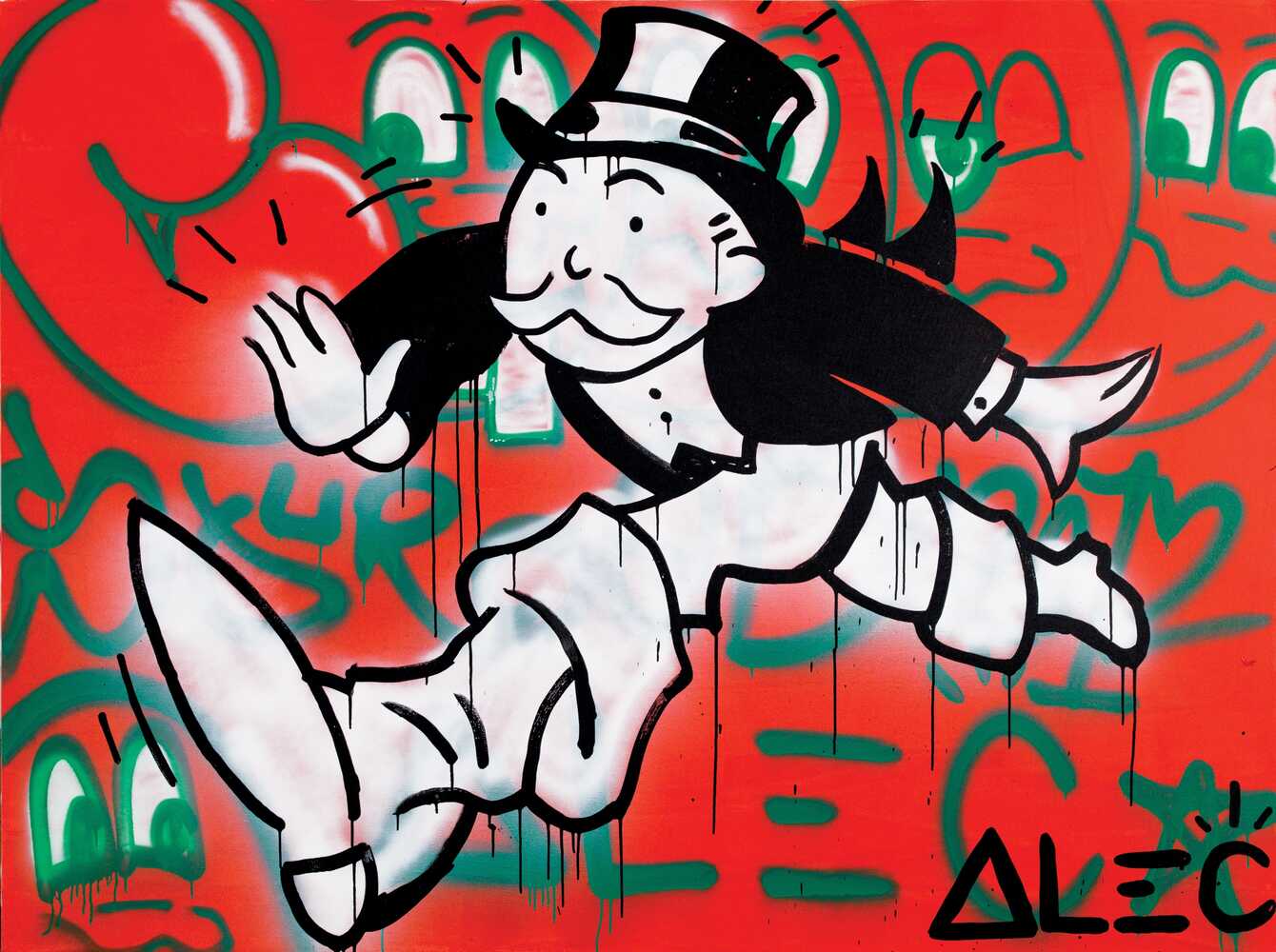
Elon Musk and Billionaires v Politicians


“Who do you trust less? Billionaires or Politicians,” Elon Musk asked in a tweet.

No one cares what I think. No one cares what you think. No one cares what Elon Musk thinks. Elon Musk doesn’t care what Elon Musk thinks, in this particular poll anyway. He wants to know what we think, but he doesn’t really care what we think either. If he asked, “Who do you trust more?” that might hint at some narcissism on Musk’s part, but “Who do you trust less” is intended to reveal to virtue signalers, in the political offices of both parties, that they’re not as popular as their fellow ivory tower dwellers tell them they are. I still believe Musk missed the mark however. He should’ve asked who can do you more harm?

“The billionaire, Elon Musk, conducted this poll on his Twitter page, so he received the results he expected. As MSN.com reported, As of Friday afternoon, the poll had amassed over 3 million votes, and 75.7% of participants selected “Politicians” as who they trust less, while 24.3% selected “Billionaires.””

Again, this was Elon Musk’s poll, conducted on his Twitter page with his followers, so the results are skewed. If a politician was bold enough to conduct a similar poll on their Twitter page, they would probably receive the results they expect. If we dug deep into these polls and analyzed the results, we would find that it doesn’t matter. Trust is often based on personal preference, and it doesn’t really matter who we trust less, if neither party can do us harm.

Without going into the details of the two parties concerned, because it feels unnecessary, the politician is obviously in charge of more levers of power that can do us harm. On the flipside, an individual who favors politicians could ask, “Which party can help us more the billionaire or the politician?”

To which we would reply, “All conditions being perfect, the politician.” That’s the bullet point, but the subpoints say, “As long as that politician is honest, and their prime directive is helping people in a purely altruistic manner. If that were the case, the politician would focus their efforts at problem solving. They would seek the best solution, regardless the politics, but how many politicians in  federal government do that?”

Some suggest the primary goal of every politician in Washington D.C., is to get reelected. If that’s the case, how many politicians help us solve our problems in a way that doesn’t serve their favorite special interest groups’ cause? When we see those three words, special interest groups, we naturally think of the other political party’s special interest groups, but special interest groups come in all stripes, and they influence politicians of all stripes. Just about every politician claims they don’t accept special interest money, but just about every politician does, Having said that, the relationship between the two might involve a genuine hand holding mission, but how often do politicians pick winners and losers in an industry, because one corporation aligns with their views better than the other? (Note: We can usually tell when a politician is picking winners and losers, if their primary defense is “We’re not picking winners and losers here.”)
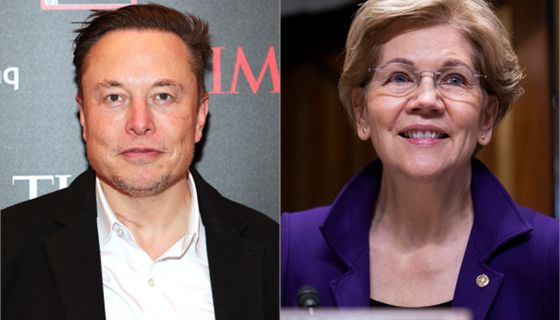
Between the two, I think we could make the general point that politicians care more than the billionaire does. A billionaire, if they’re any good at what they do, is focused almost entirely on what’s best for their corporation. Their corporation provides a good or service that helps their fellow man, but their mission is not altruistic. They’re interested in whatever generates the most profit for their company. If their corporation happens to help their fellow man, that’s gravy, but it’s not their prime directive.

The very idea of entering public service suggests that the politician is more concerned with their fellow man, but how many of them know anything about private industry? If they’re going to solve problems, regardless the politics involved, they should be able serve public and private concerns, so some experience in private industry could prove helpful. Yet, some politicians consider working in private industry the equivalent of working behind enemy lines.

Most politicians, from both sides, appear to have the best intentions, but how often do they break what doesn’t need fixed? They might write, or vote for, legislation with the best intentions in mind, but they often campaign, in the next election, on the idea that they need to fix what they just broke.

It doesn’t matter if we trust or distrust a billionaire, because their ability to directly help or hurt our lives is minimal by comparison. Who’s the most powerful billionaire in the United States? What’s the most powerful move he could make? If they fulfill our worst fears, what recourse do we have? We can go to their competition.

Bashing billionaires and politicians is so easy. As much as we hate to admit it, both parties have accomplished more in their lives than most of us ever will, and that leads to jealousy, hatred, and a desire to boycott, protest, and demonize everything they do.

“Billionaires spend their own money, whereas politicians spend our money.” Stephen Crowder responded to Elon Musk’s tweet. “I think it’s obvious who we should be more concerned about.” Those who trust billionaires less could argue that they spend our money, because we give them our money for their products or services, but if those products or services are inferior, or too expensive, they won’t receive our money, and the marketplace will eventually crush them. If government officials provide inferior services, and we decide not to give them our money, based on their performance, we could face stiff penalties and possible jail time. As Crowder alludes, why would we be concerned if a billionaire is dishonest, greedy, or a criminal? How much can their actions affect our lives? Why should we be concerned about dishonest, greedy, or criminal politicians, because they can have a much more direct effect on our lives.

What happens if a billionaire goes on an irresponsible spending spree with their money? They can help the economy, create jobs, and they can spread the wealth around to those who create products and services around the world.

What happens if a politician goes on an irresponsible spending spree with other people’s money? They’ll need more of our money to spend, so they’ll take more. If they cannot find a way to do that, they’ll print money, or borrow it, which will create inflation, increase deficits and debts, and damage the long-term economy for their short-term goals. Even if some of their money reaches its intended source, how much of it will be siphoned off by various bureaucracies? How much of it will be wasted through various redundancies, fraud, and abuse? We’ve witnessed such examples through various stimulus packages that were ravaged by waste, fraud and abuse. In the meantime, money equals power and greater freedom, and the net result for the citizen they represent is less power and freedom.

It’s not the politician’s fault that we take advantage of their best intentions, right? We could analyze this from a number of perspectives, but the final answer should end with a big fat “no one cares what they intended”. The numbers show results. The numbers show the politician failed. We should hold them to account for their failings, so that future politicians might insert whatever oversight they can to prevent fraud, waste and abuse. They don’t, and we reelect the politician based on their intentions. The billionaire’s best intentions are often held in check by numbers and meritorious results.

Who can do you more harm? Circa 2014, the federal government raised corporate taxes in the United States to some of the highest in the world. American corporations began moving their operations to other, more competitive countries to escape those taxes. Some politicians proposed that the best way to combat these moves was to make them illegal. If a governor, or a mayor lost a business to another state, and they threatened to make it illegal for a business to move to another state, they would be laughed out of their reelection campaign.

When politicians pass legislation that affects lower-level operations that most of us will never see, this affects the cost of doing business, and that cost is then passed onto the consumer through higher prices of their products and services. Some politicians propose fixed pricing to solve the problem of higher prices. Their intent is to prevent the consumer from getting hit by the corporation raising prices, but the primary reason the corporation raised prices was to pay for the politicians’ rules, regulations, and taxes. When the government imposes costs on corporations, and those corporations pass the costs onto the consumer, economists call this an incidence tax.

The rising costs rarely affect the politician, because the natural inclination of most consumers is that when prices rise, it is due to a CEO’s whim of wanting more profit. Increase the price, increase the profit, right? This line of thinking neglects the market. If corporation A raises prices because they want more profit, it opens the door for corporations B through F to sell more of their products at market prices. Their volume of sales will increase, until such point that the CEO of A realizes they don’t control the market as much as they thought. If one billionaire CEO were to raise prices, we would go to the competition. When an entire industry raises prices, however, it is often due to politicians’ whims.

If a politician raises taxes to force us to help pay for their spending, where are you going to go? If the politician is local, we can move to another locale, city or state. If they’re federal politicians, we can go to another country. We have options either way, of course, but I don’t think we’d get much push back when we say the politician can do more harm in this regard.

What’s the worst thing a billionaire can do to harm your life? They can raise prices, they can avoid paying taxes, and they can create a monopoly that harms the marketplace. They can also contribute money, time, and endorsements to a politician, but in the competition between who has access to the more levers of power over the individual, it’s not much of a contest.

Does a politician employ people? We hear politicians talk about creating jobs all the time, but what jobs do they create? New York Times Economist Paul Krugman once talked about how he thought politicians should create temporary jobs to help the economy over the hump. He suggested politicians create ditch digging jobs, where one set of workers digs a hole and another set of workers fills it up. I should thank Krugman, because this is the first time I’ve heard of someone state that politicians can actually create jobs. The jobs Krugman proposes would be pointless, of course, but at least it would put people to work, temporarily. That needless work would also be funded by taxpayers who worked hard earned for that money. How about the politicians in the federal government temporarily lift some needless regulations or temporarily lower corporate taxes, so private industries can temporarily hire more workers to get us over the hump? Krugman’s proposal keeps the levers of power in the hands of the politicians, who don’t create products, services, wealth, or jobs.

If the billionaires appease local politicians, and vice versa, the billionaire can almost single-handedly revive a community, a city, and in some cases an entire state by deciding where to locate a plant. The local politician’s job is to placate the billionaire, in this instance, with tax breaks and real estate, and to be present for the ribbon cutting ceremony. Other than that, the ability of a politician to create jobs obviously pales in comparison to the billionaire’s.

In the current era, the billionaire also has to be in an industry that will help the politician get reelected. The modern politician has more bullet points than they’ve had in the past, so creating jobs is no longer the prime directive of most politicians, unless the politician favors the corporation or industry. The politician can then run to their phones to contact their broker to buy shares in that company with their insider information.

How much oversight does an enterprising billionaire have on his daily activities, as it pertains to his business? The billionaire has to answer to the consumer, the media, shareholders, the corporate board, the security and exchange commission, the IRS, local and state governments, and other federal bureaucracies, and all their rules and laws. The politician has to answer to much of the same, but whose oversight is more intense?

Everybody hates the billionaire. We don’t trust them. We think they attained their wealth through ill-gotten gains, and we don’t trust them to use their place on the stage responsibly. We won’t buy their products or services to prove our point, and … and it just doesn’t matter. The billionaire will go on to sell their products to those who will buy them. If no one does, they’ll go out of business, and no one will talk about them anymore a month later. It doesn’t matter if we trust billionaires to be responsible, honest, or quality managers of their company. If they’re incompetent, dishonest, or even criminal, their company will eventually fold up. Whatever consumers, shareholders, workers they have left will be deeply affected, and the city, state, and locale their corporation called home will also be affected, but that pales in comparison to the damage a politician can do before being turned out of office. As we’ve witnessed in bygone years and modern times, it is often very difficult to expose them and get them out of office if they’re popular enough. In the meantime, a corrupt politician can do grave damage to those that they’re elected to represent.

Money: A Love Story


“I spent most of my life making money for someone else,” Eduard Pennington said. “It wasn’t just one day, one week, or even one year, but at some point I realized I wasn’t just wasting my talent, I was wasting time. I enjoyed my time at the corporation, and they treated me better than they should have, but I wasn’t getting younger. I just got tired of doing it for someone else, and through a series of painfully slow, very boring investment platforms, I eventually had the money to do it for myself.”

Some people feel the passion when they hear tales of romance. I get the same charge hearing someone passionately talk about making money. I might be lonely in this corner of the world, but when I hear anyone talk about how they made theirs, I’m not the least bit envious. I’m inspired.  

Eduard Pennington is, was, and always will be a regular schmo. There was probably nothing fancy about his clothes or his car when he was a middle class employee, and nothing changed after he became the multi-millionaire next door. When we speak to him, we notice the confidence of a life well-lived, but we don’t hear the smug arrogance those of us who grew up on cartoons might suspect from such a character. Eduard Pennington is, as depicted in the 2010 book, The Millionaire Next Door.  

“When we look back on our lives, we remember the good, the bad, and the ugly,” Eduard said. “The years I spent working for myself were the highlights. It was so stressful, in the beginning, that it affected my health, and the idea that I made such an idiotic mistake leaving the comfy confines of the corporate world to do this kept me up many a night. I also worked so many hours, getting my business off the ground, that it took a toll on my relationships with my wife and my kids. I still regret missing out on some vital parts of their youth, but other than that, those were the best years of my life.”

Money is not the root of all evil. It is neither good or evil. It is contained wholly within the specimen on which it acts. We define it, and it defines us. If we are bad guys, the pursuit of money can make us worse. If we are good guys, the pursuit can make us better. In its finest form, money is a byproduct of human ingenuity, hard work, and entrepreneurial risk-taking.

“You can get rich working for money, my dad once told me,“ Ed said, “but you can get stinking I-hate-you wealthy when your money starts working for you. Money is power,” Ed added to his dad’s saying, “and power buys you freedom, and that freedom permits you to do what you want to do.”

In the middle of the decade Ed spent working for himself, his company eventually turned a profit. He began delegating most of the authority, and some of the work, to his employees as the profits increased. He trusted them to run the company the way he saw fit, but the resultant free time did not suit Eduard Pennington. He grew anxious and itchy, and in the the process of trying to find something more productive to do he “almost accidentally” developed a device (pre cell phone era) to help make the work of his employees easier. He did it for the money. He did it for the profit, and he did it so well that his company’s profit margin began to dwarf that of his nearest competitors’. After years of pounding them, the competition came-a-knocking. Eduard quickly patented the device, and he shared everything about it with them. He then permitted them to pour through his accounting books to determine the ins and outs of how he was beating them. They waked away believing the difference was this device, and they bought it. Then, their competitors bought it, and so on and so forth, until the device took off. It wasn’t long after the competition incorporated the device into their business that they couldn’t imagine how they got along without it.  

“Word got around, and they came-a-knocking,” Eduard said of a number of entrepreneurs who walked into with bountiful checks in hand. “They knocked loud and hard. I couldn’t believe the numbers they were writing down. I should’ve seen the bidding war that ensued, everyone said I should’ve seen it, but I didn’t. I was wholly unprepared. The problem for me was, they didn’t just want the device. They wanted my whole company. My company, my little baby, and the thing I built from a little granular idea was now a number. It was a gigantic number, for me, back then, but it was still just a number.

“I hated them for putting me through this, and I loved them at the same time,” Eduard continued. “Ten years into this company, and I never wanted to do anything else. My plan had been to see this company to its bitter end, my end, my retirement, or whatever came first. If I told you the number they wrote down, you might consider it an easy decision, but this was my whole life, my routine, and my identity that they wanted to buy. It was the hardest decision I’ve ever had to make, but I just couldn’t imagine, in my wildest dreams, ever turning down the kind of money they were offering.

“I took a month of long-sweaty nights mulling over the plusses and minuses of selling my company. They thought I was playing a card. They thought I was being strategically patient. I wasn’t. I was making sure giving up what I spent ten years building, was the right decision. I hired corporate analysts to project the growth of the company ten years, twenty years out, and I paid advisors, lawyers. I even contacted other owners in my industry to see what they thought.

“Even with all that, I still regretted selling it,” Ed continued. “I regretted it before I signed the documents, I regretted it after, and I regret it to this day. I don’t think I would’ve done with it what they did. Maybe I would’ve, I don’t know, but they took it to another level. God love them, they knew what they had, much more than I did, and I knew a lot, but they took it to the stratosphere. They gave me a lot for it, but if they ever decide to sell, they’ll probably get fifty times what they gave me, based on what they did.”

Eduard Pennington lived the last thirty years of his life The Millionaire Next Door. He took two extravagant vacations to celebrate the prize of his ingenuity, and he bought a verified and minted Babe Ruth-signed baseball to give his reward a tangible quality. Eduard then took care of every one of his immediate family members, in ways big and small, and he made sure they never had to struggle in life the way he did. Then, he did something revolutionary with the rest. He invested it.

“I went boring,” he said. “Boring, old blue-chip stocks with high dividends, bonds, and real estate. I have no creative investments, other than maybe the Babe Ruth baseball, and no sexy, innovative stocks are in my portfolio. My plan was to live on dividends, interest, and appreciation. My financial plan was to go so boring that you might fall asleep before I’m done telling you what I invested in, but that was my plan.”

There are a number of reasons I find Eduard Pennington’s story so beautiful, but one of them is purity. He pursued the American dream from his nook of the world, and he found it. His journey did not involve backstabbing, fraud, or deception. It involved some appreciation of his business, but that was thanks mostly to his hard work and ingenuity.

Eduard Pennington was a good man who worked his fingers to the bone, and he learned so much about his industry that he developed a revolutionary product that eventually went international. He surrounded himself with good and honest men and women based on merit, and they proved their value to his company for a decade and beyond. If you’re reading this with the notion that somewhere around right here in this article, the other shoe will drop to expose some of Eduard Pennington’s character defects, this isn’t that story.

The streamers and Hollywood would never pay one dime for Eduard’s tale, because he loved his wife and children, he didn’t cheat anyone, and he never hurt anyone. He wasn’t a bad guy, and they want bad guys, because we want bad guys. Bad guys are the angle, the promise they make in their summaries, and the selling point to get us to click on their movies. We want tears and pain from the side characters, and a ruthless bloodlust from our main character. No one wants to read a story about a man who loved his wife almost as much as he loved his mother. No one wants to read a story about a nice man who never faltered in his dream to make the most honest money he could, that’s just boring.

***

“Money is not the root of all evil,” someone far smarter than us once said. “Money provides definition. When a bad guy pursues money, it can make them worse. A good guy pursuing his dreams can become a better man in the pursuit.” The idea of money is intangible quality with no definitions of its own. We define money and money defines us.  

Once he took the money and ran, some might suspect that Ed did it all for the money. That seems so obvious to us now that it’s not even worth discussing for many of us. Yet, Eduard loved what he did, and he regretted getting out. “My friends and family said things like, you’re still a young man, and with that money you can do whatever you want,” Eduard said. “I thought that was right and logical and all that, but the truth was I didn’t want to do anything else. I still don’t, but I couldn’t turn the money down, because I didn’t want to be known as the person who turned that money down. I didn’t want people to there goes Eduard Pennington, the guy who turned down big money, and right after he did it, his business fell apart. Every industry, hell every business, goes through cycles, and it was possible that the value of my company could’ve gone down. It didn’t, but it was possible.”

Eduard Pennington did it all for the money. He worked for someone else, because they paid him. He opened his own business for the expressed purpose of making more money, and like all upstart businesses he skimped and saved during the early, desperate years. He even dipped into his nest egg to see to it that his employees were paid on time. He didn’t do this because he was a good man. He did it, “Because it was good business,” he said. “I interviewed and hired every single one of these talented men and women, and I paid them top dollar for their skills, because I knew they could make me more money. I don’t care how loyal your employees are, if they find someone who is going to pay them so much more than you, that will test their loyalties. It’s just good business to find the market for their talent and pay them more than that.

“Why else do you do anything in business?” Eduard asked when asked if he has any concerns that we might view him as a greedy capitalist. “I spent most of my life making money for others. When I went into business for myself, my goal was to make as much money as I could.

“Let me amend that slightly,” Ed said. “If you do it solely for the money, you’ll end up miserable. If you love what you do, and you’re good at it, money is more than a byproduct of all of your efforts, it’s the reward. If you’re not getting paid what’s the point?”

Guy no Logical Gibberish


My dad didn’t pronounce words correctly. It embarrassed me so much, when I was younger, that I matured into something of a wordsmith. A wordsmith, in my personal definition of the term, is not necessarily more intelligent than anyone else is. We do not have a better hold on pronunciations than anyone else does, and we don’t have a gift for spelling or proper word usage. A wordsmith is someone who focuses (see obsesses) on such matters. A wordsmith is also so embarrassed by past, present and future mistakes that we make that don’t think we’ll ever live down. Such matters didn’t embarrass my dad at all. He didn’t care about any of it. 

Even though I put more effort into pronouncing words correctly, spelling them correctly, and using them in a proper manner, I still make errors all the time. I mispronounced a famous person’s name one day, and it was so embarrassing to me that I don’t think I’ll ever live it down. Someone mispronounced the name, I thought that mispronunciation was hilarious, and I began mispronouncing it on purpose, as a joke, until I did it in front of two people I sought to impress. I’m sure if I asked those people hear me do it what they thought, they probably wouldn’t even remember it, but it haunts me. I used a word that that we don’t recognize as a word in my formative years, and I used a tense of an adjective that is not considered one of the tenses for that word. I also used the word (“had”) too often, as in “if he had lived to see the day”. I hear professional speakers use incorrect terms and words all the time, and I hear them mispronounce words as often, and I don’t mock them. I’m mortified for them in a manner that constitutes the difference between empathy and sympathy. 

People I knew and loved mocked my lexicon so often, in my youth, that I made it my life’s mission to eradicate all errors. (I’ll let you know if I ever accomplish that feat.) I could handle most of the mean-spirited mockery directed at my other, numerous errors, because they meant nothing to me. The mockery directed at my lexicon concerned me, because I knew my dad’s casual disregard for the conventional rules of language, and it embarrassed me as a teenager.

They say that if we spend enough time in another part of the country, we might carry accents, and/or peculiar pronunciations for words that are otherwise indigenous to that area of the country. My dad said the word wash for most of his life, until he traveled to Tennessee. He spent one week there, and for the remaining decades of his life he said, “warsh.” Correcting that proved an insurmountable hurdle for him, as did “eckspecially”. He made up contractions, such as ‘kout’ for lookout and (‘Q’) or “kyou” for thank you. He also made various plural-sounding names singular and vice versa. McDonald’s was McDonald and Burger King was Burger Kinks. Don’t ask me how he arrived at that second (‘K’). He also said intentendo, instead of Nintendo. We could fault his hearing for some of it, but after numerous corrections, the man stubbornly maintained his fault-ridden lexicon. He subconsciously picked up on errors in usage, but he never picked up on my numerous corrections. 

Speaking of word choices, how did we arrive at the word anus to describe what Etymology.com describes as the “inferior opening of the alimentary canal”. The first question the more insecure among us might ask is, “How do you know mine is inferior? How dare you!” Beyond that, we have to imagine that those in the front of the receiving line of word choices place a lot of trust in those in charge of the language used in medical periodicals and biology textbooks to choose words that cannot be misappropriated for the purpose of humor. There are a number of choices common folk have that have a greater propensity for humor, but why did these serious professionals coin such a cute term for such a repugnant organ to be used by other serious professionals in serious situations? 

How extensive was their search for the ideal, unfunny sounding word? How many voices did they hear, pro and con various other terms before they eliminated all others and ended up with anus? “The search is over, we’ve found the ideal word to describe the organ that sounds professional and doesn’t lead to uncomfortable smirks and giggles. Going forward, we shall all refer to the organ as the anus in doctors’ offices, biology text books, and other professional settings.” No one can blame the collective we, for etymologists say the term predates English. The word anus derives from the Latin word anus, meaning “ring”. The Latin derivative annulus means “Little ring”. So, modern professionals cannot be blamed, and for that we must go much further back, but there had to be a first person to coin the term. 

In the search for the ideal term, the first thing they had to do was rule out the other, less professional alternatives. Imagine if your doctor said, “You’re fifty years old now, it’s time to see what’s going on inside your smelly freckle.” If my doctor used such a term, in such a sensitive situation, I wouldn’t care if they were trying to add some levity to an otherwise uncomfortable situation. I would seek another physician.

The term they decided on sounds so unusual and cute that all humans, no matter their age, gender, or background, giggle when they hear it. If we could remove all of the connotations the word has with otherwise repugnant biological functions, we might picture a cute, little bug if we heard the word for the first time. If the word had no connotations to our little ring, imagine if comic book writers used the word to name one of their bad guys. “Join Spider-Man, in next week’s issue, as he takes on the Anus!” There’s something so unusual and cute about the word that I don’t think it would strike fear in the reader, until we learned what her powers were.    

We giggle, because it makes us feel uncomfortable in a way we can’t explain. One explanation might involve the idea that they chose such an unusual, cute term to describe such a repugnant orifice. What better punchline is there than, “… and I ended getting it stuck in my anus.”?

There was never a board of lords assembled to determine what term we should use to refer to the inferior opening of the alimentary canal a term. As stated, the word has roots in Latin, and Old French, but the Indo-European language family that dates back to 4500 BC to 2500 BC influenced those languages. As with other words and terms, we can arrive at the first recorded use of a word, and Wikipedia states that the first recorded use of the word anus dates back to 1650-1660, but there was probably never an official orifice decree that suggested all professionals should start using the word anus in professional settings. Anytime we try to source a word, we encounter its complicated roots through a maze of variations of language based on migrations, and subsequent regional dialects that affect different shifts in pronunciation, morphology, and vocabulary. We then encounter various efforts at reconstruction of the Proto-Indo-European roots of the word to arrive at the conclusion that it’s almost impossible to source the origin of some words and terms. The one thing we can agree upon is that the modes of communication were so archaic in 1650-1660 on back that most words achieved staying power places via word of mouth, and that it just sort of caught on after that. Even with all that, the question remains why did one prehistoric person, with some biological knowledge, pass this agreed upon, unusual, and cute-sounding term anus to another, and how did it pass the smell test?  

The continued use of this term probably has more to do with hundreds to thousands of years of tradition, and a certain level of consistency attached to it, as I wrote, but the professionals who continue to use the term whenever they produce a new textbook or periodical of any sort have a choice every time they pass it on. The question they might ask is what’s the best viable alternative? The answer is there probably aren’t any now, the term is too ingrained, but we have to wonder how many alternatives the linguists and lexicographers of yesteryear passed on, before they agreed the word anus should be the preferred choice for those in professional and scientific circles. If they hoped that their final decision might end all of the snickers, giggles, and uncomfortable smiles when the subject comes up, then I think we can all agree that they failed.

“Don’t text me during the game,” I text. “I’m taping it. I don’t want to know if it’s a good game or a bad game. I won’t even check my phone during the game, so save your, “You’re going to love this,” “Don’t bother watching,” or “Get out of your house, there’s a small Cessna heading toward your house.” I don’t know why it bothers me so much when someone texts me about a game I’m taping, but I think it has something to do with a compact I have with the game I’m watching. It seems pointless, to me, to watch an otherwise exciting 7-yard out route, on third and six, when I know the outcome. Thus, when someone texts me some hint about the outcome of the game, it frustrates me so much that I want to coat my naked body in some sort of glistening liquid and run through the city streets, just to teach humanity a lesson. I know that I couldn’t live with that memory though, so I just avoid my phone during games.

Big Things vs. Little Things. We dream of big things, but we cannot accomplish big things without tending to all the little things that make big things possible. Before writing the Great American Novel, for example, the author has to write. That first page can be tough, but it’s not near as tough as page two. Page one is often the flurry of inspiration that led us to sit down and write. That inspiration probably struck them at a relatively boring moment in our life. Page one often ends up gibberish, however, and that doesn’t make it past Chekov’s Razor test. Page one often ends up being deleted or tossed into the waste paper basket. Page three is often where the book begins, according to Anton Chekov. Page one is important to the author, but it’s not as important as page three, or any of the pages that constitute continuing.  

An important note I heard recently that contradicts that paragraph is, we don’t have to accomplish great things to be great. By taking care of the little things in life, we can still be great. We can be a great father, mother, businessman, and student. I knew a man who accomplished great things in life, but he turned out to be something of a failure as a father. I call it the Larry Bird Complex. There’s an old saying that “those who can’t do it teach” but the flipside proves to be true too. Those who can do it, often cannot teach others how to do it. Larry Bird was a man many considered by many to be one of the greatest to play the game, but he wasn’t a very good coach. The man I knew with a Larry Bird Complex had a personal resume so loaded with prestigious accolades that we might have to break the story of his life down to chapters. When they buried him, however, those of us who sat in the second row of his funeral realized that he couldn’t take his accolades with him. We also realized those who sat in the first row were his legacy, and they were confused adults who lived a life of chaos. Was that his fault? It’s debatable, but he obviously didn’t do enough in his life to relieve them of their pain, and they were/are how the rest of us measured him. A man of great accomplishment enjoys telling people about his great accomplishments, but if he often fails to tend to his backyard, and that will end up his legacy.

So, You Want to go Into Business. “My employees think I’m Daddy Warbucks,” an owner/operator of a local franchise said with a laugh. “They don’t understand how thin profit margins are.”

“Most people don’t,” I said. “I don’t for the most part. I’ve never owned my own business. Most of us think that anyone who does is in the money, especially if that business is a franchise. Most of us have no idea of the expenses involved in running a business.”

Most of us know-nothings loosely define profit as the difference between the wholesale and retail prices. We don’t consider the idea that an owner/operator uses that profit to pay employees’ wages, rent, utilities, various forms of marketing, the franchise fee, insurance, repairs, remodeling, various forms of security, and all of the other numerous costs associated with owning a business. Once the small business owner factors these numerous costs in, they still have to pay all of the federal, state, and local taxes and any fees associated with registering and owning a business. Some of us even begrudge the business owners for writing off expenses when it comes time to pay taxes. Yet, if we deprive them of the ability to do that, then they would have little to no profit at all. After paying off all of these expenses, the middle class owner/operators also have to pay off the loan the bank gave them to open the business.

Another element of the equation that should’ve been obvious but wasn’t until I attended a “Welcome to [the franchise]” meeting for potential owners of a nationwide franchise, is that the individual franchisee has to purchase everything from the vowels on the sandwich board, to the floor, to the franchise chairs and napkins from the corporation. If the owner/operator’s franchise runs out of napkins, for instance, the owner/operator cannot simply run to the supermarket to purchase napkins, they have to fill their napkin holders with napkins that have the corporate logo on them. Failure to do so could result in franchise infringements penalties. To ensure individual franchises are adhering to the level of uniformity the franchise, and their customers, expect throughout the chain, the corporation hires what some call secret shoppers. The primary goal of these insects is to prove the value of their employment, so they grade the owner/operator’s franchise on everything from the significant to the seemingly irrelevant. They find things to write in their report, because they fear if they gave the franchise an (‘A+’), “no infringements found” the corporation might not hire them again. The infringements they find could lead to more penalties and other unforeseen costs for the franchisee.

The corporation will also send out trainers who train the owner/operator and the incoming staff on how to do things “the corporate way”, and the franchisee then “helps” pay their salaries.

The corporate advisers, who provided us this “Welcome to [the franchise]” presentation, did not provide an itemized list of the total costs of purchasing and running a franchise. I had to do my own research to find some of them. One look at this list and every potential franchisee should wonder how anyone makes any money in this business. When I emailed some leading questions regarding my findings, to the advisers, they said, “[This corporation] will help you with any costs and expenses,” they wrote using the specific name of the company. “[This corporation] wants to help you open a location in your city, and they will do whatever they have to to help you make it happen.” This was a blanket statement the corporate advisers made throughout their presentation, and it was the theme of most of their answers throughout the “Welcome to [the franchise] presentation”, but they often avoided providing specifics. 

“Profits in food service are so thin that I would seriously advise you consider another business,” a former owner of a mom and pop restaurant advised me. “We obviously didn’t have to pay all the franchise costs you list, and we barely made it month to month. You probably won’t make money for years, and even then you’ll probably want to consider opening two or three different locations if you want to make any real money and each of those franchises will each take their own time to turn a decent profit.”

A franchise owner/operator then wants to pay the person most responsible for opening the location. Themselves. They want money for their time and headaches. “Expect to work at least 60 hours a week,” the mom and pop owner told me. “At least 60 hours. You’re the one responsible for all the hiring and firing, and after a number of incidents, you’ll probably develop a greater tolerance than you predict for misbehavior and poor performance. You will put up with whatever you have to from your employees, to avoid going through the headaches involved in firing an employee, hiring a new one, and training them. Other than all of the headaches and time involved, you’ll eventually view it as an unnecessary expense. Then, you’ll have to fill in for those who call in sick, and when you finally pay yourself for all the hard work you’ve done, before taxes, you should expect to make less, per hour, than you’re making now. Most business owners, like your friend think it’s cute and funny when their employees consider them Daddy Warbucks in the beginning, but when they hear it four or five times, they might accidentally launch into a rant about how wrong they are.”

Some of us celebrate when we see “big business” fail in our neighborhood to the point of closing down. We see their big name as a blight on our community. Some of those franchises are corporate owned, but a number of them are not. We might see it as sticking it to the man when we contribute to their failure, but that failure might be a man or woman who is seeking an alternative way to feed a family of four.    

Why do flies, moths, and other insects want into our home so badly, and they want out just as badly and just as quickly? If it were nothing more than a mistake, why do they bump against the glass trying to get out? Are they just dumb? No, they’re not dumb, some argue. Okay, then why do they immediately fly to the nearest glass trying to get out shortly after getting in?

Light guides most insects at night, and the only light at night that guides them is the moon. Their internal guidance systems lead them to fly according to the light of moon, and our artificial light messes with their internal guidance system. Do they then recognize their faux pas soon after making it? If the moon explains the nighttime insects wanting in our home, how do we explain daylight flies trying to get in? Do they smell our food? When do they recognize their faux pas? Some of them might be attracted by the smell of our trash, but they rarely visit our trashcan. They usually bump to get in and turn around and bump to get out. Do they recognize their error to get in, or are they just dumb beings driven by instinct?

Why do birds only fly so high? We’ve all witnessed a predator fly higher than other birds. Why do they fly so high? Answer, they want achieve a vantage point where they can see their prey. Why don’t other birds fly just as high? Answer, they’re more affected by low levels of oxygen, as they’re not as equipped, as their predators to extract necessary oxygen from the air. The temperature is also cooler at greater heights, and most birds cannot generate enough heat within their muscles to counteract that. These latter two paragraphs describe the mysteries and functions of the every day lives of some of its smallest contributors to our daily life.  

My Favorite Teacher of all time performed a miracle. He led me to believe the subject of Economics might be interesting. He made the subject so interesting that when I left high school, I became an Economics major. In college, I discovered how boring Economics could be in different hands. On the flipside, I considered Shakespeare so boring in high school that I found it difficult to hide my disdain for the material. In college, I found a passionate teacher who made Shakespeare sound like a genius. My takeaway, every subject is one good teacher away from being interesting.