We’re Doomed! Long Live the Gloom!


“The planet’s not in trouble,” a comedian said onstage. “It has survived countless threats, tragedies, and catastrophes. The planet will be just fine. Human beings, however, we’re screwed.”

The End of The Road

We’re doomed, and we love it! If ratings, proceeds, and ratings mean anything, doom and gloom is big business. 

We want it in the all-too-near future, “Ten years from now…” Ten years is one of our favorite time frames. Twenty years is too far away and five years is too close. We want urgency, we need it now, but not too close. We might deem it hysterical if it’s too close, and we might not worry about it if it’s too far away, so we’ve deemed ten years the Goldilocks, sweet spot for dystopian rants. I think I can top them. I think future street corner bell ringers might want to narrow their hysterical rants for greater appeal among consumers. If you know anything about grocery store pricing, you know that consumers find round numbers too stark, too pricey, and generally unappealing. Their psychologist advisors have informed them that consumers find $9.99 more appealing than $10.00. It’s a penny right, what’s the difference? These psychologists say it’s everything to consumers, so we now see their items listed accordingly on all shelves, car salesmen do it, and everyone who wants to appeal to this mindset we all have. The chicken littles of our future might want to recalibrate accordingly and say, “Nine years and nine-nine days from now…” 

Ten years also seems like enough time for human ingenuity to develop a solution. If we’re facing a true cataclysm that will end the human population, we have to think it would become the sole focus of more than a few of our brightest stars in science, engineering, and just about every other focus we have to attempt to counter the sure-to-come devastation of life on the planet? 

How many times has human life faced extinction only to have some genius come along and devise an ingenious way of saving life? This time it’s different, of course. This time, no one can save us. We’re helpless. How exciting!

We’ve all been here before, in theoretical forecasts, but this is the future. We’re here to report that the ten years in the future that we’ve forecast for the last seventy years is now here. It is ten years in the future, and a moment, not the moment, but a moment we’ve feared for at least seventy years is here, and we don’t know what to do about it.

The reporters investigated and attempted to locate and expose a human culprit. They hopscotch between various narratives to find a bad guy before it’s too late. They join forces with the scientific community to narrow the focus of their study on human involvement. Regardless whether they’re wrong or right, they have the best intentions.
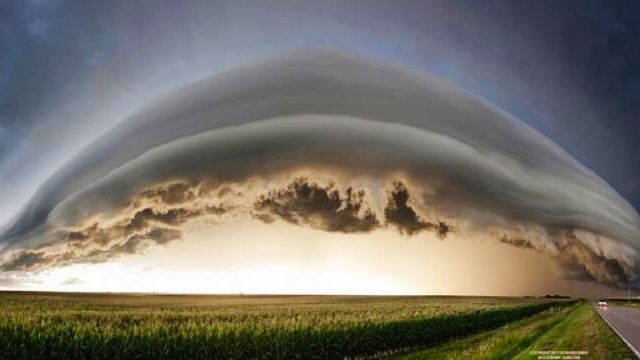
So Scary, It’s Beautiful!

There are no high-profile news agents ten years in the future. They’ve been exposed in one way or another, and relatively few read, watch, or listen to them anymore. In their wake, citizen journalists rose up on the internet and developed reputations for telling the truth in the years preceding the looming tragedy. Some of the more prominent citizen journalists provided a contrarian belief that certain scientists developed by studying the looming tragedy through various angles that focus on the math and science of the universe. These contrarian scientists eventually proved incorrect, and those with no knowledge of science rained fire upon them. 

“It’s you job to figure this out!” a reporter screamed at a contrarian scientist, as he walked to his car. This confrontation went viral and social media launched “It’s your job!” meme at scientists, and the citizen journalists who supported them.

The contrarian, non-human theories were rejected so often, and so publicly, that most become afraid to voice their concerns with their neighbors, lest they be called a denier. “There’s nothing we can do!” becomes the credo of the day. “The scientific consensus suggests there’s nothing we can do.” 

Teams of scientists hear this, of course, and they’re scared, but some of them brave the cynical firestorm to push this theory that the new, unforeseen, looming, and disastrous event involves a detailed and complicated natural occurrence that has nothing to do human beings. 

“It is,” they write, “an event that occurs throughout the universe on a relatively infrequent basis, and it is going to occur near Earth, unless we are able to do something about it.” 

Numerous scientists attempt to disprove their theory, as is their role, and most of them suggest that their findings are inconclusive. Some of those scientists who unsuccessfully attempt to disprove the theory, decide to pursue the theory in purely hypothetical mathematical and scientific forms. “If true,” they write, “then we could use an end around to avert the looming disaster.” Other scientists join in and posit theories around this new end around theory. 

“It’s time to say it, Science has failed us!” a major online news publication, that no one reads anymore, states in the title of an article they publish in a desperate attempt to remain popular. The article proves popular, of course, as a crude attempt to develop “if it bleeds, it leads” style click-bait articles that feed into the gloom and or doom themes. “As time continues to tick down,” the article states, “our most brilliant minds continue to fail to find a solution.” 

Scientists develop other theories, and other scientists disprove them. The lack of understanding of science, leads to mayhem all over the world as citizens the world over begin to panic over the delays. In the midst of that panic, as time ticks precariously closer, a scientific hypothesis emerges.

High profile scientists immediately reject the hypothesis, with no evidence, and popular sentiment follows suit. Prominent leaders of the world join the popular sentiment. With the lack of any government endorsements, and more importantly government funding, these teams of scientists desperately seek private donors to help them pursue the hypothesis that no scientist has been able to concretely disprove. The theory does not please anyone and everyone is torn, until it works. The event from the far reaches of the universe is thwarted, and the little dots in the universe, we call human beings, avoid extinction. Most of us feel weirdly disappointed when we realize that we get to live at least a little bit longer.

Science does not experience a popular upgrade in the aftermath, since so much of it failed, so often, when people were really scared. The citizen journalists do not experience more popularity, as the historical record suggests they backed the wrong horse more often than not. One citizen journalist, in defense of his record, and the record, suggests that this is the nature of science. “Most of science is as wrong, flawed, and incompetent as the humans who develop it. Scientists develop theories and other scientists disprove them, until the various teams compile a deeper knowledge of the harmony of math and science in the universe.” He continues, “Scientists are flawed human beings who aren’t large enough to qualify as a speck in the universe. Our/their knowledge and understanding of how universe the works wouldn’t qualify as a speck either. The failure of these brilliant minds only reinforces how little we are, and we can know what we know and still be wrong an overwhelming number of times, until some congealed form of human ingenuity, based entirely on observations, wrong educated guesses, and the infighting we now all know about leads, inevitably and almost accidentally, trip on a truth.” 

The politicians who said the end around theory would never work, because they wanted us to follow the theory that they supported, now attempt to embrace the end around theory as one they supported all along. The reporters and social media outlets who rejected and condemned anyone who believed in the theory move onto other, click-bait stories of the next looming disaster. 

When Tuesday rolls around, everyone forgets how close we actually came to extinction on Monday, as few appreciate a tragedy that never happens. The various teams of scientists who developed, pursued, and helped execute the end around theory are vilified by the scientific community, the politicians eventually join in the condemnation for those who saved the world, and the media seeks numerous angles to further vilify them. A major, online publication produces a series of pictures depicting the team of scientists most responsible for saving the world in mug shots. “They saved the world,” the title of the feature article says. “Why it’s not okay to like them.” 

Some of the scientists who braved the negative forces primed against them to save the world, quit their jobs, others finish out their career anonymously, because their names were never attached to the chains that led to the theories that saved the world, and one unfortunate scientist commits suicide. “Leave my family alone!” was the first sentence of his suicide note.

“He joined a team that wound end up saving the human race from annihilation,” the suicide victim’s friend said in the eulogy, “and they destroyed him for it.”

It is the future, it is the past, and it is the present. 

Mutually Assured Destruction

“He was the worst human being on the planet,” we now hear. “What he did was indefensible!” The definition of defensible involves flowcharts. Who is the alleged perpetrator? “Who are his victims?” What was the nature of his crime? “Was he well-intentioned or just awful?” It’s impossible to know, and we might never know. We base our conjecture on what team we’re on.

If we’re on his team, we qualify with excuses. We have so many excuses. Why? We don’t really know what happened, so why do we care so much about the accused that we’re willing to put our reputation on the line to see our guy go free or be penalized as little as possible? “What if he’s guilty?” What if he’s innocent? “All right, but what if?” We have no serious, vested interest. We’re just watching it on TV.

They don’t believe him. We know they’re on a certain team. If they believe him. We know they’re on the other team. The bad team. We know they’re capable of anything. We don’t know the truth, but we know if they pound the table harder than the other guy, they can sway popular opinion.

“What is the truth?” No one would openly say that the truth doesn’t matter anymore, “but someone has to be right,” and someone has to be wrong. Do we crush the importance of truth under the weight of what’s right? “I don’t know and you don’t know,” but let’s not study that subtle distinction. “Right.” We know that they’re wrong, and no one will be able to convince us otherwise. Our guys aren’t capable of wrongdoing, because like us, they come from better stock. “They would never do that.” We like our side, because they make us feel like a major component.

When we debate the other team’s proponents, we fear they might know something we don’t. We know our stuff, but we don’t have that haymaker to silence all debate. Everyone is searching for the person, place or thing that provides the haymaker. Yet, we don’t even bring it up, thinking that they might know something we don’t, or they could be offended. Saying our guy could be innocent might offend their sensibilities, and our friends might not be our friends in the aftermath.

The End of The Road

We can find the truth, as always, nestled somewhere in between. The lawyers in every industry define a truth. Not the truth. They manage information and disinformation so well that they push us further away from the truth through whatever means necessary. It’s called a quality defense, and we’re willing to pay buku bucks for it. Everyone is afraid of lawsuits, so we don’t question their version of the truth.

There are those who report a truth based on how they see it. Are they right? Who cares? We dismantle truth seekers based on past behavior to destroy them, so no one believes their version of truth. The truth seeker goes on defense, and our assumption of guilt and innocence depends on how much they defend themselves. The more they defend themselves, the guiltier they are. We think we’re onto something. As far as we know, they reported their side’s version of truth. Is their side’s version of the truth true? Who cares, destroy them before they destroy us in a pact of mutually assured destruction.

This might sound cynical, but how could anyone paying attention avoid some semblance of cynicism? Cynicism is the safe place for those seeking foolproof status. You can’t fool me, and neither can they, but while no one can call me a fool, I can’t say I know anything about the spaces in between.

Fear Bradycardia and the Normalcy Bias


[Scene] Everybody’s favorite clown, Dougie, ventures out a little too far in the lake.

“Didn’t you hear the old, Native American woman say something evil lurks in that there lake?” one of the great-looking people on the shore screams. Dougie ignores them, apparently unaware of the golden rule of modern cinema: Always listen to Native Americans, especially if they’re old and speak in hallowed tones. “You’ve gone too far, Dougie!” the great-looking people on the shore continue to shriek. “Come back!”

“C’mon, you chickens!” Dougie says, backstroking leisurely. “It’s fun, and there’s nothing evil out here!”

The music that cues Dougie’s impending doom spills out of the Dolby surround sound. A subtle roar follows, and those of us in the audience tense up. We grip the armrests so tight that our forearms flex. We join the gorgeous people on the shore, mentally screaming to Dougie to try to get him out of the water. We then join the collective hysteria that erupts when the water of the lake begins to swirl.

“Dougie, please!” we shout in unison with the great-looking people.

“Aw, shut it!” Dougie says, waving off the warnings. 

The trouble is the character actor who plays Dougie is unattractive and chubby, and those of us who have watched thousands of movies know our horror movies, and we know casting. We know unattractive and chubby types are doomed soon after they accept their role in a movie. 

The monster roars to an impossible height. Dougie looks up at it, and as his fate becomes apparent, he screams. Is the monster evil, or is it just hungry? We don’t know, and we don’t care. It’s going to eat Dougie, the comedic foil in our movie. The monster takes its time, so we can see the full breadth of its horror. It gnashes its teeth a little. It swivels its head about. It looks menacingly at Dougie. Dougie continues to look up and his screaming continues until the monster lowers onto him and bites Dougie’s head off. The idea that this macabre scene took a full thirty seconds leaves those of us who have watched too many horror movies nonplussed.

“Why didn’t he just move?” monster movie aficionados have asked for decades. “Why did he stay in the water, screaming, for thirty seconds? Why didn’t he just swim away?” We can live with the fact that the monster would naturally move through the water much quicker than Dougie, since the monster is aquatic and Dougie is not. We can also live with the fact that Dougie probably didn’t have much of a chance the moment he jumped into the water. Still, we horror movie aficionados would love, just once, to see victims do a little more to prove that they, like all humans, share an inherent survival instinct.

When I later learned that actors have to stay on their mark, I was a little less disgusted with the actors who played Dougie roles. I still want them to move, but I now know they must obey the director who commands them to stay in a designated spots for the decapitation scene. This cliché scene may strike horror in some, but I would venture to say that either the terrified are under the age of 30, or they haven’t watched enough horror movies to know the premise. For those of us who have crossed both thresholds, we know it’s just plain irrational that a person wouldn’t move or do something to get away from a menacing monster. We certainly wouldn’t just stand in one spot, looking up, screaming, at the person, place, or thing looking to seal our fate.

Or would we, author David McRaney asks. McRaney claims that not only are Dougie’s reactions normal, but they are a lot closer to a truth than anything monster movie aficionados might expect. In McRaney’s incredible book, You Are Not so Smart, he suggests that the one conflicting detail of this monster scene that might counter how we think we would react in a similar moment of unprecedented horror is Dougie’s screaming.[1]

Those of us who don’t study psychology in a professional setting know what we know. We know there are two basic reactions to catastrophic, chaotic moments: action and non-action, or as we like to call it acting and choking. Those who act may also be broken down into two categories: The selfish who fight to save themselves and the martyrs who act in a heroic fashion to save others. Either way, casual, non-psychology types insist there are but two reactions to such situations. Either the individual involved in the situation does something to save their lives, and the lives of those around them, or they choke.

McRaney argues that there is a third reaction, though casual, non-psychology types are more apt to view this course of action as little more than an extension of choking. Psychologists call it fear bradycardia. The difference between fear bradycardia and choking is that a victim of fear bradycardia experiences a heart deceleration, as opposed to the acceleration we might expect in a traumatic situation. An acceleration of the heart could lead a potential victim to fumble about and select an incorrect reaction, or choke, but a deceleration might lead the potential victim to freeze up in a manner they call attentive immobility. Fear bradycardia is a reflex, an involuntary, automatic instinct that often occurs in moments of unprecedented chaos and horror, heaped upon the unprepared.

Put succinctly, fear bradycardia is the idea that in our movie not only will Dougie not scream or scramble out of the way, he will reflexively stop moving and simply stay put, hoping beyond reason, for the best possible outcome. The normal reaction one might have to surviving a plane crash, for example, is to unbuckle and exit plane. We suspect that we might need a moment to deal with the most terrifying thing that ever happened to us. We might also need a moment to come down from the absolute horror we experienced going down, and we might also need another moment to deal with the euphoria that follows when we realize that we just survived one of the most horrible accidents that could ever happen to a human, but we suspect that we will eventually come to grips with it and exit the plane.  

The concept psychologists are describing, when they talk about the term fear bradycardia, suggests that we will remain frozen beyond the normal moment necessary to deal with the situation. It suggests that if the plane is on fire, in our scenario, and other survivors are screaming that the plane is going to blow, we might not do enough to assure our survival, as we will remain frozen hoping that this moment simply passes. This fear bradycardia reaction involves an automatic, involuntary instinct that exists in all of us. Some refer to this state as tonic immobility, but no matter the name, it falls under the umbrella of another psychological term, normalcy bias.

McRaney details several incidents in which people experienced fear bradycardia: an F5 tornado in Bridge Creek, Oklahoma, survivors of floods, and even the infamous 9/11 Trade Center terrorist incident.

According to some first responders, the one commonality in most similar tragedies is that victims wander about in a dreamlike state. These first responders say that their first responsibility is to shake survivors out of this state, so they can hopefully achieve full consciousness and save themselves. For even if their world is falling down around them, most survivors shut down and go to a safe, more normal space in their minds, if no one is around to shake them out of it.

In the aftermath of the 9/11/01 terrorist action, most first responders spoke of the calm that evacuating survivors exhibited. They stated that most of the survivors obediently followed instructions, without any panic, allowing for a safe exit that ultimately saved many lives. The first responders we saw interviewed on the news stated that the heroic first responders provided a model for proper evacuation procedures.

Other first responders agreed with that sentiment, but they added that the unspoken sense of order among the survivors was so calm and quiet that it bordered on eerie. Very few survivors were screaming, they said, and though there wasn’t room to sprint, there is no record of anyone pushing, shoving, or doing anything out of the ordinary to get out of the burning, soon to be falling buildings. There is no record of survivors complaining about the slow, orderly exit, or attempting to find their own alternative exit, if there was one available. We might think these are normal, human reactions to such a horrific episode, but the limited records we’ve found suggest no such incidents occurred.  

McRaney cited some of the accounts first responders of 9/11/01 reports of some survivors taking a couple extra, crucial moments to complete the log-out procedures on their computers. With first responders screaming out instructions, some survivors stopped to gather their coats. Other first responders made note of the mundane conversations some survivors shared with their coworkers on the way out of the office. Why would a survivor of one of the nation’s worst tragedies talk about adding marshmallows to a flan cake recipe, or the reason their favorite player missed a dunk last night? To try to establish some level of normalcy amidst the chaos happening falling down around them.  

Those of us on the outside looking in might view this as absolute lunacy. If I were in that situation, we might think, I’d be running, screaming, and I might be crying. I might even knock an old lady down in my departure, but I would do everything I could to get out. I don’t care what this author says I’m all about survival brutha.

Television shows and movies depict such drama on a regular basis, and we’ve all watched how they play out on our screens, be it some horror flick with a monster and a Dougie or our favorite cable news program’s recreation of a tragedy. We’ve all placed ourselves in the shoes of the characters involved in such stories, and we know we would do things differently. We’ve all shouted these condemnations at our various screens when the Dougies just sit there as a monster nears them, and we all know how we would’ve reacted before the menacing monster bites our head off. The central question of McRaney’s thesis, however, is this: While we might think we know how we would act, unless we’ve experienced such a moment in our lives we can never really know.

“If you haven’t experienced a true tragedy,” McRaney writes, “You can never know how prepared you will be, and you can never know how you’ll react. The ideas we have about how we will react may be lies we’ve told ourselves so often that we might end up not knowing the actual truth until it’s too late to rectify it.”

Shutting down computers, gathering coats, and having mundane conversations are automatic, involuntary responses that occur because of this dream-like, faux normal state we defer to when it becomes clear that no amount of rationalizing will ever render the horrific, unprecedented, chaotic moment normal. We shut down to block out the flood of external stimuli that might otherwise cause us further panic.

“The people in the World Trade Centers on 9/11 had a supreme need to feel safe and secure,” McRaney writes. “They had a desire to make everything around them go normal again in the face of something so horrific that their brains couldn’t deal with it in a functional manner.”

As stated previously, most casual, non-psychology types might characterize this as choking in the clutch, but McRaney states that it goes beyond this, because they do not freeze as a response to panic. “It’s a reflexive incredulity,” McRaney writes, –attributing the term to Amanda Ripley– “that causes you to freeze up in a reflexive manner. This reflexive incredulity causes you to wait for normalcy to return beyond the point where it’s reasonable to do so. It’s a tendency that those concerned with evacuation procedures –the travel industry, architects, first responders, and stadium personnel– are well aware of, and they document this in manuals and trade publications.”

Sociologists McRaney cites say, “You are more prone to dawdle if you fail to follow these steps and are not informed of the severity of the issue.” Failing to gain the necessary information leads to speculation and to the inevitable comparisons and contrasts of other more familiar incidents.

Men, in particular, seem to have an almost imbedded desire to rationalize fear away. Fear, by its very nature is irrational, and most men feel it incumbent upon them to keep fear a rationalization away. In the face of a tragedy that alarms most, the rational, no fear, man is prone to say, “This is bad, sure, but it’s not as bad as a previous experience I once had?”

Their preferred culprit for unwarranted fear is the media and politicians. “Fear equals ratings,” we say to tap into cynical truths, “and they want to keep us in a constant state of fear, so we’ll vote for them.” There is some truth to that, of course, but it’s also true that the terrorist incident on 9/11/01 was one of the most horrific to ever happen in our country.

“That is true, but there was just so much fear they spread that I smelled the politics of it all,” some cable news viewers said around 9/11/01, “and we should all start viewing the hype of politicians and media players as nothing more than that, hype.” Most of us recognize that some media outlets and politicians make their bones on promoting fear, but at times, a bit of fear –an emotion that can ignite awareness– might save our life.

For these reasons and others, it is crucial for a city facing an ensuing crisis to allow the local media to inundate us with reports of that impending storm, because the media needs to help us redefine our norm. It is also a reason for those of us who make fun of our friends for paying attention to the flight attendant’s pre-flight instructions, to drop our macho façades and listen. We may also want to drop the pretense that as frequent flyers we are prepared for anything. We must redefine our sense of normalcy in preparation for the many things that could go wrong in the air or upon our return to ground.

In spite of McRaney’s findings, I still find it hard to believe that the movie scenes that depict the near-catatonic reactions Dougie displayed as the monster neared him are closer to the truth than I am about how most people will react. I live with the belief that a survivor’s instinct will kick in for anyone facing impending doom. As those dumb enough to corner a badger into a corner know, most beings will do whatever it takes to survive, and I believe that the human being, regardless how chubby or unattractive they are, have that same instinct. The difference might be that the badger hones those skills more frequently, but we’ve all experienced mini-disasters and personal traumas in our lives, and most people have a decent batting average when it comes to reacting to them. Will that be enough to avoid experiencing fear bradycardia, tonic immobility, reflexive incredulity, or any of the normal bias tendencies we have in the wake of a horrific incident? We don’t know, and we won’t know until the decisive moment reveals if we are so ill prepared that we fall prey to automatic and involuntary instincts that result from lying to ourselves for so long that we end up rationalizing ourselves to death.

[1]McRaney, David. November, 2011. You Are Not So Smart. New York, New York. Penguin Group (USA) Inc.