No matter how hard they try to wreck movies, I still love them. I love a great book, a fantastic album, and even a mind-blowing painting, but nothing beats spending ninety minutes in the hands of a master movie maker. Thanks to the VHS, and every medium before and since, I’ve watched more movies than just about anyone I’ve ever met. I write “just about”, because I had a “Who’s watched more movies” showdown with a fellow movie freak who cut the debate short by asking, “Do you watch porn?” I said I didn’t. He said, “I win!”
Nobody ever died wishing they watched more movies, and it’s not something we normally lord over someone to a point of superiority. When comedians start dropping references from movies, however, movie freaks enjoy getting those jokes that the others –who didn’t waste so much of their life watching movies–don’t.
“Before we go to a movie, we have to get to the movie theater, and is there a better way of getting there, or anywhere, than in a Jeep Wrangler? (Cue the video backdrop of a Wrangler managing various rough roads, icy snow, and large rock terrains.) “Hi! I’m somebody famous, but I have a moderately-dressed family (cue the entrance of the wife and kids and remind the paid spokesman to put his arm around his daughter’s shoulder), who need a reliable automobile to get them places. We put some serious consideration into purchasing a sensible family sedan, and then the snowstorm hit.
“When hazardous conditions hit, the 4-wheel drive (4WD) drivetrain of the Jeep Wrangler will go from a luxury to a necessity. We don’t always need it, of course, but hazardous conditions strike, we can push, pull, or otherwise engage the 4WD to the supermarket, the drugstore, or the movie theater with comfort. The comfort 4WD owners know can be so great we might consider it a little weird. Most of us don’t care if others have a faster car than we do, and we don’t care if they think have a better car, and we never have. We’re not car guys. When that snowstorm hits, however, and it brings ice and everything else that defines hazardous conditions, there is something embarrassingly unusual that happens to us when we’re not only able to manage hazardous conditions but dominate them.
“We all learned how to drive in the snow and ice in other cars, and those cars taught us to be cautious and never over-confident in hazardous conditions, no matter what we drive, but how often have you felt so intimidated by the “here/there be dragons” roads that you decided not to leave home. If this was you, the makers of Jeep have the antidote. The 4WD Jeep Wrangler not only provides the piece of mind that comes from making a decision that protects your family, but it can lead to some feelings of masculine machismo as you conquer nature. (Cue the son’s growl.) And now back to the show.”
The Action Movie
 “Jason Statham is our new action hero!” they say with all sorts of exclamation points. I yawn. Action movies? Does anyone still lust after a great action flick? I have nothing but compliments for Jason Statham. He’s a quality actor who picks some quality movies to star in, the Crank movies stand out as his best so far, but action movies as a whole are just dead to me? We all loved what Stallone and Schwarzenegger did to and for the genre, in the 80’s and 90’s, but didn’t the whole action movie format kind of peak in that era? How many twists on the genre can we put on this otherwise tired genre? The John Wick movies supposedly proved I am wrong. People were a buzz about them. “You have to see this next one. Do you want to see it? Do you want to see it with me? If this one is anywhere close to the first one, it’s a must-see.” So, I saw it, and as action movies go, it was really good, but I couldn’t have been more bored. Maybe there was a time when I found choreographed fight scenes exciting, but I can’t remember it. All scenes in movies require some suspension of disbelief, but we all know they’re going to win the fight. They are all so formulaic.
To introduce his guest action-hero Steven Seagal to his show, Arsenio Hall had a great line, “This man could probably whip your tail with a french fry.” I’m sure Steven Seagal could probably beat me up, and I kind of don’t care,, but we’re talking about a man who played a character in a movie, and most of his physical exploits were choreographed with players executing moves that allowed him to punch them or kick in pre-planned moves. Does that mean he could beat me up with a french fry in real life? We all know they’re not fighting for real, of course, but we suspend our disbelief long enough to enjoy the choreography involved. If it’s not real, and all the moves by the main character and his adversaries are choreographed, aren’t we basically watching a ballet with some punching, kicking, and bullets thrown in? “But you’re male, and every male has just been intoxicated with fight scenes since about Bruce Lee. Why, because we’re males. It’s as every bit apart of us as our ring-a-ding-ding.” Well, then, I’m obviously not as male as you, because I’d prefer the verbal, cerebral exchanges we can hear in even the most average Woody Allen film over the finest choreographed fight scenes of the best Van Damme flick.
 The Car Chase

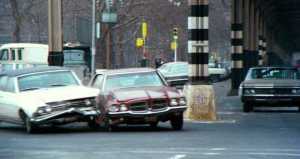
Some say that the greatest car chase scene that ever took place in the history of cinema occurred in 1971’s French Connection. People still talk about this scene as if it’s one of the greatest scenes in movie history. They talk about how dangerous it was, and Screenrant.com writes that director “William Friedkin had no permission to film the car chase the way it was done, which is why The French Connection could never be made today.” They also drop a note about how the car accident in the scene was real, and Friedkin kept it in the movie to add to the scene’s gritty realism. I drop a big “who give a crud” thud. When I saw that that scene for the first time, before I knew anything about the hoopla and the hollering, I thought the scene ran too long. After hearing people gush about the scene in the decades since, I watched it again with a renewed sense, and I thought it ran too long. That scene, one car chase scene, runs approximately six minutes. About five minutes too long. “But you have to understand how difficult the logistics of the scene were,” they say. “You have to sink yourself into the drama of the moment, and how well it was edited to a perfect pulse pounding pace.” No, I don’t. I don’t care about the particulars of the artistry of the film-making, I just want to sit down and enjoy watching a movie. I also don’t plan on ever shooting a car chase scene, so why would I be influenced by anything involved in the shooting of it? I watch a movie to be entertained, and when a chase scene, or a fight scene, interrupts the pace of that movie, “because that’s what we love”, I now have the luxury of fast forwarding through it to see what happened.

The Bad Guy
Our familiarity with portrayals of bad guys began in preschool when our teacher put on a puppet show and introduced the bad guy, “And here’s comes mean Mr. Johnson,” “BOO!” we all shouted in unison. “All I care about is money!” she has mean Mr. Johnson say in her mean guy voice, as our throng of boos strengthened. It was fun and funny back then, but we fully grown, mature and responsible adults are still doing that today. When the bad guy enters our adult productions today, the writers will introduce him by having him kick a cute, little puppy down a flight of stairs, light a physically-impaired individual’s house on fire, or do some other equally heinous act such as declaring there are some virtues to profit. At some point in the production, he will declare that a side character isn’t pulling their weight in the company, and he will do it in such an over the top, mean, bad and dastardly way that it’s almost embarrassingly cheesy to watch. Enter our good guy, “C’mon man, that’s no way to talk to a person.” We all but cheer our good guy for saying what needed to be said, but doesn’t anyone else see this as the movie’s obnoxiously obvious way of endearing the main character to the audience?
I would submit that the characterizations of bad guys haven’t progressed much beyond that preschool puppet show portrayal of the mean Mr. Johnson bad guys. “Hey, if you don’t think money is important, I’d like to see you get along without it!” mean Mr. Johnsons say in modern, adult movies. “Boo!” we shout in unison. Most adults don’t openly boo in theaters, but do we avoid openly booing because we’ve matured past that impulse, or does decades of movie going let us know that the writers and directors of our beloved productions are going to make something awful to him? That’s what separates us from preschoolers, we know the movie makers are going to expose him as the bad guy he is, and we know he’s going to get his comeuppance. We’re not talking about comedies either, where it’s more acceptable to have exaggerated characters for comedic purposes. We’re talking about otherwise complex dramas that basically write Scooby-Doo bad guys as actual characters. “He’s going to get his comeuppance,” someone in the audience says, as if they’re watching a sporting event. He’s one of those “I told you,” guys who love to say they knew what was coming, even though it is as obvious as it was in our preschool puppet plays. As I wrote I don’t need, or even want, a complex, deep narrative on par with a Dostoyevsky novel, but I wouldn’t mind seeing some writers shake up these tedious, bullet point tropes that adhere to the 80’s cookie cutter characters that Scooby Doo made famous.
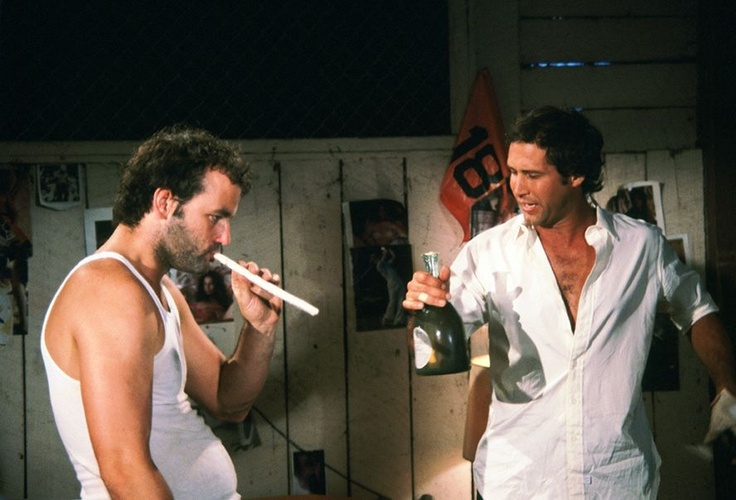 My favorite illustration of this point comes from Quentin Tarantino:
“Critics always really preferred Bill Murray movies to Chevy Chase movies,” Tarantino said. “However, it does seem as if the point of all the Bill Murray movies is that he’s this kind of hip, cool, curmudgeon, smartass guy, who in the last 20 minutes gets a transformation and becomes this nice guy. And almost apologizes for who he was the entire movie before that happened.”
Tarantino continued with examples: “Stripes, Groundhog Day, Scrooged. The whole thing. For instance, Stripes. How does he go from where Warren Oates kicks his ass, deservedly kicks his ass…to where now he’s rallying the troops? Now, he’s getting their army on during the parade and now he’s leading a secret mission. Same thing with Groundhog Day. I mean, does anybody really think a less sarcastic Bill Murray is a better Bill Murray? Maybe it’s better for Andie MacDowell, but not for us as the viewer.”
“Yet, Chevy Chase movies don’t play that s***,” Tarantino said. “Chevy Chase is the same supercilious a**hole at the end of the movie that he is at the beginning. He never changes in his stuff…I mean, unless they have him playing a dope like he is in the Vacation movies. But when he’s playing like a Chevy character, he never apologizes for who he is, stays the same way through the whole film, and even if there’s a slight change, that’s not the whole point of the movie, like changing him into a nice, cuddly guy.”
 Information Age and Movies

Another huge component of watching modern movies is all of the insider information we have at our disposal. Thanks to news aggregators, the internet in general, and the other chairs on late-night talk shows, we now know so much about movies that we crossed a tipping point of too much information about the production of a simple 90-minute movie. I used to find the information actors, directors, and everyone else involved in the production provided in the other chairs on late-night talk shows somewhat fascinating, but somewhere along the line I realized it’s all just self-imposed deification, and their sign to them that they made it. For some reason, we all want to know everything we can find about our definition of our royalty, and the roles they play in movies, and we can never get enough. I did. When the actor told me that they put weight on to play the role, I didn’t really care, but I considered it a worthwhile dedication to the role. When the host began to ask questions about the diet they used to add weight, I turned the channel. When the person in the other chair informed us that she didn’t wear make-up for their role, I didn’t care. When the host said, “You are very brave,” and he appeared to mean it, I turned the channel. When it was revealed in an aggregator, that this actor didn’t get along with that actor, their onscreen lover, we all learned that many considered working with that actor difficult. When we learned that the actor became so immersed in his method acting that he demanded everyone on set call him Weasel, because he’s playing Weasel, I found that fascinating at first. Then, when everyone copied that immersion technique, I found it trite, redundant, and a little pathetic and dumb. We learn that some actors aren’t nice, but others are. “It’s true. I know he’s a good guy, because he asked me my name when giving me an autograph, and he called me Harley from then on, and he even winked at my kid.” That director used this technique, this setting, those cameras, that soundtrack, and the movie studio budgeted it at such and such an amount, but as usual the artistically demanding director burned through that the first week. We still care about the quality of a movie, of course, but all these other late-night talk show talking points enhance the movie experience for us. Why? I honestly don’t understand how any of this information enhances your cinematic experience. You like a movie better, because you found out she’s nice, and you won’t go to see another movie, because you heard a report about how one time that star didn’t hold an elevator for an old lady carrying groceries? You might be a victim of too much information.
Even with all that, I still love movies. I find a trip to the theater, a night at home with Netflix, Prime, etc., and a quality movie, a great evening. No matter how hard they try, they can never take that away from me.

 Rilaly