I couldn’t put my finger on it, when one of my friends threw me a beach ball, but I felt something, something deep that I needed to explore. Its texture felt so cathartic that I scrunched my fingers on it, which led to an almost inexplicable connection. The smell of it, fresh out of its package, was such a unique scent that I knew there was something more to it. I just couldn’t put my finger on it when I put my finger on it.
 It also felt naughty to scrunch it, and I wasn’t sure if the sound or the feel of that scrunching drove that reaction, but I wouldn’t stop until I uncovered what caused me to do it.
“What are you doing?” my friends asked with some disdain. I couldn’t think of anything to say, but I feared that they might talk about this later. They might say something like, “You think he’s normal? I once saw him scrunch a beach ball for about two minutes straight with a look on his face that I’ll never forget. That boy ain’t right.” I saw those impressions starting to form on the faces of my good friends, and I knew I should’ve snapped out of it, but I just couldn’t stop searching for the connection.
“C’mon, throw it!” my friends finally shouted from the pool, snapping me out of it.
I probably should’ve obsessed over it for a little longer, when it was fresh in the mind, but I didn’t. I decided to return to the normal and enjoy the rest of my day at the pool. Yet, every time I played with a new beach ball, and it had to be new, because the new beach ball had that new beach ball smell, I experienced that odd, impossible to place memory.
I don’t know how long it took me, decades at least, to remember that this unusual connection I had with that material harkened back to the days in kindergarten when I first met The Letter People.
***
“We’re not to touch The Letter People!” our real teacher, a Mrs. Chamberlain, informed us when she introduced us to the first Letter Person we met, a Mr. M. “We’re going to learn a lot about The Letter People throughout the year, and we’re going to learn a lot from them. They will become our friends, but we are not to touch them!” I didn’t know what Mr. M had going on, or what this was all about, but I was all into it.
By the time Mrs. Chamberlain introduced us to the second character, a Mr. T, I recognized the routine she was developing. We were going to meet a new character at various intervals, once a week it turned out. The second introduction wasn’t as overwhelming as the first, but I found so much comfort in this routine that I no longer cried when my mother left me to the charge of Mrs. Chamberlain.
By the time we moved past the introductory characters, I gradually moved past the carefully constructed mystiques Mrs. Chamberlain and company manufactured for us. I began to see them as the teaching tools they were, but I also began to think The Letter People visited us from another land, a Middle Earth of sorts, similar to the land J.R.R. Tolkien created with his own level of creativity.
Before meeting the first Letter Person, I was horrible at managing expectations and anticipation. I must have been a miserable kid in that regard for my mom, as she taught me how to make X’s on a calendar, so I wouldn’t bother as much about how many days away expected days were. When I began anticipating the day of arrival of the next Letter Person in the same miserable manner I did the other hallowed days, my mom had a word with Mrs. Chamberlain, and we found out that Mondays were the new hallowed days in my life, and I would ‘X’ my way to Mondays.
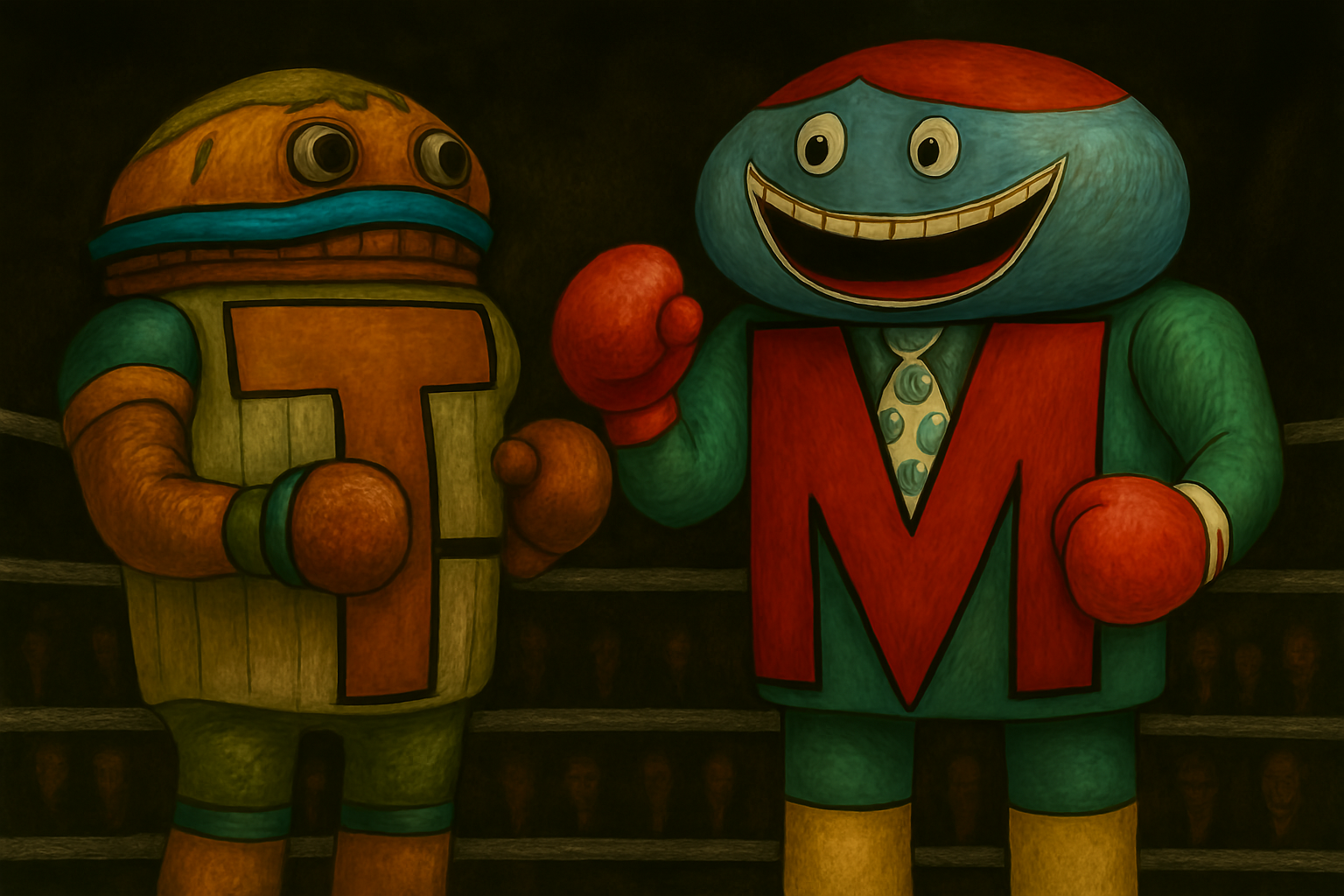 I eagerly anticipated the day of introduction for each Letter Person, but to be quite honest most of them didn’t have the star power, the it factor that Mr. M and Mr. T had. I realized, on some level, that the rest of them were just learning vehicles for kindergarten kids that needed to know the spelling system of our language, and they needed to know the rules of how letters represent sounds, and how words are spelled. I might overestimate how advanced I was in kindergarten, but my mom was such an active parent that most of what my kindergarten peers were learning for the first time was retread for me. Whatever the case was, The Letter People lost some of their magic in the routine of the months that followed, until I met Mr. Q.
I still remember the day I met Mr. Q. He stood on the opposite side of the entrance with our new substitute teacher, a Miss Landow, standing sentry, obstructing our ability to form a complete sensorial connection with him.
Mr. Q felt rarely used, mostly ignored, and an underdog who is often misunderstood. Mr. Q felt like an avant-garde phoneme, before I knew what avant-garde and phoneme meant. He wasn’t the last Letter Person I met, and I don’t know if I knew all this, or sensed it, but I remember feeling a special connection to Mr. Q based on the subtle idea that no one else connected to him the way they did the other Letter People.
Mr. Q was quiet. His special feature/superpower was silence. As my mother could surely attest, I never thought of being quiet before, and I never met anyone who operated in silence before I met Mr. Q. The concept was so foreign to me that I decided to try it out.
“What’s wrong?” my mom asked me. “You’re so quiet.” I don’t remember if that question validated my new existence, if it emboldened me to pursue the idea of silence, or if I thought I was really onto something, but I loved the power of silence in those moments.
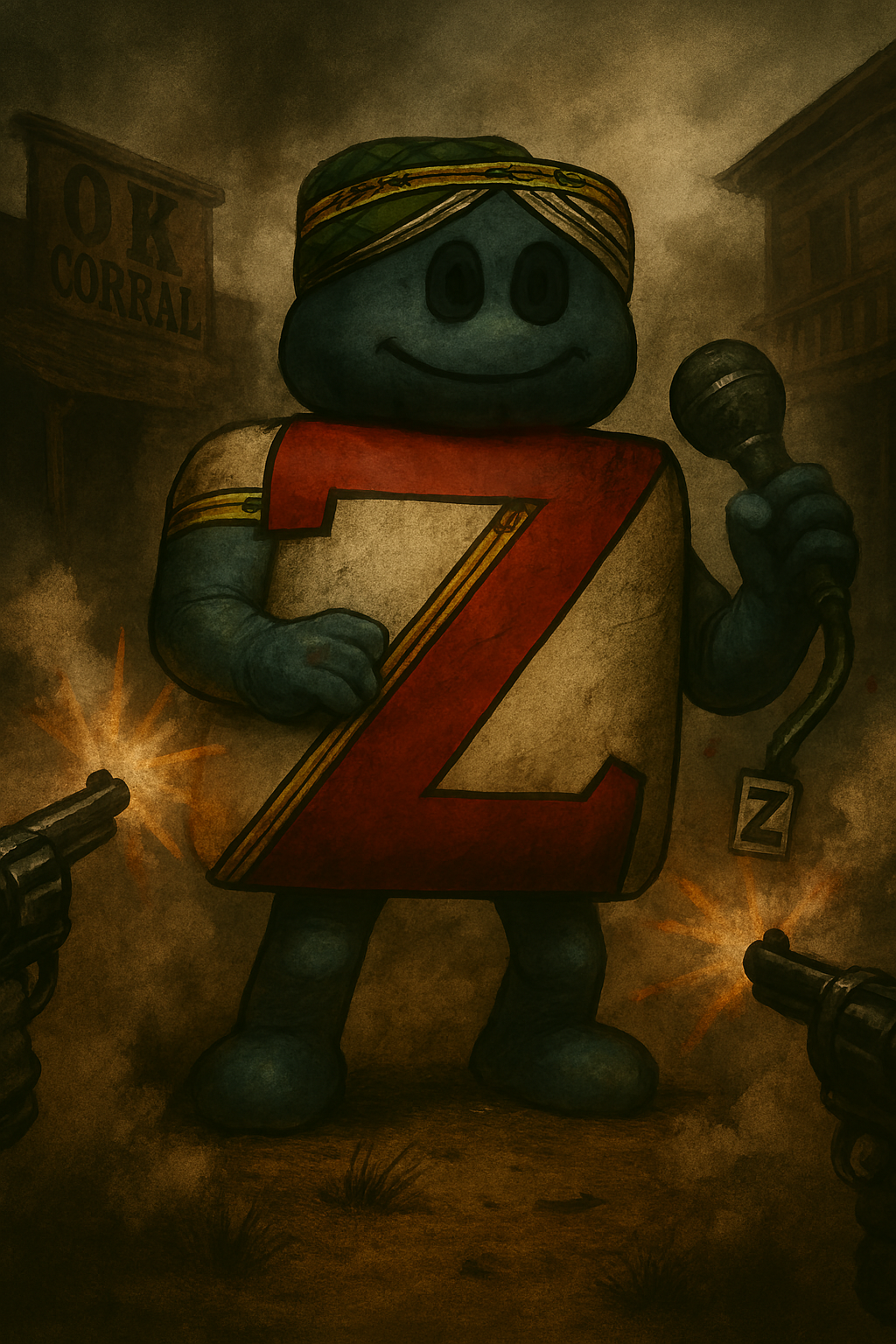
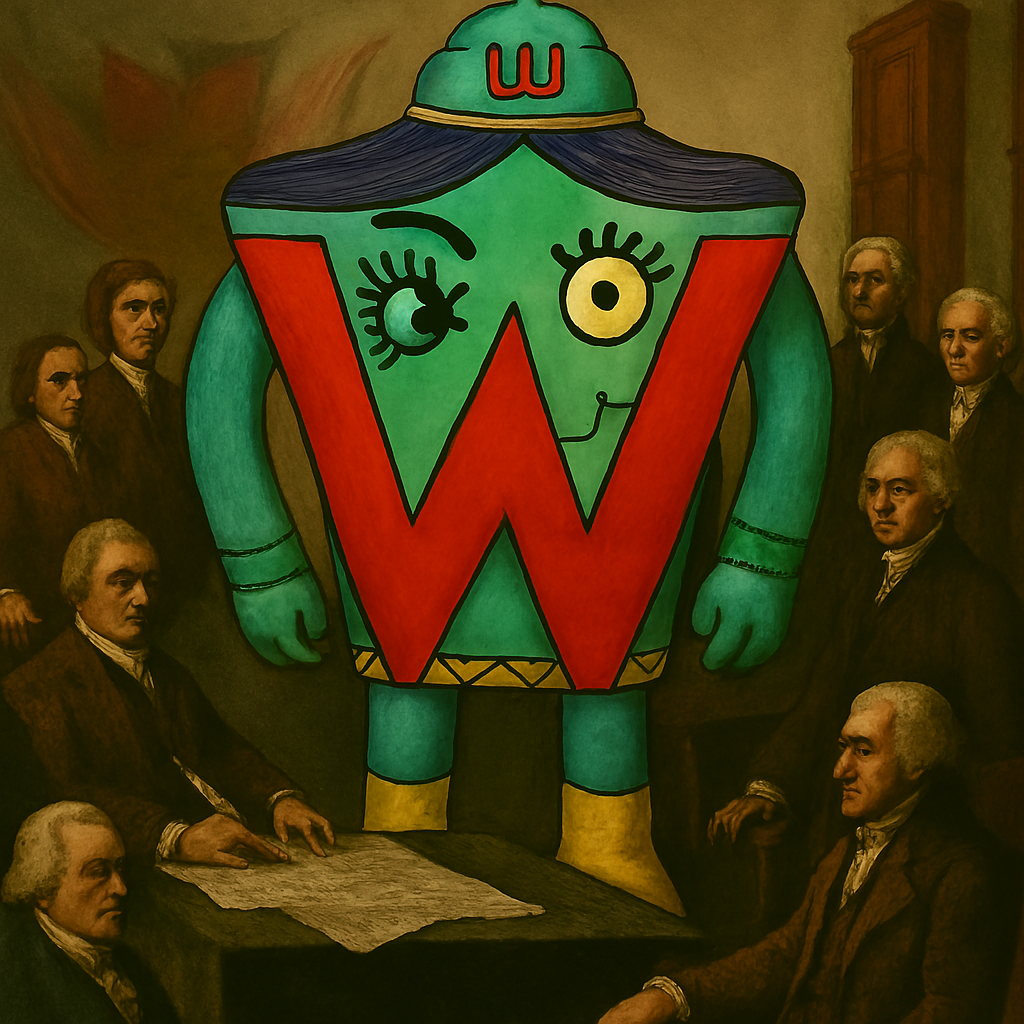
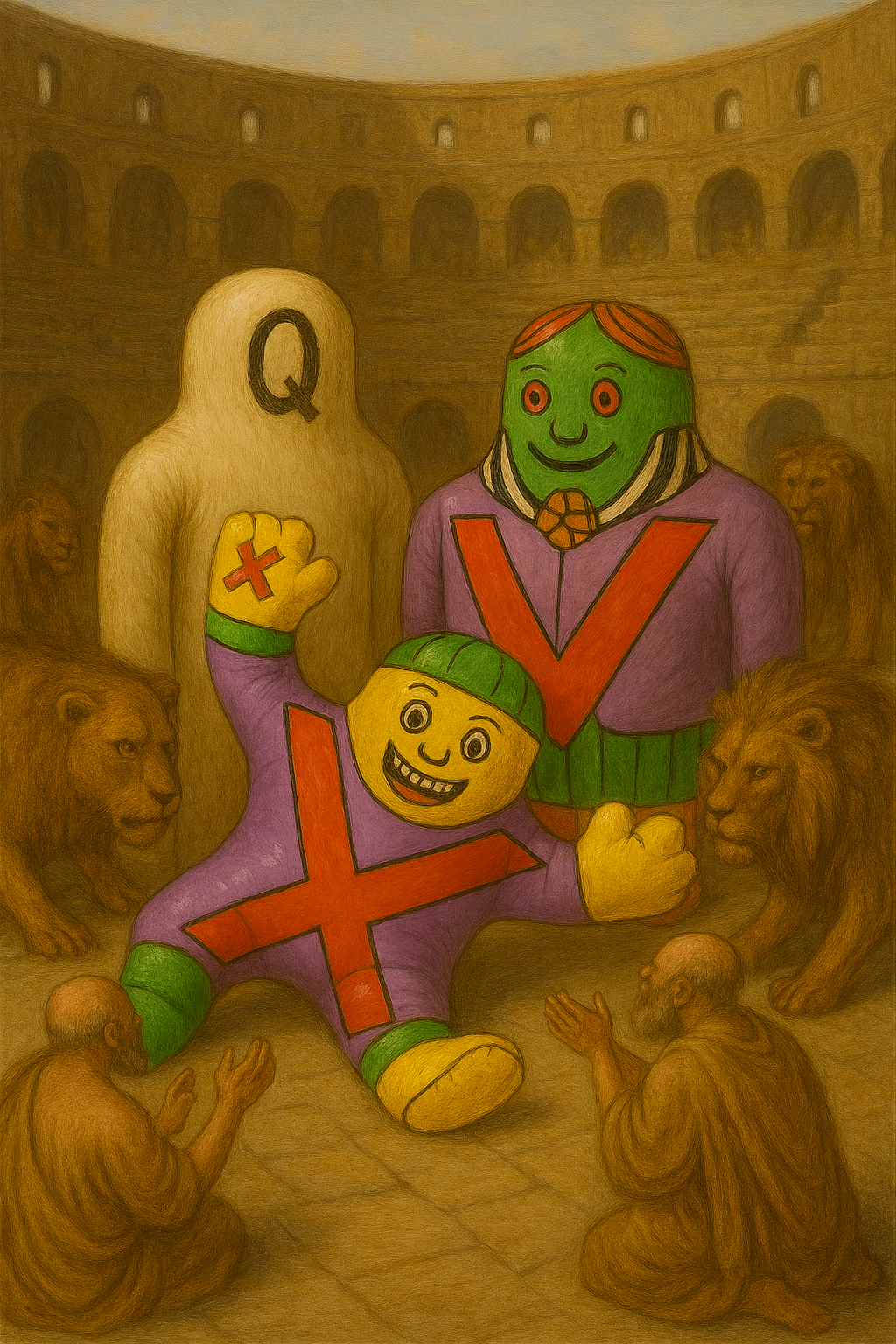 As opposed to the other Letter People, Mr. Q silently observed the people, places and things around him, and when he did eventually speak, it proved powerful. I found that concept intoxicating. I thought there was something more mysterious and cryptic about Mr. Q, than Mr. V, Mr. W, Mr. X, Mr. Y, Mr. Z and all the other, more obvious characters. Those characters arrived last, bearing cryptic gifts and challenging the orthographic orthodoxy. I found them mysterious, ironic, and possibly unstable.
***
Other than Buggs Bunny, I don’t remember having unusual, almost spiritual attachments to cartoon characters before I met The Letter People. I may have been just as nutty over other things, but I don’t remember them having such a profound effect on me. I was so eager to meet these new characters that I managed to get over the idea that I could no longer spend every waking hour with my mom. I looked forward to going to school just to meet these new characters.
I tried to get to know more about them than anyone else did, just to increase my level of familiarity, but there wasn’t more to know. Knowing this made me feel so limited. There’s nothing to figure out about blowup dolls, and I know that now, but as a six-year-old kid these mysterious figures called out to me. They wanted to get to know me as much as I wanted to get to know them. Our kindergarten, class photo showed all the students and teachers saying cheese and smiling for the camera, but I was smiling at The Letter People near me.
Dogs have ways of making foreign objects talk to them. They sniff and sometimes inhale them, until they end up sneezing twelve times in a row. When their powerful sense of smell doesn’t help them understand a foreign object any better, they try eating it, urinating on it, or attempting to procreate with it. When they fail to arrive at some form of greater understanding of its purpose, they move on (Jack Russell Terriers and Beagles excepted). Their motto is “Try, try and try again, and then move on. No sense making a fool out of yourself.” I was not/am not wired that way. My obsessive brain could not let things go, for better and worse, and I obsessed over these mysterious figures called The Letter People.
When I couldn’t learn my individual definition of the essence of these Letter People from afar, I wanted to touch them and play with them to learn everything I could about them. I wanted to be their friends and spend time with them to get to know them better, but we were deprived our sense of touch.
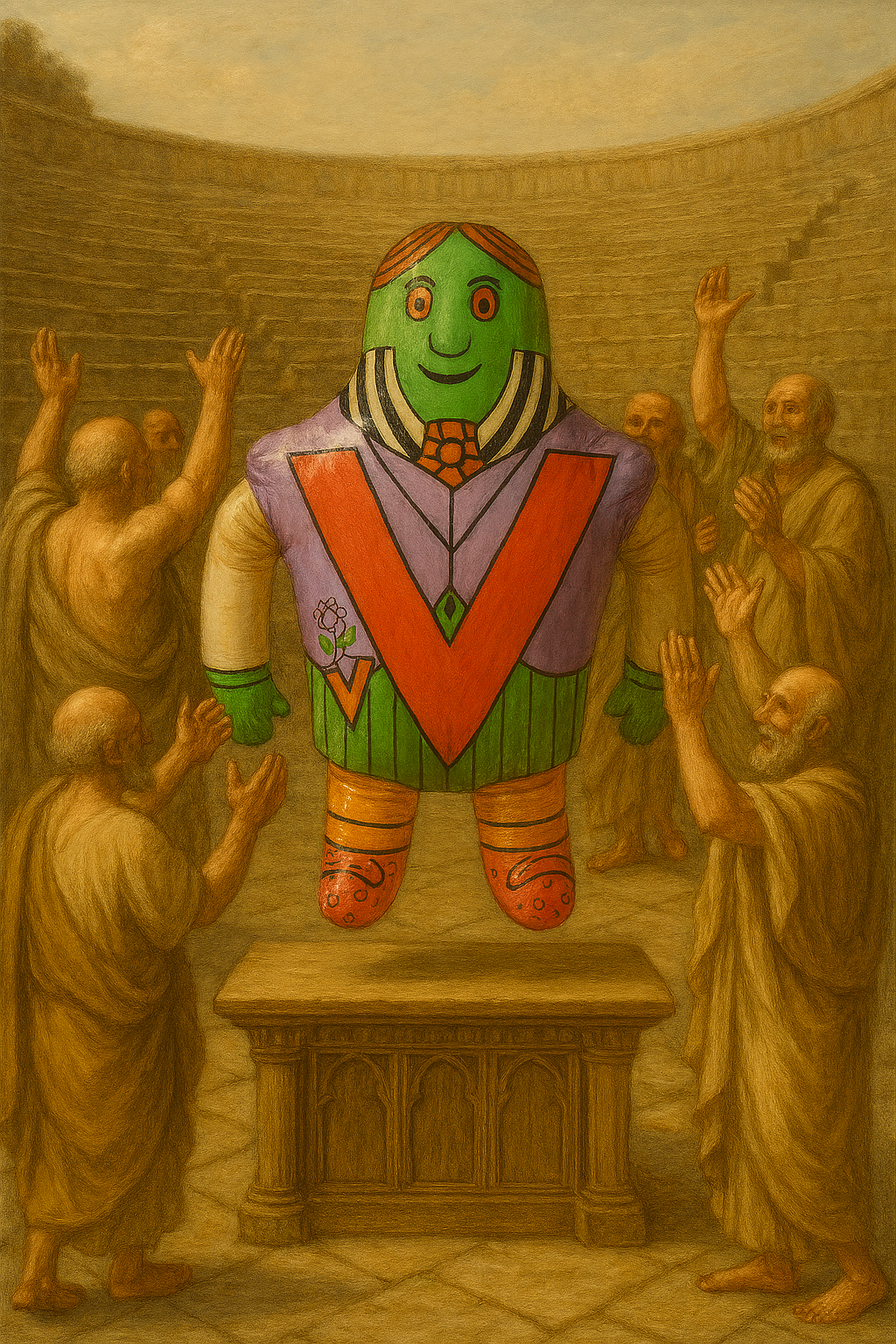 As nice and sweet as Mrs. Chamberlain was, her, “They’re not toys, and we’re not to touch them” carried some weight with us. She either had an authoritative way about her, or her beauty and demeanor granted her authority. I write the latter in association with psychological studies that suggest kids, even as young as five and six, behave better when their teacher is young and beautiful, because they want to be her. Mrs. Chamberlain had those qualities, and she spoke in an ethereal tone that reminded us of Glenda the Good Witch. Whatever the case was, when Mrs. Chamberlain laid down the law, we listened.
My guess is that Miss Chamberlain and the school administrators probably developed their “No touching” rule based on precedent. Kids like me probably found that once they derived some sense of the essence of these characters, they couldn’t stop. They probably developed the rule to prevent us from even getting started down that road. Depriving me of the sense of touch only elevated the mystique of these characters, as I realized I would need to find other ways to learn more about them.
By the time we met Mr. F, Mrs. Chamberlain was no longer our teacher. She was pregnant, they informed us. I didn’t know what that meant, but I learned that being pregnant meant she was going to be gone for the rest of the year.
“Does that mean she’ll be gone for a while?” I asked my mom through tears.
“No, she’ll probably be gone for the rest of the year,” my mom said, and I assume she used more compassionate words to try to somehow soften the crushing blow for me.
A Miss Landow stepped in her place, and Miss Landow was a less attractive, more authoritative woman. Miss Landow informed us that Mrs. Chamberlain’s “No touching” rule for The Letter People would be upheld, and she meant that in no uncertain terms. Miss Landow, however, did not have the leadership mystique Mrs. Chamberlain did.
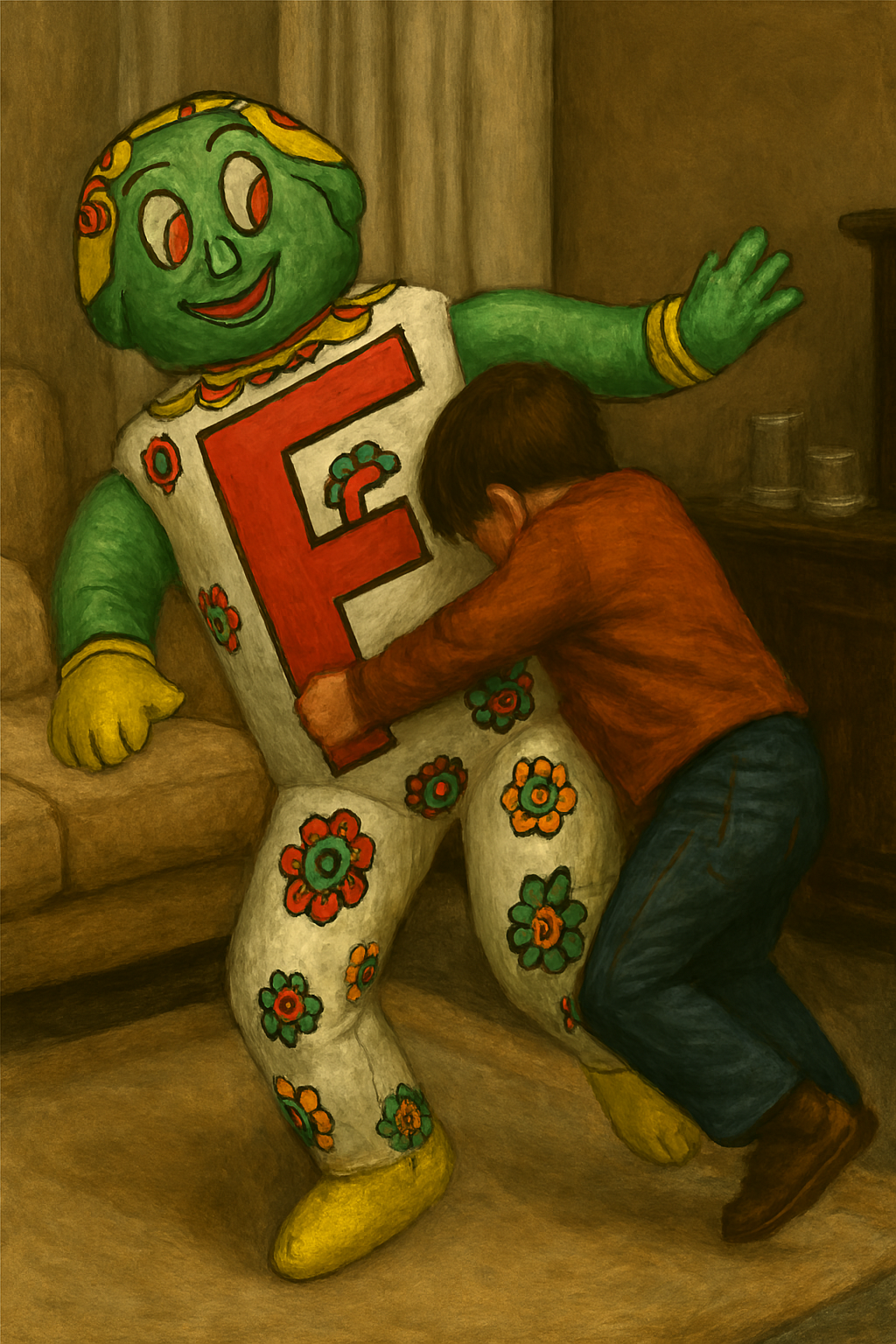 I don’t know if it was Miss Landow’s first day on the job, or first week, but Tommy Spenceri decided to challenge her authority. Either that, or he didn’t have the patience I did to work through his progressions. Whatever the case was, Tommy could no longer abide by the “no touching” policy anymore when we met Mr. F, and his floppy feet. He rushed to the front of the classroom to employ what a defensive tackle in football would call a bull rush, and he knocked Mr. F off his floppy feet. He hit Mr. F square, drove him onto his back and popped him. Nobody screamed that I remember, but I was on the verge of it. Tommy ruined Mr. F before I got to know the man, and Tommy deprived me of developing whatever relationship I might have developed with Mr. F.
Tommy Spenceri was six, I know that now, but back then I considered his flagrant violation of protocol so horrendous that I couldn’t look at Tommy without disdain for his inability to restrain his primal impulses. When Mr. F returned, the next day, his hole was taped to help him retain air pressure, but I couldn’t look at him, because he appeared weak to me now, tainted as it were, and I had no respect for him. It’s a bit callous, I know, but how many six-year-olds know anything about the complex emotion of sympathy?
The one thing that Tommy introduced to me was the concept of moderation. I was never going to commit what I considered a flagrant violation of protocol as horrendous as he did, but with Mrs. Chamberlain gone, her leadership mystique went with her, and to my six-year-old mind, that opened a window of opportunity. I don’t remember the exact timeline involved here, but at some point I conspired with my younger brother, a heist of a Letter Person. I wasn’t sure which Letter Person I would steal, or if I would steal all of them. I had favorites, but I didn’t want to play favorites. I didn’t want to leave a man behind, so my plan broadened out to stealing two of them, to three, to however many I could grab. I was not the type of kid who stole things, and I considered the whole idea shocking, and I considered how shocked and disappointed my mom would be if I was caught. I was so in love that The Letter People that it grew into an obsessive, unhealthy love that some might characterize as stalking.
Immediately after Tommy Spenceri committed his horrendous violation, I was disappointed that Miss Landow, and the powers that be, didn’t punish Tommy as severely as I thought they should’ve. They gave him what they called a “stern talking to”. Tommy violated the sanctity of The Letter People, and their primary “no touching” rule, and all they gave him was a “stern talking to”? Tommy maintained his smug smile throughout this “stern talking to”, and I watched it all thinking that they weren’t do enough to protect The Letter People.
When I began plotting and planning this heist, my perspective on Tommy’s soft punishment changed. I now realized that if they caught me, they might give me nothing more than a “stern talking to”.
 While in the planning stages, I realized that I didn’t know where The Letter People went after our week with them was over, and I decided to start watching the routines of Miss Landow in the coming week to see what she did with The Letter People when our lesson plan concluded. I don’t remember how sophisticated my plans were, but I remembered those people who stole things in movies, and I saw how often their episodes ended in gunfire with the thieves who survived eventually going to jail. As much as I wanted to spend more time with The Letter People, and become better friends with them as a result, I figured that I wasn’t ready for gun play, and I was pretty sure I wouldn’t do well in jail. I eventually chickened out, because as much as I wanted to spend the rest of my life with The Letter People, I couldn’t stand the thought of life without my mom. I tried to live a life without her once before, when I ran away from home, and she let me. Everyone considered thought it was so funny that I couldn’t get to the end of the block without her, and I found it humiliating to realize I wasn’t able to exist on my own.
With that fantasy out of sight and out of mind, I moderated further. I developed a foolproof plan based on the patterns and behaviors I watched the various players in our school for the next couple of days. When we went to recess and played on the playground for however long it took, Miss Landow stayed with us, observing us. On the rare occasion someone had to use the restroom, she allowed them to go inside the school, unmonitored and unaccompanied, to use the facilities. Once I mustered up the courage, and that took some time, I asked to be excused from recess.
The path to the restroom and our classroom were the same, until we hit a fork in the hall, turn right and we’re headed to the open-doored classroom. Turn left, and we’re headed to the bathroom. I thought about this in the planning stages, and I followed my plan to the letter. After asking her if I could go to the restroom, I approached the fork in the hall as casually as I did any other time I went to the restroom, and I turned left to the restroom. I stood on that corner and looked back at Miss Landow. I could see her through a window in the door, talking to a fellow teacher and laughing about something. I carefully looked in every direction, and then I held my breath and crossed the hall and entered into our kindergarten classroom.
I felt a “whoosh” of emotion when I crossed that threshold, as it was my first experience with committing something so wrong it felt right. I looked back down the hall and up the hall to see if anyone witnessed my transgression. The coast was clear. My immediate thought was to initiate plan A and steal Mr. Q, but I couldn’t think of a way to conceal him well enough to sneak him out the door. Years later, I wondered why I didn’t just deflate him and hide him in my shirt, but I’m pretty sure I didn’t know Mr. Q was inflated back then.
 When I finally stood before Mr. Q, I didn’t know what to do. My plan B did not include any details of what I should do when I was finally alone with him, because I didn’t think I’d make it that far. I didn’t want to tackle him, or hurt him in the brutish manner Tommy Spenceri did. I just wanted to touch him little, and I did. It felt a little naughty, but it felt cathartic and pleasing in an almost spiritual manner to run my fingers across him. Then, I touched him so much that I began squeezing him softly, and when I did it made a scrunching sound that I enjoyed. I scrunched him a little more, and then I lowered to a knee and sniffed him, and Mr. Q’s scent was so unique and pleasing that I neared him even more and inhaled that smell deeply.
 For most people, memories of childhood are relative. Some remember a few snapshots from high school, some go back further, but very very few can remember anything beyond sixth grade. This moment I spent with Mr. Q felt so special that I would recall it, decades later, when I held a beach ball for far so long for my friends gave me a look that suggested I was doing something concerning. I also remember that I would continue to use the restroom excuse to visit the other Letter People we met after Mr. Q, onto the final days with Mr. Z, but my sensorial and physical relationship with Mr. Q, who I knew would remain quiet about our interaction, was the most special.
When the class photo day arrived, months after we began meeting these characters, Miss Landow brought back Mr. T and Mr. M for the photo, because they were the most popular, but I wanted to spend more time with Mr. Q and the other Letter People that weren’t as popular. We didn’t spend as much time with them, and in my opinion, we never truly got to know them or learn their essence.
Years later, my brother discovered that there was a The Letter People television show. Back then, a kid in kindergarten spent a half-day at school, and he was able to watch that show while I was in school. That destroyed me a little, because I felt my relationship with these characters, three years out, still felt incomplete. I was so bitter and angry that I could barely contain myself. I eventually saw this show, and I don’t remember if it occurred in the first episode I saw, or soon thereafter, but my interest waned quickly. I was too young to know that someone wrote and directed these episodes, and I knew nothing about voice actors, or any of the players involved in such a production, but I thought they did it wrong, all wrong.
 “There’s no way Mr. T talks like that,” I, a budding critic, told my brother. I also complained about the various interactions of these characters in whatever nine-year-old verbiage and understanding of the world I had at the time. I thought almost all of the characters were wrong, or different than what I imagined. It wouldn’t be the last time a production left me feeling disillusioned, but when my brother later urged me to watch another episode with him, I told him I wouldn’t be watching it again. I didn’t know it then, but watching these characters actually interact with one another ruined all the mystiques I built up for them when I imagined who they were, what they cared about, and how they might interact with me if I ever got the chance to meet them in real life. I was obviously a kid with an overactive imagination, but when I finally recalled why the feel and smell of a beach ball was so special to me, I realized what an incredible time I had being a kid, and I had The Letter People to thank for their small role in it.



 Rilaly