Chuck Klosterman on who wears the black hat in our society


Chuck Klosterman’s new book I Wear the Black Hat is mostly a list of villains throughout pop culture and History.  The list, at times, is a little kitschy, and at times it’s a little serious, but whether you agree with him or not, Klosterman always has plenty of material to back up his claims.

In one of the passages of his book, Chuck Klosterman informs us that it’s no longer PC (Politically Correct) to call the PC movement PC.  He says that the very term PC is now nothing more than a “quaint distraction” that “no one takes too seriously anymore,” and “it feels like something that only matters to Charles Krauthammer.”  Klosterman says that the last time it was a “correct term to use to describe the linguistic issue in America was (roughly) between 1986 to 1995.”

Klosterman

It drives some of us “really, really crazy” when an individual tells us that a term, or phrase, that we use to describe a movement no longer properly describes that movement.  These people are prone to say, “You should stop using that term,” or something like, “That is so yesterday dude.”

‘Ok,’ I mentally respond, while reading this particular condemnation in the book I Wear the Black Hat (Or should I say African-American Hat). ‘What term, or phrase, would Mr. Klosterman prefer we use to describe the current incarnation of the PC movement?’ The answer, we find by dutifully reading on, is that we don’t replace it, unless you’re Charles Krauthammer.  It’s, apparently, just not a phrase that people should use anymore.  In other words, the cynical would respond, “it drives certain people (like Klosterman’s wife) really, really crazy” to try and defeat the idea that some people are trying inflict speech codes upon our language, so just drop it, and we can all get along a lot better.

If the import of Klosterman’s message on PC speech codes were that I’m not to be considered hip anymore when I use a term like PC, I’ll take that, because I’m admittedly about as far from hip as one person could possibly be.  If he’s telling us that the term PC is no longer an apt description of the attempts to control language, however, he’s going to have to provide us with a substitute.  I wouldn’t use that substitute, of course, but it would strengthen his argument to do so.

I was going to argue that the PC movement may not be as overt as it was between 1986 to 1995, but it is, we’re just more assimilated to it now.  Those of us that railed against PC speech codes in that era, as Klosterman later points out, simply lost the war.  The difference between the culture that existed between 1986 to 1995 and now, is that it’s simply less shocking to us now when someone tries to control how we speak.  It’s one of those sad but true facts that we’ve all learned to accept and a code we now have to lived by.

It used to be shocking to some of us when someone, be they a politician, or an obnoxious member of a particular group, would tell us that we weren’t speaking correctly, and it would elicit rebellion back then.  That rebellion was put forth by many, but in Klosterman’s opinion no one did it more often, or as loudly, as Andrew Dice Clay and 2 Live Crew.  Klosterman states that PC climate of that era provided an historical window in which an Andrew Dice Clay could become a megastar, and that “he would not have been a megastar in any other historical window—if (Dice Clay) had happened at a time when vulgarity somehow felt less important.”

Klosterman declares that that PC era was “painlessly oppressive” and those in that era experienced “low level anxiety” when they argued in public in which “Even casual conversation suddenly had the potential to get someone fired.”  He describes how sexism and racism were given birth, or at least re-birth, during this era, and that the “backlash was stupid and adversarial.”  In other words, if we are to read Klosterman correctly, we presumably should’ve all acquiesced to the PC crowd a lot sooner, so they could’ve won the war a lot quicker and saved us a whole bunch of adversarial exchanges.

I don’t know much about Klosterman’s life, and if he has experienced the hammer of the PC police personally, but those of us that have know that the PC police don’t just go away. They move onto the next thing, whatever that thing is.  To some of us, it is very important, and at the risk of inflating it beyond reason, vital to the the free speech clause that we continue to provide them the “stupid and adversarial” backlash that keeps them somewhat close to being in check.

In the final portion of this chapter, Klosterman does concede that the winners of this war, these advocates of speech-limitation, “Didn’t necessarily make a better argument, they just wore the culture down.  Almost everything that these advocates wanted in 1990, have been adopted by the world at large, in that we now err on the side of caution for the potentially offended.”  So he basically admits that the PC crowd is still on the march, but that it’s just not PC to call them PC anymore.

The Villians

The much ballyhooed (and selling point for the book) chapter on O.J. Simpson doesn’t live up to the hype.  The hype that the publishers used to try to move the book, was that Klosterman was going to tell us O.J.’s second biggest mistake.  The second biggest mistake O.J. made, in Klosterman’s opinion, is that O.J. didn’t go into hiding after the trial exonerated him of the brutal slaying of his wife and Ron Goldman (yawn).  Klosterman advises O.J., as O.J.’s adviser Alan Dershowitz advised O.J., that he should’ve kept a low profile, or move, or do anything but what he did by going out and living the O.J. lifestyle that O.J. knew pre-incarceration.  Klosterman, would’ve advised O.J. against writing that book, or going on talk shows to give his side.  A much more interesting chapter, as if it hasn’t been covered already, would’ve been to focus on our society’s reaction to O.J. post-verdict.  It would’ve been interesting to read Chuck’s analysis of the young kids (who never knew O.J. the running back, announcer, or Naked Gun star) asking for O.J.’s autograph, the manner in which he was fawned over in public, and he could’ve tied this into the culture’s glorification of bad guys dating back to Butch Cassidy and The Sundance Kid, Billy the Kid, and those that wore the black hats.

The most interesting chapter, in my opinion, other than the “Eagles” chapter that was covered in one of my previous blogs, is the chapter concerning how Muhammad Ali is a villain.  Klosterman takes on this icon’s current, glorified status, stating that Muhammad Ali ruined a man’s life (Joe Frazier) for the expressed purpose of getting in the man’s head to win a fight.

I must painfully admit that I have been on Muhammad Ali’s side for much of the history of the Ali/Frazier story.  I was too young to have firsthand knowledge of the fight, or the debate that followed, and much of what I’ve seen, heard, and read has been after the fact analysis.  I was also very young when the debate started springing up around me, so I took the star’s side.  When I later learned that that put me on the same side of this debate as TV personality Bryant Gumbel, I knew I was on the wrong side. I didn’t yet know the specifics of why I was wrong, but I knew that Gumbel was consistently and obnoxiously, on the wrong side of history.  Thanks to Gumbel’s obnoxious takes on the matter, I began to strive for more objectivity on the story.  The productions I watched from that point on, including the one put together by HBO, “The Thilla in Manilla”, convinced me that Ali was a bad guy, and a bully, that would stop at nothing to humiliate Frazier, until it reached what some have termed an historical level of betrayal.

The other illuminating fact Chuck unearths, that I must say I didn’t know, is that Ali met with the KKK to discuss their shared belief on the evils of interracial marriage.  One has to think that even the obnoxious Bryant Gumbel would not have been eager to agree with Ali on this point, as Gumbel’s mother, and his wife are white.  If you have ever watched Gumble interview a subject he sides with, however, you have to think this may have been a possibility.  Gumble is, if nothing else, consistently obnoxious. The likely outcome, if Ali brought this up in a Gumble interview, would’ve been a surreptitious edit.  It is possible that this obnoxious, succumbent to African-American stars may have found a surreptitious way of agreeing with Ali, and he may have found a way of calling those that opposed  an “(effing) idiot” for disagreeing with whatever  “the greatest” had to say on the matter.  Klosterman concludes this piece by asking how many icons, other than Ali, could’ve survived with their image intact after such a meeting with the KKK, and such a shared belief, as that.

Klosterman also states that Kareem Abdul-Jabbar is a villain, because he was once mean to a guy from Pearl Jam.  Klosterman says that the guys from Pearl Jam are nice guys, and they have a history of being appreciative of their fans, and Jabbar purportedly does not.  These facts, when put together, should lead the reader to believe that Jabbar is a villain.  Did Jabbar thump an autograph-seeking child in the forehead, did he push an old lady to the ground, or did he set Mother Teresa on fire after a particularly heated debate on the virtues of altruism?  No, he was mean to a guy from Pearl Jam.  Mean may even be a relative term in Chuck’s description of what happened.  I read dismissive more than mean, but apparently no one can be dismissive of guys in Pearl Jam, or they’ll write a song about them, and Klosterman will like that song so much that he’ll feel enough allegiance to call the one that dismissed them a villain on that basis alone.

Chevy Chase is also a villain in Klosterman’s view, and this is based on the fact that Chase doesn’t take his role in entertainment seriously enough.  Klosterman does lay out the fact that none of Chase’s co-stars in movies or on TV showed up for his roast, and that that pretty much means that those co-stars didn’t care for him.  Chuck revisits a fight scene between Bill Murray and Chevy Chase, where Bill Murray called Chevy a “medium talent”, to suggest that Chase was overrated and underachieving at the same time.  Chuck writes that the book “Live from New York, as oral history of Saturday Night Live” is littered with people taking pot shots at Chevy, and that the creator of the show “Community” called him a bad word, but Klosterman believes the nut of why Chevy is a bad guy exists in the fact that Chevy hates himself.  Klosterman writes that one of Chevy’s most famous lines: “I’m Chevy Chase, and you’re not” is not something he’s happy about.  Klosterman also writes that Chevy “never opted for the serious roles that so many comedians vie for throughout their careers.”

Now I agree with Marlon Brando that it doesn’t take a lot of talent to act in movies, but perhaps Chevy feared some sort of revelation of his “medium talent” in those roles.  From the rare glimpses we’ve seen of Chase’s obnoxiousness, it’s hard to believe he’s a good guy, and as Klosterman writes, we can take some of Chevy’s cohort’s criticism as jealousy, but to suggest that he’s a villain based on the fact that he didn’t take his career serious enough might be a bit of a stretch.

In the “Eagles chapter” that has little to do with the villain premise, except perhaps thematically, Klosterman writes that he doesn’t think certain bands, and singers, are bad guys, he takes a moment to suggest why Mr. Bungle is not as great as some people think.

Mr. Bungle “was way more interesting than it was” writes Chuck Klosterman.  Klosterman claims Mr. Bungle was a “self-indulgent side project”.  He calls it “my real world introduction to The Problem of Overrated Ideas”.  He says that Mike Patton, in particular, was “improvisational and gross.  Musically and otherwise: He (Patton) stated that he would eat huge portions of mashed potatoes and chase it with schnapps,” Patton told MTV News, “Then he would sneak into his local laundromat and vomit into washers and dryers.” The fact that Klosterman does not mention Mike Patton by name, only as the singer, suggests that there may be some personal animus that drives his review of the band, but I could be wrong. Klosterman also basically claims that Patton should’ve stuck with the more mainstream Faith No More.

First of all, a decent study of Mike Patton’s history would show Klosterman that not only was Faith No More Patton’s other band, but it was his side project (not the other way around).  At one point in his career, Patton did give Faith No More his full concentration, but it was mostly viewed as a promotional vehicle for Mr. Bungle.  As evidence of this, Faith No More’s first video “Epic” shows Patton in a Mr. Bungle T-Shirt.

All personal preferences and disagreements aside, it says a lot about Klosterman’s listening habits that they’re, at least in part, dictated by things said in interviews he finds distasteful. Klosterman writes that Patton’s improvisations are “gross musically”, and this leads the informed reader to believe that Klosterman has probably only listened to the first Mr. Bungle album.  I’ve listened to this self-titled debut ad nauseum, and I’ve basically reached a point where I’ve deleted all of the silly and gross improvisations from that album on my iPod, and I used to delete the same portions from the audio tapes I recorded the album onto.  What you’re left with, when you delete the silliness, is a great piece of work from a bunch of teenagers.  (As a side note, Mr. Bungle’s other two albums succeeded without such deletions.  Those albums were tight in their musical structure, and all the silliness lay behind them by this point.)  Perhaps, Klosterman should do more homework on a subject he apparently knows little to nothing about.

Are you telling me, Chuck, that Ozzy Osbourne and Motley Crue never did anything silly and gross (like biting the heads off bats), and they’re never been immature in interviews? How old were your peeps when they snorted a line of ants?  The guys in Mr. Bungle were teenagers when their self-titled, first album came out, and teenagers love bathroom humor and fart jokes, but the members of the group eventually grew up and produced two of the best, most consistent, and serious albums of music I’ve ever heard.

I’ve always thought that the best reviews were those that dissected a book in a negative manner, as opposed to those glowing, sound bite style reviews (“A Tour de Force”) that the reviewer writes, so that he might get his name on the cover of the book.  It may be just me, but I’ve always thought that negative reviews act as an EKG monitor for the heart of a book, and positive reviews usually act as a fawning mechanism for the star status of the author.  I also don’t care what a person’s personal review of the book is, if it’s based on the fact that they like Muhammad Ali, I want to know if it was a good book or not, and I think a thorough dissection of a book, can only be done in a negative manner.  If you do want my opinion, however, I Wear the Black (African American) Hat is an excellent, fun read that dissects our era (Chuck and I are about two years a part) in a manner, it appears, that only Chuck Klosterman can do this well.
The Music That Chuck Klosterman Kind of, Sort of, Used to Dislike


To promote Chuck Klosterman’s new book I Wear the Black HatEntertainment Weekly (EW) provided their readers a sample chapter. There is no title to this EW installment, but one would think EW, and Klosterman, would go with some form of a modern meme that attracts young people. “Music Chuck Hates,” or “I Hate the Eagles, by Chuck Klosterman,” or some title that would attract young people in the manner the Facebook page has with the title: “I ——- Love Science”.

KlostermanReading through this sample chapter, however, the reader begins to believe that these titles would not work, as Klosterman is not as passionate, or as emotional, about the music in this chapter as such a title would suggest. A better title might be: “The Music I used to hate, but I’ve grown, and I’m a lot more thoughtful now, and I’ve realized that the people making this music aren’t so bad. And I may run into these people, or need them for an interview, so I am at least going to be more cryptic with my critiques.” The book has a theme regarding villains, so Klosterman presumably dismisses various bands as villains to give himself a reason to discuss them in a book about villains. Even with that proviso, Klosterman should’ve exhibited a more commanding tone when discussing his likes and dislikes in music.

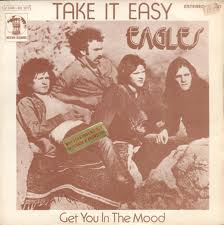
In the paragraphs provided, Klosterman discusses the band, the Eagles. Klosterman claims that he hated them as much as anyone else for most of his life, and he says that this was based on the fact that they were/are limousine liberals, but he says that his tastes changed in 2003, when he was forced to re-listen to one of the Eagles songs:

“I listened to “Take It Easy” and I thought about its lyrical content, and I came to a mostly positive — but highly uncomfortable — realization about who I was and how I thought about art.”

Take it easyYou gained a greater appreciation of art, or how you thought about art, from the lyrical content of a song by the Eagles? The Eagles? Lyrical content? Take it Easy? Chuck? What are you talking about? No one would say that the pop genre is without artistic merit. They’re out there, but they’re in the minority, and the Eagles are not in that minority. The Eagles didn’t even write Take it Easy, as Chuck Klosterman admits. Glenn Frey wrote one line of the song, and Jackson Browne wrote the rest of it.

In the midst of this article, there are some “Klostermans”. Klostermans, as I define them, involve Chuck Klosterman’s kitschy breakdown of the lyrics of a song as if they were profound literature, a writing tool he’s used so often in his career, and so well, that the act of doing so should be trademarked “a Klosterman”. For the most part, these breakdowns are hilarious, but when he does it with Take it Easy, it feels like a violation of the term. It almost feels as if he’s asking us to re-examine a song that we’ve all heard far too many times … in the bits and pieces we’ve heard on classic rock radio before we were able to change the channel. There are also moments in life when a person is not able to change the channel or in any other way skip a song, such as in a doctor’s waiting room, when it’s not in a person’s best interests to run screaming out of a room the moment after Take it Easy begins.

We don’t want to hear this song again, Chuck. We don’t care that a guy is having trouble juggling five women. No matter why or how. Let it die for criminys’ sakes. We enjoy it when Chuck analyzes old Billy Joel lyrics, that’s fun and kitschy, but the Eagles? Artistic? Chuck?

Throughout the course of the Eagles career, they’ve created safe, boring, liberal, touchy-feely music that our most simple-minded friends shush us over, and close their eyes, and have a spiritual moment, based on the fact that this particular song was playing on the radio during a seminal moment in their lives. For these people, however, music is largely background noise, until those songs reach the rarefied air of being on the radio so often that they can’t help but become monumental and a slice of Americana. This, in turn, leads the people that sang that song to believe that they are so monumental, and such a slice of Americana that they can wave a magic wand on stage and get audience members to live through their more important (their stress) lives.

The Eagles could be the greatest American band, if we base that scale on popularity, or sales, but suggesting that there is anything artistic about this simple-minded, clichéd, and ubiquitous music is a statement best left to the sycophantic staff of Rolling Stone magazine. Most of us cannot listen to an Eagles song, much less Take it Easy, without feeling a little dumber, more common, and less in touch with who we are as music aficionados, and it’s going to take more than a clever “Klosterman” to get me listening to it again.

On Bruce Springsteen, Klosterman writes:

“I just thought he was so fake, which is the most backward possible reason for hating Bruce Springsteen.

“Old people who read Newsweek believed Bruce was somehow different from everyone else making music, and his willingness to perpetuate that fallacy made me view his integrity as profoundly compromised. It seemed like the difference between acting in a play and lying in real life.

“Any time I meet someone who thinks Springsteen is overrated or artificial, I find myself thinking, this person is extra real. I immediately respect that person more. And yet I do sincerely believe Springsteen is (on balance) a great guy. I don’t hate him at all. So why am I still retroactively trolling him? It’s just something I can’t get over.”

When Klosterman states that hating Springsteen for being fake is, “the most backward possible reason for hating Bruce Springsteen”, this reader wonders if Klosterman is attempting to qualify the opinions that follow. Either that or Mr. Klosterman is attempting to dispel what he may believe to be a consensus on Mr. Springsteen. If that is the consensus, this reader didn’t find anything in the Springsteen section to dispel it. Klosterman does write that he believes Bruce is “(on balance) a great guy”, but isn’t that what fake people are … on balance? I have no idea if Bruce Springsteen is actually fake, and I don’t care enough to put as much thought into it as Chuck Klosterman has. If Springsteen is fake, an observer could say that he hits all of the bullet points. He seems like “a great guy (on balance)”. He gives us the formula he knows we want, to remain in our favor, then he goes on to live the life he wants to live, and no one calls him out for what could be hypocrisy. While it’s difficult to prove, or disprove, one’s authenticity, Chuck Klosterman writing, “I sincerely believe he is a great guy” doesn’t cut it for this reader. We readers don’t care what you think of him personally, Chuck, unless you can substantiate it in some manner.

Does it really matter if we think a musician is fake? Do we think Bob Dylan is fake? No one cares, least of all (it seems) Bob Dylan. Bruce Springsteen does care, or at least he appears to care. Bruce has built a musical empire around the idea that he’s real “extra real”. I co-opt that term from Klosterman, but Klosterman does not write the words “extra real” in the pejorative sense I did, and he does not attach the term to Bruce. Yet, we could attach the term “extra real” to the “generic-yet-kinetic” clothing Bruce Springsteen wears. Would we deem Springsteen authentic if he chose to sing his unionized, small town lyrics in a made-to-measure, custom-fitted Frank Sinatra suit with wide lapels? Springsteen is so big, because he’s managed (artificially?) to remain so small, and that’s what people love about him. Those of us who don’t think Bruce is “extra real”, think Bruce is overrated, and we see through the “great guy” image of the man singing about small town, unionized America, to the idea that once one strips away all the “extra real” layers of Bruce Springsteen, his music is not artistically complex or by any measure diverse. He just puts on “amazing” shows, and few break down how they are amazing.

Klosterman then examines the point of Springsteen being authentic in comparison to Mötley Crüe, when he writes:

“The difference was that Mötley Crüe did not pretend they were real (or at least not in a convincing enough manner). Vince Neil never led me to believe that any element about who he pretended to be was supposed to serve any purpose beyond “the act of being the singer in Mötley Crüe.””

Klosterman nails this point, but he backtracks it in an “aw shucks” manner that suggests he may have been too hard on Springsteen throughout his life writing that “Bruce is a great guy”, and that he “doesn’t hate him”, and that “it’s something he can’t get over”.

Anytime a person has beliefs they can’t get over, they probably have them because they know that there is a fundamental truth to them that they can’t get beyond now that they’re old and so many people are telling them that they’re wrong. I realize that, as Chuck climbs the ladder in corporate magazines, and newspapers, he’s entered a sphere of existence where he’s torn between the readers that put him where he is, and the editors that put a governor on his former “No one gets out of here alive” method of critique, but those of us who read this particular piece in EW were a little disappointed by the apparent need Chuck Klosterman felt to politically tight rope his way through genuine critique. Chuck Klosterman’s previous writings were what separated him from those rock journalists who were afraid to write anything negative about Springsteen, Clapton, Tom Petty, or any of the sacred cows of rock that rock journalists seem forbidden by their editors to write anything negative about. It could also be that I’ve exaggerated Klosterman’s previous writings in my own mind, and that he was never as daring as I considered him, but it seems to me that he was never this cautious either.

On Van Halen, Klosterman writes that he hated Van Halen (or as we called them “Van Hagar”) soon after David Lee Roth and Van Halen parted ways. Chuck then says that he had the same feelings for Mötley Crüe after they replaced Vince Neil.

“Within any group conflict, my loyalties inevitably rest with whichever person is most obviously wrong,” Chuck writes.

It’s a humorous assessment of Klosterman’s musical fandom, but I believe his loyalties are more superficial than that. Chuck and I were about thirteen and sixteen respectively, when the Van Halen split occurred, and neither of us knew much about music, but we knew their lead singers. I may have known the names of Nicki Sixx, Tommy Lee, Mick Mars, the Van Halens, and Michael Anthony, as I was a big fan, but David Lee Roth and Vince Neil were the bands as far as I was concerned. They were the front men, and they were the face of the band in public perception.

A true musician will inform a listener that the front men are the least vital components of the music, and the guitarist is the second least important when compared to the vital back beat of the bassist and the drummer, but in the land of public perception, it’s the exact opposite. Therefore, when the groups separated from these two front men, those of us in public perception land considered the band done. Chuck can try to lay groundwork that suggests that the loyalties of his teenage mind were more complex than that, but down deep, I think he knows that the music of these bands became karaoke after the groups replaced their charismatic lead singers. The bands became a group of guys trying to hold onto a franchise that they struggled so hard to create, and they wanted a few more years added to the legacy before they called it a day. The music of these bands lost their nihilism, their signature, and their “silly and fun arena rock” persona after their lead singers left. They became Pat Boone’s “In a Metal Mood”. They became a bunch of guys trying to play what the youngsters liked. They became a: “You guys gotta keep it together” paycheck their manager promised them after informing them how marketable the name of their band was, and how they would never achieve that kind of plateau again in any other incarnation.

The albums created, post carnage, Mötley Crüe and Van Hagar’s 5150 may have been the greatest albums anyone has ever created, but those of us in public perception land barely noticed, and more importantly didn’t care, when they came out. Those groups were over as far as we were concerned.

ACDCKlosterman does not cover the music of AC/DC, because this was a hate column, and he presumably never hated AC/DC, but their music was some of the most consequential music of our era, and it would be music that I would eventually come to hate.

I didn’t hate AC/DC at first, but I didn’t love them either. Their music was never “my” music in the manner music becomes “my music” to a teenager, but I did have some appreciation for what they did early on when the “cool kids” in my neighborhood introduced me to them. (I knew of their music to this point, in other words, but we had never been properly introduced.)

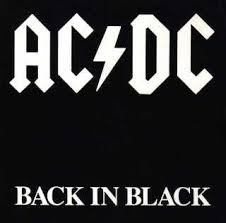
The album, Back in Black, was my formal introduction to AC/DC, and it blew me away. I did not know that other bands (bands other than Kiss) could make fearless music. The first song I heard was Back in Black, and from its intro on, I knew this was fearless music that my parents, most females, and chart makers would not appreciate. (I probably didn’t think of charts in the truest sense of the word, at that point, but I knew I wouldn’t hear AC/DC on my local, top 40-radio station.)

I also loved the album cover. It was black, nothing but black. I also loved the title, and the band’s name. As a Kiss fan, I thought that every band was required to have brilliant visuals on the cover. I found Back in Black’s lack of visuals brilliantly simplistic.

When I first heard Back in Black, I thought that I now had one other band that I could trust not to make a ballad. (I was still embittered over Kiss’s foray into ballads with the song Beth, but I had learned to forgive them by simply lifting the record player’s arm up over that misstep.) I thought I discovered the second greatest band in the land, in AC/DC, especially when this friend rolled out the other AC/DC album he owned: Dirty Deeds Done Dirt Cheap. I heard that album’s title song, and the balls song, Big Balls, and I swooned in a pre-teen male form of a swoon, looking for a way to catalog his machismo.

AC/DC had a way of singing lyrics, a way that had my adolescent stamp of approval that fit the music and nothing more. There were no self-indulgent, symbolic lyrics. Their lyrics were simple and in your face that fit the music in a manner, I would later term arena rock. The problem with arena rock, and the reason I came to loathe AC/DC, is the lack of variety. As I stated earlier, I never wanted AC/DC, Kiss, or any of the bands I listened to, to go soft, but every album after Black in Black sounded almost exactly like Back in Black. I never felt the need to purchase another AC/DC album, and I came to loathe those who did.

As I wrote earlier, Chuck Klosterman should trademark his kitschy method of dissecting lyrics, as if they were profound literature. He does this so well, and so often, however, that one can’t help but think some part of Chuck Klosterman believes that his favorite lyrics form profound, artistic statements. I’ve always considered lyric writing one of the most overrated art forms. They appeal to us on a certain level, I would argue, because of the musical background that accompanies them. If one were able to remove the music from their mind, and read most lyrics on a blank page, I would argue, we would see that most lyrics do not have the literary merit necessary for the profound literature moniker.

Most lyrics involve double-entendres and cryptic messages regarding how the casual use of controlled substances should be considered kind of neato! I never understood why so many people felt compelled to tell others that they have ingested drugs, and I really had no overwhelming desire to do it, so the descriptions of these cryptic messages always bored me a little.

Don’t get me wrong, I enjoy it when musicians attempt to speak the language of their demographic by mixing in the occasional curse word. I enjoy the general idea of messing with the mainstream, but I was unmoved when a teacher told me that John Lennon was communicating greater messages in his songs than I had realized in my casual listening experiences. I always thought Lennon (along with the rest of the rock community) was most likely a vacant individual who was trying to sound smarter than he really was by using clever lyrics. I’ve always thought lyrics should fit with the music, nothing more and nothing less. It should never be an arena for the college thesis that most lyricists never wrote, because they weren’t intelligent enough to write, but they were clever enough, or cleverly brilliant enough, to make you think they were within the convenient limits of a song.

REMOn R.E.M. Klosterman writes:

“I didn’t relate to the kind of person who related to R.E.M. and I didn’t like textured, nonheavy songs that made me feel like some dour weirdo was telling me I was living my life wrong. Over the next twenty years, R.E.M. would become one of my favorite bands of all time, which means a) the sixteen-year-old version of me would have hated the thirty-six-year-old version of me, and b) I probably was living my life wrong.”

Klosterman nails my feelings on R.E.M. almost word for word, except for that last line. The last line bothers me, because (I would later learn) that’s pretty much what the worldview of the songs of R.E.M. were all about. They were about telling the listener that they were living their life wrong. Those that question such an assessment need only read an interview with Michael Stipe. His answers contain the rantings of an obnoxious, self-involved narcissist. The reader will find that this narcissist does say narcissistic things in all the “right” narcissist ways however.

In one of these interviews, Stipe described Rod Stewart as “icky”. Not kidding he said: “Ick! Ick!!” Now, I’m not sure if Stipe knows Rod Stewart on a personal level, and his judgmental attitudes are based on personal experiences, but I’m guessing that this very personal condemnation does not adhere to what Stipe calls a beautiful refrain ‘Judge not, lest ye be judged’. An observer, hearing this condemnation of Rod Stewart could find Stipe’s supposed adherence to this beautiful refrain a hollow claim.

Stipe also deems those who espouse opposing points of view unacceptable, evil, and presumably icky. He would probably also deem those that consider his rants to be “from an obnoxious, self-involved narcissist” icky. The fact that Stipe may not be as informed as he pretends to be, has never mattered to those interviewing him, however, because, again, all of his icky rants are icky in the ways the journalist has presumably considered non-icky.

If Stipe is going to judge another person, in a public forum, then we can judge his judgment, if we listen to his beautiful refrain. As with most venial sins of this nature, Stipe judges Stewart to leave the reader of the interview, the impression that he, by comparison, is a wonderful guy. He wants the reader to think he has the correct views on all the right subjects, and he lives by the “mean people suck” bumper sticker philosophy that ostensibly declares the driver to be a wonderful. I may be alone in this assessment, but I tend to find such social Darwinist thinking to be icky.

We, music fans, shouldn’t kill the messenger for the message, however, and Stipe and company (R.E.M.) did make some beautiful music. Klosterman should not condemn the music of the Eagles based solely on their politics; Rolling Stone should not condemn Ted Nugent for his views; and we should not condemn R.E.M. or Springsteen for their views. We should just listen to their music with the idea that most musicians don’t know what they’re talking about, but they cannot keep quiet in their quest for a “more consequential” title than that musician guy that prances about on stage. The one thing I have taken from all of the interviews I have read from rock musicians over the years, in my quest to learn what drives them, is that if I want to continue enjoying their music. I should probably just stop reading such interviews.