“It was the best of times, it was the worst of times, it was the age of wisdom, it was the age of foolishness.” –Charles Dickens’ A Tale of Two Cities
It’s the human condition to believe we live in the best of times and the worst. Psychologists have terms for various strains of bias that inform our opinions, and Dickens’ famous line encompasses them all. I’m biased, you’re biased, and the whole damned system is biased, but this particular article focuses most on what could be called a generational bias, or nostalgia bias. Our generational bias leads us to believe that everything was funnier, more intellectual, and more stimulating than anything before or since. While I admit that the bias is strong in me, I challenge anyone to defeat the opinions in this article.
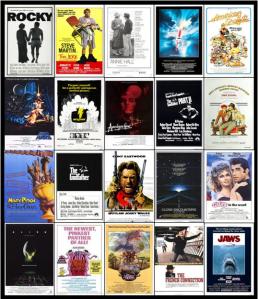 “I am biased.” There, I wrote it, and I’ll write it again to satisfy anyone who challenges the biased nature of this article. The one thing I’ve found is that we can write this over and over again, but there will always be someone who stands up and says, “Yeah, but aren’t you biased?” and they say it with one of those grins that suggest they caught you.
“Ok, you caught me,” I confess, “but I wrote a whole paragraph about it at the beginning, I added it in the middle, and I concluded with it. Check the minutes of your transcript of our little conversation in this intangible bistro.” So, rather than try to qualify every single nugget of what I’m about to write, go ahead and place a parenthetical (back to top) at the end of each statement if that’s what you need to do to assure yourself that I admit to having a mean case of generational bias, which might be nostalgia bias, considering that the time frame stretches from 1975 to 2001.
If you’re going to challenge my recency bias, however, I ask you to name an era of entertainment that matches the total output from the 1975 to 2001. We’re talking top-notch, quantity and quality, from the era of your argument to mine. Everyone has their opinion, of course, and some say that some of the artists listed in those productions were overhyped by the marketing teams spending huge dollars to see to it that their artist made it to the A-List. This happened frequently during this twenty-six-year chunk of time, as the individual eras therein were chock full of money to be spent in all avenues of entertainment, but with the advantage of hindsight, we can weed through the A-List to ferret out the true artists from the pretenders. Even after doing this, the A-List from this twenty-six-year era is still daunting.
We can all go through this twenty-six-year era and parse out which was better than the other, but taken together as a whole, I believe the total number of good-to-great movies, the sheer breadth of music, and comedy from the era between 1975 and 2001, will not only go down as the greatest era of entertainment in the United States, but most future eras won’t even try to compete. They’ll just go retro, and try to buy the back-catalogs of the artists from the era, from whomever owns it “now”, to pursue ways to use it and re-use it, market it, and merchandise it in the future. Some might include the 1960’s in some of those entertainment venues, and others will include the 2000 to 2010 era, but after watching, reading, and listening to just about everything from those eras, everything in the 60s now seems to prelude this thirty-year peak, in retrospect, and just about everything that followed seemed to be trailing off.
 There are exceptions to the rule, of course, as there are always going to be exceptions to every rule. There will always be a couple great movies in any given year, a few great albums here and there, and future comedians who deliver exceptional material in the future. If you lived through this era though, you knew to expect that an exceptional artist would deliver something exceptional in any given month. It was also “an event” when an actor, director, musician or band, and this author came out with something new. Tuesday used to be “the day” when new albums came out, Friday was “the day” when new movies came out, and I when one of my favorite artists was coming out with something new, I knew months in advance. I realize I’m old now, and no longer on the cutting edge, but does anyone look forward to such things anymore? The new music is downloaded on your music subscription service on Friday now, and your new movies are downloaded into your streaming service. There’s still theaters, in the present tense of this article, but most people are willing to wait, the on average 30 days for it to appear on a streaming service. Do modern artist still have “event” status with their new releases?
While reading this, I’m sure you thought of some exceptions to the 1975 to 2001 timeframe, The Beatles, The Godfather I and II to name but a few of the exceptions you probably considered. The point of this article is not to quibble over the merits of some critical greats that happened before or after but the general whole.
My biases came into play in the 90s, because that was the first era when I had real disposable income of my own, and I almost went broke numerous times, trying to rent every movie that had ever been made, listen to every album of music ever created, and I stayed up late to listen to every comedian the late-night talk shows invited on. The reader might consider it a bold statement to say I know everything vital and important to come from this thirty-year peak, or they might consider it a little sad that I devoted so much of my free time and disposable income to this pursuit, but few who know me would challenge my reference base of the mostly inconsequential information from the field of entertainment that occurred during this era.
I don’t view this cast knowledge of movies, music and books a brag, because other than winning some Trivial Pursuit games and winning some trivia games in bars, I haven’t profited from my mastery of useless knowledge in any way. It’s useless, inconsequential information that doesn’t serve a purpose. Yet, from 1975-2001, I was entertained. The movies, music and books filled my free time.
Another area to which I devoted too much free time and disposable income was in the area of others writing about the music, movies and books from this era. Some devoted too many calories to framing artistic creations in political orientation. These sophisticated sophists declared some chunks of time “the dark ages,” if that artistic creation occurred during an era in which the office of the president was of a political orientation different from theirs. It was so over the top at times, that it was almost funny. As one who lived through it, and now looks back with a wistful eye at the glorious times these decades were, that’s a big ball of nonsense. It’s a feeble attempt to rewrite history through a politically biased lens, and I write that asking the reader to consider that when one goes down the list of parties in that powerful seat, over the course of this thirty-year chunk of time, it’s mostly even.
Unless you consider The Cold War with Russia an actual war, the 70s were the first era that was largely free of war. The Vietnam War ended in 1975, and that was preceded by the Korean War, and WWII. Except for a few skirmishes here and there, the era between 1975 and 09/11/2001 was largely free of war. Except for a few moments here and there, America experienced such a great era of stability and prosperity for thirty years that we had too much free time on our hands. In order to keep ourselves intrigued, we invented scandals, controversies, and we spent most of our free time worrying about what could happen if things weren’t this great. The best thing politicians could think of, to keep us mired in fear was, “Things are great, now, sure, but they could be worse, and if elect that other guy, they will.” Our movies needed to invent possible tragedies and catastrophes just to remind us that tragedies and catastrophes could happen. Now that we’re through that era how many of us wish we could go back and realize how many calories we wasted worrying about stupid stuff that never happened. How much would you give to go back in time right now and tell yourself to avoid worrying about that, “because that won’t happen, because it didn’t happen, and it probably never will.” It worked back then, of course, as we all worried about it, and the politicians and the groups all benefitted from the fear, because we all agreed that it was such a scary prospect that we agreed to devote billions of dollars to try to stop something that would never happen. As much as we hate to admit it now, in a historical perspective, we lived and still live, in the best of times.
There were so many factions and fractions in movies, music, TV, and books for the average consumer to consider, and yet we all agreed on most topics. A walk through the A-List contributors in the early 70s, in music and the movies, is so daunting that I won’t even try to list them. The list in the 80s and 90s not only continued this legacy, but these eras may have topped the 70s by sheer volume. Before we move on, think about that A-List for just a second. How many different, varied, and talented artists littered that A-List compendium. We usually try to shorten that list a little, just for sake of conversation, but the A-List of that era is so long that we feel a need to limit entrants just so we can have a decent conversation on that topic without putting people to sleep when we try to avoid missing someone. Think about all of the great directors, and how many movies they released during this twenty-year chunk of time. Think about all of the various musicians, and all of their various templates. We could devote this entire article to the Billboard Top 100, the Top of the Pops, or any of the other publications and venues that tried to top one another with the A-list artists they featured. Now, think of the magazines, both mass market and the niche ones, that tried to cover the A-Lists of music, the movies, books, and entertainment in general.
As one who wasn’t exclusively enamored by A-list celebrities, and rock stars, I often found myself enjoying the entertainment put out by those others might call the B-List artists, C-Lists, and D-lists, but I only did so, because I exhausted myself trying to watch, listen to, and read everything at the top of those lists in the first half of the era. At some point, also, the influenced began to appear to parody the influencers. I almost went broke numerous times trying to keep up, stay hip, and know every reference point, joke, and conversation topic people were having. Some call these conversations “water cooler” conversations, the coffee shop, or the break area. Whatever the case was, I was one of those who had to know everything, and there were so many movies, so much music, and so many great books and comedians to know about, for someone who had to know, that no past era compares when it comes to pure output and I dare say no future era will even try to compete. If you love music, movies, books, and comedy it was the greatest era in human existence to be alive.
 My nephews, some thirty years my junior, insist that the 80s were greatest musical era ever created, and they don’t even bother trying to defend “their” era. They have no allegiance to it in anyway. They state that the 80s were the greatest era of music as if it’s not only a fact, but such an obvious fact that it’s not even worth discussing. They don’t list one particular artist as the game-changing artist, as many of us will, but they do try to compile a list of influential artists that I considered quite daunting, and they insist no other era can compete. Even though I had nothing to do with creating the music in this era in anyway, I took some pride looking back and hearing an outsider consider this era I lived through the greatest era ever. Due probably to my age, more than anything else, I’m more of a 90s guy, and being a 90s guy, I always considered the 80s a silly era of music, until my nephews put their spin on it. I also write all of this with the asterisk pointed to the notion that proponents of any era between the 60s and the 00s have valid arguments for “their” era.
My rhetorical question, sent out to the ether, is will future inhabitants in the United States be having arguments over the specific eras of this thirty-year chunk of time for the next 60 to 70 years? Will there be a “rock revival” in 2050 that puts the 80s music to shame? Will there be a return-to-roots revival in the movie industry that puts the quality and quantity of the movies from the 70s in the dustbin?
Some argue that with the proliferation of streaming services and the various outlets on the internet, Americans will never collectively agree on great artistic outputs ever again. They argue that there’s just so much to choose from that it inhibits the idea of a Michael Jackson, a Star Wars, or even a more recent release like the book The Da Vinci Code from ever rocking our world in quite the same manner. These arguments discount the genius effect, of course, as every era has their own geniuses. The question I have, and it seeks to be as objective as possible for someone obviously imbued with a whole bunch of biases, is will those future geniuses ever be able to take future generations to the point that they can finally put 1970 to 1999 to rest, or will 2070 America still be arguing the relative merits of Michael Jackson vs. Madonna; Spielberg vs. Lucas vs. Coppola; Seinfeld vs. Leno; and Chevy Chase vs. Steve Martin vs. Bill Murray?
One of the primary reasons there might never be an era that tops this era is the topic no common fan wants to talk about but they are know: money. There was so much money to be made in movies and music that the executives and their boardrooms didn’t mind pouring money into projects, because they knew they’d make it back eventually. They had money makers and artistic projects, and they devoted huge chunks of money and resources to both, because at the end of the year, they knew they would always be in the black.
How many guys with nothing but a guitar strapped to their back receive the kind of funding and support they may have made twenty years ago? How many “good looking waiters who can act” is a movie studio going to bank on if a majority of the money they see is from the comparatively flat streaming services? The amount of money that man may have made for himself and those who supported his rise, just isn’t there anymore, not like it was between 1975 and 2001.
My unusual hunger to know everything about everything was born watching Johnny Carson and David Letterman. I paid hard money and devoted way too much time trying “to get” every reference they included in their jokes, so I tried to watch every movie ever made, listen to every song, and read every book. And I didn’t just want to get the references to movies, songs and books from my generation, I wanted to get the jokes and references to their generation and the generation before that. This was nearly impossible, of course, but I did try. When I couldn’t understand their jokes in the moment, I faked it, but I was so embarrassed I didn’t get that particular joke that I researched it, so I would get it next time. It was that important to me. I don’t know if the younger generation is intimidated by the qualitative and quantitative output of that era, but they don’t care about this near as much as I did.
They basically ignore most of my reference jokes, and when I ask them if they get it, they say no. “You don’t get it, because you haven’t seen one of the greatest movies ever made,” I say. (I’ve said this about various books and music too.) Again, if someone of a prior generation said this to me, I probably would’ve experienced such a powerful FOMO that I might have watched it, read it, or listened to it that night. If I drop such a reference on them, they immediately dismiss it as “Old man,” stuff.
“It’s probably an old man humor,” they say, if I tell them a show or movie is must see. It’s funny when they insult me in this manner, don’t get me wrong, but it amazes me that there’s no curiosity on their part to “to get” my well known references from the best of … lists. When I’ve survived the insult of my vicarious ownership of such productions and insisted that they watch that essential show or movie to up their reference base, they’ve watched some of them and returned with: “It’s old man humor.”
If the younger people who surround me are endemic of their generation, this article is the equivalent of screaming into a well. Yet, I maintain that the sheer output from so many different, varied artists, from so many different corners of the country, that occurred in these thirty years, will probably never be matched in my humble opinion, an opinion obviously derived from generational, or nostalgic, bias.
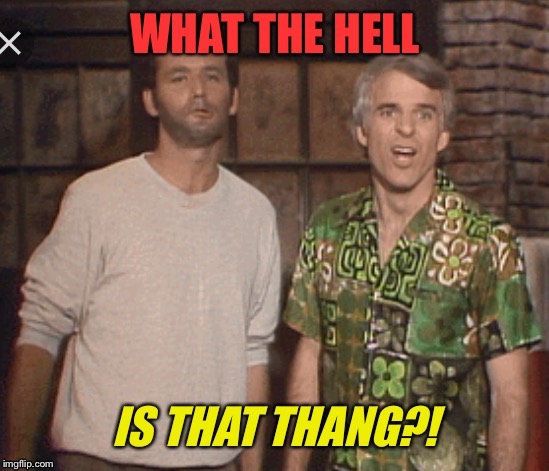 Some guys are just funny. We hated them in high school, because they could effortlessly do, what the rest of us worked so hard to do: Make people laugh. Was there a super-secret formula to their success? Not that we could see. They could just lift an eyebrow in a particular situation, or smirk in a somewhat sarcastic, somewhat serious way, and put everyone on the floor. It was frustrating to those of us who’ve had to work our way through the dark and mysterious halls of funny to find that which they just had sort of attached to them at birth. Everyone wanted to be around them to hear what they might say next, and they hoped that he liked them half as much as they liked him. Why? Because he was funny, naturally and effortlessly, funny. “Some guys just are,” we might tell our kids facing similar circumstances, “and there’s nothing you can really do about it.”
 What is the super-secret formula to Bill Murray’s success? My guess is that there isn’t one, and that might be his secret. Bill Murray does have an undeniable everyman appeal in that he’s not gorgeous, he doesn’t have great skin or hair, and while he’s not fat, no one would say he’s fit and trim. He is just a funny man. He is the embodiment of the annoying “It is what is” principle. I go to see his movies, because he’s funny. Why is he just as funny, or funnier, than his peers? “I don’t know, he just is.”
 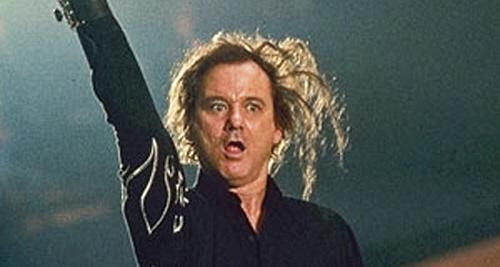 Now we have Steve Matin, one of Murray’s peers and colleagues, a man who began around the same time, has attempted to do as almost as many comedic and dramatic movies, and TV shows saying he basically agrees that it doesn’t appear as though Bill Murray is even trying. Regardless the actual number of movies, or the debate over comedic quality, the two can be viewed as colleagues in many ways, and he views Murray’s career as so effortless that it’s almost frustrating to him.
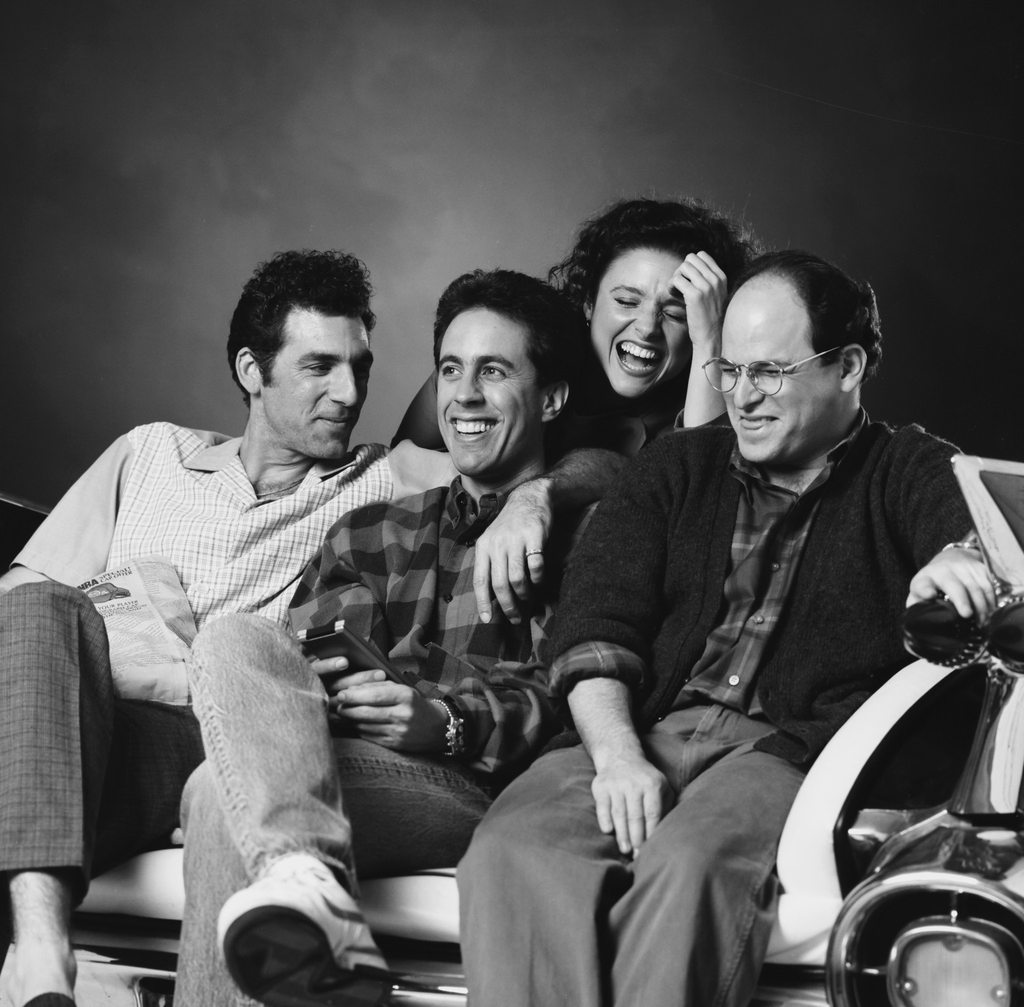
 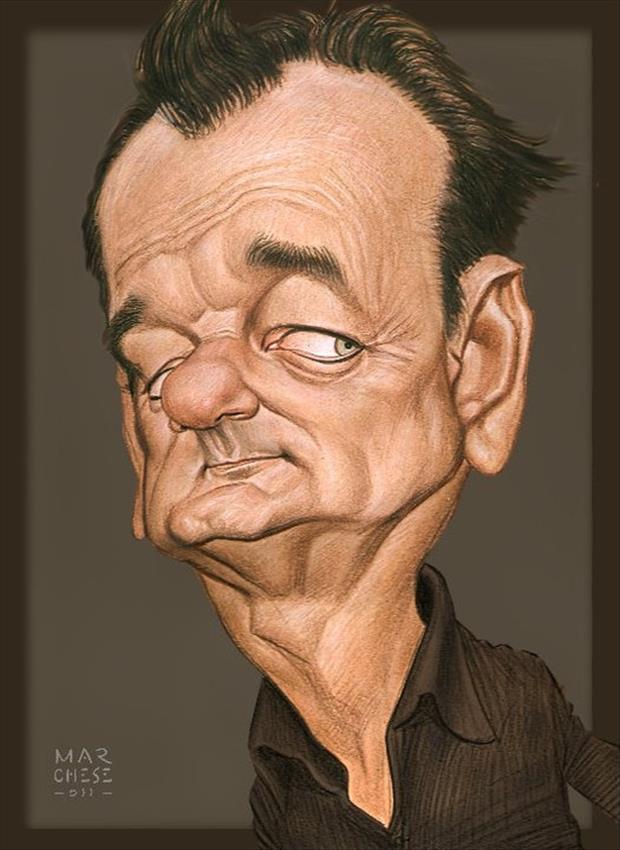 If you have to try that hard, you’re probably not very funny, you might counter, and you’d be right, but we have all had to learn how to be funny. Learning the beats, rhythms, and everything else it takes to be funny is often done by osmosis. We don’t learn how to be funny in the same way we learn math, how to play baseball, or how to be an electrician. We pick up various elements of our presentation from our peers, that crazy-funny uncle, and our TV shows and movies. If you were around during the Seinfeld/Friends era, you saw how they influenced what it takes to be funny, and you picked up some tips and copied the actors’ mannerisms, their tones, and sometimes we stole the lines their writers wrote for them. They, and numerous others of course, defined funny in our era. Other eras had Abbot and Costello, The Honeymooners, and The Lucille Ball Show define funny. We’ve also had others tell us “That’s not funny!” and we adapted and adjusted to the current cultural norms of funny, and in some ways, it took some definition of work to do so. Others, it seemed, didn’t have to go through all those trials and errors. They just seemed to fall into funny, because that’s who they were.
 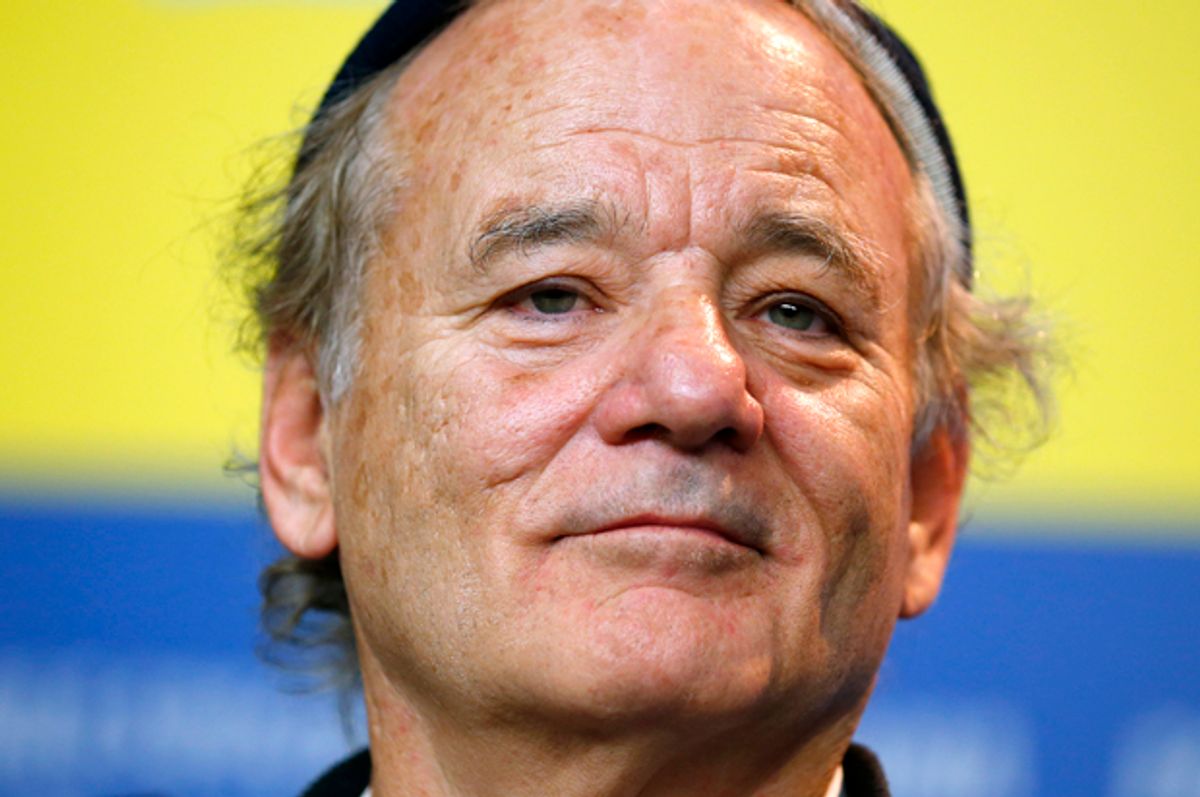 Most of us worked hard to be funny, shortly after we realized we didn’t have anything else going for us, and it was so frustrating for us to see someone roll out of bed funny. We can all identify with Steve Martin’s complaints, because we all know someone who achieves what we worked so hard for with such apparent effortlessness. If you’ve ever watched camp counselors, teenagers, try to MC an event, you’ve seen them try to work the audience (of camp goers and their parents), you’ve seen them try to act crazy, nuts, and fun, and you’ve walked away thinking, they could really use a natural speaker with some unusual levels of charisma, a Tripper (Bill Murray’s character in Meatballs). If you’ve ever seen a grown man sing with a full stage show, with dancers, pyrotechnics, and anything and everything to entertain an audience, you know that there are just some men and women who, armed with nothing but a microphone, can sing a song called Star Wars, and produce one of the funniest things ever seen. How does he do it? No one, not even one of the other funniest men of his generation, knows. He just does. When we watch it, we send out Steve Martin’s “It can’t be that easy!” complaint sent out to the unfairness of the universe.



 Rilaly