“80% of success is showing up,” Woody Allen once said.
“So, what you’re saying is if I want to succeed, I should show up?” you ask. To answer that question, we ask another question, how many people don’t? How many apathetic and self-destructive types didn’t show up for the opportunities-of-a-lifetime Woody Allen received? Was Allan Stewart Konigsbeg (Woody Allen) the most talented person in his troupe, or did he show up so often that he got the job, the jobs, and the career that the apathetic and self-destructive did not, because they weren’t there.
In his book I’m Dying Up Here, author Arthur Knoedelseder suggests that Woody Allen’s 1978 Annie Hall winning numerous Academy Awards that year opened up all kinds of opportunities for standup comedians, comedic actors, and writers of comedy. Most of those who would land multiple picture deals would go onto be the faces of comedic humor in the ’80’s and beyond. The question is was Woody Allen funnier than those peers, or was he in the right place and the right time in Hollywood history?
 To listen to modern screenwriters tell their tale, Woody Allen’s story isn’t the type of story we enjoy. We’d much rather hear the story about “the kid,” “the natural,” or the one everyone agreed was the most talented person in the room who finally got his big break, and in the next scene, they’re asleep or dead with a heroin needle hanging from their arm. It happens so often on screen, that it’s a trope, but is it true? We’re sure it’s happened, but has it happened so often that it’s a truth, or do we just love to cringe so much that screenwriters feel compelled to write about it.
I can only imagine that the screenwriter tries to sell his script pitching about “the kid,” “the natural”, and the potential Hollywood producers asking “Okay, but where is the arc? What does the American public love more than anything else, the rise and fall. We build him up as the kid, the natural, and then, on the cusp of him finally realizing his talent on a national, worldwide scale his dysfunctional, self-destructive traits rear their ugly head. It’s the Freddie Prinze story. People love that story. They love to cringe.”
It can be a little scary to put all of our potential to succeed, and all of our hard work, on the line. How many of us have the potential to succeed, and how many can stand before others, relatively anonymous and proverbially naked, to showcase our potential? Are you a fraud, or are you so confident that you’re just waiting for an opportunity to show your talent? Are you the type who creates your own opportunities, or do you wait for them to happen? If you’re the latter, will you not show up, because you’re afraid you’re not ready? Even if you’re “not ready” in a relative sense you’ve defined, that might just be your opinion. If Woody Allen’s quote holds any weight, it might redound to your benefit to show up anyway to see what happens.
Some of us cringe when we hear tales of the dysfunctional and self-destructive types, others laugh, and we all feel sorry for them, but they’re the ones we replace. We’re the ones who show up and do it so often that we might overcome whatever relative level of talent we might have.
Showing up is also starting up. How many of us think about doing something, how many of us daydream, and how many of us actually do it? Showing up suggests that you’re ready to make it happen. You’ve surpassed the dream stage, and you’re there. You’ve shown up and you’re ready to work with others to make it happen.
Stop Letting Your Bullies Bully You
There are few things that bother me more than watching a victim of bullying make their problem worse by the manner in which they deal with a bully. When I hear, read, or see a member of an audience become so offended that they’ve become outraged at something a standup comedian says, I say, “You’re going about it wrong! You’re doing it all wrong!”
There might be some exceptions to the rule, but my bet is every standup comedian was a former class clown/bully. The essence of the craft is such that it attracts guys and girls that someone, somewhere once called a class A jerk. (A class A jerk is someone other than the class D jerk who pokes fun at others for sport and backs down if anyone informs them they’re offended in anyway.)
When real life darkened their door, most standup comedians admitted they didn’t know what to do. They were as lost, or more, as the rest of us. “I don’t know what I would’ve done if my predecessors didn’t do what they did in this craft to make it what is it today. Not only am I not good at anything else, I didn’t particularly like doing anything else.” What is it they’re doing, on stage, every night? What is it they enjoy doing so much that it saved them from the depths of despair? If we dig through all the particulars of the craft, we find that making fun of other people is the core of standup comedy. Where do you think they discovered their talent, and how did they hone it? They did it on your back, and your delicious tears told them they might be onto something. It’s what they do. It’s who they are.
 One other special ingredient that defines the difference between most great comedians and the ones who never made it to the main stage, pushing boundaries. What does that mean? We think pushing boundaries is about filmmakers teaching us what we don’t want to hear, and it is, but it’s also about standup comedians telling us what we don’t want to hear. They’re mutually exclusive, diametrically opposed, and the same. Tell a standup that they can do anything they want except this, and this will be the only thing they want to do. Tell them that they can make fun of everyone, except these people, and a joke about those people will probably make it into their intro. My problem is not with standup comedians. We all know who they are. They’re bullies. The problem is with the offended. If the standup comedian is wrong, tell them why, and do it from a position of power not weakness.
If we ever effectively find a way to diminish, deter, or defeat bullies as a whole, the one detriment might be our inability to deal with bullies. The only solution we’ve found at this point is to inform them that we’re offended by something they’ve said. Who cares if you’re offended? Some do, of course, and there are probably more now than ever before who aren’t afraid to say that they’re offended, but I can tell you one person who doesn’t care, the offender. I’ve been offended by something a comedian said, and I always think that’s just one man’s opinion, and it’s not an informed one. (I use the term offended, here, for the purpose of illustrating a point, because I can’t think of any comedian who has ever offended me.) You getting offended is exactly what the offender wants. It’s what their audience wants too. How many nice guys finish first in the world of standup? What is it .0001% The nature of the beast is such that if a comedian goes clean and tries to avoid offending anyone, the audience might chuckle politely, but the chuckle will be soft and almost internal, as they wait for that hurtful haymaker to punctuate the joke. Most good guy, clean comedians are widely regarded as too safe to be truly funny. We, as a whole, want our standup comedians risqué, we want them to push boundaries, and we want them to speak out against unsafe targets. Who are the unsafe targets though? That’s the question skippy, and that’s the point Howard. The unsafe targets have shifted from my guys to your guys, and from my issues to yours. We didn’t handle it well, claiming offense and outrage, and now you’re doing the same.
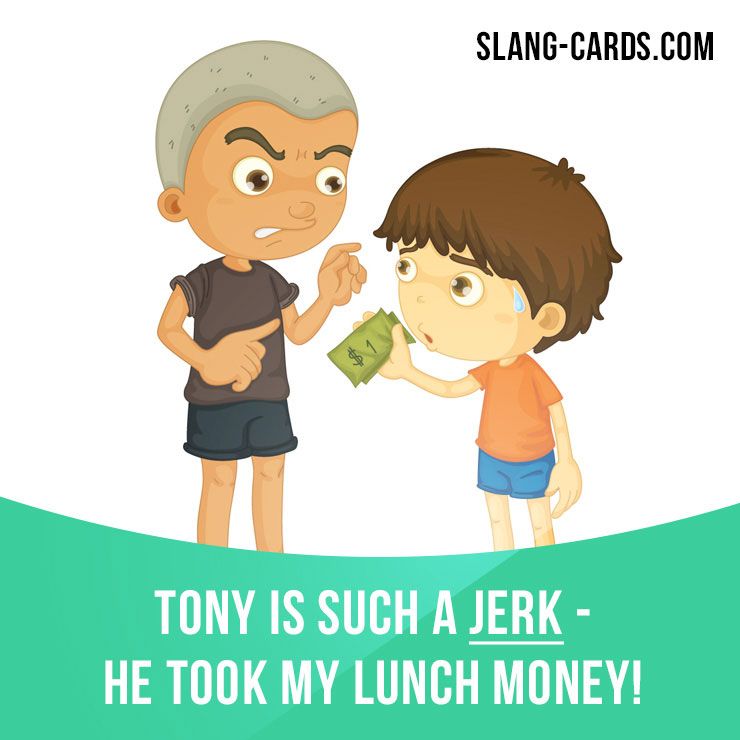 If this is true, wow do we stop the mean-spirited comedian then? I don’t think you do. I think they love it so much there’s nothing we can do or say to stop them. You can see it on their face. They were born to do this, they love it, and they wouldn’t want it any other way. They define your offense as effective penetration. Their audience, comprised mostly of former bullies and class clowns, love it too. Do we get in their face and try to mow them down? Have you ever been bullied by a class A jerk? They’re unusually very good at what they do. They’re often unusually smart, and not only are they smart, they’re quick, and not only are they quick, they’re funny. It’s often that final nugget, funny, that just tears into our soul. They come up with material quick, and how do we defeat them? If it’s a class A jerk, we’re on their turf when we’re trying to outfunny them. The only way to defeat them is to switch the playing field to our internal home court and outdo them there. If we can convince them, there, that they’re not getting in, we’ll take all their fun out of it for them. That’s all I got, and I know it’s not great, but it’s obviously better than everything you’ve come up with thus far. You’re encouraging them and making them think they’re onto something when you declare that you’re offended. You’re making it worse.
Crazy Joe Davola
Crazy Joe Davola (actor Peter Crombie) has died, and Fox News reports that his friends suggest that even though “he was cast as a bad guy on Seinfeld, and he played numerous interesting and complicated characters, including Bernard Goetz, he was very sweet in an old-school way. When not working as an actor on stage or in front of a camera, he was genuinely humble, preferring others to talk and take main stage. He was always helpful, giving and funny. He was one [of] the kindest, soft-spoken, loving and caring people I have ever met. A gentle giant.” It’s a fitting tribute, but it’s not funny? We might not want funny to be on site forever more, but in private, on stage, I think Peter Crombie would’ve loved it if someone, someone like Lewis Black, offered Crombie a comedic sendoff. “It wasn’t much of a challenge for Peter Crombie to play the awful characters he did, because he was awful. He was an awful human being. I remember one day he saw a kid with ice cream, and he stole it. He didn’t want their ice cream. He didn’t even like ice cream. He would pitch it in the nearest receptacle. He did it just to do it. Just so he could say he did it. He said that he liked to hear kids cry. “The younger the better,” he said.”
Review of Self-Reliance
 If there’s one thing an aspiring writer can learn from the movie Self-Reliance, it’s that your audience doesn’t want anything bad to happen to the fictional characters of your stories, until they nothing does. Leaving out all of the other particulars of the plot, the primary plot of this movie is that a bored, lonely man is offered a proposition. If you can survive for thirty days, with murderers trying to murder you, we will give you $1 million dollars if they are unsuccessful. There is a catch for the murderers, however, they cannot kill him if he’s within three feet of another person. The need to have someone near him, leads the character to realize that in his life before the contest he forgot to make real, human connections throughout his life, and he forgot to live life to the fullest. That underlying theme would’ve been engaging if, IF, it was properly balanced with the character narrowly escaping harrowing threats. The problem with this movie is that this viewer (you might be different) never feels the threats are anything more than an excellent plot device to sell the movie. There are some threats made on the character’s life throughout the movie, but they are easily, too easily, vanquished. This reveals to us that the threats on the character’s life are basically ancillary to the underlying theme. It’s as if the writer said, I want to write a post-COVID script that reminds the audience of the need for human connection and companionship. The problem is how do we go about writing about that without getting too gushy? I got it. Let’s develop a contest for the character in which he needs to have people around him. All of that would be fine, except the writer/director forgot to concentrate enough on the threat therein.
Anyone who watches this movie will realize as much as we don’t enjoy cringing, we enjoy cringing. We want to see scenes where the character stupidly gets into harrowing situations that he can’t possibly escape, until he does, and we’re awash with relief when he does. We want to experience the ups and downs of what it must feel like to have people trying to murder you. We want to scream, “Don’t go in there!” when he approaches the wrong door. We want to see pianos fall behind him while he’s talking on the phone, comically unaware of what just happened. We want to grip the arms on our chairs when a gigantic ball comes rolling after him, as he runs through a cavernous region in which there’s no lateral escape, and we want o see a poison-tipped arrow hit a guy standing somewhat near the main character after the main character bent down to pick up a piece of garbage that some rube just threw on the ground. “Hey, it’s called littering man!” The main character shouts at the litterer, as the man with the arrow in his neck, behind him, slowly falls gurgling to the ground. There can be humor intermingled in the tension, but we want/need the tension. What we get from Self-Reliance are all of the hypotheticals a man who must survive a scenario might have to go through to insure his survival. The movies is really about the social interactions a person might not go through if there wasn’t an ever-present, or in this case never-present, threat of death. My takeaways are that the movie accomplishes two things: It teaches writers what not to do with a thriller, and it leaves you with the weird, uncomfortable feeling that you actually want bad things to happen to fictional characters. Those of us who know and enjoy so many of Jake Johnson’s projects, enjoyed this one too. He’s a funny, interesting actor, and Self-Reliance is not a bad movie in anyway, except for that lack of threat, and the ending is more of a wrap-up than an exciting conclusion. The character basically tells us what happened at the end, and he shows us some shots that visualize what he’s saying.




 Rilaly