Eradicating Boredom, Losing Creativity: The Double-Edged Sword of Digital Distraction


“I’ll never be bored again!” I said the day I purchased my first smartphone. I said that in reference to one of the very few games we play that has no winners: the waiting game. With a smartphone in hand, I thought I could finally resolve one of my biggest complaints about life: waiting.

“We’re not going to live forever,” we complain when someone is involved in the life and death struggles of a grocery store price check. Most of us don’t take out our life expectancy calculator to figure out how long we’re going to live, or to calculate how much of our lives we’ve wasted waiting in line, but we all love sharing that snarky joke about the guy complaining to the clerk that the price tag said asparagus cost $3.47 as opposed to the register’s reading of $3.97.

We’re all waiting for something, all the time, but what makes us angrier, waiting for something to happen, or doing nothing for long stretches of time? We’ve all experienced our frustrations inch their way over into anger, then boil over into rage, and we’ve all experienced that sense of helplessness when it happens to us. With a smartphone in hand, I correctly predicted that I could avoid falling into that trap of claustrophobic silence and inactivity by filling it with something, something to do with my hands, and something is always better than nothing in the waiting game.

Promptness is About Respect

The waiting game is not selective or discriminatory. Everyone from the most anonymous person on the planet to the most powerful has to wait for something, but there’s waiting and then there’s waiting. The waiting game is all about power and the lack thereof. When we’re stuck in line, at a restaurant, waiting for a seat, we experience a sense of powerlessness. We’re so accustomed to having power over our own life, as adults, that when we find out the wait time for that restaurant is forty-five minutes, we exert that power by walking away. When we find out every decent restaurant in town has a thirty-to-forty-five minute waiting time that sense of frustration sets in, and we eat at home. When someone we love leaves us sitting in that restaurant for a half an hour to forty-five minutes a sense of helplessness creeps in when we realize that we’ve accidentally put ourselves in a position of dependence yet again.

I don’t know if everyone feels this way, but I replay a Madonna quote in my head. “If you have to count on others for a good time, you’re not doing it right.” When I’m sitting in a restaurant with patrons passing me, looking at the vacant side of my table, I realize I’m counting on the wrong people in life, the narcissistic, irresponsible, and disrespectful people I count on for an enjoyable lunch. If they leave us there long enough, by ourselves, we’ll start to dream up all sorts of motives and agendas for their tardiness. That frustration can lead to anger and a level of teeth gritting and grinding that damages the expensive and painful dental work the impatient we’ve had done. 
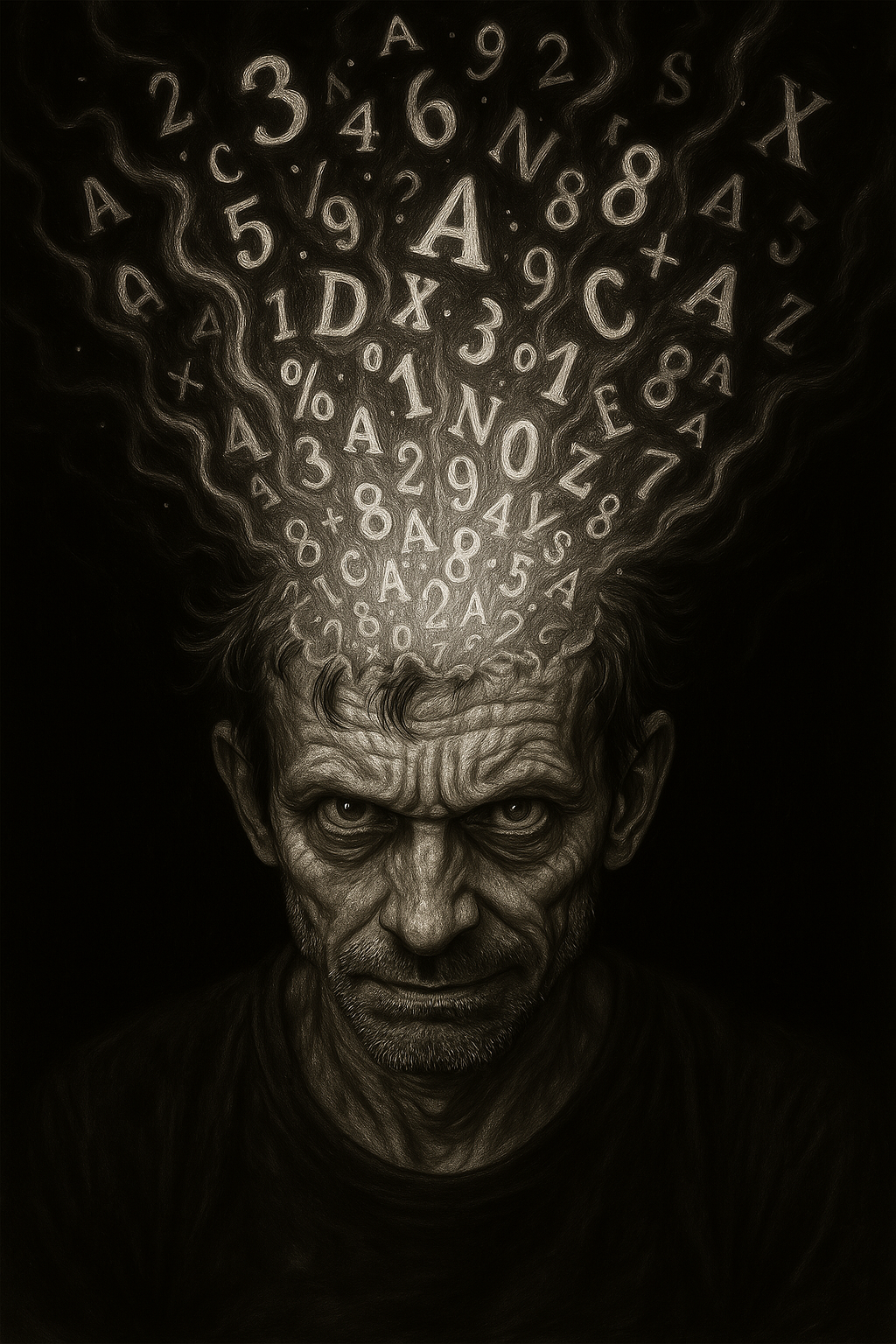
I know that the search for what could tip me over into some form of mental illness is over when I am on the other end of the waiting game, and I eventually hear, “What is the big deal, I was only a couple minutes late, and I had to …” They usually fill that void with utter nonsense that we cannot disprove, so we just let it go. 

Life happens when we least expect it sometimes, and sometimes we’re going to be late. If we respect the other person, we call, text, or email us to inform them we’re going to be late, but that would be respectful on our part. That’s really what we’re talking about here, the respect or lack thereof, on their part. If we respect our employer, we show up on time. If we enjoy the company of someone we’re dating, we show up on time, or early. It’s about respect, the lack thereof, and narcissism. And when they show us this lack of respect, quality friendships can be tainted and temporarily damaged, and dissociations with associates end what could’ve become a friendship. We overreact to such slights, and we know it, but it all boils down to the fact promptness is all about respect.

The Eradication of Boredom

When we’re immersed in the maddening waiting game, the mosquito paradox comes to mind. Anyone who has ever had a beautiful day at the park ruined by a scourge of mosquitoes has asked why scientists don’t find some way to bioengineer an eradication of that relatively useless species? Biologists, with a specialty in mosquitoes, provide arguments for why we shouldn’t, but when we’re swatting, slapping, and running from the scourge, we develop seven counter arguments to every one of theirs. The only vague but true answer we’ll accept is “Anytime we mess with nature, there will be consequences.” We’ve all heard that in relation to the mosquito, but what about waiting and the resultant boredom? Boredom is a naturally occurring event. What could possibly be the consequences of eradicating boredom? We’re not talking about that simple, “I don’t know what to do to pass the time” boredom. We’re talking about levels of boredom that takes us to the edge of an abyss that stares back at us, until it roars to the surface and frightens everyone around us.

Some of us loathe the boredom inherent in the waiting game so much that it whispers some scary things about us to us, but when it’s all over, it dawns on us that something happens to us when we spend too much time in claustrophobic silence with nothing to do but think.

How many useless, pointless thoughts have we had in such moments? We flush most of those thoughts out of our mind after it’s over, as we will with that which our body cannot use, but some thoughts collect, mate, and mutate into ideas that we can use. How many of our more meaningful, somewhat productive thoughts had hundreds of useless, pointless parents conjugating during the waiting game? 

***

The child and I often talk a lot about how relatively boring things were when I was a kid. This involves me recalling for him what we did for fun, and how we thought those things were so much fun at the time. “We had to do these things,” I say when I see his face crinkle up, “because we were all so bored.” These complaints could be generational, as I often hear the previous generation describe their youth as “Such an incredible time to be a kid,” and they were raised on farms! I’ve been on farms, trapped there for huge chunks of my youth, and the only thing I found incredible about it was how incredibly boring it was. It takes a creative mind, more creative than mine, to believe that being raised on a farm is an “incredible” time.

“It’s all about perspective,” they say, and they’re right. If we don’t know any better, skipping stones in a pond and fishing can be a lot of fun. We rode our bikes around the block a gazillion times, and we thought that was an absolute blast, and then we played every game that involved a ball, but they all seem comparatively boring when compared to the things kids can do now. We could argue all day about the comparisons, but they do have better things to fill the empty spaces. Yet, what happened to us as a result of all those empty spaces, and what happens to them as a result of mostly being devoid of any?

How much of our youth did we spend sitting in chairs, looking out windows, waiting for something to happen? Some of us did something, anything, to pass the time until the event we were waiting for could happen, but there were other times when we just had to sit and wait. We’d sit in those chairs and think up useless and pointless crap that ended up being nothing more than useless and pointless crap, but how many bountiful farm fields require tons of useless and pointless crap per acre? 

We have cellphones and smartphones now. That’s our power. That’s how we eradicate boredom. “4.88 billion, or 60.42%, of the world population have cellphones, and the number [was] expected to reach 7.12 billion by the end of 2024. 276.14 million or 81.6% of Americans have cell phones.” We don’t ever have to be bored again. 

We have game consoles. “The Pew Research Center reported in 2008 that 97% of youths ages 12 to 17 played some type of video game, and that two-thirds of them played action and adventure games that tend to contain violent content.” These kids may never have to face the kind of boredom I did as a kid. We didn’t even have an Atari 2600 in our home when just about every kid we knew did, and it wasn’t because our dad wanted to prevent us from becoming gamers. He was just too cheap. So, we were forced to do nothing for long stretches of time.

When you’re as bored as we were, the mind provides the only playground. “Is there something on TV?” There never is, and I don’t care how many channels, streaming services, apps, and websites we have, an overwhelming amount of programming is just plain boring to kids. We could go out and play, but when you’re from a locale of unpredictable climates, you learn that that is not possible for large chunks of the year. The only thing we can do, when we’re that bored, is think about things to do. I invented things to do to pass the time, but they could get a little boring too.

Filling the Empty Spaces 

“You’re weird,” is something I’ve heard my whole life. I’ve also heard, “I’ve met some really weird fellas in my time, but you take the cake,” more than a few times. That’s what I did when I ran out of things to do. I sat around and got weird. Your first thought might be, “Well, I don’t want to be weird, and I don’t want anyone thinking my kid is weird either.” Understandable, but what is weird? Weird is different, it’s having divergent thoughts that no one has considered before, until they grew as bored as we did. Weird is rarely something that happens overnight. It takes decades of boredom, and it takes a rewind button of the mind, replaying the same thoughts over and over, until we’ve looked at the same situation so many different ways, on so many different days that we’ve developed some weird ideas and abnormal thoughts about people, places and things around us. This is what happens when we stare out windows too long, looking at nothing, wondering how the world might look different if it was weird, strange, or just plain different. It’s what happens when someone lives too long in the mind, and their peeps start worrying that they’re not doing it right. 

Some weird, strange, and just plain different thoughts led us to think about the difference between success and failure. Success is a short-term game that will mean nothing tomorrow if you’re not able to back it up, so you better enjoy it while it lasts, because if there’s one thing we know about success, it has a million parents and failure is an orphan. We also realize that, in those dark, quiet moments we spend alone, looking out the car window on the drive home, that failure does define us. Athletes and business people say, “Don’t let failure define you,” but it defines us. Some remember those moments, and some will never forget, but what we do shortly after failing will define us too. The thing that plagues us is, “Was that moment of failure an irreversible blemish?” and when we’re left staring out the window at nothing, it can feel like it is. Some will never forget, and we know who they are, because they always remind us who they are, but most forget. As any trained public speaker will inform us, an overwhelming number of people will forgive, forget, and dismiss errors. Most people aren’t paying near as much attention as we think, and most people aren’t dying to see others commit errors. When we’re left alone for long chunks of time, replaying moments over and over, we can make the mistake of thinking it’s the opposite. 

“Reach for the stars,” they say. “Become the next Albert Einstein, Vincent van Gogh, Isaac Newton, and Leonardo da Vinci, fill your empty spaces, and reshape your world.” It’s great advice, and we think about how we should try to be better today than we were yesterday, and we shouldn’t spend those dark, quiet moments obsessing about trivial notions we consider our limitations. As we sort through those famous names, we ask how bored were they, when they were kids? Those guys had nothing to do either, when they were kids. They didn’t have movies, TV, devices, or consoles to occupy their time. As boring as it could be to be a kid in our generation, we can only imagine those previous generations were just itching with boredom back in their day, and they were so bored that they dreamed up some things that laid the foundation for everything we find interesting now. We can imagine that most dismissed them as dreamers and daydreamers that wouldn’t amount to much, and they ended up conjugating all of those pointless and useless thoughts into something that ended up reshaping our world.    

No matter how much we daydream, or dream up interesting thoughts, most of us will never actually reach those stars. Yet, something happens to us when we’re so bored that we think up weird and interesting thoughts that will never amount to anything. We accidentally, incidentally, or just by the natural course of filling empty spaces become more interesting. Thinking so much that we think too much could lead us to divergent thoughts that some people find so weird, strange and just plain different, but that can lead them to ask us about matters that they consider trivial, relatively unimportant, to important. Our unique perspective often attracts people to us, and it could lead us to have more friends, which could be one of the primary reasons we should consider inserting more boredom into our kids’ lives. Our kids might not know who they are, or who they could be, if they find artificial ways to avoid ever sitting in front of a window with nothing to do but think about everything. Even if they never make it above the lower-to-middle stations in life, they might learn how to make life more interesting, and they might accidentally figure out how to enjoy their lives better, and in the process of being so bored, they might learn how to become happier, more interesting people. 

Turn and Face the Strange


“Don’t bendStay strange.” –David Bowie

“All children are born artists, the problem is to remain artists as we grow up.” –Pablo Picasso.

“We don’t grow into creativity, we grow out of it.” –Ken Robinson said to further the Picasso quote.

“Don’t bend. Stay Strange,” is such a simplistic and beautiful quote that if we heard it earlier in life, some of us might have stitched it out on oven mitts, T-shirts, and flags.

“What’s it mean though?” we ask,

David Bowie answered in an appearance on a 70’s show called The Midnight Special. It’s difficult to capture the effect that weird, strange, and just plain different appearance had on me all those decades ago. I was floored. I was flabbergasted. I craved the weird, even when I was young. Even before I knew the totality of what embracing meant. When Bowie walked out, I thought it was shtick. I waited for him to break out some Steve Martin-ish routine, and then he started singing. Bowie’s commanding voice informed me this was not an affectation. It was a full-on embrace of the weird. It made me uncomfortable, but it also confused me. I was so young, and so confused, that I considered his appearance unsettling, and I needed help dealing with it.

“He’s just weird,” she said. She was trying to comfort me. Her message was he’s so weird that he’s probably being weird for the sake of being weird, and that we should dismiss him on that basis. I argued that I didn’t think so. “If that’s the case,” she said, “we probably don’t want to peel that onion.” I didn’t want anyone to consider me weird, so I tried to dismiss him. I couldn’t look away though. I never saw anyone embraced the weird before. I thought weird was what we whispered when we saw it walking down the street, and we walked a lower case (‘b’) around it.

If Bowie dropped this quote on me, as a kid, it might have helped me through the swamp, but I don’t think Bowie would’ve dropped such a line on a kid. Rock stars are generally impetuous creatures, but I would hope that David Bowie wouldn’t be so reckless as to advise a child to embrace the weird. I think he reserved such notions for relatively stable, confident adults. If he followed that impulse, I think he knew it might cost that kid some happiness, for the world is so confusing to a kid that they need to embrace normalcy until their minds are strong enough to embrace the weird. I also think such a quote might mess with that young person’s artistic cocoon. I think Bowie knew, from firsthand experience, that the struggle to maintain the weird defines the artist in constructive, creative ways. To paraphrase the Picasso quote above, the problem isn’t how to become weird, strange, and just plain different. The problem is to maintain it as we work our way through the mire and maze of childhood.

The chore of the artist is to maintain the element of weird, while melding it with the normalcy of adulthood. Those of us who were weird had some weird ideas that were weird for the sake of being weird. We were passionately weird, and learning how to form an identity. We’re now glad there are no records of our strange thoughts. We needed seasoning. We needed to understand norms better if we were ever going to constructively mock, ridicule, or upend their conventions. This perspective is particularly vital to writers, as it gives them an outside perspective from which to report on those who followed their passion throughout life and embrace the weird, strange, and just plain different.

***

Some scholars, like Sir Ken Robinson, want us to violate this theory by changing school curriculum to accommodate the weird, strange, and just plain different. In his popular Ted Talk speech, Robinson cites anecdotal evidence to suggest that we should change the curriculum to recognize the unique and special qualities of weird, strange, and just plain different students.

Shouldn’t they learn the rules first? Most writers were wildly imaginative kids, and when our kids flash their unique fantastical worldview before us, we remember how weird we used to be. We fondly remember how imaginative and creative we used to be. Our kids reignite that internal, eternal flame in us. We remember how special it was to be imaginative without borders, but we also remember how unstable and confusing that time was. We were impulsively and instinctively imaginative without borders, and we smashed through whatever borders they put in our way, but most of the results of our beautiful and wonderful childish creativity was gobbedly gook.

We didn’t know what we were talking about because we were kids. We didn’t do anything worthwhile, even when we were wildly creative, because we didn’t know what we were doing. We were kids. When we think of the rules, we often think of some humorless school master enforcing discipline at the end of a ruler, but we often forget how many little, seemingly inconsequential matters we learned along the way to help form our thoughts into mature creativity, and how a stew of those little, relatively inconsequential matters and our wild creativity made us who we are today.

There will always be prodigies, but what percentage of the population do we consider prodigies? For the rest of us, there is a special formula to achieving final form. This painfully methodical process involves rebelling against our establishment, succumbing to it, recognizing its inherent flaws, and returning to our rebellion with an informed mind. As I wrote in the Platypus People blog, “one of our first jobs of a future rebel is to learn the rules of order better than those who choose to follow them.” The idea that the manner in which school curriculum deprives, stilts and discourages creativity is a strong one, but do these scholars remember how confusing the adolescent years could be for the kids who weren’t prodigies? Lost in this discussion is our need to understand that which we now deem unreasonable, irrational, and in need of change. Why does this work, how does that work, and how and why should we change this to that? 

“I welcome your complaints, but if you’re going to complain, you better have a solution,” our teachers told us. The crux of that line is the difference between weird for the sake of being weird and constructive oddities. How can we form a solution to the artistic complaints we have, if we don’t first understand the problem better than those who are just fine with it?

The perfect formula, as I see it for the creative artist, as Pablo Picasso said, is to remain weird after learning the curriculum and surviving the need to conform. When we learn how to read, write, and arithmetic, we use them to fertilize the science of creativity. If an artist can maintain their fantastical thoughts after learning, they might be able to employ the disciplines they need to enhance their creative and innovative mind to artistic maturity.

We don’t know many specifics of Sir Ken’s dream school, but one of the fundamental elements he theoretically employs is the need to play. The creative mind, he says, needs time and space to play. Throw them a block and let them play with it, and we’ll see their ingenious minds at work. He dots his speech with humorous anecdotes that serve to further his thesis. We know that Wayne Gretzky spent much of his youth playing with a stick and a hockey puck in every way he could dream up, and we learn that other kids develop their own relatively ingenious little theories by playing. We cannot forget to let them play. It is a well-thought out, provocative theory, but it neglects to mention how important discipline is in this equation. The discipline necessary to figure out complicated mathematical equations and formulas might seem frivolous to a dance prodigy, for example, but Geometry works the mind in many ways it otherwise wouldn’t.

“Why do I have to learn this?” we all asked in Geometry class. “What are the chances that I’ll ever use this knowledge? If I become the vice-president of a bank, what are the chances that knowledge of the Alexandrian Greek mathematician Euclid’s theories will come into play?” One answer to the question arrives when we meet a fellow banker who knows nothing but banking. For whatever reason our fellow banker knew she wanted to be a bank vice-president at a very young age. Her focus was such that she had the tunnel vision necessary to succeed in the banking world, but everyone who knows her knows the minute she clocks out for the day, she’s lost. She might be successful by most measures, but she knows nothing about the world outside of banking, because she never needed any knowledge beyond that which exists in banking.  

“How can you report on the world, if you know nothing about it?” is a question I would ask everyone from David Bowie to the twelve-year-old prodigy who wrote a fantasy novel. The kid’s story fascinated me, because writing a 200 page novel is so foreign to my concept of what it means to be twelve-years-old. I was trying to make friends and be happy at twelve-years-old. I read the news article about this kid with great interest, and if I ever ran into him, I would encourage him to see his talent to its extent, and I would applaud him for what he did, but I would never read his novel. I don’t think a twelve-year-old’s vision of the world would do anything for me.

Sir Ken Robinson doesn’t say that he wants to do away with the core curriculum directly, but in his idyllic world, we need to cater it to the talents of people like this twelve-year-old prodigy, the dance prodigies, and all the other as of yet unrecognized prodigies around the world.

We’ve all heard tales of these uniquely talented creative people and prodigies with tunnel vision. We marvel at their tales, but we’ve also heard tales of how former prodigies don’t know how to fit in the world properly. They’ve reached their goal by producing a relatively prodigious output, but they’re now unhappy. 

How could they be unhappy when people pay them to do something we’d pay someone to do? If the word unhappy doesn’t do it for you, how about unfulfilled? Their weird thoughts of the world are not an artistic affectation. 

Something fundamental is missing in them that they’ll never square properly. Being on the proverbial stage is the only thing that gives them joy, and they understand this as little as we do. It might have something to do with being in the spotlight their whole lives, but it might go deeper than that. It might have something to do with the fact that their authority figures never forced them to be normal, and they never had to learn the basic, core answers the rest of us learned by working through all of the pointless exercises that our core curriculum required. “So, if I take a Geometry class, I’m going to be less confused about the world?” No, but if you learn how to learn how to use your brain to figure out the tiny, relatively meaningless facets of life, it might help you arrive at answers that help you cope with the otherwise random world a little better.

Robinson might be onto something when he suggests that if we feed into a prodigy’s creative instincts, we might have more of them, and they might be happier people as a result. His thesis suggests that most people are unhappy because they have untapped talent that we neglect to foster. Let them play, he says. Fine, I say, but why can’t we let them play at a dance school, in art class, or in a school band? Why can’t we just throw a block at them in their free time? Do we have to devote our entire curriculum to helping them recognize their talent? A strong, confident adult is so difficult to raise that as much as I would’ve loved some devotion to recognizing my weird talent, I think I would’ve ended up deficient in so many other areas that I would’ve been miserable. Devotion to recognizing my weird talents would’ve made me happier in the short term, as I think I was always heading down a certain road I didn’t recognize for some time, but I think I’d probably would’ve ended up more confused than I already am.

“Don’t bend. Stay strange,” is the great advice David Bowie passed on, but I think it should only be used by those who manage to maintain some of the creativity they had in youth and managed to remain artists. Most artists think they could’ve been prodigies if someone came along, recognized their talents, and coached them up, and many think they wasted so much time in school learning things that didn’t matter? Robinson feeds into these fantasies with some anecdotal evidence that suggests if we would’ve just danced more, we might have discovered that we were dance prodigies. He suggests that if we, as parents, learn how to feed our child’s talent, they might be happier. If the child’s interests are satisfied, they might be more satisfied. Possibly, but if we devote our entire curriculum to dance, creative writing, painting, or one of the other art forms, how many failed upstarts might we have? Students mature at different rates, and while developing schools devoted to encourage more creativity, it will likely result in unequal amounts of misery among those we consider prodigies based on their wild imaginations, but they were actually engaged in nothing more than child-like gibberish.

Rock and Roll is Dead!


“Rock and Roll is dead!” is a line most of us have heard for most of our lives. From the anthemic screams of punk rockers to the classic rockers suggesting, “Today’s music ain’t got the same soul,” everyone has enjoyed repeating a version of this line. For most of our lives, however, this has been little more than snarky criticism of the current status quo. For some of us, this has been based on the idea that our favorite strain of rock is no longer prominent, that we don’t appreciate the new direction rock was headed in, or that we have simply aged out of it. Looking at it from a rational perspective, rock and roll has always been able to survive based on young individuals crafting creative derivatives of what came before, and those derivatives develop movements that lead to greater sales and continued power, for rock in the music industry. On both planes, it does appear that either rock music is in a severe and prolonged downtrend, or that it may, in fact, be dead in terms of it being a powerful force in the music industry.

“For generations, rock music was always there, and it always felt like it would come back, no matter what the current trend happened to be,” Eddie Van Halen told Chuck Klosterman in a 2015 interview. “For whatever reason, it doesn’t feel like it’s coming back this time.”

As Klosterman writes, in his book But What if We’re Wrong, Eddie Van Halen said this at sixty-years-old:

“So some might discount (Eddie Van Halen’s) sentiments as the pessimistic opinion of someone who’s given up on music. His view, however, is shared by rock musicians who were still chewing on pacifiers when Van Halen was already famous.”

Thirty-seven-year-old singer of the band Muse, Matt Bellamy, echoed Eddie’s statement saying:

“We live in a time where intelligent people –or creative, clever people– have actually chosen computers to make (sic) music. They’ve chosen (sic) to work in tech. There’s an exhaustion of intelligence which has moved out of the music industry and into other industries.”

Chuck Klosterman then adds:

“We’ve run out of teenagers with the desire (and potential) to become (the next) Eddie Van Halen. As far as the mass culture is concerned that time is over.”   

If the reader is as shocked as I was to read a high profile, classic hard rock performer, coupled with a more modern artist, and a rock enthusiast on par with Chuck Klosterman, discuss the end of an era in such a rational, and persuasive manner, you’re not alone. It does not appear to me that these individuals were intending to be provocative. They were suggesting that it now appears that those of us who proclaimed, “Rock and Roll will never die!” were wrong, and that historians may view rock and roll as nothing more than a “prolonged, influential, and cultural trend”. That trend involved rock artists often coming out with a new album every two years, and there were so many rock artists that we usually had about one new rock album a week, at its peak, and a rock album a month at various other times. When a new rock album comes out now, it’s often followed by “Keeping Rock and Roll alive!” There will always be some musicians who make rock music and albums, but the powerful force that once helped form the backbone of America might be over. That trend may have been such a prolonged staple, but it’s been around longer than most of us have been alive. Yet, if we are able to remove the emotion we have vested in the art form and examine it from the perspective of creativity and album sales, it is more than likely that hundreds of years from now historians will view rock and roll as a trend that began in the mid-to-late fifties and ended somewhere around 2010.

The Creative Power 

The one aspect of Bob Dylan’s memoir Chronicles that an interested reader will learn about the man, more than any other aspect of his life, is how much depth went into Bob Dylan’s artistic creations. Dylan writes about the more obvious, influential artists that affected him, such as Woody Guthrie, but he also writes about the obscure musicians he encountered on his path, that affected him in ways large and small. He also writes about the manner in which reading literature informed his artistic persona, reading everyone from prominent poets and fiction writers, to the Ancient Greek philosophers, and he finally informs us of how other experiences in his life informed him. The reader will close the book with the idea that the young Dylan wasn’t seeking a road map to stardom so much as he was learning the art of craftsmanship.

On this subject of craft, as it pertains to the death of rock and roll, the bassist from KISS, Gene Simmons, informed Esquire:

“The craft is gone, and that is what technology, in part, has brought us. What is the next Dark Side of the Moon? Now that the record industry barely exists, they wouldn’t have a chance to make something like that. There is a reason that, along with the usual top-40 juggernauts, some of the biggest touring bands are half old people, like me.”

On the subject of craft and being derivative, we could argue that Dark Side of the Moon was derivative. We could also argue that Elvis Presley, Bob Dylan, The Beatles, The Rolling Stones, and Led Zeppelin were all derivative. We could argue that rock and roll, itself, derived from rhythm and blues, and that rhythm and blues derived their sound from the blues, jazz, and swing music. There is no sin in being derivative, in other words, as most artists derived something from another influence, but the question of how derivative an artist is has often haunted most artists that derived their craft from other, more obscure artists. The question most artists have had to ask, internally and otherwise, is how much personal innovation did they add to their influences? Perhaps more important to this discussion is a question of how much room was left in the zeitgeist for variation on the theme their influence created? To quote the cliché, a time will arrive in any art form, when a future artist is attempting to squeeze blood out of a turnip, and while the room for derivatives and variations on the broad theme of rock and roll seemed so vast at one time, every art form eventually runs into a wall.

We could say that the first wave of rock and roll that didn’t spend too much time worrying about how derivative it was, was the Heavy Metal era of 80’s hair metal bands. We could also say that they didn’t have to search too deep, at that time, because the field still yielded such a bountiful harvest. All they had to do was provide a decent derivative of a theme some 70’s bands derived from some 60’s band that were derivatives of 50’s bands, and so on and so forth. There was still something so unique at the heart of what they were doing, in that space in time, that they could develop what amounted to a subtle variation of a theme and still be considered somewhat unique.

At some point in this chain of variations and strains, the wellspring dried up for 80’s hair metal bands, and they became a mockery of former artists, until rock and roll was in dire need a new template. At this point, right here, many proclaimed the death of rock and roll. They claimed that rock and roll was now more about hairspray, eyeliner, and MTV than actual music. Into that void, stepped Guns N’ Roses, Faith No More, The Red Hot Chili Peppers, and others. They provided unique variations at the tail end of the 80’s and early 90’s. At various points in the timeline, a variation has always stepped up to keep the beast alive, but hindsight informs us that rock and roll was, indeed, on life support at this time. Hindsight also informs us, that when the 90’s Seattle bands, and The Smashing Pumpkins, stepped to the fore, their derived variation on the theme was, in essence, a reset of the template that had been lost somewhere in the late 80’s, and they brought rock back to the early KISS, Black Sabbath, Led Zeppelin, and Aerosmith records of the 70’s.

This begs the question, would Nirvana have been as huge as they were, if they appeared on the scene around 1983-1984, or would that have been too early for them? Are musical waves little more than a question of timing? Did Nirvana hit the scene at a time when the desire to recapture whatever was lost in the late 80’s was widespread? The Nevermind album may have been so good that it would’ve sold in just about any rock era, but would Nevermind have outsold Quiet Riot’s Mental Health and Twisted Sister’s Stay Hungry, or would it have been too derivative of an era we just experienced? Would Nevermind have been the ten million copies shipped phenomenon it was if it hit the scene in 1984, or was it a valiant attempt to recapture what was lost in rock that we needed at the time?

Most of the musicians, in what rock critics called the grunge movement, had varied tastes, and some of their favorite artists were more obscure than the general public’s, but the basic formula for what would critics called grunge could be found in those four groups of musicians, from the 70’s, that had deep and varied influences. The grunge era, we could say, was the last innovative, derivative movement of nuanced rock.

Talk to just about any young person in America today, and they may list off some modern artists and groups that they listen to, but most of rock connoisseurs will provide “classic rock” band as one of their favorite genres. When someone my age hears the term classic rock, they’re more prone to think of one of the 70’s bands mentioned earlier, but these young people are referring to bands that were brand new to me somewhere around yesterday, yesterday being twenty years ago.

I know I run the risk of being dismissed as an old fogy when I declare rock dead, or something along the lines of “Today’s music ain’t got the same soul”, but there is something missing. In fairness to modern artists, and in full recognition of my old codger perspective, I have to ask how the “next big thing” will pop out, right now, in 2016, and offer the world a perspective on rock that no one has ever considered before? Such a statement does undercut the creative brilliance that young minds have to offer, but to those of us who have listened to everyone from top of the line artists to some of the more obscure artists in recording history, it seems to me that every genre, subgenre, experimentation, and variation has been covered to this point.

Gene Simmons asked where the next Dark Side of the Moon is going to come from, I ask where the next Melon Collie and the Infinite Sadness is, and it may be a question that led those of another era to ask what artist is the modern day equivalent to The Carter Family? I never thought I’d be this guy, but most of the modern rock music sounds uninformed and lacking in the foundation that previous generations had. I know this is largely incorrect, but when I listen to the rock bands of the current era, I don’t hear the long, varied search for influence Bob Dylan sought. I don’t hear artists harkening back to the rich and varied tradition old blues singers, folk musicians, and country artists learned from their family and friends in gospel songs at church, at campfires, and at night before going to bed. It might be there, but I don’t hear an informed artistic persona. Their music lacks some of the organic funk R&B musicians brought to the fold, and the intricate instrumentation that the 50’s and 60’s jazz musicians left for their successors to mine.

Some consider this entire argument moot, however, and they say that the nature of music and art in general, suggests that there will always be an innovative, up and coming star who develops variations and derivatives of former artists if there is money in it. Naysayers would echo their favorite artists and say it’s not about the money, and true art never should be. While that may be true, it is also true that when the money is removed, as the Gene Simmons quote below states, there may not be people in the upper reaches of the chain (the corporate types) who are willing to spend all of the money necessary to help develop that talent, and soon after the whole model is thrown into chaos the structure of it is destroyed.

It’s About the Money. It’s Always About the Money.

“You’re [now considered] a sucker if you pay for music,” one of my friends informed me at what was, for me, the advent of file sharing. 

My friend did not say the words “now considered” but that was the import of his statement. I was no Luddite. I knew about the file sharing sites, such as Napster, but for me, Napster was a place to find obscure throwaways, bootlegged versions of the songs I loved, and cover songs, by my favorite artists. I learned of the Metallica lawsuit against Napster, and some talk of file sharing among the young, but I had no idea that the crossover to file sharing had already begun for music enthusiasts, until my friend dropped this line on me.

The line did not inform me of the new way of attaining music, as I already knew it was out there, but it informed me of the new mindset in regards to accessing music. After scouring these sites for my favorite songs, albums, and artists, (and finding them, waiting to be downloaded for free) one thing became crystal clear, this was going to change everything. I read of the music industry hauling young people into court after illegally downloading music, but my astute, file sharing friend said he believed that the music industry was desperate, and that they were trying to scare people. He correctly predicted that the music industry would stop trying to prosecute them and simply give in. He said that they should’ve done something long before this point (and this point was very early on in the age of file sharing) to cash in on the file sharing wave. He said that there were simply too many people, from his small corner of the world, downloading music for free, for the music industry to prosecute them all.

File sharing, say some, may have spelled the true death of rock and roll as a profitable, cultural force in America today. I write this as a qualifier for those who suggest that the idea that a bunch of kids sitting in a garage to develop a new sound will never die. It may not, but reading through Gene Simmons’ interview in Esquire, a reader learns of the type of support that new musicians need from execs in the upper echelon of the music industry to help them progress from garage rockers to a cultural force in America, and that that part of the structure has been destroyed by file sharing. To belabor this point for just a moment, we would all prefer to believe that our favorite musicians have little regard for money, or corporate influence, but how much of the sound of an album was tweaked, finessed, and completed by industry money? Listen to insiders speak of a final product, and they’ll tell the reader that the album doesn’t sound anything like it might have without a high quality producer, and it doesn’t sound anything like it did before the corporate mixer came in and put in some of the finishing touches that those of us in the audience don’t care to know anything about.

Rock and roll’s appeal has always been a young person’s game, however, and that makes most of the derivative argument moot. Most young people live in the now, and young people have never cared that their favorite artist just happened to be a hybrid between The Rolling Stones and Aerosmith, at least not to the point that they wouldn’t buy their favorite artists’ albums. As far as they were concerned, their favorite band’s sound, and look, was fresh, original, and theirs.

“My sense is that file sharing started in predominantly white, middle- and upper-middle-class young people who were native-born, who felt they were entitled to have something for free, because that’s what they were used to,” Gene Simmons also said in the Esquire interview. “If you believe in capitalism — and I’m a firm believer in free-market capitalism — then that other model is chaos. It destroys the structure.”

Death of the Album

Scouring these file sharing sites, and creating personalized playlists, I also sensed a death of the album. As an album-oriented listener, I always thought one could arrive at the artistic persona of a musician in the deeper cuts of an album. My philosophy was fleshed out by Sting, and his, “Anyone can write a hit, but it takes an artist to write an excellent album” quote. I was affected by the new file-sharing mindset almost immediately, as I began to consider it a waste of time to listen to the various Queen Jane Approximately cuts, when I could create a playlist filled with top shelf, Like a Rolling Stone cuts from various artists.

The idea of the self-directed, playlist mindset developed somewhere around the advent of the cassette tape, an era that predated me, but the full album managed to maintain most of its glory throughout that era. For most of my life, the power of a quality single led concertgoers to leap out of their seat and rush the stage. With all these new tools, however, a person no longer has to stand around for an hour waiting for the band to take the stage. They no longer have to sit through mind-numbing guitar solos, and witty banter from the lead singer to get to the one song they enjoy from that artist. They can now go to a site like YouTube to watch their favorite singer sing that quality single.

I still think that the lack of depth in most products current artists put out is a factor in the demise of rock as a force in the industry. I am persuaded that that is not the case by the idea that young people know as little about the history of their music as their favorite artists do, however, and what little they do know is superseded by how little they care about it.

I am also convinced that file sharing has had an effect, if not a devastating effect, on the structure from top to bottom. Another writer had an interesting take on this matter, stating that the file sharing mindset may have something to do with young people growing up watching their favorite artists display their wares on shows like MTV’s Cribs. Shows like these may have led young people to think that their favorite artist has enough money as it is, and the shows may have led the young people to download the music for free without guilt. Which, in turn, led them to believe anyone who plops down money for music is an absolute sucker for supporting the artist’s hedonistic lifestyle. 

“They’re not going to miss any meals if I deprive them of my $9.99,” they might say. That may be true in the case of this one individual, but what happens when millions begin sharing this mindset? What happens is that when we begin removing the $9.99 bricks that formed the foundation of the industry, we destroy an industry, as we knew it. They will sign fewer rock artists, they will no longer hire all those little guys who helped finish the product, and they will no longer provide support or promotion to an album that would’ve garnered it before, because there’s little-to-no money in it for any of the players, on any level.

“You might be right. Rock and Roll might be dead in terms of a business enterprise that brings in new artists and fosters their career, but fans can always go back and listen to the music of your era,” young people might argue. “What the idea of Rock and Roll never dying means to me is that once an artist puts their music out, we can, and will, listen to that music forever.” This is obviously true. If we read the reports from the companies that list download sales, the dinosaur rockers are almost as popular as they’ve ever been, and in some cases more. If we look at concert receipts, they’re doing as well, and in some cases better, than ever.  

The spirit of rock and roll will never die, but it does appear that the starving artist walking around with nothing more than a guitar strapped to his back will have a much tougher time receiving institutional support, financially and otherwise from the corporations that brought all of the cultural icons to the mainstream, and the consequences for that could run deep for a culture that has subsisted on the philosophical foundation of rock music for as long as most of us have been alive.