Turn and Face the Strange


“Don’t bendStay strange.” –David Bowie

“All children are born artists, the problem is to remain artists as we grow up.” –Pablo Picasso.

“We don’t grow into creativity, we grow out of it.” –Ken Robinson said to further the Picasso quote.

“Don’t bend. Stay Strange,” is such a simplistic and beautiful quote that if we heard it earlier in life, some of us might have stitched it out on oven mitts, T-shirts, and flags.

“What’s it mean though?” we ask,

David Bowie answered in an appearance on a 70’s show called The Midnight Special. It’s difficult to capture the effect that weird, strange, and just plain different appearance had on me all those decades ago. I was floored. I was flabbergasted. I craved the weird, even when I was young. Even before I knew the totality of what embracing meant. When Bowie walked out, I thought it was shtick. I waited for him to break out some Steve Martin-ish routine, and then he started singing. Bowie’s commanding voice informed me this was not an affectation. It was a full-on embrace of the weird. It made me uncomfortable, but it also confused me. I was so young, and so confused, that I considered his appearance unsettling, and I needed help dealing with it.

“He’s just weird,” she said. She was trying to comfort me. Her message was he’s so weird that he’s probably being weird for the sake of being weird, and that we should dismiss him on that basis. I argued that I didn’t think so. “If that’s the case,” she said, “we probably don’t want to peel that onion.” I didn’t want anyone to consider me weird, so I tried to dismiss him. I couldn’t look away though. I never saw anyone embraced the weird before. I thought weird was what we whispered when we saw it walking down the street, and we walked a lower case (‘b’) around it.

If Bowie dropped this quote on me, as a kid, it might have helped me through the swamp, but I don’t think Bowie would’ve dropped such a line on a kid. Rock stars are generally impetuous creatures, but I would hope that David Bowie wouldn’t be so reckless as to advise a child to embrace the weird. I think he reserved such notions for relatively stable, confident adults. If he followed that impulse, I think he knew it might cost that kid some happiness, for the world is so confusing to a kid that they need to embrace normalcy until their minds are strong enough to embrace the weird. I also think such a quote might mess with that young person’s artistic cocoon. I think Bowie knew, from firsthand experience, that the struggle to maintain the weird defines the artist in constructive, creative ways. To paraphrase the Picasso quote above, the problem isn’t how to become weird, strange, and just plain different. The problem is to maintain it as we work our way through the mire and maze of childhood.

The chore of the artist is to maintain the element of weird, while melding it with the normalcy of adulthood. Those of us who were weird had some weird ideas that were weird for the sake of being weird. We were passionately weird, and learning how to form an identity. We’re now glad there are no records of our strange thoughts. We needed seasoning. We needed to understand norms better if we were ever going to constructively mock, ridicule, or upend their conventions. This perspective is particularly vital to writers, as it gives them an outside perspective from which to report on those who followed their passion throughout life and embrace the weird, strange, and just plain different.

***

Some scholars, like Sir Ken Robinson, want us to violate this theory by changing school curriculum to accommodate the weird, strange, and just plain different. In his popular Ted Talk speech, Robinson cites anecdotal evidence to suggest that we should change the curriculum to recognize the unique and special qualities of weird, strange, and just plain different students.

Shouldn’t they learn the rules first? Most writers were wildly imaginative kids, and when our kids flash their unique fantastical worldview before us, we remember how weird we used to be. We fondly remember how imaginative and creative we used to be. Our kids reignite that internal, eternal flame in us. We remember how special it was to be imaginative without borders, but we also remember how unstable and confusing that time was. We were impulsively and instinctively imaginative without borders, and we smashed through whatever borders they put in our way, but most of the results of our beautiful and wonderful childish creativity was gobbedly gook.

We didn’t know what we were talking about because we were kids. We didn’t do anything worthwhile, even when we were wildly creative, because we didn’t know what we were doing. We were kids. When we think of the rules, we often think of some humorless school master enforcing discipline at the end of a ruler, but we often forget how many little, seemingly inconsequential matters we learned along the way to help form our thoughts into mature creativity, and how a stew of those little, relatively inconsequential matters and our wild creativity made us who we are today.

There will always be prodigies, but what percentage of the population do we consider prodigies? For the rest of us, there is a special formula to achieving final form. This painfully methodical process involves rebelling against our establishment, succumbing to it, recognizing its inherent flaws, and returning to our rebellion with an informed mind. As I wrote in the Platypus People blog, “one of our first jobs of a future rebel is to learn the rules of order better than those who choose to follow them.” The idea that the manner in which school curriculum deprives, stilts and discourages creativity is a strong one, but do these scholars remember how confusing the adolescent years could be for the kids who weren’t prodigies? Lost in this discussion is our need to understand that which we now deem unreasonable, irrational, and in need of change. Why does this work, how does that work, and how and why should we change this to that? 

“I welcome your complaints, but if you’re going to complain, you better have a solution,” our teachers told us. The crux of that line is the difference between weird for the sake of being weird and constructive oddities. How can we form a solution to the artistic complaints we have, if we don’t first understand the problem better than those who are just fine with it?

The perfect formula, as I see it for the creative artist, as Pablo Picasso said, is to remain weird after learning the curriculum and surviving the need to conform. When we learn how to read, write, and arithmetic, we use them to fertilize the science of creativity. If an artist can maintain their fantastical thoughts after learning, they might be able to employ the disciplines they need to enhance their creative and innovative mind to artistic maturity.

We don’t know many specifics of Sir Ken’s dream school, but one of the fundamental elements he theoretically employs is the need to play. The creative mind, he says, needs time and space to play. Throw them a block and let them play with it, and we’ll see their ingenious minds at work. He dots his speech with humorous anecdotes that serve to further his thesis. We know that Wayne Gretzky spent much of his youth playing with a stick and a hockey puck in every way he could dream up, and we learn that other kids develop their own relatively ingenious little theories by playing. We cannot forget to let them play. It is a well-thought out, provocative theory, but it neglects to mention how important discipline is in this equation. The discipline necessary to figure out complicated mathematical equations and formulas might seem frivolous to a dance prodigy, for example, but Geometry works the mind in many ways it otherwise wouldn’t.

“Why do I have to learn this?” we all asked in Geometry class. “What are the chances that I’ll ever use this knowledge? If I become the vice-president of a bank, what are the chances that knowledge of the Alexandrian Greek mathematician Euclid’s theories will come into play?” One answer to the question arrives when we meet a fellow banker who knows nothing but banking. For whatever reason our fellow banker knew she wanted to be a bank vice-president at a very young age. Her focus was such that she had the tunnel vision necessary to succeed in the banking world, but everyone who knows her knows the minute she clocks out for the day, she’s lost. She might be successful by most measures, but she knows nothing about the world outside of banking, because she never needed any knowledge beyond that which exists in banking.  

“How can you report on the world, if you know nothing about it?” is a question I would ask everyone from David Bowie to the twelve-year-old prodigy who wrote a fantasy novel. The kid’s story fascinated me, because writing a 200 page novel is so foreign to my concept of what it means to be twelve-years-old. I was trying to make friends and be happy at twelve-years-old. I read the news article about this kid with great interest, and if I ever ran into him, I would encourage him to see his talent to its extent, and I would applaud him for what he did, but I would never read his novel. I don’t think a twelve-year-old’s vision of the world would do anything for me.

Sir Ken Robinson doesn’t say that he wants to do away with the core curriculum directly, but in his idyllic world, we need to cater it to the talents of people like this twelve-year-old prodigy, the dance prodigies, and all the other as of yet unrecognized prodigies around the world.

We’ve all heard tales of these uniquely talented creative people and prodigies with tunnel vision. We marvel at their tales, but we’ve also heard tales of how former prodigies don’t know how to fit in the world properly. They’ve reached their goal by producing a relatively prodigious output, but they’re now unhappy. 

How could they be unhappy when people pay them to do something we’d pay someone to do? If the word unhappy doesn’t do it for you, how about unfulfilled? Their weird thoughts of the world are not an artistic affectation. 

Something fundamental is missing in them that they’ll never square properly. Being on the proverbial stage is the only thing that gives them joy, and they understand this as little as we do. It might have something to do with being in the spotlight their whole lives, but it might go deeper than that. It might have something to do with the fact that their authority figures never forced them to be normal, and they never had to learn the basic, core answers the rest of us learned by working through all of the pointless exercises that our core curriculum required. “So, if I take a Geometry class, I’m going to be less confused about the world?” No, but if you learn how to learn how to use your brain to figure out the tiny, relatively meaningless facets of life, it might help you arrive at answers that help you cope with the otherwise random world a little better.

Robinson might be onto something when he suggests that if we feed into a prodigy’s creative instincts, we might have more of them, and they might be happier people as a result. His thesis suggests that most people are unhappy because they have untapped talent that we neglect to foster. Let them play, he says. Fine, I say, but why can’t we let them play at a dance school, in art class, or in a school band? Why can’t we just throw a block at them in their free time? Do we have to devote our entire curriculum to helping them recognize their talent? A strong, confident adult is so difficult to raise that as much as I would’ve loved some devotion to recognizing my weird talent, I think I would’ve ended up deficient in so many other areas that I would’ve been miserable. Devotion to recognizing my weird talents would’ve made me happier in the short term, as I think I was always heading down a certain road I didn’t recognize for some time, but I think I’d probably would’ve ended up more confused than I already am.

“Don’t bend. Stay strange,” is the great advice David Bowie passed on, but I think it should only be used by those who manage to maintain some of the creativity they had in youth and managed to remain artists. Most artists think they could’ve been prodigies if someone came along, recognized their talents, and coached them up, and many think they wasted so much time in school learning things that didn’t matter? Robinson feeds into these fantasies with some anecdotal evidence that suggests if we would’ve just danced more, we might have discovered that we were dance prodigies. He suggests that if we, as parents, learn how to feed our child’s talent, they might be happier. If the child’s interests are satisfied, they might be more satisfied. Possibly, but if we devote our entire curriculum to dance, creative writing, painting, or one of the other art forms, how many failed upstarts might we have? Students mature at different rates, and while developing schools devoted to encourage more creativity, it will likely result in unequal amounts of misery among those we consider prodigies based on their wild imaginations, but they were actually engaged in nothing more than child-like gibberish.
The Organically Weird, Strange, and Just Plain Special Music I Enjoy


This is not a complete list of my favorite albums of all time. To make that list, I would have to include popular, mainstream albums. Saying that I enjoy popular, mainstream albums might get me kicked out of some clubs, but I do like some of them. I just find it less interesting, and redundant, to write about them. This is a piece about some relatively obscure albums that I love so much that those who care about me ask me not to play in front of friends they hope to impress. I write the term relatively obscure because some on the list are certified platinum, and some might consider it odd to list any platinum selling album obscure. Others might see some of the albums listed here and say they are not obscure by any stretch of the imagination. My excuse for listing them is that age has led some of these albums to the dustbin of history, and experience has informed me that a wide variety of people have never heard of albums that I consider the greatest of all time. 

I’ve read seasoned musicians I respect list their favorite albums, and most of those albums are truly obscure. I’ve tried to listen to some of those albums, but I’m nothing more than a fan of music. I don’t appreciate music on the granular level that most seasoned musicians do. That having been said, I am a music aficionado, whose music appreciation is not that of a player or a critic, but greater than the casual fan who only appreciates the surface level of music that spent time on the Billboard’s top 100 or repeated on classic rock radio ad nausea. By the end of this, the reader might consider the albums selected purposely obscure. If I am purposely obscure, or I seek some level of contrived weirdness in my music, I have been doing so for thirty years, and I can now tell the difference between those artists who attempt to achieve something different in a less organic manner and those who just plain weird, strange, and special. Many have used those adjectives to describe me, at various times in my life, and if I do hit any of those marks (others consider me so normal I’m boring), all I can tell you is I’ve learned to embrace them in my life, and in the music I enjoy.

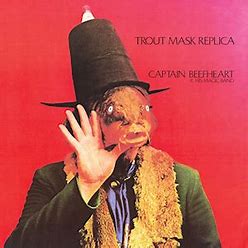
8) Captain Beefheart—Trout Mask Replica—This is the strangest album on this list, and one music magazine rated it the second strangest albums ever made (behind Todd Rungren’s A Wizard/A True Star). We don’t know what went on in the mind of Van Vliet, when he created this Joycean mess, that some call “anti-music in the most interesting and insane way.” The most listenable track, and that’s compared to the others on this album, might be Ella Guru. Cartoonist and writer Matt Groening tells of listening to Trout Mask Replica at the age of fifteen: “I thought it was the worst thing I’d ever heard. I said to myself, they’re not even trying! It was just a sloppy cacophony. About the third time, I realized they were doing it on purpose; they meant it to sound exactly this way. About the sixth or seventh time, it clicked in, and I thought it was the greatest album I’d ever heard”.

If Trout Mask Replica is one of the strangest albums ever created, Pena might be the strangest, most inaccessible song ever made. It’s so discordant, we might want to reconsider whether to classify it music. It is, but it stretches the boundary that much. If you convince a friend to listen to this album, prepare for the backlash, as they might consider it a mean practical joke. If you listen to this song, do not do so at high volume, for you will run across the room to shut it off. It might be one of the least melodic songs ever made from the least melodic album ever created. Friends don’t understand why I love this album, and to tell you the truth I can’t explain it, but it’s not weird for the sake of being weird. It has its own inexplicable mathematical appeal that very, very few will appreciate.  

If you brave all of these disclaimers and decide to listen to this album, and you find yourself getting “fast and bulbous” after repeated spins, you might want to reconsider recommending it to friends. Be prepared for some of them to hate this music with such feverish intensity that they hold it against you personally for recommending it to them.

7) PJ Harvey—To Bring you My Love—This is PJ’s strongest album to date. The two albums she made prior to this one were incredible, but To Bring you My Love made those two albums look like building blocks to this one. Her albums following To Bring you My Love run the gamut from relatively boring to fantastic, but To Bring you My Love was without question her peak. One album of note following TBYML is White Chalk. It’s the most powerful quiet album you might hear. The standout tracks on To Bring you My Love are: Meet Ze Monster, Down by the Water.

6) Mr. Bungle – Disco Volante— If Trout Mask Replica is the second weirdest album ever made, and I don’t think it is. I think it’s number one, I don’t think A Wizard/A True Star compares in the category of strange, but I don’t enjoy it as much as the others on this list. If Trout Mask Replica is number two, then music critics and writers should consider Disco Volante third on this list. This is an album of songs, as opposed to an effort with a cohesive theme. Each song is so different that they probably don’t belong on the same album. The only song that is less than brilliant is Everyone I Went to High School is Dead. I am not a track skipper, but I skip this song every time. The most brilliant song on this album occurs at the 4:42 mark on Carry Stress in the Jaw. Some listings, list it as [The Secret Song]. My advice, if you choose to accept it, is listen to this album from start to finish. Then separate individual tracks out in playlists, or what have you, to appreciate each song in its own right, until you obsess over them and you know every beat so well that you might be able to play them yourself (I say as an individual who hasn’t picked up an instrument in decades, and even then I couldn’t play them).

The strange element of Disco Volante defines strange people. Listeners who have a strong foundation of normalcy can listen to this album unscathed, but if you have any fear that you might be abnormal, be forewarned that if it gets around that you enjoy Disco Volante, your friends and family will consider you strange. That sounds like a joke, but I’ve witnessed it. Those who are totally normal will not enjoy this album, because it’s so weird, strange, and just plain different from any album of music I’ve ever heard. I know that goes against everything I wrote in the previous paragraph, but I think it’s that weird. Disco Volante is only for weird, strange, and just plain different listeners who are confident that they can survive all of the recriminations that will follow saying that you like this album.

[Writer’s Note:] When I went in search of this album, as a completist who needed to own everything attached to the names Mike Patton, Trevor Dunn, and Trey Spruance, I walked into a Music Land at a mall one day (yes, I’m that old), and I asked the employee if he had an album called Disco Volante. He stared at me silently. A small somewhat bemused smile began to curl at the corner of his lips. “It’s by a group called Mr. Bungle,” I said in the weird, somewhat uncomfortable space that followed. 

“Very funny,” the employee said. “Who put you up to this?”

“What?” I asked looking around. “I want to know if you have an album that I have been trying to find.” We stared at each other for an uncomfortable moment after I said that. “I’ve been to all the record stores in town, and they don’t carry it. None of them do.”

“Seriously, who sent you in here? Was it Sandy?” After a brief back and forth that consisted of me convincing him that no one sent me in his store, he said, “No, this place would never carry an album like that.”

The man was wary of me, as if he expected a group of camera men to enter the store to reveal the practical joke we were all playing on him. 

“Okay thanks,” I said. As I turned to leave, I said, “Why would you think it’s a joke to ask for an album?”

“That’s my favorite album of all time,” he said, “and a couple months ago I joked with my girlfriend that no one would ever come into a Music Land in Bum[fudge], Nebraska to ask for it. So, when you asked for Disco Volante, I thought she sent you.”  

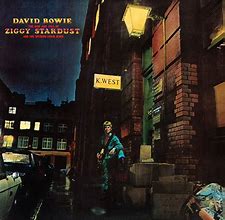
5) David Bowie–Ziggy Stardust and the Spiders from Mars—Perhaps no musical artist in the history of music made the weird, more mainstream as well as David Bowie. He was an organically different man who made weird music. If he were alive today, he would confess that he wasn’t as original as critics often said he was. His music was an amalgamation of the weird.

Ziggy Stardust might be the most popular and least obscure album on this list, but it’s so old that I wonder how many people have never heard of it. A few mainstream artists in that era tinkered with the weird, but very few of them explored it as thoroughly as Bowie did while achieving some level of fame for doing it. I could’ve picked any of a number of Bowie albums to include on this list (Hunky Dory, Alladin Sane, Diamond Dogs, Low, Lodger, Scary Monsters, and even Blackstar), but Ziggy seems to be the most accessible starting point for Bowie novices.  

The best songs are the first four songs on the album, and the last six. The only song to skip on the album is It Ain’t Easy. I have to think Bowie had other songs to put on this album that he dismissed in favor of It Ain’t Easy. [Special Mention:] The best non-Ziggy Bowie songs that every Bowie fan needs to hear again and again, Alternate Candidate (This is a tough song to find, but I found it on YouTube) and Lady Grinning Soul.

4) Mother Love Bone—Apple—If I were a musician, this is the album that I would’ve created. I loved playing around with words, and I loved describing the normal in hippy, trippy ways. Apple is thirty-years-old now, and it doesn’t have the appeal to me it did back then, but the music and the lyrics that Ament, Gossard, Wood, and the rest created captured me in a time and place manner that no music had before and few have afterward. To say I was blown away is an understatement. I listened to this album in a way others listened to The Beatles, Elvis, and The Rolling Stones.   

Some critics, musicians, and others who know far more about music than I do, say Pearl Jam was better in every possible way. (A number of the members of Mother Love Bone gathered together and found a new lead singer after Wood died to form Pearl Jam.) I disagreed, and I still disagree, but when you’re a member of the screaming minority, you eventually buckle to those who know more than you. They didn’t change my mind, of course, but I recognize the limits of my musical knowledge, or my taste. I loved Pearl Jam, but Apple absolutely blew my mind.  

The story of Mother Love Bone is a sad “could’ve been, should’ve been” tale that could’ve and should’ve rewritten the narrative of the whole Seattle, movement in the early 90’s. Andrew Wood, the lead singer, died of a heroin overdose at 24, a month before the record company released this album. If this album received the promotion record companies normally put into an album in which they outbid five other record companies, coupled with radio airplay, touring, and all that, this album would’ve been the first multi-platinum disc coming out of Seattle in the 90’s. This album, this group, would’ve been bigger than the later incarnation Pearl Jam in my humble opinion. 

I think Apple would’ve been so big that it would’ve divided Seattle into two camps, those who loved the silly, rock star side versus the serious, sad, and angst-ridden Nirvana side. It would’ve been Mother Love Bone versus Nirvana, and Nirvana probably would’ve hated Mother Love Bone the way they came to hate Pearl Jam. (They may have hated them more, due to the contrasting styles of the two, as Pearl Jam wasn’t such an exaggeration of differences.)

The tracks on this album might all have a certain familiarity to them, as glam rock, arena rock fans will recognize some Queen, with a dash of Zeppelin, a little Elton John mixed in, and a big morsel of Aerosmith mixed in the stew, but Mother Love Bone combined these influences with a heavy dose of individual interpretation mixed in. I’ve read commenters on Allmusic.com say that the Apple has not aged well. As I wrote, thirty years has dulled the magnitude of this album for me, but I still do not have such perspective on this album, for I am an adoring fan boy who cannot view Stargazer, Captain Hi-Top, Gentle Groove, Crown of Thorns, or Lady Godiva Blues from an objective perspective. When people talk about how they still love the music from their late teens/early twenties, this album is one of the primary ones that formed that inner core of my favorite music.  

[Writer’s Note:] Some suggest that the Seattle music from the early to mid-90’s killed rock and roll. If we look at the timeline of rock and roll, we could easily make that leap with them, but I would suggest that the Seattle music, that some call grunge, might have been the last gasp from a dying beast. Seattle music was retro. It was Black Sabbath, KISS, T. Rex, and various other artists from the 70’s. It was a return to the music before the glam, heavy metal 80’s redefined everything. If we could go back through the timeline and remove grunge, rock and roll would’ve died earlier after the damage the music of the 80’s did to it. Grunge was the chemotherapy that kept a stage 4 cancer victim alive for a little longer beyond its life expectancy, and I suspect that if Andrew Wood hadn’t needed one more heroin fix, rock and roll might have remained on a life support a little longer.   

3) Pavement—Wowee Zowee— This album might form the basis of my album oriented preferences, for I find it difficult to pick just one track to note. This album should be listened to top to bottom. Rattled by the Rush might be one of the few songs on the album that follow a traditionally accepted song structure, but I find it hard to hold one song out for individual praise. This album is a collage album, a collection of songs that didn’t quite fit on their previous albums. Some call them pastiche albums. Whatever the case is, I loved this album so much that I honestly don’t care that some might consider it inferior to their two prior albums, and I loved (and I mean LOVED) their two previous albums. This album achieved something so different that it achieved the hallowed status all artists strive for with their fans of being “my music”. The previous two albums might have been better on the scale critics use to rate such albums, but I love Wowee Zowee more for the intangible qualities that leads us all to prefer some albums more than others. I won’t write that every track is perfect on this album, but that’s its appeal. Wowee Zowee is a raw, flawed album in serious need of better production, but seeking perfection with more production would also ruin whatever raw intensity the fellas in Pavement captured here.

2) King’s X—Gretchen Goes to Nebraska—Some grunge artists say this was the first grunge album. Some suggest that Alice in Chains took the sonic formula of this album and applied it to their album Dirt. Listen to the two albums back to back, and you’ll hear a surprising number of similarities. One of the members of Alice in Chains joked about it with a member of King’s X, saying, “We need you to come out with another album. We need a new sound.” (The author loves Alice in Chains, and the album Dirt, and he does not intend to diminish the band or their best album.)    

The Burning Down and The Difference are the only two songs on GGN that I skip. Other than those two songs, I’ve gone through phases with just about every other track on this album. The uninitiated should start with the hit, Over My Head, move onto Summerland, Everybody Knows a Little Bit of Something, and then work their way through the rest of the album song by song. By the time the intrigued listener is done, I don’t know how anyone could say these guys didn’t write beautiful, transcendent, and timeless music.

Normally, I couldn’t care less if an artist makes it or not. Mainstream music is just that, and as this list indicates, I am not a huge fan of mainstream music. The idea that King’s X didn’t achieve mainstream success, and others did with their formula pained the members of the band and their producer Sam Taylor. I doubt that any of the others on this list, save for Bowie who achieved worldwide success, experienced depression as a result of the lack of sales. They had to know, somewhere in the production of their album that it would not appeal to the masses. King’s X wanted it, expected it, and they experienced some depression as a result. The idea that very few regard King’s X as one of the top bands of its era, however, seems like an historic injustice to me that it needs to be rectified.

Other artists, and some critics, adored King’s X. A compendium of quotes from them suggest that on talent alone, coupled with the producer Sam Taylor, and the combined and consistent efforts found in the first five albums that King’s X created should’ve led them to the hallowed Beatles status. Upon discovering King’s X, reports state that Sam Taylor said he thought he found the next Beatles. King’s X were a combination of progressive metal, funk and soul, combined with vocals that remind one of gospel, blues, and the various groups in the British Invasion.  

It confounded critics, and other artists, why this band never broke through to the mainstream. In my experience, King’s X had two strikes against them, their looks and the “God thing”. Anytime I introduced my friends to Gretchen Goes to Nebraska, it blew them away. “Who are these guys?” they would ask. When they investigated them on their own, and they saw them on MTV, they soured on them to the point that they didn’t buy their album. The lead singer (Doug Pinnick) had a funky look. He had a high mohawk, and he was black, and there was something different about him. (He was/is gay.) Coupled with that, King’s X lyrics were uplifting and spiritual, and some critics labeled them “God music”. Sam Taylor and King’s X had gorgeous musical arrangements, Beatle-like harmonies, top-notch production, and the record company supported them, but Doug Pinnick looked funky, and their lyrics suggested they had a “God thing”.  

King’s X might have been one of the few bands who were hurt by the video age of MTV, for when people saw them they thought they were weird, and not in a good way. To further this thesis, Alice in Chains took the King’s X formula, and they fit the mold better than King’s X did. As much as we hate to admit it, the idea that the lead singer (Layne Staley) was a junkie and on the verge of overdosing had/has enormous appeal to some, their look was more socially acceptable, and the idea that they were obsessed with the dark elements of death had far more appeal than King’s X spiritual and uplifting lyrics. I consider that opinion so based in fact that I don’t consider it debatable.  

Alice in Chains was also cool in all the tangible and intangible definitions of the term, and King’s X were the antithesis of cool. What’s interesting, on this note, is that most of those who bought AiC’s albums, considered themselves the opposite of superficial. They considered themselves deep, thoughtful people who wouldn’t buy an album based on the band’s look. They loved the music on Dirt, but they didn’t buy music equal to, if not superior, to that on Dirt, and it all boiled down to looks and a packaged commodity that they considered nonconformist. 


more consumable, and the idea that the latter was “God music”.     

1) Mr. Bungle—California—This album, particularly the songs None of Them Knew They were Robots, Retrovertigo, The Air-Conditioned Nightmare, Goodbye Sober Day, and Ars Morendi, are timeless classics. As opposed to most of the albums I’ve listened to on this list that I’ve played so often that I have to remember how much they affected my life when I first heard them, California sounds as fresh and vibrant to me as the first day I listened to it. Pink Cigarette and Sweet Charity were, of course, my first loves on the album, but to my mind there’s something wrong with people who fail to recognize the greatness of those five songs.