2020 was a huge year in the DIY (Do-it-Yourself) industry. We spent so much time inside, isolated, that we spent record amounts on DIY tools and accessories to accommodate what we thought might be our new reality. We spent so much time inside, isolated, that people who rarely used a tool were now purchasing power tools. Faucets, kitchen cabinets, and toilets were flying off the shelves. Home Depot saw a 20% increase in net sales, and Lowe’s saw a 24.2% increase. We spent record amounts on DIY tools and accessories to accommodate what we thought might be our new reality.
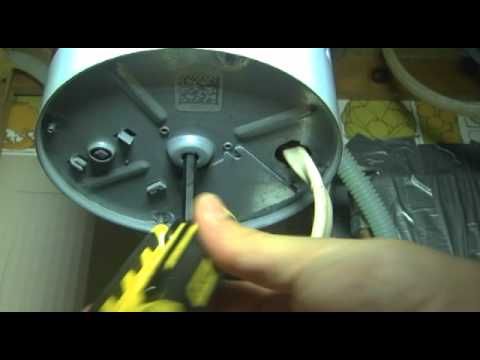
I thought it might be a revolution in individual empowerment, but the number one answer given to pollsters on this subject was “[I] finally having the time for it.” Translation, I always knew how to do this stuff, I just never had time for it before. The numbers reflect that, as DIY industry numbers have plummeted since 2020 back to normal, but those of us who didn’t know what we were doing before COVID, but learned it within, took our first bite of that apple and found the flavor empowering. We found fixing things ourselves less intimidating after seeing an oaf with a mustache on YouTube explain that insulating our attic and changing our garbage disposal can be accomplished in ten easy steps.
Bob Peters didn’t know anything about plumbing, HVACs, appliances, or anything else in his home that required fixing. Anytime he had a problem, he just called an expert. Mr. Peters would’ve loved to fix his belongings in the beginning, but he never learned how to do it. His dad was probably less informed and less experienced in fixing things that he was, and Bob spent the first twenty years of his adulthood living in apartments. After purchasing his own home, Bob knew he was physically capable of fixing his fixables, but two minutes after opening these things up, he felt overwhelmed by the idea that an idiot like him could do it.
“One huge part of intelligence,” Bob often joked to friends and family who encouraged him to fix these things himself, “is knowing your limitations.”
Bob Peters wasn’t an idiot. He worked hard, and his hard-earned expertise, in his arena, was valued and well-compensated. He didn’t have the time or the wherewithal to Do-It-Yourself (DIY). During COVID, the individuals weren’t as overwhelmed as the certified, licensed experts. The wait times were insane.
“I understand your frustration, but if you knew what we were up against, you would understand.” The resultant desperation led Bob to discover the oafs with mustaches on YouTube. These oafs were licensed plumbers, certified HVAC guys, and former and current employees at the companies that manufactured the appliances Bob owned. They were experts in their field hoping to make some side money in the YouTube universe. They taught Bob that he no longer needed Mike the plumber, Leo the HVAC guy, and Craig the fix-it-guy to fix everything in his home. He could do some of this himself. The idea that an unlicensed, uncertified individual could fix the small things in his home “by following these steps” was a revelation to Bob Peters, and the only question left for him was how far do I take this?

We’re not licensed plumbers, yet we can fix some of the majors, and most of the minors, in a little under an hour with the assistance of the ideal YouTuber. Bob even found that messing with electricity isn’t as scary as he thought it was. He maintained a healthy respect for electricity, but that healthy respect was a healthy fear prior to an oaf with a mustache informing him that as long as he followed “these necessary steps,” the electrical world wasn’t as foreign and scary as he thought it was.
The problem for Bob was that as healthy as his home, and now his car, were now through DIY maintenance, he could never maintain his own health. “How far do I take this?” he asked himself when he experienced yet another setback, a level of pain that suggested he was going to have to endure yet another emergency room visit.
Bob’s life devolved to seemingly endless trips to doctor’s offices, rushes to emergency rooms, and some hospital stays. The routine was so demoralizing, painful, and tedious that in the midst of Nurse Nancy attending to him yet again, he said, “I just have this feeling that this is my life now.”
Those employed in health-related institutions gain knowledge, wisdom, and a level of expertise from books, professors, and personal experience, but they are methodical sorts who can leave a fella waiting, in pain, for thirty-to-forty minutes. I know what you’re thinking, a thirty-to-forty wait isn’t such a bad thing in the grand scheme of things, but when you’re in excruciating pain, each click of the minute hand feels endless. These doctors and nurses further complicated Bob’s life with all of their monitoring. They suggest that they need to keep us, sometimes overnight, to monitor the effects of our medicinal and procedural treatments. Bob Peters just got sick of the whole shebang, and when he experienced yet another flair up, he wondered “How far can I take this DIY stuff?”
He’d been through the process of having a catheter inserted into his nether region so many times that he joked, “I could probably do this myself at this point” to Nurse Nancy the last time she helped him through the painful procedure. He repeated that joke, in his head, as he waited in the hospital room that last visit, as they monitored his levels. He then repeated that joke to his friends and family when they asked how his last visit went, and he ended up repeating that joke so often that when he experienced another flair up, he began seriously contemplating it. Even though his friends said, “You’re not seriously considering this are you?” He said no, and he meant it, but now that he was in need yet again, and he thought about going through all the typical procedures again, he began seriously considering it.
The beauty of YouTube is that they list for us the bullet points of most DIY projects. Most viewers at home were so uninformed we didn’t even know there were bullet points and finding them proved an empowering revelation. The one caveat that experts list for anyone considering YouTube-style DIY fixes is that oafs with mustaches often don’t cover variables well.
Bob came to our attention after experiencing just such a variable. He consulted a YouTube video that instructed him how he could insert a catheter from the comfort of his own home. The oaf with a mustache covered the basics, the principles behind it, and a number of caveats and variables, but he neglected to cover whatever led to Bob experiencing what he called “a warm rush of liquid” that occurred shortly after he inserted the catheter.
“I didn’t hear a pop,” Bob told Nurse Nancy, “But that warm rush of liquid concerned me, and I’ve been urinating blood since. And, it ain’t stopping.” Although he managed to drive himself to the emergency room, Bob characterized his pain as a ten on the pain scale. “I always characterize the pain I feel as a ten, don’t we all, but the pain I’m experiencing right now gives me new perspective. I’m going to go ahead and edit all those previous pains as sevens now.”
Fearing the worst, Bob suggested that Nurse Nancy have the doctor, “Check to see if I punctured one of my testicles.” Those in charge of making preliminary guesses, guessed that Bob didn’t do anything as drastic as that, and he probably scratched something or popped a boil of some sort, but they knew that without further analysis, the possibilities were endless.
Unfortunately, we don’t have the details of this furthered analysis, but suffice it to say that Bob found an answer to the question, “How far do we take this?” As a relatively new advocate for Doing-It-Yourself, Bob probably sounded like an evangelist on feelings of empowerment inherent in being able to fix your own fixables. Even after his episode, he would stand behind the DIY sword and shield, but he would encourage those of us who ask ourselves “How far do we take this?” to ask one crucial question: “What’s the penalty for error?”
Bob would probably add that even in the age of oafs with mustaches on YouTube, AI, and the resultant sense of individual empowerment inherent in fixing it yourself that there is still, at this point in human history, as of yet devoid of superhumans melding with AI, a need to avoid traveling in areas we don’t belong. As much as the not-easily-intimidated crowd hate to admit it, there is still a need for knowledge and expertise in certain arenas. There is still a need for professional analysis, waiting on those with firsthand knowledge, experience, aptitude, and all of that monitoring for the effects of all of the above. What’s the penalty for incorrectly installing a garbage disposal? What are the penalties for making errors in trying to fix an HVAC, their electricity, or their plumbing? “Go ahead and pay attention to all those ‘Don’t try this at home’ disclaimers that oafs with mustaches list on their YouTube videos before they start in,” Bob might add, “because some drains are more intricate, delicate, and indispensable than others.”


 Rilaly