‘Good Boy!’


“Try saying something other than ‘Good boy’ to your dog the next time you reward them for good behavior,” said a human who claimed to know more about dogs than other humans. “Your dog gets tired of hearing the same phrases over and over again. Mix it up and keep it fresh to allow for greater stimulation of your dog’s mind.”

I am not an expert on dogs, but if this is expert advice, then I wonder how we qualify the term expert. “They spend a lot of time around dogs,” you say. Okay, but I spend a lot of time around my dogs, and I notice that they prefer that we keep it simple and consistent. This expert is basically suggesting that the best way to enhance our relationship with our dog is to complicate our relationship with them.

This expert is not talking to dogs here. He’s talking to us, trying to justify his title as an expert. If this expert said, “The next time you want to reward your dog for good behavior, say ‘Good boy!’” We would all question his title for saying what we already know. They know this, so they tweak our common knowledge in a harmless way that most of us won’t follow. If we do, we might try it once or twice and realize it doesn’tmake a difference, and we’ll all go back to saying “Good boy!” again to enjoy the simple, fun, and loving relationship we have with our dog.

My guess, if we could talk to our dogs, they’d say something along the lines of, “I’m going to be honest with you, I don’t know what you’re talking about 95% of the time, I don’t speak English, but I know tones. I’mperfectly happy with the arrangement we have right now, but if you feel the need to start messing with the five percent I understand, do what you need to do, but keep the tone the same.”  

If I could gather a group of experts to comment on this situation, I’m sure they would all condemn this expert advice, and I’m sure that their condemnation would leave me feeling temporarily validated. Yet, the other thing we know about experts is that they get their validation condemning another expert’s advice.

The Suspect 
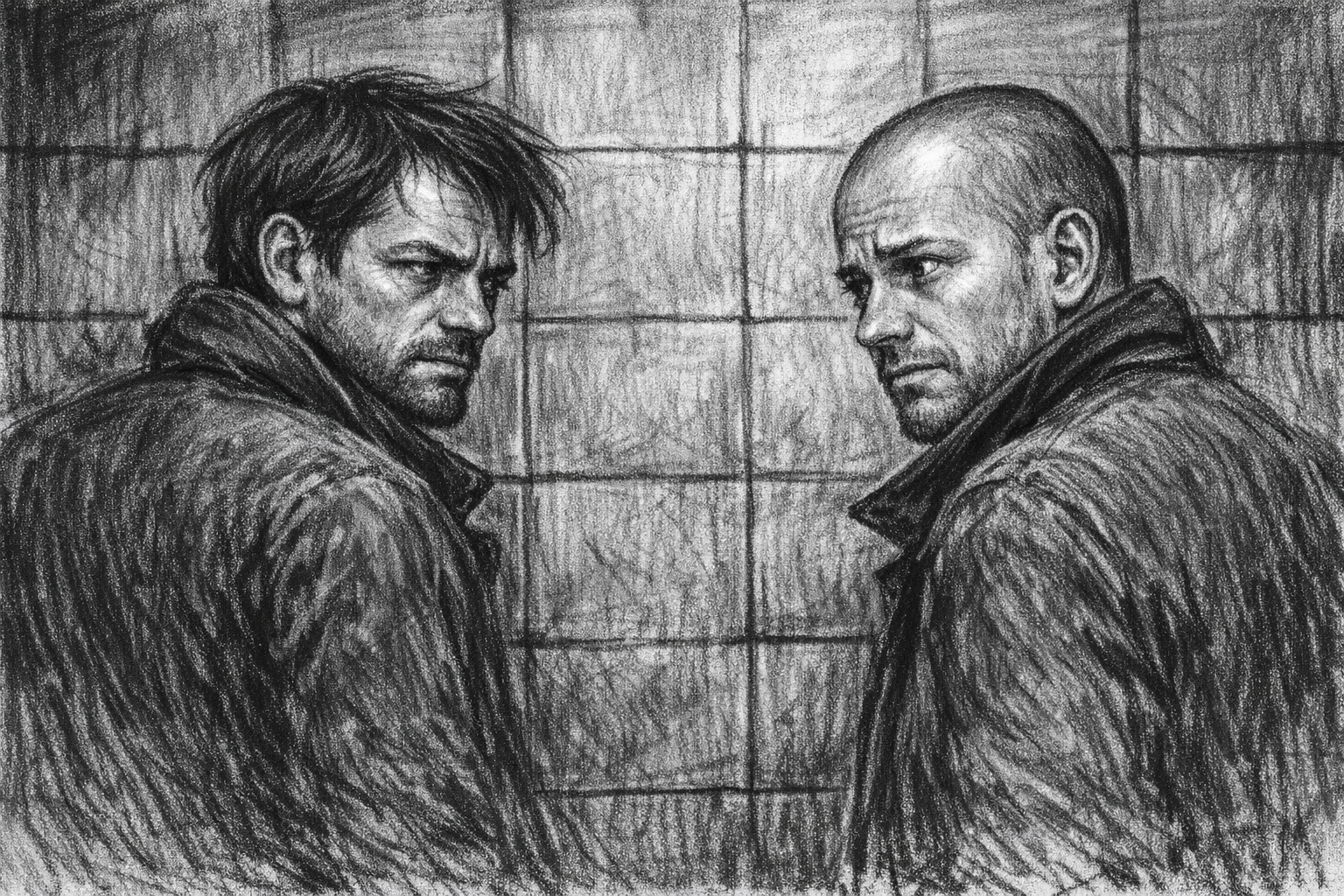
If I walk into a public restroom, and it’s obvious that something awful happened there, you’re the primary suspect if you’re the one walking out. You’re guilty until proven innocent, and there’s really no effective defense. I thought this was pretty damned hilarious, until I realized, while conducting my affairs, that I would have to time my exit perfectly to avoid becoming someone else’s primary suspect.

The Relative Definition of Beauty 

“If you’ve ever been to a male stripper’s joint,” Jane said. “You’ll see that nearly 100% of the female patrons of the joint are ugly, old, and out of shape women. There’s no way the males enjoy that?”
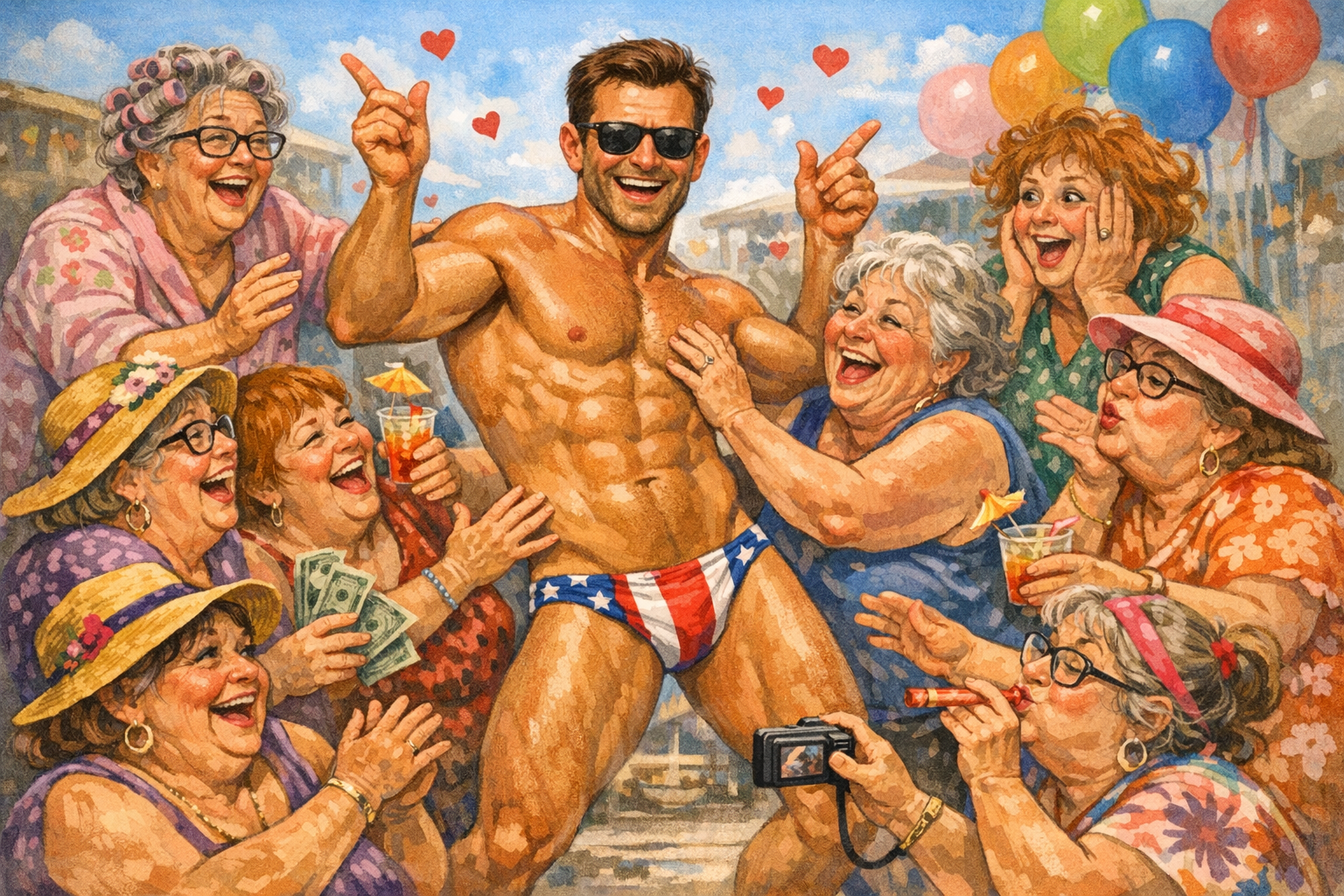
“Have you ever been fawned over?” I asked her. “Most women have. Most men haven’t. I’m sure gorgeous men get fawned over all the time, but most men don’t know they’re attractive, until it’s too late in life. They look back at pictures of themselves and realize that they were a lot better looking than they thought.” Women aren’t as generous with their praise. They seek to humble men. So, when a man gets fawned over by women, it doesn’t really matter to the man what the women look like.  

Everything in its Right Place 

I could never be a slob again. I’m not talking about the difference between clean and unclean as much as the difference between being organized and unorganized. Losing things bothers me more than being unclean. If I place a toothbrush on a bathroom sink, for instance, I’ll think about that toothbrush until I have a chance to put it in its proper place. If I don’t, I fear that it will somehow become lost before I need to use it.   

The History of Propaganda 

Most people have heard the phrase, “If we repeat the same thing often enough, people will believe it.” Evil historical figures have proven this is an effective tool to fool some of the people some of the times, but as Malcolm Gladwell wrote there is a tipping point to everything.

We’re all subjected to various forms of propaganda, everything from the more obvious political slogans to advertisements, but there is a moment somewhere between “I got it already” and “They’ve been pounding this drum SO often that I’m starting to think they’re up to something.” Some call this Message Fatigue and others call it the Backfire Point.

I don’t think this deduction requires a level of ingenuity or cleverness. It’s such a basic understanding of human nature that it’s kind of boring to read and write about. There’s one nugget that contributes to the survival of this myth, the stupidity of the man of yesteryear. Since most men of yesteryear lived without modern technology and conveniences, we all think they were a little dumber than we are. C’mon, admit it. We see old black and white daguerreotype photos of people, and we think hayseed, yokel types who barely knew how to read. “They fell for it,” we think, looking at them, and those of us who have iPhones, Google, and AI feel so much more advanced, even though we had nothing to do with those technological advancements, and we think we would never fall for propaganda. Or, if we did, we would have a tipping point, and they probably didn’t, because “Look at them. Look at what they wore.”

The ‘S’ 

I found a trivia question to stump the band: “What was the 18th president Ulysses S. Grant’s middle name at birth?” Answer, Ulysses. Wait a second, how did they get from Ulysses from ‘S’. Ulysses is his first name. His actual birth name was Hiram Ulysses Grant, but everybody called him Ulysses. If you had the opportunity to choose between the name Hiram and the central figure of The Odyssey, wouldn’t you choose the latter? Some sources state that the young Hiram Ulysses Grant hated his name, because his initials were HUG, but that doesn’t answer the question of how his official name went from Hiram Ulysses Grant to Ulysses S. Grant.
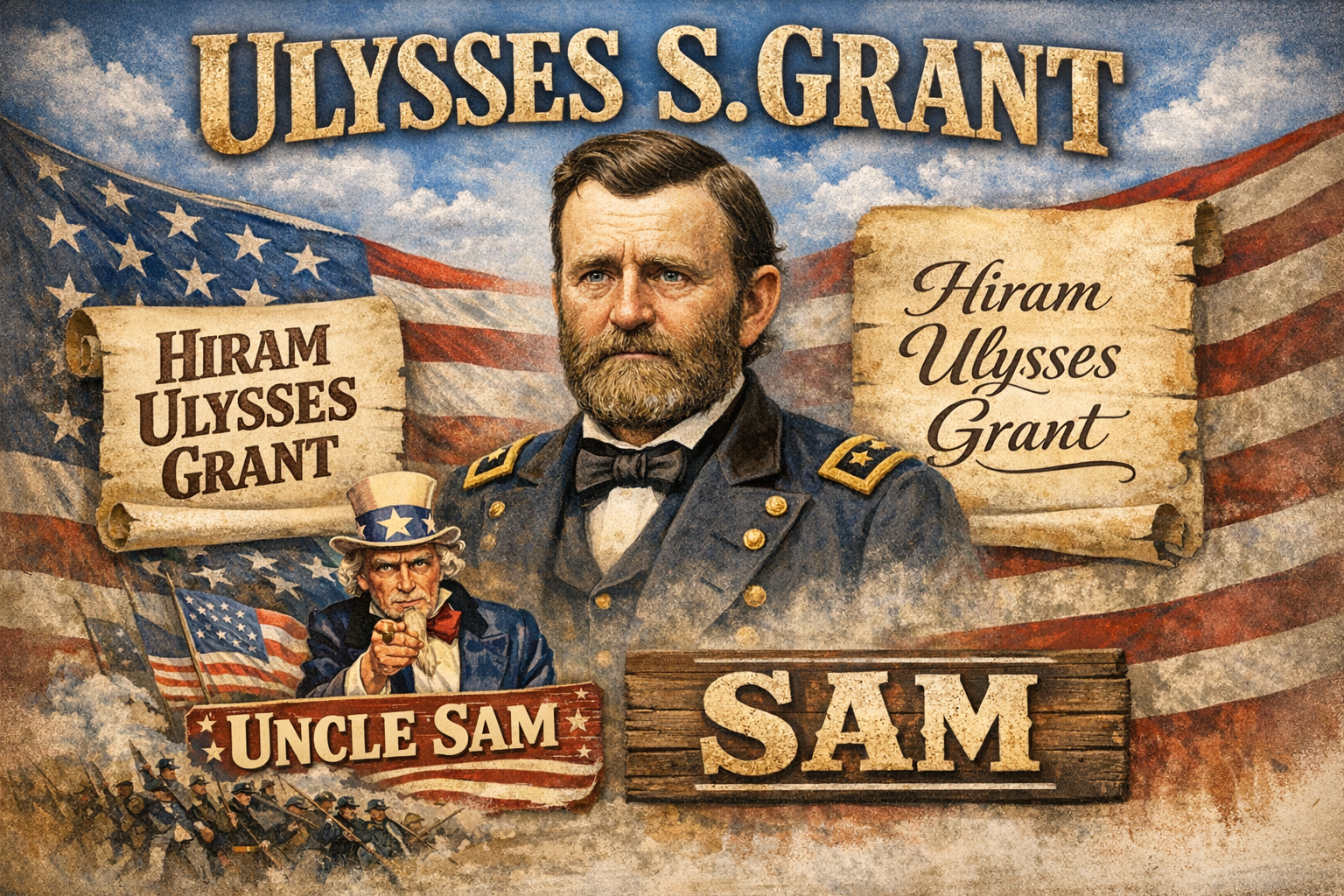
The confusion began after “Grant was nominated to West Point in 1839 by Ohio Congressman Thomas Hamer, who wrote Grant’s name in the application as “Ulysses S. Grant.”” Everyone called him Ulysses, so Congressman Hamer just assumed that was Hiram’s first name. Middle names weren’t as common in this era as they are today, as evidenced by the fact that Abraham Lincoln did not have one, so we can only assume that Hamer assumed Ulysses Grant didn’t have a middle name. The problem for Congressman Hamer was that the West Point application required a middle initial, and due to the fact that Hamer couldn’t just text Hiram to sort matters out, or call him, he decided to just fill the blank in that application to get it done. Congressman Hamer found out that Hiram Grant’s mother’s maiden name was Simpson, so he just added that famous ‘S’ on the application.

Aside #1 Harry S Truman middle name is ‘S’. It’s not ‘S’ period, because it’s not an abbreviation. His parents couldn’t decide whether to name him after Solomon Young, Harry’s maternal grandfather, or Anderson Shipp Truman, his paternal grandfather, so they compromised and just gave him the middle name ‘S’.

Aside #2  Grant’s fellow cadets at Westpoint noted the patriotic arrangement of Ulysses S.’ initials, and they began calling him U.S. Grant, Uncle Sam, or just Sam.

Aside #3 “In an 1844 letter to his future wife Julia Dent, Grant wrote, “You know I have an ‘S’ in my name and don’t know what it stand (sic) for.”

“Grant made several efforts to correct the mistake [Ohio Congressman Thomas Hamer made], but the name Ulysses S. Grant stuck.” So, the correct answer to the trivia question what was Grant’s middle name was Ulysses at birth, but an error by a congressman permanently changed his middle name to ‘S.,’ which was an abbreviation for his mother’s maiden name: Simpson. So, the error by a bureaucrat was compounded by a bunch of lazy, incompetent bureaucrats who didn’t want to do more paperwork? I can only imagine that when Grant attempted to correct the record, the bureaucrats   at West Point said, “Do you know how much paperwork changing a name involves? It’s incredibly tedious, and are you really going to fight for a name like Hiram?” My guess is Hiram Ulysses Grant didn’t give up easily, because he was a fighter, and the bureaucrats were talking about permanently changing his name on the record. My guess is the lazy bureaucrat pounded it home with a compelling argument along the lines of: “I think the congressman actually did you a favor by fixing the error your parents made by giving you the incredibly nerdy name of an accountant. Ulysses was the name of Homer’s warrior, and it could help you rise through the ranks of the military if you have the name of a warrior.”

Hiram Ulysses Grant did, in fact, rise through the ranks of the military, becoming General of the Army of the United States, a fourstar rank created for him in 1866. This rank made him the senior officer of the U.S. Army and the first person since George Washington to hold a comparable level of authority. Then, of course, he became the 18th president of the United States. If we could ask Abraham Lincoln how the Civil War would’ve progressed without General Grant, he probably would’ve said, “I don’t even want to think about that.” If Grant managed to correct the record and made Westpoint change his name back to Hiram Ulysses Grant, would Lincoln have trusted the fate of the nation to an accountant? I’m sure soldiers and generals offered testimonials to bolster Grant’s credentials, but Lincoln would’ve ended each reading with, “But his name is Hiram.” Some historians would suggest that the Civil War wouldn’t have ended as quickly as it did without the leadership, and some might add the utter brutality, of Ulysses Grant’s leadership, tactics, and strategies. Some suggest if it weren’t for him, the nation might not be united in the manner we know it today, and his stature might not have happened without the mistake of one bureaucrat and the probable laziness of a bunch of other ones. Now, you might say that I’m connecting and disconnecting a lot of dots to complete a story with ifs, buts, and what-ifs, but isn’t that how a number of stories of history were made and unmade?

Mr. Fehrley was not Just a Dog


“It’s just a dog,” he said. “We can’t help but grow so attached to dogs that we end up loving them, but in the end, they’re just dogs.”

Just a dog? Just a dog?!” we say. “Do you have any idea how much I loved that dog?” In their reaction to our defensiveness, we see that while we all grieve in own ways, some of us console in our own ways too.  

Years prior, I took a vacation. I had another dog that I had to kennel him for that time. “What if he comes back different?” I asked in a rhetorical manner. “I’ve heard it happens. I’ve heard that some dogs don’t want to play as much when they come back from a kennel stay. What if my dog is different when I pick him up?”

“Get a different dog,” he said. When I argued, he added, “What is a dog’s job? Their job is to play with you, let you pet them, and provide some companionship. If you pick up your dog, and he’s not doing his job anymore, get another one.” This unemotional, almost mathematical response did not come from Siri or Alexa, but from a living, breathing human.

“When your child begins to turn on you, in all of the rebellious ways our offspring will, are you going to get another child?”

“A child is a complicated human being,” Alexa and Siri, disguised as a human, said, “but a dog is just a dog.”  

In science, a dog is just a dog, and he shouldn’t matter as much as human do in our pack. In mathematical principles, a dog has a lesser denominator. When they remind us of the equations involved, it should console us to know that math and science offer more permanent and indestructible solutions that contain order and eliminate the random matters that are so difficult to control, and chasing an emotion like happiness is a messy, chaotic proposition that never ends well.  

Contrary to his anthropomorphic name, Mr. Fehrley was nothing more than a dog who managed to carve out a prominent role in our lives, our family, and a prominent and permanent place on my list of best friends of all time. As painful as the shock and awe of his demise was to us, we all knew we would have to move on in life. As Franz Kafka once wrote, “Everything you love will probably be lost, but in the end, love will come back in another way.”

Denial, anger, bargaining, depression, and finally acceptance are the traditional stages of grief. Everyone grieves in their own way, and some of us go through reeling, feeling, dealing, and healing. In the dealing stage, we accept the idea that “Everything [we] love will probably be lost,” and that it’s the nature of existence for survivors to be left behind, but for some reason the math doesn’t make it any easier to sort through all of the messy emotions involved in trying to achieve the healing stage.  

We’ve all experienced loss of loved ones, and as painful as the reeling stage is of it is, we know we’ll recover. We’ll never forget, but we will move on. When we make some strides to move through the reeling and dealing stages, the pain of routine takes its place. The immediate memories strike us during the reeling period, but when we encounter the little moments of routine, they can prove just as emotionally crippling in the healing stage.

We had a morning routine with Mr. Fehrley, a treats routine, the routine of the “bye-bye” car rides, the long walks to the fence, and the night routine. When the morning after arrived, it dawned on us that there was a gap in our being that we never knew existed until he filled it by resting between our legs on the ottoman. When the time for the other routines arrived, and the new dog didn’t respond with puppy-like glee, we realized that we made those routines so exciting. When the wound is still fresh, our routines of life feel just a little more empty, and boring. If we explain this to anyone outside our home, they might smile politely, and they might recognize the power of routine through those they have with their own dog, but they’ll never understand how important these little routines were to us.  

Mr. Fehrley was just a dog, but I never realized how affectionate he was. I never realized what a luxury it was to have a dog who always wanted to be around me, leaning on me, and touching me. I sit on the couch now, and no one leaps into my lap anymore. I go out to the backyard, and no one wants to join me, and no one even notices when I’m gone. I return home, and no one is overjoyed to see me. These are but examples of what a dog can add to a person’s life, and if the reader has a dog who is so affectionate that it can be annoying at times, I tell you to appreciate it for what it is. It doesn’t last forever, as we all know, but we should all take a moment to create a memory we’ll wish we created when they’re gone. 

We had a basketball routine. Every time we went to play basketball at the park, we almost always brought Mr. Fehrley along. Mr. Fehrley stayed on the outskirts of court, sniffing everything available to him, running in circles for no apparent reason, peeing, pooping, and playing with imaginary friends.

“Aren’t you afraid he’ll run away?” an observer asked when he noticed that Mr. Fehrley wasn’t leashed, and that he stayed within certain parameters. There was no accusation or condemnation in the man’s voice. He was in awe of the discipline Mr. Fehrley displayed by not running off. 

“He ran off before, numerous times, and we had a number of reactions. One of them was to leash him up. Another was to take him home and not take him on such outings again for a while. After a number of these incidents, he learned that if he wanted to go along with us and remain unleashed he would stay within certain defined parameters.”

It might seem far-fetched to say that a dog can learn lessons in this sense. Most people don’t think a dog can associate not going out with us as a punishment for a momentary, small transgression. Most people don’t think a dog could make that type of connection, especially when an amount of time between outings occurs, but I’m telling you, as I did the observer that day, Mr. Fehrley did make those connections.

A friend of mine once said, “A dog spends their whole life trying to make us happy.” Based on the actions and behavior of my dog at the time, I disagreed with her. Mr. Fehrley taught me that he learned when we’re happy, he’s happy. Mr. Fehrley was a bright dog who learned his lessons well. He was, by far, the best dog I’ve ever owned.

“My dog would never stay like that,” this observer added. “You give him an inch of freedom, and he strives to take a mile.”

The initial instinct is to regard that comment as a compliment to the manner in which I raised and trained Mr. Fehrley to stay within imposed limits. If I didn’t train him to learn those imposed limits, through repetition, I wouldn’t have been able to do half of the things I did with him. I would’ve had to leave him at home in the manner everyone else leaves their dogs at home when they go out to do such things. Yet, when a dog passes away, and the cavalcade of emotions penetrates all of our vulnerable nerves, we think back on these conversations, and we wonder if we trained him so well that we trained him too well. Did we deprive him of some initiative, and did we inhibit some of what it means to be a dog?   

I initially thought the reeling stage would be the most painful part, but as with the progression of a physical injury, the healing stage proved almost as painful as the reeling stage. The realization that all of the routines we built up for ten and a half years were over proved to be one of the more painful elements. 

We had our little fella for a glorious ten and a half years, so it would prove difficult to appreciate him to the level I wish I would have every day for that long, but I regret some of the moments when I could’ve appreciated him more. Weather permitting we took this little 33lb, Puggle everywhere we went. Friends laughed at us for feeling guilty on those occasions when we had to leave him at home alone. Someone once said, “When I die, I want to come back as your dog.”

As happy as Mr. Fehrley was, and we provided him a fun, full life, I wasn’t spared the road of regret I feel that I took him for granted in some ways.

***

Justanswer.com suggests that there are approximately 68 million domesticated dogs fulfilling families in the U.S. alone. Even if we wonder how they arrived at such a figure, we all know that the figure is very high. What role do these dogs play in all of these households? Visit a home without children, and the dogs’ roles tend to play a more prominent role in that household. Even in homes with children, however, dogs play a prominent role. As kids love their dogs as much as adults do. Most of us love our dogs almost as much as we love our children, but we might never know the prominence they have in our lives until they’re gone.

If you’re anything like me, one of the first things you do when you enter someone’s home is seek out their dog. If you love dogs that much, you’re bound to encounter a dog you don’t enjoy. Some say they’ve never met a dog they didn’t like. I’ve met two. I thought their owners, guardians, or whatever people prefer to call human companions were relatively nice people. I later found out I was wrong, and I realized that our relationships with dogs tend to be symbiotic in that a dog can define a person in some ways, and a person can define a dog in some ways. Our personalities rub off on dogs, and their personalities rub off on us.

How much time do we spend around our dogs? How much time do we spend playing with them, talking to them, petting them, taking them to parks for walks, and everything else to shape and mold them? Dogs notice things. They pick up on behavioral cues, patterns, and routines, and they learn how to behave to get along with us better. If we say hello to everyone we encounter in a park, for example, they will too. If we’re confrontational people, our dogs might be more confrontational. How often do our neighbors have to raise and develop crazy dogs before they realize they’re the problem? 

Have you ever met a neighbor you initially considered relatively stable and friendly, only to find out their dog was out of control? Did it shape how we viewed that person? There’s usually a reason a dog is so out of control, and when we find out that that neighbor has another side to him, a nutty, out of control side, when he isn’t leaning over the fence for a chat, we learn to read our tea leaves better. We learn to pay more attention to their dogs. Our personalities help define our dogs, and they define us, and everything in between.

As we often say of those who pass, Mr. Fehrley died doing what he loved best. He died chasing a squirrel across a street. If you were lucky enough to know Mr. Fehrley, you knew that chasing squirrels was his joie de vivre (exuberant enjoyment of life), and he loved it so much that it became his raison d’être (the most important reason or purpose for existence). To deprive him of that would’ve been the more responsible thing for me to do, and I was warned, but I didn’t want to deprive him of that joy. 

Years prior, I saw a junkyard dog check both ways before crossing the street. The junkyard dog was everything you’d imagine. It had various sores, patches of hair, combined with some spots of mange and bald spots, and it also walked with a noticeable limp. I never saw a dog check both ways before crossing a street before, and I considered hilarious at the time. The more I thought about it, however, the more I considered it a little sad. This dog, obviously, had no one to protect it from harm. It obviously had to learn, from firsthand experience, how painful cars can be when they hit. The key to the junkyard dog’s survival involved checking both ways before walking across the streets cars drive on. Mr. Fehrley never checked both ways of course, because he didn’t know any better, because he never had to develop that survival skill. I did that for him. So, I could wallow in the misery that I forgot watch for him that one, fateful moment, or I could think about all the times I prevented him getting hit. Developing coping mechanisms such as this one help, as does having a family with which to share the pain, but when incidents like these happen, we all go through them alone. 

Art is Dog. Dog is Art


A man let his pet out for a tinkle. Nothing strange about that, right? His pet was a rooster. I was the visitor walking my dog passed his property, witnessing a homeowner doing what he does from the comfort of his own home, so I was in no position to evaluate his activities. Watching the man do that, led me to feel that I was a stranger in a strange land, and I couldn’t shake it. Other than this small, relatively insignificant episode, it wasn’t a strange land to me. Even though I was born and raised in a relatively industrial city, my home state is generally considered an agricultural one, and just about everyone I knew and spent some time in and around the agricultural industry. The state was I was now walking my dog in was so close to mine that I didn’t expect to see anything different from what I knew, and I didn’t, until this rooster sprang out the backdoor that the homeowner held open for him. 

I tried to look away quickly, because I didn’t want him to know I saw it. I didn’t want to share that uncomfortable smile that we share with someone after they do something we consider embarrassing, and I didn’t want to have to come up with some comment to lighten the load for him. Just before I could look away, the homeowner waved. It was a hearty wave, strengthened by a pleasant smile. The man’s smile and the wave suggested that letting a rooster out in the backyard was nothing but routine for him, and there was no reason for me to stress out about it in the moment. I returned the smile, waved back, and continued walking my dog.

While attempting to force the conclusion of the episode in my head, I almost missed the rooster rush the fence after it saw how close my dog and I came to its territory. It quickly ambled down the considerable stairs that descended from the porch, and it sprinted across the yard to us, until its beak protruded through the fence. It eyed my dog, and it eyed me. It offered us an unmistakably foreboding eye to caution us against stepping any closer. It did not cockle-doodle-doo us, but some sound, like a bark, seemed like the next logical progression to punctuate its warning. 

It followed us along the fence line with that foreboding eye. The silent tension percolating between us was not one of fear, but I was so confused that I wanted to hurry up and end this episode before a more confusion progression occurred. The writer side of me wants to write that when we reached the end of its fence line, it stood there watching us as if it didn’t know what to do, but even though its actions were born of mimicry, the rooster appeared to know exactly what it was doing. The rooster’s actions were so foreign to my limited understanding of roosters that they unnerved me. They unnerved and confused me so much that I thought if I were a four-to-five-year-old when I experienced this episode, I might walk away in tears. Especially, I thought, if this rooster tried to bark. If it tried to bark, or make some sort of sound to punctuate its warning, I thought it might rattle my foundation in the same ways some of the early David Lynch films could. 

I forgot about this incident soon after that walk ended. I didn’t consider it a “You’ve got to hear this!” type of story for months. I considered it a “you had to be there” story where so many stories go to die. When one of my friends told me a story about an incident that “kind of freaked them out a little”, I dropped this story on them in that “You think that’s weird, get a load of what happened to me one day” vein that we do to outdo their stories. His reaction to this story was such that I began telling it so often that it became my story. I told it so often during the next year, that when I returned to the locale where it happened, I began telling it again without proper foresight.

“Oh, that’s my brother Harley,” a man said. “He has a pet rooster.”

Harley’s brother interrupted me in full story mode. I was in my element as a storyteller with a number of people listening in, and I was on a roll. Harley’s brother locked me up. I couldn’t think of anything to say. It was equivalent to driving down the street at eighty miles an hour and slamming on the brakes.

My favorite stories are of the “strange but true” variety that can stand on their own. They don’t require embellishment or a clever, fabricated conclusion. A more clever writer might’ve added something more to ignite laughter or some sort of other sense of satisfaction for their audience. They might have the rooster bark, or have it make some sound that it mimicked from the dogs it was obviously raised around. Strange but true stories like the-rooster-that-thought-it-was-a-dog are my favorites, not because they’re hilarious, but because they’re so true that they leave the listener with that “All right, but what do you want me to do with this?” reaction. When I’m in the middle of one of these stories, and someone interrupts the timing and emphasis I’ve developed after so many retellings, it annoys me. When that interruption deflates my story, I become visibly flustered.

I had a finger in the air, and a smile on my face, as I prepared to launch into my critically acclaimed conclusion, but this man’s intimate familiarity with the rooster’s owner brought me to that screeching halt. It locked me up so bad that for the next couple of guilt-ridden moments I wondered if there was a colloquial antonym for verbal diarrhea. I considered the term verbal constipation, but I wasn’t sure if that captured it.

“Harley had two dogs,” Harley’s brother added. “They died. That rooster is the only thing he has left.”

There was something in the man’s tone I couldn’t immediately place. I immediately assumed it was compassion that he was directing at his brother’s loss. The more I thought about it, however, the more I began to believe that he might have felt bad about ruining my story and causing me a mean case of verbal constipation. He might have noticed how much I enjoyed telling this story before his interruption, and he might have recognized that he had taken one hell of a good story away from me.

Whatever the case was, the man provided me an answer for why a homeowner would release a rooster in his backyard. The rooster grew up around dogs. The rooster either mimicked the patterns of those dogs protecting their property, for so many years, that it couldn’t stop after they passed, or the rooster thought it was a dog. I did not ask if the rooster scratched at the door when it wanted to go outside, or if it saw my dog and I approaching and began running in canine circles, until Harley picked up on the visual cues that the rooster mimicked when it wanted outside. I didn’t ask about Harley, and if Harley participated in this routine because he missed the dogs so much that continuing the routine provided some sort of therapy? I didn’t ask if Harley thought the rooster’s actions were kind of cute, or funny in the beginning, and he ended up doing it so often that whatever drove him to do it in the beginning was gone and the routine of it all took over, because by the time I saw Harley do it, I saw nothing but routine on his face. I wish I asked some of these questions, just to fill out the details of this story, but Harley’s brother caught me so off guard that I ended the moment with a mean case of verbal constipation.

The Art of the Nod 

A speaker began speaking about himself. He began informing us of his talents, what he planned to do with them, and all of his subsequent dreams and expectations. His life story was interesting in the beginning, but he just went on for too long. He was also the type of speaker who provides far too many details, and he provided so many alternatives that no listener would be able to maintain interest no matter how much they wanted Ari to like them. I managed to maintain the façade that Ari intrigued me, but it was a struggle. When everyone else failed in this regard, I became the center of his attention. When that happened, maintaining interest became more of a chore for me.

My friend, a third party in this conversation, was not as successful in her efforts to purport interest. She nodded off. I was, presumably, the only one who saw her nod off, and I was the only one to witness her artistic recovery.

When she nodded off, her head went down and some instinctual part of not wanting to appear so bored that she fell asleep took over, and she jerked her head up. The art of this nod occurred a second later when she nodded down again. This second nod was not a result of falling asleep, but an attempt to rewrite any theories we might have had about her falling asleep in the first place. She performed the second, voluntary nod to re-characterize the first one as nothing more than the first in a series of nods of agreement.  

She even added a “Yep!” to further characterize the hearty series of nods further. 

She had no idea what she was agreeing to, but she got away with it. I looked out at the faces of the others in the room. No one else saw it. I was impressed. I looked back at her, and she had not only maintained her agreement, she strengthened it, until she was garnering more attention from Ari than I was.

In the halls of social protocol, I considered this art.

I all but applauded her for this reaction when I asked her about it later. I mentioned that I didn’t think a person could carry something like that off once “That!” I said, “was too artistic. That requires practice!” I asked if she ever did this to me. She said she hadn’t. She said I was never that boring. I was grateful for the compliment, but I had to know how often she did that. She said as far as she was concerned it was the first time. She had no other explanation for it, other than the fact that she was trying to avoid appearing rude. She tired of my questions after a while, and she stated that the moment embarrassed her, and she asked that we move onto other subjects.

Old People

Old people? Old people? Let me tell you something about old people. Old people set the parameter. If it weren’t for old people, your nuance would have no contrast. All that rebellion you cherish, that avant garde comedy, would just be blather. Old people? Have you ever watched the movie Caddyshack? Did you find it humorous? Uh huh. Ask anyone that knows anything about the finer nuances of comedy, and they’ll tell you that that movie would not have been half as funny as it was, were it not for the old person in that production, Ted Knight, providing contrast. Without contrast in comedy, the movie is just a bunch of buffoons standing around reciting lines to one another. Contrast provides the pivot point for comedy, and that old man in Caddyshack, that fuddy duddy as you call him, set the standard for the role that straight men would play in comedy for the next four decades. The straight men set the parameters for other players to bounce off, and that’s what we old, boring types do. We set the parameters for the rest of you to appear funny, cool, hip and sexy. Try writing a cool, hip, funny scene without a Dean Wormer, and we’ll see how far you get.

Like Boxing for Writers

Some writers believe that what they write is witty, humorous, or a display of their as of yet undiscovered talent in the art of comedy? We’ve all watched them write about clouds and trees, and we’ve all let that go, because we know all writers have to preen themselves every once in a while, but when they attempt comedy some of us think these writers need an intervention. 

One of the dangers inherent in comedy is that it’s relative, and every audience member should acknowledge that before they castigate another’s attempt at being humorous, but some attempts at humor are so bad that I want to say that we can all see the writer’s haymaker coming.

When the author writes about a disagreement they had with their daughter about what television show to watch, we know to put our laughing galoshes on. We also know that every author, if they are male, will provide exhaustive detail about how they regard their daughter a superior intellect. They will provide us with eyewitness testimony of their daughter’s brilliance, and for some authors this will last for about a quarter of the story.

At this point, many of us envy those who can start a story and ‘X’ out of it when it fails to intrigue them. Those who are able to find their way through the maze of the author’s shame, apologies, and qualifiers are introduced to a flurry of jokes that are intended to impress the judges. There’s no power behind the punches, because the author doesn’t want to offend the reader, their daughter, or any judge that might happen upon their story. We see their effort dangling, and as the joke plays out we all learn what not to do when we’re looking for a laugh. The author is the butterfly that floats merrily through our head without the fear, or the need to fear, the bee sting. They’re the Pernell Whitaker, Sugar Ray Leonard, and Floyd Maywhether of the writing world that gets points from the judges, but bores those of us who don’t understand the art of boxing. We want something exciting to happen, the judge can call it blood lust if they want, but if the reader wanted to witness the majestic art of dance, they would’ve attended the ballet.