Some Rules of the Modern Workplace: Elon Musk


1) It’s very important to like the people you work with, otherwise life and your job is gonna be quite miserable. – Elon Musk

I learned the hard way that when we get into an argument with a co-worker, it can make the work life miserable for as long as that argument lasts. Depending on the work we do, and how often we do it, employment situations can trap us into spending more time with people we can’t stand than those we love. With that in mind, if we get into an argument, we need to forgive and forget with strength.

“I won’t back down,” we say, “and I have a very difficult time admitting I’m wrong, especially when I’m not!” In interoffice squabbles, it really doesn’t matter who’s at fault. No matter how great people are, they will make mistakes, and if we want to be happy in the office, it’s important that we recognize that, especially when we enjoy the work we do.
It can make matters even more difficult when it’s the other party’s fault. If it’s our fault, and we’re living in absolute misery, all we have to do is apologize to end the stupid, irrelevant argument. When the other party refuses to apologize, it lengthens and strengthens the tension. I’ve done the wrong thing so many times that I learned that the best way to end relatively benign interoffice squabbles is to apologize, forgive and forget, and do it with a noteworthy level of strength.

I got into an interoffice squabble with a co-worker, and in this instance, she was in the wrong. She immediately called me to apologize. “I’m going to forgive you and forget this ever happened.” I said that with an unusual (for me) level of anger and force, “and I don’t want to hear your excuses or explanations, so I’m now going to hang up on you now.” I heard her say, “Wait, I just want to say …” before I hung up.

Who says, “I’m going to forgive you” with strength? The source of true power, we all believe, lies in refusing to forgive. We can lord their slip-up over them for weeks, months, and even years, if we do it right. Anyone who has tried to maintain an angry facade knows it can be foolish and a little exhausting. I’m not going to talk to this person at this time when I always do, we think, and when it comes to that party, I’m going to purposely walk by them without saying a word. That will get her. We have to teach people how to treat us, and this is going to extremely effective. There are only so many punctuation marks we can put at the end of a sentence. Do we pound the point home with three proverbial exclamation points, and how often do we do it before they truly understand that we’re mad!!! We’ve all been through these mistakes, and we’ve all missed out on the good times we witness across the party room floor when we see her laughing with the group we’re normally in, but we won’t step foot in because she’s there, and we’re mad at her. A simple, powerful acceptance of an apology can be so shocking that the recipient might repeat what you said in their head a number of times.

This co-worker was a very sweet, young woman who messed up big time. We both knew it, and we both moved on to have a very good relationship in the aftermath.

In another situation, I messed up bad. I was 100% to blame for committing an almost unforgivable transgression against a very sweet co-worker. I called her up the next day and apologized. She, being a very sweet person, offered me all sorts of outs and excuses. “I appreciate what you’re doing here,” I said, “but I’m not going to accept that. I want you to know that what I did was wrong, and I apologize. Full stop.” I allowed a few seconds to tick by, “Now that I’ve apologized in an unequivocable way, let me tell you what I intended to say.” I then told her that, and how it was intended to mimic what she said about herself previously, and how I mangled it up so badly. I told her how I would’ve interpreted what I said, if someone said the same thing about me and how horrible I would’ve felt. She agreed with my summation, and she offered me total and unequivocable forgiveness, and we are good friends to this day.

One of the biggest mistakes I’ve made, in such situations, is to enter into it from a position of weakness. Strength in the face of what should be a weak moment can be surprising, but if we remain strong throughout, we’ll experience long-term dividends for our actions.

Our relationships with our co-workers are just as important as our other relationships. If we want to have a happy work life, we need to work as hard at them as we do all of our other relationships in life, and accepting an apology with force and strength can be as effective as offering a strong, unequivocable apology.

Having said all that, there is a small percentage of horrible people in every walk of life, and some of them seem to enjoy making our lives a living hell. There are some people, as the quote from Cool Hand Luke says, “You just can’t reach. So, you get what we had here last week, which is the way he wants it; well, he gets it.”

2) Failure is an option here. If things are not failing, you are not innovating enough. – Elon Musk

What a great antonym to “failure is not an option.” That famous quote, I think, refers to ultimate or final failure, and I think it fails to leave room for small failings that teach us as we go. Musk’s “Failure is an option” almost liberates those who fail. As with the famous quote, it gives room for some failure, as long as we learn, but some of the times we read “failure it not as option” as a threat to avoid trying new things. Imagine being an employee in an innovative tech company, and your boss has a “failure is not an option” plaque on his desk. We might not try that adventurous idea, because we know it’s fraught with failure, so if failure is not an option, we might not explore the possibilities of our idea. It’s a subtle difference that might not deter a strong mind, but we’re all subjected to the opinions of authority, and we all try to please them in a way that creates vulnerabilities. Am I the right man for such a bold, adventurous idea? What if I fail? Try, fail, learn. How will we ever learn, if we don’t try. How will we ever learn if we don’t fail in the beginning and on the trail every once in a while?

The bassist from The Who, John Entwistle, once said of Jimmy Page’s idea of a New Yardbirds group, “That’s going to go over like a lead balloon.” Jimmy Page loved that condemnation so much he changed the name of his new project to match it. Instead of calling his new project the New Yardbirds. He called it Led Zeppelin.

3) Pay attention to negative feedback and solicit it, particularly from friends. Hardly anyone does that, and it’s incredibly helpful. – Elon Musk

How many of our friends and family tell us that our ideas are destined to fail. Some of them don’t know why we’re destined to fail, they just know a screwy idea when they hear it. Some of them know don’t know what we did wrong, but they know how to fix it. Rather than dismiss them entirely, because they’ve never tried anything so unique, weird, and adventurous, listen to them. In my experience, there’s usually a nugget, a 10% of the 10% advice they give that actually could, slip into your round hole and come out the other side looking quite different and more beautiful.

There is a certain percentage of people who are cheering you on in life. There’s a percentage who envy us, dislike us, and think we’re fools and morons for believing in ourselves in a way they can’t. Our job in life is to find that percentage who believe in us so much that they offer us the type of constructive criticism they think we need. They’re not always right, but their head and heart is in the right place, and if we listen to them often enough, we might find something we can use. It rarely happens in the moment, and some of the times it takes so long to see the merit of what they’re saying we can’t remember who said it, but every once in a while we can find a nugget to chew on.

4) Any product that needs a manual to work is broken. – Elon Musk

As with a joke, if a story requires too much explanation, then it probably wasn’t the Great American Classic we thought it was while writing it.

As someone once said of the great Russian authors. “Yeah, they’re great and all that, but some of the times I read them and think, ‘Just get to the point already.’”

I appreciate the need for character development and setting. Writers need to help us empathize with their character, and we have to be there, but as with everything else there is a tipping point. I’ve read 1,000+ page books, but I’ve rarely read one that couldn’t use at least a little trimming.

5) You shouldn’t do things differently just because they’re different. They need to be… better. – Elon Musk

I began my writing career, trying to be weird for the sole purpose of being weird. My favorite books, music, and movies were weird, and I wanted to explore the deep dark caverns of my mind for the weirdest possible plot lines I could think up.

The problem was no one understood it, and I enjoyed that. It felt great to say, “You just don’t get it,” because that made me feel like a complicated, misunderstood artiste. Yet, I’ve found that if no one understands it, then no one is going to understand it. If this is you, then you’re just writing for yourself. “Right, that’s what I’m going for.” The authors I love all said that, so I said it. Unfortunately, I neglected to learn how to intertwine writing for myself and writing for others. The authors I loved already conquered the latter, so they could go forward writing for themselves.

My advice, don’t forget the context. Context makes your writing so much more entertaining for the reader.

As John Hughes wrote for Steve Martin in Planes, Trains, and Automobiles:

“[In me you’ve] got someone who will listen to your boring stories. I mean, didn’t you notice on the plane when you started talking, eventually I started reading the vomit bag? Didn’t that give you some sort of clue, like hey, maybe this guy is not enjoying it? You know, everything is not an anecdote. You have to discriminate. You choose things that, that are funny or mildly amusing or interesting. You’re a miracle. Your stories have none of that! They’re not even amusing accidentally! “Honey, I’d like you to meet Del Griffith. He’s got some amusing anecdotes for ya. Oh, and here’s a gun so you can blow your brains out. You’ll thank me for it.” I-I could tolerate any, any insurance seminar, for days. I could sit there and listen to them go on and on with a big smile on my face. They’d say, “How can ya stand it?” And I’d say, “‘Cause I’ve been with Del Griffith. I can take anything.” You know what they’d say? They’d say, “I know what you mean. The shower curtain ring guy.” It’s like going on a date with a Chatty Cathy doll. I expect you have a little string on your chest. You know, that I pull out and have to snap back. Except that I wouldn’t pull it out and snap it back, you would. And by the way, you know, when, when you’re telling these little stories, here’s a good idea. Have a point. It makes it so much more interesting for the listener!”

6) I think that’s the single best piece of advice: constantly think about how you could be doing things better and questioning yourself. – Elon Musk

I see articles that provide updates: “Edited on May, 6.” Are we supposed to do that? If I did that, my articles would all be 10,000 words, and most of those 10,000 words would be the notations on all the updates, edits, and revisions. I change everything from the big to the small. I rarely read one of my articles and think that’s just complete. There’s always something to delete or add. I take time away and re-enter with a fresh perspective.

I went to another blog on the subject of errors, rewrites, and editing. Most of the writers wrote that their readers will accept a certain error rate, so they don’t go back to fix their article and correct every stupid, little thing. “Every passionate writer is going to commit some errors, so I don’t go back and edit,” they write. “I leave it raw, as is, and I think my readers understand.”

My first thought was that these people must be way smarter than I am to survive the fear of everyone seeing our there, their and they’re type errors. I see errors in big time writers’ articles every time, and I’m mortified for them. I see errors in my own work, the ones I catch anyway, and I shudder. How many readers saw this, I think. They’ll probably never be back. Every time I write an article, it’s edited at least ten times before I hit publish, then I go back and try to catch whatever errors I missed the first 309,000 times through, and I always find something. I don’t know how these writers, who presumably write something once and never go back, live with that fear that someone out there knows that they’re less than intelligent. All the power to them for being so strong, but I could never do it.  

7) People work better when they know what the goal is and why. It is important that people look forward to coming to work in the morning and enjoy working. – Elon Musk

I went to work for two promising, young companies at different points in my life. The only thing these companies had in common was they didn’t know what they were doing. I found this confusing and exciting when I was younger. I was on the ground floor of a ground-breaking company that would eventually become a Fortune 500 company. The rules would change on almost a weekly basis, and our method of operation, as employees, would have to adjust accordingly.

“This customer is telling me I’m doing it wrong,” I would tell the help desk operator. I called them for nothing more than confirmation of my knowledge.

“You are doing it wrong,” the operator would say. “Check your email from May 23.” The changes were so drastic, so often, that an employee could get dizzy simply sitting in their cubicle desk. Every supervisor and manager said, “The minute you get comfortable with a standard method of operation, it will change.” Working in various cubicles for as many years as I did, I got used to that overused line, but I never worked for a company where that was actually true. It was, as I said, confusing, dizzying, and a little exciting.

I went to work for another promising, young company again, later in life, and I quit quite early on. The sentiment in Musk’s quote was a primary reason why. I didn’t want to go through all that humbling humiliation all over again.

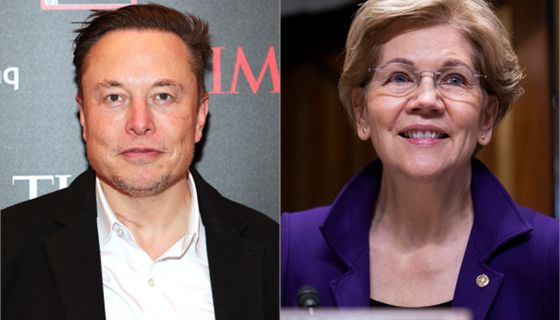
Elon Musk and Billionaires v Politicians


“Who do you trust less? Billionaires or Politicians,” Elon Musk asked in a tweet.

No one cares what I think. No one cares what you think. No one cares what Elon Musk thinks. Elon Musk doesn’t care what Elon Musk thinks, in this particular poll anyway. He wants to know what we think, but he doesn’t really care what we think either. If he asked, “Who do you trust more?” that might hint at some narcissism on Musk’s part, but “Who do you trust less” is intended to reveal to virtue signalers, in the political offices of both parties, that they’re not as popular as their fellow ivory tower dwellers tell them they are. I still believe Musk missed the mark however. He should’ve asked who can do you more harm?

“The billionaire, Elon Musk, conducted this poll on his Twitter page, so he received the results he expected. As MSN.com reported, As of Friday afternoon, the poll had amassed over 3 million votes, and 75.7% of participants selected “Politicians” as who they trust less, while 24.3% selected “Billionaires.””

Again, this was Elon Musk’s poll, conducted on his Twitter page with his followers, so the results are skewed. If a politician was bold enough to conduct a similar poll on their Twitter page, they would probably receive the results they expect. If we dug deep into these polls and analyzed the results, we would find that it doesn’t matter. Trust is often based on personal preference, and it doesn’t really matter who we trust less, if neither party can do us harm.

Without going into the details of the two parties concerned, because it feels unnecessary, the politician is obviously in charge of more levers of power that can do us harm. On the flipside, an individual who favors politicians could ask, “Which party can help us more the billionaire or the politician?”

To which we would reply, “All conditions being perfect, the politician.” That’s the bullet point, but the subpoints say, “As long as that politician is honest, and their prime directive is helping people in a purely altruistic manner. If that were the case, the politician would focus their efforts at problem solving. They would seek the best solution, regardless the politics, but how many politicians in  federal government do that?”

Some suggest the primary goal of every politician in Washington D.C., is to get reelected. If that’s the case, how many politicians help us solve our problems in a way that doesn’t serve their favorite special interest groups’ cause? When we see those three words, special interest groups, we naturally think of the other political party’s special interest groups, but special interest groups come in all stripes, and they influence politicians of all stripes. Just about every politician claims they don’t accept special interest money, but just about every politician does, Having said that, the relationship between the two might involve a genuine hand holding mission, but how often do politicians pick winners and losers in an industry, because one corporation aligns with their views better than the other? (Note: We can usually tell when a politician is picking winners and losers, if their primary defense is “We’re not picking winners and losers here.”)

Between the two, I think we could make the general point that politicians care more than the billionaire does. A billionaire, if they’re any good at what they do, is focused almost entirely on what’s best for their corporation. Their corporation provides a good or service that helps their fellow man, but their mission is not altruistic. They’re interested in whatever generates the most profit for their company. If their corporation happens to help their fellow man, that’s gravy, but it’s not their prime directive.

The very idea of entering public service suggests that the politician is more concerned with their fellow man, but how many of them know anything about private industry? If they’re going to solve problems, regardless the politics involved, they should be able serve public and private concerns, so some experience in private industry could prove helpful. Yet, some politicians consider working in private industry the equivalent of working behind enemy lines.

Most politicians, from both sides, appear to have the best intentions, but how often do they break what doesn’t need fixed? They might write, or vote for, legislation with the best intentions in mind, but they often campaign, in the next election, on the idea that they need to fix what they just broke.

It doesn’t matter if we trust or distrust a billionaire, because their ability to directly help or hurt our lives is minimal by comparison. Who’s the most powerful billionaire in the United States? What’s the most powerful move he could make? If they fulfill our worst fears, what recourse do we have? We can go to their competition.

Bashing billionaires and politicians is so easy. As much as we hate to admit it, both parties have accomplished more in their lives than most of us ever will, and that leads to jealousy, hatred, and a desire to boycott, protest, and demonize everything they do.

“Billionaires spend their own money, whereas politicians spend our money.” Stephen Crowder responded to Elon Musk’s tweet. “I think it’s obvious who we should be more concerned about.” Those who trust billionaires less could argue that they spend our money, because we give them our money for their products or services, but if those products or services are inferior, or too expensive, they won’t receive our money, and the marketplace will eventually crush them. If government officials provide inferior services, and we decide not to give them our money, based on their performance, we could face stiff penalties and possible jail time. As Crowder alludes, why would we be concerned if a billionaire is dishonest, greedy, or a criminal? How much can their actions affect our lives? Why should we be concerned about dishonest, greedy, or criminal politicians, because they can have a much more direct effect on our lives.

What happens if a billionaire goes on an irresponsible spending spree with their money? They can help the economy, create jobs, and they can spread the wealth around to those who create products and services around the world.

What happens if a politician goes on an irresponsible spending spree with other people’s money? They’ll need more of our money to spend, so they’ll take more. If they cannot find a way to do that, they’ll print money, or borrow it, which will create inflation, increase deficits and debts, and damage the long-term economy for their short-term goals. Even if some of their money reaches its intended source, how much of it will be siphoned off by various bureaucracies? How much of it will be wasted through various redundancies, fraud, and abuse? We’ve witnessed such examples through various stimulus packages that were ravaged by waste, fraud and abuse. In the meantime, money equals power and greater freedom, and the net result for the citizen they represent is less power and freedom.

It’s not the politician’s fault that we take advantage of their best intentions, right? We could analyze this from a number of perspectives, but the final answer should end with a big fat “no one cares what they intended”. The numbers show results. The numbers show the politician failed. We should hold them to account for their failings, so that future politicians might insert whatever oversight they can to prevent fraud, waste and abuse. They don’t, and we reelect the politician based on their intentions. The billionaire’s best intentions are often held in check by numbers and meritorious results.

Who can do you more harm? Circa 2014, the federal government raised corporate taxes in the United States to some of the highest in the world. American corporations began moving their operations to other, more competitive countries to escape those taxes. Some politicians proposed that the best way to combat these moves was to make them illegal. If a governor, or a mayor lost a business to another state, and they threatened to make it illegal for a business to move to another state, they would be laughed out of their reelection campaign.

When politicians pass legislation that affects lower-level operations that most of us will never see, this affects the cost of doing business, and that cost is then passed onto the consumer through higher prices of their products and services. Some politicians propose fixed pricing to solve the problem of higher prices. Their intent is to prevent the consumer from getting hit by the corporation raising prices, but the primary reason the corporation raised prices was to pay for the politicians’ rules, regulations, and taxes. When the government imposes costs on corporations, and those corporations pass the costs onto the consumer, economists call this an incidence tax.

The rising costs rarely affect the politician, because the natural inclination of most consumers is that when prices rise, it is due to a CEO’s whim of wanting more profit. Increase the price, increase the profit, right? This line of thinking neglects the market. If corporation A raises prices because they want more profit, it opens the door for corporations B through F to sell more of their products at market prices. Their volume of sales will increase, until such point that the CEO of A realizes they don’t control the market as much as they thought. If one billionaire CEO were to raise prices, we would go to the competition. When an entire industry raises prices, however, it is often due to politicians’ whims.

If a politician raises taxes to force us to help pay for their spending, where are you going to go? If the politician is local, we can move to another locale, city or state. If they’re federal politicians, we can go to another country. We have options either way, of course, but I don’t think we’d get much push back when we say the politician can do more harm in this regard.

What’s the worst thing a billionaire can do to harm your life? They can raise prices, they can avoid paying taxes, and they can create a monopoly that harms the marketplace. They can also contribute money, time, and endorsements to a politician, but in the competition between who has access to the more levers of power over the individual, it’s not much of a contest.

Does a politician employ people? We hear politicians talk about creating jobs all the time, but what jobs do they create? New York Times Economist Paul Krugman once talked about how he thought politicians should create temporary jobs to help the economy over the hump. He suggested politicians create ditch digging jobs, where one set of workers digs a hole and another set of workers fills it up. I should thank Krugman, because this is the first time I’ve heard of someone state that politicians can actually create jobs. The jobs Krugman proposes would be pointless, of course, but at least it would put people to work, temporarily. That needless work would also be funded by taxpayers who worked hard earned for that money. How about the politicians in the federal government temporarily lift some needless regulations or temporarily lower corporate taxes, so private industries can temporarily hire more workers to get us over the hump? Krugman’s proposal keeps the levers of power in the hands of the politicians, who don’t create products, services, wealth, or jobs.

If the billionaires appease local politicians, and vice versa, the billionaire can almost single-handedly revive a community, a city, and in some cases an entire state by deciding where to locate a plant. The local politician’s job is to placate the billionaire, in this instance, with tax breaks and real estate, and to be present for the ribbon cutting ceremony. Other than that, the ability of a politician to create jobs obviously pales in comparison to the billionaire’s.

In the current era, the billionaire also has to be in an industry that will help the politician get reelected. The modern politician has more bullet points than they’ve had in the past, so creating jobs is no longer the prime directive of most politicians, unless the politician favors the corporation or industry. The politician can then run to their phones to contact their broker to buy shares in that company with their insider information.

How much oversight does an enterprising billionaire have on his daily activities, as it pertains to his business? The billionaire has to answer to the consumer, the media, shareholders, the corporate board, the security and exchange commission, the IRS, local and state governments, and other federal bureaucracies, and all their rules and laws. The politician has to answer to much of the same, but whose oversight is more intense?

Everybody hates the billionaire. We don’t trust them. We think they attained their wealth through ill-gotten gains, and we don’t trust them to use their place on the stage responsibly. We won’t buy their products or services to prove our point, and … and it just doesn’t matter. The billionaire will go on to sell their products to those who will buy them. If no one does, they’ll go out of business, and no one will talk about them anymore a month later. It doesn’t matter if we trust billionaires to be responsible, honest, or quality managers of their company. If they’re incompetent, dishonest, or even criminal, their company will eventually fold up. Whatever consumers, shareholders, workers they have left will be deeply affected, and the city, state, and locale their corporation called home will also be affected, but that pales in comparison to the damage a politician can do before being turned out of office. As we’ve witnessed in bygone years and modern times, it is often very difficult to expose them and get them out of office if they’re popular enough. In the meantime, a corrupt politician can do grave damage to those that they’re elected to represent.

Is Elon Musk Rasputin or Cosmo Kramer?


How many of us thought we would not live long enough to see the mind-blowing innovations displayed in countless sci-fi movies? How many of us thought we’d live long enough to see portable communication devices as small as those in Star Trek? How many of us thought we’d see live to see phones where we could see the person on the other line? How many of us thought we’d have a computer in just about every home? How many of us thought when all these wild innovations hit, we would all be wearing silver suits while watching TV, mowing the lawn, or doing the dishes in the distant year 2000? If you watched movies or TV during the bygone era, you thought these were the visions of life on Earth in the future.

Photo courtesy of American Conservative

How many of us now laugh when we picture our deceased relatives trying to figure out how to use our current innovative gadgets? Our generation now knows that these sci-fi movies portrayed life in the 2000s correctly in some ways and incorrectly in others, but one thing they were right about is we know more technological innovation than our forebears did. Even the generation below us is more accustomed to life with such innovation than we were. Walk into any junior high in the country and you’ll witness work in robotics that is no longer speculative. You’ll also witness the work they do with computers that belies the fact that they are so accustomed to computers being a facet of human life that they’ve worked through any intimidation they might have had with the machines a decade before junior high. The question now is are we so accustomed to technological innovation that we’re more open to wild, crazy ideas than every generation before us, and are we so open to it that we leave ourselves susceptible to the possibilities of more from an ingenious charlatan?

The early 1900’s were another period of great innovation. Individuals such as Nikola Tesla and Henry Ford were at the forefront of innovations that intimidated most of their populations. How many of them had a difficult time initially conceiving of the extent of man’s capabilities? How many people thought the advancements made in medicine alone bordered on the heretical? How many of them feared that “modern medicine” was coming close to messing with God’s plan when it came to prolonging life? As the people of that era attempted to come to grips with the advancements man was making in the fields of automation and medicine, the image of Michelangelo’s Creation of Adam must’ve danced in their head. Over time, the people of this era became more open to mankind’s ability to make life easier and better for their fellow man through advancement, but were they so open to these ideas that they became more susceptible to proclamations of a charlatan?

Some say the time Grigori Yefimovich Rasputin spent on farms in small, obscure parts of Russia may have helped him understand the healing properties of some natural medicines better than most. Some say that he might have learned hypnosis techniques elsewhere in life, and he understood how to employ it before most understood it. Others suggest he may have learned autosuggestion techniques that some farmers used to calm their horses, and that Rasputin may have used one or all of these techniques to calm the nerves of the mother of the young heir to the Russian Empire. Whatever the case was, his ability to alieve the young heir of some of the symptoms of bad case of hemophilia was a cause célèbre in the nation of Russia. Some honored the great achievement, and others were in awe of the possibilities of what Rasputin could achieve. Some also fear him with that rationale. The largely ostracized Russians believed Rasputin displayed mystical powers, God-given powers. They thought he was a chosen one, and the Russian Empire gave him an influential role in the empire as a result. Some say that this precipitated the decline of the Russian Empire, but others say that implosion was inevitable.

Is Elon Musk our nation’s modern day Rasputin? Rasputin cloaked his rise in mystical wonderment, and Musk drapes himself in the speculative questions of what a genius in the field of technological innovation can achieve. Both men also used their newfound status to make wildly ambitious claims to cause the citizens of their nation to hold them in speculative wonder.

Columnist Norm Singleton paints a far less provocative portrait of Musk in his, Elon Musk is the Cosmo Kramer of Crony Capitalism” column. In it, Mr. Singleton details the wildly ambitious ideas Elon Musk and his fictional counterpart relayed to their respective audience. The difference between the two, of course, is that Cosmo Kramer never received the federal grants the taxpayer has given Mr. Musk to pursue his wildly ambitious ideas. Another difference, and one Mr. Singleton does not explore, is that Mr. Musk has achieved some results that have established him as a certified genius. He founded X.com, which later became PayPal. He has an admirable record of accomplishment at SpaceX and Tesla, and he has a list of accomplishments that no one can deny. Singleton’s column does not focus on that list of accomplishment, but it does challenge the current resume of Elon Musk in a manner that no politician dare explore by asking if Musk’s current accomplishments align with the continued, all too generous federal and state grants he receives. Some might argue that Musk is not a charlatan, because of those accomplishments, and because he actually believes in all of his ideas, but Cosmo Kramer believed his ideas too, and so did Rasputin.

Somewhere on the road to technological innovation, someone (likely a politician) convinced us that if our nation is fortunate enough to house a certifiable genius, we’re going to have to pay for the innovations he creates to make our lives easier and better. We’re not talking about paying for the final product of ingenuity at the proverbial cash register either, though there are some on the consumer end who don’t understand that concept. (They think the corporate responsibility suggests that all online innovation should be free.) We’re talking about taxpayers funding the creative process of the bona fide genius. For those who haven’t read as much as I have about the creative process, artists love to talk about it almost as much as they love creating. They love to talk about their influences, the structured method they used to bring their product to life, and the future projects they have in store for us. If someone were to pay these artists for such talk alone, I think most artists would give up the painstaking process of actual creation and opt for the life of describing their process instead.

Filing for government grants has been around for as long as I’ve been alive, and as one who has never filed for a grant, I will admit ignorance on this topic, but I would think that success in field of receiving successive grants requires constant proof of success on the part of the artist. Enter the technological genius. Many consider Elon Musk the rare innovative genius who should not have to worry about pesky concerns like money. Politicians, specifically, appear to believe that Musk should not have to provide continued results for continued money, apparently, for demanding as much from a technological innovator that promises breakthroughs in science, would be tantamount to career suicide for them.

Norm Singleton concludes his piece by saying that the best thing we could do for Elon Musk is to cut off all government funding for his ventures. Those who believe the concept that if we want technological innovation, we’re going to have to pay for the process, have never heard the quote, “The best we’ll ever see from an individual often occurs shortly after they’ve been backed into a corner.” Those who think the removal of financial support damages the creative process might want to go back and read that quote again. The politician who sticks their neck out to remove federal funding from Elon Musk would risk insulting Elon Musk, and Musk’s lobbying group might mortally wound that politician, but that insult might inspire Musk to prove the politician wrong, and that motivation might drive him to pursue greater profits as a result. Cutting him off from all state and federal funding might also force him to be a more traditional CEO, in that he would be more accountable to disgruntled shareholders, more cognizant of his companies’ profit margins, and it might force him to be more of a results-oriented man and less of a theoretical idea man.

I think Mr. Singleton has a great idea, but in order for his idea to work, he would need to find a significant number of politicians who have the fortitude to say no to an established genius in the field of technological innovation. That politician would also have to fight Musk’s powerful lobbying groups and the stigma of the “against science” label. No, Elon Musk carved out an enviable place by being an established genius. He has also developed an enviable formula for all artistic geniuses to follow. Once a person has established themselves as a bona fide genius (no easy feat to be sure) all that genius has to do is develop some ideas for wildly ambitious projects on a semi-annual basis to achieve headlines in major newspapers that no politician can ignore. Their projects may never see the light of day, but they will secure nonstop funding from easily intimidated politicians.

It may be a gross exaggeration to insinuate that the brilliant, innovative Elon Musk might be a charlatan, but when it comes to securing such regular, enormous chunk of the taxpayer’s hard-earned dollars, we the people, and our representatives, should hold the prospective recipient guilty until proven innocent.

I may be alone in this regard now, as those in charge of allocating our tax dollars appear unafraid of defying logic, but I hold an achievement devoid government funding in higher regard. As former president, Calvin Coolidge said shortly before his demise, “I feel I no longer fit in with these times.” Perhaps I no longer fit in with these times, but if an entrepreneur states that his or her project made it to the marketplace based on individual ingenuity and sheer grit, I respect that accomplishment more. I also appreciate the effort it takes to pound the pavement and secure private funding, but the Elon Musk methods of convincing a bunch of politicians to part ways with other people’s money seems far too beneficial to all parties involved and way too easy.