When a Kiss is Just a Kiss


“Why do people kiss?” my nephew asked his dad when he was younger.

My brother called his wife into the room. “I think this question is more in your level of expertise.”

“Because that’s their way of saying I love you,” his mother answered.

“Why don’t they just say it then?” he asked.  “Why do they have to kiss?”

Questions like these have been asked by curious adolescents of giggling parents for as long as children and parents have been interacting. The reason that we parents might experience some hesitation when trying to answer questions like these is that it’s been so long since we didn’t know the answer that we don’t know how to answer the question. We’ve also taken things like kissing for granted for so long, and that it’s been such a staple in the process for so long, that we stepped back to ask “Why?” for a long time.

Puddy and Elaine

Most parents probably dismiss the peck as the source of their child’s inquiry, and focus their search for an answer on the saliva sharing smooch. Most of us probably assume that our child has already accepted the “Hello” and “Goodbye” peck as a fundamental part of the process of greeting and parting with our loved ones, and that the nature of the child’s curiosity regards why a man would want to trade saliva with a woman, in a city park, to express love, and why the two of them would enjoy that elongated transfer of fluids so much that they would want to do it more often?

“One hypothesis,” posed by Noam Shpancer, of Psychology Today, “is that (the sloppy smooch) might be a mechanism for gathering information about a potential partner. A kiss brings you in close –close enough to smell and taste [the] chemicals that carry immunological information. Our saliva carries hormonal messages: Close contact with a person’s breath, lips, and teeth informs us about his or her health and hygiene– and thus potential as a mate. Research also suggests a range of other functions, such as expressing and reinforcing feelings of trust and intimacy and facilitating sexual intercourse. The meaning of a kiss depends on who’s doing the kissing.”

My sister-in-law started out saying, “A kiss is a way two people express love.” 

“Why don’t they just say it then?” my nephew repeated. The two of them went back and forth for a bit, as his mother offered what he considered subpar answers, and he pressed her further. She would later confess that when he hit her with this question, it was so out-of-the-blue that she needed some time to think. 

“A woman learns a lot from a kiss,” she said. “A quality kiss shows a woman that you’re paying attention and that your affection for her is real. If it’s not she’ll know. Some of the times a kiss is just a kiss, but some of the times it means something, and a woman will know the difference.”

My nephew was not of the age to understand the term “end game”, but I’m guessing that that was the crux of his follow up question, “Why don’t they just say it then? Why do they have to kiss?” Why doesn’t a guy just walk up to the woman in the park and say, “I love you,” and walk away when he’s determined that she knows he’s being genuine?

I’m sure that his mother would then say something along the lines of, “Because saying ‘I love you’ can be easily faked, and a girl needs to know that you love her, and physically showing her, with a meaningful kiss, proves it to her. A woman can feel your intentions.” This basically goes to the chemistry, and the Chemistry that Shpancer described, in a woman knowing and knowing in her conscious and subconscious determinations, but that would’ve been way over my nephew’s head, and it would’ve only led to more questions about the abstracts of need, emotion, and fulfillment that he was too young to understand.

My nephew is male, of course, and reading the Psychology Today findings in the Evolutionary Psychology piece, he might never understand when a kiss is just a kiss on the level that those of the female gender do. For to a male, a kiss is rarely as important as it is to a female. If he thinks he’s going to provide an answer, he will pursue it. He will want to kiss a girl his age, and he will be confused when it’s over and it doesn’t achieve clarity for her, but he will continue to kiss girls, because he knows it means something to them. When he has ulterior motives, he might try to add bits of information to a kiss, but if his recipient has as much omniscience as his mom and Noam Shpancer theorize, the recipient will know when such additions are false. When he genuinely likes a girl, and those additional ingredients he adds are more organic, he might wonder what the difference was. My advice, if my nephew ever asks me for advice, is do not think, just do. As Olivia Newton-John sang in Grease, “Feel your way.”

In their findings, the Evolutionary Psychology poll states that 86% of women polled would not have sex with someone without kissing them first; while only 47% of males say they would not. Their takeaway was that:

“For women, the smell and taste of their kissing partner weighs heavily in their decision to pursue closer contact. Men routinely expect that kissing will lead to intercourse and tend to characterize “a good kiss” as one leading to sex.”

The next poll probably gets to the heart of my nephew’s follow up question better, as it asks the genders how important kissing is. In a 2013 poll listed in the Archives of Sexual Behavior, there is the suggestion that kissing may never be as important to my nephew as the girls he’s kissing, as men rank the importance of kissing as a 3.8, on a scale of one to five, while women rank it as a 4.2. Their takeaway was that:

“Women rank kissing as more important in all kinds of romantic relationships than men do; men also tend to consider it less important as relationships go on.”

***

The perfect illustration of the minutiae involved in a kiss comes from (where else?) the television sitcom Seinfeld. In an episode entitled The Face Painter, the character David Puddy informs the character Elaine Benes, that he will no longer “Support the team” by painting his face before the two of them attend a hockey match, because Elaine it embarrasses her when he does it. She is visibly touched by the idea that Puddy would alter his life in such a manner just for her, and to celebrate this new understanding in their relationship Puddy says:

“Ah, c’mere,” as he nears her for a kiss. “All right,” he says when that celebratory kiss is concluded, and he’s up and moving towards the door, “I gotta go home and get changed before the game. I’ll be back, we’ll make out.”

This scene is brilliant on so many comedic levels, not the least of which is the depiction of the value each gender places on kissing. Puddy acknowledges that some sort of romantic punctuation is needed for the agreement they’ve reached, and he basically says, “All right. Here!” to initiate that kiss. The comedic value of the situation occurs when this romantic punctuation concludes, and Puddy simply says “All right” as if to say ‘now that that’s over, I need to get some other things done.’ The very human element of “Enjoying that transfer of fluids so much that he wants to do more often” is then dispelled by Puddy saying once he’s done doing those other things (changing clothes), they can start doing something else (making out). He thereby places the value of making a seemingly transformative change of his life (no more face painting) on a level with the act of changing his clothes, and the excessive kissing involved in making out. This is all punctuated with Puddy unceremoniously suggesting that he’ll do what she wants when he’s done, but that he’s only doing it for her.

The subtext of this exchange surprises the once visibly touched Elaine for she thought she had a read on the situation. “You’d do that for me?” she asked when Puddy announced that he would no longer be painting his face. She believed they achieved a new understanding in their relationship, and she was so touched that he would make such a transformation that before he announced his plans after the celebratory kiss, she was breathlessly holding her hand to her heart. She also appeared on the verge of tears believing that her otherwise unsentimental boyfriend would be making such a life-altering sacrifice for her by sealing it with a kiss. She appeared to believe that this sacrifice, and that kiss, suggested a brighter future, and a better understanding, between the two of them as a couple. When Puddy stands and says what he says, it dispels all of the conclusions Elaine derived from the situation, and the idea that a “woman always knows”. And her only takeaway, as the scene closes, could be that Puddy, like most stereotypical jarheads, will go through the motions to please a woman, but it actually means little-to-nothing to them.

Most boys spend their adolescence believing that their mother knows all, until they find out she doesn’t, but they continue to do the things necessary to please her, and fortify this shared illusion, until most boys become better men for it. Some boys put their heart into it, and live their lives, and kiss their girlfriends with the belief that their mothers know all, and how they treat their mother will be an indicator for how they will go on to treat all women. Others, like the fictional character Puddy, go through the motions to make the women in their lives happy, but to them a kiss is much lower than a 3.8 on a scale of one to five.

After telling me this story, my sister-in-law asked me if I wanted to take a crack at answering my nephew’s questions, and I informed her that it’s probably better that I don’t. It’s probably better that he run the optimistic and loving road her answers put him on. He’ll likely become a better man by trying to prove to all the women in his life that he can be meaningful and moving when he wants to be, and when that time comes for him to plant that profoundly spiritual kiss on that one, special woman, he’ll do it with the belief that he can make her believe it too. And, he’ll hopefully get all that done before he falls prey to the cynical notion that some of the times a kiss is just a kiss to get women to shut up about wanting to kiss all the time.

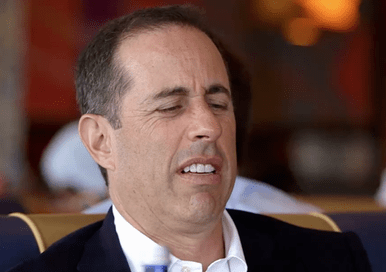
Conquering Fear: A Few Tips from Psychopaths


“99% of the things we worry about never happen,” says a mental patient in the best-known psychiatric hospital in England called Broadmoor. “Yet, we spend 99% of our time worrying about them? What’s the point? Most of the time our greatest fears are unwarranted.”

What is a psychopath? The word drums up horrific images of serial killers, cannibals, and Hannibal Lecter in an old hockey mask. Some shudder at the mere mention of the word, and for good reason in some cases. If we dig through all of the cinematic and medical definitions we find two traits that most psychopaths share, they don’t care, and they don’t feel guilty. The exaggerations of these traits often alarms medical professionals and law enforcement officials on a case by case basis, but are there any elements of the way a psychopath thinks that we could use to live a more fruitful, eventful existence with less fear? Is there something we could learn from an otherwise twisted sense of reality to better our lives?

Author Kevin Dutton believes we can, and he conducted an interview of four different psychopaths –for a book called The Wisdom of Psychopaths: What Saints, Spies, and Serial Killers Can Teach Us about Success to prove it. “What is a psychopath,” the thesis of this book asks, “but an individual who exhibits ruthlessness, charm, mental toughness, mindfulness, and action.” The psychopath also exhibits a level of fearlessness unknown in most quarters.

“Who wouldn’t benefit from kicking one of two of these (characteristics) up a notch?” Dutton asks.

The theme of Dutton’s piece, and the interviews he conducted with these psychopaths he lists simply as Danny, Jamie, Larry, and Leslie is that fear rules much of our lives, and the fears of what others might think of us.

Most of what we say is ninety-percent narcissistic gibberish, and psychopaths are no different. Their gibberish receives further damage by their other hysterical rants. Before dismissing them entirely, however, we might want to consider delving into the gibberish –that can border on hysterical at times– to see if they have something we could to add to our discourse. In doing so, we might gain some perspective on ourselves and learn how fear has rooted itself deep into our decision-making process.

Most psychopaths don’t wallow in from the past most of us do in our guilt-ridden lives. Most psychopaths don’t have fears about the future either, at least in regards to how it might govern their present, in the manner the rest us do. Most psychopaths have a callous disregard for the plight, the feelings, and the emotions of their fellow man, unless it serves them to do so. For this reason, the author doesn’t focus on the crimes these men committed. This may seem to be a crime of omission by some to placate a controversial argument, others may deem Dutton’s argument incomplete and immoral, and the rest may not want to consider the wisdom of those that have committed unspeakable atrocities to be worthy of discussion, but Dutton did not consider their crimes germane to his piece. It may also be worthy to note, that the crimes these psychopaths committed are not germane to their presentation either. They appear, in the Scientific American summary of Dutton’s piece, to have simply moved on. They don’t appear to relish, or regret, their acts in the manner a Hollywood production would lead us to believe psychopaths do. They just moved on in a way we might suspect from someone who truly doesn’t care. They appear to have gained a separation from their acts that allows them to live a guilt-free life. Dutton quotes an unnamed lawyer to further illustrate this point: 

“Psychopathy (if that’s what you want to call it) is like a medicine for modern times. If you take it in moderation, it can prove extremely beneficial. It can alleviate a lot of existential ailments that we would otherwise fall victim to because our psychological immune systems just aren’t up to the job of protecting us. But if you take too much of it, if you overdose on it, then there can, as is the case with all medicines, be some rather unpleasant side effects.”

Although the patients Dutton interviewed do not appear to relish, or regret, the specific incidents that led to their incarceration, this reader believes that they do appear to enjoy the result. They appear to enjoy the fruits of their actions: our fear of them.

“We are the evil elite,” says the patient named Danny.

“They say I’m one of the most dangerous men in Broadmoor,” says another patient named Larry. “Can you believe that? I promise I won’t kill you. Here, let me show you around.”

The question this reader has is do psychopaths simply enjoy the idea that we’re fascinated with the freakish nature of living a life without fear, or do they enjoy the fear others have of their thoughtless and impulsive capacity to cause harm?

Fear Causes Inaction

The patients named Jamie and Leslie received an “every day” scenario by the author in which a landlord could not get an uninvited guest to leave his rental property. The landlord, in question, attempted to ask the guest to leave the property in a polite manner. When the tenant ignored the landlord, he tried confronting the man, but the man would not leave, and the man would not pay rent either. That landlord was stuck between doing what was in his best interests, and doing what he considered the right thing.

“How about this then?” Jamie proposed. “How about you send someone pretending to be from the council to the house? How about that councilman go to the house and say that they are looking for the landlord to inform him that they have conducted a reading of that house? How about that councilman asks the uninvited guest to deliver a message to the landlord that his house is just infested with asbestos Before you can say ‘slow, tortuous death from lung cancer,’ the wanker will be straight out the door.

“You guys get all tied up trying to ‘do the right thing’,” Jamie continued after being informed that his resolution was less than elegant. “But what’s worse, from a moral perspective? Beating someone up who deserves it? Or beating yourself up who doesn’t? If you’re a boxer, you do everything in your power to put the other guy away as soon as possible, right? So why are people prepared to tolerate ruthlessness in sport but not in everyday life? What’s the difference?”

“You see I figured out pretty early on in life that the reason why people don’t get their own way is because they often don’t know themselves where that way leads,” Leslie continues. “They get too caught up in the heat of the moment and temporarily go off track. I once heard a great quote from one of the top (boxing) trainers. He said that if you climb into the ring hell-bent on knocking the other chap into the middle of next week, chances are you’re going to come up unstuck. But if, on the other hand, you concentrate on winning the fight, simply focus on doing your job, well, you might knock him to the middle of next week anyway. So the trick, whenever possible, is to stop your brain from running ahead of you.”

Most unsuccessful boxers lock up when considering the abilities of their opponent. They want to knock their opponent out, before the extent of their opponent’s talent is fully realized in the ring.

“Our brains run ahead of us,” Leslie points out.

Our fear of how talented the other guy might be gets in the way of us realizing our talent, in other words, and this causes us to forget to employ the methodical tactics that we’ve employed throughout the career that brought us to the bout in the first place. We have these voices in our head, and the voices of our trainers, telling us to knock our opponent out early, before they get their left hook going, while forgetting to work the body and tire them out to the point that our own knockout punch is more effective.

The gist of this, as this reader sees it, is that we end up fearing failure and rejection so often that we fail to explore the full extent of our abilities in the moment. We care about the moment so much, in other words, that we would probably do better to just shut our minds off and execute.

If we place a goldfish in a tank, we may see that fish knock against the glass a couple of times, especially early on, but sooner or later that fish learns to adapt to its parameters, and it no longer bumps into the glass as often. We may believe that there is some sorrow, or sadness, involved in the goldfish’s realization of its limits, but there isn’t. We’re assigning our characteristics to the goldfish, because we know our parameters, and we’re saddened that we can’t break free of them. Even though we have the whole world in which to roam, we stay in the parameters we’ve created for ourselves, because everything outside our goldfish bowl is unknown, or outside our familiar, routine world.

Asking for a raise, or a promotion, can be a little scary, because we know that such a request will call our abilities into question. The prospect of quitting that job is scarier, and the idea of hitting the open market is horrifying, because we know the limits of our ability will come into play in every assessment and interview conducted. The ultimate fear, and that which keeps us in a job we hate, lays in the prospect of landing that other job for which we are either unqualified, and/or ill equipped to handle. What then? Are we to shut out all those worries and fears and just act, and is it possible for a human to do so without some fear?

“When we were kids,” Jamie says, “We’d have a competition to see who could get rejected by the most women in a tavern. The bloke that got rejected the most, by the time the last call lights came on, would get the next night out free.

“Funny thing was,” Jamie continued, “Soon as you started to get a few under your belt, it actually got harder to get rejected. Soon as you started to realize that getting rejected didn’t mean jack, you started getting cocky. At that point, you could say anything you wanted to these women. You could start mouthing off to these women, and some of them would buy into it.”

“I think the problem is that people spend so much time worrying about what might happen, what could go wrong, that they completely lose sight of the present,” Leslie says. “They completely overlook the fact that, actually, right now, everything is perfectly fine.”

Fear can also get you injured 

On the subject of fear, a Physics teacher once informed our class that fear can actually get us injured in some occasions:

“Fear causes us to tense up, it causes muscles to brace, and it usually puts us in a position for injury when, say, another car is barreling down on us. This is why a drunk driver can plow into a light pole, demolish their car beyond recognition, and walk away unscathed. With that in mind, the next time you fall off a building, relax, and you should be fine.”

What is a psychopath was a question we asked in the beginning of this article. There are greater answers, in better, more comprehensive articles out there, that spell the definition out in more clinical terms, but the long and short of it is that psychopaths don’t care. They don’t care about the people that they’ve harmed, they don’t care about the pain they caused their victim’s family members, or the communities that their actions alarmed, and they don’t care that they have a greater propensity to harm more people in the future. They may know why they need to be incarcerated, on a certain level, but they don’t care what those reasons are.

Naysayers might suggest that empathy, sympathy, guilt and regret are almost impossible to shut off entirely. Caring is what separates us from the alligator, the bear, and just about every other life form. They might also suggest that psychopaths are not as immune to emotions as they suggest, but that they’re playing to the characteristics of their psychological categorization. It would be impossible to deny this in all cases, as the individual cases of psychopathy are so varied, but it could be said that these people are, at the very least, so unaffected by their deeds that they are not incapacitated by them. We could also say that when casual observers evaluate the characteristics of others, they often make the mistake of doing so through their own lens. We all experience moments in life when we do not care as much as we should, and some of us experience moments of exaggerated apathy that others might characterize as psychopathy. These moments are few, however, and loosely defined as psychopathic. Yet, our own limited experience with the mindset suggests that there are limits, and we find the exaggerations listed in Mr. Kevin Dutton’s book as incomprehensible, yet these psychopaths find it just as incomprehensible that we are so inhibited by the exaggerations of the opposite that we are left incapacitated by it.

These psychopaths may currently live confined in the world of a psychiatric institute, and they may be preaching to us from an insular world in which they don’t have to deal with the real world consequences of pursuing their philosophy. They do believe that they lived a portion of their lives freer than we’ve ever known, however, and that the only reason they’re locked up is that they may have been granted a little bit too much of a good thing.

I’m Disgusting, He’s Disgusting, She’s Disgusting, Wouldn’t You Like to be Disgusting Too?


I considered the national obsession with hygiene a well-played, well-timed joke that we were all in on, until I witnessed two grown men form a friendship based on shared demands for hygienic excellence. In their conversation, they set up a standard of behavioral traits intended to define them as the next step in the evolutionary process that they believed might place them in a pseudo superman, or Übermensch, status beyond the inferior, basic hygiene practices of the common man and woman. I considered their hygienic standard so high that I thought they were exaggerating it for humorous effect. By the time their bond was sealed, however, I realized that this newfound friendship was based not only on respect for the other’s demands for excellence in this regard, but for their hygienic superiority.

I loved the brilliant television show Seinfeld as much as anyone else. I found the main character’s obsessive demands for hygienic excellence so funny that when these two friends of mine began the list of requirements they had for their fellow man an impulsive laugh escaped me. After spending so many years laughing at Seinfeld’s obsessive quirks, my laughter was almost a conditioned reflex, but they weren’t laughing. They had smiles on their faces, but the smiles they shared were not of a sly variety that concealed a clever joke. Rather, they were kind, appreciative smiles, and a recognition that they finally found a likeminded soul in one another.

In the space normally reserved for laughter, they further detailed how the common hygienic habits of their fellow man were gross, and they both agreed that one particular person, our mutual acquaintance, was emblematic of those common habits. Without saying these exact words, they suggested he deserved all the shame that persons of modernity should cast upon him. I spoke with the two men separately a number of times, and they were well versed in the cultural norms, the belief that all men and women are created equal and we should accord them a degree of respect we require of them–unless, apparently, that person decides to leave the bathroom without washing their hands.

The implicit suggestion nestled within this discussion was that as the representative of one with common hygienic practices, I was supposed to recognize that I was gross and completely disgusting, and if I had any designs on becoming friends with either of them, I would have to seriously up my hygienic practices. I was to fear adding input into their conversation for that that might lead to an examination of my hygienic practices and a revelation that my habits were closer to our mutual friend’s than I ever knew. We might also find that what I considered an acceptable hygienic standard to be so disgusting and gross as to be worthy of some sort of public flogging in the public square to set an example for anyone else who might consider basic hygienic standards acceptable.

✽✽✽

“If you’re disgusting and you know it, clap your hands,” is the ostensible mantra of a major news network website that a number of my co-workers visit on a daily basis. The overarching milieu of this site is news, but the regular visitors of the site that I know are aware of little to nothing of the news of the day. Yet, they always have some nugget of information about how we can all improve our hygienic standard of living a little.

“Your kitchen counter is covered with more germs than your floor,” one of my co-workers said when he approached our lunchroom table. “Your dishrags and sponges are cesspools. Using them on a continual basis doesn’t rid your kitchen of germs. It only spreads them around.”

The idea that this particular purveyor of hygienic knowledge was male did not strike me as odd because I considered it less than macho to be hygienic, but he was the first man I met who would prove so obsessed with it. His warning would prove to be the first of many signposts to signal that the obsession I once believed indigenous to the female demographic had now crossed income brackets, social stratifications, and genders.

“Install a lighter-colored counter-top so you can see germs better.”

“Stainless steel is the best defense against the spread of germs.”

“The most germ-ridden room in most homes is the kitchen. Your cutting board can contain up to 200 times more fecal bacteria than your toilet seat.”

“Your fingertips can spread more germs than any tool in your kitchen.” 

The best way to avoid germs, it appears, is to avoid the kitchen, the bathroom, and your fingertips. They’re gross! The bathroom is obvious, but what about your bedroom? Furthermore, if you have any thoughts of going into the basement, you might want to consider investing in a gas mask and a Tyvek suit with hood and boots. Your basement is a cesspool teeming with pathogens no one can pronounce! It’s gross! Disinfect everything! Sanitize! Sterilize! We need more government research on this matter! We could get sick! We could die!

Our mothers taught us that the best way to avoid pathogens is to clean, but modern scientific research dictates that cleaning might be nothing more than a good start. Our mother didn’t know that the optimal way to avoid germs is to religiously and fastidiously clean the cleaning products to the point of sterilization. She used the same sponge and dishrag for more than a week without dipping it into a solution that contained one part bleach to nine parts warm water, and she used the same cleaning products for more than one task with no knowledge of cross contaminants. She didn’t know. 

CBS News reports, “If you’re cleaning up appliances, counter- tops, tables, etc., it’s almost mandatory that you use different cleaning agents. There should be different designated sponges for each function. After you clean up the debris from the meat carcass, place your sponge in this cleaning solution for about a minute or so. That will kill all the potential pathogens.”[1] 

Mom didn’t know.

Mom didn’t consider the idea of placing an industrial air shower to divide the kitchen from the rest of the house, because she was born in a generation that didn’t know anything about these hygienic standards of excellence. She might not have considered putting an industrial-strength anti-radiation shower in her kitchen for the sake of better health practices and greater avoidance of accidental pollination by pathogens. Mom didn’t have the information we do today, so how can we blame her? She didn’t know that it’s best to stay out of the kitchen altogether. Her generation wasn’t privy to the kind of scientific research that discovered that it’s probably safer to stay out of the house, unless that means going outside. The dangers inherent in leaving the house are so obvious that it’s not even worth exploring. We all know that the air outside is just teaming with pathogens, but our mom allegedly had no idea about this. She might have thought it was safe to send us outside to play, but she didn’t have the ubiquitous news sites clamoring for clicks, or the search engines that provide the latest tidbits of science in proper hygiene.

One of the worst conversations the creators of the Seinfeld show, Jerry Seinfeld and Larry David, brought to American life involved this obsessive level of hygiene. Conversations about hygiene occurred before the Seinfeld mindset began invading our culture and corporations began adding antibacterial agents to our soaps and body washes, but in the aftermath of that great show, it seems that every fifth conversation we hear now involves some form of obsession over cleanliness. We all thought Seinfeld’s obsessions were hilarious, but we had no idea how influential this mindset would prove to be. People now claim, with pride, that they don’t just wash their hands. They use a paper towel to open the bathroom door. “Oh, I know it,” the sympathetic listener proclaims with pride, “that handle is gross!”

No one has a problem with better practices that aim for cleanliness or those that strive for greater hygienic practices, but some, like my two friends, are so obsessed with it that they tip the scale of hygienic standards discussions toward superiority versus inferiority. When they spoke of our mutual acquaintance, the hygienic heretic, their disdain for him sealed whatever bond they needed to declare a friendship based on some kind of perverse superiority they felt regarding the man’s inferior habits.

✽✽✽

A Psychology Today (PT) by Rachel Herz piece details this perversity, stating that some obsessives even avoid shopping carts that have crumpled paper in them.[2] Why do they avoid those shopping carts, because they’re gross? A crumpled piece of paper is evidence that someone else used the shopping cart, at some point, since its creation. We know someone has used this cart before, of course, yet we regard visible evidence of it repellent. Supermarket and department store chains throughout the country have addressed this concern by putting antiseptic wet wipes near the shopping cart area, but that does not address the trauma of spotting a crumpled store ad in a cart. The only remedy for that is selecting another cart, but why should we be forced to select another cart? Why doesn’t someone address our concerns better? It would be one thing if the cart was home to a soiled piece of tissue paper, but what crime against humanity did the crumpled store ad commit? It’s evidence of other people, germs, pathogens, and a general lack of uncleanliness on the part of the store. It also initiates in us, “a desire to keep that which is outside from getting in.”

An interesting note about the emotion of disgust that Ms. Herz adds is that it’s both learned and selective. If a hygienic person with obsessive characteristics happens to see the person who left the crumpled ad in the cart and they find that person somewhat attractive, the potential cart user will not be as disgusted by the crumpled ad and the subsequent use of that cart. If they judge that previous cart borrower to be gorgeous, they will be even less disgusted. To take this idea to its logical conclusion, if the hygienic person with obsessive tendencies sees that the previous cart user was an attractive celebrity, that customer may feel privileged to use the cart regardless the celebrity’s hygienic practices. They might even save the crumpled ad and brag to their friends and family that the gorgeous celebrity touched it. If the previous cart user was somewhat overweight or of foreign descent, however, customers are more apt to select another cart, regardless that person’s hygienic standards.

Those who engage in obsessive hygienic practices also tend to be less inclined to be friends with those with physical disabilities, for images of frailty or illness lead us to avoid having anything to do with that person.

If those obsessed with hygienic practices had someone force them to share a toothbrush with someone, they would be more inclined to share it with a relative, rather than the mailman. This makes sense, because we are more familiar with our family members, and we assume we share some of their immunities.

What doesn’t make as much sense to those who believe their disgust has philosophical purity is the decision-making process that concerns those outside our immediate realm. We view our boss, for example, as a stranger who exists outside our immediate realm. We may interact with our boss daily, but this is not with the same level of intimacy we share with relatives. Our natural inclination is to place that boss below our family members, but the study also suggests we place our boss below the weatherman on the list of people with whom we would forcibly share a toothbrush. If our overriding concern were hygiene, why would we prefer to share a toothbrush with a weatherman we’ve never met to a boss we interact with on a regular basis? A weatherman is often better looking. The weatherman is often better-looking, clean cut, and better dressed. Moreover, there’s a greater possibility that we personally dislike our boss.

“Our attraction toward someone,” the Herz writes, “can override our qualms about sharing body fluids.”

There is one point of inconsistency in the PT article: “Those who avoid objects touched by strangers report fewer colds, stomach bugs, and other infectious ailments,” it states in one place, yet in another it offers, “Exposure to benign bacteria stimulates the immune system so that it is better able to fight bad bacteria.” Perhaps the explanation resides in the word “benign,” but other than that, the two purported facts appear to be contradictory.

The Origin of Disgust

Contrary to internet myths and our own preconceived notions on the subject, disgust is not an innate emotion based on self-preservation. Disgust is, rather, a learned behavior that we learn more about every day, exacerbated by every news report and website we read. Despite the fact that a baby might twist up his face in disgust when force-fed strained squash, his expression does not have a direct link to disgust. Studies suggest that the baby doesn’t really know disgust until they’re 3 years old. “If we were to make a look of disgust to a baby, say when we take out the garbage,” Rachel Herz writes, “the infant is more apt to think we’re mad at them for something than to associate the look with disgust, until they’re three years old.”

This is why babies have no problem eating whatever they find on the floor. It is also why they have no problem crawling through what we consider disgusting debris. They have no understanding of what they should find disgusting and what is not, no matter how often we tell them. It’s the reason my brother and his wife had to keep my nephew away from the dog dish, because he didn’t recognize the difference between the liquid his parents served him in a bottle, and the liquid we place in the dog’s dish.

“Even after we achieve three years of age,” Herz writes, “we don’t have a total understanding of disgust. It is the most advanced human emotion that requires reasoning, thought, and deduction. Humans are the lone animal with a brain advanced enough to process the complexity of disgust, and that knowledge occurs with experience and over time. It is also something we learn more and more about every day, and we get more and more grossed out by what could be deduced as minimal when it comes to actual infection.” 

Those of us who used to think exaggerated obsession with hygiene was nothing more than a brilliant characterization and one of the best recurring jokes to support that joke, now know how wrong we were. We’ve learned that these characteristics can aid in the pursuit of psychological dominance, and they can form friendships with fellow travelers on the road to hygienic excellence.

“You’re all just silly,” I told the two men that formed a friendship based on their hygienic standard. “You’re obsessed with all this.”

“Hey, better safe than sorry,” one of them said. I received that response before from the obsessed, so I expected it. I didn’t expect him to expound on that typical response, “If more people were as obsessed as I am, as you say, I wouldn’t have to be the way I am.”

“I guess,” I’ve responded, “but you do recognize that all these reports about pathogens and sterilizing sponges and counter-tops hit home with some people, until they’re afraid to enter their homes or anyone else’s or go outside. I don’t know anyone who takes all these reports seriously, to the point of adjusting their habits accordingly, but I’m sure there are some. If you met such a person, wouldn’t you consider them silly?”

“Well, yes and no.”

I was disgusting and I didn’t know it, until I met these two. I knew I wasn’t disgusting, but group thought can be difficult to thwart when the one in the minority hasn’t studied the subject in question. The idea that these two men were extreme was not lost on me, of course, but I needed an extreme from the other pole to counterbalance their subtle condemnations. For that, I turned to comedian George Carlin:

“I never take any precautions against germs. I don’t shy away from people who sneeze and cough. I don’t wipe off the telephone, I don’t cover the toilet seat, and if I drop food on the floor, I pick it up and eat it! My immune system gets lots of practice! It is equipped with the biological equivalent of fully automatic military assault rifles, with night vision and laser scopes … and we have recently acquired phosphorous grenades, cluster bombs, and anti-personnel fragmentation mines …. So, when my white blood cells are on patrol, reconnoitering my blood stream, seeking out strangers and other undesirables, if they see any—any—suspicious-looking germs of any kind, they don’t [mess] around. They whip out the weapons, and deposit the unlucky fellow directly into my colon! Directly into my colon! There’s no nonsense. There’s no Miranda warning, there’s none of that three-strikes-and-you’re-out [mess]. First offense, BAM! Into the colon you go.

“Speaking of my colon, I want you to know I don’t automatically wash my hands every time I go to the bathroom, okay? Can you deal with that? Sometimes I do. Sometimes I don’t. You know when I wash my hands? When I [mess] on them! That’s the only time, and you know how often that happens? Tops, tops, two to three times a week … tops! Maybe a little more frequently over the holidays. You know what I mean?

“And I’ll tell you something else my well-scrubbed friends… you don’t need to always need to shower every day, did you know that? It’s overkill, unless you work out or work outdoors, or for some reason come in intimate contact with huge amounts of filth and garbage every day, you don’t always need to shower. All you really need to do is to wash the four key areas; armpits, [anus], crotch, and teeth. Got that? Armpits, [anus], crotch, and teeth. In fact, you can save yourself a whole lot of time if you simply use the same brush on all four areas! [3]

[1]http://www.cbsnews.com/2100-500178_162-697672.html?pageNum=2&tag=contentMain;contentBody 

[2]Herz, Rachel. “The Cooties They Carry.” Psychology Today. August 2012. Pages 48-49.

[3]https://www.lingq.com/lesson/george-carlin-fear-of-germs-235986/