“You just jinxed us!” my friend said to explain why everyone was groaning at me and making the meanest faces they could find.
“You think this is funny?” my friend’s dad said. I did, until the whole room turned against me, and I realized this man was asking me this in a very confrontational manner. “People here depend on the income from these games,” he added. In that brief window of silent tension I continued to believe I was the butt of a joke that would end in a big old “Gotcha!” followed by uproariously laughter. As our silent stare continued, and the dad’s confrontational stance appeared to only strengthen, I realized this was not fun and games to them.
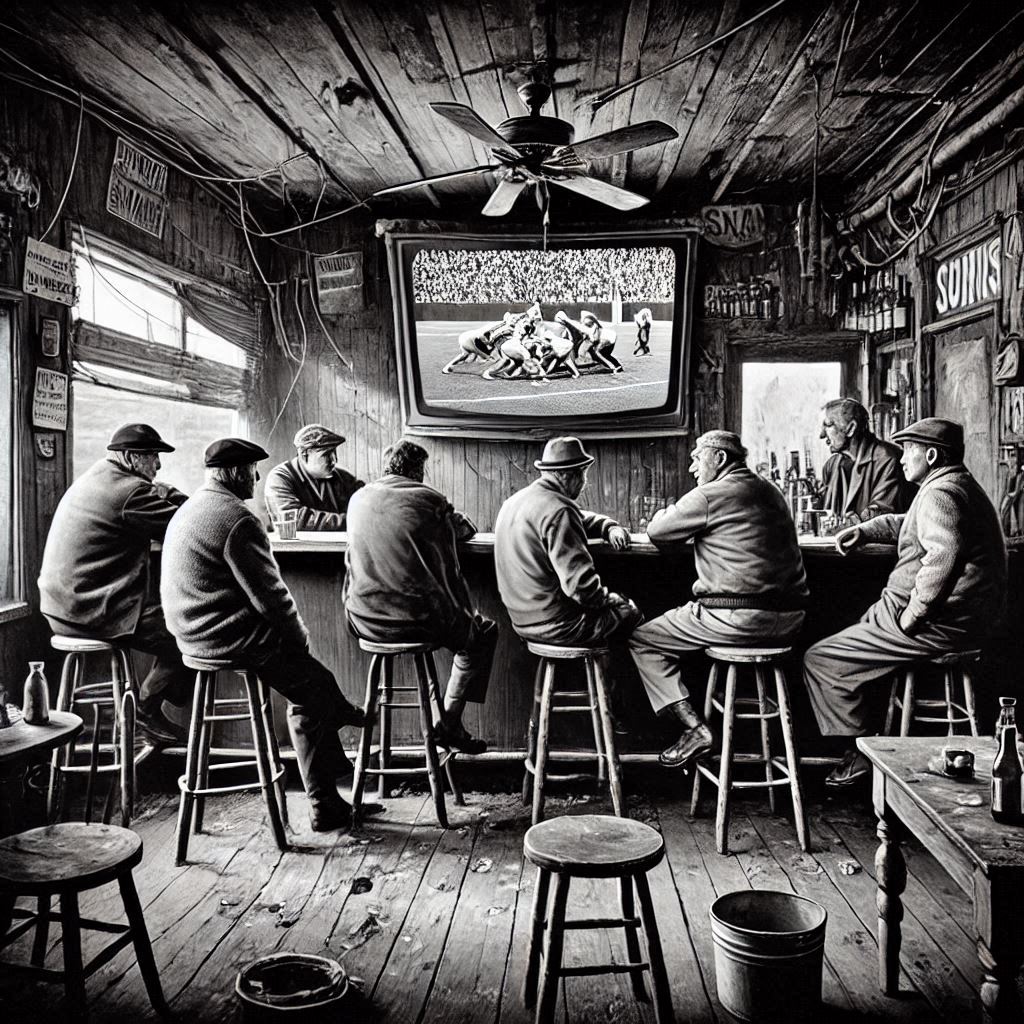 What I said to ignite this uproar, while watching an otherwise meaningless football game in my friend’s family home, was, “Well, it looks like we’re going to win here!” I violated the tenets of the jinx after our team scored a touchdown to put our team up by twenty-one points with less than two minutes left in the game. Lifelong football fans have seen some wild swings in football, but a comeback of historic proportions, but that meant nothing to them. When my friend not only joined the crowd, but led the charge, I thought he was joking, but he obviously read the room better than I did.
The furor that line generated couldn’t have been too much worse if I went to the bathroom, stripped down naked and sat among these people as straight-faced as I could.
In the aftermath of the silent tension between the dad and I, about five mouths around us continued to hang open. They were silently aghast at my utter stupidity. One of the attendees sat back with his hands splayed, as if to ask, “What are you doing to me here?”
Another said my comment was, “One of the dumbest things I’ve ever heard, and I’ve heard some really dumb things.”
My friend just sat there in the midst of all this shaking his head. After it was over, my friend reiterated that this football game wasn’t just a game to these people, they depended on the income from the outcome.
I understand that anything can tip the precarious balance in sports, but I had no idea how instrumental I was in it, until they educated me. I would’ve maintained my I’m-not-falling-for-this stance if it were just my friend saying these things, as we joked about it many times before, but the adults in the room not only shared my friend’s condemnation, they taught it to him. Adults who had twenty-five-years experience on me and knew far more about the world than I did, were saying what I considered incomprehensible, and they were shaking their heads with their eyes closed, whispering my name through clenched teeth as if it were an unquestioned truth.
You might think that I was the butt of some Jedi mind tricks, and that they would all have a good laugh later, but they wouldn’t. They genuinely believed it, all of it. They believed that sitting half-bun on a chair while watching a football game on TV, clothed in team-related regalia, while singing the team’s fight song to send a telepathic message of love and truth to our boys fighting on the gridiron would make a difference.
After that incident, years of repetition informed me that these forty somethings were serious, “serious as a heart attack”. They also informed me, without saying these exact words, that I was to respect the ways and traditions of their home.
My family wasn’t of sound mind. My dad was as quirky if not more than my friend’s dad, but he didn’t abide by these superstitions. I never experienced anything like this before, but I never spent time around big-time gamblers either. The adults basically informed me that I sat on the threshold of being banned from their home if that other team came back. They didn’t. Our team won, but they said, “You got lucky … this time, but don’t ever say anything like that again.”
The next time they invited me to their home to watch a game, the dad remained in the doorway for an uncomfortable amount of time, blocking it, saying, “You’re not going to say anything stupid this time, are you?” I assured him that I wouldn’t, and that I learned my lesson last time. He backed away and allowed my entrance.
The Drugstore Cowboy
This friend and I later watched the movie Drugstore Cowboy together. In this movie, a character introduces the concept of a 30-day hex that results from leaving a hat on a bed. “Why a hat?” a side character asked.
 “Because that’s just the way it is sweetie,” the main character responded. “Never talk about dogs, and never look at the backside of a mirror, because it will affect your future, because you’re looking at yourself backwards … No, you’re looking at your inner self, and you don’t recognize it, because you’ve never seen it before. But the most important thing is the hat on a bed. The hat on a bed is the king of them all. Hell, that’s worth at least 15 years bad luck, even death, and I’d rather have death, because I couldn’t face no 15-year hex.”
The hat-on-the-bed hex seemed so arbitrary and quirky that it was hilarious, kind of cool, and interesting. The characters in the movie were drug dealers, and we assumed that this explanation offered us some insight into their damaged brains. To prove the theory that a hat-on-a-bed could provide anywhere from 30-days to 15-years of bad luck, the movie characters’ lives fell apart, and they all realized their run of bad luck started after one of the other characters left a hat on the bed.
That movie is decades old now, but I can still see that hat sitting on the bed. It provided a crucial turning point in that movie. The characters’ lives were progressing as well as any drug dealers could before a stupid and naïve character haphazardly left a hat sitting on a bed, as if it were nothing more than a hat resting on a bed. I remember that narrative so well because my best friend talked about it all the time, and anytime we entered his home, we were to abide by his incorporation of this rule into his life.
“Are you serious about this?” I asked this otherwise rational human being when he introduced it to us all.
“Why would you want to risk it?” he asked.
“Because it was a movie,” I said, “and not only that, it was a joke in the movie that the writers inserted to show how hilariously insane their characters were.”
If he laughed and said, “I just thought it was kind of cool and funny.” I would’ve said, “Thank God, because I thought you were serious.” Unfortunate to his legacy, he told me he was serious. It should’ve been obvious to my otherwise intelligent and rational friend that the movie makers didn’t believe this superstitious nonsense any more than I did, as they arbitrarily edited the definition of looking at the backside of a mirror, and the length of the hat-on-bed hex, but my friend was born and raised in a home of very superstitious people, and he believed that a hat-on-bed could alter his life in the same manner the scene altered the trajectory of the characters in the movie. No one ever put a hat on his bed, as far as I know, but he made us all aware of the consequences of doing so on numerous occasions over the years.
The Swanny
Propagandists say that if we repeat the same lie often enough, enough people will believe it to make it true, and my friend, his family, and their friends genuinely believed in hexes, jinxes, and superstitions. In their home, I learned that no matter how great the momentum, a few choice words from a teenage male, who doesn’t know anything about the world yet, can alter the course of a history.
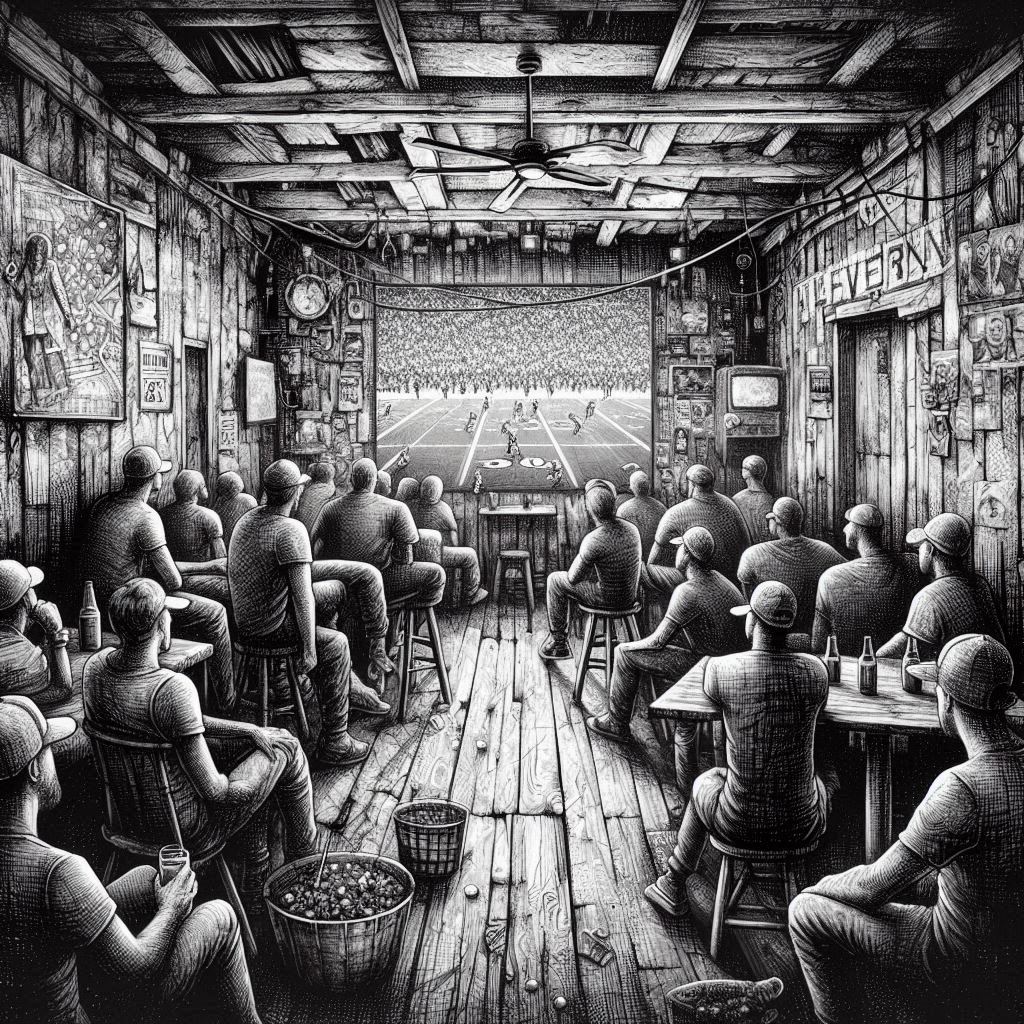 One of those who insulted me, in my friend’s home, said I committed a Swanny. A Swanny, they explained, was a term they coined after a man named Ron “Swanny” Swanson said something as dumb as I did once, and they informed me that the other team miraculously came back shortly after he said it. “It happened,” they said, and after it happened, they labeled anyone prematurely calling out a victory and thus jinxing the team “a Swanny”.
“I’m not denying that “the Swanny” happened,” I said to my friend, after the whole incident was over, “but how many times has it happened since humans started watching sports on TV? How many television spectators, hundreds of miles away from the action on the field, have prematurely called out a victory only to have the outcome flip? Don’t you see how we could view Swanny’s “Swanny” as a coincidence?”
They could not. That inexplicable loss was marked in the annals of sports’ history as far as they were concerned, because it proved their contention that when anyone says a most unfortunate thing at a most inopportune time, they can alter the course of history as we watch it play out on TV, hundreds of miles away from the action on the field.
“What would happen if Swanny committed “a Swanny” while watching a documentary on World War II?” I asked, “and three-fourths of the way through that production he mentioned that he thought it was pretty obvious that the allied powers were going to win? Would we all be speaking German now?”
“That is so ridiculous,” my friend said with laughter. “World War II is already over. The analogy doesn’t apply.”
“Sometimes, the best way to prove how ridiculous something is,” I said. “Is to provide an analogy that is more ridiculous.”
If I thought my friend was an unmovable moron, I wouldn’t have pleaded my case against “The Swanny”, but my friend was a logical, reasonable man who just happened to be well-educated. On the subject of hexes, superstitions, and jinxes, however, he proved an immovable object. He had a blind spot, we all have them, but this one was so confusing to me.
I might be one of the least superstitious beings on our planet now, and I’d love to write that even as a teenager, I was immune to such ridiculousness. I watched so many football games at my friend’s house for about a decade though, with his superstitious parents and their superstitious friends. They were rabid fans, and they loved gambling. They were some of the few I met who were into these games as much as I was. Watching sports in my teen years was tantamount to life and death. They were big fans, but they had a financial stake in victory too. Though we approached watching sports from different angles, the outcome was the same, and their fervor made watching games at their home so much fun.
After committing “the Swanny”, I learned to watch my tongue when we were watching sports on TV. As ridiculous as I considered their rules, if I had respect for my friend and his family, I had to respect the rules of their home. This respectful silence had an accumulative effect over the years, as anytime I entered their home to watch a game, I learned to never say anything premature, or joke about it, and that led me to avoid even thinking that even the most obviously decided game was decided. Little by little, game after game, their repetitive messaging progressively seeped into my brain and morphed what I once considered a joke into a new reality for me. I don’t remember ever making a conscious flip in this regard, but I eventually took their ridiculous hat-on-the-bed type superstitions home with me, and I chastised my brother for making an inopportune comment at an inopportune time when the two of us were watching a football game on television together. “You just jinxed us!” I said.
“Seriously?” he asked. “You’re serious? Take a step away from what you’re saying, and I think you’ll realize how ridiculous that sounds.” I didn’t, I wouldn’t, until I did, and I entered into a lifelong cringe for ever somewhat, sort of, and temporarily slipping under the power of group-think and repetition.

 Rilaly