“Now that you’ve seen the whole package,” standup comedian Eddie Pepitone said shortly after walking on stage, “I want to answer the question that you’re all thinking, and the answer is yes, I have had a lot of work done. I’ve had my hair removed and my belly let out, because I was too pretty.” –Eddie Pepitone.
“Age is a relative concept,” is a phrase we’ve all heard, but what’s the difference between old and old. Ruth was seventy-eight years young, and I don’t describe her age that way to sound culturally sensitive. Ruth was happy, and she loved being alive every day in every way. Most seventy-eight-year-olds, like Jack, don’t. Jack was just tired by the time he reached seventy-eight. I don’t know what he was like before, but the guy I knew would’ve been much happier if he died sooner. Ruth had an infectious smile, and watching her work her way through her day could leave one feeling exhausted. Jack lingered long after he stopped mattering, or caring about matters. Age is a relative concept.
***
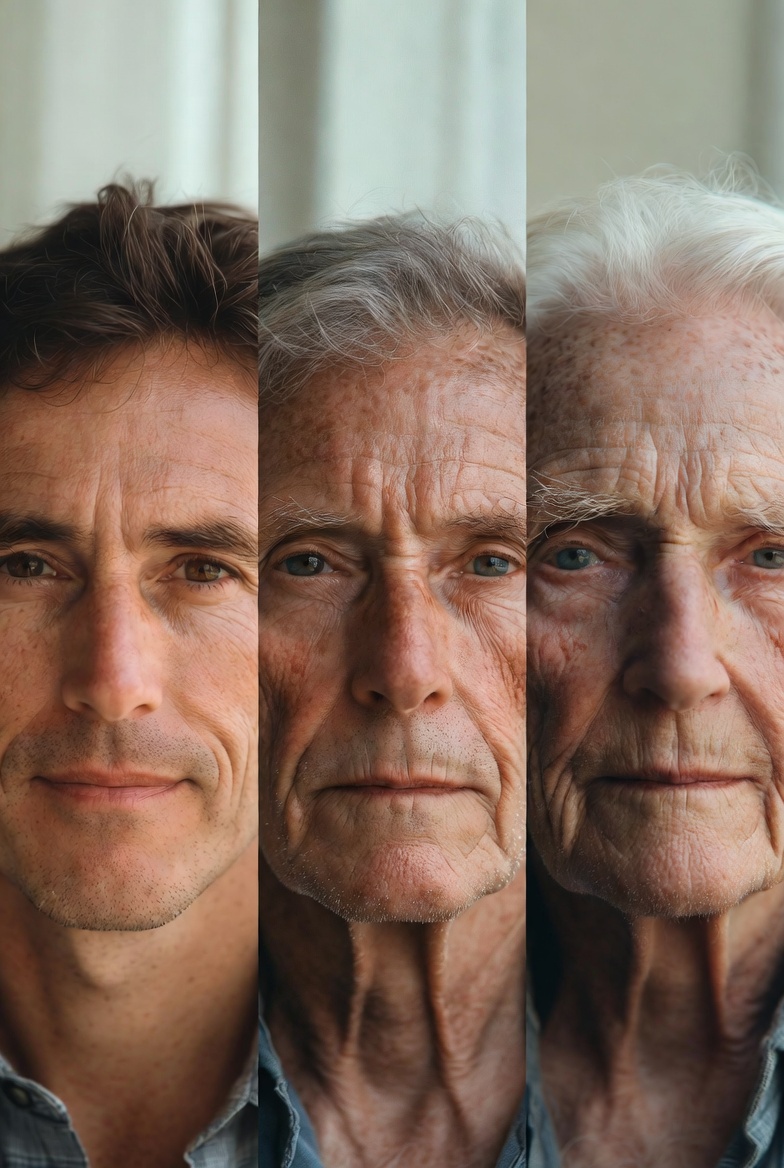
We don’t know where we’ll be at age seventy-eight, but we experience indicators along the way. We don’t think about age now, but Jack might say that’s because we’re not seventy-eight, broken down, and just tired. I’ve never tried to act or look younger than I am, and I’ve never lied about my age. I just am who I am, a little older and wiser, but I never really thought about age, until my long-time friend walked into the bar and grille wearing a pair of Crocs.
Tony Mancuso was all about girls when he was young. He loved them big, tall, short, and small. He was so girl crazy that everything he did in life was to get more girls looking at him. We all did that to some degree, but Tony went further than anyone I knew at the time. Another girl crazy friend, an Aaron, started Tony down this road when he said, “You have it all, great hair, a great personality, and a decent fashion sense. The only thing holding you back,” Aaron said, “is your skin.”
“What’s a fella supposed to do about their skin?” I asked. “We can grow our hair out, cut it short, buy new clothes, all that, but we can’t do anything about our skin.” I said that with empathy, because I, like Tony, had bad skin. We both had acne pockmarks and scars, holdovers from the severe case we had as teens.
“Some of the times a fella needs to hear what he needs to hear,” Tony replied.
“That’s true,” I said, “but what can you do about it?” He shrugged, I shrugged, and the matter sort of devolved into nothingness.
About a week later, Aaron and Tony found an answer to what I considered an unnecessarily harsh insult, and Tony was willing to sacrifice his good standing in our ultra-male community by applying a little bit of Aaron’s Max Factor Pan-Cake foundation makeup to help cover those unsightly pockmarks and scars. Then, when a little dab didn’t do him, he overdid it. He had a line under his chin he didn’t blend, because he didn’t know he was supposed to blend, so his little sister had to teach him. It didn’t embarrass Tony, because he thought it would all be worth it in the end. Aaron and Tony then began turning their collars up, they stopped wearing hats, and Tony began shaving more often and brushing his teeth on a daily basis, because he knew girls liked that. He was all about marketability and increasing his market share in our teenage dating market. Tony eventually escaped the raging insecurities that drove him to do such things, but seeing him again, after years of separation, in a pair of Crocs, led me to the inescapable notion that we were both old now.

We have an idealized image of ourselves that we see when we’re talking to others, and mirrors don’t reveal the incremental progressions from those delusions. We’re in front of a mirror every day, so we don’t see the aging process, how much weight we’re putting on, or how much hair we’re losing in them. Pictures used to tell those tales, as we could compare them to pictures of us from our past. When we started using our cell phones to take selfies every day, they failed to tell the tale of monthly and yearly progressions. In the age of technological advances, we can live in total denial, until we run into big, glaring signposts that reveal irrefutable facts to us.
Tony didn’t show up for our reunion dressed in one of those Hawaiian shirts that appear to be issued at the Florida state border, and he wasn’t wearing khaki shorts. No, the man who almost appeared to have a fashion consultant in our previous life together, rocked my whole world by walking up to the table of the bar and grill in a pair of Crocs.
“Are those Crocs?” I asked him with a level of disdain that I didn’t conceal very well.
“They’re comfortable,” Tony said.
‘Holy Crud, we’re old!’ I thought when I realized Tony Mancuso was now choosing comfort over fashion. It had been probably ten years since I last saw him, maybe more, and the transformation between the man I basically grew up around and the man standing before me now were nearly 180 degrees different. If I wore something for comfort, back in the day, he would’ve said, “That’s fine, but you look like an idiot.” If we saw a grown man in a pair of sandals, he would’ve dropped his pat response on the man, “The last man to look cool in a pair of sandals was Jesus of Nazareth.” Now, that man, was basically wearing a pair of them.
When we’re happily married for as long as Tony and I were, the idea of dating someone else is as far from our purview as free-solo rock climbing. When we’re happily married, we usually hang around other happily married people who haven’t talked about dating for over a decade, and when we don’t talk about such matters, we don’t see those windows closing. We know it in the larger sense, but it feels like those windows are closing, in the present tense, as opposed to closed or slammed shut forevermore.
When we’re happily married, the idea that our waitress, barista, or whatever service industry employee stands behind the counter, is cute, beautiful, or incredibly attractive, catches our eye. “That never leaves a fella,” my eightysomething uncle once told me. “I don’t care how old you are, or how married you are, it never leaves.” Yet, there is a huge difference between someone catching our eye and rocking our world.
I now choose to think that the act of admiring a beautiful young woman as equivalent to admiring an artistic masterpiece, the only difference is God and/or mother nature is her Creator and/or creator. My examination of her features is an appreciation of the result of features that have emerged from thousands of genetic variants interacting with each other and the environment. If I walk through an art gallery, and I see a beautiful work of art, I’m going to stop and look, and I might admire it for a spell, but that doesn’t mean I’m going to make any commitments to buying it.

I don’t know if the waitress who stepped up to take our drink orders that day was that artistic masterpiece, or if I had the effects of Tony’s Crocs swimming around in my head, coupled with the idea that those shoes meant our dating lives were “so over” that the whole situation enhanced her beauty to me. Whatever the case was, I accidentally, incidentally, or situationally leered at her.
And she didn’t care. She didn’t appear the least bit complimented or disgusted by my faux pas. She appeared so unmoved by it that I felt smaller and more insignificant than I would have if she called me out on it. This has led me to advise beautiful, young women that if you can effectively ignore a leer, as effectively as this waitress did to me, you might make this guy feel so irrelevant that he never leers at another woman again.
Yet, that leer wasn’t the desperate cry from a lonely well it was when I was younger. When this young, beautiful, and muscularly athletic woman whose features emerged from thousands of genetic variants interacting with each other and the environment generated an almost automatic hedonic and motivational response in me, I think I just wanted to drown out the whispers I was hearing from Tony’s Crocs.
When we left the bar and grille that night, Tony stood, key in hand, near a 2019 Ford Fiesta, while we talked. He almost acted as if he was going to get in the Fiesta, and I grew distracted by the joke I saw coming as he stood there. The joke involved him nearing the car, as we spoke of other matters, and at the last second, just before we parted, he would pull that key back and say “Gotcha!” He’d then walk over to his 1970 Plymouth Hemi ‘Cuda. I still had that expectant smile on my face when he said, “All right, I gotta get going,” and he fobbed his Fiesta.
“Is that yours?” I asked. He said it was. “Is it a rental?” I wondered, thinking maybe he got into a car accident or something.

“No, it’s mine,” he said. Again, Tony’s whole life, or the life I knew him in, was all about ‘what will the ladies think?’ Now, he’s pitching a car to me based on the idea that “It gets excellent gas mileage” and “The 2019 Ford Fiesta was deemed one of the most reliable and durable cars of the year, with excellent points in terms of drivability.” I didn’t question his research, because my yeah-buts were all about how a man who used to drive late 70s gas hogs that fired up and appeared to run on testosterone and sensitive androgen receptors could now be driving a sensible sedan that all but puttered when he turned the key in the ignition.
***
Seeing pictures of myself told me some undeniable truths, playing sports against teenagers told me something else, but that day at the bar and grill was so illustrative that I found it slightly and temporarily depressing. Tony Mancuso was my fella for so many years that he felt like my brother from another mother, and seeing him age gracefully and accept the facts of the aging process was so shocking that I didn’t want to talk about it. I expected to suffix his age with years young, as opposed to years old. I expected him to dress like a man on the make, even though he was a happily married man who no longer needed to appear attractive. Seeing that this man who is six months younger than me, either give up entirely or display how comfortable and happy he was in life, caused me a couple sleepless nights.
‘Nobody is looking at us anymore,’ was my takeaway, ‘and Tony realized this before I did.’ When we were teens, Tony would ask me if his hair looked right, and “What do you think of this shirt?” My pat response to him was to tell him that fewer people were looking than he imagined. Seeing him in a pair of Crocs while driving off in a Ford Fiesta led me to the depressing conclusion that he finally accepted the fact that I was right.
I never expected to write anything about age insecurity, because I’m more at peace with myself than I’ve ever been. I answer that age old question, “Would you like to go back and do it all over again?” with an asterisk, “If I could go back with my current mindset and everything else as is, I’d love to go back and edit and totally rewrite elements of my life, but I wouldn’t want to go through everything that accompanies youth again. I wouldn’t want to undo all of the psychological and philosophical progress I’ve made just to physically relive my past.
I’ve also found most of the elements of aging quite pleasing. We’re all insecure to some degree, but insecurities were such an insurmountable obstacle when I was younger that I’m glad most of that is over. I love being a husband, father, and family man so much that I rarely, if ever, think about other things, until they smack me in the face like a signpost.

 Rilaly